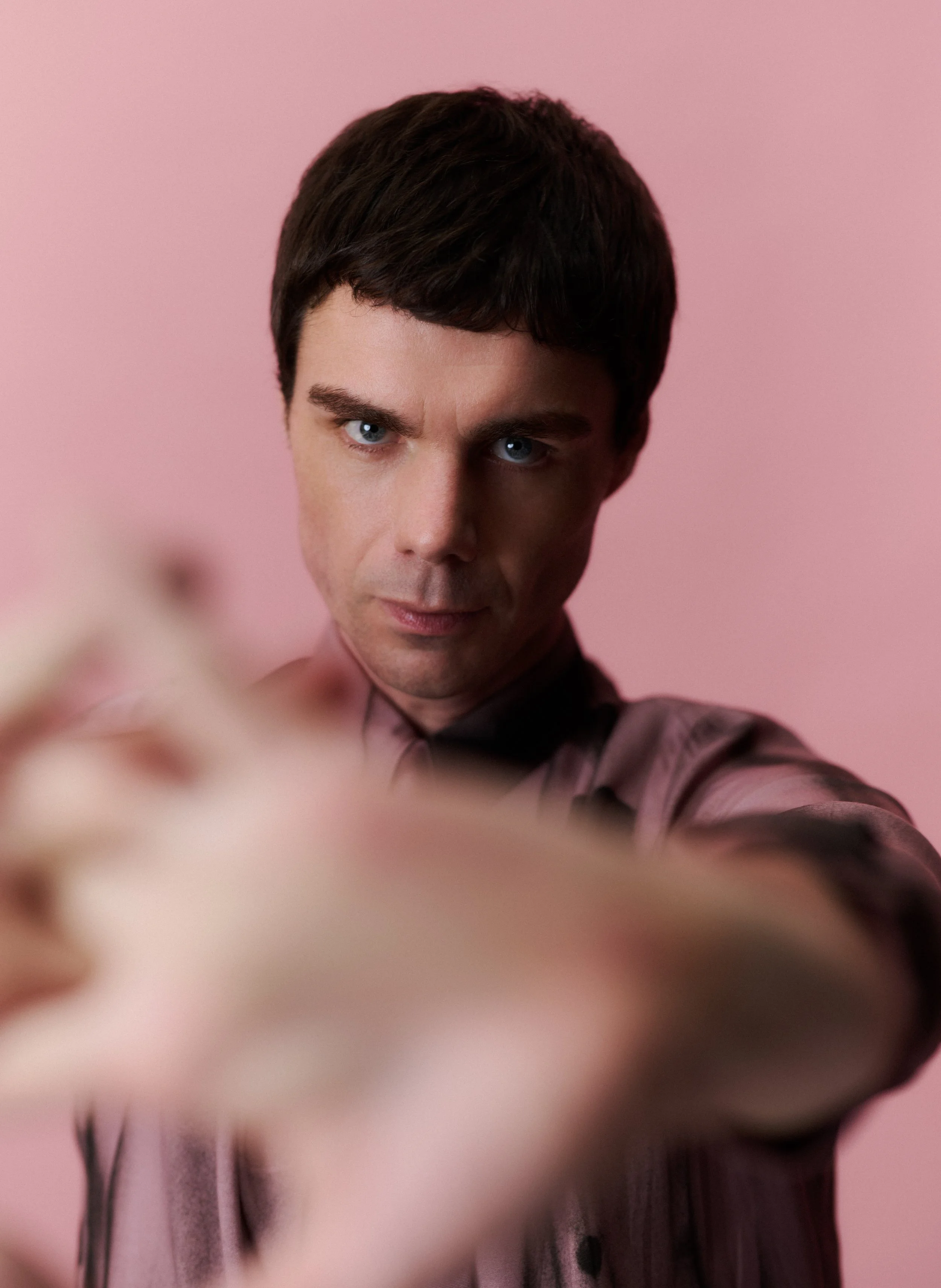
interview by JANA LETONJA
From Shakespearean stages to the dangerous corridors of Westeros, Matthew Needham has built a career around characters who are rarely quite what they first appear to be. A Lamda graduate with extensive theatre credits, he has become internationally known as the enigmatic Larys Strong in HBO’s House of the Dragon, a role he reprises for the third season. His next projects take him into two very different iconic universes: the eagerly awaited Blade Runner 2099, alongside Michelle Yeoh and Hunter Schafer, and the second season of Batman: Caped Crusader, in which he voices the Joker.
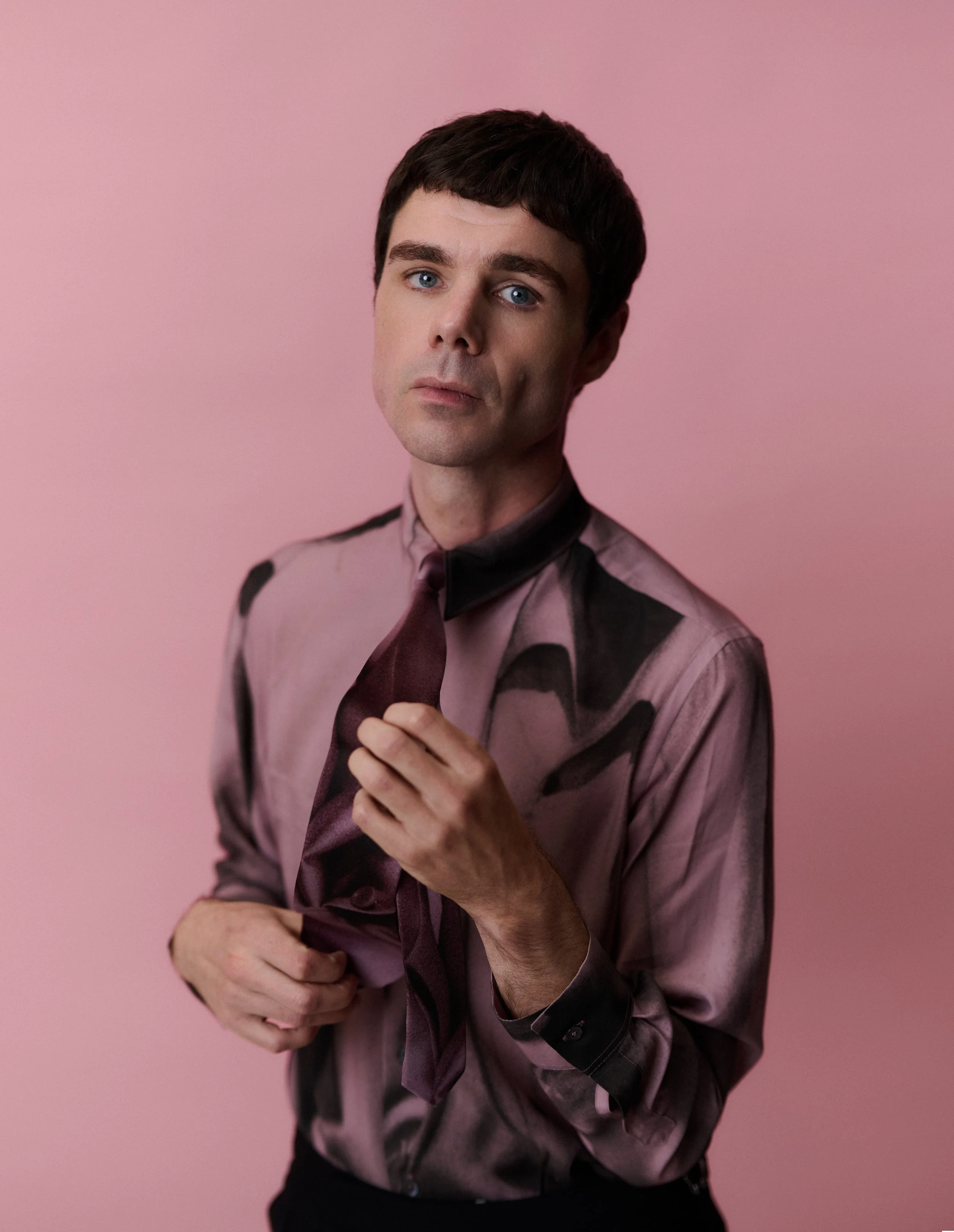
photography by PIP
You’ve just returned to Larys Strong for the third season of House of the Dragon. After living with a character for several years, has your understanding of him changed from when you first took on the role?
Yes I think so. I feel like he’s been a little different each season hopefully. It feels like every time I go back, there’s another layer or another aspect to him that I hadn’t felt before. He adapts to reflect his environment and circumstances and the more those things change, the more he does as well. What’s been interesting is the different reactions from people on the street. After season one, people would always be very nice, but they would preface everything by saying they hate the character. Then from season two it started to change and now people come up to me and say they love him. I don’t know if that’s just familiarity or the shifting allegiances within the show, but it’s interesting to notice. Someone called it a Larysaissance which I thought was quite funny.
Larys is fascinating because so much of what he thinks and wants remains hidden. How much of his inner life do you need to construct for yourself, even when the audience isn’t allowed to see it?
Yes, he doesn’t get great chunks of dialogue to allow the audience a window into him, so I’m glad you find him fascinating. I think for me, it’s not always the lines themselves that are most interesting, it’s what’s going on underneath them or in moments of silence. So, I try to have a very solid structure of thoughts and objectives that he’s trying to achieve even if they don’t line up exactly with the dialogue itself. I think that’s true to life. People rarely just say exactly what they mean, there’s usually always some element of subterfuge going on. Everything has a basement.
You’re next appearing in Blade Runner 2099. What was your reaction when the opportunity arose to become part of a universe with such a distinctive cinematic history?
I loved doing Blade Runner as I really like both films. It’s a unique and fascinating world to step into. The premise is that the world order has flipped and replicants are now the ruling class as humanity has become a second-class citizen. That relationship between the human and the artificial is prevalent for many reasons, but that aside it’s a great thriller. It has real beauty and style as well as balls to the wall action.
How much can you tell us about your character in Blade Runner 2099, and what particularly interested you about playing them?
I play Yahya who is a Replicant police officer tasked with hunting down rebel humans. It’s an inverse of the original. He is driven and relentless and has a deep-seated resentment for the way his kind had been treated under the humans. I think of him as a former prisoner who’s suddenly put in charge of his prison guards. He’s not exactly benevolent, but would you be? It’s interesting to play someone so dogmatic but who also has his own doubts and insecurities about his own standing in the world. Weirdly, he’s very human.
You’re also taking on one of popular culture’s most famous villains by voicing the Joker in season two of Batman: Caped Crusader. What goes through your mind when you’re asked to play a character who has already had so many celebrated interpretations?
That was insane. It didn’t really hit me until we were promoting it what a big deal it was. The character is so different to other iterations that I felt I had a blank page to work from, but of course, you can’t help but think of all the other iterations that have come before. It’s important to take risks though and I’m glad it paid off like it did.
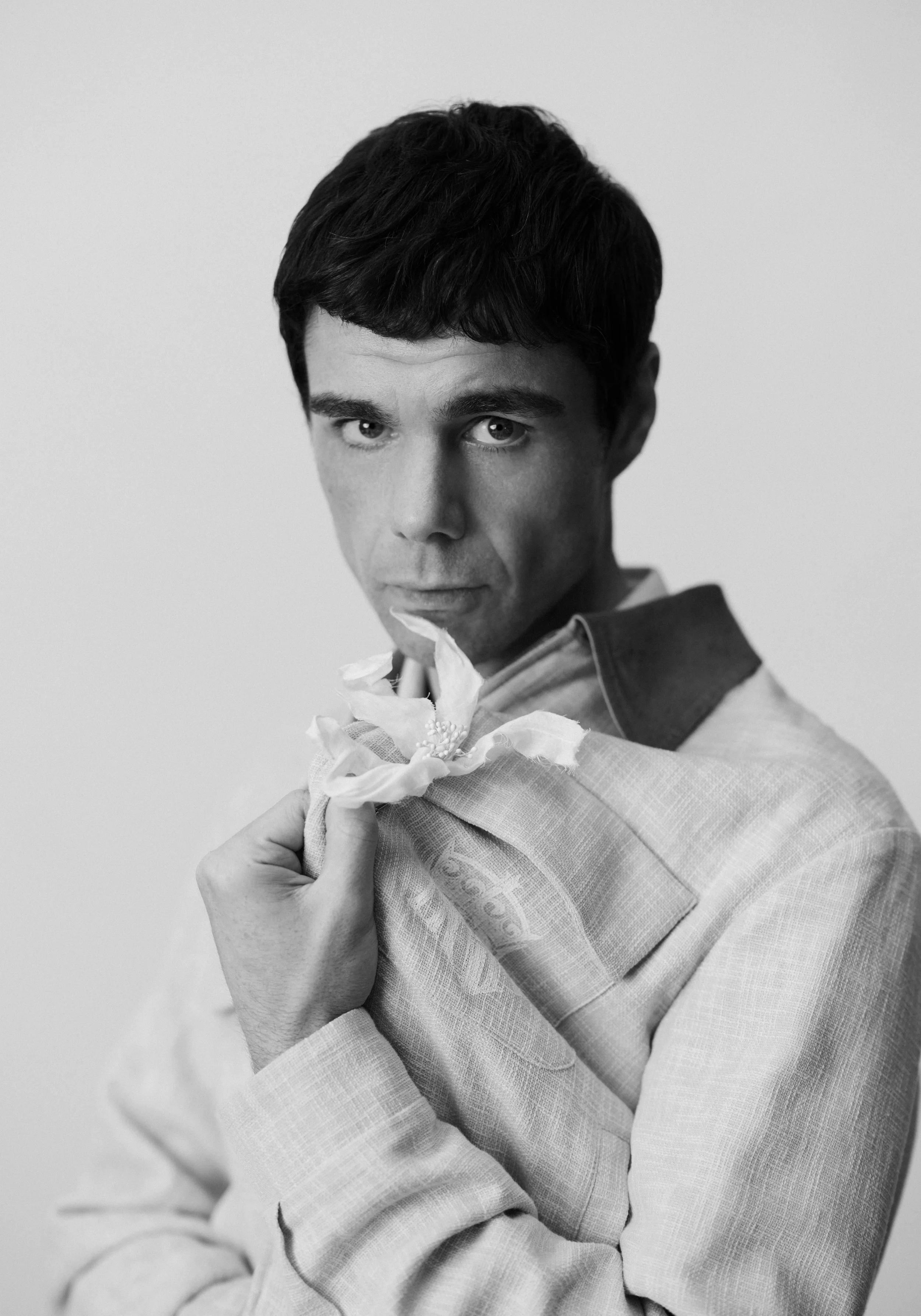
Voice acting removes many of the tools you normally have as a performer — your face, physicality and body language. Did you find that restriction liberating, challenging, or a little of both?
I love it. I find it completely liberating. You’re still incorporating your body. The voice has to be engaged to a physicality somewhat. It’s all connected. There just aren’t eyeballs on you which I have no problems with. The less me the better.
Between Larys Strong, the Joker and your upcoming Blade Runner role, you seem particularly at home in morally complicated and slightly unsettling worlds. What attracts you to characters who exist in those grey areas?
I don’t know. It feels truer I suppose. Life is grey as much as we like to pretend it’s not. It’s also more interesting to me personally. For the first ten years of my career, I mainly played “normal” people, whatever “normal” means, like the unassuming friend or the nice boyfriend or the friendly coworker and it can be really boring. Give me weirdos and nutjobs any day of the week.
Your career began with a great deal of classical theatre, including work with the Royal Shakespeare Company and Shakespeare’s Globe. How much of the actor you are on screen today was shaped by those years on stage?
I suppose it’s given me an appreciation of writers and writing. It’s not reverence. It’s very practical. A lot of those plays will direct you just by the way the lines are assembled and where the stress goes. There’s not that level of assistance in all scripts, but it’s made me more sensitive to the writer than I used to be.
Stutterer, in which you played the lead, went on to win the Academy Award for Best Live Action Short Film. Looking back, what place does that project hold in your career?
Funnily enough, it’s what I get recognised for the most. The Oscar thing is nice and fun, but what is interesting is the life it continues to have. It’s a short film that came out over ten years ago and people still come up to me to say how much it means to them. It had real reach and a real impact on people. It’s an amazing achievement by Ben Cleary and his team.
At this point, audiences may associate you strongly with characters who have a mysterious or darker edge. What kind of role would surprise people most to see you play next?
That’s funny. I don’t know. Maybe if I played Mother Theresa. Maybe something where I don’t kill someone? I shot a film in France earlier this year which I’m really excited about. It is a really beautiful ensemble film, and I don’t kill anyone in that,or do I?