
IN CONVERSATION WITH JARROD BROWNING
interview by NIA TOPALOVA
Jarrod Browning is known for his expressive, large-scale artworks that combine bold colours, layered textures, text, and symbols. Embracing chaos and spontaneity, his work reflects the experiences and inspirations of everyday life. In conversation, Browning shares insights into his creative process, artistic freedom, and the journey behind his evolving practice, as he looks ahead to new opportunities and international exhibitions.
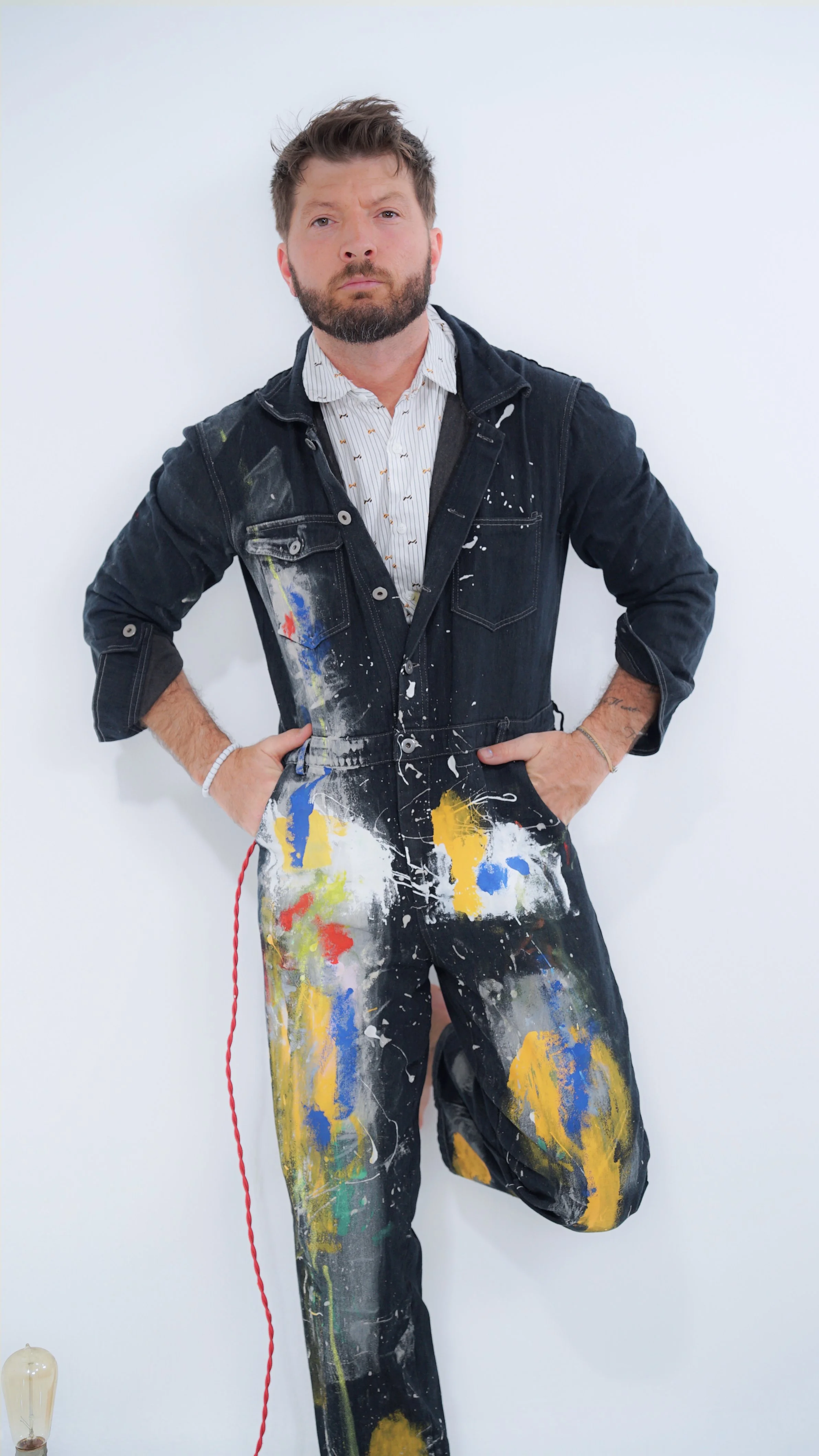
Your works vary in scale, with changing text, symbols, characters, and colour palettes. What do you hope viewers take away from your pieces?
When it comes to the art pieces in general, I’m hoping that the viewers see the story within the chaos and the leftover errors that create and build the piece into what it becomes. Maybe the story is simple, or maybe it is not even a story at all. But it’s the draw to the oddly used colour palette, the text, the varying shapes, and the size of the works. In those areas and spots within the artwork, I hope something resonates within the viewers, and on a deeper level, the connection builds as they look through the artwork closely. Finding something within oneself, you can’t really go wrong with that.
Why are large-scale pieces the main focus point of your work, and what is the creative process behind creating them?
The reason my drive and aim are focused on creating mainly large-scale works is that I feel I would rather own a wall than rent it. This has nothing to do with any fault in smaller pieces. I feel that when a piece of artwork of this size is placed in a home, it commands the attention of the room or area. I also feel that smaller artworks can often be moved from place to place, never truly owning their location, much like renting rather than owning. Odd, I know, but it’s subjective and allows for different interpretations of the meaning.
When it comes to the process, I take the ideas I’ve come up with and apply them to a freshly stretched canvas, often layering as many thoughts around an idea as I can until I feel like stopping. Regardless of mistakes, I’ll continue to apply colour, layer upon layer, adding more ideas, text, and possibly symbols or designs. After hours of this process, the artwork begins to build itself through applied thought and error. Deciding what to keep and what to cover up with another layer, another coat of paint, or another part of the story is what builds and creates the final piece. It’s an ongoing battle between you and the canvas, from one piece to the next. It’s a beautiful love story, and you may not even know how it will end yourself, as the painter, until it’s right in front of you.
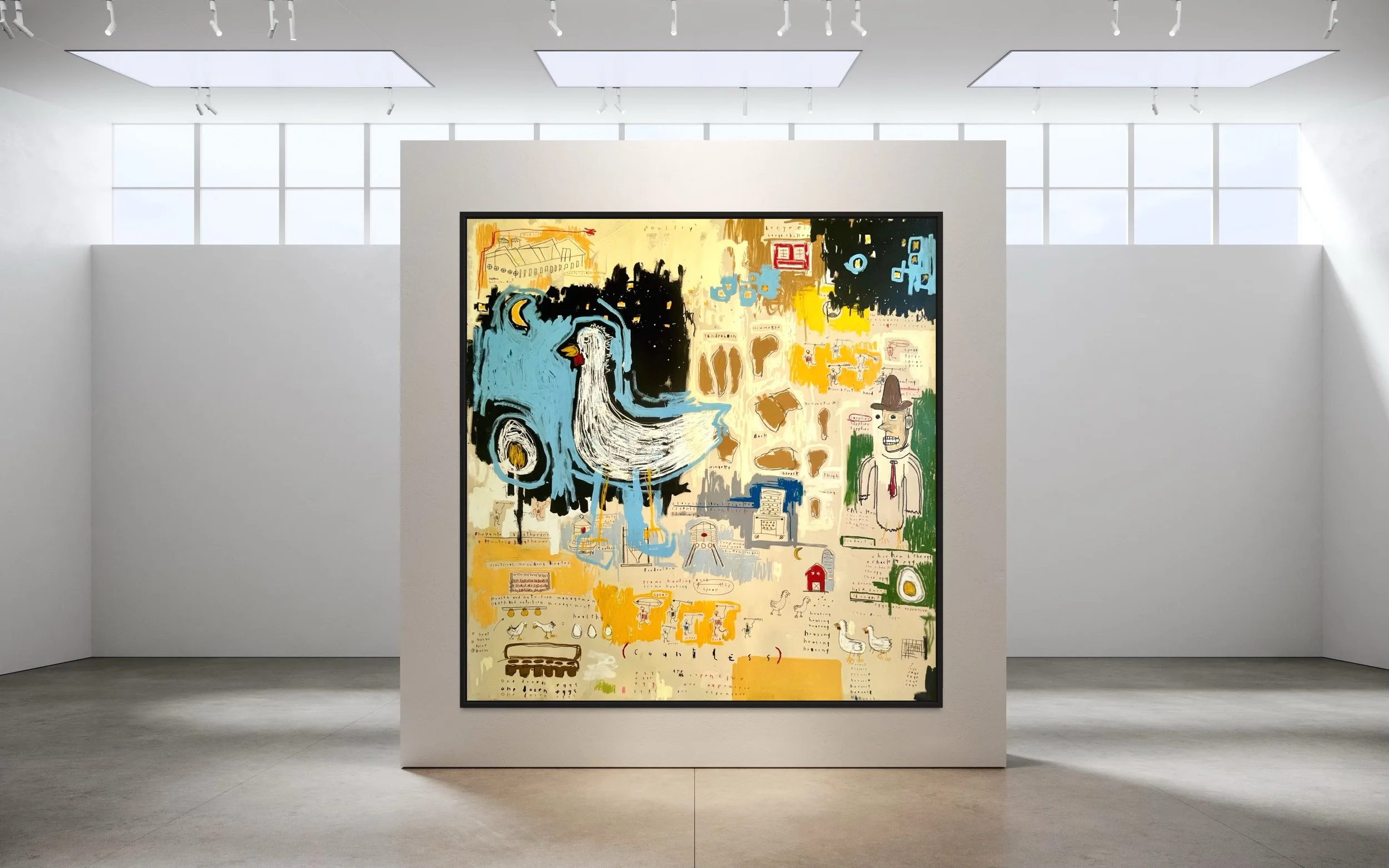
When working on these artworks, what tells you when the piece is done?
When it comes to finishing an art piece or completing the story on the canvas, it comes down to a feeling. It’s almost as if you can sense whether the canvas has enough oil stick, crayon, or paint, or whether it needs more. With the way my chaos works, a single line or layer can bring a piece to completion in an instant. It’s a feeling that you’ve reached a defining point in the piece where you don’t feel like you could change anything.
What are the main inspirations behind your artworks?
The main thing I feel about inspiration is that it’s always there. Inspiration is all around us; it can be anything from sunrise to sunset. It could be the journey to a café in Manhattan or going out for lunch in Downtown Los Angeles. I believe, for myself at least, that inspiration comes from the journeys of everyday life. I then translate those journeys onto a large canvas with a paintbrush, an oil stick, or a crayon. Doing that over and over for the world to see. You can’t go wrong with sharing the journeys of life in the form of art.
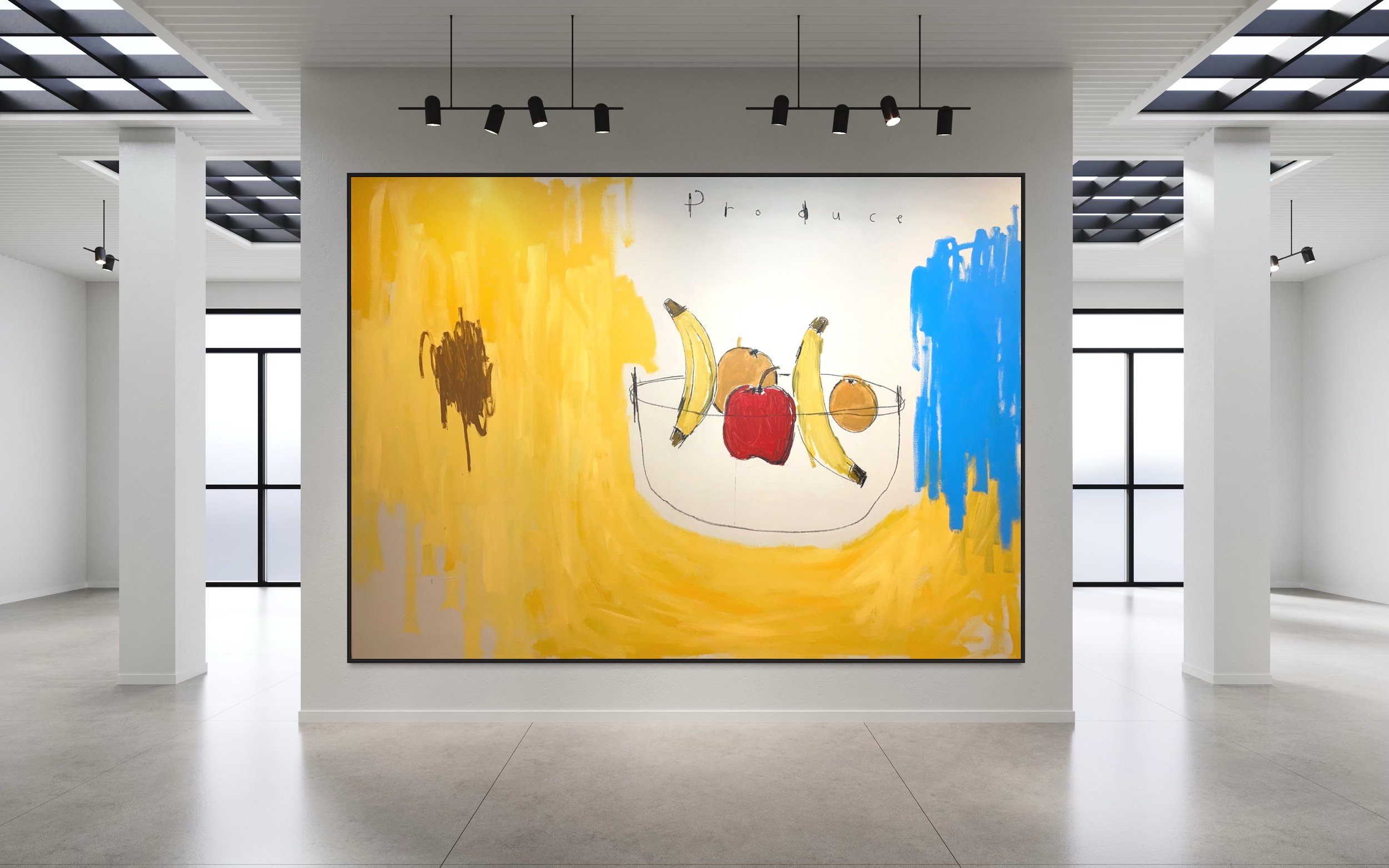
Has the success that you have had so far, may it be your work showing up in commercials, on television shows, in magazines, or in the hands of collectors all over the world, changed the way you perceive the art world?
I don’t think that having my art featured in commercials, TV shows, or elsewhere has changed my perception of the art world. However, it has made me extremely excited about the future and what lies ahead. Everything that has happened so far, and so quickly, has been a blessing, and I couldn’t be more thankful.
From having my artwork featured in ABC’s Shifting Gears, where an entire gallery of my work appeared throughout an episode, to High Potential Season 2 on ABC and Beef Season 2 on Netflix, these are just a few highlights from the past year. These opportunities are wonderful and such a blessing. More recently, collectors like Mr. Fernando Botero Zea have acquired an entire collection of my largest-scale pieces available on the market. These are truly fantastic opportunities that leave you in awe. What a privilege it is to have my art in the hands and private collection of Mr. Botero. I look forward to even more opportunities in the future through hard work, creativity, imagination, and, most of all, a love for self-expression.
How do you balance being a father and creating art, and do you think the pace of your work will remain the same?
Oh man, balancing new fatherhood and painting is like a juggling act, challenging but fantastic. It’s not easy at all, I will say that. But if it weren’t for such a supportive partner, finding that balance would be much more difficult. My partner really helps me through this stage of growth, and I hope I do the same for her. My new son, Lyric Alexander Browning, is such a beautiful little boy that it’s often hard to return to the studio when I’m with him. What a fantastic and amazing creation.
Surprisingly, my pace has remained about the same. I definitely appreciate my time in the studio and really immerse myself in the canvas when I’m there. I take that time seriously, often working on multiple canvases or moving from one piece to the next. Face to canvas for hours, just creating, creating, creating, with oil stick, paintbrush, and crayon.
What is it about painting that allows you to express yourself fully? What about this medium makes you feel at home and in your comfort zone?
When it comes to painting, it just feels right. It often feels like a window has just opened and fresh air is coming through. It’s like getting anxious to see the next unmatched colour fall into place, or the next line that creates the next part of the painting. When your face is right on the canvas, it is almost like everything around you blurs out. You can hear your own breathing; ideas fly nonstop in that mode. It’s like an unwritten love language. Yourself and a giant piece of canvas… tell me that isn’t poetic.
You’re dealing with logistics companies and direct suppliers of canvas and supplies on your own. How has this helped you with your artistic freedom?
Being able to manage all of that directly is something I want, whether it’s dealing with art supply suppliers and logistics companies or building the frames and shipping crates myself in the studio. All of this gives me the greatest artistic freedom. Not only does it mean money isn’t going in twenty different directions, but it also allows me to create more art. I can ship more artwork with fewer worries as it moves from one hand to the next, without concerns about complications during shipping. Having direct communication and access helps keep stress levels much lower, especially when shipping to other countries, which can sometimes be nerve-racking.
I think having direct communication throughout the entire process, creating, shipping, and delivering, is fantastic.
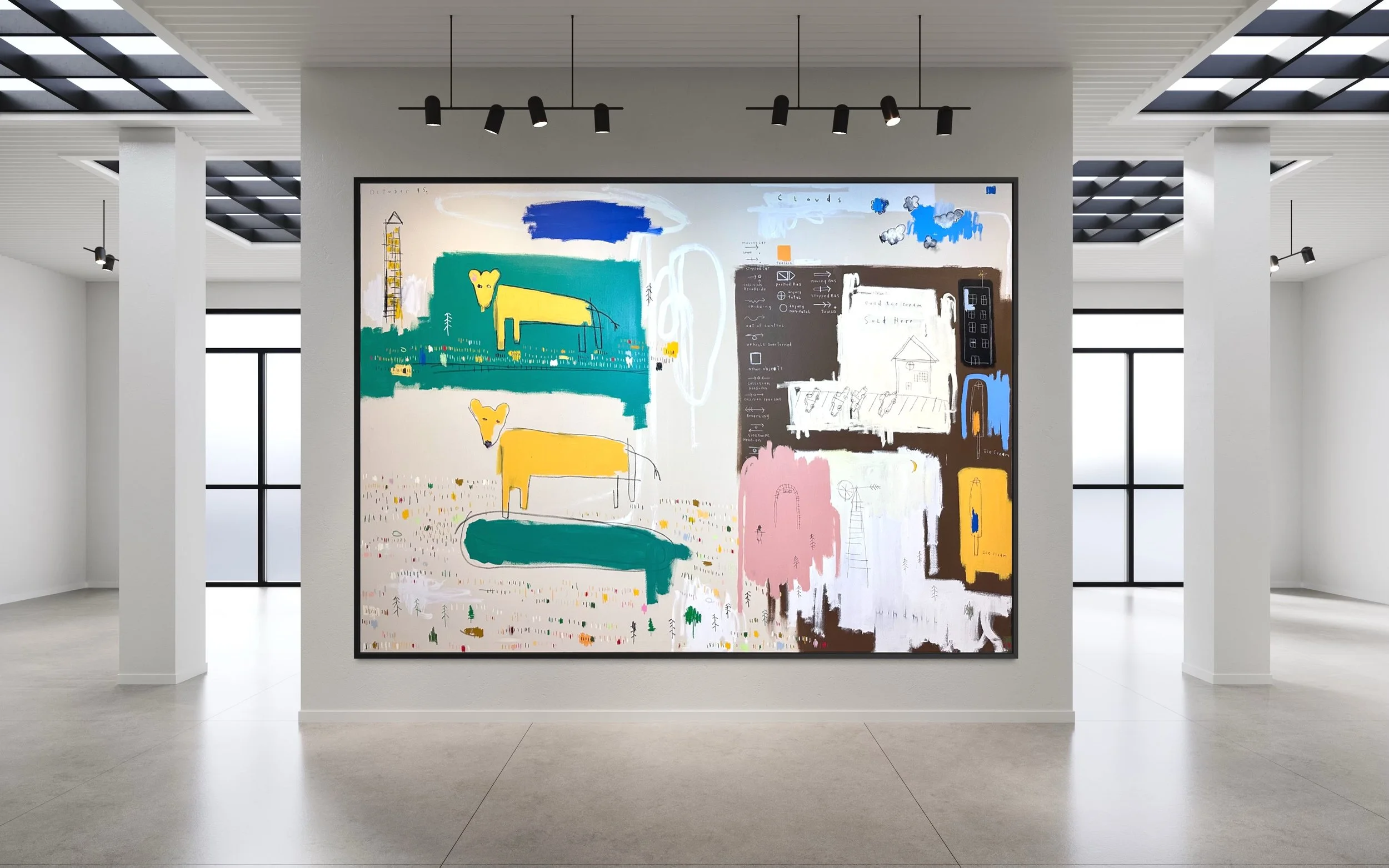
You grew up in a very small country farming town in Minonk, Illinois. What do you feel growing up there contributed to who you are today?
Growing up in good old Minonk, Illinois, a small Midwestern town with, I think, a population of around 3,500 when I left, was a great experience. The people, the community, the farm work, the steel construction, and the small-town feel are things that never really leave you. I believe the work ethic I learned and developed early on has always stuck with me. From getting up before the sun to toss hay and feed to bulls, cows, and pigs, to working with a CNC 4,100-watt laser for 12-hour days, these are experiences I’ll always remember and appreciate. Those were some great people and some great times.
You’re planning a release in China, then another one in London, with visionaries and collectors purchasing your work for their private collections. How do you feel about this happening so fast?
At the moment, I sometimes feel like I need to keep producing more and more work while thinking about what else needs to be done, and so on. But I’m learning as the process unfolds. Things have been happening fast, but it’s such a great feeling to go from one opportunity to the next. When that’s not happening, then you should get worried, I would say.
I couldn’t be more excited about speaking at an exhibition coming up in China in October, and we’ll be doing the same in London soon after. My curators for the show in China, Jingyun Chen and Jingmin Zhang, have been nothing but fabulous in getting everything organized and arranged for ViVi Gallery and myself.
Sometimes, with everything happening so quickly, it can get overwhelming. But then I start painting my next piece, and all that weight I feel goes out the window. It’s exciting to think about the future and where this journey will lead. I’ll say it again: it’s exciting. Take it all in and appreciate every second of it because it’s never promised; it’s only earned. There is still a lot left to do, as far as I see it, but I definitely feel we’re on the right road, heading in the right direction.
