
IN CONVERSATION WITH JEREMY BELOATE
interview by JANA LETONJA
Jeremy Beloate is entering an exciting new chapter that brings together his roots in theatre and his rapidly rising career as a recording artist. A finalist on NBC’s The Voice who went on to sign with Snoop Dogg’s Death Row Records, he will next take the stage in the highly anticipated Off-Broadway musical MIDNIGHT, written, directed and choreographed by Todrick Hall. With MIDNIGHT exploring love, identity, empathy and redemption against the backdrop of the 19th-century American South, Jeremy is stepping into a demanding role at a transformative moment in his own career.
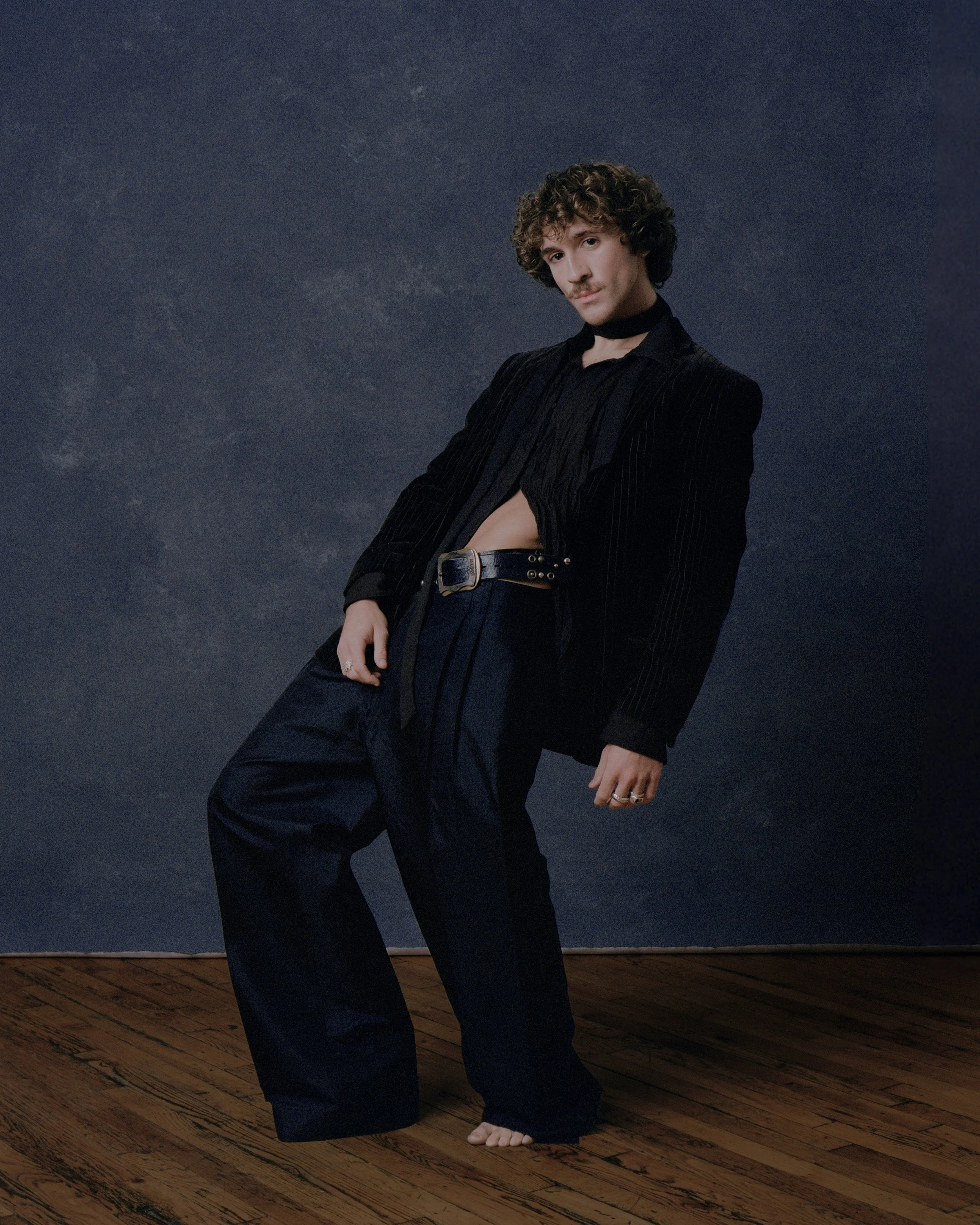
jacket JIL SANDER
shirt STYLIST'S OWN
belt ROBERTO CAVALLI
pants MAISON THAI by SANDEEP TUPILI
You’ve been involved with MIDNIGHT since its early development. What has it been like watching this project grow from those first stages into a full Off-Broadway production?
From the moment I heard the first song, which was a voice memo of Todrick singing a not-fully-realized song, I was hooked and knew this project was special. Watching the Broadway community, and the world via social media, discover the magic this musical possesses fills my soul because the world deserves to know Todrick for who he is, a genius with a heart of gold.
For audiences meeting Richard for the first time, who is he, and what drew you to him when you initially encountered the character?
It’s been the most beautiful balance of self-creation and trusting Todrick’s guidance of who he sees Richard to be. Richard is a puppy-eyed optimist who wants to be the good in the world. Richard and I share many traits, but the biggest one is how we both lead with our hearts.
It has been such a gift to settle into him, as well as rise to the occasion of being a leading man, not only on stage but off stage. What that means for me is being grounded and still when the moment warrants it, and thinking less about “showing” the audience his world and just surrendering to truthfully living in it and letting them lean in.
Richard’s relationship with Rail is an important emotional thread in the story. How would you describe their connection, and what makes their relationship particularly meaningful to you?
Richard and Rail are, in many ways, similar to Elphaba and Glinda. Their dynamic was helpful to study because they truly are pitted against each other, but something cosmic aligns them, and their purpose as characters relies heavily on the change they invoke in one another. While Wicked is fictional, MIDNIGHT is a split between fantasy and realism, grounded in true historical events. It has been helpful studying films like 12 Years a Slave and The Green Mile, as well as having open dialogue and doing research, to truly understand what the dynamic between an enslaved person and their master looked like.
While Richard is a sweetheart, I by no means wanted him to feel innocent, but maybe more naive, because he still was taking part in a deeply evil social norm. The most meaningful part of this journey is doing it alongside one of my dearest and best friends, Todrick. So much of what is felt and shared onstage is truthful to Todrick and my connection to one another. I am so lucky to have a partner in him. He, just like Rail, makes me rise to the occasion and be better.
MIDNIGHT tackles some enormous themes—love, race, identity, empathy and redemption—within the deeply divided world of the 19th-century American South. What conversations did you and Todrick have about navigating that material with honesty and sensitivity?
We’ve had several years’ worth of conversations, as well as sessions with dramaturges and sensitivity coordinators, to ensure the visibility and safety of the cast. The most helpful research I’ve done has been with Todrick, watching different films including those I mentioned previously to understand what a relationship between a master and an enslaved person looked like. And also understanding that these are only movies, so what happened historically was often far worse.
Todrick Hall is wearing several hats on this production as writer, director, choreographer and performer. What is it like collaborating with someone who has such a complete vision of the world you’re helping bring to life?
It’s honestly so helpful. Every single movement, melody, and word holds importance, and there is an answer as to why it was chosen. I have never been able to work with someone who holds such genius and perspective, so as an artist, it has only propelled me forward within the show and outside of it.
The score moves through gospel, R&B, pop, rock, folk, opera and musical theatre. As someone whose own musical identity crosses genres, does that eclectic score feel particularly suited to your voice?
It honestly fits like a glove. For years, I’ve tried to find the right music to sing, and this is truly the first time something feels like an absolute true fit. In addition to its innate style, I have had the blessing of Todrick intentionally writing moments in the show to highlight my strengths as a singer and storyteller. After this, it’s going to be hard to sing anything else. This music, wow.
You’re performing material that deals with very serious subjects, but ultimately MIDNIGHT is also a story about human connection. What do you hope audiences feel when they leave the theatre?
More than anything, I hope they leave changed.
I have had a lot of personal loss in my life, and because MIDNIGHT deals with such deep themes throughout the show, I give my entirety to the story every performance because it is what this story deserves.
You’ve had quite a journey from musical theatre to becoming a finalist on The Voice and now returning to the stage with a much larger public profile. Does performing in theatre feel different to you after everything you’ve experienced?
It does. For years, I tried to understand why I never got the “yes,” but now looking back, I was protected. Those opportunities would not have been aligned with my journey as a human and would not have developed me into who I am today. I’m learning that God always has a bigger plan in place than your own, and that sometimes you are “hidden” until it is your time to be revealed. I am so grateful that the moment is now and that it is with this project, a story that feels like my purpose on Earth to tell.
The Voice introduced you to a national audience through some incredibly emotional performances. What did that experience teach you about yourself as a vocalist and performer?
I think more than anything, The Voice was a platform and a moment of exposure. I went into it knowing that, so I tried to be strategic and take advantage of the window of time I had. One of the biggest blessings of my life, and of the show, was being introduced to Snoop Dogg and Sara Ramaker, VP of Death Row Pictures, who then introduced me to my current managers, Ron Fair and Gary Marella.
Not only did Snoop Dogg financially invest in me outside of the show, but he and Sara made me feel like I was a true part of their family. They did more for me than the show ever could, and for that I am forever grateful. I would not be where I am today without them.
Snoop Dogg ultimately signed you to Death Row Records. When you first heard that he wanted to work with you beyond The Voice, what was your reaction?
He called me, which I have a video of somewhere, and told me the news, and it truly felt like the best moment of my entire life at the time. The record deal also came in on my birthday. How aligned is that? I think it taught me a lot about the importance of who you are. Yes, he and his team saw talent and a bigger picture, but more importantly, they saw and felt me, and that is why I believe we got to work together. I will forever be changed because of it.
Your music emphasizes personal storytelling, while acting requires you to disappear into somebody else’s story. Do those two sides of your artistry feed each other?
They absolutely do. I am not the traditional actor, nor would I ever pretend to be. My acting training is slim to none, and what I’m learning is that acting really is what it means to you. It isn’t a book or a method or a technique, it boils down to what resonates with and helps you. It’s a personal relationship. I approach both mediums, acting and singing, with truth and from my personal experience. I have never been attracted to or interested in “performing,” but rather the authenticity and truth of art. My very first voice teacher, Cindy Barret, told me at seven years old, “The magic is in the connection,” and that has been my truth ever since.
You’re simultaneously building careers in two industries that can each demand everything from a performer. Do you ultimately see yourself as an actor who makes music, a recording artist who acts, or is rejecting that distinction important to you?
I would like to be known as an artist rather than a singer or an actor. Artists I really admire are Ariana Grande, Jennifer Hudson, and Reneé Rapp, because to me, what they have built goes beyond a title. You just know them as themselves and associate them with every medium of entertainment.
Between The Voice, signing with Snoop Dogg and Death Row Records, and now taking MIDNIGHT Off-Broadway, your life has changed considerably in a relatively short period. Have you had a moment when you’ve been able to process everything that’s happened?
I am trying to do that more. I am a dreamer at heart, and honestly, my biggest “why” I do this is my family. Until I feel like I can take care of them and my loved ones, I won’t feel like I’ve done enough. That is success to me.
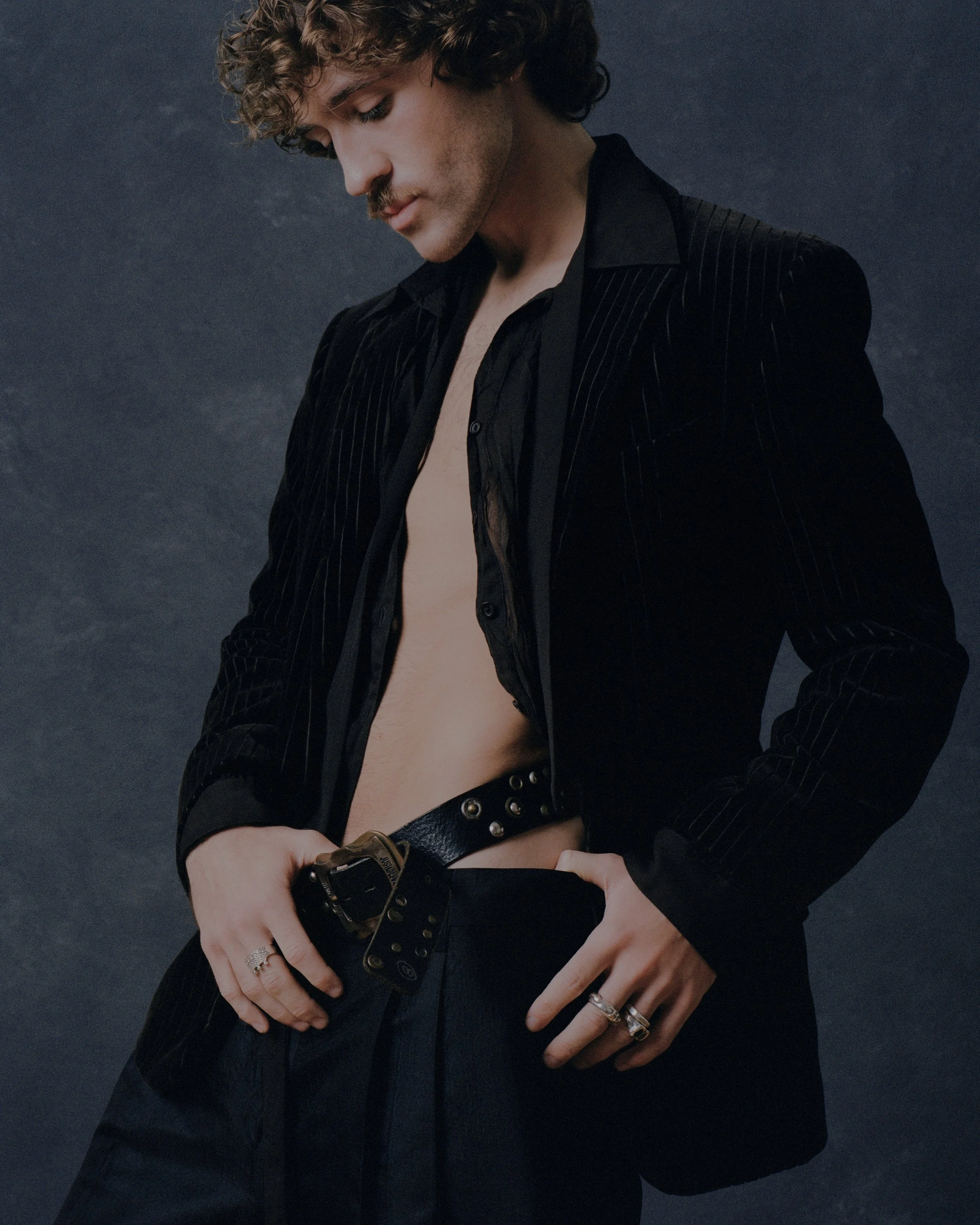
TEAM CREDITS:
photography M. COOPER
photography assistance CONNOR MITCHELL
styling DYLAN WAYNE
styling assistance NOEMI LOZADA
