
IN CONVERSATION WITH JERO LEEFLANG
interview by TIMOTEJ LETONJA
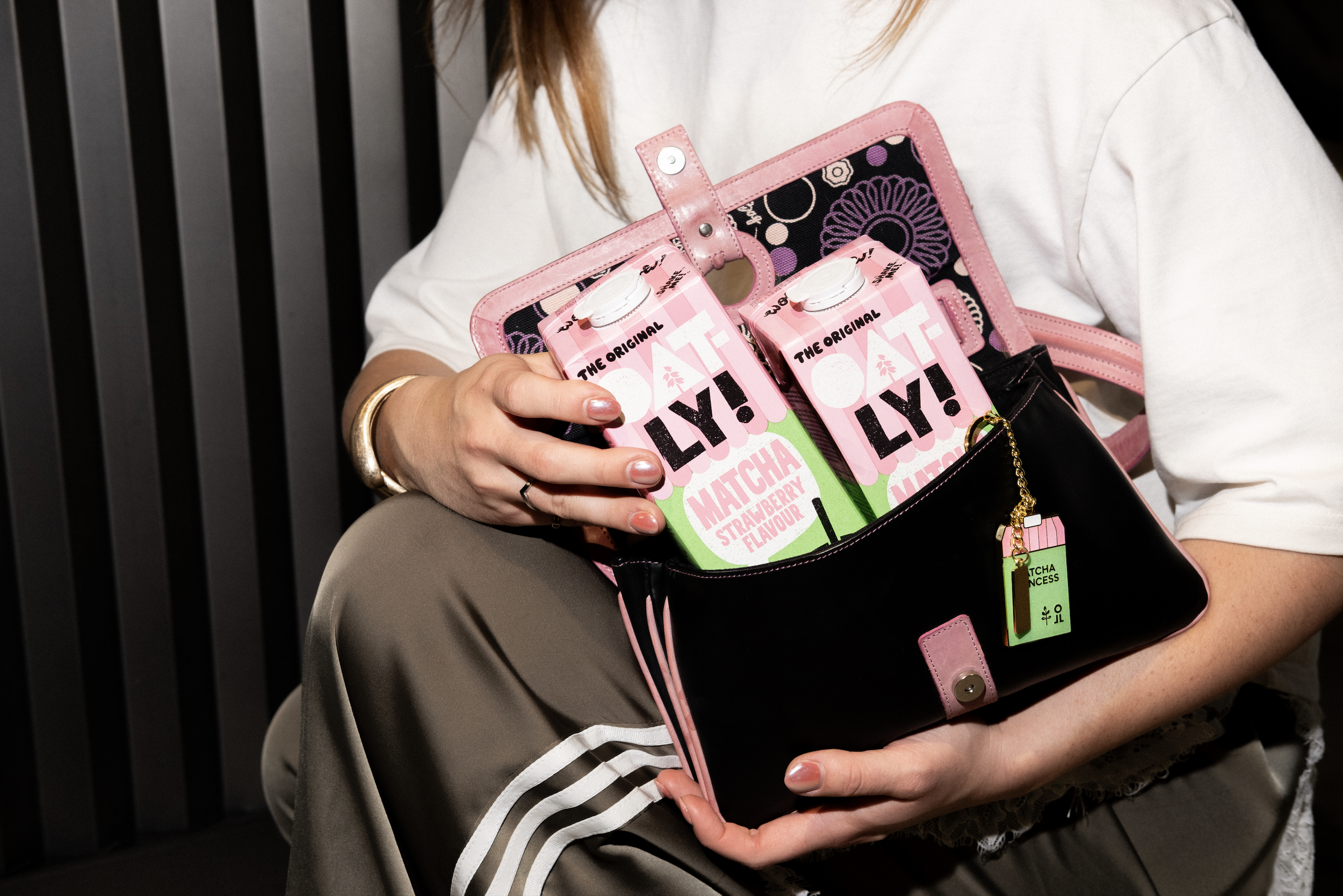
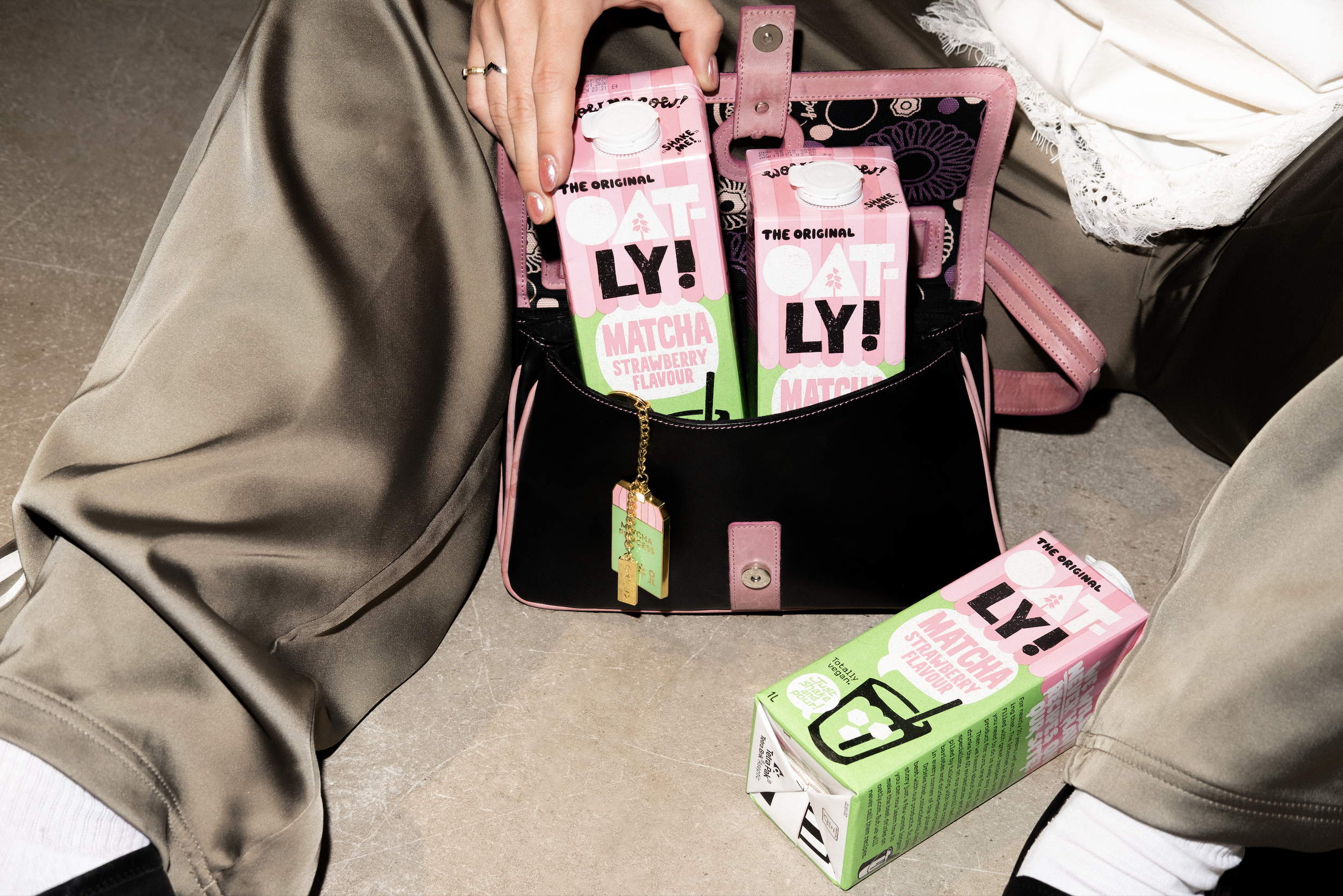
As fashion and café culture continue to blur into one another, few collaborations capture this current happening quite like Oatly’s strawberry matcha bag charm created with Amsterdam-based jewellery designer Jero Leeflang. Translating one of social media’s most recognisable drinks into a collectible accessory, the project merges internet aesthetics with craftsmanship, balancing playful nostalgia with Leeflang’s refined, sculptural approach to jewellery design. We sat down with Leeflang to talk about the process, materiality and what it takes to turn something viral into something lasting.
What was your first reaction when Oatly approached you to translate a viral drink into a piece of jewellery?
I already knew the brand and loved how playful and creative their campaigns are, so I was super excited when Oatly approached me. The idea of turning a viral strawberry matcha into jewellery immediately felt fun because the drink already has such a strong visual identity with the soft pinks, matcha greens, and layered look.
The goal was to capture the feeling of the drink in a wearable way, fresh, playful and a little nostalgic, while still making it feel elevated and collectible through the materials and finish. I loved the challenge of turning something so internet-driven into an accessory people could actually style and keep.
all images courtesy of OATLY
The Matcha Strawberry bag charm plays with softness, texture, and metal — how did you balance something playful and internet-driven with your own design language?
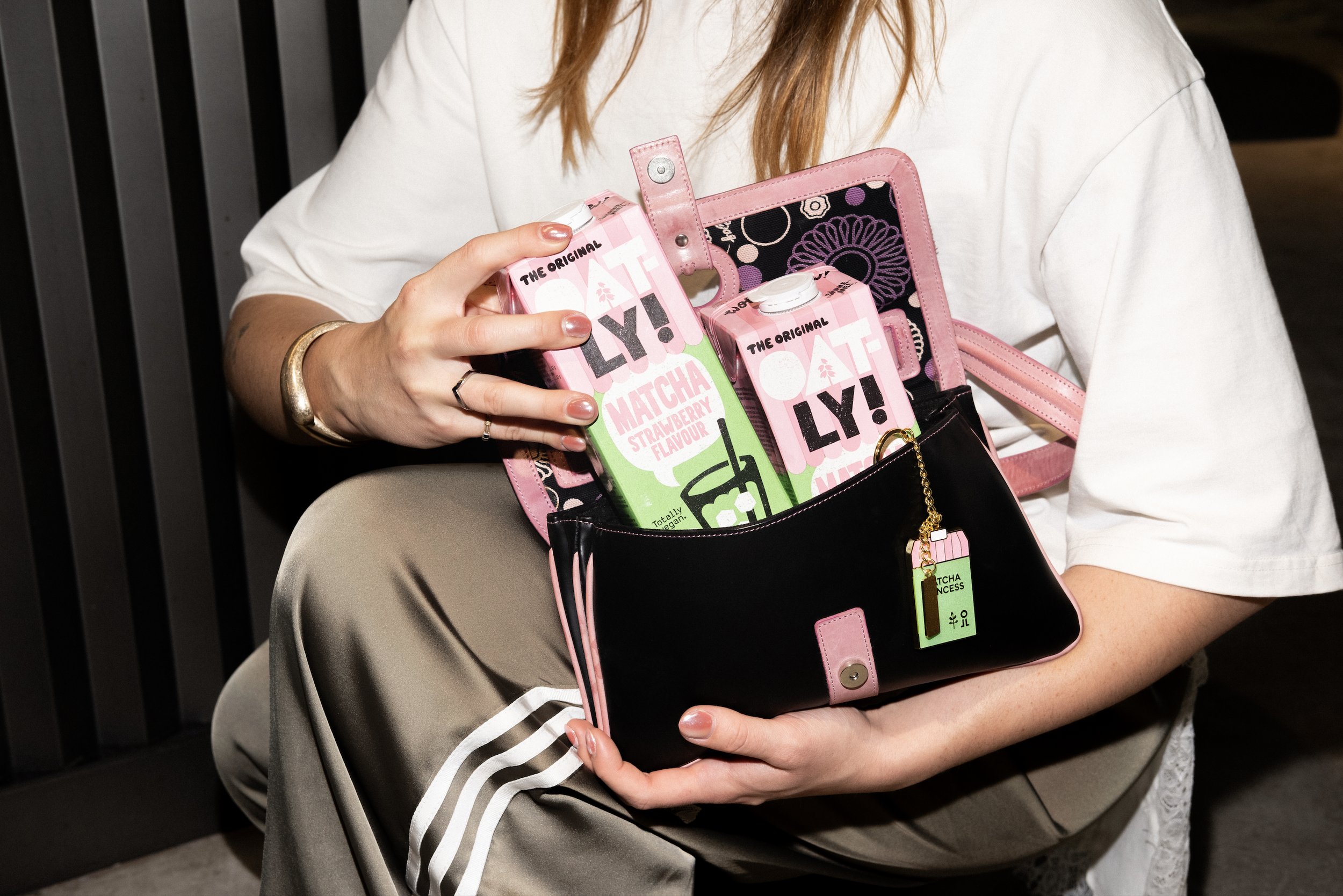
The Matcha Strawberry bag charm was a chance to blend my modern-classical design language with something much more playful and internet-driven. I wanted it to feel like a little extension of the Oatly Strawberry Matcha itself, the soft strawberry pink tones, creamy matcha greens, and glossy metallic details all reflect the drink’s mix of freshness and sweetness.
Because my jewellery usually has a timeless, durable, and luxurious feel, I balanced the playful side through texture, colour, and a slightly exaggerated charm-like silhouette, while keeping the craftsmanship and materials elevated. The result feels fun and collectible, but still refined, almost like the drink translated into an accessory with a bit of sparkle and personality.
Fashion and food culture are becoming increasingly intertwined right now. Why do you think people are so drawn to collectible, wearable objects connected to café culture?
I think people are really drawn to objects that feel personal and tell a story. Café culture has become so much more than just grabbing a coffee, it’s connected to aesthetics, routines, comfort, and identity. Drinks like strawberry matcha almost become little cultural symbols online, so turning them into wearable objects feels like a natural extension of that world.
There’s also something fun about taking an everyday ritual and making it collectible. People want pieces that feel expressive, a bit unexpected, and tied to moments or trends they connect with emotionally. A bag charm inspired by café culture feels playful and nostalgic, but it also becomes part of someone’s personal style, almost like carrying around a tiny piece of your personality.
You describe the project as “fun and challenging.” What was the most technically or creatively difficult part of transforming the colours and feeling of a strawberry matcha into wearable design?
The biggest challenge was finding the sweet spot between my own design language and the playful energy of both the drink and Oatly as a brand. I wanted the charm to instantly capture the soft colours and layered feeling of a strawberry matcha, while still feeling elevated, wearable, and true to the timeless quality of my usual work.
This collaboration feels very rooted in trend culture and social media aesthetics. As a designer, how do you approach creating pieces that are instantly shareable while still feeling elevated and lasting?
Every piece I make is like an experiment, and a big part of these experiments is sharing the outcome. The final feeling of a piece comes from the choices made during the process, such as proportions, material choices, and other details.
You’ve said that you often begin directly in metal or wax rather than sketching first. How does working so intuitively change the final piece compared to a more planned design process?
I think this way of working leaves much more room for changes during the process. When something is sketched out first, it can feel more fixed, and from that point on you’re mainly recreating what is already on paper. Working directly with the material gives me more freedom. This allows me to work in a more sculptural and intuitive way. When I work with a stone for example, I like to feel during the process which proportions work best, and make design decisions around that as the piece evolves. To me, this results in a more refined and beautiful final piece.
Some time ago, you moved out of your studio is surrounded by artists from different disciplines, and now have your own, while still providing platform for the jewellery makers. What inspired that shift, and how has this new environment influenced the way you think about jewellery today?
That’s true! I now have my studio and exhibition space in the Oude Kerk in Amsterdam. It’s the oldest building in the city, and for me it makes perfect sense to be here because it breathes history and craftsmanship, which is incredibly inspiring and also connects naturally with a craft like goldsmithing.
In this studio, I create my jewellery and organise jewellery exhibitions under a platform called Atlas Amsterdam. We provide a platform for jewellery makers and invite artists from different disciplines to present their approach to what jewellery can be, offering a broader perspective on the many forms jewellery can take.