
IN CONVERSATION WITH MATTHEW LAW
interview by JANA LETONJA
Matthew Law is stepping into a defining moment in his career. Known to audiences as the quietly charismatic O’Shon in the Emmy-winning Abbott Elementary, he has built a reputation for performances that feel grounded, sharp, and deeply human. Now, with Netflix’s high-stakes crime drama Nemesis, premiering on 14th May, he moves firmly into leading-man territory. Off-screen, he is equally compelling, writing and directing his own stage and film project, TRUE, a raw exploration of vulnerability and mental health. It’s this duality, actor and creator, precision and emotion, that makes this next chapter feel not just like a breakout, but a transformation.
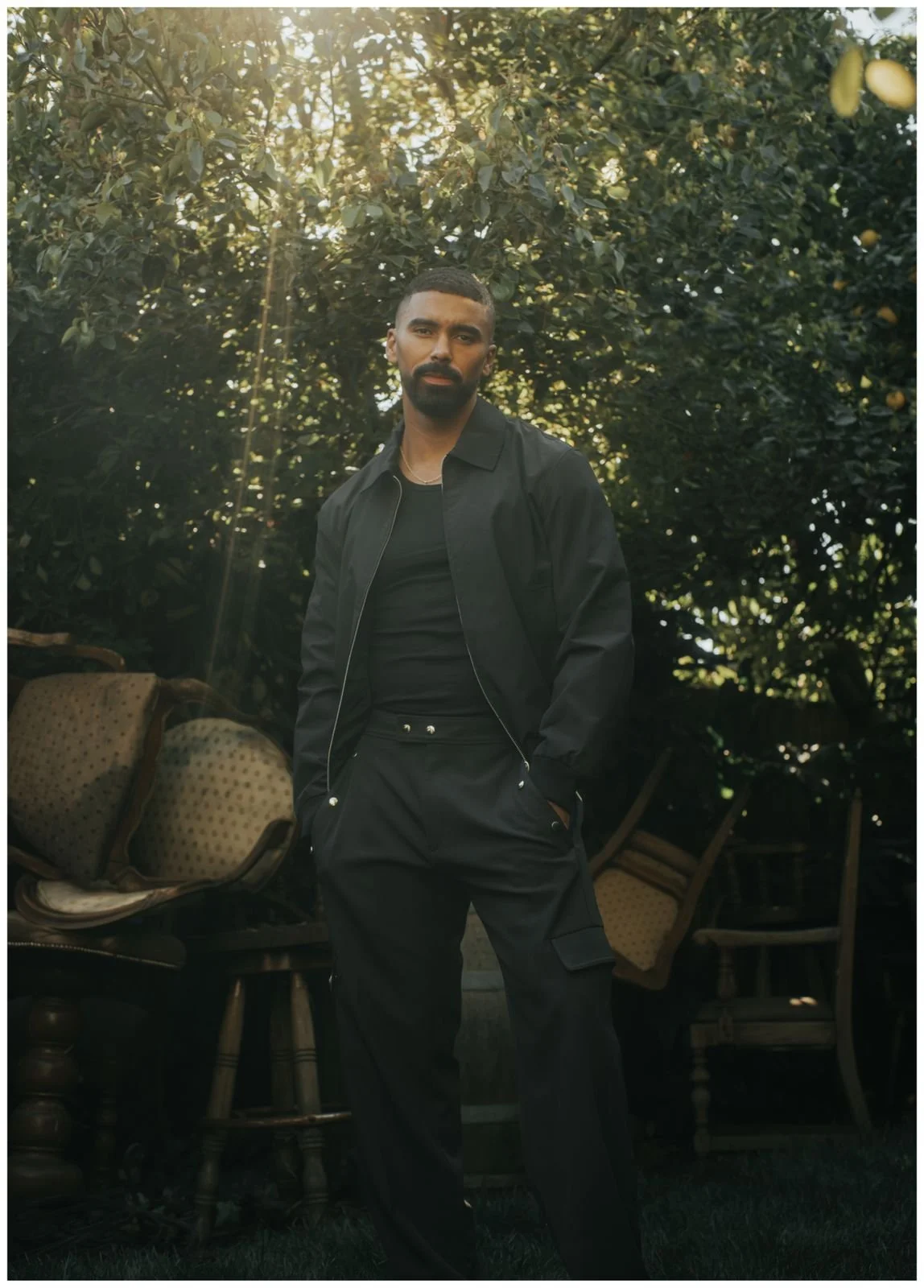
Nemesis feels like a major turning point. What drew you to the role of Isaiah Stiles?
Have you ever seen the video of the immortalised Felix Baumgartner jumping to Earth from the edge of space off of that capsule? That’s what drew me to the role. This stratospheric leap of faith that I knew would challenge my every ability. I was lucky enough to receive a call to come in and audition. It was my first in-person audition in five years, and in the legendary casting office of Vicky Thomas no less. I felt a kinship to Isaiah Stiles as a sort of gritty prophet who others see as a wayward and out-of-control soul. I was drawn to that opportunity, to let his humanity shine between the cracks of his armour. To find the meaning underpinning his obsession. And was obviously giddy at the chance to work with the incomparable Courtney Kemp.
The show explores the line between right and wrong. Did it change how you think about morality?
For me, it was more of a call to adventure into exploring family dynamics and how, when you’re trapped between duty and love, it can tear people apart at the seams. It was also this breathless rollercoaster into embodying someone who has all the intention of doing good, but maybe doesn’t always stick the landing. You all can watch the show and tell me whether he does or doesn’t.
What was it like stepping into a leading role for a series of this scale?
It felt like an answered prayer. Like an honour and a privilege that I’ve been preparing a long time for. I made a decision on the first day to always set the tone with passion and preparation, but also with kindness, respect and consideration for every person on our incredible team. Humans make these dreamscapes we call television, and we have to take care of each other. So, after many years of being a struggling PA early in my career and seeing some of the worst this industry has to offer, I had vowed that if and when I could be part of leading a set, I would do it with love.
What makes Nemesis different from other crime dramas we’ve seen recently?
This takes the DNA of crime dramas and runs with it, bringing it to a whole new level. It plays with a world of deep, endearing characters, slick high-stakes action, sexy romance, wars of morality, family drama and a dazzling Los Angeles. Sounds like I’m pitching it to you, but I mean it. I’m a fan of what we made. And we're mad proud that we were able to film all throughout the city with a world-class local crew.
You’re known for your work on Abbott Elementary. How did you shift from comedy into this darker world?
Comedy, drama, it’s all rooted in truth. In each of those shows, the creators have laid out these riches of relationships and humanity to pull from. No matter whether it’s tears of laughter or tears of sorrow, I feel like the luckiest man to be able to play in these disparate worlds.
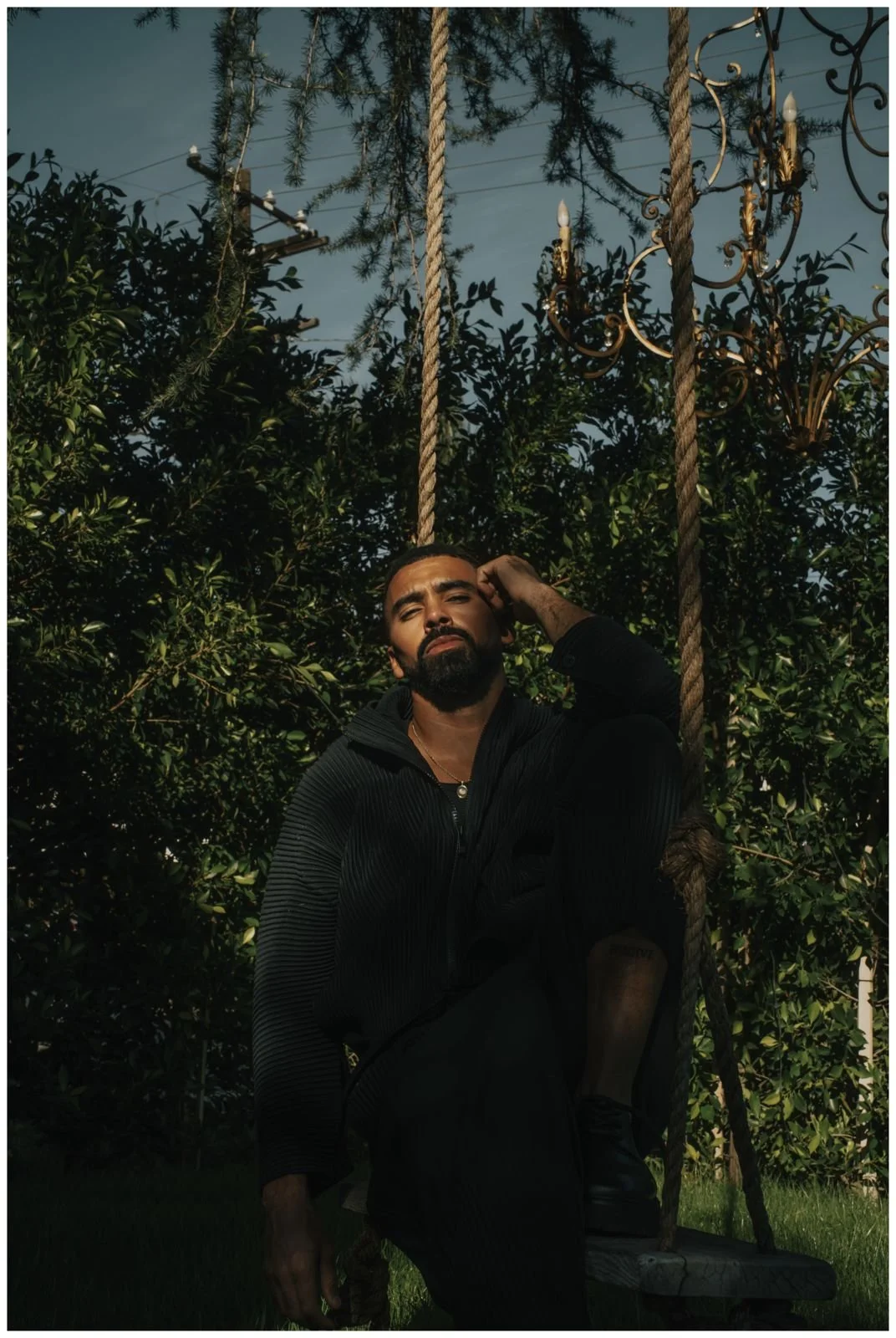
There’s a psychological depth to the story. How did you prepare emotionally for it?
There was a lot of preparation to step into Isaiah Stiles’s Jordans. I trained with an incredible group at TorchStone Global for his detective expertise. Specifically for the emotional prep, I did months of exploration with my acting coaches. Breaking down the scripts with Desean Terry at Last Acting Studio and building Isaiah from the inside out through a somatic practice called Lucid Body with Kennedy Brown. That one required a deep plunge into imagining his history, his wounds, his imploded, exploded and blocked chakras, and a bunch of other woo-woo type wonders.
You’re also a writer and director. How does that perspective influence your acting?
Thank you for that question. I’m just realising it makes me nervous to answer because I manufactured a distance between the two. I think it’s only been the past few years that I’ve allowed these sorts of partitions between my creative processes to drop. Previously, I was afraid to let anyone who knew me as an actor see me as a writer and director, and same with the other side. That anxiety was rooted in some vestigial fear that they’d think one would suffer because of the other. They’ve also been such separate journeys for me. In reality, I think it’s a remarkable positive, and I encourage any actor to also pick up the pen and a camera and tell their own stories.
That perspective influences my acting mostly in the preparation stage. When you’re filling in or dreaming up all of the backstories and trajectories that led to the already abundantly constructed “now” that the writers have created. It’s also been a clarifying factor that reveals when I’m in the midst of true collaboration. Working with Courtney Kemp, and her knowing that I write and direct, sometimes she would click on the other part of my brain and encourage me to see the scene from a different angle. Nobody had ever done that with me before. It was so generous and liberating.
Your project TRUE explores mental health and vulnerability. What inspired you to create it?
In the trenches of 2020, I decided to stop waiting and to just do the thing that scared me the most, letting my anger and shame out into a short film. I shot, edited, starred in and directed it, and made it alongside four of my most trusted collaborators. Then I was inspired to continue creating in hopes that this series would be a platform where my friends could vent their own “true” stories. Eventually, I hoped it could be a pathway to some of my homies seeking out professional therapy, while also raising the question, who cares for the caretakers?
Its second life, as a live immersive event, was born during the strike when we wanted to assert that creation belongs to the creatives and not exploitative conglomerates. Making dope, meaningful art with dope, meaningful artists has become the blueprint. I felt there was no better way to do that than for us to bring the films together with a live play and blend it into a communal gathering for the people.
How important is storytelling as a tool for emotional honesty in your work?
It’s everything. For real. After one performance of TRUE, a woman had come up to me and said, “If you did this last year, my son would still be alive.” That hit me like lightning, reminding me of the power and urgency of art. And the urgency for us to be honest.
What kind of stories are you most drawn to telling moving forward?
Silly ones, fun ones, action-heavy ones with beautifully shot kinetic choreography, dramatic ones, revolutionary ones, Black ones. Anything honest and truthful. I believe that entertainment can have efficacy and that these stories can be medicinal. That’s what I feel drawn to.
How do you balance the internal, emotional work of acting with the demands of large-scale productions?
You balance by bowing to whatever power you believe in and giving gratitude for waking up another day and living your dreams. Starting rooted in gratitude is a must for me. Self-care toolkits like meditation and journaling sound generic, but having a morning sanctuary to pour my raw self into has been crucial. I also had to learn how to say "no" outside of work. I felt myself being stretched thin with the overnight shoots and sometimes sixteen-hour days, five to six days a week. I'm still learning, and I’ll be learning forever. But I know that showing up prepared and smashing it on screen was my job, but so was showing up as a good human being. Being able to walk away with everyone on the crew saying "It was a pleasure to work with you" makes me feel just as accomplished as any shiny award out there that they're hawking at us.
TEAM CREDITS:
talent MATTHEW LAW
photography DAION CHESNEY
editorial director and interview JANA LETONJA
