interview by JANA LETONJA
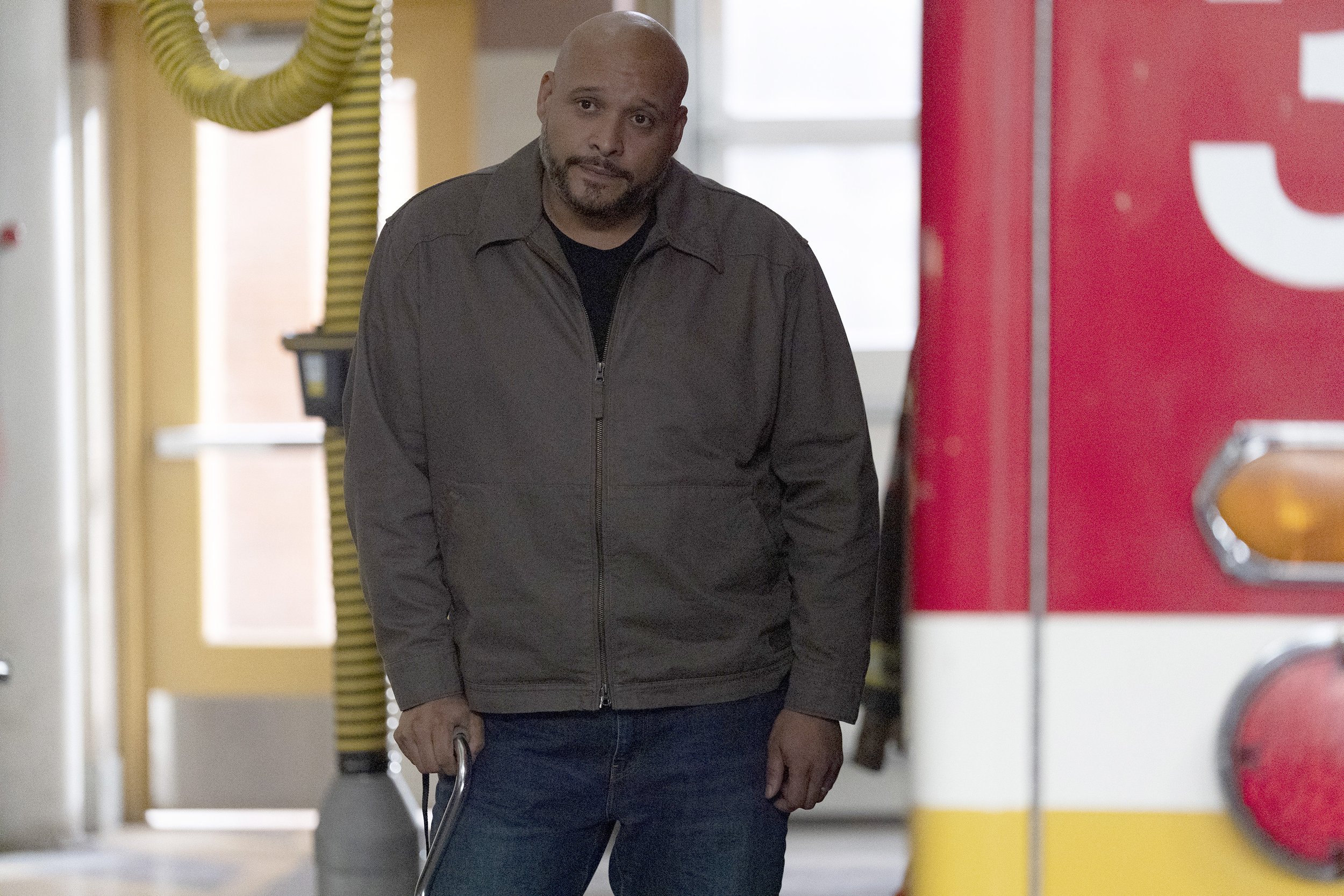
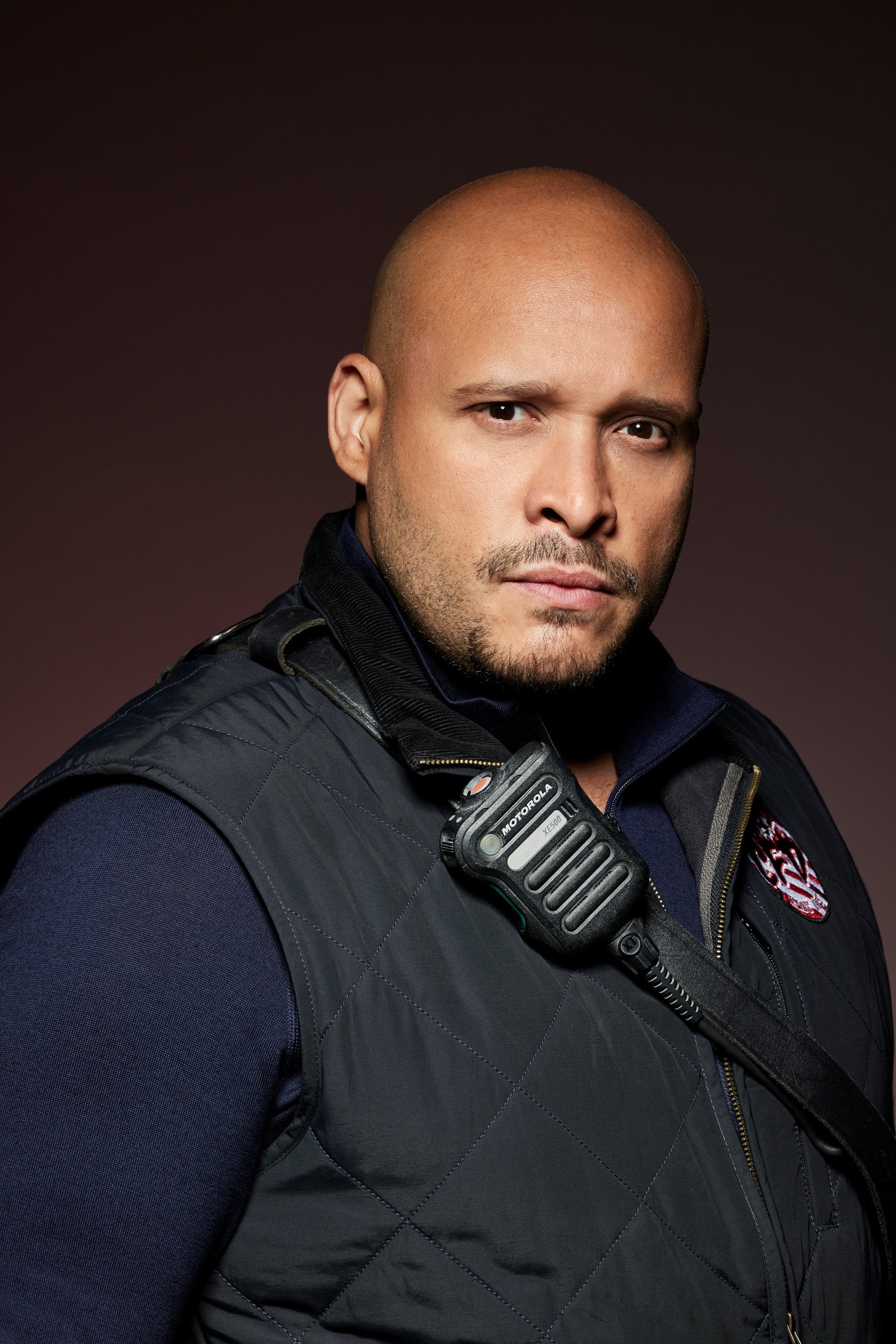
For more than a decade, Joe Miñoso has captured audiences’ hearts as Joe Cruz on NBC’s hit drama Chicago Fire, bringing warmth, vulnerability, and emotional depth to one of Firehouse 51’s most beloved characters. From a young firefighter finding his place to a devoted husband, father, and respected leader, Cruz’s evolution has mirrored Miñoso’s own journey as an artist navigating growth, change, and the meaning of belonging. Now, as he bid farewell to the role in the series’ milestone 300th episode, airing November 4, he stands at an exciting crossroads in his career. Beyond the firehouse, he is embracing new creative challenges, expanding his voice as a storyteller through acting, writing, directing, and producing. With projects including Caged Birds, Long Lost, Émigré/Americana, and Paper Flower, he is stepping into a new chapter defined by creative independence and a desire to tell meaningful stories.
After more than a decade portraying Joe Cruz on Chicago Fire, you've just said goodbye to a character who has been such a significant part of your life. What emotions have surfaced as you've approached this final chapter?
Honestly, all of them. There's grief, because you don't spend fourteen years with someone, even a fictional someone, without him becoming a part of your life. But more than anything, it's gratitude. I get to say goodbye on great terms with the people who made this show and gave me this role, with a real story, surrounded by people I love. That doesn't happen often in this business.
Cruz has undergone an extraordinary transformation throughout the series, evolving from a young firefighter into a husband, father, and respected leader. In what ways do you feel you've grown alongside him?
It's funny, because Cruz was originally written as this smooth ladies' man, Beats headphones on, Jay-Z playing, the coolest guy in the room. Then they cast me, and the writers figured out pretty quickly that I am not that guy. Instead of forcing it, they leaned into who I actually was, and Cruz became someone warmer, more vulnerable and more lovable than I ever imagined. I give the writers a lot of credit for that. They did it with the whole cast. They wrote toward the actors they had, and I think that's a big part of why the show has the heart and the family feel it does.
From there, Cruz and I kind of grew up together. While the writers were handing him marriage, fatherhood and leadership, life was handing me my own versions. I met my wife on set, and less than a month before my final episode airs, we're celebrating ten years of marriage. This show got me out of debt, got me my first mortgage, gave me four dogs and married me into an incredible family. I showed up hoping to get asked back, and I'm leaving with a whole life I couldn't have dreamed of. I don't know who was raising who. I think Cruz and I just kept pulling each other up.
Your departure coincides with the show's milestone 300th episode. Does reaching such a significant moment in television history make this farewell feel even more meaningful?
I'm told it's technically historic, so I'll take their word for it. I also recently learned I'm the Latino actor with the most episodes as one character in network history. For a kid from New York who joined stage crew because a girl was in the school play, that's hard to wrap my head around. Tying Cruz's goodbye to the 300th episode makes it feel less like an ending and more like a celebration of everything this family built. Victor and the writers made it a love letter, and I'll always be grateful for that.
When you first stepped onto the Chicago Fire set, did you ever imagine that Joe Cruz would become such an enduring and beloved character? What do you remember most vividly about those early days?
Not at all. I was a recurring guy, and every week I was just happy the phone rang again. What I remember most is how new it all was. Yuri, Charlie Barnett and I lived together, three actors in one apartment figuring out how to be firefighters and TV actors at the same time. Yuri and I showed up on the last day of fire camp and went through it together, and we were inseparable from then on. Cruz and Otis worked because Joe and Yuri were real. That's why we're working on a rewatch podcast together now, Stop, Drop & Rewatch. We want to go back to the beginning, episode by episode, and relive it with the people who were there. We're still putting the pieces together and working to get it off the ground, but it feels like the right way to carry this thing forward.
One of the show's defining elements is the powerful sense of brotherhood within Firehouse 51. How have the relationships you've built with your fellow cast members shaped your experience, both professionally and personally?
The brotherhood is real. You spend fourteen Chicago winters together, wet and freezing on a burning set at three in the morning, and you become family whether you planned to or not. These people were at my wedding and with me through the hardest and best moments of my life. Professionally, they made me better. You can't coast next to Taylor, David or Christian. Personally, they're my people for life. I'm leaving the firehouse, not the family.
When you've inhabited a character for so many years, the boundaries between the actor and the role can become blurred. Are there aspects of Joe Cruz that you feel will always remain part of who you are?
His loyalty. Cruz shows up for people, no questions asked, and playing that for fourteen years made me want to be that guy in my own life. He also understood that the job is what you do, but the people waiting at home are why you do it. I'm taking that with me.
You've recently expanded your creative work beyond acting, taking on roles as a writer, director, and executive producer. What sparked your desire to move behind the camera, and why does this feel like the right moment to explore those ambitions?
It's always been in me. I came up in Chicago theater, at the Goodman, Chicago Shakespeare and Writers' Theatre, where you learn the whole process, not just your part of it. Then I spent fourteen years watching some of the best directors in television work, and I was always the guy asking questions between takes. Eventually those questions turned into wanting to do it myself. Now feels right because I've had an incredible run, and I want to use what I've learned to tell stories that might not get told otherwise, especially Latino stories. My first big step is directing an episode of Chicago Fire later this season. Same set, different chair. It doesn't get more full-circle than that.
With Long Lost, you took on the responsibilities of writing, directing, and starring in the same project. What did that experience reveal about your creative instincts, and which of those roles challenged you the most?
It showed me that my first instinct is to protect the story, more than the runtime and more than my own performance. Long Lost follows two half-brothers, one an immigrant laborer and one a first-generation ICE agent, who don't know they're connected. That subject is close to my heart right now, and I wanted to get it right. Directing myself was the hardest part. As an actor, you want to disappear into the moment. As a director, you're watching the clock, the light, and a crew of more than ninety people who all need answers. You're switching between those two mindsets constantly. I was lucky to have actors I trust, like Alex Meneses, Desmin Borges and Yuri, who kept me honest.
You've also executive produced Caged Birds, and directed Paper Flower. What draws you to a particular story, and what themes or human experiences do you find yourself returning to as a filmmaker?
I'm drawn to stories about people caught between worlds, and especially about the people who have the least power to change their circumstances. So often that's children. Paper Flower is about a young brother and sister facing the challenges of immigration, and the way they get through it is the power of a child's imagination. Caged Birds is about child trafficking, which is one of the hardest subjects you can take on, but I think that's exactly why it needs to be told. Long Lost is about two brothers on opposite sides of an immigration raid. When I look at them together, they all ask the same questions. Where do I belong? Who protects the people who can't protect themselves? What do we owe each other? And family is always at the center of it.
As an actor, you've spent years interpreting someone else's vision. As a writer and director, you have the opportunity to create your own. How has that shift changed your relationship with creativity and artistic freedom?
As an actor, you're one instrument in someone else's orchestra, and I love that. I always will. As a writer and director, the question changes from "How do I serve this?" to "What do I want to say?" That's scary, because there's nowhere to hide. But it's also the freest I've ever felt creatively. And it's made me a better actor, because now I understand what the person behind the monitor is dealing with.
The entertainment industry can be unpredictable, especially when transitioning away from a long-running role. How do you navigate uncertainty, and what keeps you grounded during periods of professional change?
I've been the out-of-work actor in Chicago with no idea what was next, so I know uncertainty isn't the end of the story. Usually it's the start of a new one. My family keeps me grounded, my wife and my people. The work does too. When you're building something, you don't have time to sit and wait for the phone to ring. You're too busy making it ring.
As audiences are saying goodbye to Joe Cruz, what do you hope his legacy will be? And when you look toward your own future, what stories are you most excited to tell next?
I hope people remember Cruz as the guy who showed up. He was a good friend, a good father, and a good man who made mistakes and owned them. And I hope young Latino kids saw him on network television every week for fourteen years and thought, "That could be me." If one of them is out there writing a script right now, that's the legacy.
As for what's next, I'm building Mass Epiphany Studios, and the name is the whole philosophy. I don't believe great stories come from one person alone in a room. They come from a mass epiphany: writers, directors, actors and a whole crew catching the same spark at the same time and chasing it together. Then it happens again on the other side of the screen. When a room full of strangers watches something and feels the same thing at the same moment, that's a mass epiphany too. That's what I want to keep making.
Between that, directing, and getting Stop, Drop & Rewatch off the ground with Yuri, I've got a lot I'm excited about. Cruz's chapter is closing, but mine is just getting started.