
IN CONVERSATION WITH JOHNNY MASSARO
interview by LEANDRO DA SILVA
From a very early age, JOHNNY MASSARO found acting a space for curiosity, imagination and transformation. He began his artistic career at 12, and more than two decades later, that sense of discovery remains at the heart of his work. An actor, director and producer with a degree in Film, Massaro has built a diverse career across television, cinema and theatre, while also expanding his practice behind the camera. His recent work has brought both recognition and new challenges. Massaro received the Grande Otelo Award for Best Actor in a Fiction Series for his performance in Máscaras de Oxigênio Não Cairão Automaticamente, while continuing to expand his work across cinema, television and theatre. Among his upcoming projects is his first solo performance, an adaptation of a book by Ana Suy, marking a new experience on stage.
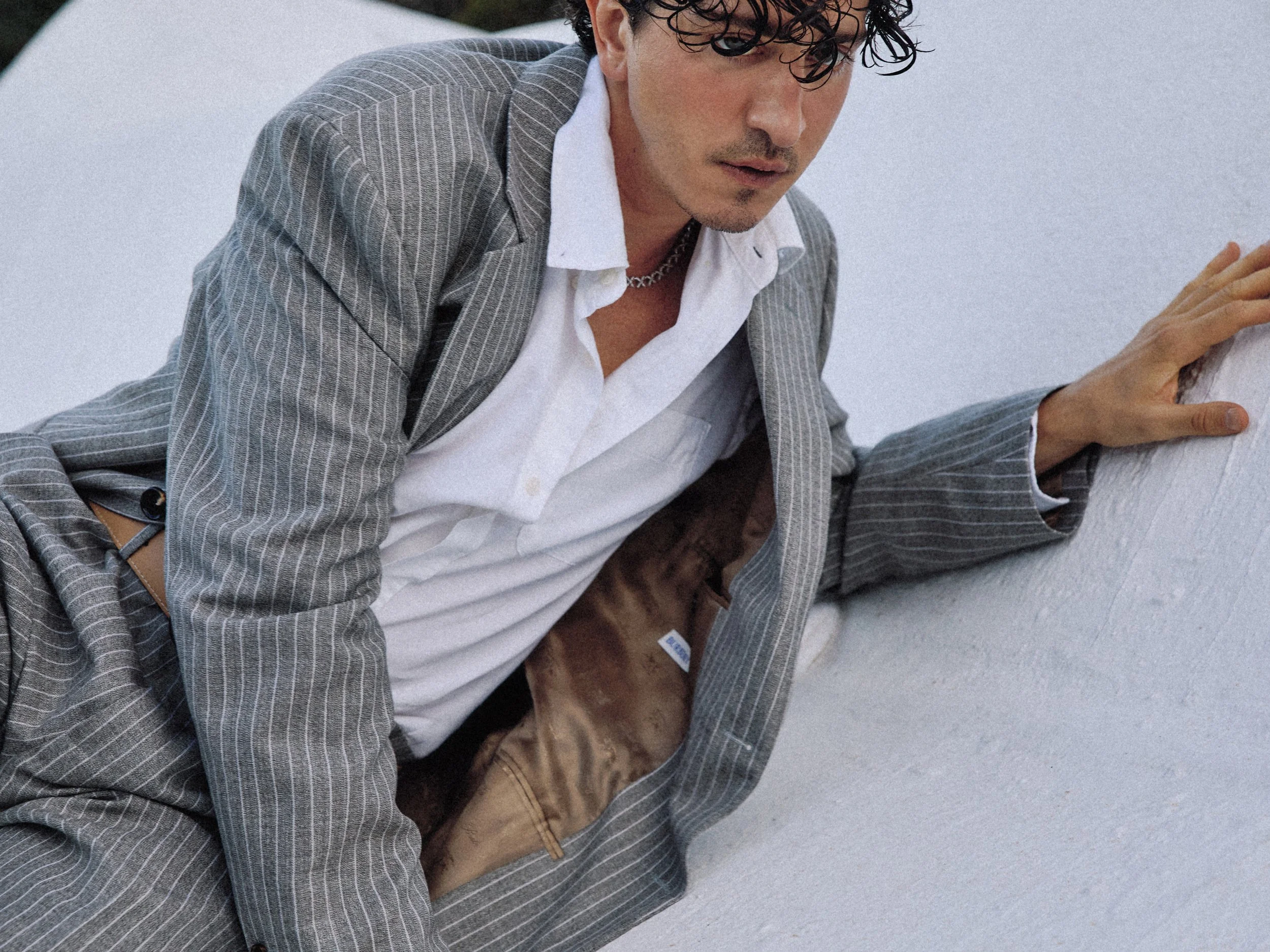
You began acting at the age of 12. What did you find in acting so early on that made it such an important part of your life? After more than two decades of working, what still motivates you to perform, both on stage and in front of the camera?
I don’t particularly know what I found when I was 12. It was more intuitive. I remember watching Chiquititas and thinking how much I would like to do that, although I obviously had no idea how. As I got older, I tried to understand why I wanted it, but I can’t really give a name to the thing that was there and brought me here.
I think I was lucky because choosing a profession can be difficult. What motivates me is still connected to that original question: what was I looking for? I’m still looking for it, obviously in a different way now. Ideally, we keep understanding ourselves throughout time.
After years of developing your perspective as an actor, you also moved into directing and producing. What sparked your desire to explore other possibilities within cinema? As you took on these other roles, what changed in the way you came to see your own work as an actor?
I think that desire was already there when I was a child. I had a VHS camera, and when I was working on Floribella, I started making little videos with my cousins and my brother. I would dress them, think about the shots and direct them. So there was always something in me that wanted to be involved in the whole process.
Later, I studied Film and realised that I didn’t want to be only an actor. Directing and producing allowed me to participate in cinema from other perspectives, and I really enjoy that. I directed A Cozinha and the short film Consolo, adapted from a story by Tobias Carvalho. The possibility of thinking about the entire construction of a work is very exciting to me.
As an actor, you are an important and visible part of a much larger process. Directing and producing made me understand that even more clearly. I hope to continue exploring those areas.
In O Filme da Minha Vida, directed by Selton Mello, the film is built around memories, family relationships and the transition into adulthood. How did you find the right balance between the delicacy and intensity required to inhabit this world?
O Filme da Minha Vida is very special to me. At the beginning of my career, I was extremely insecure, and that film helped me understand other possibilities within my work as an actor. It was also my first major experience in cinema with someone like Selton Mello, so it marked me deeply.
I think a lot of the delicacy came from Selton’s eye. He is very objective and, at the same time, extremely sensitive. He knows what he wants and is visibly emotional about making films. The delicacy and intensity were already present in the world he was creating, and I was trying to enter that world honestly.
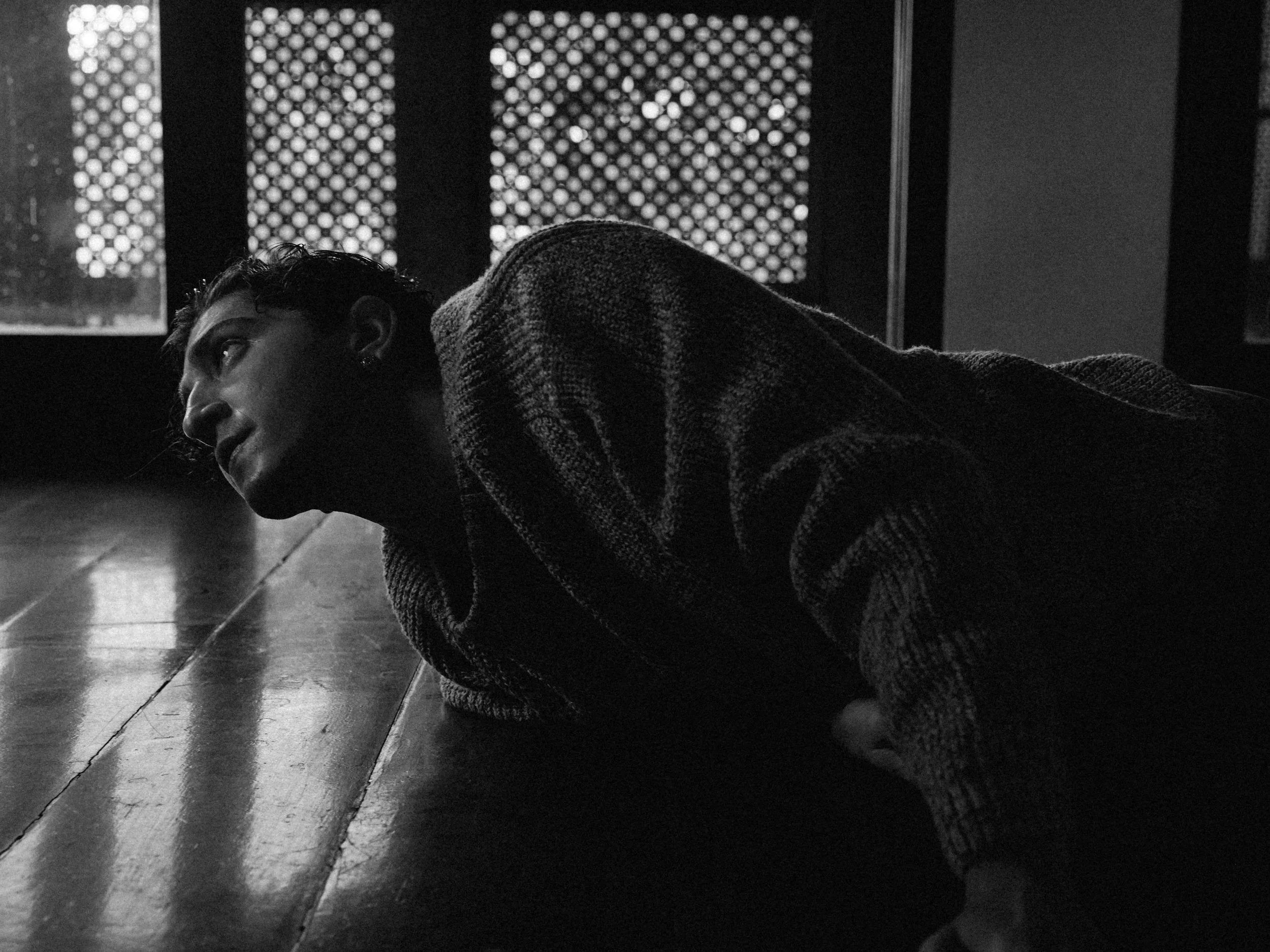
In playing Márcio in Emergência Radioativa, you approach a real tragedy, the Cesium-137 accident in Goiânia, which continues to have consequences for many people. The character was inspired by several scientists who worked during the accident, including physicist Walter Mendes Ferreira. How was it to build a performance based on a real story that required precision, responsibility and respect for the memory of those who lived through it?
I didn’t know it was based on a true story when I auditioned. When the director told me, the most important thing became respect — respect for the people who died, and for those who are still living with the consequences of that tragedy.
I looked at news reports from the time almost every day, because I didn’t want to forget that the pain was real. The director’s guidance was also very important. You have to be careful not to treat something like this simply as material for a performance.
At some point, I also realised that a character is a manifestation of the work, desires and experiences of many people. The actor is an avatar within that process, but the character is also created through costume, make-up, lighting, direction and so many other elements. I can’t say that Márcio belongs only to me.
Your performance as Fernando in Máscaras de Oxigênio Não Cairão Automaticamente, an HBO Max series, earned you this year’s Grande Otelo Award for Best Actor in a Fiction Series. What did this character awaken in you throughout the process, and what made this work so meaningful to you?
It’s difficult to explain because so much about the series and everything surrounding it feels almost mysterious. I nearly couldn’t do it because I was also working on a soap opera and didn’t know whether my character would die. If he didn’t die, I wouldn’t have been able to make the series.
Then the series went to the Berlinale and Toronto, which was very symbolic for us. It felt like the project was breaking through a bubble, especially because of the subject and the way the story was being told.
The response from the HIV community was particularly moving. People expressed how represented they felt, and you start to realise that you never know where a work can lead. Maybe someone will make a different choice because of something they saw in the series. Of course, one work doesn’t change the world, but one small thing can already mean a lot.
That is what stayed with me. The whole experience continues to surprise and move me.
In O Filho de Mil Homens, directed by Daniel Rezende, you play Antonino, a character who carries a profound search for affection and belonging. What did Antonino’s story make you think about the different ways of building a family?
It’s impossible for me to talk about O Filho de Mil Homens without talking about Daniel Rezende. He had always said that making that film was a dream of his, and we were dreaming together.
He is very sensitive to the story, and that sensitivity affected everyone around him. The film carries his emotional signature. My participation was relatively brief, but it was one of the most intense experiences I’ve had in cinema.
I’m also a huge fan of Valter Hugo Mãe, so when I heard Daniel was making the film, I told him that I would even make coffee on that set. He was already thinking about me for Antonino.
One of the first scenes I filmed was actually the scream at the end of the film. Daniel was crying while watching it, and somehow the film began for me with that moment of release. Antonino’s search for affection and belonging made me think about how much of our understanding of family comes from recognising another person’s pain and wanting things to be different.
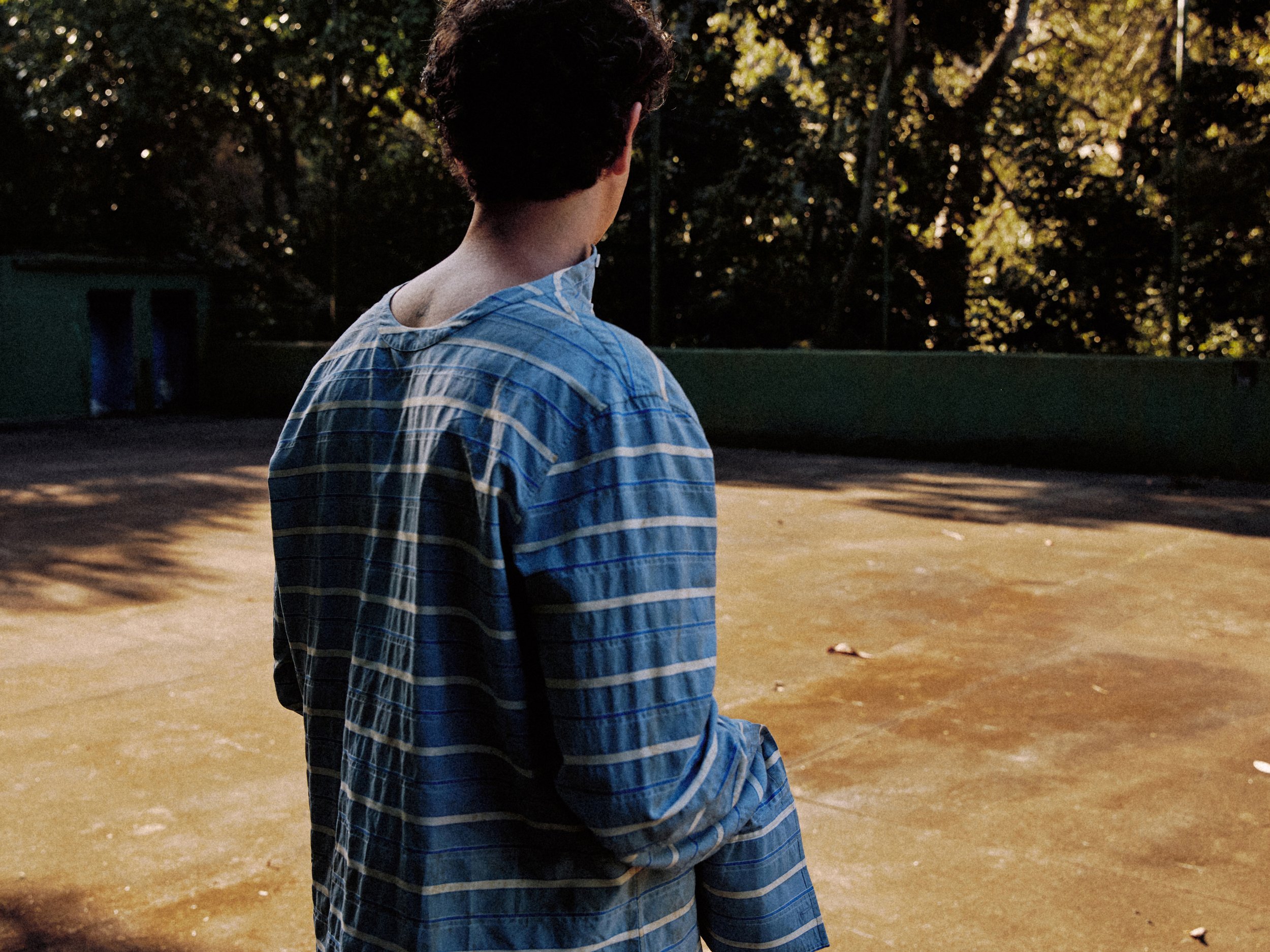
Every character requires a different way of approaching them. Is there a ritual or practice that helps you connect with a character and gradually enter their world?
Every project asks for its own rituals and habits. They help you step away from the rational side of things and focus on something small that has meaning. It grounds you in the craziness of life.
Sometimes it can be a candle, incense, a certain colour or even an herbal bath. Nothing particularly complicated, but those small gestures can help me enter the world of a character.
You are preparing to make your theatre debut with your first solo performance, an adaptation of a book by Ana Suy. What changes when there is no other actor on stage to share with you the responsibility of carrying a story from beginning to end?
This is my first monologue, so I’m discovering that as I go. I’ve been rehearsing for two months, and I haven’t performed it in front of an audience yet.
I enjoy being alone, but theatre itself cannot be solitary. The connection with the audience is essential. We want to create a connection without forcing interaction. In the same way that Ana Suy connects with her readers through honesty, I hope the play creates an honest relationship with the audience.
I also think it is a good moment to talk about love and loneliness. Love is a language we are not taught. We often don’t have the vocabulary, gestures or ethics to know how to live it or speak about it. The play is, in a way, an attempt to think about human vulnerability together. My objective is to be vulnerable on stage.
In Delegado, directed by Leonardo Lacca and Marcelo Lordello and produced by Kleber Mendonça Filho and Emilie Lesclaux, you play the character at the heart of the narrative. What was it like to discover the film from the perspective of a character who is at the centre of the story?
When I think about Felipe, I immediately think about the other characters around him — played by Alice Carvalho, Virgínia Cavendish and Hermila Guedes — and all those relationships.
A long time ago, during a therapy session, I remember apologising for always bringing the other person into the conversation. At some point, I realised that perhaps we can only talk about ourselves through our relationships with others. Without the other, we have no perspective on who we are. That stayed with me, and I think it also informed the way I approached the character and the relationships around him.
All of those relationships meant something to me while making the series. I’m very curious to see the final result, but I don’t feel able to form an opinion about it yet. I prefer to let the series happen.
You recently filmed O Diário de um Mago in Spain, Netflix’s adaptation of Paulo Coelho’s bestselling novel, alongside Rodrigo Santoro. What was it like to step into the world of Paulo Coelho, one of Brazil’s most internationally renowned writers, and bring one of his best-known works to the screen?
It was really lovely to enter Paulo Coelho’s world. This was one of the projects I pursued the most because, when I want something, I don’t hesitate to go after it. I had already done the Camino de Santiago, which is central to the story, so there was also a personal connection there.
I actually wanted to be part of the film before I had even read the book. I have a particular relationship with titles — they can immediately draw me into something and make me curious about that world. O Diário de um Mago was one of those titles that caught my attention, so I pursued the project and spoke to everyone I could.
The director, Vicente, was very clear that I shouldn’t try to imitate Paulo. It wasn’t about reproducing him, but about depersonalising the character and making him broader. At the same time, I researched Paulo deeply and became fascinated by him. He is such an unusual figure in literary history — a global celebrity who spoke about witchcraft, swords and so many other things, and who was also a creative partner of Raul Seixas.
I became a fan. And the film itself? WOW!
Which films were important to your development and do you consider essential for anyone who wants to better understand your perspective on cinema?
That question makes me anxious because I don’t like choosing one film over another. There are so many images and moments of beauty that stay with me. One of the powers of cinema is its ability to immortalise a moment of beauty.
But if I have to choose one, I would say The Dreamers, by Bernardo Bertolucci. My first short film at university was inspired by it, but what stayed with me most was how deeply that film affected me. I remember feeling that something in me could be changed through cinema and acting. It made me understand the transformative power that a film can have on you.
If I start listing films, I’ll probably open a thousand tabs in my mind and become anxious about choosing. So I’ll stay with that one.
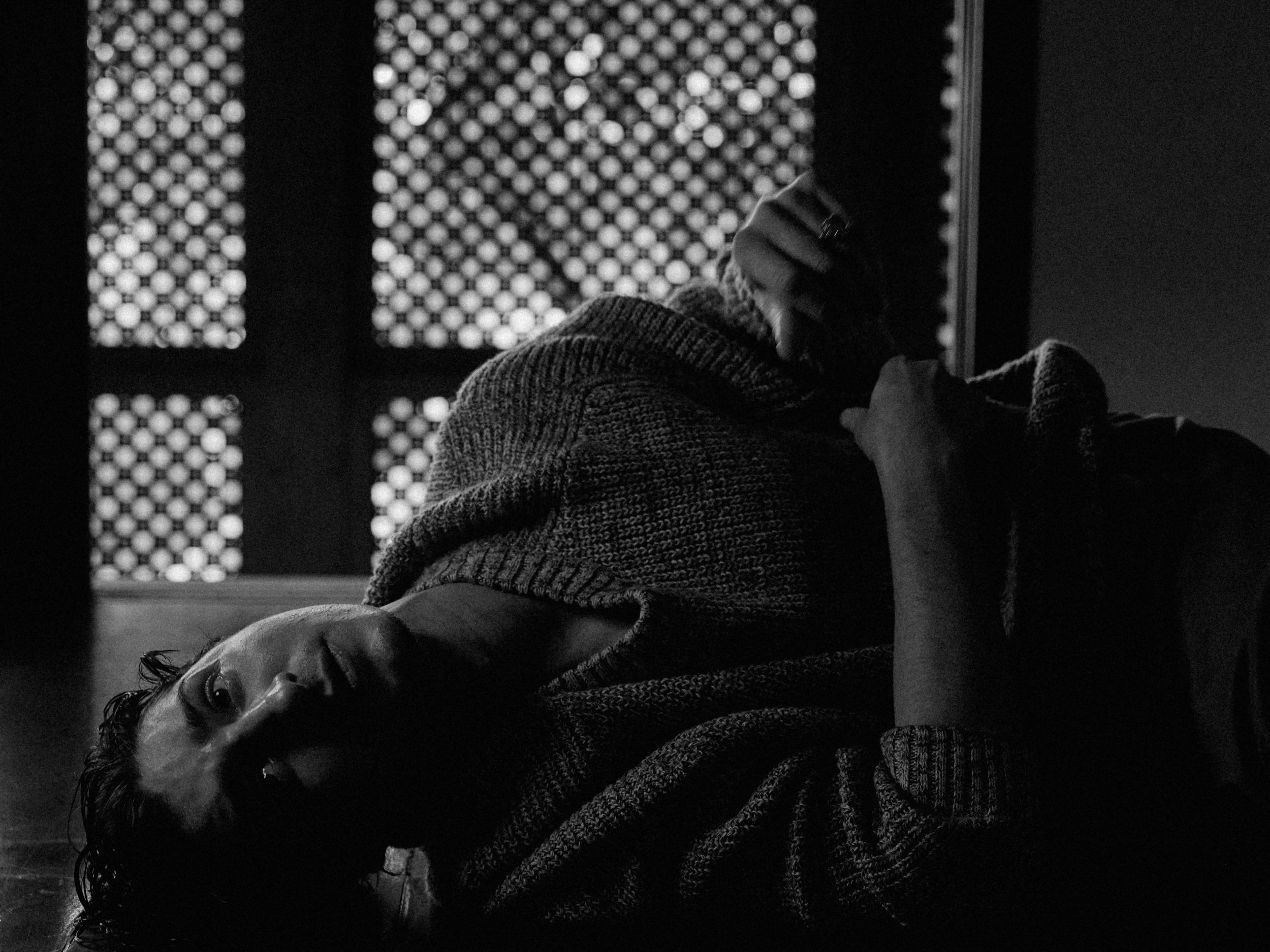
TEAM CREDITS:
talent JOHNNY MASSARO
photography MARCUS SABAH
creative direction and styling GABRIEL CARNEIRO
dresser FABÍOLA MAGALHÃES
hair and makeup GABRIEL GOMEZ
production ARUÁ PROJECTS
executive production CLAUDIA STEINERT
project manager ALESSA OLIVEIRA
photography assistant GUILHERME FERRAZ
fashion assistants LEONARDO PORTILHO and MANUELA TOLEDO
styling assistant ALLANIS MACHADO
retoucher FELIPE FEW
location LES JARDINS DE RIO
editor TIMI LETONJA
interview LEANDRO DA SILVA
cover design ARTHUR ROELOFFZEN
