
IN CONVERSATION WITH JOSÉ AVILLEZ
interview by TIMOTEJ LETONJA
At the helm of some of Lisbon’s most recognised restaurants, José Avillez has spent the past two decades shaping a contemporary view of Portuguese cuisine. From the refinement of Belcanto to the vegetable-led focus of Encanto, his work is deeply inspired by tradition yet driven by innovation, bringing Portuguese cuisine into the spotlight of the culinary world.
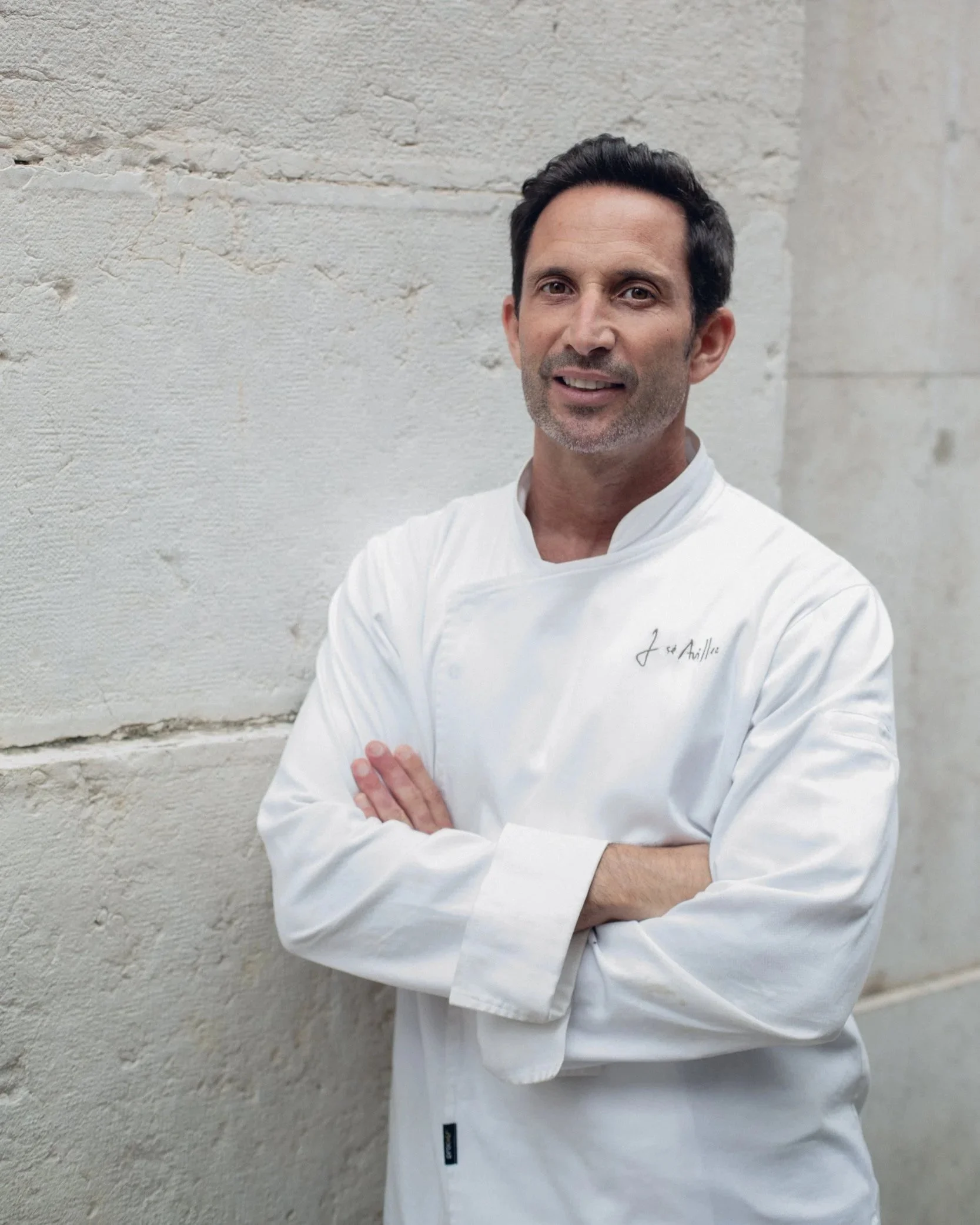
all images courtesy of JOSÉ AVILLEZ GROUP
Encanto was your first restaurant built around a 100% vegetarian tasting menu. What creative challenges did removing meat and fish present, and what freedoms did it unlock?
When you remove meat and fish, you can no longer rely on them as the centre of gravity of a dish. What might seem like a limitation becomes very freeing. It forces you to listen more carefully to vegetables — to texture, bitterness, acidity and fermentation — and to build depth in different ways. It opened up a wider field of creativity. In the beginning, it felt similar to what we were doing 15 years ago at my first fine dining restaurant, but now applied only to vegetables.
It’s like reducing the palette — if I were a painter, using fewer colours. Here, we reduced the ingredients, which meant thinking more, but also investing in new techniques like fermentation, and developing a deeper understanding of seasonality and vegetables. It was an important creative exercise, and we grew a lot as cooks.
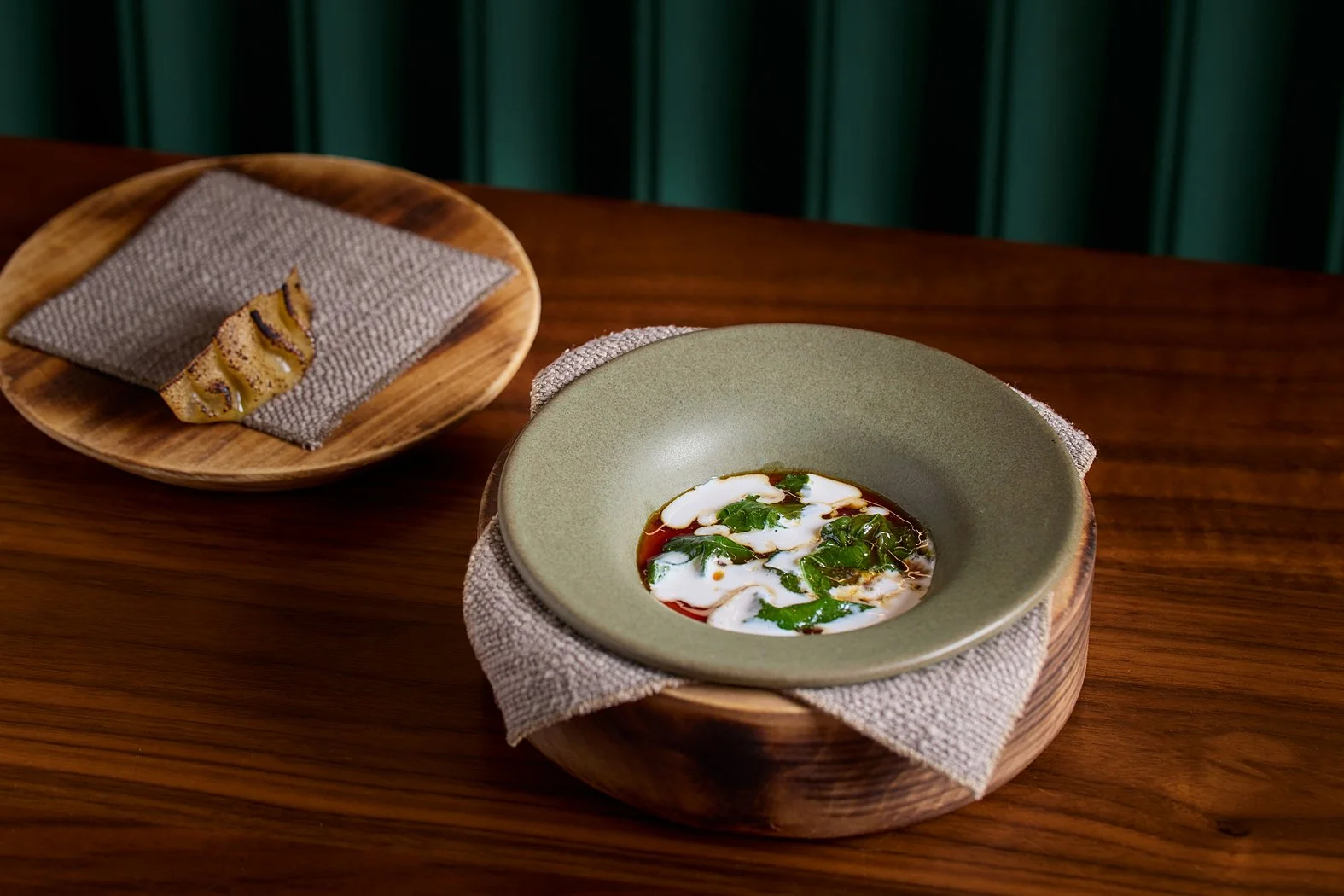
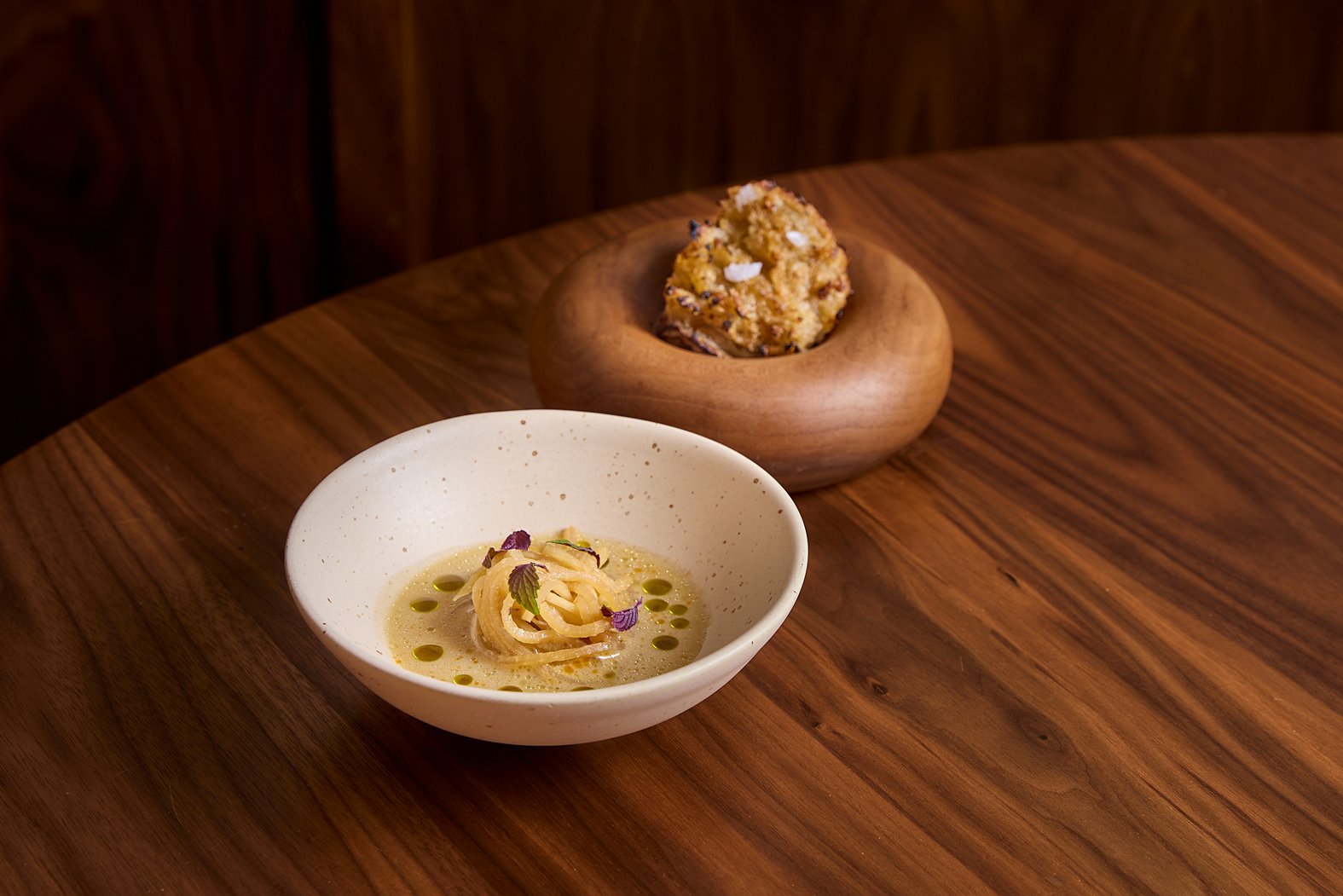
As you’ve suggested, Encanto celebrates vegetables not as substitutes, but as protagonists. How did you train your team to approach them with the same ambition usually reserved for protein?
A large part of the team — both in the kitchen and dining room — are vegetarians, some even vegan. Many of them came to us because of Encanto, so they already had a strong understanding of this way of thinking. What changed was the questions we ask. Instead of asking what protein goes with this, we ask what this vegetable wants to become.
Vegetables have a much greater potential for transformation than meat or fish. We work on techniques, maturity and flavour extraction with the same rigour we would apply to protein, and over time, the team begins to see vegetables not as substitutes, but as ingredients with their own voice. That’s when the shift happens.
For guests, especially those who are not vegetarian, there is often a tendency to compare — to relate a dish to meat or seafood. It’s a natural reaction, a way of finding familiarity. But in the kitchen, the focus is entirely on vegetables — their textures, how they evolve, and how processes like fermentation can shape them.
The restaurant now holds both a Michelin star and a Green Star. How do you balance fine dining excellence with genuine approach to sustainability?
For me, sustainability only makes sense if it’s embedded in daily decisions, not in slogans. It’s about sourcing, processes, energy use, relationships with producers and long-term thinking. The moment it becomes a performance, it loses credibility.
Unfortunately, we hear a lot about sustainability, but often it’s not taken seriously in practice. For us, it goes beyond marketing. We work around three pillars: environmental, economic and social sustainability — and all three matter equally.
It’s not just about the environment, but also how we take care of our team and our producers. Every decision has an impact. The challenge is to maintain high culinary standards while accepting that the most responsible choice is not always the most spectacular one. That balance is something we consider constantly.
Many ingredients come from small Portuguese producers and your own garden at Casa Nossa. How has sourcing locally shaped the way you design your tasting menu?
It has made the process more humble and more precise. When you know the people who grow your food, and see how fragile and seasonal that work is, you design menus with more respect for what is available at that moment.
Most of these relationships are built together with Diogo Formiga, our head chef. You can feel in him a real connection — not only to the ingredients, but to the people behind them. It’s an ongoing process. The menu becomes less about imposing an idea and more about listening to what the land offers at a given time.
Your other establishment — Belcanto — tells a story in several chapters through a tasting menu. How do you decide which moments from Portuguese gastronomy deserve to be preserved and which should be reinterpreted?
I try to preserve emotional truth rather than literal recipes. Certain flavours, gestures and memories are parts of our collective identity — those deserve to be protected. But the form they take can and should involve. I say that reinterpretation is a way of keeping tradition alive, not of replacing it.

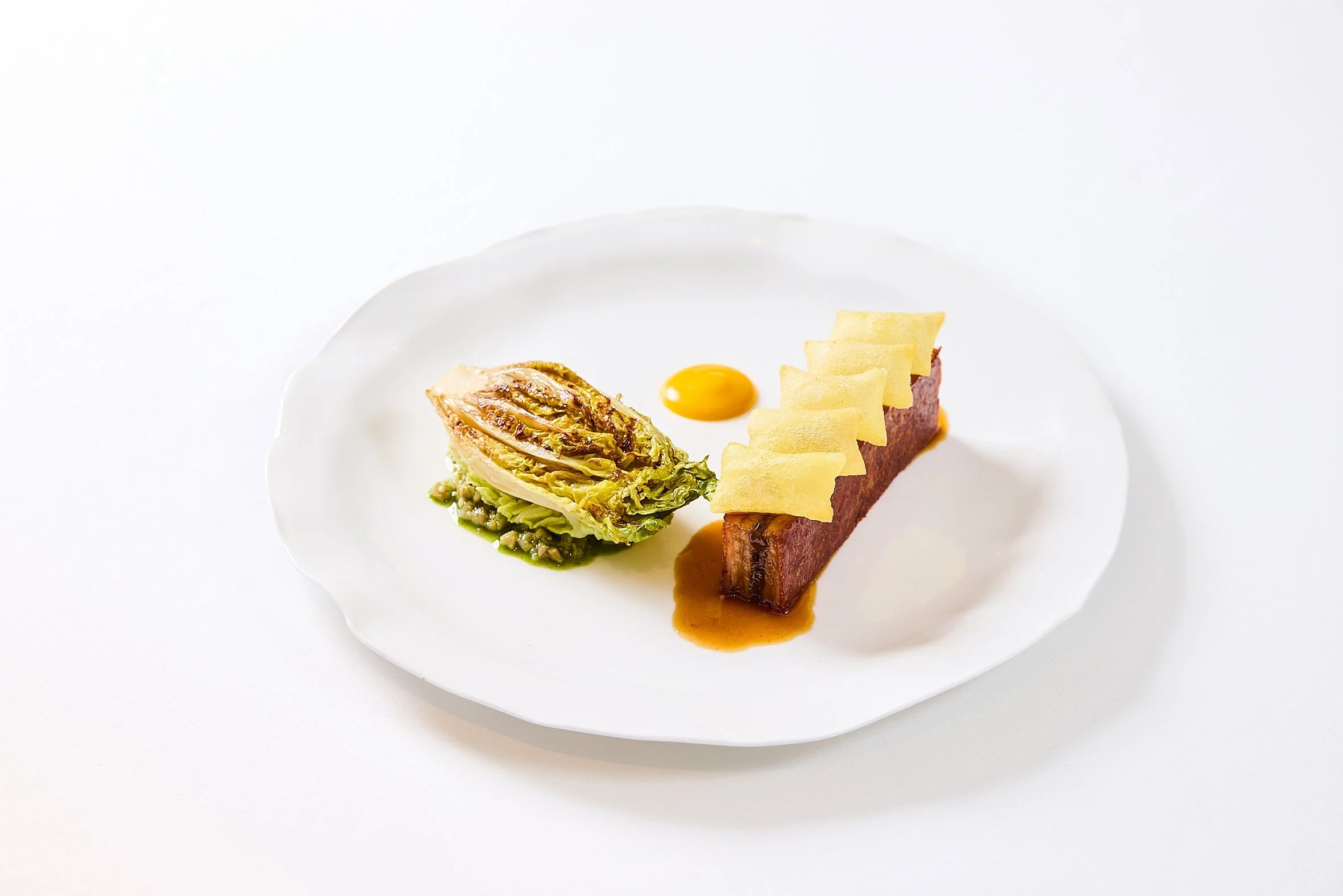
Belcanto has evolved continuously since 2012, while maintaining two Michelin stars and being named one of the World’s 50 Best Restaurants this year. How do you innovate without betraying the restaurant’s emotional core?
By being very clear about what that core is. Belcanto is about intimacy, memory and a certain poetic view of Portuguese cuisine. Innovation is welcome as long as it deepens that feeling rather than distracting from it. I always say that if you do something new, it has to be as good as — or better than — what is already there. Otherwise, there’s no point. A new idea only makes sense if it serves that emotional centre. If it doesn’t, it probably belongs somewhere else.
The atmosphere at Belcanto feels almost introspective, even romantic. How important is this sense of time and place to the way guests perceive the food?
It’s fundamental. Food is never experienced in isolation — the room, the light, the rhythm of service all shape how guests receive it. Belcanto’s connection to Chiado, to a more introspective and literary Lisbon, creates a context in which the food can be experienced more quietly and more deeply.
I’ve always been inspired by Fernando Pessoa, who was born just across from Belcanto. His writing, and the way he describes Lisbon — almost like a small, intimate place — has stayed with me. He even wrote about the bell we hear here every day. All of this feeds into what we try to do at Belcanto — to transmit that identity and that sense of place.
You lead two very different teams across two kitchens. How does your leadership style shift between Encanto and Belcanto — and how do you divide your time between them?
I spend more time at Belcanto but I wouldn’t say I lead the teams in a traditional way — I try to inspire them. Each restaurant is led day to day by its head chef. Across all my projects — in Lisbon, Cascais, Porto, Dubai and Macau — my role is to give direction, provide the right tools, and support the teams in how they lead and manage. It’s more about setting the tone and letting each team take ownership.
When I was at Encanto, I picked up your cookbook. I love cooking at home — is there one classic Portuguese dish you’d recommend I learn?
One of the dishes I love most, and the one I’ve probably cooked the most in my life, is bacalhau à Brás — which is also in the book. It’s quite simple, very comforting, and rooted in family cooking. It’s also something that reminds me of my childhood — I could eat it two or three times a week. That would be a good place to start.
Thank you — I’ll make sure to try it. Looking ahead, when future chefs look at Encanto and Belcanto, what do you hope they understand about Portuguese cuisine today?
I hope they understand that Portuguese cuisine is not static. It’s a living culture — something that can be both deeply rooted and radically contemporary. Respecting tradition doesn’t mean freezing it. Innovation can be a way of honouring where we come from.
I think that’s the real challenge for chefs everywhere — how to evolve traditional cuisine without losing its identity. We’re lucky to have such a strong culture and history. What we do now is continue it, sometimes in a different way, but always with the same soul.
One last question — what’s next for you? What are you focusing on now, and what feels new or challenging at this stage?
That's a one million dollar question. The last 20 years — especially the past 15, since opening Belcanto — have grown into something much bigger than I ever expected. With that, your way of thinking changes — especially with the expectations that come with recognition like Michelin stars and international rankings.
There comes a moment where you start to reflect. For me, that began around five years ago, during COVID. It gave me time to think about what I wanted — both professionally and personally. Recently, I’ve also been reflecting on that journey through a documentary I’m working on, looking back at what has shaped me over the past 25 years.
Right now, I find myself looking in two directions. On one side, I’m going deeper into traditional Portuguese cuisine, trying to understand it more and more. On the other, I’m very focused on what’s ahead — especially with AI, which is already changing the world in ways we’ve never experienced before. It’s something I’m actively engaging with, both for myself and with my team and family. Because it will change everything.
So at the moment, it’s about looking back and looking forward at the same time — understanding where I come from, while staying open to what’s next.
You mentioned a documentary — is there anything more you can share about it?
Not much yet — it’s still quite secret. It’s an independent project, and we’ve been filming for over a year now. I think it will tell a very personal story — about my life, and how food, especially Portuguese cuisine, has shaped me, and in some ways even saved me.
To find out more about Chef José Avillez and his restaurants, head to www.joseavillez.pt.