
IN CONVERSATION WITH JOSH FINAN
interview by JANA LETONJA
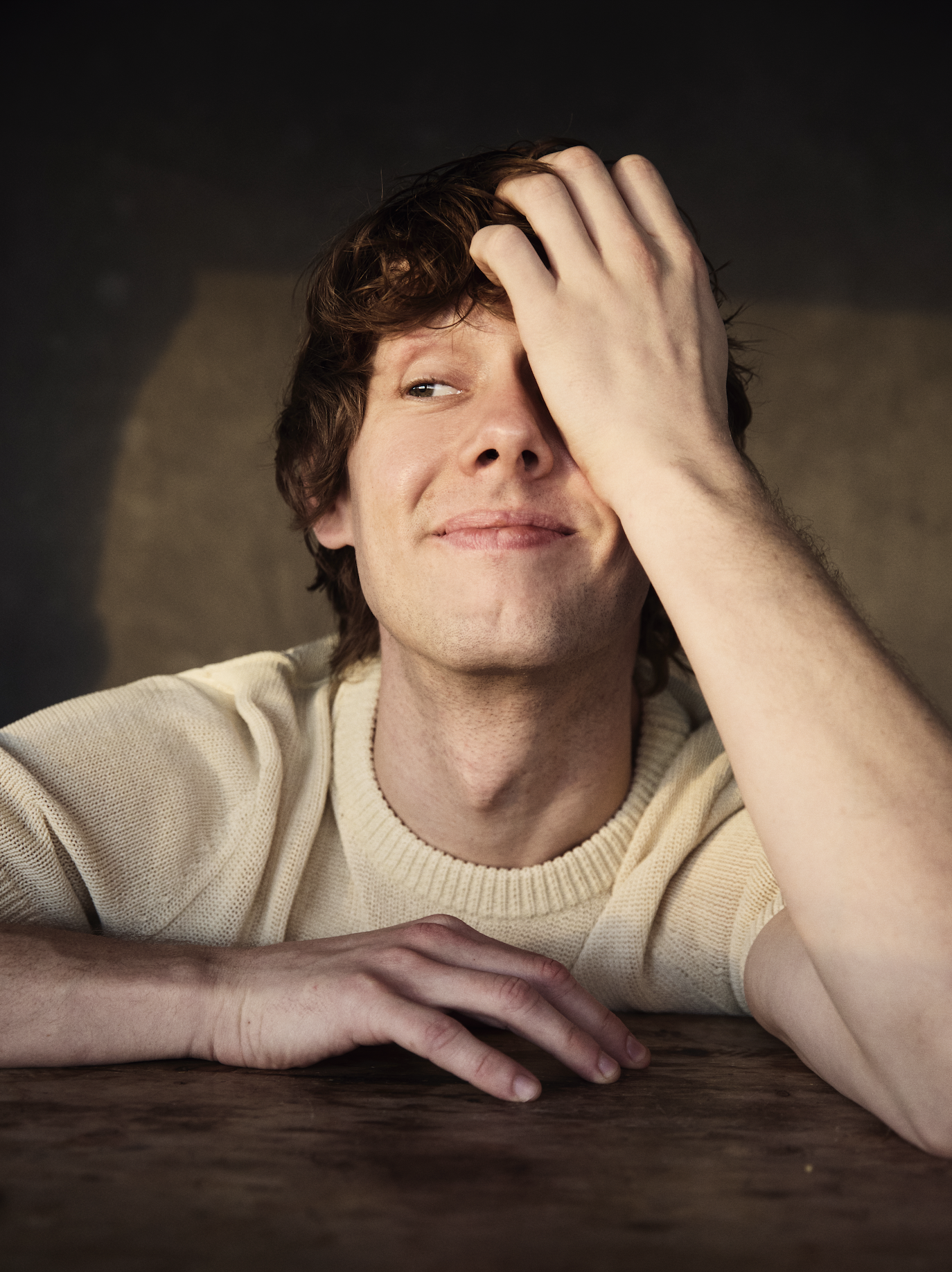
photography by DAVID REISS
Since BAFTA-nomination for his breakout performance as Marco in the BBC’s ‘The Responder’, actor Josh Finan has built an extraordinary body of work across film, TV, and theatre, including memorable turns in ‘The Gentlemen’, ‘Baby Reindeer’, and the critically acclaimed FX drama ‘Say Nothing’. Kicking off 2026 with two major releases, Josh leads the BBC’s ‘Waiting For The Out’, Dennis Kelly’s gripping adaptation of Andy West’s memoir ‘The Life Inside’, and in February returns to Netflix in Lisa McGee’s hotly anticipated series ‘How to Get to Heaven From Belfast’. With his career entering a powerful new chapter, Josh is poised to become one of the defining actors of his generation. ‘Waiting For The Out’ will air on 3rd January on BBC iPlayer and on BBC One.
You were BAFTA-nominated for ‘The Responder’, a performance many described as “career-making.” Looking back now, how did that role shift your confidence or trajectory as an actor?
‘The Responder’ was a bit of a life changing job to be honest. It holds a very special place in my heart and I can trace pretty much everything that’s happened since back to it. One thing which was really encouraging as a fledgling actor was how normalised the job of acting became. There really wasn’t much of a sense of “Oh, I’m acting with Martin Freeman and he’s famous” because he approached the work with a focus and openness which was familiar to me from doing theatre. All of a sudden, I didn’t feel quite as intimidated on a set because actually the job is the same and I realised you can just get on with it.
Before acting took off, what was the moment you realized this was the career you needed to pursue?
In the past, I’ve joked that the moment I knew I had to do it was during the nursery school nativity when I, having been too shy to accept the role of a king, suffered a mortifying experience on my hands and knees as a lowly sheep. Whether it was quite then I’m not sure, but the moment can’t have come long after as it was always something I was very passionate about as a kid.
You’ve worked across stage, TV, and film. How did your theatre background shape the Josh we see on screen today?
I love that theatre keeps you alive and alert, encouraging you to constantly strike a balance between keeping the work fresh and simultaneously remaining honest to the story. And if you get it wrong, there’s always the next night to do it again. So, when I’m working on camera, I do try to treat takes like rehearsals, never trying to get anything “right,” instead trusting the work has been done and letting whatever happens happen, hoping there’s time for another go if it’s messed up.
‘Waiting For The Out’ marks your first major leading TV role. What was your reaction when you learned you’d be carrying this series?
During the audition process, I’d very much fallen for Dennis’ script and already knew I loved working with Jeanette Nordahl, who directed the first three eps, so when I got the go ahead I knew I’d be in good company. However, it marked a definite step up for me in terms of responsibility on set and size of role, so alongside the usual prep I’d do, I did keep returning to anxieties about actually doing it. To assuage this I just had to take it one day at a time really and trust that everyone around you in holding each other up.
The show explores philosophy within the walls of a men’s prison. What aspects of Dan’s journey resonated with you on a personal level?
I love how Dan is, to the untrained eye, ostensibly a very modern man. He’s comfortable in his style, he doesn’t people please, he’s not offended by his students’ assumptions about his sexuality, he’s charming and respectful socially and romantically, and yet behind closed doors he’s struggling quite a lot and has absolutely no idea how to process his emotions. He rages around his house and is quite prone to having panic attacks. This is for me a very clever and powerful interpretation and exploration of masculinity that Dennis and the other creators are trying to grapple with, and as well as it being fairly unique is also a wonderful challenge as an actor.
This series really forces you to confront ideas about accountability, freedom, and the stories we carry. How did you prepare when you received the materials, and how do you think Dan presents these ideas?
Preparation for this job was a mixture of trying to understand as much as possible about the character, whilst also acknowledging that actually what something like this needs is a bit of a leap into the unknown, and trusting that answers might be found accidentally. I did everything I could to soak up the world that Dan navigates. I visited prison with Andy, watched him teach, participated in his classes, spoke to prisoners and staff alike, but also tried to let any preconceptions fall away as soon as we started filming and try and let something real occur with the other cast members.
Next up, we’ll also see you in Lisa McGee’s ‘How to Get to Heaven From Belfast’. What drew you to this project and her writing?
I adore Lisa and her work, so it was a very exciting prospect to work with her alongside Mike Lennox who I already knew from ‘Say Nothing’. Their relationship is wonderful, they understand each other so well and are constantly in pursuit of something surprising and fresh and new and, perhaps most importantly, funny. I can say very little about the show, but I have seen most of it and think it absolutely achieves what it set out to do and I think people will love it.
As an actor, what types of characters or stories challenge you in the best way?
I really like stories that really pull their audiences through a real range of experiences. I think something that ‘Waiting for the Out’ has in spades is its ability to turn on a dime. It can find humour in the most unexpected of places and likewise deliver a gut punch when its characters are feeling settled and comfortable. It asks questions without being prescriptive, endeavours to get to the bottom of something truly human, and offers actors the chance to play characters which are potentially quite far from themselves.
2026 already looks monumental for you. What’s one thing you’re hoping to explore next—whether on stage, in front of the camera, or behind it?
I’m looking forward to seeing what’s next. I’m not trying to plan too stringently, which is lucky as I’m not sure you really can, but I am open to whatever is new and different to what’s being going on recently. There’s a very cool indie film I’m attached to, which would be amazing to do once it’s locked in the funding and I’m always on the lookout for a play. As for writing, there’s copious notes scribbled in a notebook which hasn’t cohered into anything yet, but maybe soon.