IN CONVERSATION WITH KATE MANSI
interview by JANA LETONJA
Emmy Award-winning actress Kate Mansi is entering a compelling new chapter in her career, moving between stage and screen while increasingly exploring storytelling from behind the camera. Currently starring as Catherine in Arizona Theatre Company’s production of David Auburn’s Pulitzer Prize and Tony Award-winning play PROOF, she takes on a character navigating the fragile intersections of family, identity, inheritance, love and extraordinary intellect. Following roles in Casa Grande, How I Met Your Mother, Days of Our Lives, which earned her a Daytime Emmy Award, as well as her recent work as a director, PROOF offers an opportunity to encounter Kate at a moment when her relationship with acting, creativity and authorship is continuing to evolve.
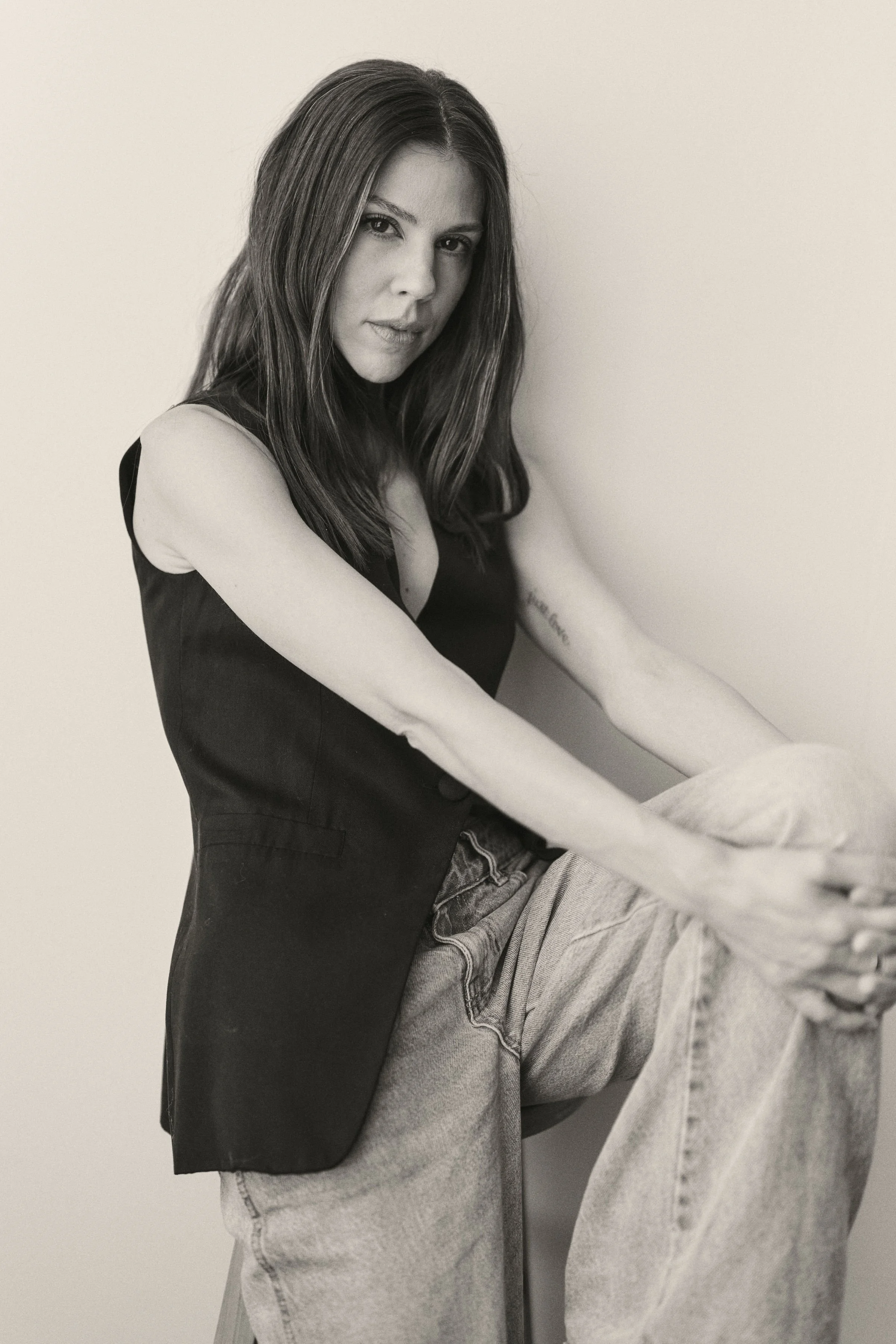
all photography by Jackson Davis
Catherine in PROOF is such a psychologically layered character. What was it about her that made you want to step into this role at this particular point in your life and career?
Catherine has profoundly impacted me since I first discovered PROOF at 19. I never dared to dream I’d ever play her, so I loved her from afar for years. I do think playing her at this point in my life was meant to be though because I understand her with greater depth now, her independence alongside her desire to be seen, her fierceness and fragility in equal measure. It feels really right at this timing, and playing her now is simply one of the greatest honors of my life.
PROOF explores the complicated question of what we inherit from our parents — intellectually, emotionally and psychologically. What did playing Catherine make you think about differently when it comes to inheritance and identity?
Catherine is in limbo when we first meet her, in the questioning of what she’s inherited, what others assume she’s inherited, and which parts of her father in fact live in her. It brings up for me the question of what we fear we are assigned to inherit from our roots, and how much of that is malleable. I think we all have to find, define and make peace with who we are apart from what we’ve inherited. We decide who we are ultimately, and that’s an opportunity that’s available to us all.
Catherine exists in a space where exceptional intelligence and mental difference are closely intertwined. How did you approach those complexities without reducing her to either her brilliance or her struggles?
Well, first let me say how much I appreciate you using the term ‘mental difference’. I have never interviewed with someone who used that before I did. Language matters and I learned the nuances and importance of that shift in how we talk about this from a non-profit I’m closely involved with, Glenn Close’s Bring Change 2 Mind.
As it relates to Catherine, my approach was to look at her through a lens without labels. David Auburn created a character who is so much more, and deserves so much more than to leave out the totality of who she is. She has a wicked wit with such a dry sense of humor, a brilliant mind for mathematics, and she’s a woman grieving her father whom she dedicated her life to. She’s all of those things at the same time.
Theatre asks for a very different kind of vulnerability from screen acting because there is no second take. What has returning to the stage revealed to you about yourself as a performer?
About three weeks into rehearsal, I remember wondering if the credits would transfer, TVfilm to stage, but once we got into tech and started rehearsing on stage, I felt it all come together. Theatre is such an entirely different medium. This really is a whole new territory for me.
I wouldn’t necessarily say it’s a different kind of vulnerability, because both require you to be raw and open, and that comes from the preparation, the approach to your work, which is fundamentally the same. But in theatre, there is no alternate coverage, no time to prepare from scene to scene. It requires you to be present, moment to moment each night. And it definitely takes a different muscle to adjust to the audience being right in front of you, having awareness of them, including them and letting them see you, but also making them disappear.
David Auburn’s play has been performed for more than two decades. What do you think feels particularly contemporary about Catherine and the questions PROOF asks today?
That’s the beauty of David Auburn’s writing. Catherine feels incredibly contemporary because so much of her struggle is about being believed and being allowed to define and redefine herself.
Especially as a woman, but not exclusively as a woman. The entire play, people are pounding Catherine with their own assumptions, intimations, labels, their definitions of who she is and who she should be, her capabilities and lack thereof, while she is trying to have a minute to breathe, to grieve, to dare to think what is next for herself. She gave up her life to take care of her father, she lost herself in that, and I think the fact that the whole play is set on the porch is indicative of where Catherine is when we meet her. She’s nowhere. She’s on the precipice. But she’s interrupted time and time again since the start. PROOF asks how much of who we are is circumstantial, inherited, and how much of who we are is what we get to decide for ourselves. Those questions are still very alive for us all more than twenty years later, and that’s the beauty of David Auburn’s gift he gave us with this play.
So much of Catherine’s story revolves around being seen accurately — by her family, by the people around her and perhaps even by herself. Has the experience made you reflect on the difference between how others perceive us and who we understand ourselves to be?
Absolutely. I think a lot about how Catherine is being told who she is, what she’s capable of, and that tension between how other people see us and how we see ourselves is universally relatable. It’s what we do with those perceptions that defines us though. Playing her has reminded me how easily we can slip into internalizing and fulfilling other’s perceptions, and how important it is to find and trust your own sense of who you are.
Winning a Daytime Emmy for Days of Our Lives was a significant milestone in your career. Looking back now, what did that recognition mean to you, and has your definition of success changed since then?
Yes, that was a beautiful moment in my life for sure. The recognition meant so much, and still does, but I think the feeling of validation arrived before I got the Emmy. It was doing those scenes that scared me a little because I wasn’t sure what to do with them, and that feeling of pushing myself to find it and execute it was a big shift for me as an actor. The actual award was the cherry on the cake, but knowing what I was capable of was the best gift I could have received. My definition of success is the same really. It’s growth, it’s biting off more than I can chew, continuing to raise the bar for myself.
You recently starred in Casa Grande and have had long-running roles on other series. What are you looking for in a character today that perhaps you weren’t looking for earlier in your career?
I think early in my career, I was focused on the opportunity itself. Now, I’m more focused on what challenges me and piques my curiosity.
You’ve also stepped behind the camera as a director. What does directing give you creatively that acting doesn’t — and vice versa?
For years, I was always told I should get into directing because naturally I have such a detail oriented mind that’s looking at the whole picture of a story, so directing felt like such a beautiful culmination of being able to tell the story from each department and so wholly.
Directing has made me a better actor, and vice versa. Once I saw the matrix revealed as a director, I don’t think I’ll ever unsee it. My director brain will never fully be turned off. They’re different creative muscles. As an actor, I can focus more solely on the character of course, but both inform the other for me now in how I tell the story.
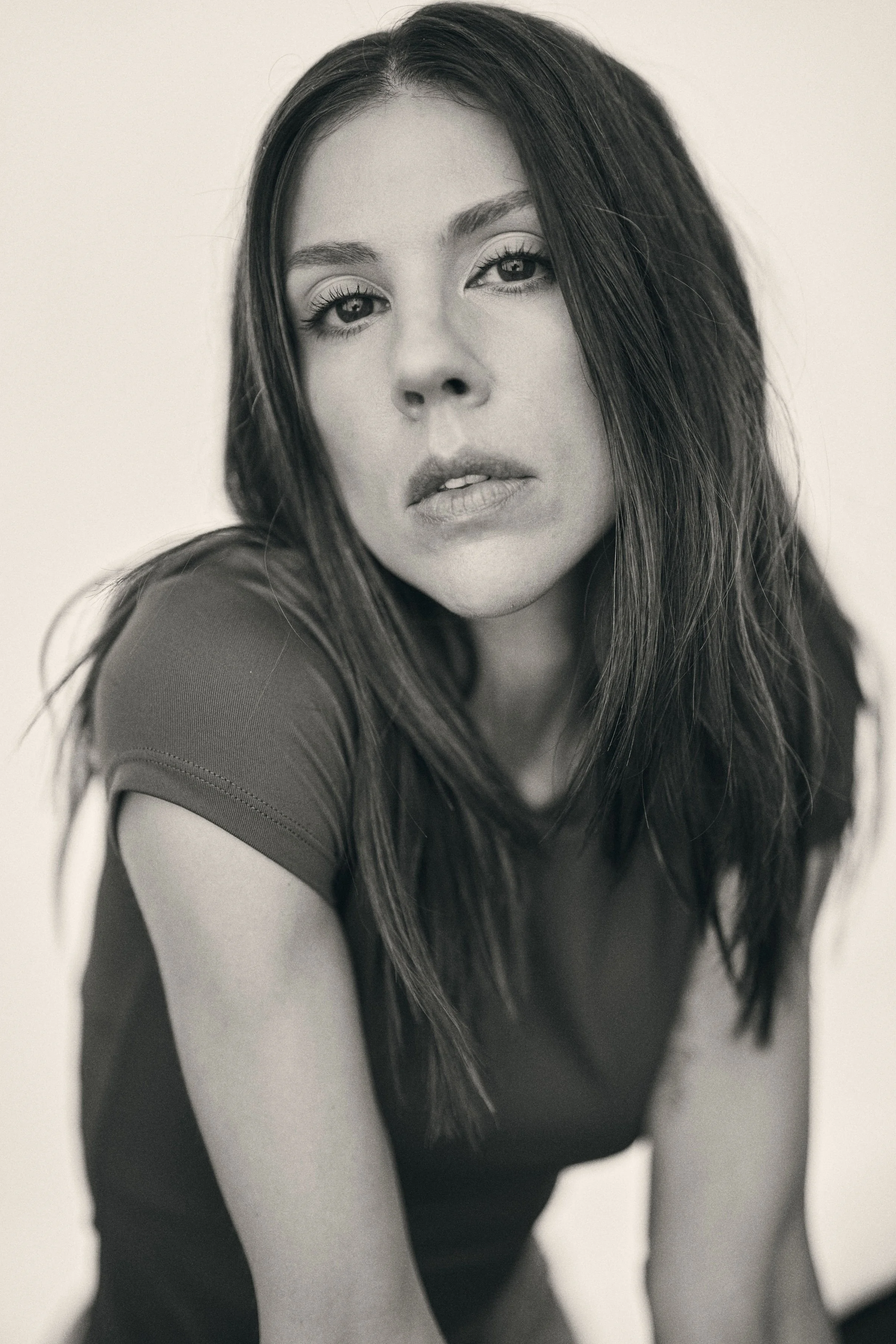
Fashion can function almost like another layer of characterisation. How important are clothing and physical transformation to the way you discover a character, and how different is your own relationship with style when you’re outside a role?
Hugely important. Some roles more so than others. For example, if I’m playing a character who’s farther from myself, then an outside in approach helps tremendously to ground me into her world.
For this, with Catherine, it was important to me that we told the story of a woman grieving, who had lost her sense of self over the last few years and then in the flashbacks, showing a more put together version of that. I’m a Virgo so I’m very detail oriented, and that always comes through in the wardrobe of the characters I play. And outside a role, the approach is the same. I think we all dress ourselves according to our emotional tone in real life. Fashion is self-expression.
You’ve spent years inhabiting other people’s stories. What parts of yourself do you feel are beginning to emerge more strongly in the work you choose now?
I think there’s been a shift of letting go of being overly cautious, trusting myself more in knowing the things I’m drawn towards are feeding me for a reason, and to follow that instinct regardless of a perceived result. Learning how to direct multi-cam this last year, and writing/directing my first short film really gave me the confidence that I could drop myself into something entirely new and I’d learn how to swim. And that neuroplasticity just breeds more self-reliance to go after new challenges.
Is there a creative risk you haven’t taken yet that you feel increasingly drawn toward?
I’d love to continue doing theatre. But the next creative risk I’ve had my eye on for a few years now is to develop a limited series I’ve had my eye on for quite some time now.