
IN CONVERSATION WITH KRISTIAN BAUMANN
interview by TIMOTEJ LETONJA
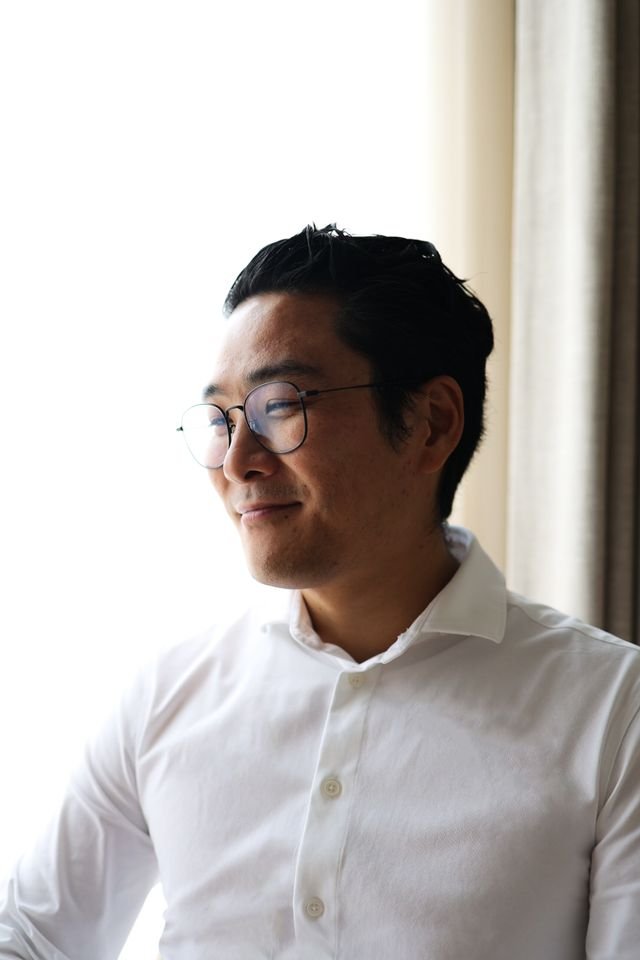
Kristian Baumann, chef patron of KOAN in Copenhagen, has created a cuisine that reflects his unique story of heritage, identity, and discovery. Born in South Korea and adopted by Danish parents, Kristian grew up connected to both cultures that have formed the foundation of his cooking.
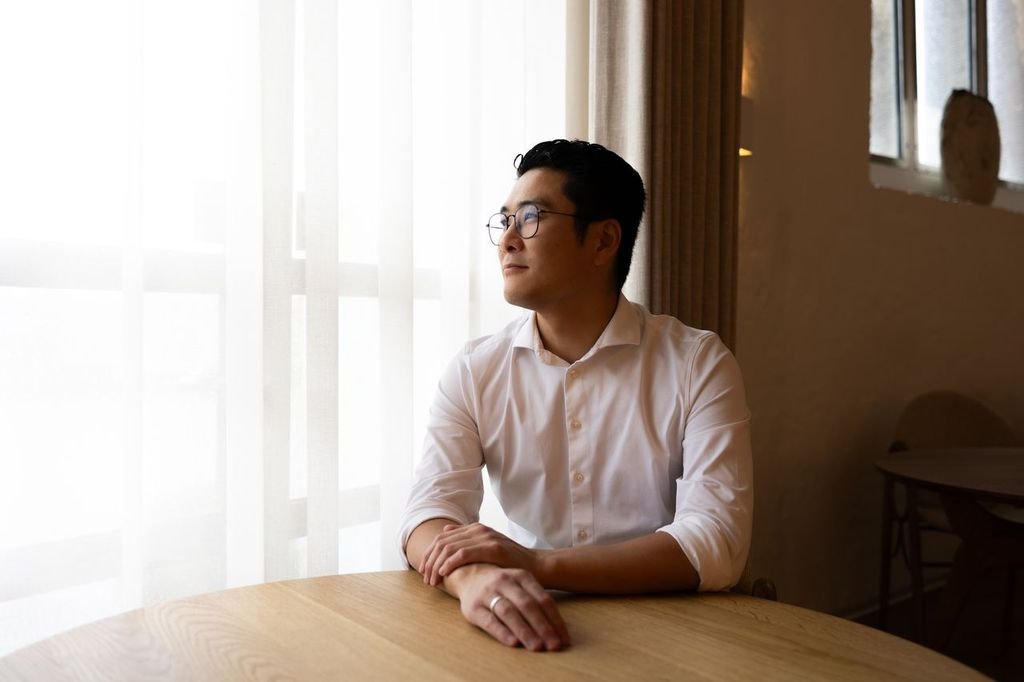
KOAN seems to be as much a story about belonging as it is about food. You grew up Danish while carrying a Korean heritage that you later chose to explore more deeply. Has cooking helped you find an answer to the question of where you belong, or has it made that question even more complex?
Yes, for sure. Koan is a personal story through food. It helped me find peace, and a better understanding of myself and my journey. I think it’s very healthy for the mind to have an understanding of your path in life, and to find comfort and peace in knowing the direction you’re going. I feel lucky and privileged to have a space where I can express myself through cooking.
You have spoken about reaching a point where your cooking was technically accomplished and critically recognised, yet didn't feel completely authentic to you. How difficult is it for a chef to abandon something that is already successful in order to search for something more truthful?
It's always a journey where we evolve and so does Koan. For me, it was easy. I knew that my life had to take a new direction and come with inspiration. Now, sometimes we have to work on removing dishes that used to be guests’ favourites, and we respect that but in order to make something new… and work on the evolution and future. I think that’s very important, and the guests are just as happy when they see our new ideas and take on dishes.
Your first research trip to South Korea in 2017 became part of a much larger rediscovery of your Korean roots. When you encounter Korea today, do you approach it primarily as a chef researching a cuisine, or as someone discovering a part of himself that wasn't fully accessible growing up?
It’s a bit of both, actually. I go with my family or with friends and colleagues and I have the feeling of returning home to a country that is so familiar, and at the same time there are new discoveries around every corner. It’s a very warm feeling, coming home to a place that is not your everyday home… I’m always curious, both for myself and for the professional side of me and my restaurant. I’ll look for any excuse to go back to South Korea.
KOAN brings Korean techniques and culinary heritage together with the extreme seasonality and purity of Danish cooking. When nature gives you an ingredient that is unmistakably Nordic, how do you decide what its Korean expression might be without forcing one culture onto the other?
It’s about creating new dishes and introducing new concepts that many times fit the bigger picture of the journey. What you need is excitement and fun.
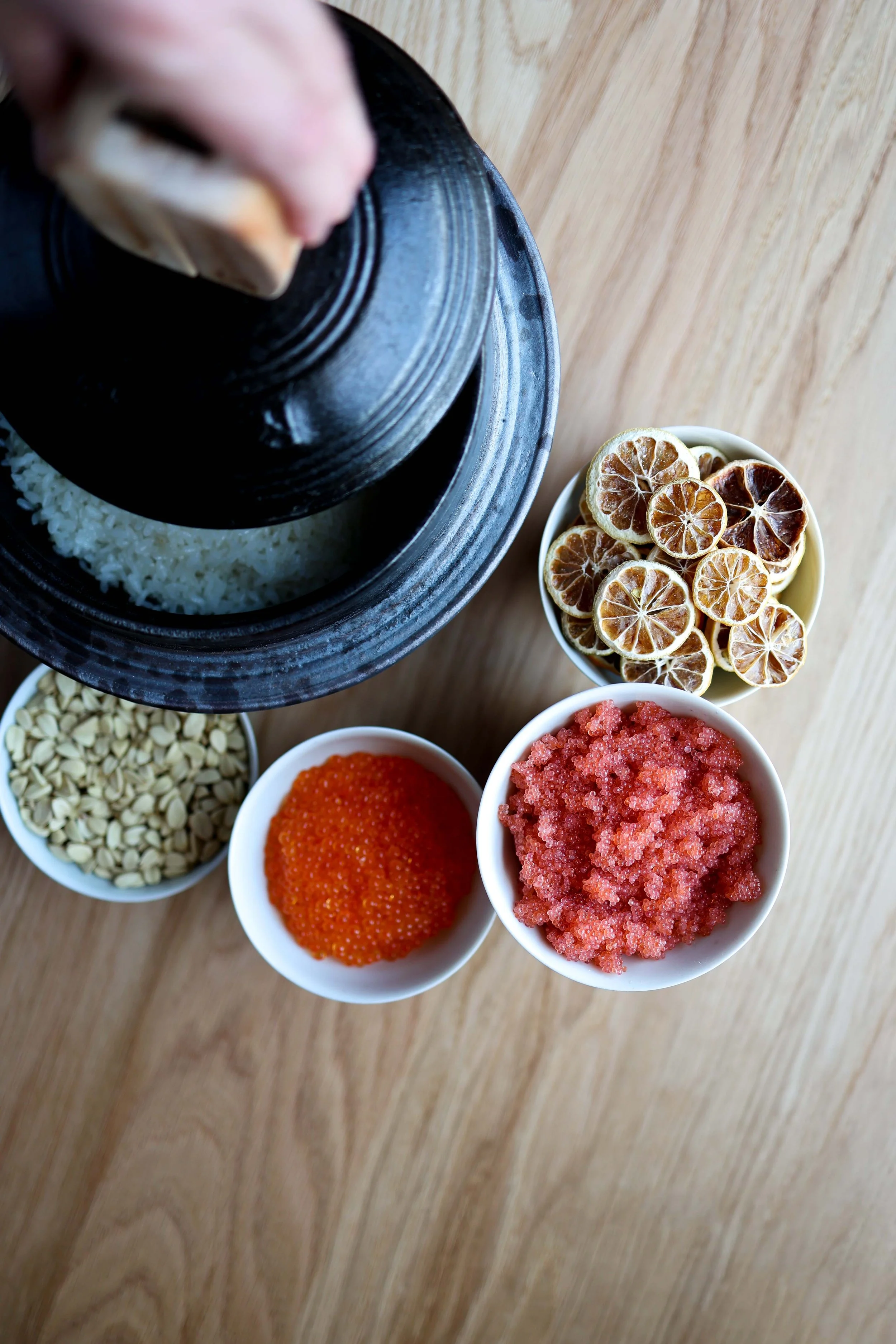
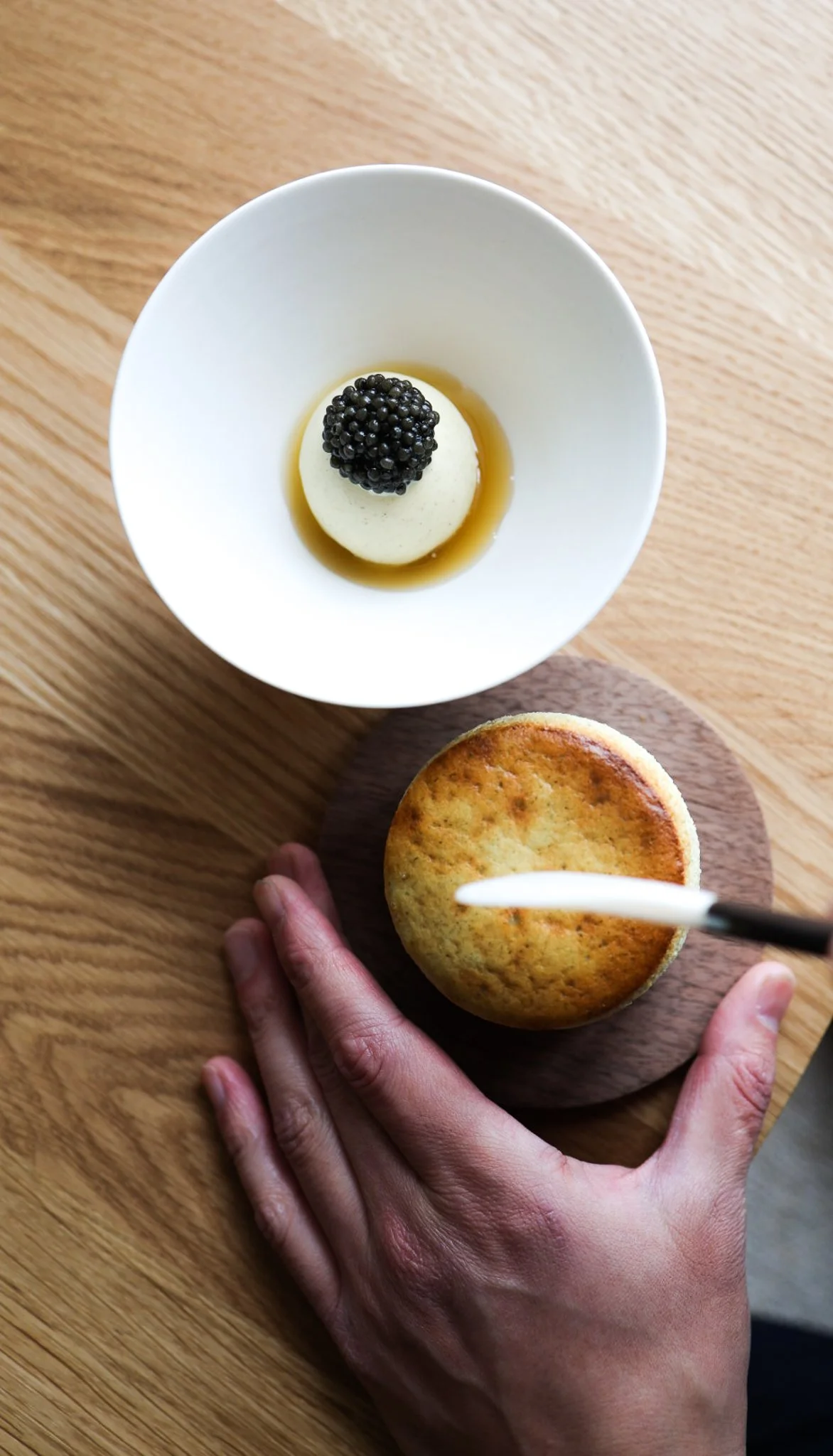
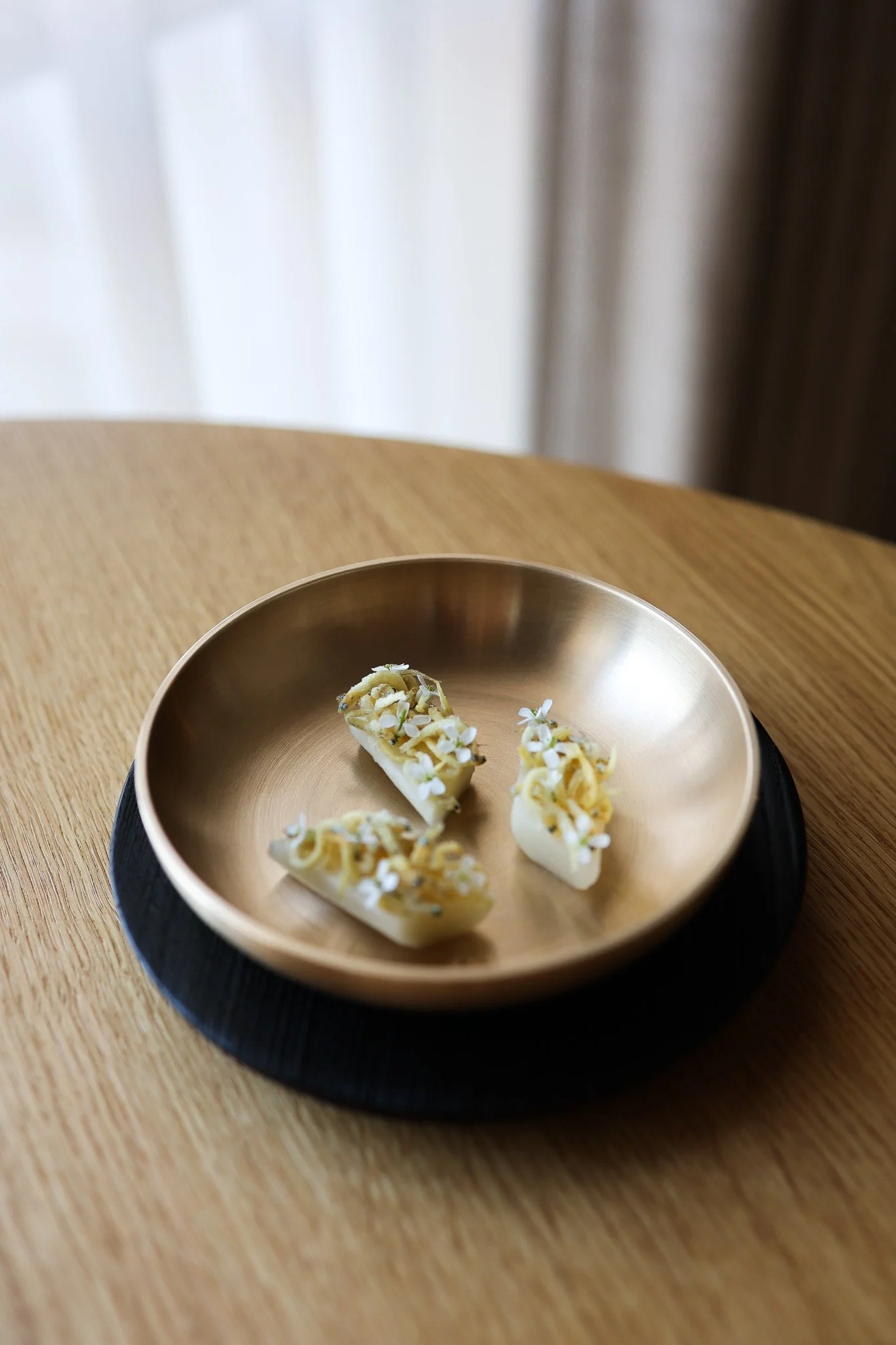

There is a beautiful idea behind the name KOAN: a question without a definitive solution, designed to open the mind. What is the question about food or about yourself that you still haven't been able to answer?
About food, there are so many known combinations, but when I discover new ideas and combinations, I really enjoy it. I think it’s healthy to carry this mentality in cooking, but also in life. At the same time, cooking is so structured; it has to be done in a certain way, but it’s very important to step outside of that and think outside of the box. I think everyone has different approaches to doing that. My process is thinking about it, processing it, stepping out of it, and then coming back to it.
On a personal level, I know who I am, but I also don’t know who I am. I know the direction I’m going in, but at the same time I’m still figuring out a lot about myself, it's always the beautiful journey of existence.
Your white kimchi dish was inspired by the “Reborn” ceramics, where fragments from centuries-old Chinese porcelain are given new life through contemporary craftsmanship. The idea of something inherited being reconstructed into something new feels very close to your own story. Do you see your cooking more as a form of reconstruction rather than fusion?
Yes for sure. In terms of expectations, I have the highest expectations of myself. We always chase the ideal. It will never be 100% of what I want, but I tell my team that I trust them and as long as we perform at about 97% and do our best I’m happy. I think being conscious of that is very important. If a guest is not entirely happy, we always try to understand why and we listen and try to do better to see different perspectives. Meeting guests where they are is very important to me.
Your approach to sustainability extends beyond ingredients and waste to smaller producers and, unusually for fine dining, to the quality of life of your team. Do you think the restaurant industry has sometimes celebrated sacrifice and exhaustion as if they were prerequisites for excellence?
What we do, and what I teach my team, they will take with them and put to good use for the future generation. One of the very big things for KOAN is that we show that we’re staying true to what we wanted to create from the beginning, and I’m very proud of that.That means quality in what we do but also quality in how we live because those go together.
A few members of the team left to start their own businesses after being with us from the beginning. They are now very successful, which makes me so happy, because it means that we’ve inspired them to do so.
You have experienced Noma, Relæ, 108 and now KOAN: restaurants belonging to very different moments in Copenhagen's culinary evolution. As Nordic cuisine moves beyond the era that made it globally influential, what do you think the next chapter of Copenhagen dining needs to stand for?
It’s so nice to see people believing in themselves. I know what it takes to open a restaurant, so you have to be a person with a lot of confidence, a little bit of naivety, and a true belief in what you want to create out of pure passion and share with the world. It’s great to see so many people taking those chances.
For me, it means that the market is there. In my view, Copenhagen has become a place for lifestyle, not just people coming in private jets, going for a meal and flying out. Denmark is evolving so much, and I think we’ll see a lot more in the next few years because there’s room for it. It’s good for the economy and for the people who want to take chances. We need people like that, developing platforms that will benefit the gastronomical scene and the people around it.
Our new issue revolves around the theme of nature. I’d like to hear your take on the importance of ingredients, seasonality and sustainability in your kitchen, especially as Copenhagen is surrounded by such a wealth of local produce and exceptional seafood. How do these ideas influence the way you cook and approach ingredients?
I think it's important to understand the ecosystems we’re working within and respect what they can naturally provide, whether that’s produce from the land or seafood from the sea. Respecting the world and working with calmness and inspiration from the world we live in. I would say my motto when it comes to nature is: “Take only what you need.”
