
IN CONVERSATION WITH RAFA KALIMANN
interview by LEANDRO DA SILVA
Rafa Kalimann has never confined herself to a single role. Over the years, she has built a multifaceted career spanning television, digital media, entrepreneurship, acting, and production. Now, as the lead actress and producer of Minha Querida Alice (My Dear Alice) and with the release of her documentary Tempo para Amar (Time to Love), she enters a new chapter, one shaped by a deeper commitment to meaningful storytelling. In our conversation, Kalimann reflects on the evolution of her career, the responsibility of bringing difficult stories to the screen, the impact of motherhood, and the values that continue to guide her work.
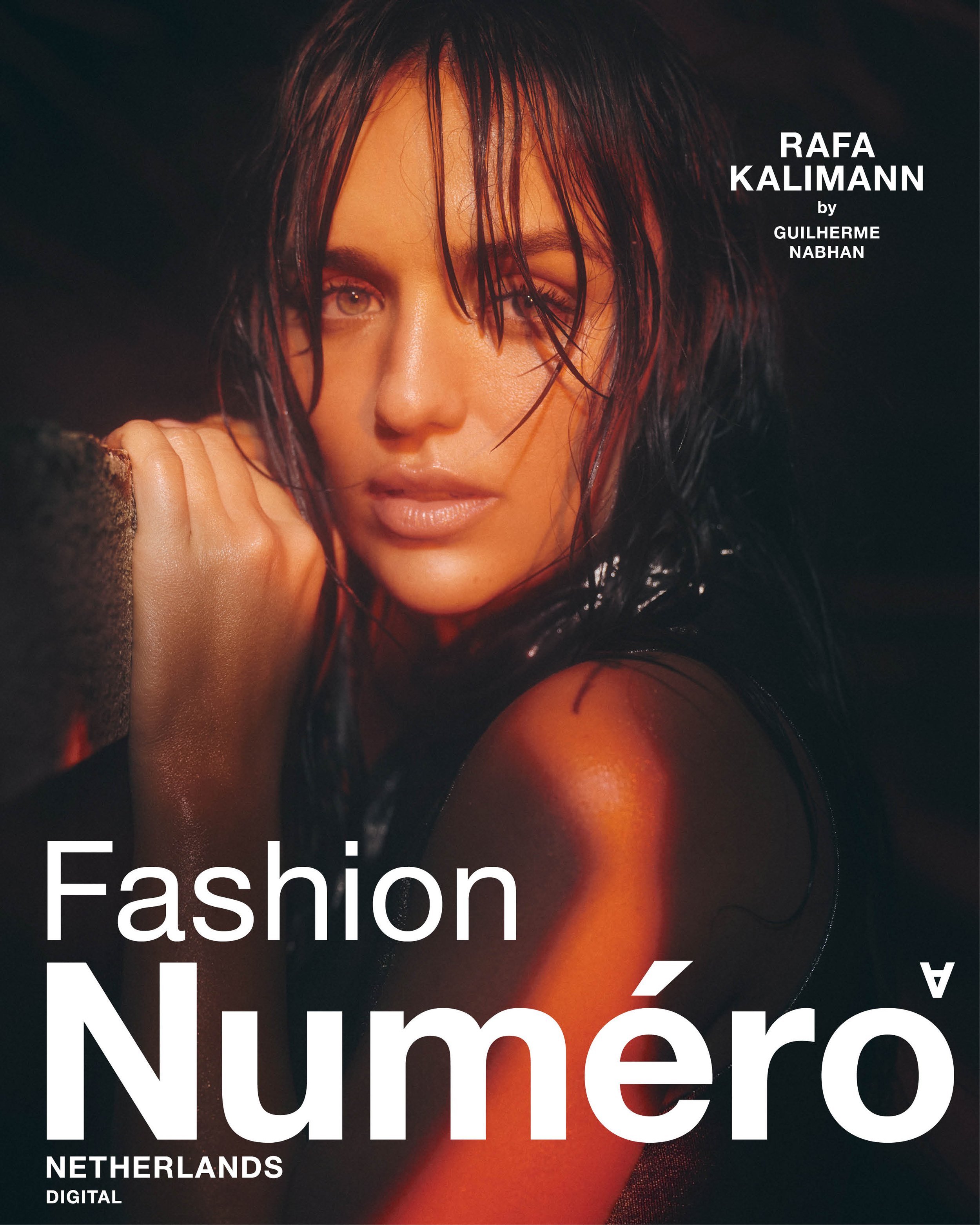
From television and digital media to entrepreneurship, acting, and now starring in and producing Minha Querida Alice (My Dear Alice), your career continues to expand in many directions. How would you describe this chapter of your journey?
I would describe it as the end of one cycle and the beginning of a new chapter in my life. I think that, over these past six or seven years, there have even been studies about how we go through different seven-year cycles in life. I have a very strong feeling that I am concluding one cycle in a very fulfilling way — feeling extremely accomplished and happy with everything I have done — and beginning another.
Minha Querida Alice is also a response to that. Seeing the film completed, seeing it about to reach audiences, and delivering it to the public, while also seeing the depth of this project and this work, and how much I have grown, matured, and evolved over these seven years, makes that feeling very alive for me.
So, I think it is the conclusion of a cycle and the beginning of a new moment. I feel very fulfilled, more mature, more complete in every sense of my life, and more fulfilled with the things I have accomplished. These have been seven extremely important years. I started new careers, began projects I never imagined I would do or experience, and producing and starring in this film is one example of that for me. Now, I feel that it is time to reap what I have planted, to enjoy it more, and to embrace what is still to come.
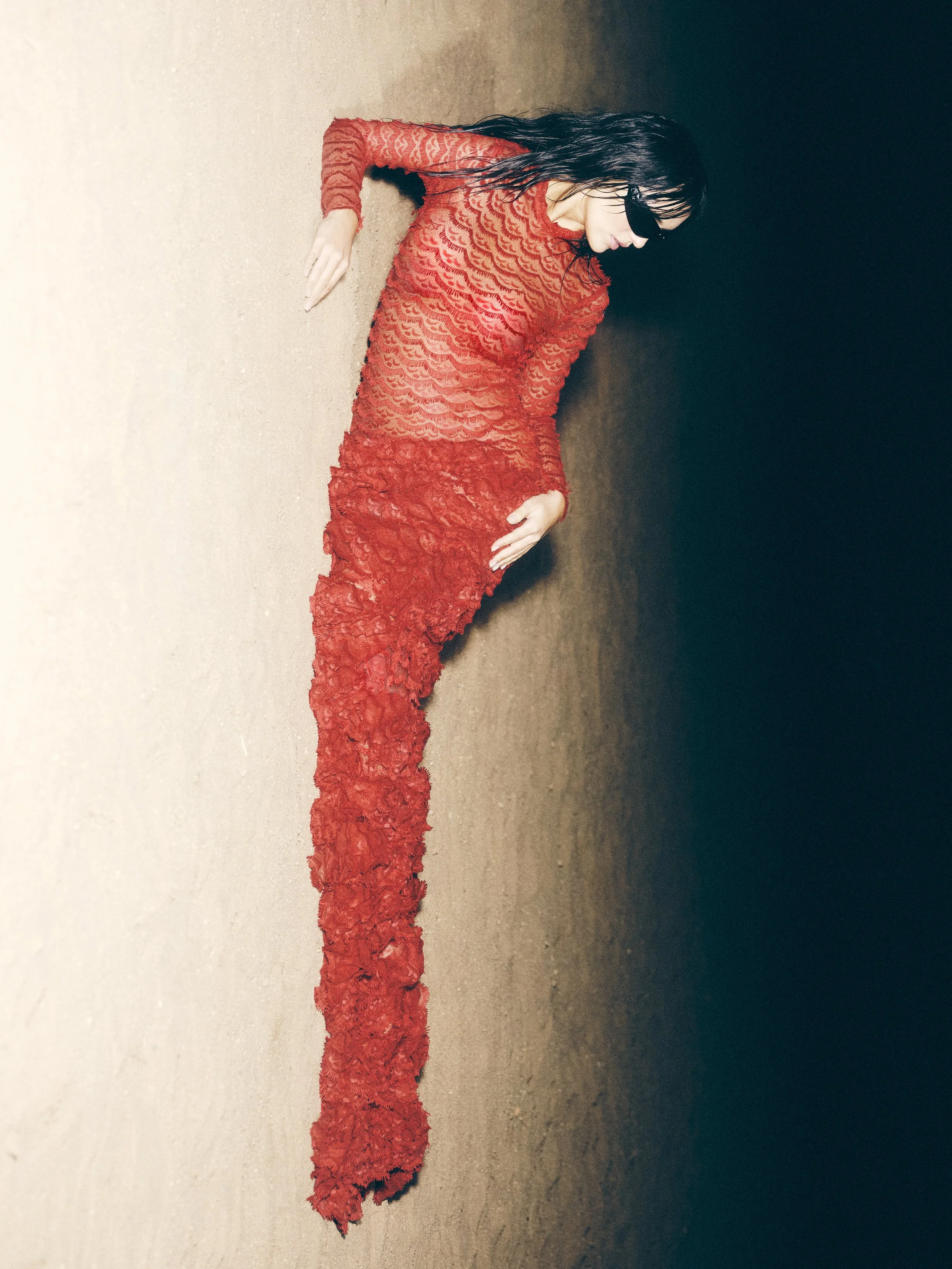
dress ATELIÊ MALAK
sunglasses DIOR
What did producing the film Minha Querida Alice (My Dear Alice) teach you about storytelling that acting alone never could? What did that experience change in the way you see yourself, not as a public figure, but as an artist?
I think the main role of art is to communicate and bring people a lived experience, a perception, an experience, or a feeling that they might not otherwise have access to in their everyday lives. Whether it is a feeling of pain, like the one the film may bring to many people, or ecstasy, joy, or so many other things.
I think art has this gift. When you bring a character to life, when you tell a character's story through your own life, you give that character space to be born and to live. I think that responsibility becomes three times greater. You are giving life, giving a voice, giving a body, and giving energy to a character and to a story. And when a story like Alice's comes into my life, with the pain I just mentioned, but also with so much strength and resilience, and with such an extremely delicate and necessary subject, the responsibility becomes enormous.
Unfortunately, I say this because we still have to talk about sexual violence against women. We still have to talk about femicide. I would not want, in the era we live in today, with so much progress, technology, and access to information, for us to still have to address these issues out of necessity — to raise awareness and communicate with the public.
But this film carries that responsibility. This film carries that message. So, bringing Alice to life carries an immense responsibility. I don't think there is any other word for it, precisely because I am giving life to a story that needs to be told because, unfortunately, it is real.
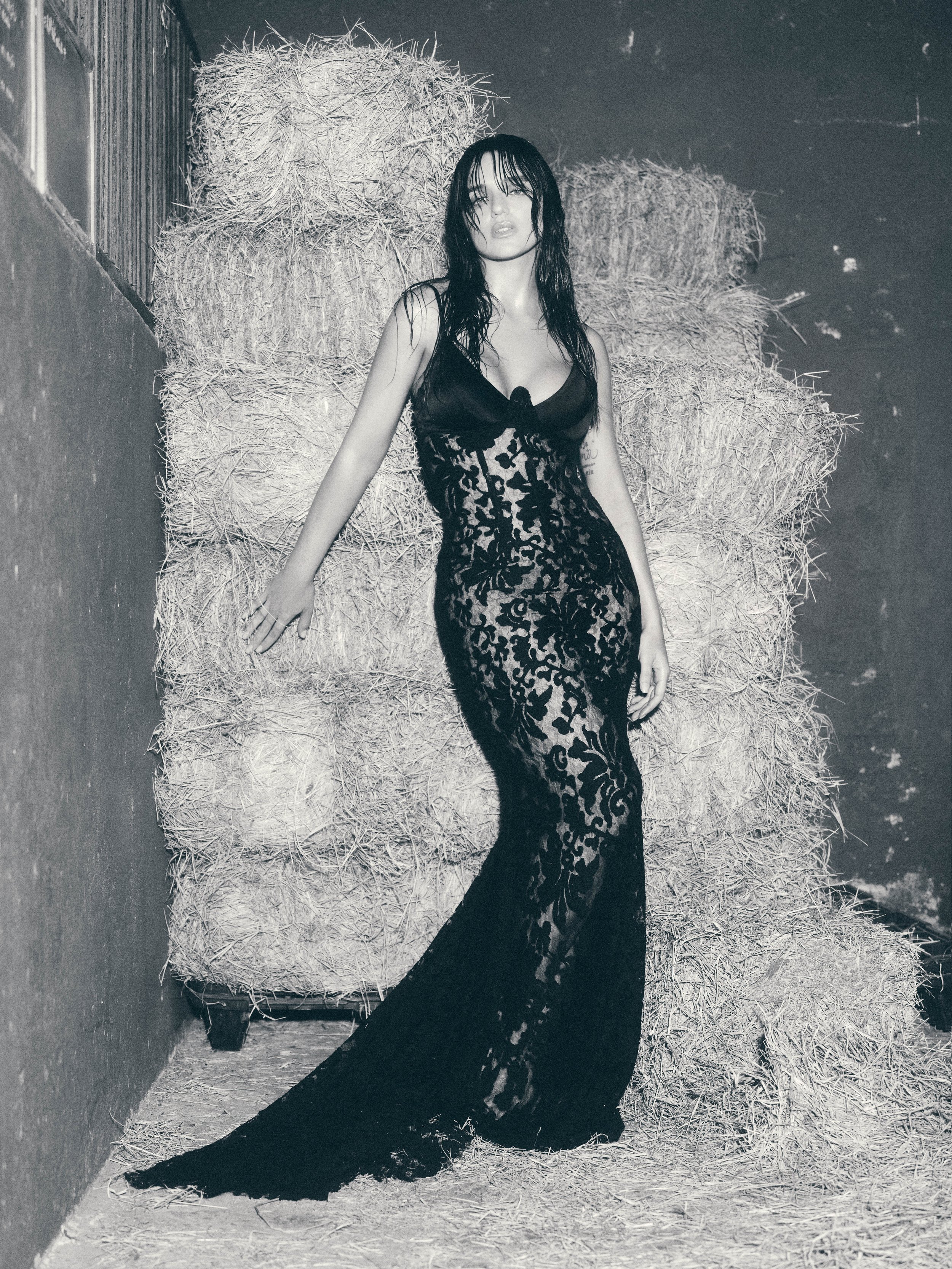
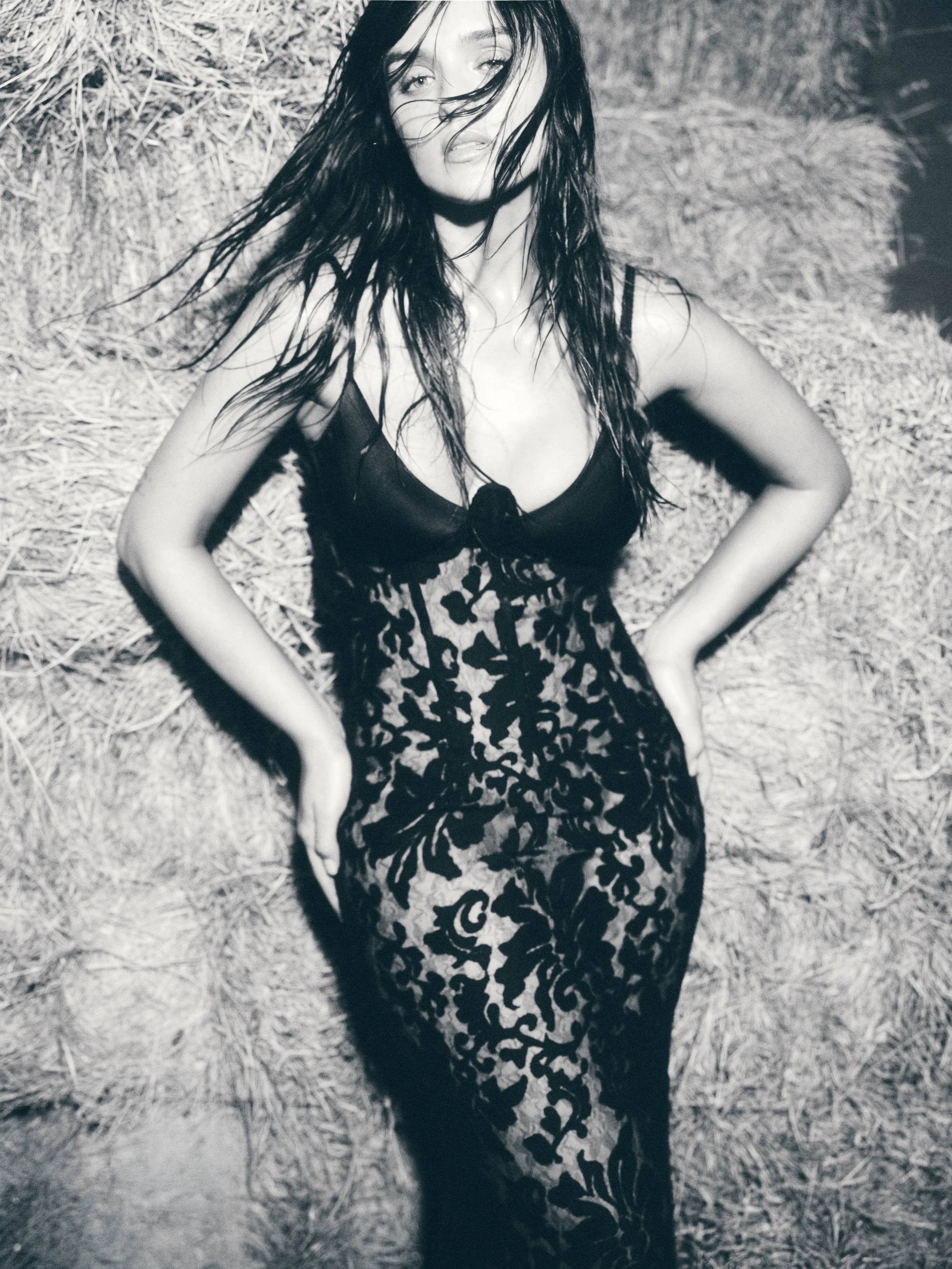
bra INTIMISSIMI
dress ATELIÊ MALAK
At its core, My Dear Alice is a story about silence, trauma, and courage. Why was it important for you to tell a story about a woman who finds the strength to break cycles of violence?
Sometimes people ask me, “Is this a real story?” And it is a real story. This character exists. However, even if it were not based on one specific story, it would still be a real story. It would still be the story of many women — an enormous number of women. And I am not even talking globally; I am talking about my own country, Brazil.
I would never have accessed, or perhaps would never have been able to access, the depth of the pain of a woman who had lived through and experienced something like this. I played this role while pregnant with a little girl, a woman. I was already pregnant with Zuza when I played Alice.
And that reverberates through me to the point that, when I watch the scenes in the film — and I am involved in the entire editing and post-production process, I am participating in all of it — every scene I watch affects me. Obviously, I remember the emotions and how I was feeling at that moment, but there is also the anguish of reality.
So, I think it is a reality that has een laid completely bare for me, for my life, and for my daughter. Bringing this into my personal life, into Rafaela's life, affects me deeply. It makes me think about how to prepare my daughter to be aware of this harsh reality we live in. How to protect her, how to provide as much safety as possible for my daughter in a reality as difficult as the one we live in. It is impossible to have gone through this story and brought Alice to life without it affecting me deeply, both as a woman and as a mother.
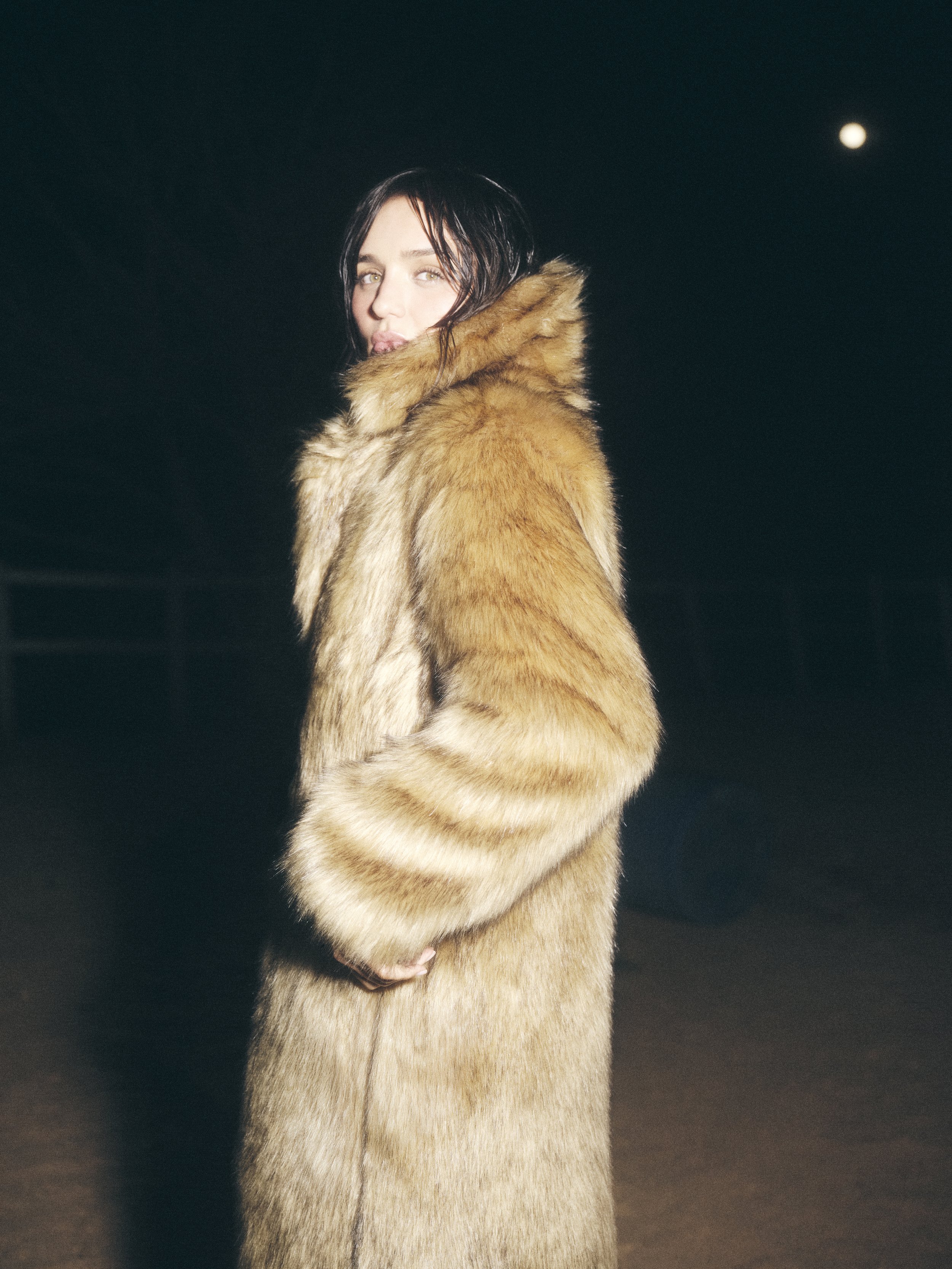
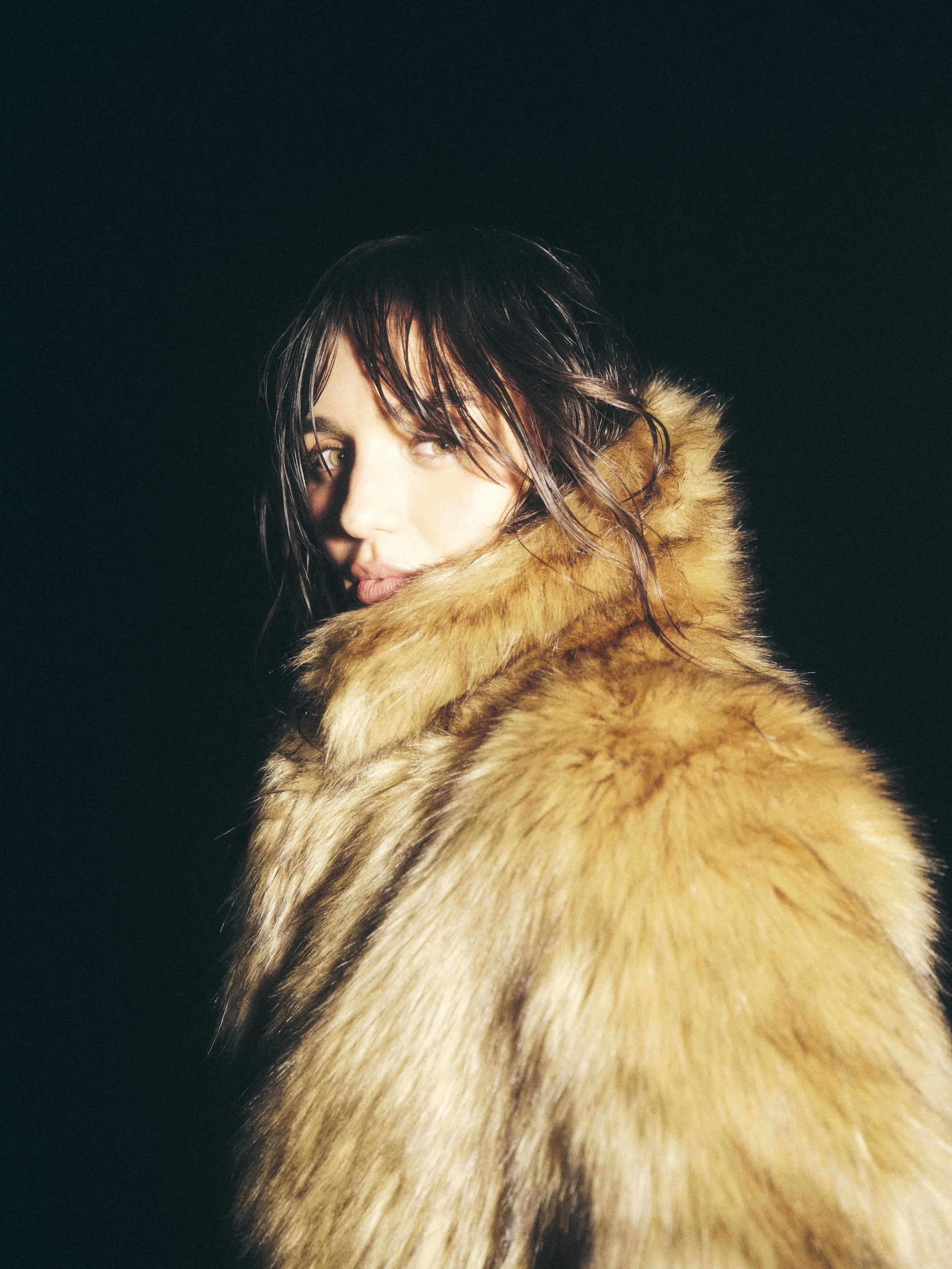
coat VINTAGE
Your documentary Tempo para Amar (Time to Love) opens the door to one of the most vulnerable chapters of your life, from pregnancy and motherhood to addressing episodes that became the subject of misinformation online. What gave you the confidence to share that part of your story?
The purpose of embracing other mothers and being embraced by other women who were going through pregnancy, and who experienced a kind of catharsis, was very important to me.
I think the greatest challenge of pregnancy is, obviously, the physical transformation. Your organs move, they shift, your bones move. But, in my opinion, the greatest challenge of pregnancy is understanding, identifying, and putting a name to what we are feeling.
Because everything really changes. A new person is born, a new woman is born, and all these responsibilities begin to vibrate inside you. You start thinking, “Am I ready for this? Can I really do this?” A new life is arriving — the life of my daughter and a new life for me.
And when I realized that I was feeling all of this, and that I could not really understand it, I went looking for support outside myself. I sought to understand other women. I looked for identification. I looked for a sense of belonging. I think that would be the word: belonging. I wondered, “Am I the only one who feels this way? Am I the only one experiencing this mixture of emotions inside me?” And then I realized that, no, it was practically universal.
Perhaps the women who did not feel that way were simply unable to identify those feelings within themselves. And I thought, “I have such a strong connection with communication. I work in communication. I have this huge platform of information in my hands. I need to do something with this.”
There was no way I could go through such a grand experience, come face to face with something that is so conflicting for so many women, understand what was happening, and not try to help them.
I wanted to do that. So, my decision came from that purpose — to become a spokesperson for these nuances beyond what we normally see, which is, of course, extremely important when we talk about the physical changes women experience. But there are so many more layers, so many things happening internally, especially emotionally, that are not spoken about, not shown, and, as a consequence, are poorly understood.
I think the great reaction from people who did not understand the documentary is precisely because it is difficult to understand. Perhaps women who are going through this experience, and families who are going through pregnancy, will understand it better. But Tempo para Amar came from that purpose, and I think I fulfilled it very well. I am extremely happy with that. Because of the number of people who are either pregnant or who have had children, I have received so many meaningful reactions.
The other day, a woman stopped me — when I was giving a talk at SP2B. She came up to me and said, “Rafa, I am a mother. My children are already grown. I watched the documentary, and it healed things inside me from when I became a mother with my husband, things I thought I would never be able to access again.”
So, I am very happy with this purpose, seeing it being fulfilled. I really believe it is a long-tail purpose. Many other women who have experienced motherhood will continue to access it and see themselves in it, and I am very happy about that.
Although your career has evolved in many directions, what is the one value or belief that has guided every decision you've made?
Family. Family is my engine, basically. My family is my foundation. I think it is not only about family relationships, bonds, the connection, and love, but because it takes me directly back to who I am.
So, the closer I am to my family — and I do this less than I would like to; if it were up to me, I would spend 24 hours a day attached to my family — the closer I am to my mother, for example, to my father, to my loved ones, the more connected I am to myself. It automatically reminds me of the person I was born to be, the person I grew up to be. So, family is that foundation for me.
My faith is also a foundation. I am a Christian, and that is something that is very strong inside me. I don't know how to take a step, I don't know how to live without that feeling of gratitude and love for God in my heart. I think that is the foundation.
Has becoming a mother changed the kind of legacy you hope to leave through your work?
It has. It has changed it so much. Today, whenever I do something, I automatically think about how Zuza will see it in the future.
I already think about the possibility of her seeing it one day. I think about how different the internet is from what we experienced with our parents. We might have seen one photograph or another that was kept in an album. Our children will see what is in the background, what is online. They will be able to search for us. They will have access to everything. I think that is very cool, but also very dangerous.
So, there is this care with what I am going to leave for her — not only in our home life, in terms of values and what I want to teach my daughter, but also a public responsibility regarding the image I leave behind as someone who chose to be a public figure. How will that reach her in the future? How can it inspire her? How can it inspire her to be strong, to pursue her dreams, and to pursue the things she believes in? I think I have the chance to be a direct spokesperson for my daughter, to be that for another woman, to be that for another person, and I want to do that in the best way possible. My responsibility today is so much greater. It is so much greater.
It is so strong that the professional decisions I make are very connected to how I want her to see me. I want to give a voice to certain things. I want to bring certain characters to life. I want to move through these different spaces. I want to appear in these different ways. And all of that is very connected to how I want my daughter to see me.
Your social work and environmental advocacy have remained consistent throughout your career. How do you decide which causes deserve your voice, and what responsibility comes with speaking out?
I have been involved with Missão África for 15 years, SOS Pantanal for seven years, and Rocinha for six years, and they are three very different projects. Missão África is focused on children in Mozambique. We bring healthcare and education.
Rocinha is a project focused on art. It is about bringing art to Rocinha, creating schools, and providing access to these young people. And SOS Pantanal does incredible work in the Pantanal, particularly in relation to fires and the burning of the Pantanal, which has decreased significantly because of this work. All of these projects came into my life in a very natural way, through mutual friends.
They were not projects that came about because I saw them on the internet — which is also completely valid, and I think that is great. But in my case, it came from my own experience with these projects. Friends introduced me to them, or I already knew the people who started them. So, it happened in a very natural and organic way. I really believe it is important, especially when you have the opportunity to give a voice, to communicate, and to create visibility, that this becomes a necessary and indispensable part of your career.
I don't understand not using the platform we have, not using this opportunity to give a voice to projects, to encourage people to get involved, to show what is happening, and to show how this work is being done. My career began with Missão África already being part of my life. So there was never a phase of my career in which my communication did not come together with social action, just as it does in my personal life. My parents encouraged this in me from childhood, and I want to carry that forward to Zuza, because I truly believe in social responsibility.
I think it is our responsibility, as human beings, to look around and understand where and how we can help. It doesn't matter what the project is or whether it is an environmental cause or something involving animals. Whatever the cause, I think we have to be willing and available to help, to look at other people, and to serve.
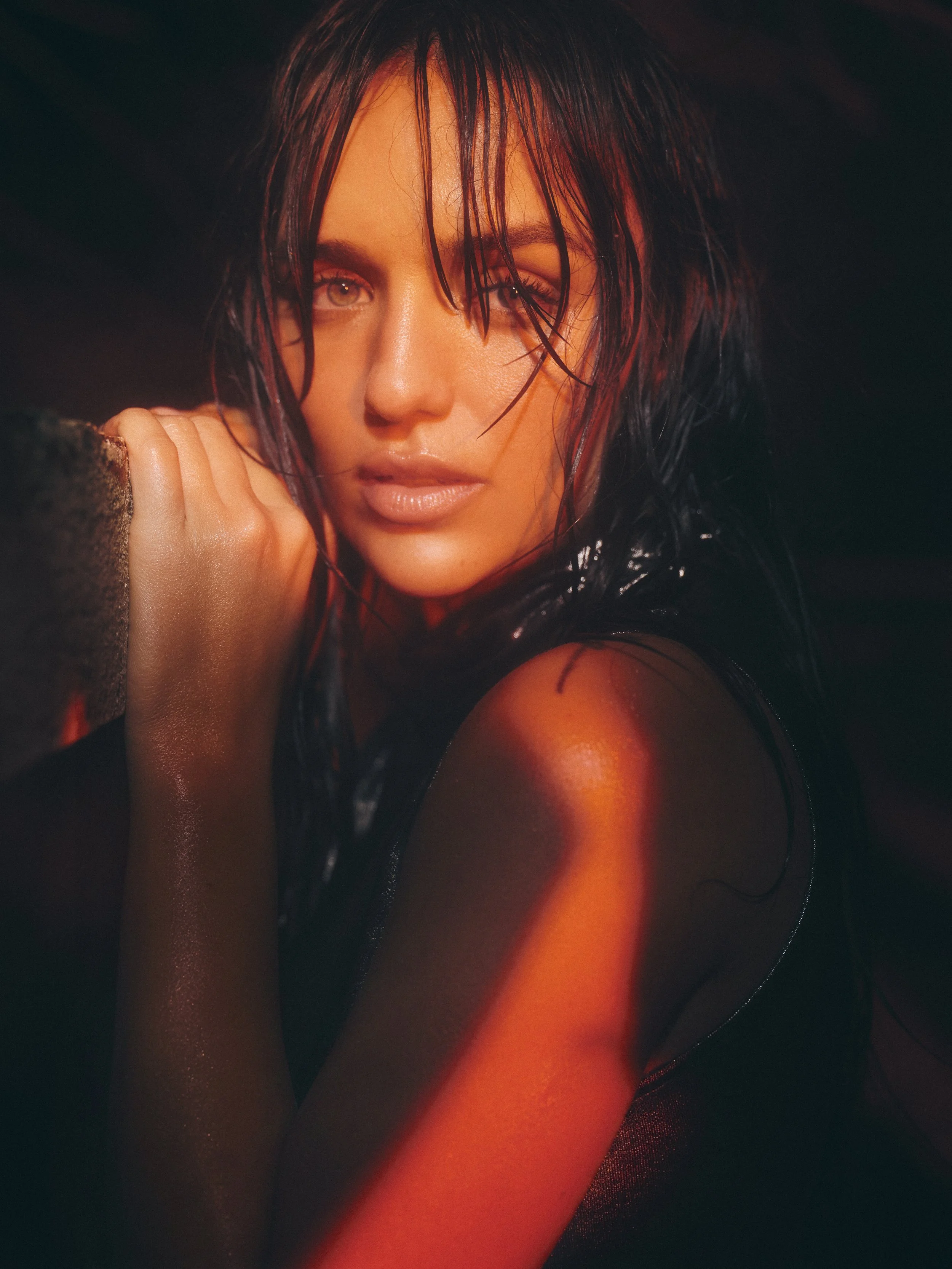
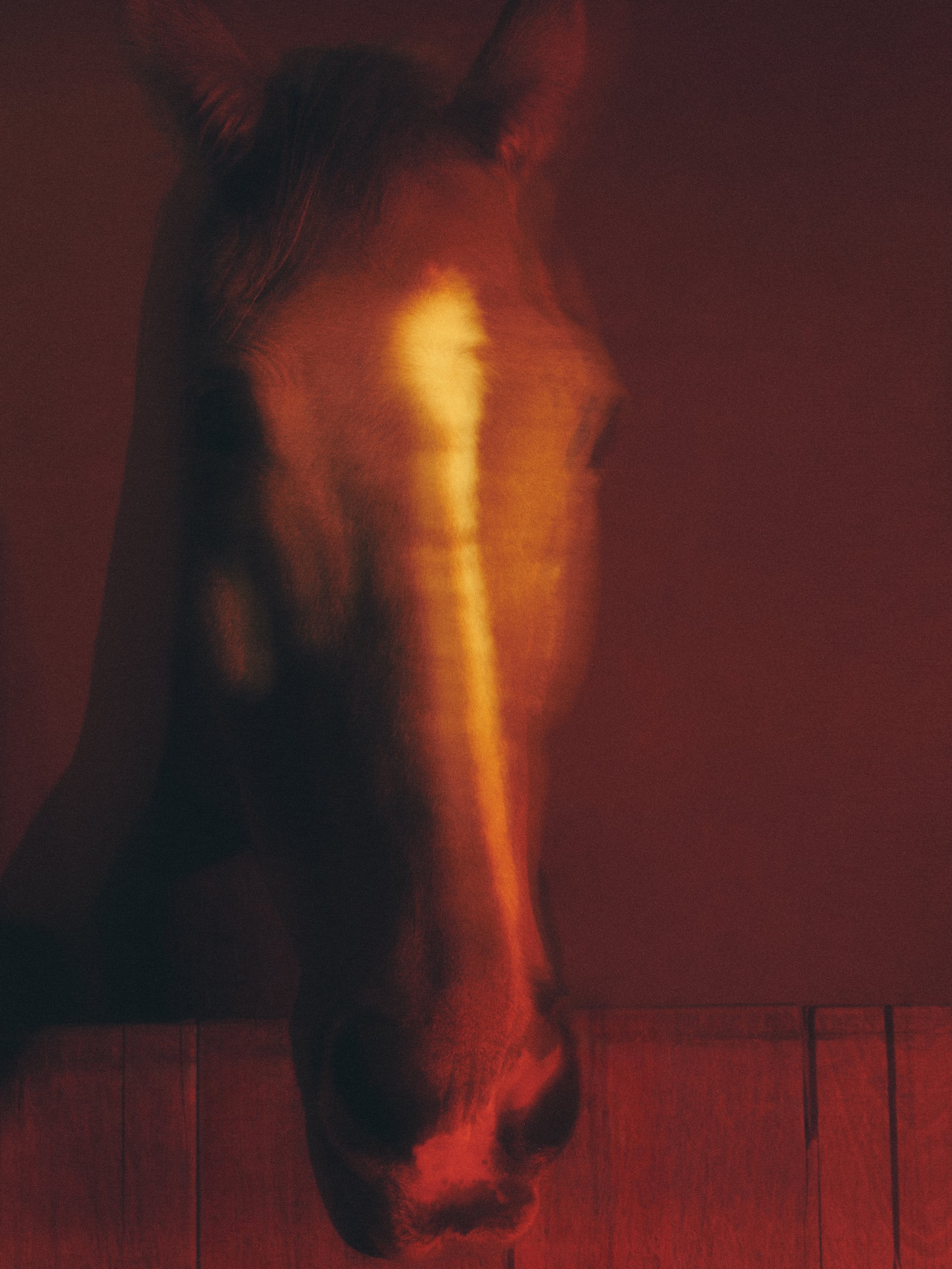
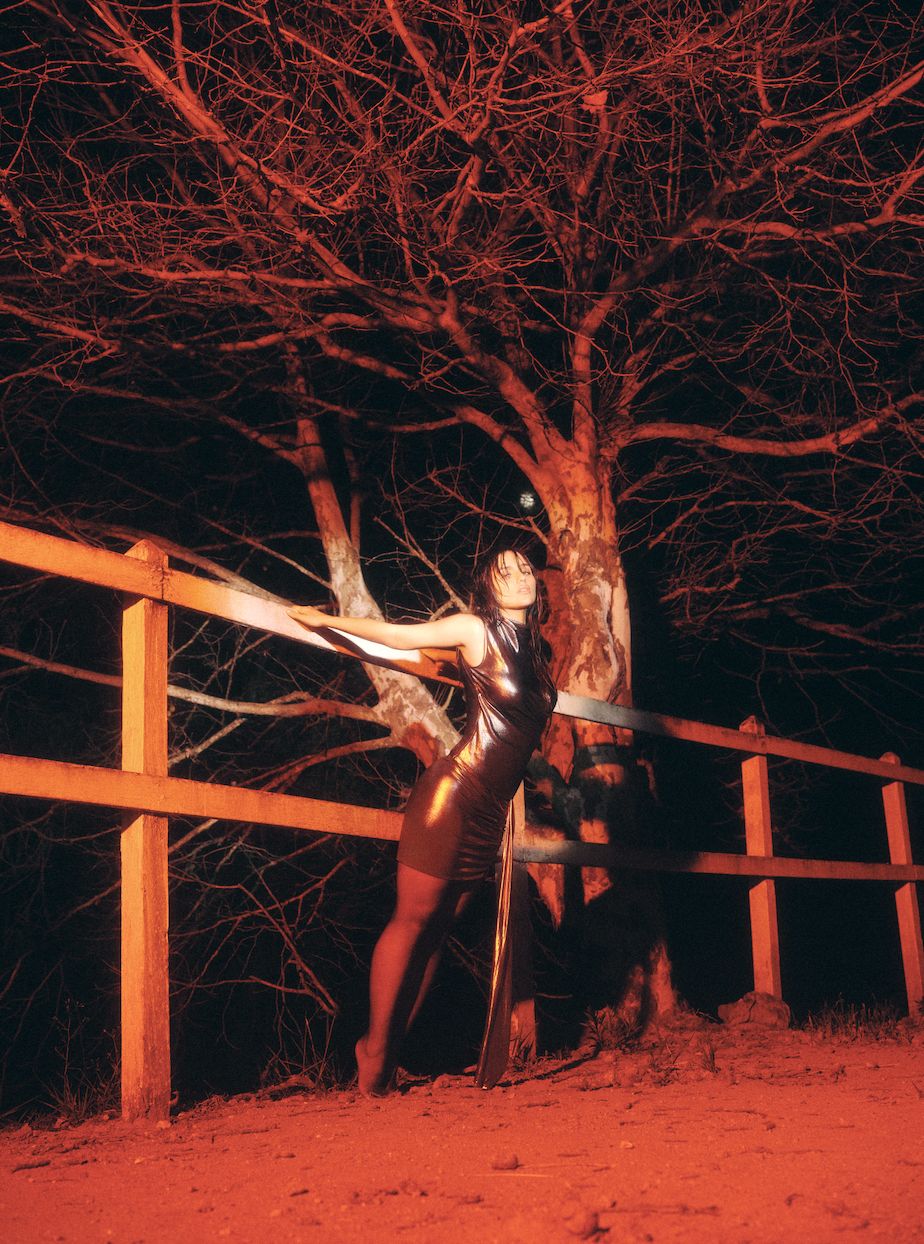
conjunto MAGDA BUTRYM
This is your fourth consecutive year as the presenter of Barretão. What does it mean to you to return to this position and once again experience something so deeply connected to your own journey?
It means so much to me. This is my fourth year presenting the circuit, and I think it is my sixteenth or seventeenth year going to Barretos. The only year I did not go was during the pandemic, because there was no event. Other than that, I have gone every year, continuously — even while pregnant. When I received the invitation to present the Circuito Sertanejo, I thought, “What a gift.”
I think that for anyone who works in communication, when an opportunity comes along to speak about something you are proud of, something you belong to, a space that you belong to, a culture that you identify with and speak about, it is very special.
Big Brother was an incredible example of that for me, because I would ask — I would practically beg them — to play sertanejo music for me. “Please, play some sertanejo. Any song, please.” Because it connects me directly to how I grew up, to what I like, what I listen to, and what I consume. And then I was invited to present the circuit, to be at the forefront of bringing this space to people across Brazil — this is literally a world I know and love. I know the lyrics of the singers' songs, Leandro. I know what they are going to say in the middle of the songs. I even know what they are going to say during the DVD recordings because I listen to them every day, all day. So, I am very happy.
This year, we are going live again, and then there will be a special. It is a project that is growing. The program grows every year, it is gaining shape and substance, and the audience is enjoying it. I think there was a major challenge because, when we think about sertanejo today, we often see it much less as something that is only about music. It used to exist simply as a musical genre. But when you start looking deeper, you realize that it is a cultural issue. It is a cultural movement, a traditional movement.
Barretos, for example, is a great representation of that. You go there and find people of every age. Probably, especially at the camping area where we stay, there are people who discovered the camping experience through their parents and now return with their own children. So, it is very traditional. And we are increasingly bringing that into the program and into the project.
It is really exciting. It is wonderful to see a program on broadcast television talking about sertanejo for the fourth consecutive year. That is a very big thing.
You’ve spoken about Country and Western as such a strong cultural movement. How important is fashion and the way people dress in expressing and representing that culture?
I think it is more interesting than ever now because I think the trend toward Western and Country is very much alive. The market is looking very closely at this world, at the countryside and at the interior. I think there is also a direct connection with the way Generation Z is wanting to return to its roots. There is such a strong trend among them toward moving to the countryside and everything that comes with that feeling.
Our generation did not really have this feeling of wanting to return to the countryside. But among this new generation, people in their twenties and even eighteen-year-olds, it is very strong. I see it happening much more now. I think all of this comes together when we talk about fashion, because the market is starting to look at this as well. So, major brands are embracing it. Chloé, for example, has been bringing this very strongly. Ralph Lauren has been doing it for a long time. And many other brands are bringing a stronger focus on Western and Country. I am loving it because it has made everything so much easier for me. My entire wardrobe is like this. So, it feels much more natural for me to dress this way, and now it is also part of a trend.
TEAM CREDITS:
talent RAFA KALIMANN
photography GUILHERME NABHAN
creative direction NATÁLIA DE ASSIS
styling CAROL ROQUETE
makeup YANTHI BRIGNOL
executive production GUSTAVO DAMASCENO
fashion production VICTOR BRANDOLIN
dresser NÁDIA MARTINS
photography assistants JONAS FELIPE, GUILHERME VAZ, and NICOLE RIOTTO
makeup assistant JOÃO PAULO MAIA
videography URIEL GUSMÃO
retouching DANIEL POHL
editor TIMI LETONJA
interview LEANDRO DA SILVA
cover design ARTHUR ROELOFFZEN
