
IN CONVERSATION WITH LINDA MESSERKLINGER
interview by JANA LETONJA
Linda Messerklinger has built a uniquely interdisciplinary career that moves fluidly between cinema, music, performance art, and ecological storytelling. First emerging through collaborations with acclaimed Italian filmmakers including Dario Argento and Giuliano Montaldo, she later expanded her artistic language beyond traditional acting through projects exploring sound, folklore, environmental consciousness, and human connection to landscape. Through her musical duo Linda & The Greenman and her multimedia performance project ANIMA_L, she has developed an immersive creative practice where music, narration, and site-specific environments merge into deeply reflective experiences.
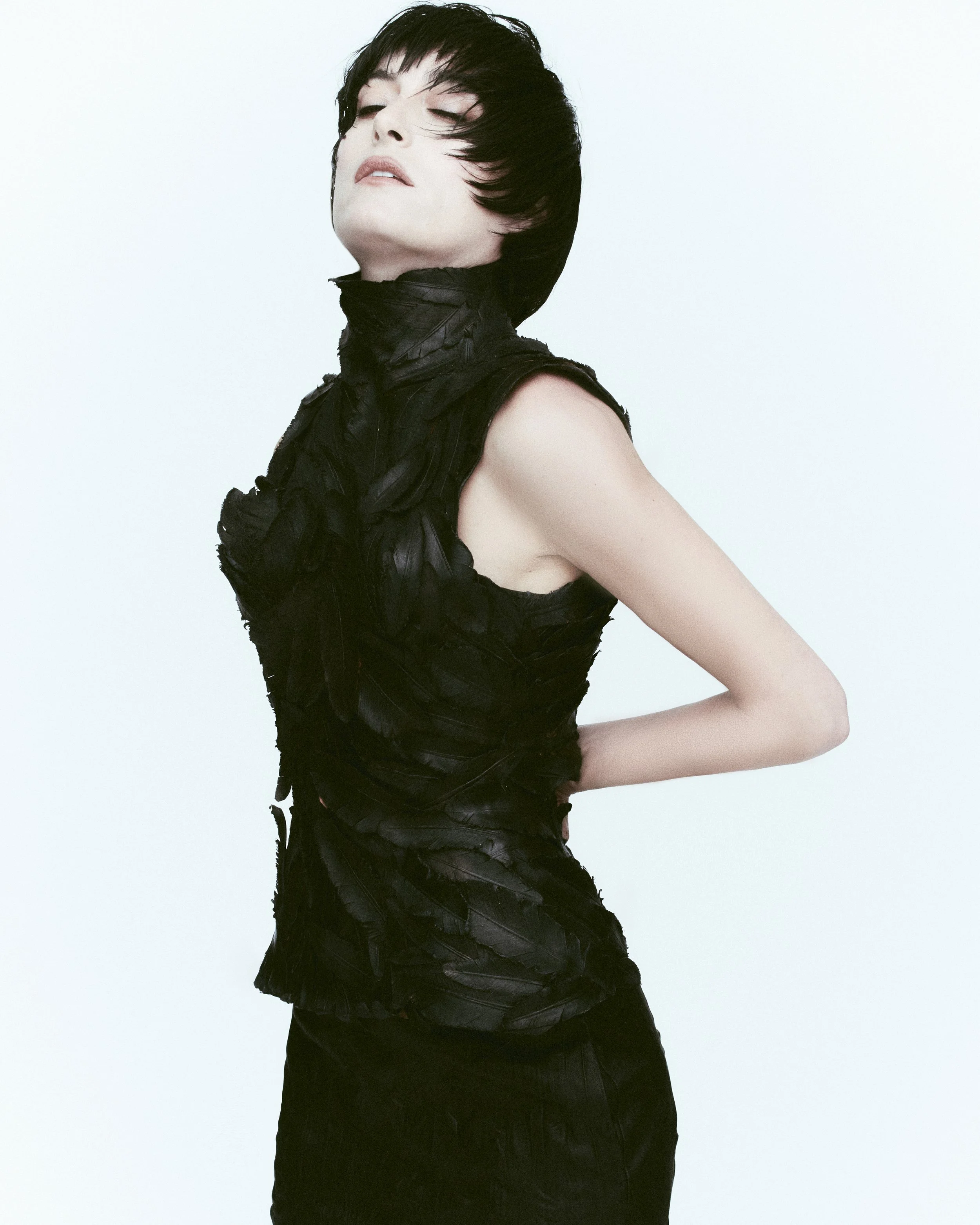
corset YIGE
skirt BOSS
jewellery LEO PIZZO
Your career moves fluidly between cinema, music, environmental work, and performance art. How do you personally connect all these disciplines together?
I feel it’s life that reveals connections to me. There is no effort, but multiple ways to experience and express creativity. I feel the need to learn, and to connect with people and situations I can learn from. Possibly, with pleasure. And love. And mutual enthusiasm. I love to think about knowledge and beauty as wide entities that can be channeled through different arts and crafts. Sure, some disciplines require a lot of specific exercise and devotion, like becoming a great classical concert pianist. Acting, for me, has been more connected to a vaste curiosity. And with staying open to a continuous, multidisciplinary, surprising process of transformation, broadening perspective and vision.
Looking back, what first drew you toward storytelling as a form of artistic expression?
As a little child, I remember the feeling when listening to the stories told by my parents and grandparents. I felt the power in it. Now I know I was contacting the power of my imagination, accessing symbols and metaphores shaping my perception of reality. I remember my parents reading books to me, like S. Francis story, which I completely falled in love with, or a three dimensional pop-up book about ancient Egypt culture, which I was spending hours on, hypnotized by geroglyphics, pyramids, gods, queens and pharaohs, hidden treasures. I also remember the joy of participating in rehearsals and performances of the theatre company composed by parents of the maternal school I was frequenting. Both my parents were part of the company, and we as kids were so happy to experience our mother’s and father’s playful transformations into the characters of The Odyssey or The Bethroted. This felt like home to me, I knew that was my path since then.
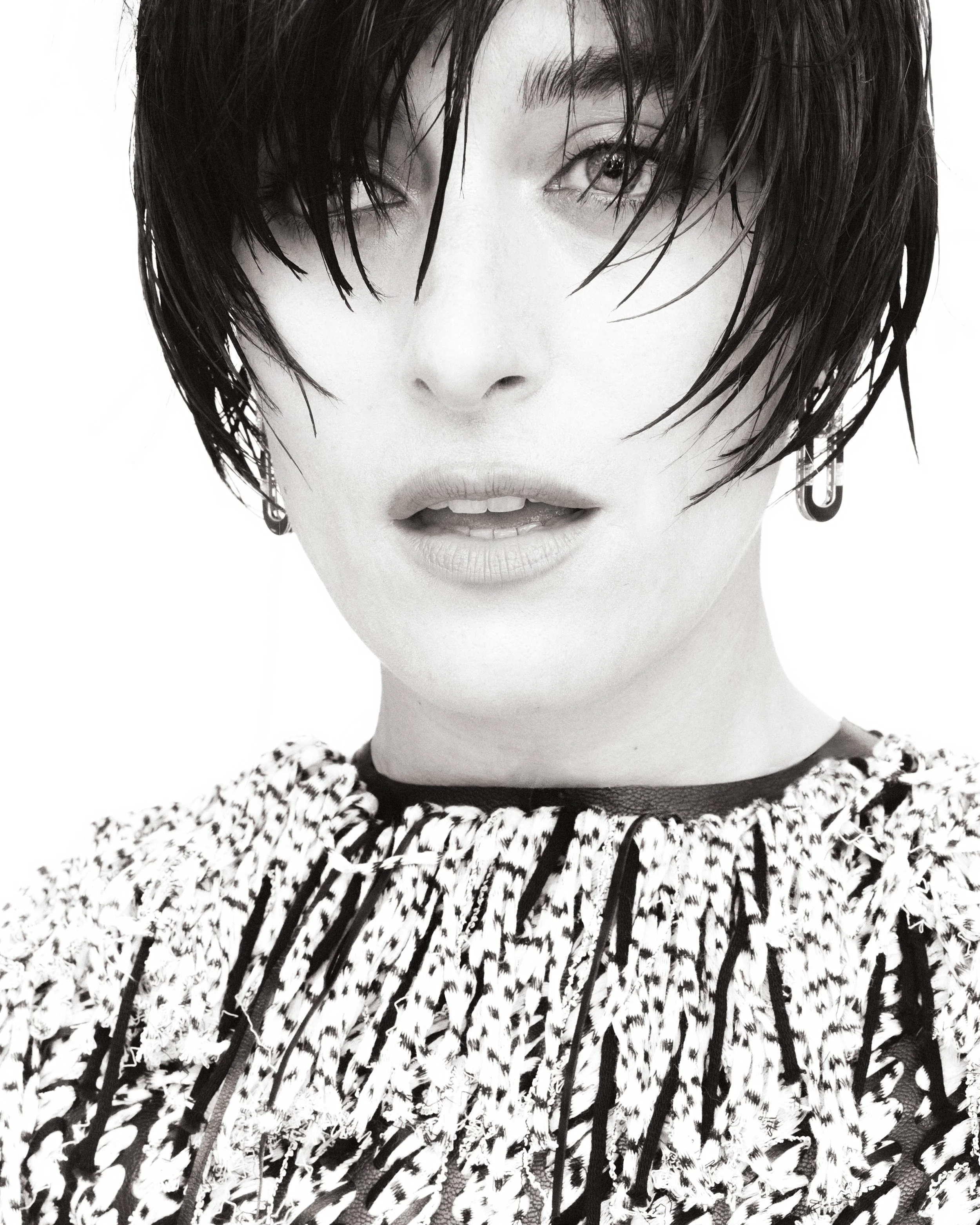
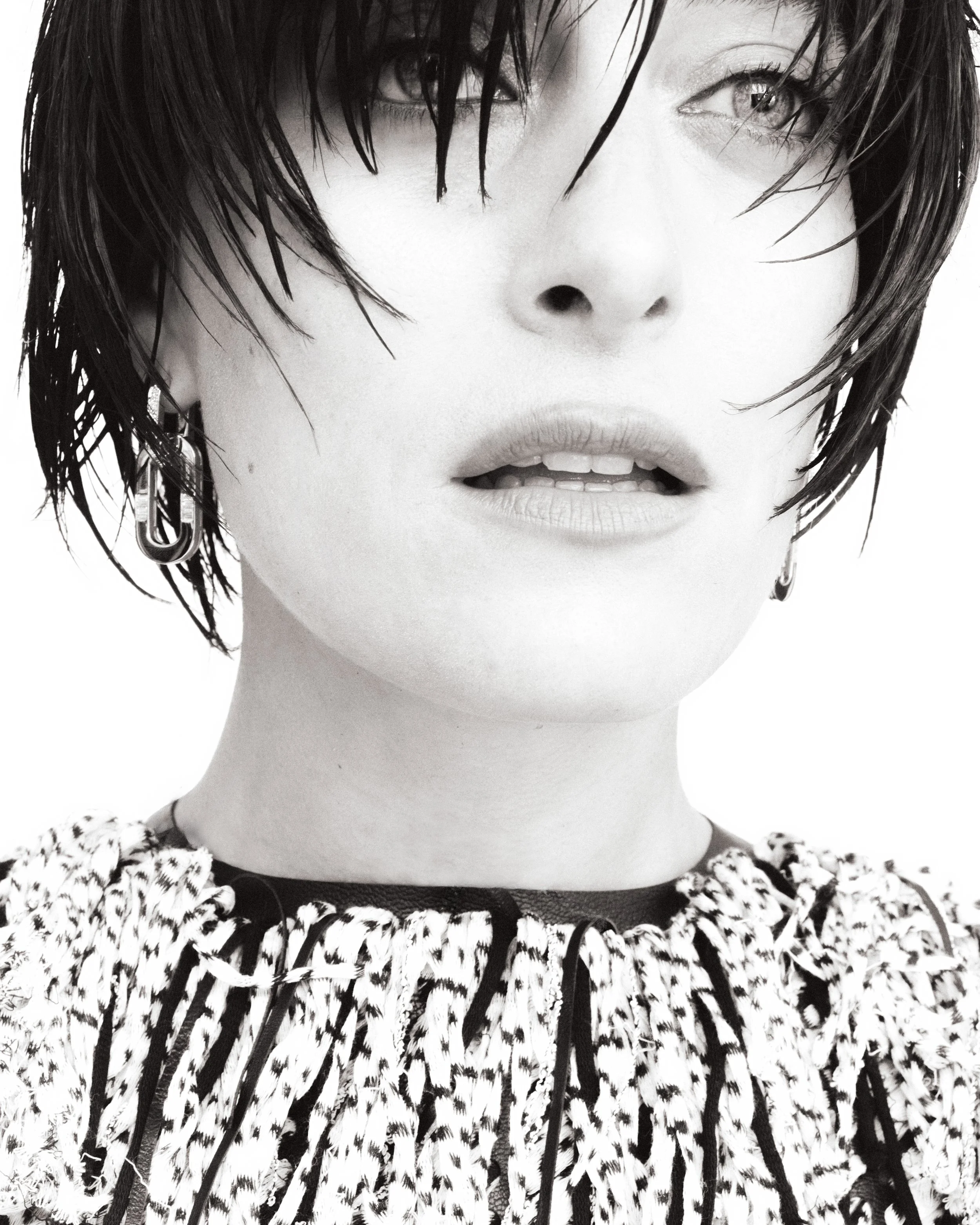
top TOD’S
earrings LEO PIZZO
Faccia d’Angelo became a significant project within Italian crime drama. What do you remember most about that experience?
Faccia D’Angelo was such a blessing to me. Andrea Porporati is a director and writer of rare sensibility and he has a deep respect for actors. It was my first work as a female lead and I felt protected and cherished. Elio Germano was a great master to work with, I learned a lot from him, not only for the way he approaches acting. What was very special was the way he took care of the team, making everybody comfortable on set, creating fun and jokes and complicity, but at the same time making sure that the conditions to work at best were respected, putting his power and experience in service of the common good. I completely fell in love with the human and the artist, we had so much fun, we shared a very playful way of preparing, training, shooting. We studied the Venetian accent by listening and singing together to the music of Pitura Freska, an iconic Venetian band. And speaking about music, I remember the moment I met the band Afterhours, after they had put the music on the film. I had grown up with Ballate per piccole iene, one of their albums, so it was a great emotion and honor to realize we were working on the same project.
Something very special about this project was that after the set, Elio, me and many actors took part in the occupation of Teatro Valle in Roma. This was a powerful experience, a convergence of artists, activists, thinkers, researchers, where all of us learned a lot about the culture of Commons.
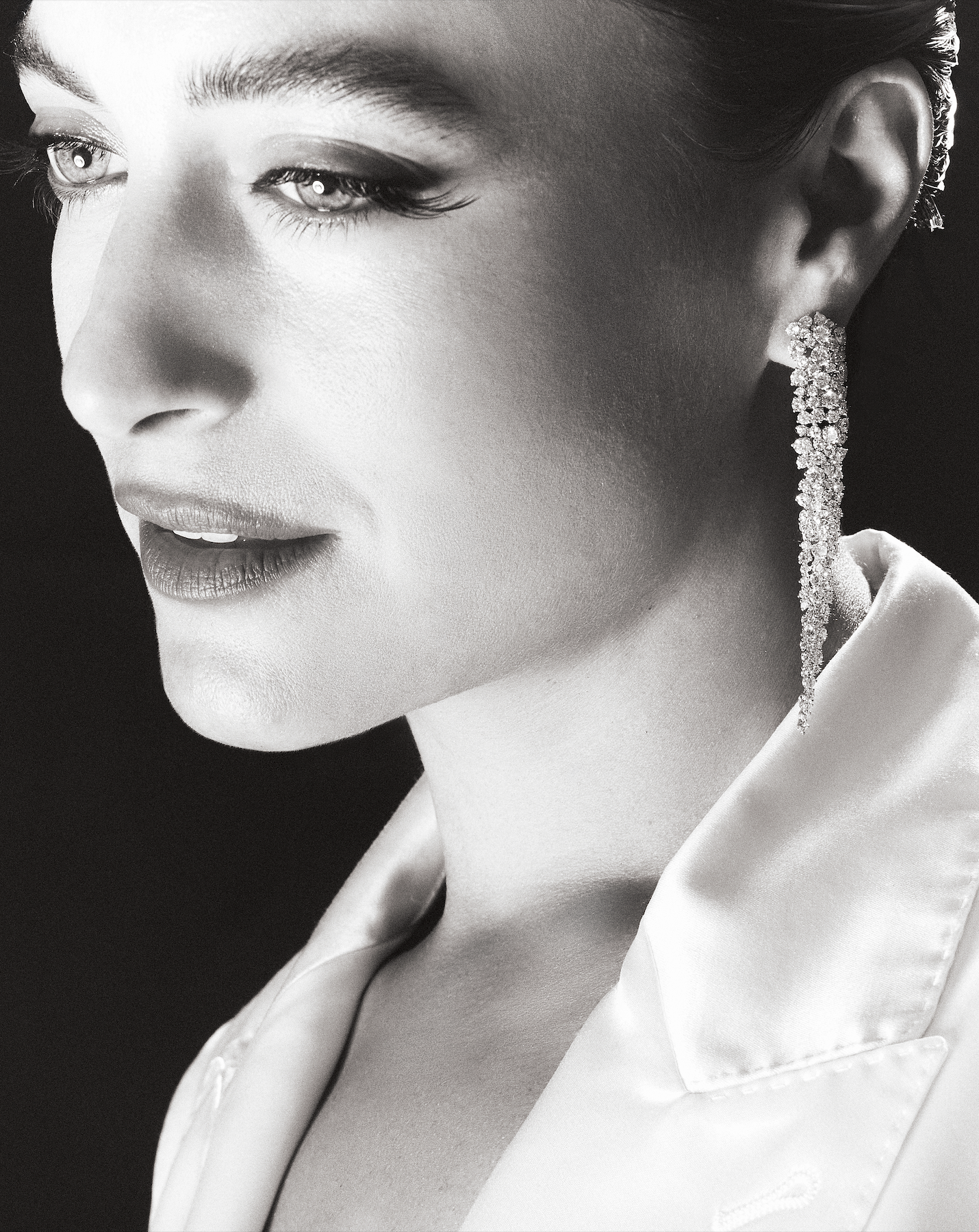
jacket BRUNELLO CUCINELLI
earrings LEO PIZZO
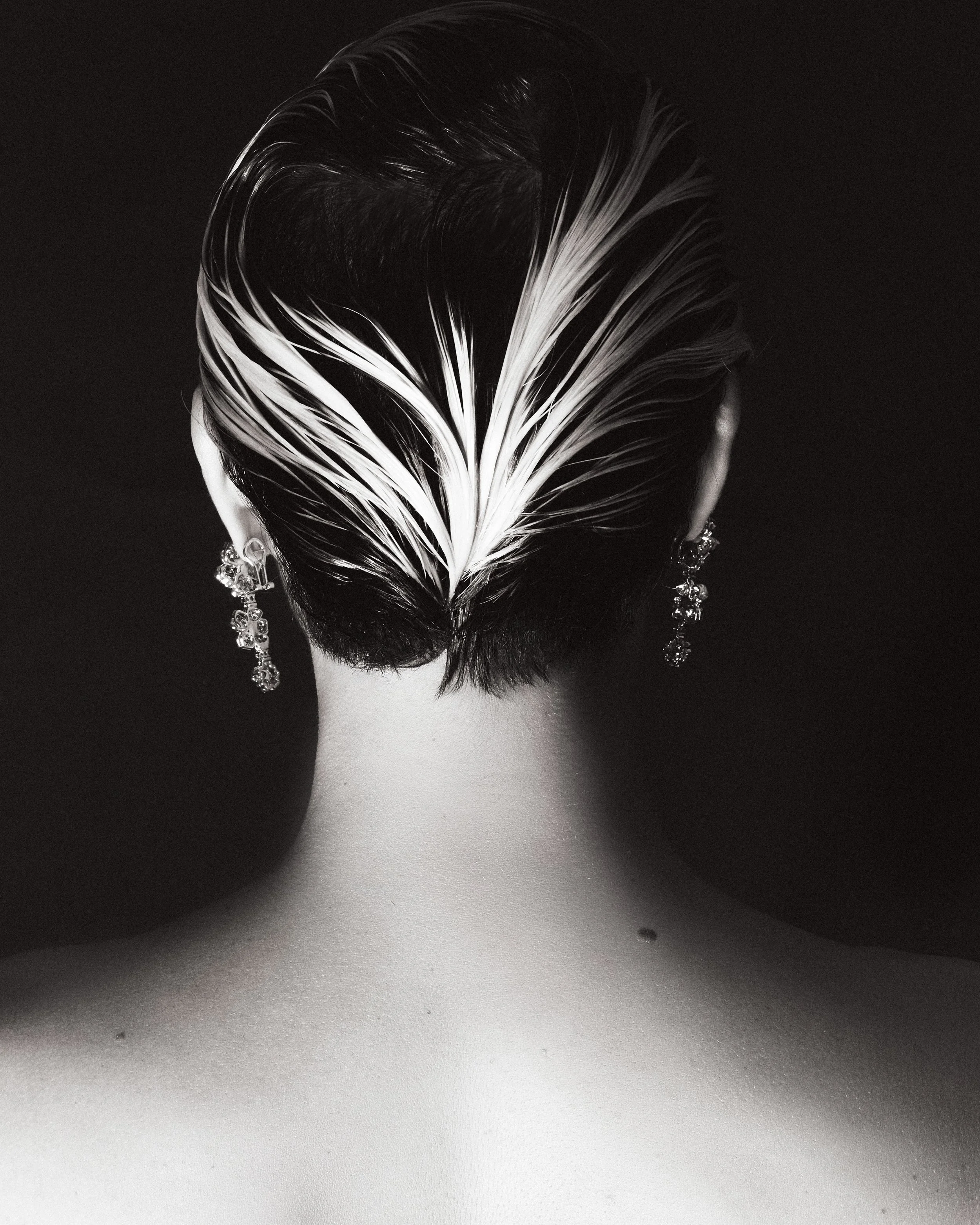
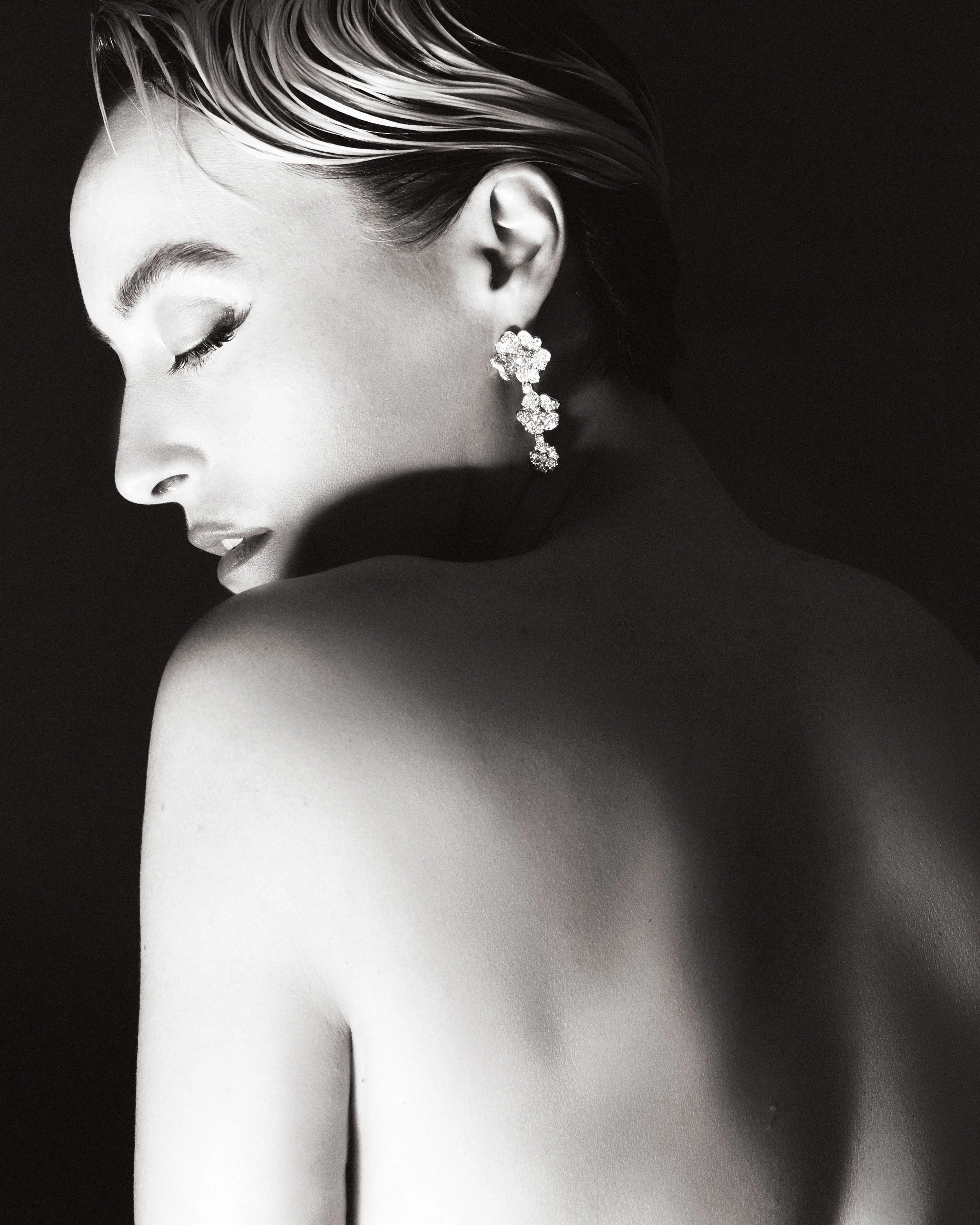
earrings LEO PIZZO
Music and sound seem central to your artistic identity. Why does sound feel so emotionally important in your work?
Music was very present in my life since I was a child. My mom played piano and contrabass, it was an important part of her profession. She was playing and singing a lot at home, she was singing and playing when I was in her womb too. Sometimes I try to imagine how powerful can be to resonate with your mother’s voice when you’re still in the womb and you’re literally immersed in the amniotic fluid vibrations. We resonate to the vibrations and frequencies of sound, which produces physical reactions in our bodies, where our emotional memories create. It’s a universal language.
Also, my grandfather Michael Messerklinger was a musician from Wien. He came to Torino invited by RAI Symphonic Orchestra, where he played the kettledrums. He totally devoted his life to music and activism, connecting Torino to the international scene. My dad loved music too and was a DJ for some time. He gifted me my first CD and introduced me to artists like Patti Smith, David Bowie and Laurie Anderson when I was very young.
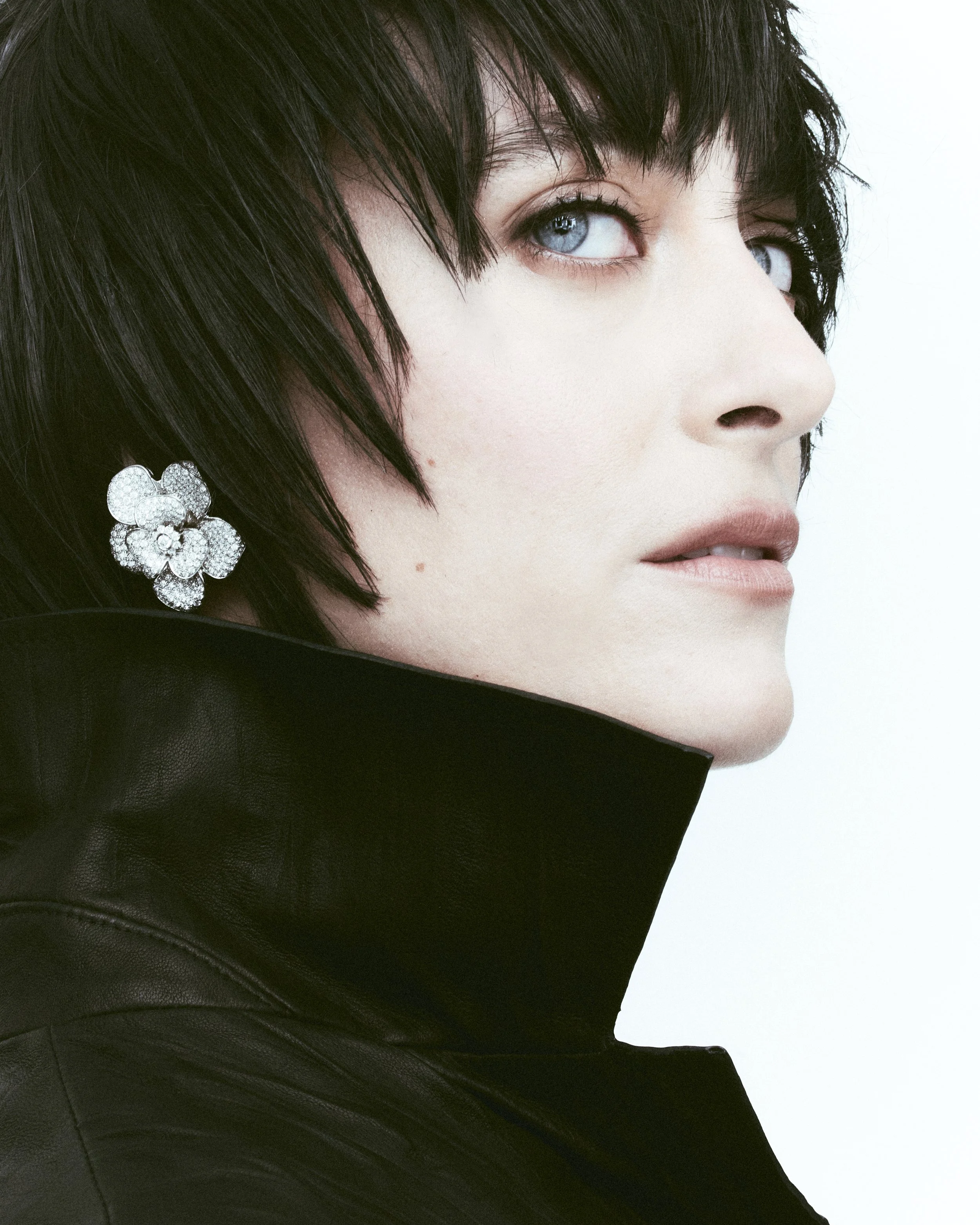

jacket BOSS
earrings LEO PIZZO
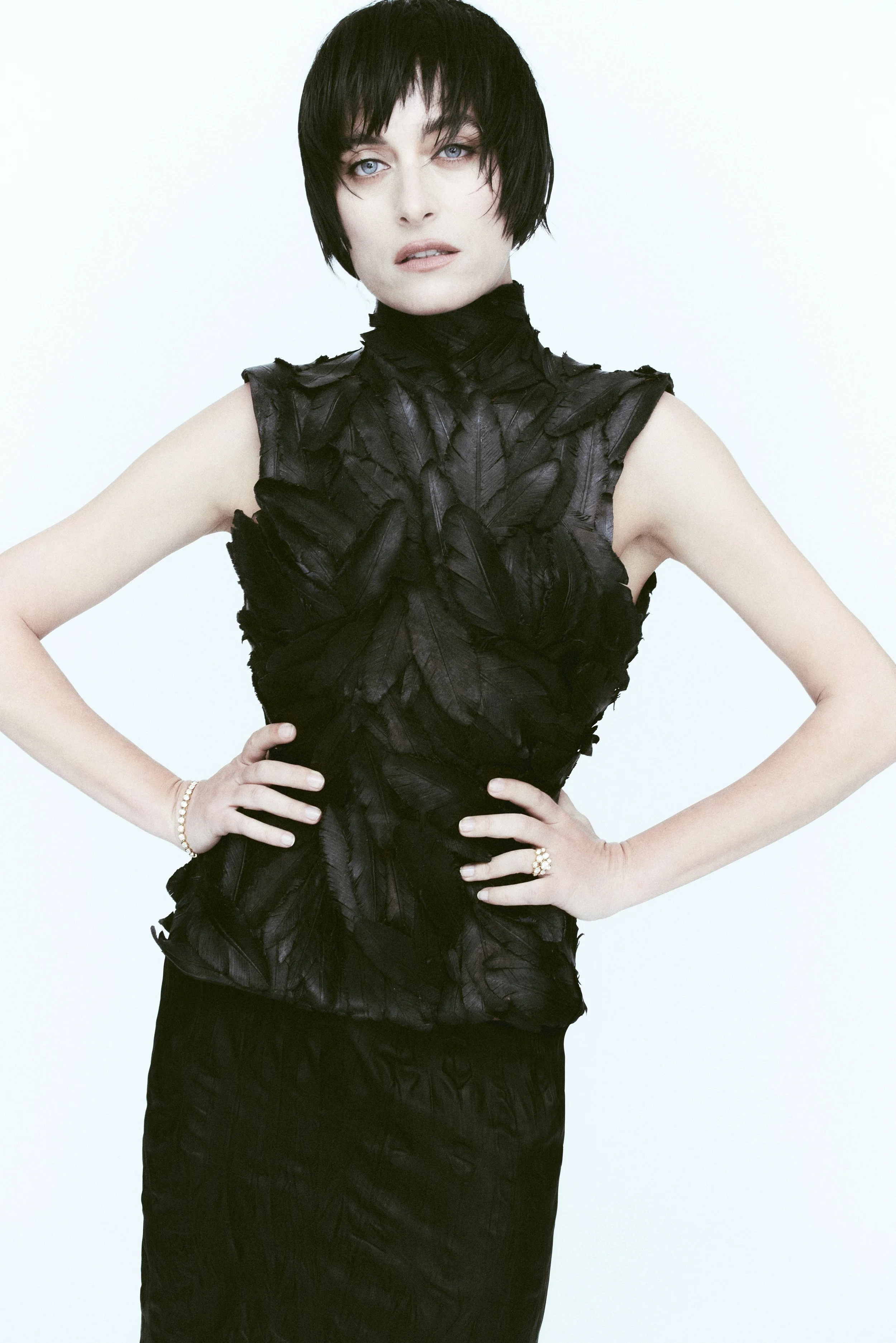
corset YIGE
skirt BOSS
jewellery LEO PIZZO
How did the idea for Linda & The Greenman first emerge?
I had just become a mother, so stopped filming for a while, and I casually met Gigi Giancursi, a musician from Italian group Perturbazione, at the Salone del Libro in Torino. I had worked with the band Perturbazione years before, acting in a videoclip directed by Guido Chiesa. We recognized each other, and in our conversation I told him I loved to sing. Some days after, we were playing together for fun, but it immediately felt magical. Our voices together created something very beautiful, graceful. We decided to work on some covers and after a while, we felt the desire to write together. It was very easy and fun to work together. The first concerts were so nice and people reacted so warmly that we continued and decided to release an album. My son spent his first years with us rehearsing and creating songs at home, like me with my mother. He also came with us for some concerts, and sometimes came with us on stage for some songs. It was very sweet, I felt I could share my art and be a mother at the same time. Gigi was a father himself and was very supporting. His daughter, Nora, loved to sing, and she was often with us. I think people connected to the “familiar” love we emanated. Our music reflected something simple, pure. We were just following our inspiration and working completely free, without any strategy. Mescal Music accepted to release our music for what it was, completely self-produced.
The Green Man is such a symbolic figure in folklore. What does that mythology represent to you personally?
The Green Man is an idea, an energy, a symbol. It conveys messages of union between Mankind and the forces of Nature. He is the guardian spirit of the woods, perhaps an ancient god of vegetation and fertility across many cultures, part of the unconscious collective imagination, an archetypal figure connected to the cycle of nature. He evokes nature turning green, flowers blooming, birds singing their love calls. And most important thing to me, he tells lost stories. We tend to forget so easily that we are children of a single Earth, together with plants and animals.
Your project ANIMA_L feels deeply immersive and site-specific. What interests you about creating performances in dialogue with physical spaces and nature?
The idea of Genius Loci is something that I always felt connected to. I love creating in resonance with places and themes. They change as I cooperate with different festivals, art galleries, workshops, exhibitions, conferences, etc., so the creative space remains something alive, growing, like nature is. With ANIMA_L, I’m learning to feel free to follow my intuition deeper. As creator and director, I need to hold space for others, a magnetic field where interconnection and cooperation can happen. I love to invite artists, researchers, activists in this space, and use my skills to create beautiful, immersive experiences where people can access a process of empowerment. The idea is that we were born deeply connected to nature, as planet Earth natives we share a common feeling of the eco-system we belong to, and every place has its special biodiversity and connected wisdom. We gradually disconnect from this feeling and awareness, if we don’t nourish it.
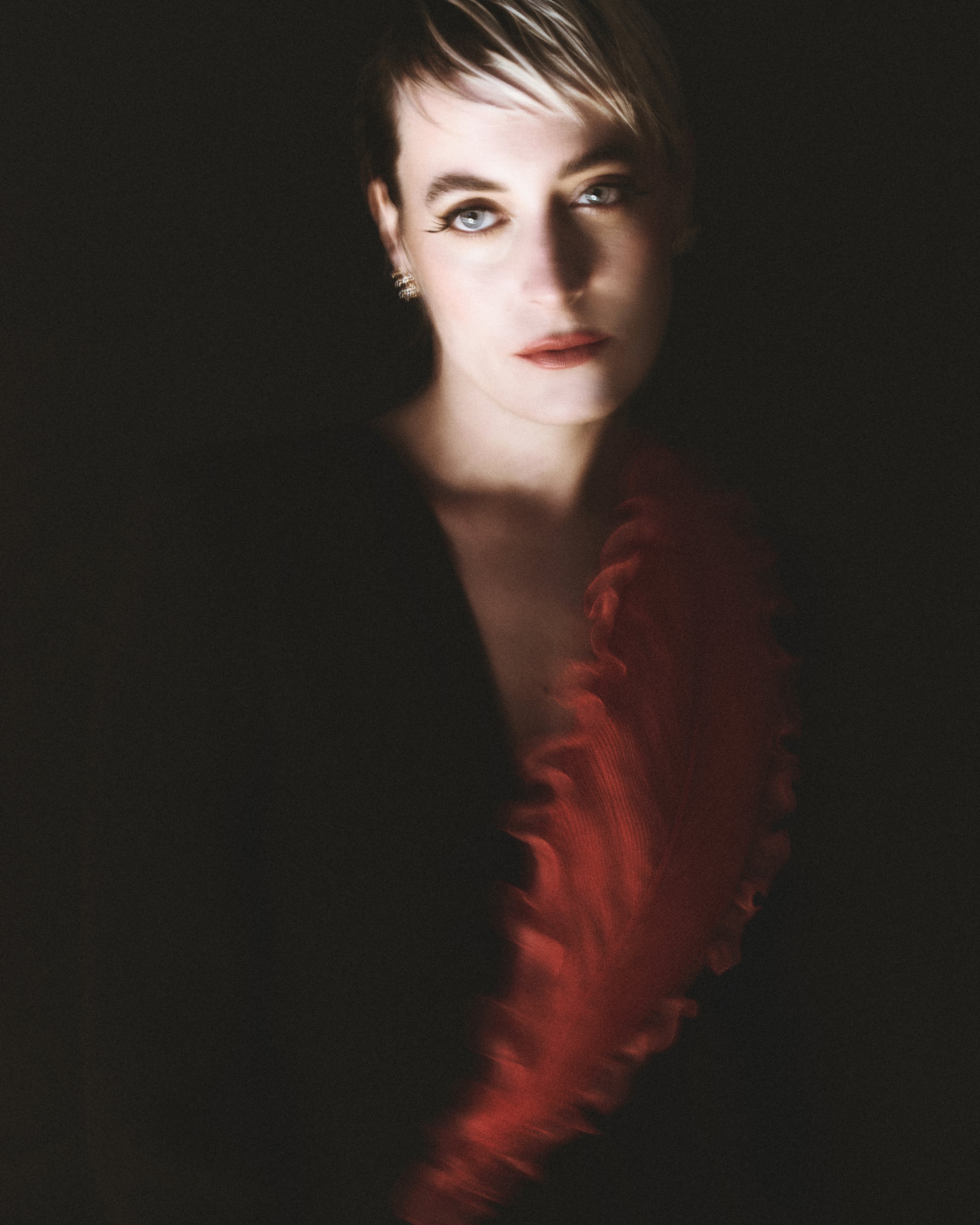
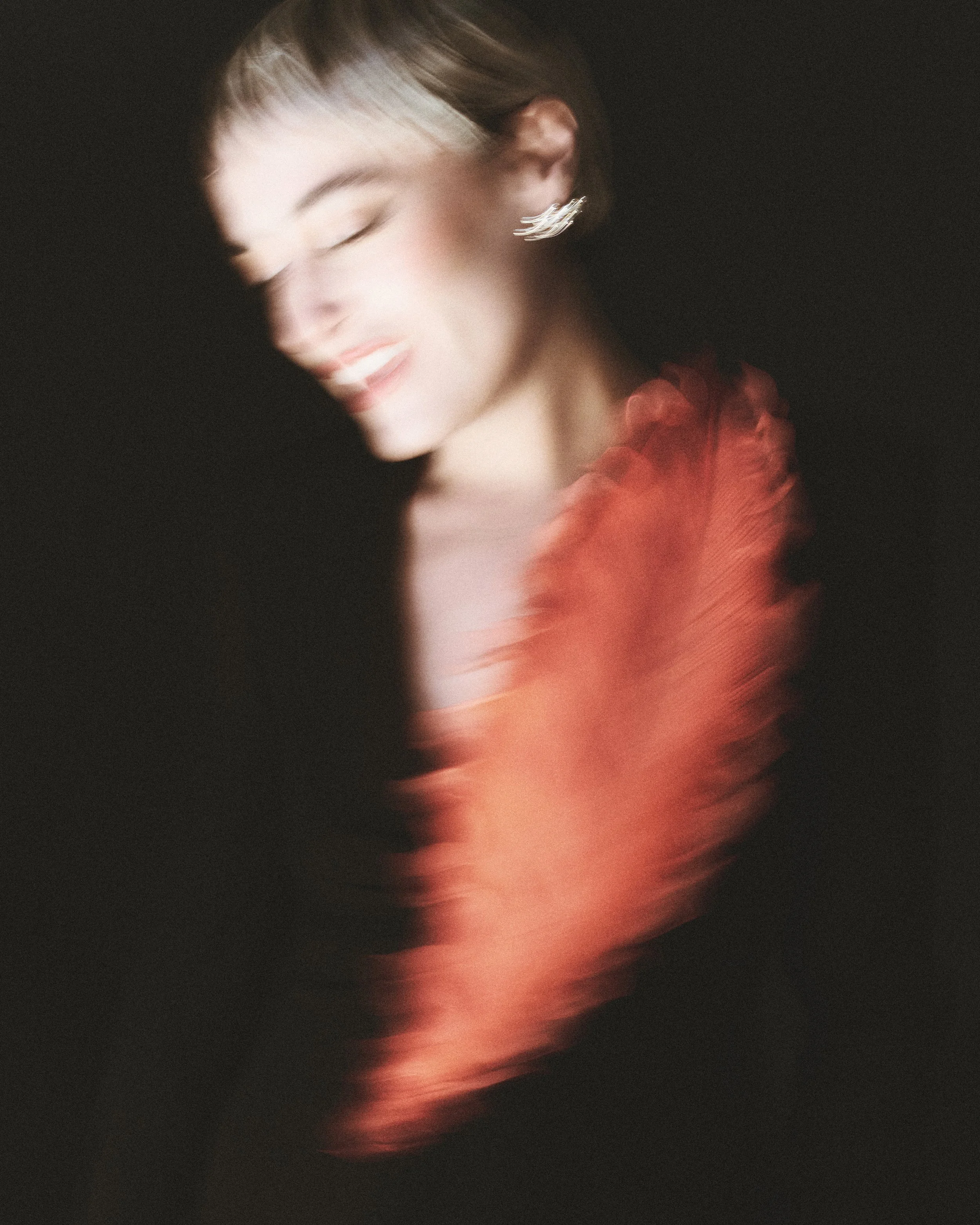
dress VALENTINO
earrings LEO PIZZO
Environmental consciousness runs through much of your work. Do you see art as a form of activism?
Yes, art can inspire action in a vaste audience. I’ve recently been to Ray of Light Awards in Ibiza, a film festival founded by Italian anthropologist Elisabetta Caraccia in memory of actor Ray Stevenson. I moderated a panel with speakers such as Satish Kumar and Helena Norberg-Hodge, and we shared a lot about the power of films. Satish told me about Pakistani filmmaker Sharlene Obaid-Chinoy, whose film The Price of Forgiveness influenced the Pakistan prime minister Nawaz Sharif to change the law regarding women’s rights. Helena, director of The Economics of Happiness, highlighted how films can reach an increasing amount of people, making it one of the most powerful tools to create awareness, inspiration, transformation. I totally resonate with this.
What inspired your collaboration with climate activism movements like Extinction Rebellion?
I knew the movement from before, but the occasion was given by Cinemambiente Festival, one of the most important environmental film festival in Europe, founded in Torino by Gaetano Capizzi. In 2020 edition, he invited me and Luca Vicini (Subsonica) to open with a performance the screening of The Trublemaker by Sasha Snow, which tells the story of Extinction Rebellion and its founder Roger Hallam. So, I invited some activists of the movement to join the performance. It was easy to connect, as one of the guiding ideas of the movement is to use symbols and artistic flash mobs to convey environmental messages.
How has your understanding of performance evolved from traditional acting into multimedia and live environmental work?
To be honest, I don’t feel I can easily think of “traditional” acting. My connection to this art has always been multidisciplinary and I met masters and mentors from different fields. My connection with nature was very strong since I was a child. Then growing up, some events made me feel more and more called to environmental awareness, natives’ issues and ancestral wisdom. When I first moved from Torino to Roma in 2009, to follow my dream of working with great masters of cinema, one of my first experiences was a workshop I attended, led by two wonderful artists, Alessandra Cristiani and Daria Deflorian, in a lovely tiny place called Teatro in Scatola. There I met a very special woman, Sabrina Montanaro, and she asked me to help her translate to Italian a document she had written with the Mamos of Sierra Nevada de Santa Marta, with whom she had spent months in their land in Colombia.
She introduced me to their wisdom and their mission to protect from exploitation and disruption the very unique ecosystem they were connected to. She also introduced me to Vedic and Tibetan wisdom and techniques she had learnt from different masters. So, in my life, acting has always been so interconnected to all of this. Then I found out many masters I love had illuminated that kind of path. Stanislavsky deeply integrated Indian wisdom and yoga into his acting system, Jodorowsky created new realities connecting art, theatre, cinema, mysticism, healing, alchemy, folklore, ancestral practices. In Italy, Orazio Costa cultivated a vision of acting and directing which shares deep philosophical and practical parallels with disciplines like Tai Chi, Ch’i Kung and Zen meditation. Eleonora Duse revolutionized acting with a profoundly mystical approach. Her body itself became a language, moving from hieratic poses to feline fluidity, sharing her search for purity and physical truth on stage. Mystical literature was a constant guide to her, and she dreamed of an academy where theatre would be taught as a path of growth, not just as a profession.

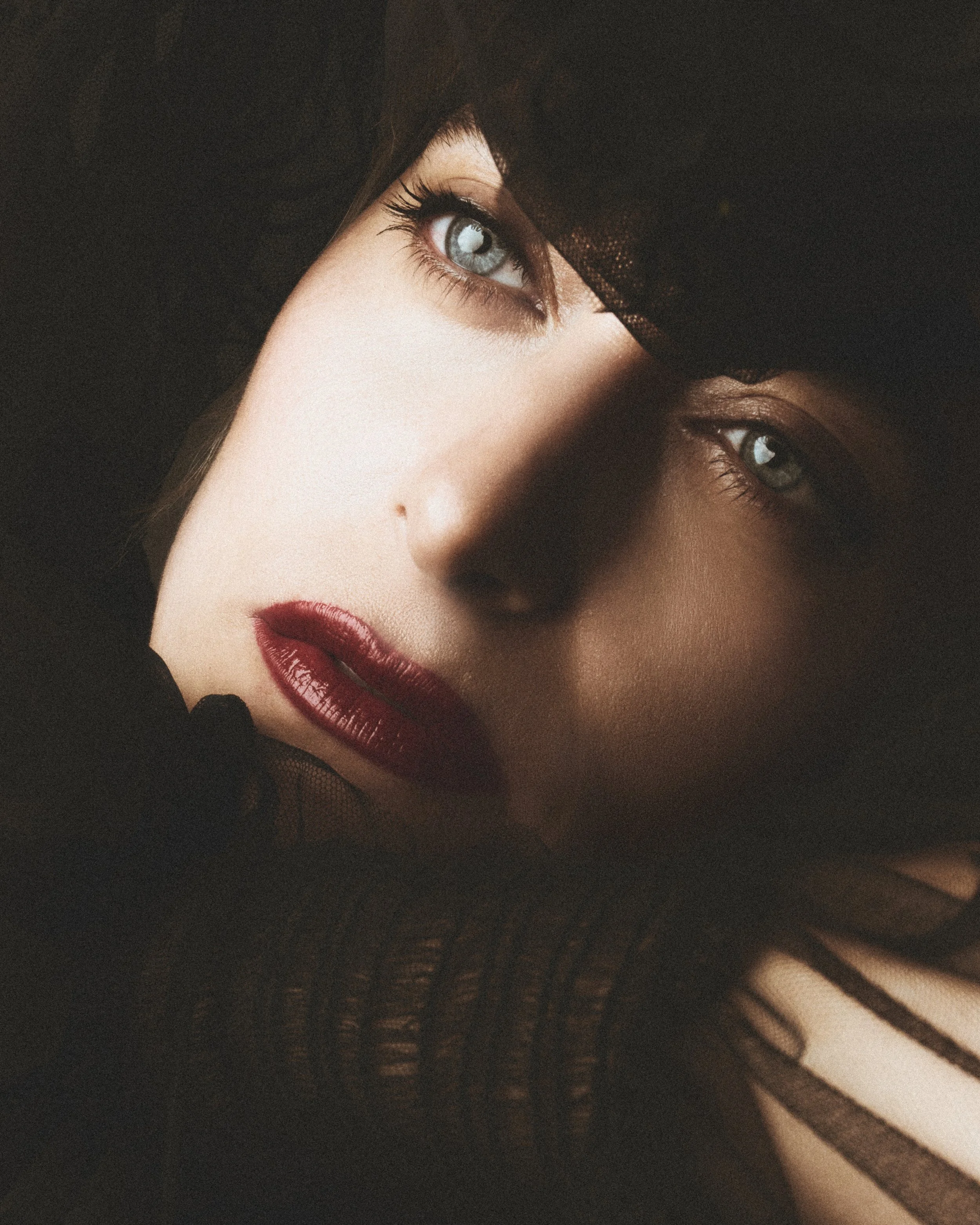
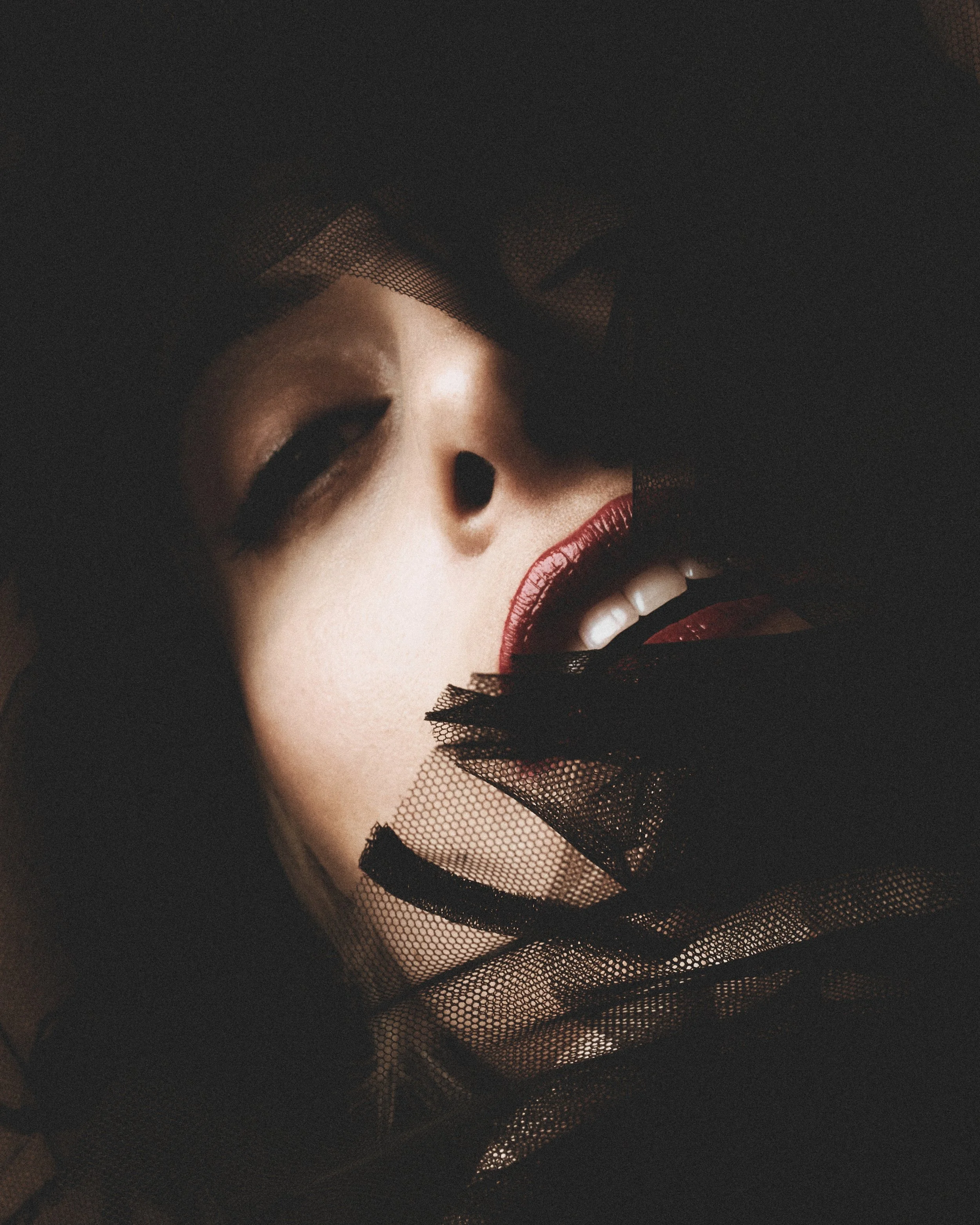
shirt BLUMARINE
What role does spirituality or ritual play within your creative process?
Creativity, for me, is the ability to embrace life in a creative way, so it has a lot to do with the spirit, in the sense that you can begin every day with a clear intention of uplifting, shining, celebrating. You offer yourself to life, and to others. You recognize the mystery of creation and you honor it. My creative process is a mystery itself, it reveals to me every time I’m working on a project, so I train myself in order to be open to it, and I study different techniques and practices and tools than can be useful for different moments. One of my mentors, Micheal Margotta, loves to say “Acting is the art of relaxation”. To practice a “Buddha mood” is an interesting mission. So basically, to me, creativity is a practice that needs a constant attitude for freedom. Free yourself from what makes you heavy, transform “heavy” into “heaven”.
What do you hope audiences feel or question after experiencing your work?
I hope they feel inspired. They feel a space of desire, new spaces for questions and possibilities and discoveries. Maybe also some emotions can be realized, and released. Emotional frequency is powerful, actors can teach and heal through their characters’ stories. It’s the magic of identification and emphaty, and compassion too. And communion. Sense of communion is something I feel very connected to, and I’d love that my work could empower this feeling. My project ANIMA_L is based on this idea, an inter-species sense of communion.
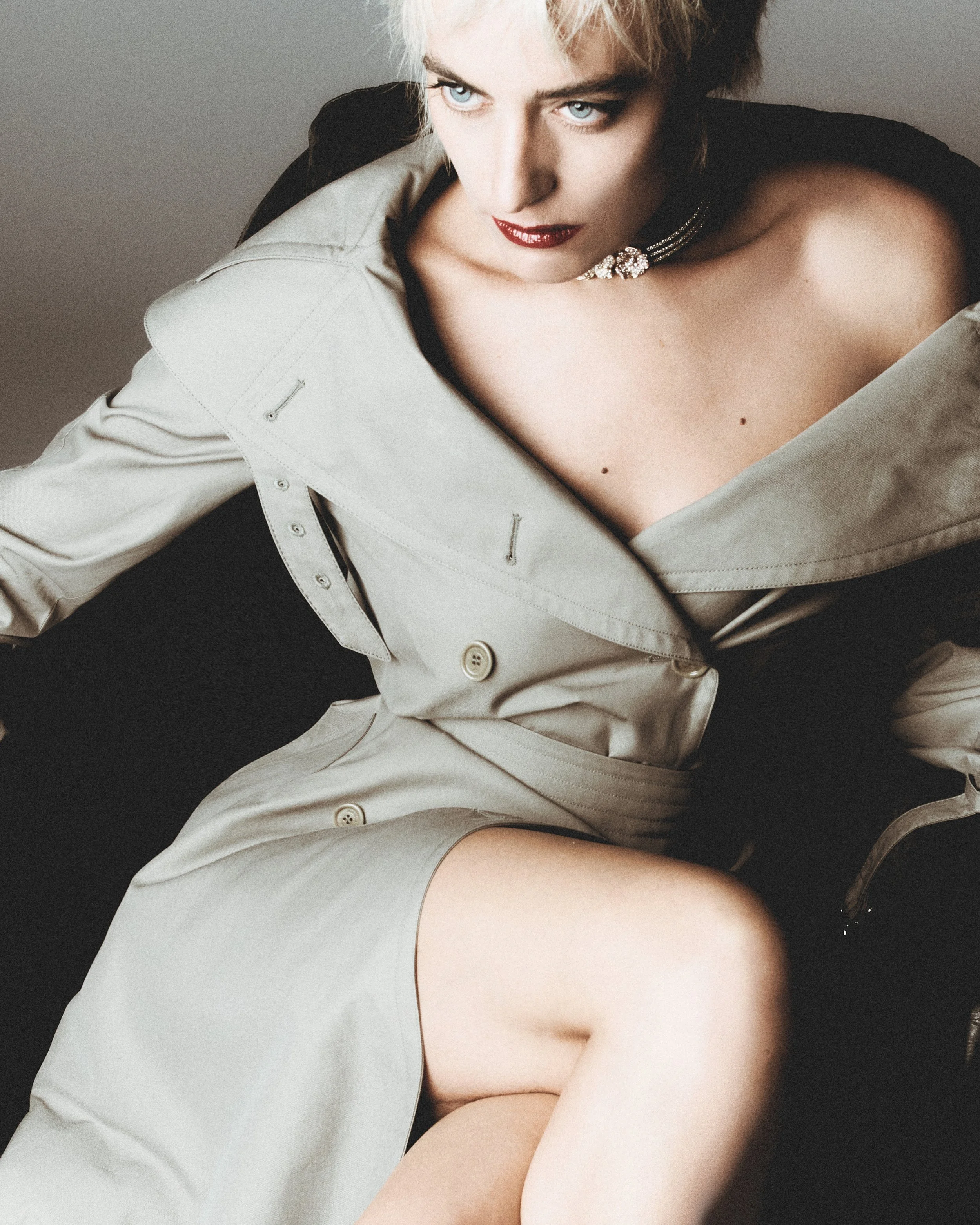
trench MAX MARA
necklaces LEO PIZZO
Looking ahead, what kind of artistic conversations are you most interested in exploring next?
Ray of Light festival in Ibiza has been a very special moment of convergence for filmmakers, artists and activists, and I want to help this grow in the next years. I wish we can also create programs for schools, working with children and teenagers in different nations. And found a ROLA production company.
With Satish Kumar, we are thinking of making something together in Torino in September.
I’m also going deeper in my connection with natives from different lineages. I feel I need to explore the planet and its wisdom to grow as an artist. One of the films awarded in Ibiza was Kopenawa - dreaming the Earth-Forest, a documentary about the indigenous people of the Amazon. They invited me to spend some time with them. Also, Mamos from Sierra Nevada De Santa Marta were at the festival, so I re-connected with them, and I just had a call with Sabrina Montanaro who has precious material she shot when she was with them in Colombia, and is working on a documentary. I feel working on art-documentaries is my new practice, and natural prosecution of what I’ve been doing with immersive performances.
As an actress, I’m open to co-operate with authors and artists from all over the world. I recently took part in a film by Hedy Krissane, whose origins are Tunisian, so I’ve been connecting with this heritage and culture a little bit. We celebrated the end of Ramadan on set, and I loved it.
I wish myself to be invited to films that enlarge my vision, perception and wisdom more and more.
TEAM CREDITS:
talent LINDA KLEE MESSERKLINGER
photography NICOLA PAGANO
photography assist PIETRO SAVIO
styling MARCO VISCONTI
styling assist GINEVRA VISTOLI and RAFAELLA AVALOS
makeup CLARISS CARBONE
hair MAIKO SHIBATA
pr MPUNTO COMUNICAZIONE
production STUDIO VISCOMA
