
IN CONVERSATION WITH LUAR’S RAUL LOPEZ
interview by MAREK BARTEK
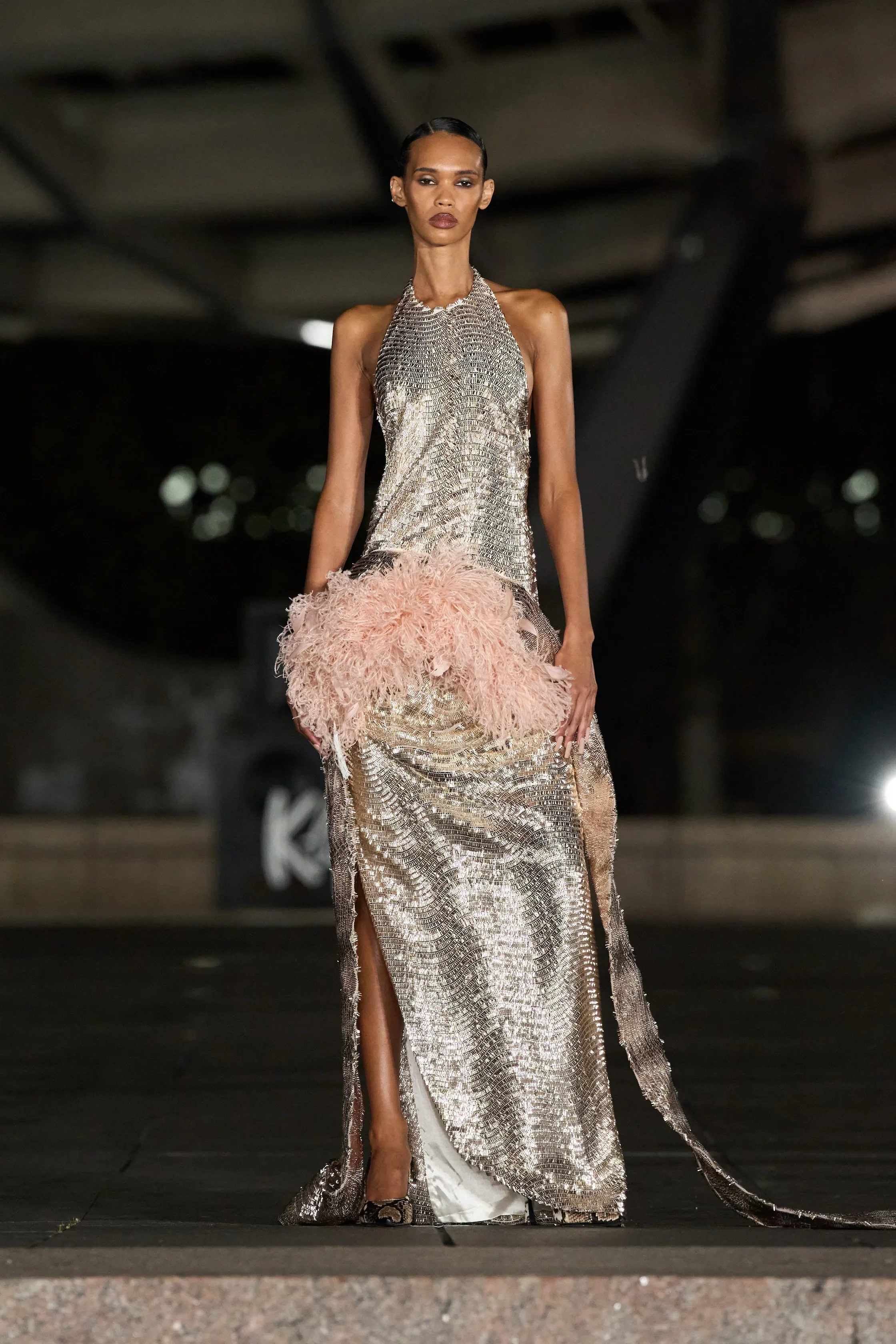
On the sixth day of New York Fashion Week, we gathered in Queens at Unisphere monument to watch Luar’s Christopher Street Columbus — a collection that explores the themes of names and Caribbean history. We caught up with Luar’s creative director Raul Lopez to talk about the inspirations, growing up in New York and reclaiming a historical narrative.
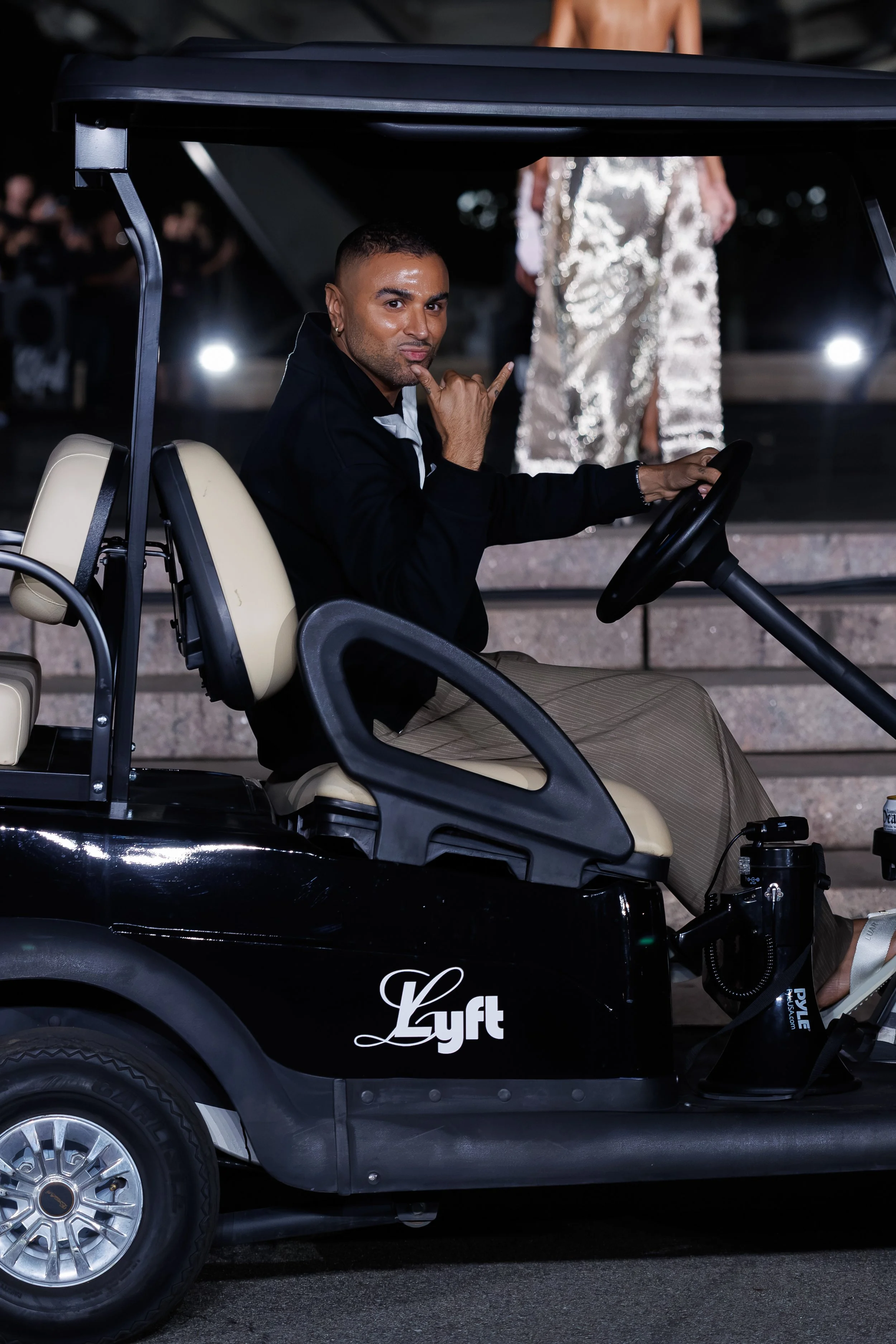
all images courtesy of LUAR
The collection begins with the idea of naming — who names us, what we’re named after and what those names leave behind. Where did that question begin for you personally, and how did it become the starting point for Christopher Street Columbus?
I’ve always been very conscious of names and what they carry. My own name, Raul Lopez, carries my family, my Dominican identity, my history, but also all the assumptions people make when they hear it. Christopher Street was the street where I really came into myself. I grew up around it, and it was one of the first places where I understood that you could create yourself through how you dressed, how you moved, how you presented yourself.
Then there is Christopher Columbus, whose name is deeply embedded in the history of the Dominican Republic and the Caribbean. So I started thinking about these two Christophers — one representing a place where I found freedom and identity, and the other representing a history of conquest, displacement and colonisation. Putting those names together became a way of looking at my own identity through both sides of that history.
What interested you in putting those two Christophers into the same conversation?
They are both deeply personal to me, but for completely different reasons. Christopher Street represents discovery in a very personal sense — discovering myself, my sexuality, fashion, community and the person I wanted to become. Columbus represents a much larger, more complicated discovery — one that was imposed on an entire part of the world.
The idea that one Christopher gave me a place to discover myself, while the other represents the beginning of a history that fundamentally changed where my family comes from. I wanted to put those two histories next to each other and let the tension exist.
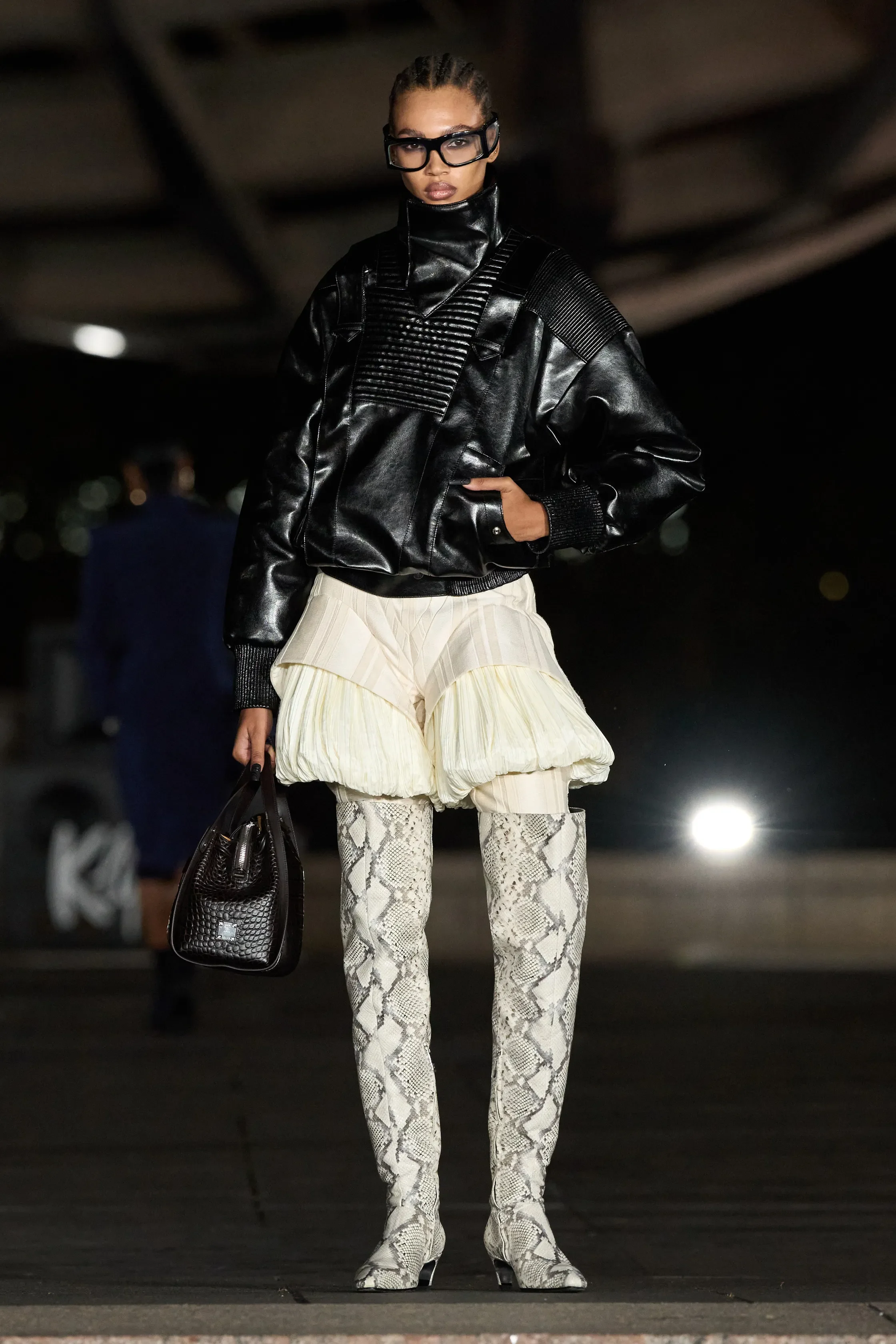
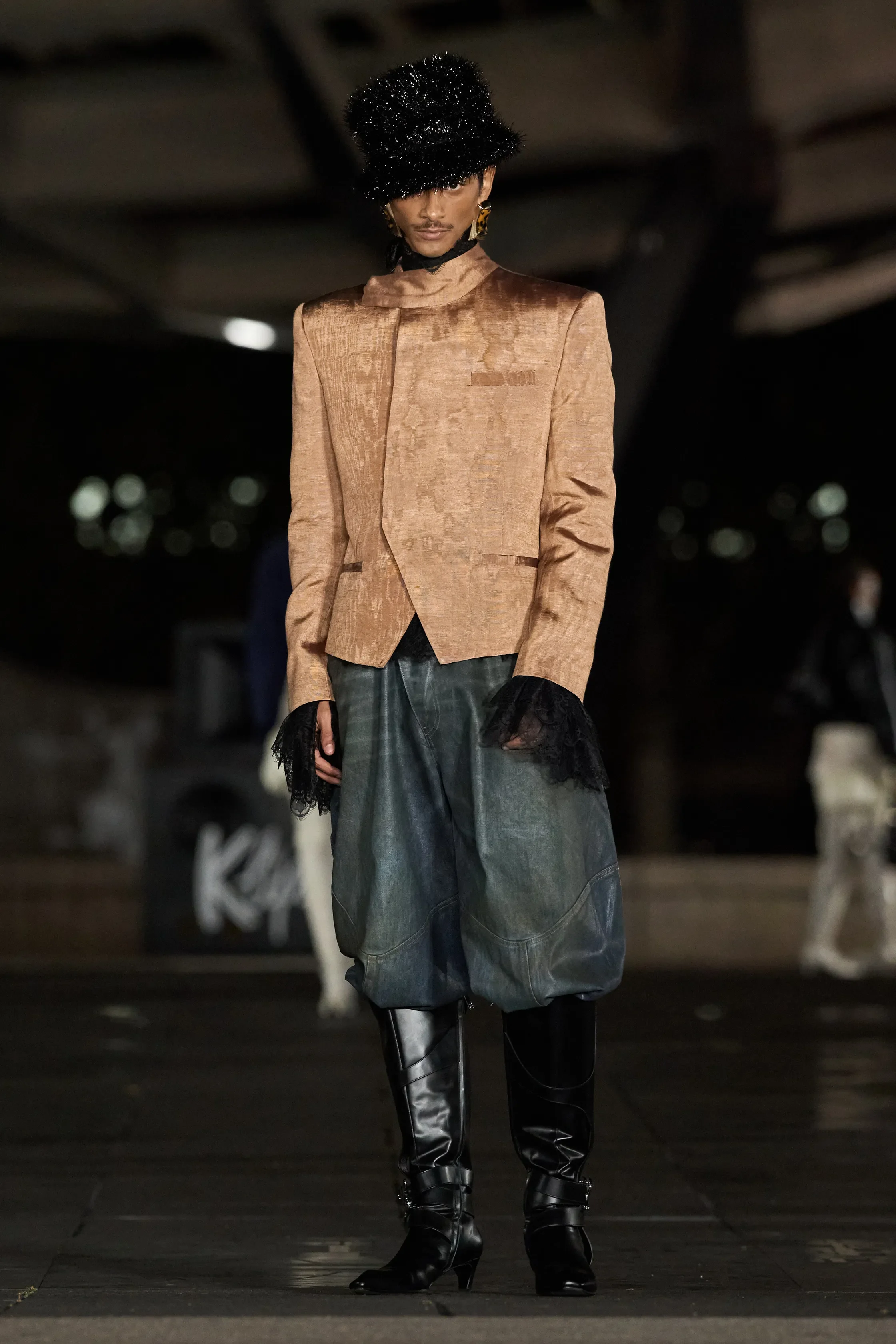
You describe Christopher Street as a place where you discovered freedom and yourself. When you think back to yourself on Christopher Street in the early 2000s, what were you learning through clothes that you perhaps didn’t realise you were learning at the time?
I was learning that clothes could give you power before I had the language to understand what that meant. I was bullied for being myself and for dressing differently. I always felt like I was too fashion for the ghetto and too ghetto for fashion, so clothes became a way of saying, “This is who I am, and you’re going to have to deal with it.”
Christopher Street taught me that fashion could be protection, but it could also be confrontation. You could walk down the street and your clothes could announce you before you ever opened your mouth. Looking back, I realise that I was already designing my identity before I understood that I was going to become a designer.
During one of the prior talks, you’ve said you wanted to play with colonisation and reclaim it. What does reclamation mean to you when the history you’re dealing with can’t necessarily be resolved or rewritten?
Reclamation isn’t about pretending history didn’t happen. You can’t rewrite it. For me, it’s about taking control of the narrative and deciding what happens with that history now.
I come from a place that has been described and defined by other people for centuries. So I wanted to take these symbols, references and histories that have complicated meanings and bring them to life through my own lens. I’m not trying to make colonisation beautiful, rather I’m questioning who gets to tell the story, who gets to wear the symbols, and what happens when the descendant of that history gets to reinterpret it.
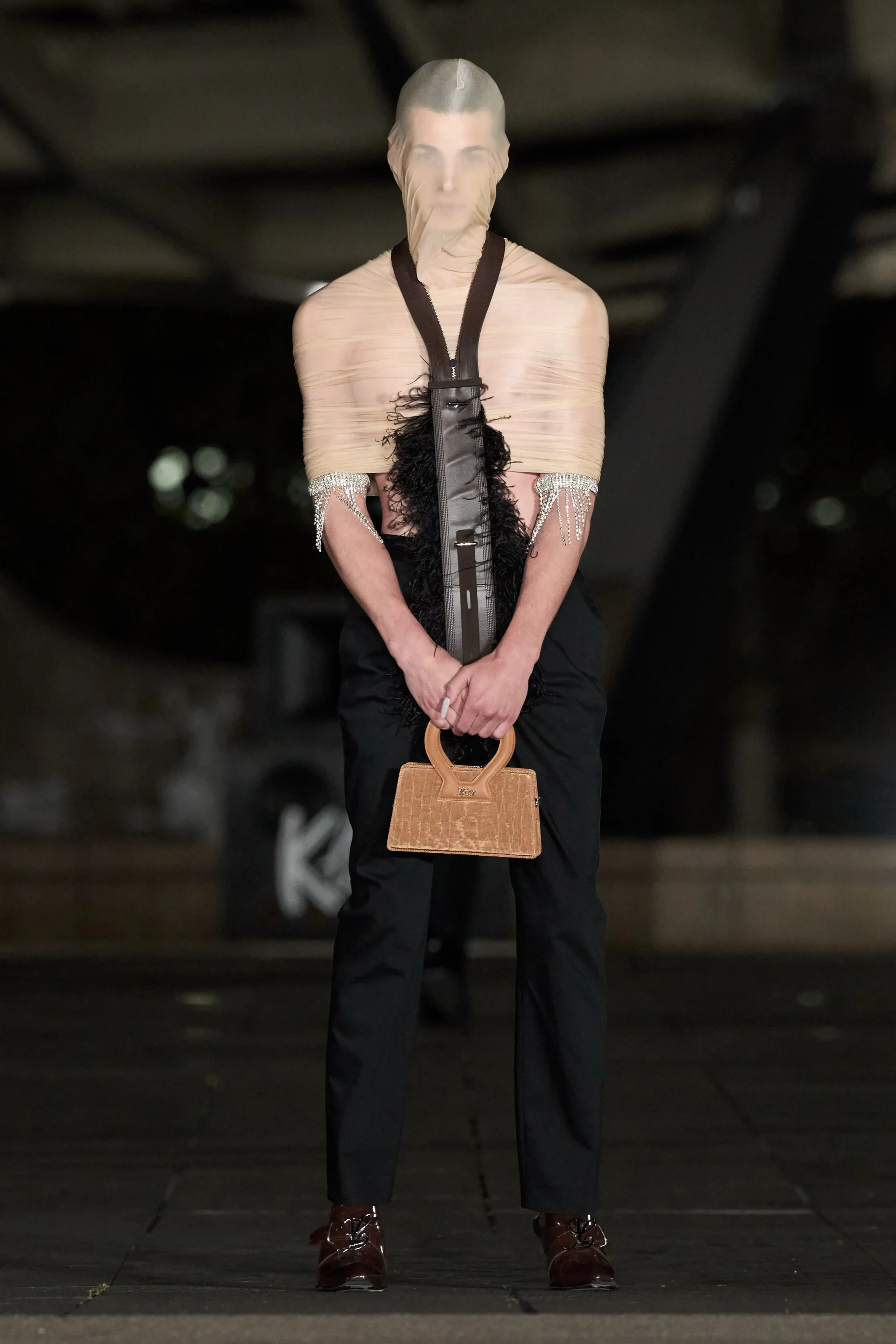
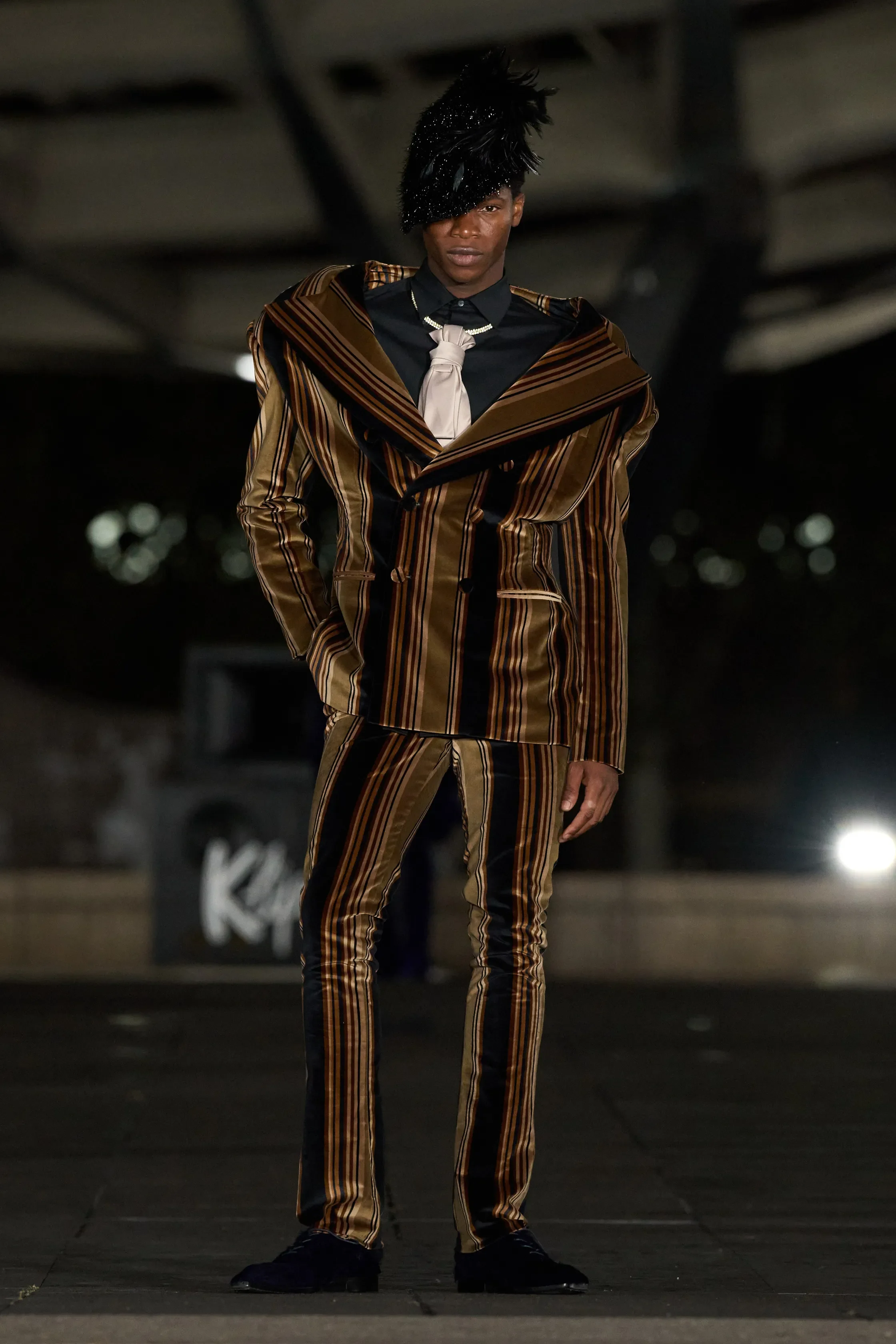
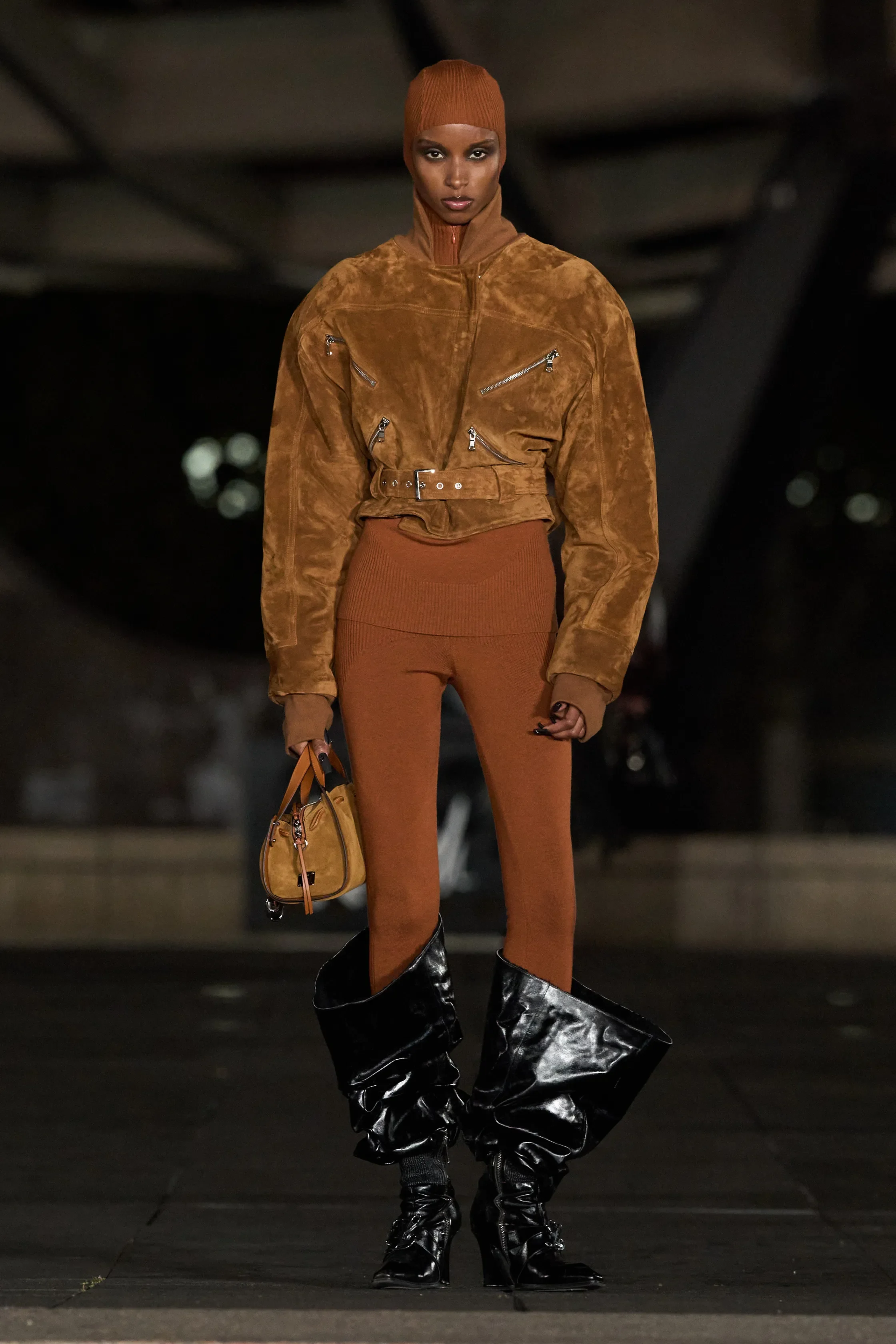
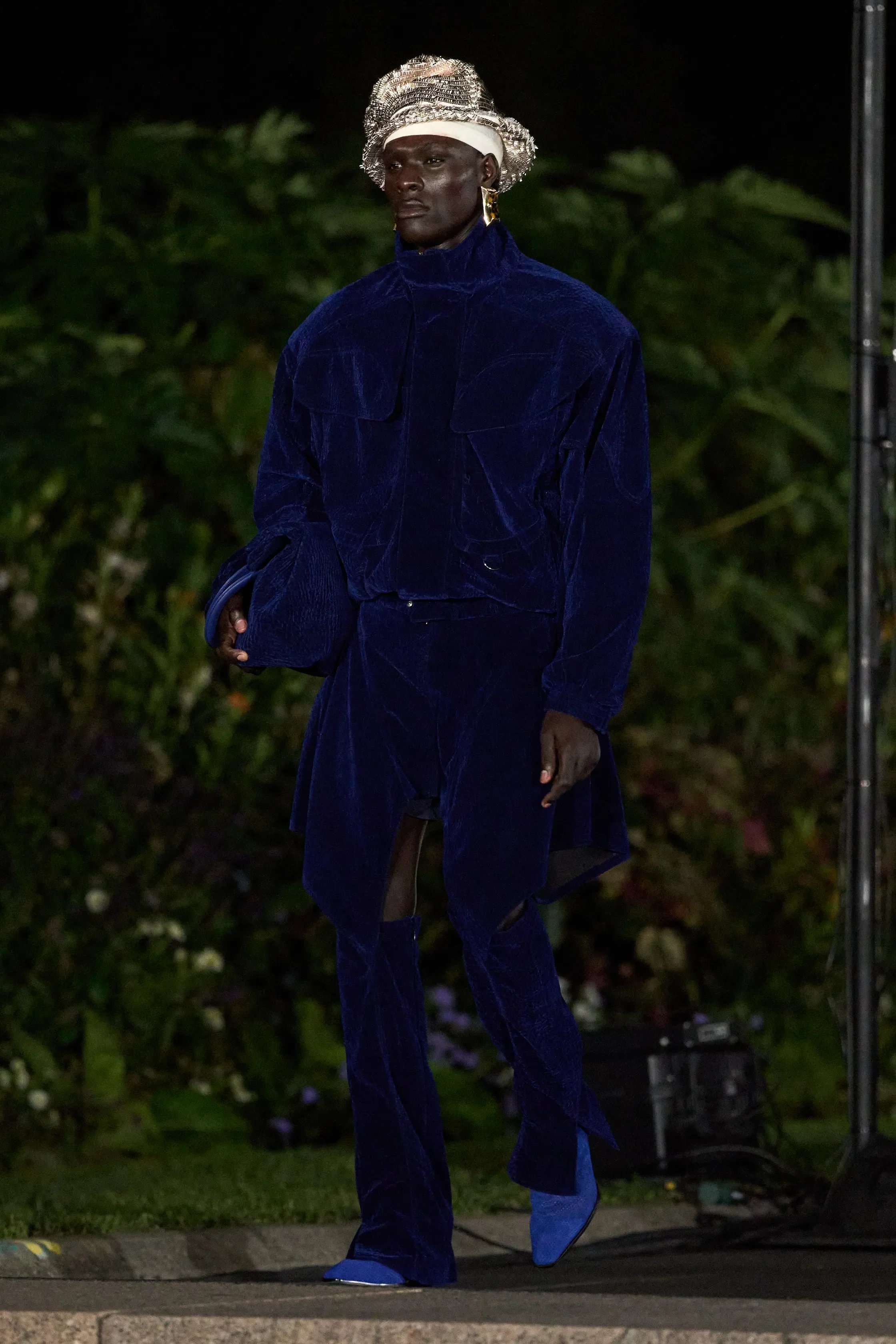
Tudor and early-modern references meet biker jackets, track jackets and early-2000s New York streetwear. How did you decide which historical codes could be pulled apart and made to speak Luar’s language?
I don’t really separate history from the present when I design. I’m always looking for the connection between things that technically shouldn’t belong together.
I was looking at Tudor and early-modern clothing and asking myself what would happen if those silhouettes had grown up on Christopher Street in the early 2000s. A pleated breech could become something urban. A puffed sleeve could become aggressive. A historical jacket could suddenly feel like a biker jacket. I wanted the clothes to feel as though they had travelled through time and ended up in New York. That collision is very Luar to me.
There’s an interesting conversation around masculinity in the collection — from the codes of early-2000s New York to pleated breeches, nipped waists, puffed sleeves, lace and jewellery. Were you interested in showing how much our idea of what looks “masculine” is really just a product of a particular moment in history?
Absolutely. Masculinity has always been much more fluid than we like to admit. What we consider masculine today is just one version of masculinity, and history shows us that those codes are constantly changing.
I love looking at historical menswear because there was so much decoration, shape, jewellery, lace and volume. Then you look at early-2000s New York and masculinity becomes much more rigid — oversized, athletic, hard, aggressive.
I wanted to bring those two ideas together and remind people that masculinity has never been one fixed thing. It is something we construct, and fashion is one of the ways we construct it.
The Dominican Republic is deeply present in this collection, from the cacao imagery to the wider conversation around history and identity.
The Dominican Republic is always my starting point. Before every collection, I go there. It’s almost a ritual for me. I don’t necessarily know what I’m looking for when I arrive, but somehow I always find the beginning of the collection there.
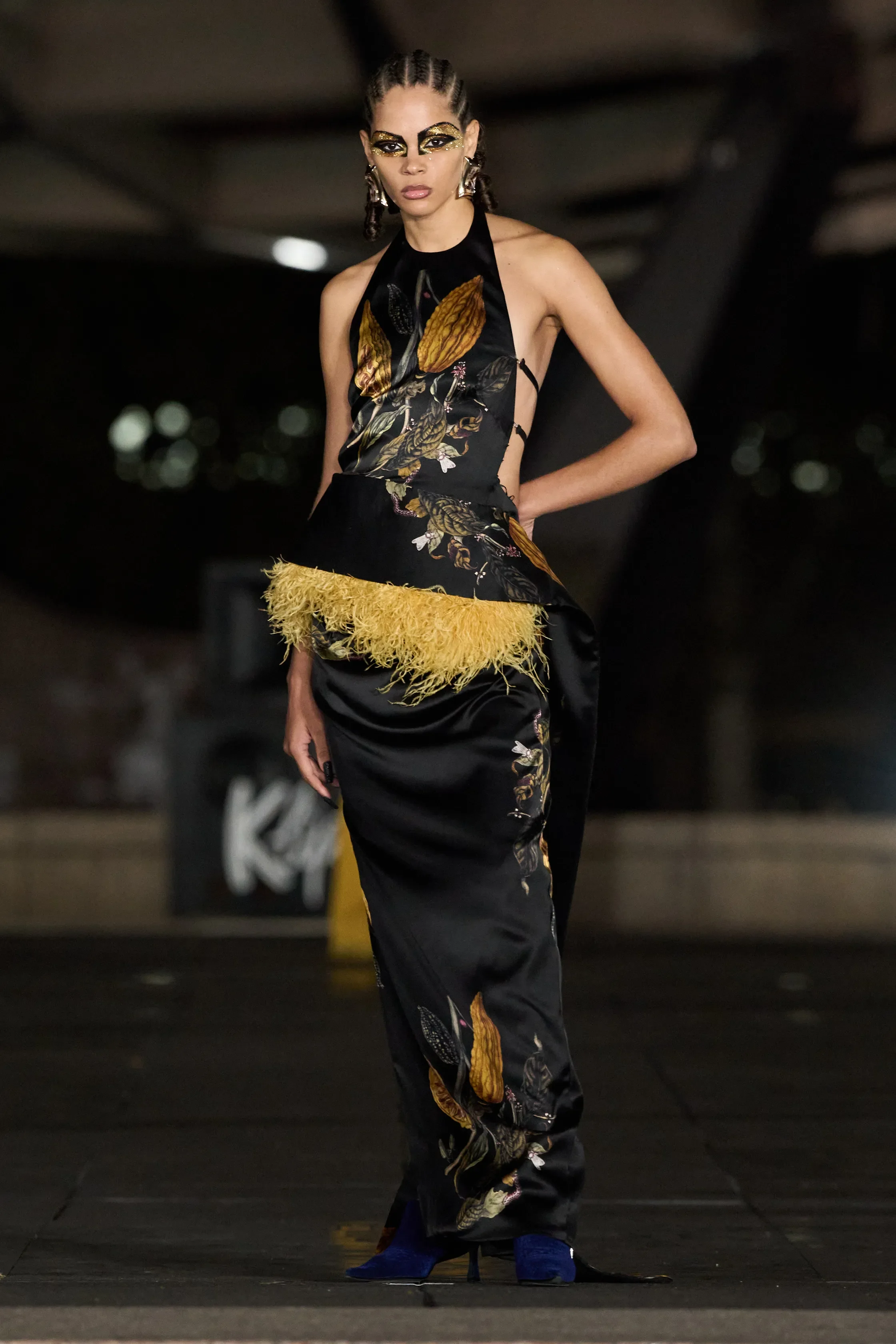
You found one of the collection’s 16th-century references on TikTok. I love the contrast of discovering something centuries old through such a contemporary platform. Where do you usually find the references that end up shaping a Luar collection?
Honestly, everywhere. I don’t believe inspiration has to come from one place or one particular kind of research. I can see something in a museum, on the street, in the Dominican Republic, on TikTok, in a photograph, in a movie, in someone’s outfit, or even in something completely accidental. I’m constantly collecting information. That’s what I love about TikTok in particular — you can suddenly be looking at something from the 16th century because the algorithm decided to put it in front of you. For me, there’s no hierarchy between where a reference comes from. A 500-year-old garment and a kid on Christopher Street can be equally important to the way I design.
You chose to show beneath the Unisphere in Queens. What significance did the location have for the collection?
Queens is home for me in a very personal way. I grew up in New York, and the Unisphere is one of those monumental images that feels embedded in the city’s identity. The World’s Fair was built around ideas of the future, progress and how we imagined the world. I loved the idea of putting a collection that is dealing with history, colonisation, identity and migration underneath this enormous symbol of a projected future. And there’s something very personal about showing it in Queens. This is where New York’s immigrant communities have always created their own worlds. I wanted the collection to stand in that space between where we come from and where we’re going.
At this point in Luar’s evolution, do you still feel a need to resist being defined, or have you reached a place where you can define yourself on your own terms?
I think I’ve reached a place where I don’t feel the need to ask permission to define myself anymore. When I was younger, I was constantly trying to figure out where I belonged. I felt too much of one thing and not enough of another. Too Dominican, too New York, too queer, too fashion, too street. Eventually I realised that all of those contradictions are exactly what make me who I am. Luar doesn’t need to fit neatly into somebody else’s category. The house is built from my experiences, my family, my Dominican roots, New York and the communities that shaped me. I’m not interested in proving that I belong in fashion anymore. I’m interested in defining what Luar is on our own terms.