
IN CONVERSATION WITH LUCAS IVERSON
interview by JANA LETONJA
Lucas Iverson is having a defining moment, as he is stepping into wider recognition with his breakout role as Dr. James Ogilvie on the multi-award-winning series The Pitt, It’s a full-circle chapter for him, one shaped by stage work, patience, near-misses, and an unwavering belief in the craft. Alongside The Pitt, he continues to build a striking body of work across television and theatre, from his recurring role on HBO’s The Gilded Age to taking on Cassio in Simon Godwin’s upcoming production of Othello at the Shakespeare Theatre Company. With momentum across mediums, Lucas represents an actor deeply grounded in technique and newly arriving at his moment.
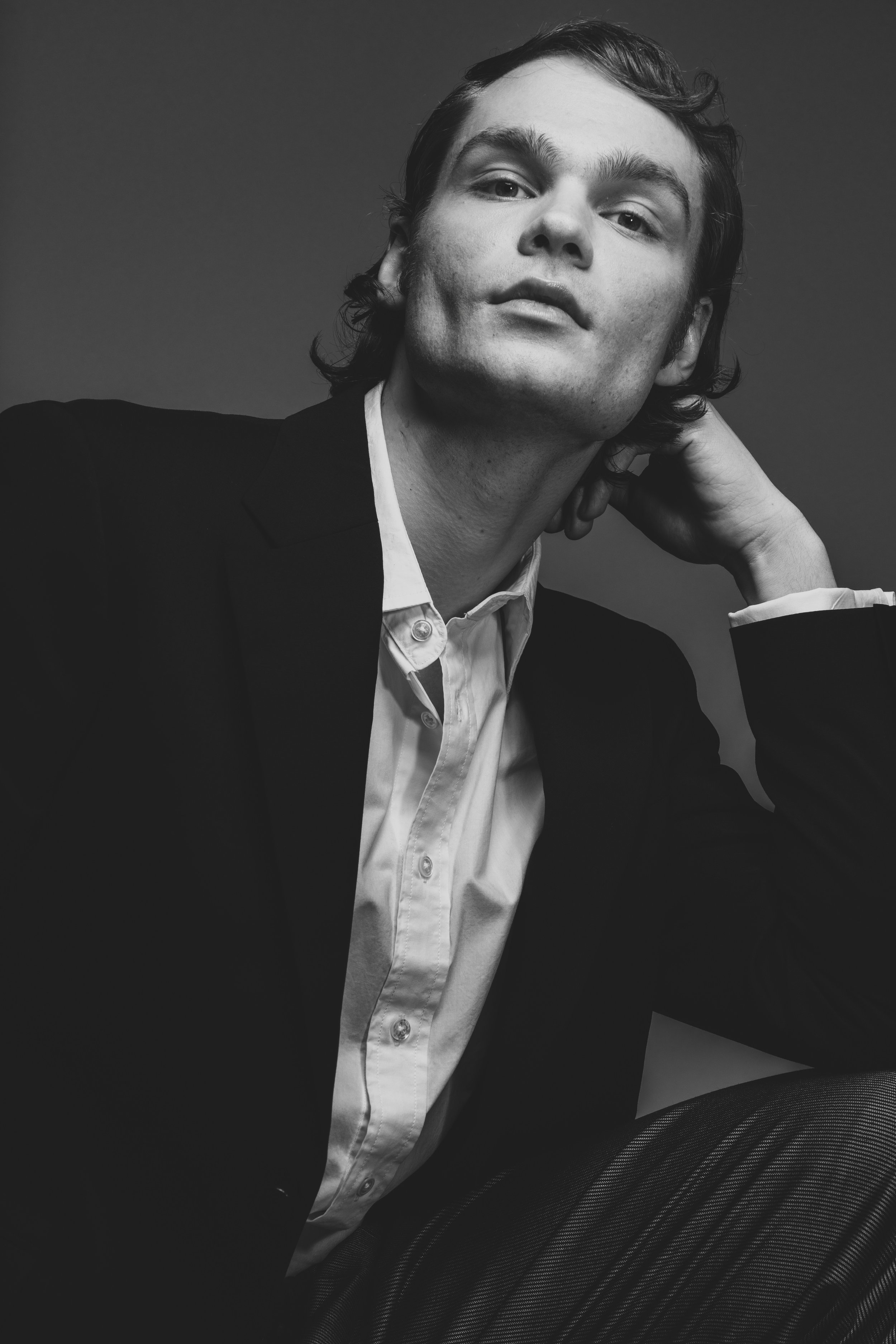
The Pitt marks a major breakthrough for you. When did it first hit you that this role was changing things?
It is still hitting. It’s a surreal thing to have everybody you’ve ever met text you, or to be recognised walking down the street. I still feel like me though. One change is a deep sense of satisfaction I feel within myself, a pride that I have been a part of something important, lasting, meaningful. Old friends keep telling me I look taller now. I think it has something to do with that.
You’ve described this moment as full-circle. What parts of your journey led directly to Dr. James Ogilvie?
This is absolutely a full circle moment for me. I was born with a birth defect, something niche and rare and tricky, which meant the beginning years of my life were dominated by medicine and surgeries and emergency rooms. Doctors saved me countless times. I’m a lifelong patient. I am still in touch with my main surgeon back home. I have such a deep admiration for doctors. To play one now, on such a vital show, means so much to me. I love my doctors and nurses. I know Ogilvie is a bit of a freak, but I hope I’m making them proud and that they can feel my love for them in this. I owe them the world, a thousand times over. Nothing will ever be enough. I hope this comes close.
As a Yale School of Drama graduate, how did your training prepare you for a role like this?
I loved Yale. Fortunately for me, it’s all pretty fresh, I graduated just over a year and a half ago. Yale taught me so much, but most directly relevant is how much I learned about an artist’s necessary courage and appetite. You need both on our set. We shoot fast, and you have to stay flexible, yet committed. I look up to Noah Wyle so much. Sometimes he talks about how this is ‘pro ball,’ and he’s right, you have to remain hungry for it through the long days. And it’s hard. Can you remain brave enough to do it for real, take after take after take? Yale’s training translates well to that. It also helps to keep a sense of play in the scenes and off camera. Yale’s huge on play too.
Dr. Ogilvie exists within a highly charged world. What was most challenging about inhabiting him?
It’s easy for the character to come across superficially. I think just a gunner or a kiss-ass, but that’s obviously limiting and impossible to play. I really wanted to mine the contradictions in Ogilvie, and there were many. He’s not a sociopath, he has strong, meaningful attachments, but they’re to the wrong things. He wants to be the best, and expects that of himself, but only in areas where he feels like he won’t get hurt. He’s terrified just as much as he is overconfident. He desperately wants inclusion, craves being liked, needs to feel needed, and goes about it in a way that further isolates him. Helongs for attachment and yet is terrified of it. I'm attracted to that kind of complication in characters. I like the grey.
I also kept working to find the moments that humanized him. I think Ogilvie is actually really quite soft and sensitive. We share that. I remember always asking our brilliant showrunner Scott where the lessons went, if he keeps getting humbled throughout the season, where is his learning?
Sometimes it’s quite literal, like, “Okay, don’t pull out a foreign object in the ER”. Will never make that mistake again. And sometimes it’s deeper than that, like with Louie’s eulogy from Robby, whom Ogilvie deeply admires. He sees a part of what makes Robby a great doctor in that moment, something he doesn’t have yet, and sees Louis more fully than before. It’s mostly choosing a positive from where I’m coming from in my assessment of him. It’s not that he doesn’t care, but more that he is afraid to let himself care.
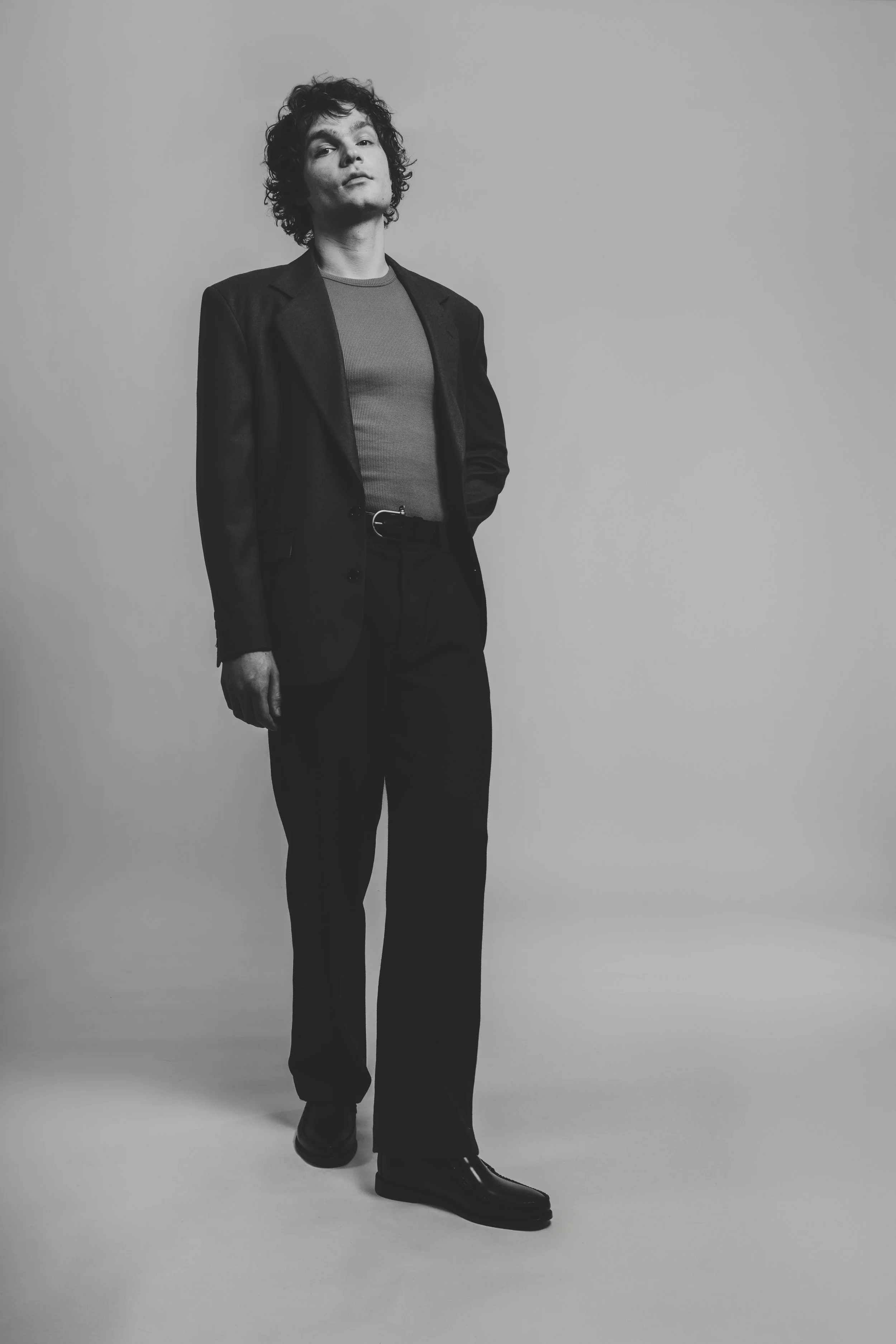
How do you approach grounding a character in a show that carries both emotional and political weight?
Ogilvie is a part of that political weight, and it further grounds him. I had a hard time liking Ogilvie for a while, and what really cracked him open for me was understanding his political purpose in the show. I think he’s representative of something that we see societally today, a sort of ‘bootstraps’ mindset that says that each individual is responsible for the state of their own life. I think that’s born out of a need for control, really. “If I stay safe, if anything good happens, it’s because I made it so,” which is why he’s so cutthroat at times. He’s desperate to have control over his life, his future and that belief applies to the patients, too. You’re responsible for the way your life turns out.
And the show takes that to task, it shows that that’s not really accurate, or realistic. With each patient he treats, it gets harder to believe, and that crumbling of his belief has a cost. His being there asks some difficult questions. What’s our obligation to empathy? How do we decide who is worthy of our empathy? What does society look like without it? Can it be taught, or learned? And if so, how? Are we able to empathise with those who don’t have empathy yet? And, what do we do with people like Ogilvie? Because they exist, in all fields. I think that’s a present conversation, politically.
How has being part of an award-winning ensemble changed your confidence on set?
This is my first serious job, so I didn’t really have any confidence before this. Outside of The Pitt, I’ve only shot on The Gilded Age, which was much more limited. That was my first ever time on a professional set, and I was very nervous. Being on The Pitt let me be the sponge I hope to be. I came early and stayed late to just watch all the beautiful work around me. It’s a strange experience, to throw and catch the ball with these people who are titans to me as a fan of the show. Everyone’s amazing, but I could gab forever about Noah’s work. I think he’s incredible. I’ve never seen someone who has such mastery over both freedom and form. He never has to trade in some of either for the other. I’d watch that and think, “How the hell did they let me in the same room as that guy?” And he’s kind, and humble, and so damn curious. It’s inspiring. The lessons are always with me. It’s still digesting, honestly, and I hope it will continue forever.
You’re also returning to The Gilded Age in an expanded role. What excites you about revisiting Simon with more room to explore him?
Considering he was basically just a MacGuffin before, it’s exciting to see that he has room to be explored. More than anything, I’m just happy to be asked back, especially as it was my first camera gig. There’s a sense of relief, too, like it can’t have gone too terribly if they’d consider having me return.
Moving between prestige television and classical theatre, how do you shift your performance muscles?
Yes, I’m still figuring that out. It's all imagination, of course, but how you go about creating something for an audience to experience is so different when the audience is there to sense the liveness, the ephemeral thing passing between you and another actor on a stage, versus when they see the pictures of that thing on a screen. The constant is that the story only happens in the imagination of the audience. The shift becomes the ways in which you are generous with your talent, with the story, with your huge heart and soul. How can I best let you into this world, share it with you? That’s technical skill just as much as it is poetry and vitality, and courage on the actor’s part. Different kinds of generosity.
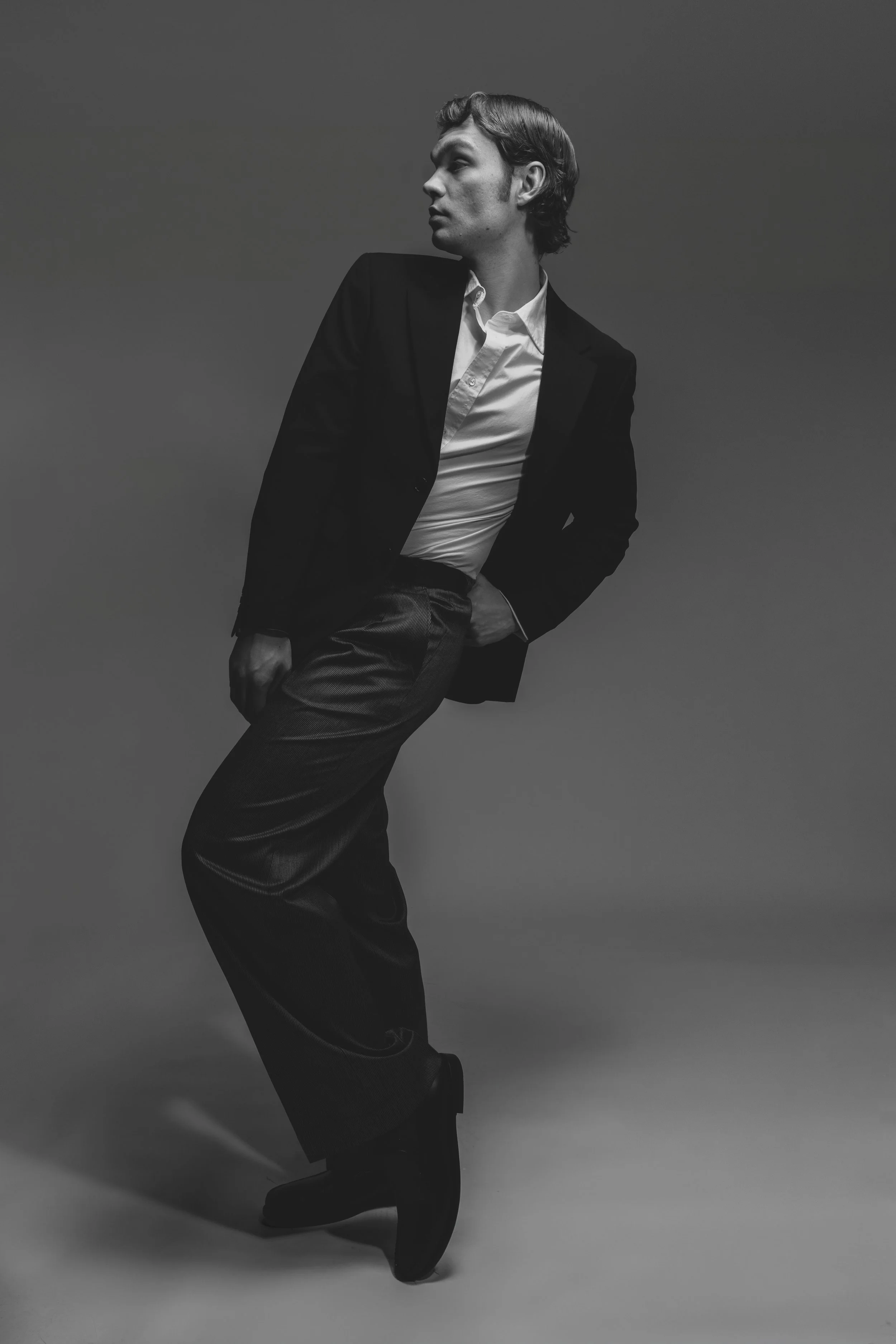
Playing Cassio in Othello is a big undertaking. How does working under a director like Simon Godwin shape your approach to Shakespeare?
Simon is legendary. People whisper about how good he is, that kind of thing. I haven’t worked with him directly yet, so I don’t think I can speak to the how, but I met him when I was doing a play last year at STC and loved him. I had to leave that show for The Pitt, so I’m lucky he’s letting me back. I guess that’s also a theme of my young career thus far. I keep getting asked back to places. I can’t explain why. I just feel so lucky to be in the presence of these giants, to steal a little bit more time around all the geniuses, Simon included.
At this stage of your career, what kinds of roles are you craving more of?
Given the response to Ogilvie, I think I’d like to lean into my light a bit. My usual type prior to The Pitt was the softies, the sweeties, lots of big-hearted lovers, often unrequited, that kind of thing. It’d be nice to return to that. Though of course, now that I’ve said that, the opposite will probably come true and I don't mind. I love the grey just as much as the light. Complexity is challenging. If there’s challenge, I’m interested.
How do you stay creatively grounded while momentum around your career is building?
The most important parts of my life are outside my career, so remembering to focus on those helps. Time with friends, seeing plays, etc. And cooking. I have a deep love of food. I did a project at Yale where I interviewed my dad, who was the cook in the house, talking about his love of food through the years. He’s a photographer, so I would pair that with pictures of him or the family, and actually cook the meals, too. Working on things like that balance out the business side. I’m like a sunflower, following the things that make me feel good, like they do the sun.
Looking ahead, what excites you most about what’s still to come?
These days, I have the great fortune to live a wonderfully vigorous life. I feel so happy when I am tired at the end of the day, when I have used myself up, spent myself in pursuit of something I love. It gives me a healthy, honest, tired feeling. When I am able to act, I feel challenged and fulfilled. It’s so rewarding to give yourself to an art form, to stretch yourself and your place in the world so that you grow and grow, as Stella Adler said.
When I get a day of me time, I feel like I’m shaping my life, pulling it from the marble with my own two hands. That’s equally fulfilling, because I love this life. In particular, I am excited for mornings. I loved mornings on set, sitting next to Noah or Gerran as we all journal, or having quiet conversations about our lives, about art. I love mornings in my tiny New York apartment. I wonder what I would do for a thousand more mornings like the ones I have had this year. For a handful. I’m excited for that, whenever or however it may come. I’ve had the great fortune to do something I never thought possible for me. And now, I’m wondering what else is there?
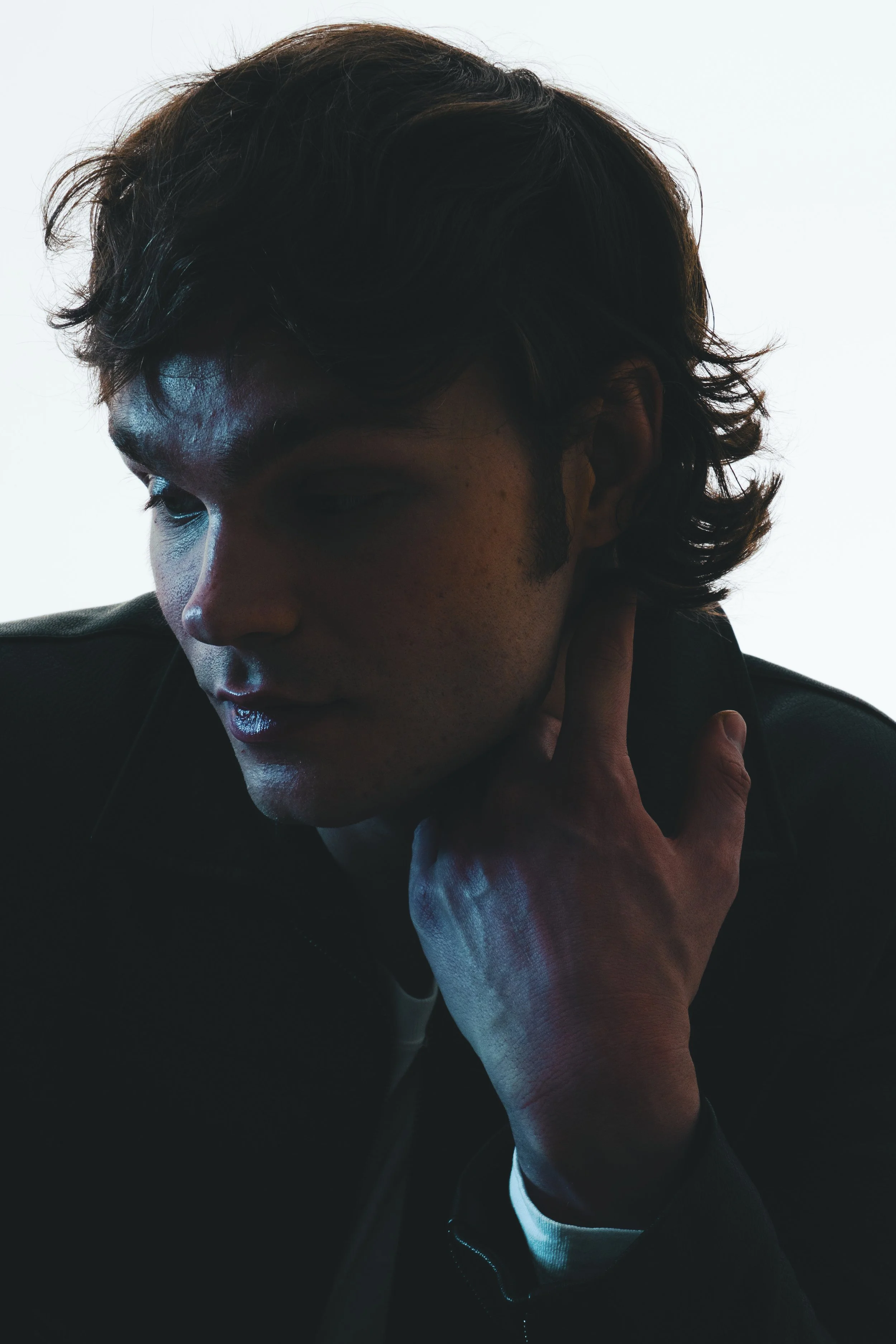
TEAM CREDITS
talent LUCAS IVERSON
photography ANDREA FREMIOTTI
hair and makeup EVY DREW
styling TABITHA SACHEZ
styling assistant SPENCER BRONFMAN
editorial director and interview JANA LETONJA
editor TIMOTEJ LETONJA
