
IN CONVERSATION WITH JAMES PAXTON
interview by JANA LETONJA
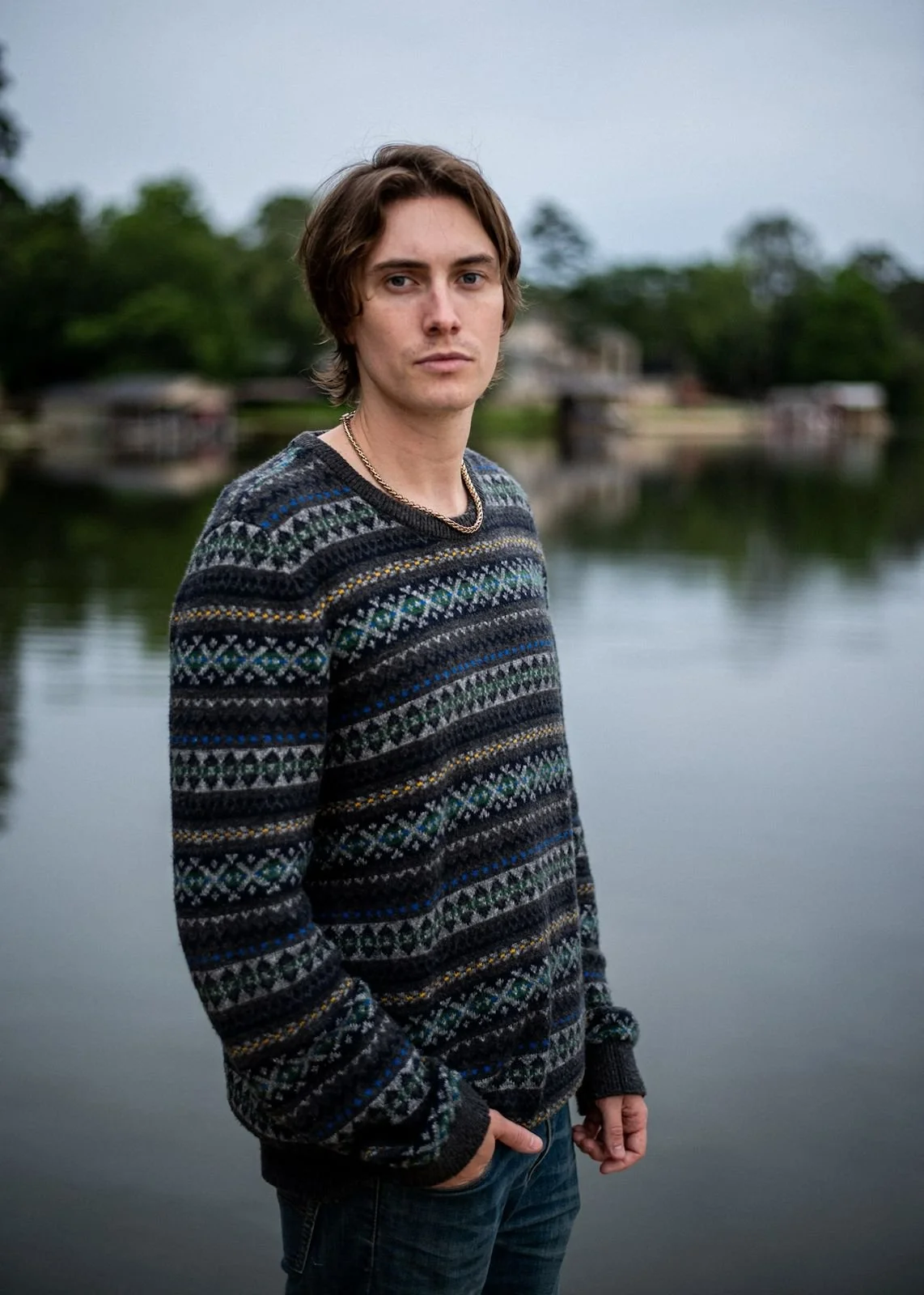
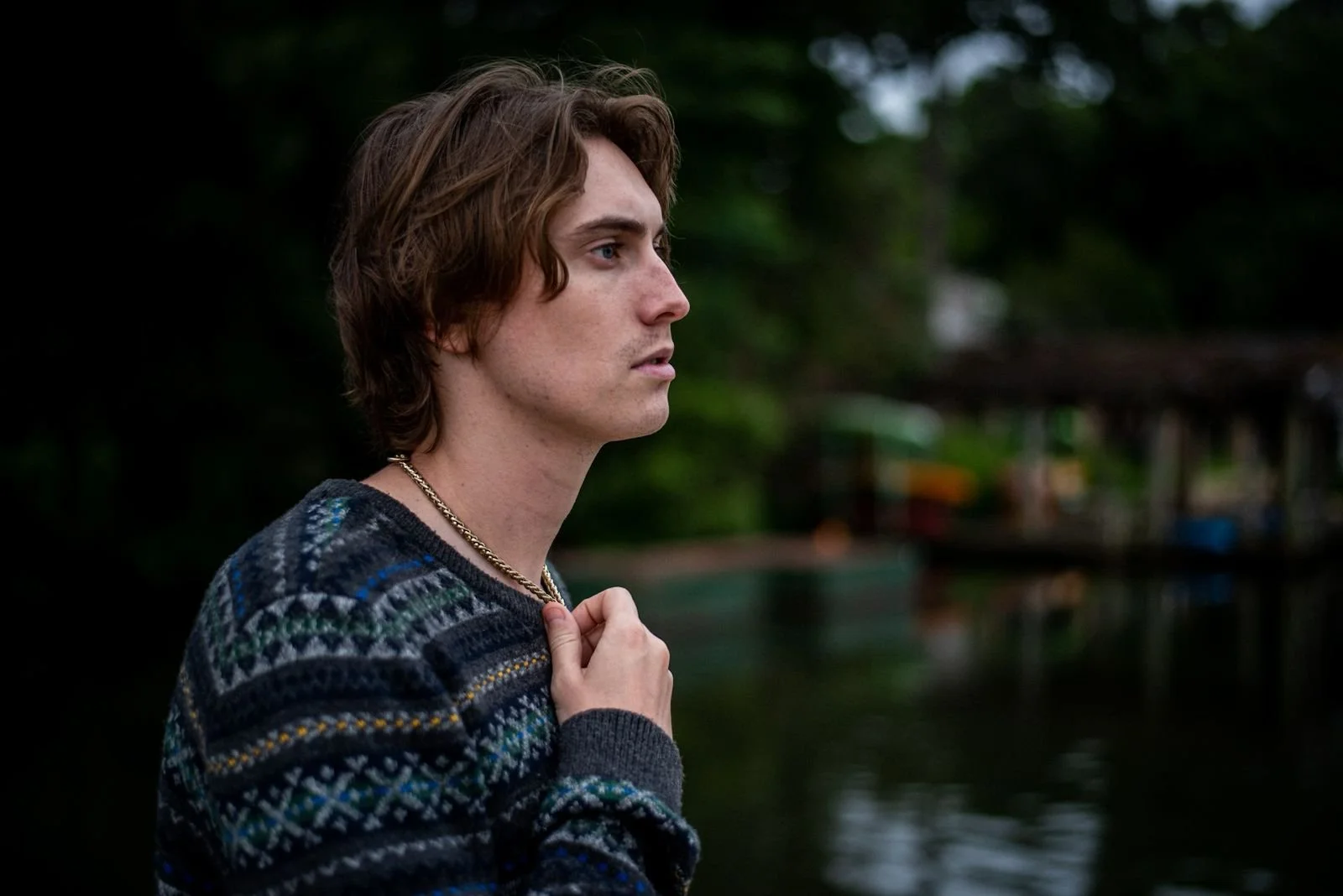
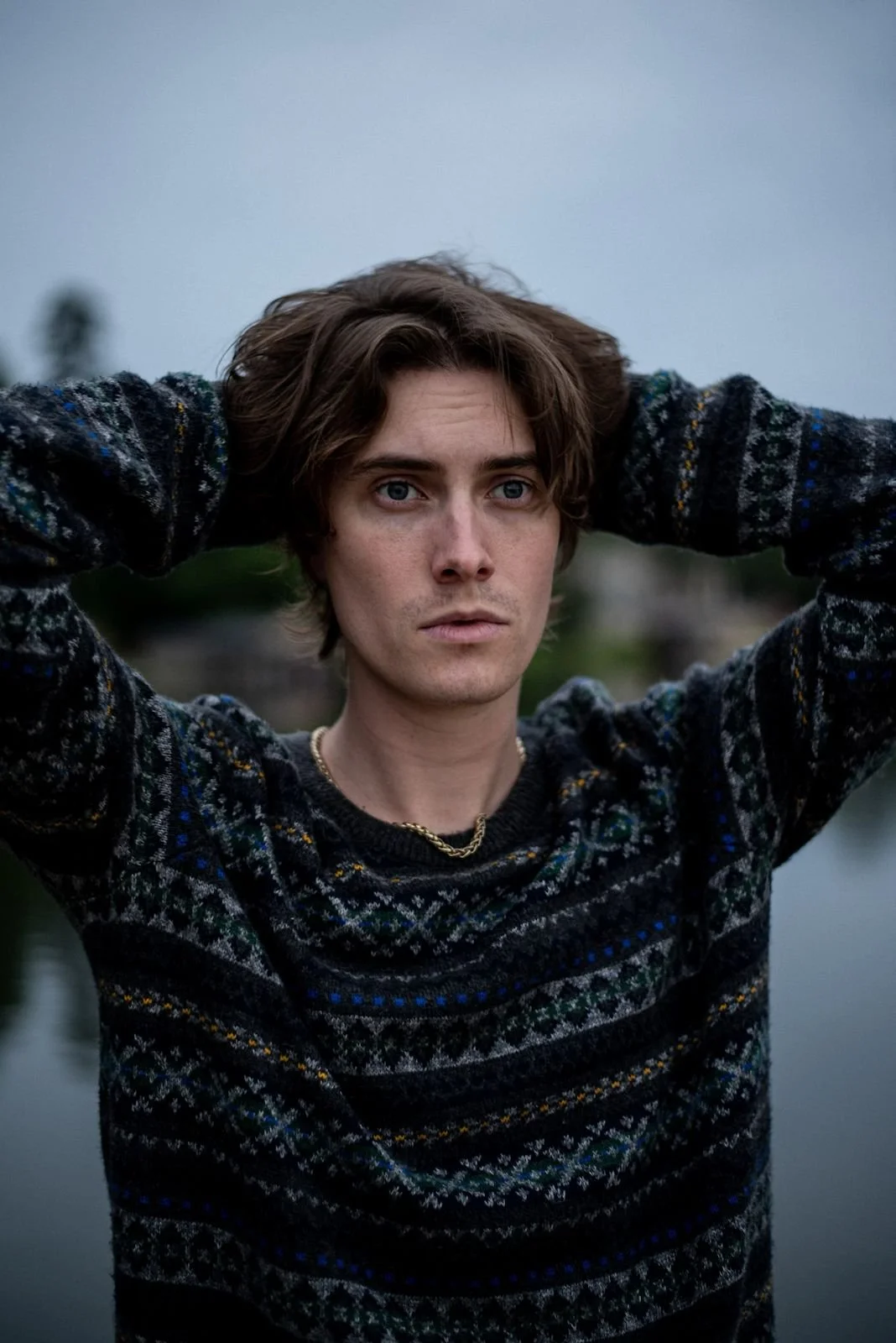
James Paxton is entering a defining creative moment, and doing it entirely on his own terms. This spring alone, he appears in three distinct projects, starring in the western Last Train to Fortune, leading the AI-driven sci-fi thriller DRAGN, and bringing irreverent humour to the SXSW-premiering horror comedy Grind. Yet his ambitions stretch far beyond acting. A true multi-hyphenate, he is also a singer-songwriter releasing new music through his band Soundaze and his solo project Love, Pax, while his visual art, hand-drawn pieces on reclaimed street materials shared through @paxtonillustrated, continues to build a dedicated following.
This year you’re appearing in a western, a sci-fi thriller, and a horror comedy. What draws you to such wildly different genres?
I’m absolutely thrilled any time I get to play in a role or story that is totally new for me, and these three projects all represent something fresh and different from anything I’ve gotten to do before. I grew up watching Westerns like The Outlaw Josey Wales, sci-films like Blade Runner, and dark comedy satires like Adam Rifkin’s Look, all films that I absolutely adore and am inspired by, so getting to take part in Last Train to Fortune, DRAGN and Grind’is exciting for me because I’m now able to give these respective genres my own humble offerings. Genre films like these are the types of films that would excite my nascent imagination growing up, and it’s truly like seeing fantasy scenes from my childhood come to life, yet this time I’m actually a real part of them.
Westerns, like Last Train to Fortune, carry a long cinematic legacy. Did stepping into that world feel different from your other roles?
Yes absolutely. Making a Western is like treading through hallowed ground in a cinematic sense, as the first true epic films were really all Westerns shooting on those expansive anamorphic lenses. The Western genre is what also originally filled seats in cinemas, so getting to finally take part in one comes with immense responsibility. Also, because the Western genre has always been such a staple in film history, it was important for us to make a Western that carries a storyline that has not been told before. Last Train to Fortune is an amazing film because it adds something new to the lineage of the Western genre, rather than repeating something that has been done already.
DRAGN explores AI and technology. What themes in that story felt most relevant to today’s world?
DRAGN is an incredibly timely film in a very horrifying sense. It explores the potential real-life consequences of combining emerging AI technology with the ever-progressing advancements in military weapons realities. In real time, around the world, we are seeing how these massively funded militaries are always finding ways to engage in drone warfare and test out terrifying new weapons technology. There is money in war, and there is money in tech. DRAGN takes a focused examination into a tech company experimenting with a new AI-infused killer drone creation that is quite aptly called the Dragn. This killer drone contains about fifty different ways it can kill you, which is what I think is the most relevant and scary element to this film. We are already well on our way to seeing machines like this change the entire battlefield, literally and metaphorically.
However, as firmly as the film’s themes and inspirations are rooted in reality, the movie, in practice, also leans into its fun, campy side. It never takes itself too seriously and aims to please fans of the horror genre, energised by the scrappy, tangible pleasures and thrills of low-budget 1980s sci-fi and vintage video games reminiscent of films like Predator and its ilk. It’s cautionary in what it represents, but as a film, it is fun, fast, furious, a bit gruesome, a bit stupid and made entirely with an affection for pure entertainment that doesn’t require a need to explain itself.
The horror comedy Grind premiered at SXSW. How does comedy shift your approach as an actor?
To be honest, there is very little distinction on the performance side between comedy and drama for an actor. It is the context and the situation that are either funny or not, not necessarily how you play the part. The best way to approach comedy is to be as sincere and earnest as possible, and let the scene’s specifics create the comedy around the performance you are giving. People “trying to act funny” is never funny, but people being genuine and earnest in ridiculous scenarios always is. In that respect, I will usually always play a character as sincerely as possible. Grind was that kind of film for us as actors. Our characters all took themselves so seriously, and that is what makes them so hilarious to watch.
Your career spans film, music, and visual art. Do these creative outlets feed into one another?
Every creative outlet of mine feeds into the others. Music and visual art help me during the downtime when I am not shooting on a show or film, as they keep my mind and imagination engaged in a self-sufficient way. I don’t have to wait by the phone to hear whether or not I booked the part I just auditioned for, you know what I mean? I can just sit down with my guitar and try to write a song, or I can plop down with my paint pens and go into a meditative art trance and draw. I think anyone who likes being creative needs to have these sorts of outlets that only you control. The acting business is a very stressful and unreliable one most of the time, so if I didn’t have music and art to immerse myself in during the slow periods, I don’t think I would be able to sustain myself mentally through the toll the entertainment business takes. Although I am, as with anything I do, committed to creating a career of it, I want to tour with my music, I want to show my artwork in galleries, and I want to pursue all these different avenues as careers and leave as much of a mark across multiple disciplines as I possibly can in this life. Why not go for it all? We’ve all got a finite amount of time on this planet, so why not make the absolute most of it? If you love it, you have to do it.
When you’re working across multiple mediums, how do you decide where to focus your energy?
This is a very good question. I struggle constantly with trying to manage the different mediums, especially since the advent of social media requires you to also work at promoting everything if you have hopes to actually get the work out there, which can take time away that you could be using to actually get better at your respective craft. I am still actively working to figure out how best to manage my film work with my music and visual art. My problem is, I want to do everything all at once because I just enjoy it so damn much, but I also have to remember that these are all disciplines that I want to truly get better at, and in order to do that, I must really make sure to focus energy and concentrated effort into each medium and project, and make sure that I am delineating specifically dedicated time to each of them. Oftentimes, though, I switch towards one when another is on a necessary or forced pause or hold. Like when I am waiting to finish mixing and mastering a song, I will sit down and work on a furniture art piece, or when I am on a filming hiatus, I will go to the recording studio and lay some tracks down. It’s all about maximizing the opportunities and time that do come up and making sure I am never wasting any idle time.
Your band, Soundaze, and your solo project, Love, Pax, have distinct sounds. What separates those identities for you?
Soundaze is a genre-blending alternative hip-hop band with its roots mostly planted in rap, which is a medium I fell into from a very young age and taught myself how to do. I fell in love with the way you could tell a story through spoken word poetry, all to a beat and rhythm, and I recognised it immediately as such a freeing way to express myself vocally and lyrically. I formed Soundaze with two of my closest friends, Jared Connor and DayWu Xin.
Jared and I grew up together since pre-school, literally three years old, and in middle school, we both started getting into all this underground hip-hop music. Funnily enough, we started actually making music by creating our own diss tracks to one another just for fun. We both made our own beats and recorded our own vocals and quickly realised that Jared’s strength lay especially in the production and beat-making side, and mine fell more in writing lyrics and with the vocals. We started a duo called Flamingo Dogs together, which we still release music as today, but in 2019, we recorded a song with my good actor friend Dayton Sinkia (DayWu Xin) that was initially just with him featuring on a Flamingo Dogs song. However, the sound changed so much that we realised it was its own unique thing. That’s how Soundaze was born.
We are all very musically diverse, and both Dayton and I like to sing as well, so we made it the band’s mission statement to jump and blend genres as much as possible in the hopes of creating something that feels new, sonically. That’s why when you listen to Soundaze, you may hear a song that is more alternative rock leaning, then a softer R&B type track, and then into an old school sounding rap anthem, with many other styles in between. Love, Pax is completely different, as it is where my musical expressions primarily as a solo artist take shape. As much as I grew up on hip hop acts like Atmosphere, Mobb Deep, The Pharcyde, Murs and Eminem, I grew up equally inspired by softer singer-songwriter folk style music by artists like Nick Drake, Elliott Smith, Gregory Alan Isakov and The Milk Carton Kids, and this is more in line with where my Love, Pax music mostly falls.
I had always wanted to learn guitar, and had just begun teaching myself some basic chords on the acoustic when my dad passed away. So, as a way to help cope with the loss, I threw myself further into practicing my guitar playing, eventually getting just good enough to be able to start writing lyrics and melodies to my own songs. While I will occasionally release a Love, Pax song that harkens back to my hip hop roots, in which I may be rapping a little bit, the sound is mostly defined by soft singing and simple guitar progressions. While I release my Love, Pax music as a solo artist, I have to give a huge shoutout to my music producer Nikolas Thompson, without whom I truly could not turn these songs into more than just timid live renditions of guitar and vocals only. Nikolas helps me record and shape these songs into true studio recordings, as he is an infinitely talented musician and music producer who adds so much instrumentally to the final versions of these songs. Love, Pax would not be a fully realised thing without him, and I am forever grateful to him for putting his heart and soul into the music with me.
Does songwriting give you a kind of emotional freedom that acting doesn’t?
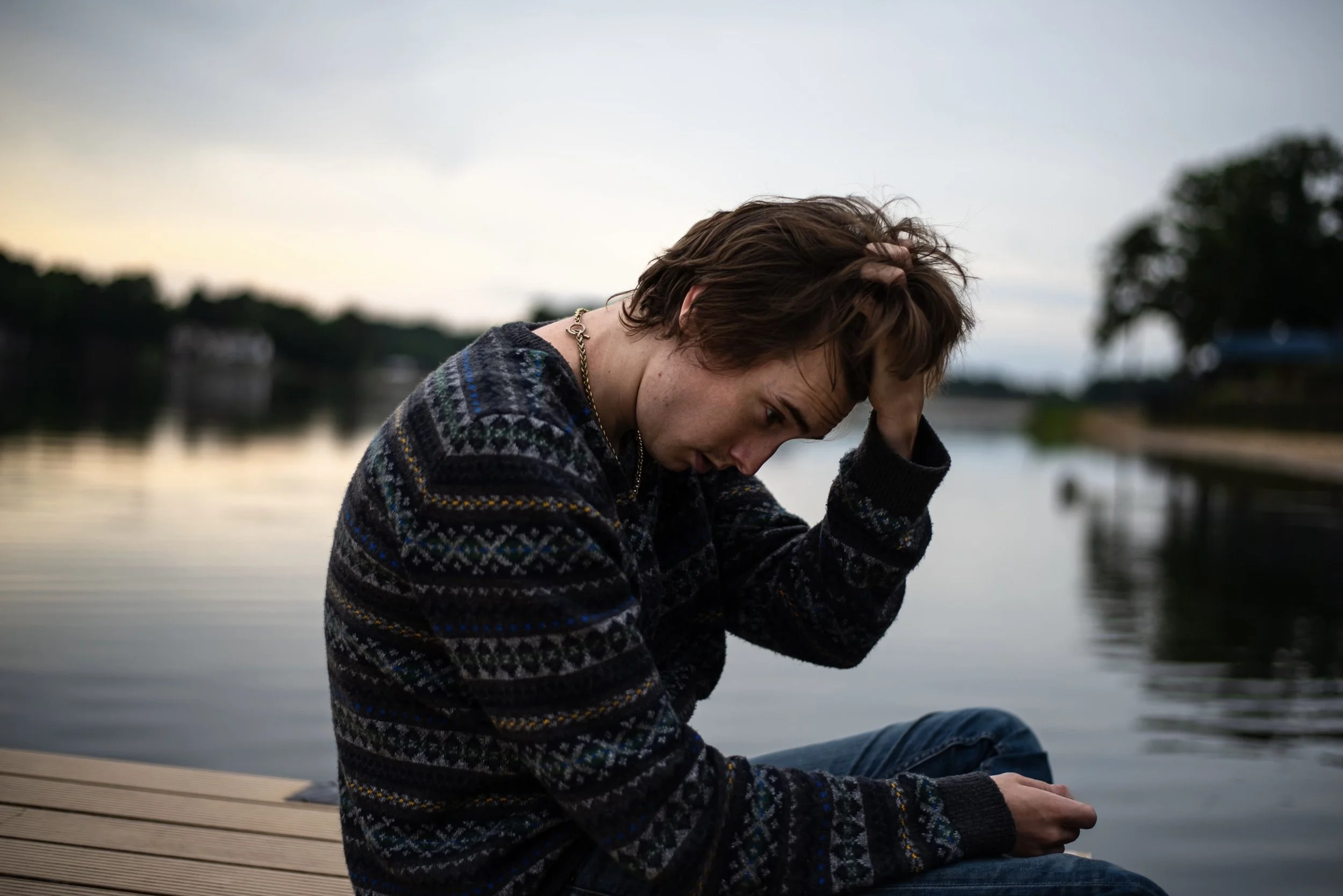
It does. Songwriting is so much more personal for me than acting is, because it is literally something that comes from inside me that I work to realise into a musical composition. It gives a voice and sound to feelings and emotions that I am trying to work through. It’s obvious to me that music is a very literal form of therapy for me. I try to take these personal things though and make them relatable to others who may be going through similar struggles like dealing with loss, anxiety, self-doubt or whatever it may be. That’s why a lot of my songs sound a bit more melancholic. Writing sad songs ironically makes me happy though, because it gets those feelings, thoughts and emotions outside of myself and sort of crystallises them into something that I can make sense of.
The pieces you share through @paxtonillustrated feel gritty yet intimate. What stories are you trying to tell visually?
I appreciate that description of the artwork. My art pieces visually really just represent the chaotic nature of my own inner mind. My mind at all times feels like a whirring mess of abstract images and strange creatures that surf through the synapses of my brain activity. I’m fascinated by intricate patterns and by juxtaposing illustrated beasts into the milieu. Visually, I’m trying to create pieces that require closer examination, that offer a feast for the eyes. I want the art to retain its own unique identity as well, like when you see a piece and you know immediately who the artist is or the work it comes from. Equally important to me as well is ultimately to honour my mother’s artistic inspiration to me. My mother, Louise, is a very talented painter and multi-disciplinary artist who used to teach a volunteer art program in my schools growing up called Art Trek. I utilise many techniques in my furniture artwork that I directly learned from her.
With so many creative outlets, how do you avoid burnout?
To be honest, these creative outlets are how I avoid burnout in general life. It is truly a privilege to get to create art, write music and act for a living. It’s the rest of life I find to be the challenging and hard part.
What role does authenticity play in the way you build your career?
Authenticity is the foundation of every single thing I pursue in my career. In acting work, I aim to always be a conduit for the truth of a role or human experience, to always approach everything with the utmost care and responsibility for authenticity and integrity. If you tackle everything from a place of reverence, love, care and authenticity, then what you usually build is of lasting significance and use to society and humanity. I don’t believe you can “fake it till you make it.” I say it’s much better to find what you truly love, work hard to cultivate that and learn to literally make it yourself; that way, you won’t ever have a need to “fake” it.
If you could merge all three mediums into one project, what would that look like?
I think in an ideal world, if I combined all three mediums, the result would maybe be a film that I would act in and also score the music for, with a heavy dose of @paxtonillustrated on the production design elements. Maybe a single location kind of film where all the walls are just drawings of the inner machinations of my mind, slowly painting myself literally and metaphorically into a corner, with the music fading in and out, helping lyrically move the narrative. And maybe it becomes an in-depth look at an artist slowly spiralling into psychosis as his own artwork devours him. I kind of like that as a storyline. Might be something I need to get to work on.
TEAM CREDITS
talent JAMES PAXTON
photography BENJAMIN EVAN COMBS
editorial director and interview JANA LETONJA
editor TIMOTEJ LETONJA
