
IN CONVERSATION WITH LUKAS DHONT
interview by TIMI LETONJA and LEANDRO DA SILVA
For Belgian filmmaker LUKAS DHONT, freedom begins with the possibility of becoming someone other than who the world expects us to be. Across his films, he has explored the quiet violence of belonging and the parts of ourselves we sacrifice in order to fit in. With his latest film, Coward (2026), this search takes him into a world where tenderness and violence coexist, and where nature becomes a space beyond the codes and expectations of society—a place to question what it means to live in a way that is true to ourselves. Dhont reflects on war, masculinity, imagination, desire and the courage it takes to step outside the roles we are given.
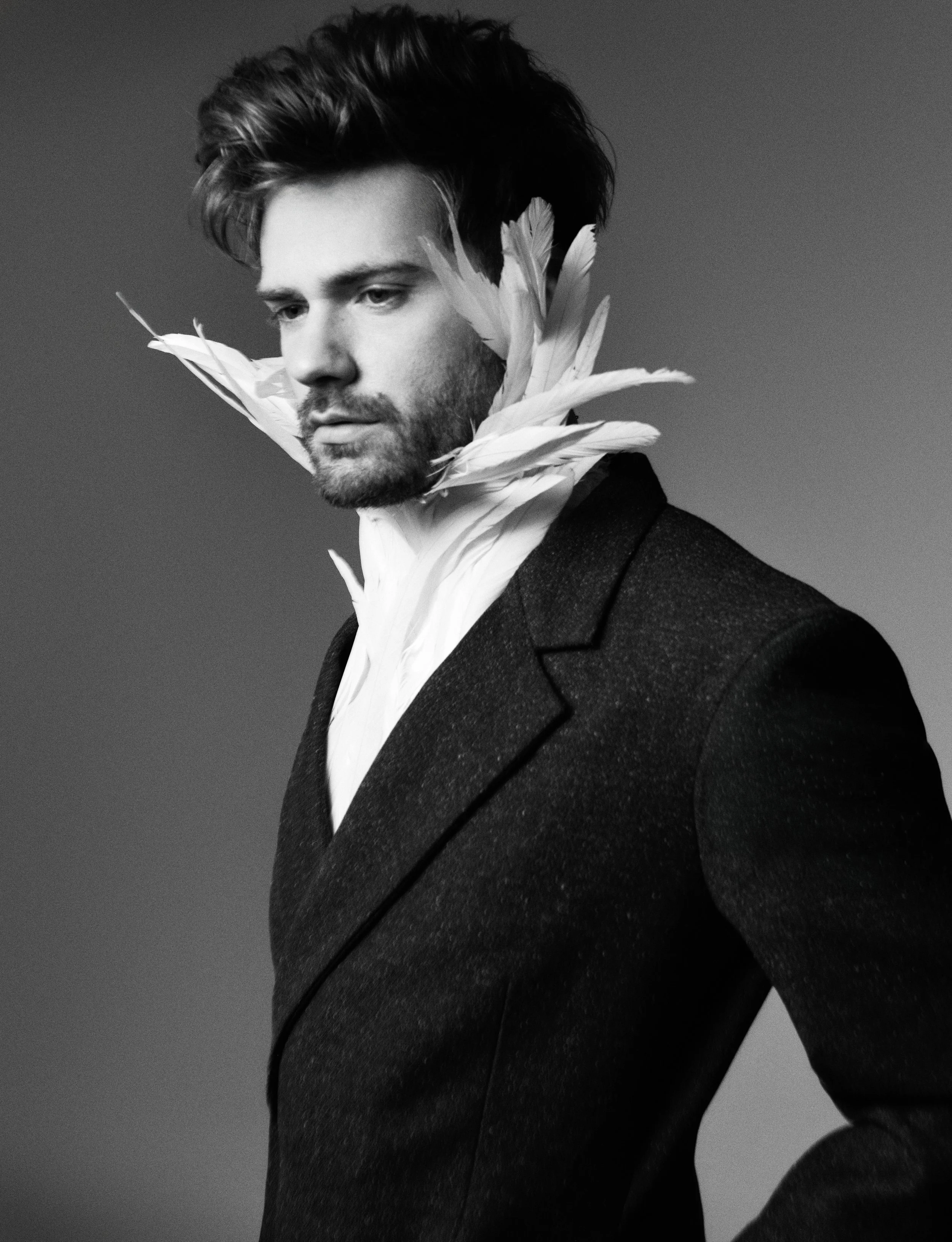
full look EGONLAB
boots HERMES
Set during World War I, there is something incredibly beautiful and unique about the world you created in Coward. The story feels deeply intimate, while constantly taking the audience somewhere unexpected, moving between tenderness, intensity and moments of profound emotion. Where did this story begin for you, and what sparked the inspiration behind it?
I think that in Belgium, we really grow up with World War I. It was a war fought on our land, and we learn about it in school from very early on. We have a sort of collective memory consisting of many images: the trenches, the battlefield and, a lot of the time, images related to violence.
Four years ago I was in Paris, in a bookstore, and I stumbled upon a book with black-and-white photographs of soldiers during World War I, right behind the trenches. They were using materials that were at hand, like munition boxes, sandbags and bullets, and transforming them into art pieces, creating theatres for each other. Something that really struck me was a man in a dress made out of a parachute.
I had never seen that type of imagery linked to the past. For me, when I think about war, it is a very virile environment. Seeing a man cross-dressing and performing for his fellow soldiers felt very modern to me. I was confronted with the fact that our collective memory exists through certain filtered images, while there is all this other imagery living in the shadows and archives.
When it comes to men, I think these images of another form of emotional expression, embracing femininity, tenderness and softness, also tend to be hidden. I was really drawn to them because I felt there was something very topical in them.
When I saw these young men so close to violence, knowing they would have to go and fight in a couple of days, and saw how, for one moment in time, they wanted to travel in their imagination somewhere else and be someone else, I thought that was incredibly human. I wanted to honour that act of creation and life amidst destruction.
EMMANUEL MACCHIA gives such a powerful and nuanced performance as PIERRE, particularly in the way he communicates so much without always needing words. When you first met him, what did you recognise in him that made you feel he could bring Pierre to life?
When I met Emmanuel, I met him on his school grounds, because I had the intuition that, as Pierre is a farmer, it could be interesting to look for a young person in an agricultural context. With Girl (2018), which is a dance film, we went to look for a dancer because dancers have a very specific way of holding and working with the body. For someone who works with the land and nature, there is also a very specific way of working with the body.
Many of our films, including this one, are about people who have a strong urge to belong to a group. In order to belong, they want to transform who they are. I could see that Emmanuel felt discomfort about being true to himself, and there was something in him to be unlocked.
In Emmanuel’s eyes, there is something of an old soul. I feel he has seen things, lived things and carries them. That weight was something I was really drawn to for this part. I was also looking for an introvert, someone who, in some ways, is the opposite of an actor. I think I was drawn to him by his shields, and by the fact that there was something incredibly mysterious about him.
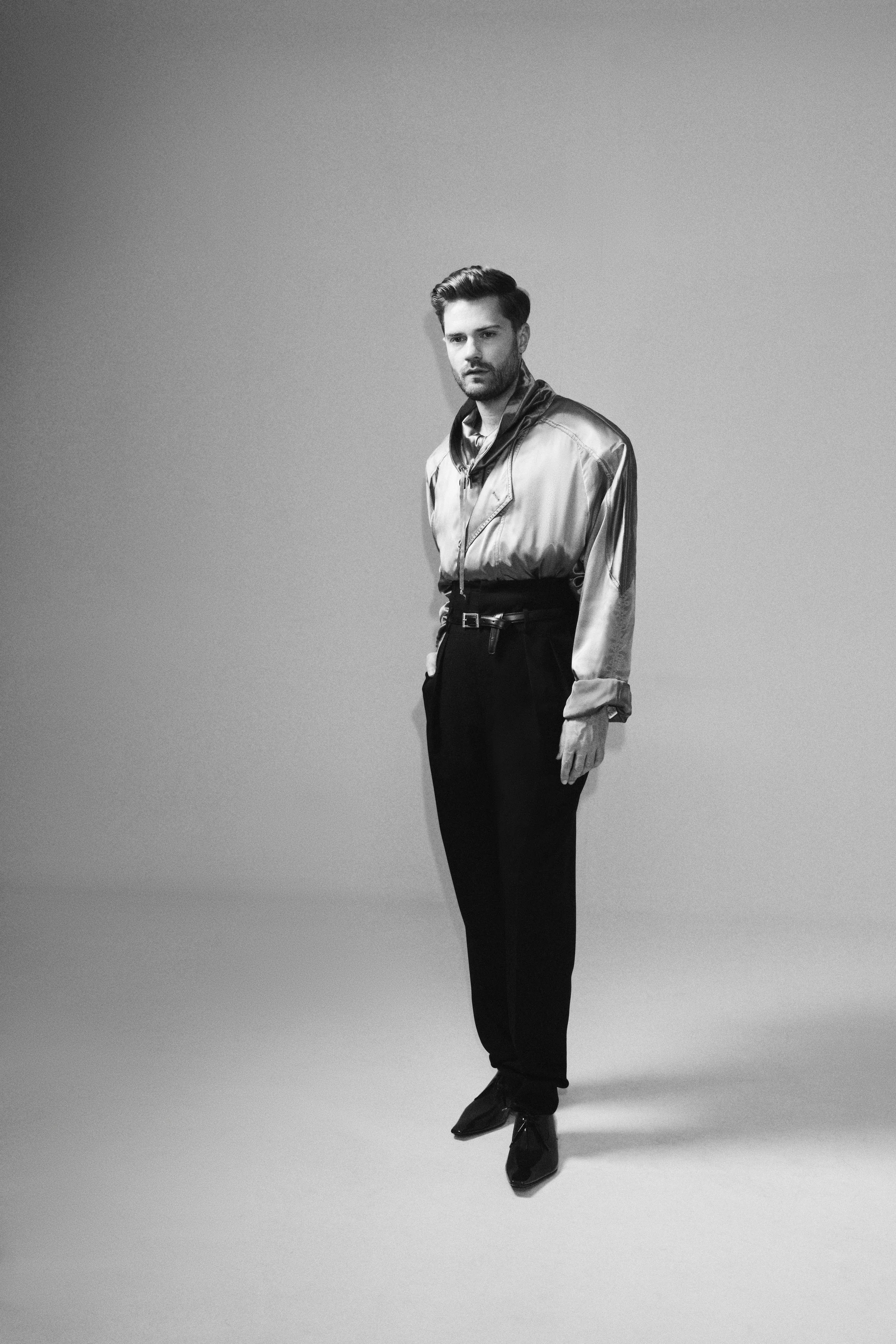
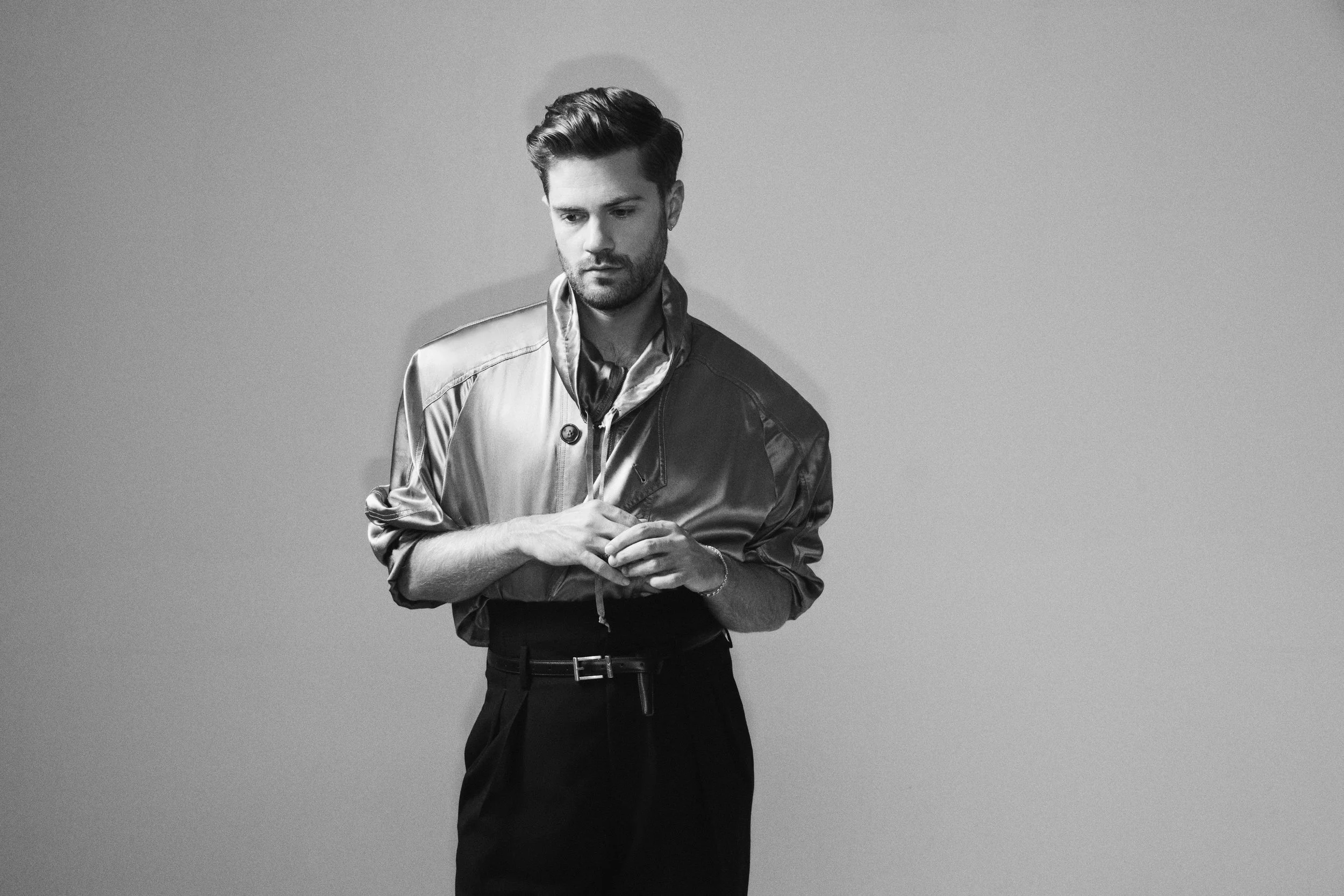
full look SAINT LAURENT
bracelet and ring DRIES CRIEL
Both Emmanuel and co-star VALENTIN CAMPAGNE bring an extraordinary intensity to their performances, and together they create such a powerful dynamic. What happened when you first put them together that made you realise the relationship between Pierre and Valentin’s character FRANCIS was going to work?
It was a very interesting casting because, when we think of casting a romance, one would think you need harmony, a feeling at first glance where the heart beats immediately. When Valentin and Emmanuel met, that wasn’t happening at all. It was a moment of friction, because Valentin is so much the opposite of Emmanuel.
When they met, they weren’t really understanding the essence of the person in front of them. Valentin was trying to talk, perhaps compensating for Emmanuel’s silence, while Emmanuel was putting up his shield because he felt Valentin was trying to invade his bubble of comfort.
There was something very true to the nature of the script. The script is essentially about an extrovert meeting an introvert, and someone who, through his imagination, brings out and unlocks another part in someone.
Sometimes someone very different from us can show us that we exist out of more parts than we actually thought. We decided to see them again, and by allowing them more time together, they started to understand the power of their differences. What at first seemed like an impossibility became rather the opposite.
There is something very moving about the way Francis brings music, dance and performance into the group as a form of escape from the war. What was your approach to guiding Valentin through those moments and allowing him to give himself so fully to the performance?
The first reason why I noticed Valentin was that on his résumé he had written that he sings opera. I was very drawn to that because, in the photo, he seemed like someone who would be cast more as a dark outcast character. When we met him, I asked him to prepare some opera, and it became very clear that he had never sung opera.
There is something playful about him: he understands what you’re looking for and has no boundary when trying to impress you. He sang for us as if he’d done it a million times, but it was clear that he hadn’t. I wasn’t put off by that; I was intrigued by someone who dares to go there.
We had a long rehearsal process with our choreographer, NORA MONSECOUR, who was my inspiration for the first film we ever made, Girl. She choreographed, together with Valentin, a lot of movement and ideas around how Francis could move between all these energies and identities that he takes on in the film. He also had very extensive singing lessons, which was the biggest challenge. He can sing beautifully, but it was something that had to be worked on.
From very early on, I tried to give the actors space to create. For example, in the scene in which Francis gives birth to a bomb or shell in the camp, I wouldn’t give him the complete scene. I would give him the outline: I want you to arrive among the boys, build up this moment and really be a woman who is in labour. I don’t want you to make it into a joke. It will be funny, but I want you to mean it. Especially for someone like Valentin, who loves surprise and change and doesn’t like to be controlled too much, allowing him that freedom brings out all of his creativity, which is enormous.
It’s interesting because it’s not the same for everyone. Emmanuel, for example, was more responsive to remarks than to affirmations. He is very much an overachiever. When you give him a constructive remark, he understands that you’re really watching him very carefully.
For me, it’s about finding the right way to work with each actor. That’s why I spend a lot of time with actors before shooting. It’s about understanding the personality you work with and then giving them the keys to shine.
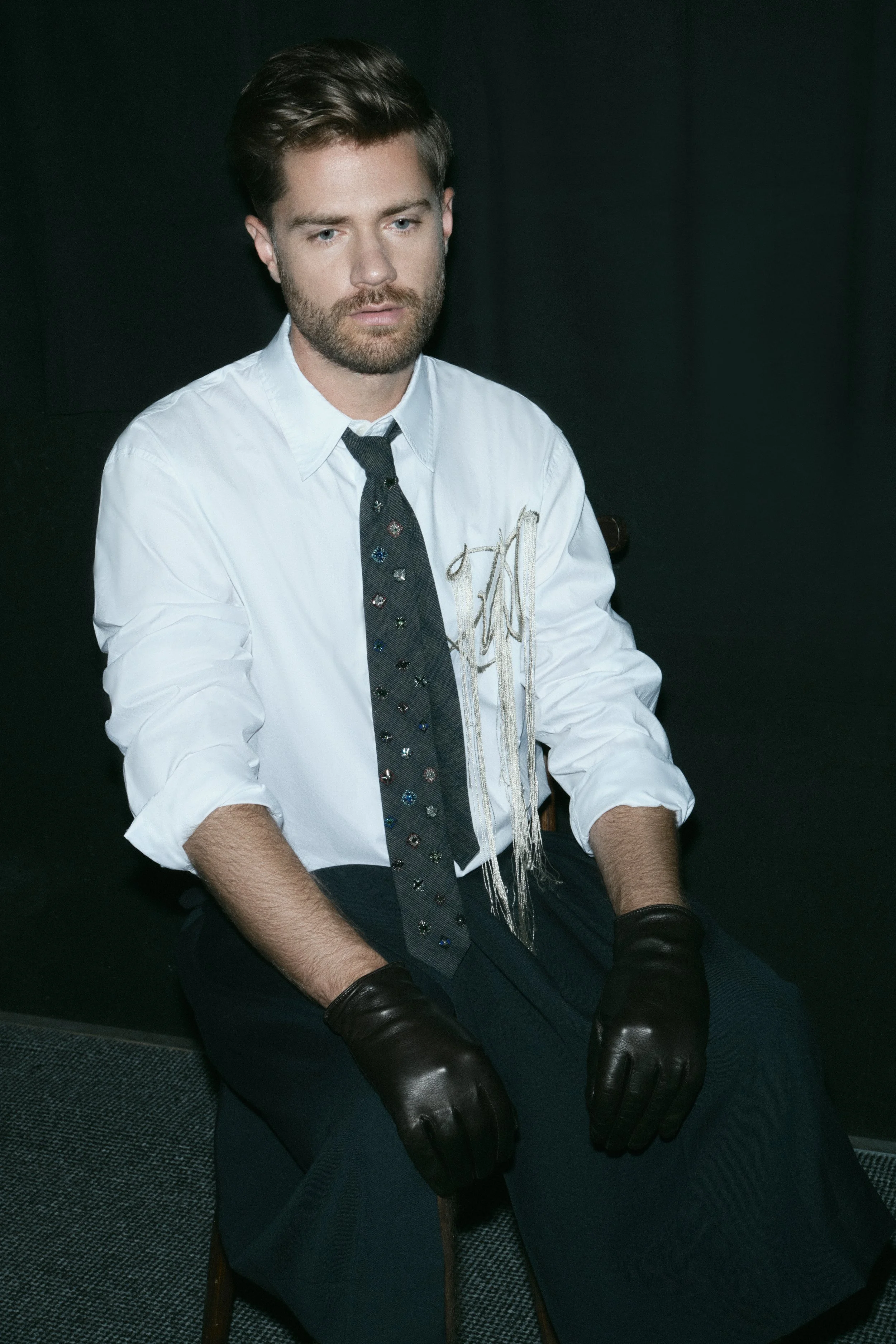
full look DRIES VAN NOTEN
socks FALKE
shoes AMI
The scene by the sea offers one of the film’s rare moments of freedom and joy, as Pierre, Francis and the other young men briefly escape the weight of everything surrounding them. What did the sea represent to you in that moment, and does it connect to any personal feeling or memory of freedom?
For me, the sea represented a moment of privacy in a love story that, for the rest, is actually quite public. That was the challenge of the love story: we had to write it in a way that it could constantly be happening with others around, so there was a sort of camouflage. The love story is constantly in camouflage.
At the sea, the big reflection for me was in writing a sex scene. What I found important was that it was clumsy, and that in its awkwardness it becomes funny, without losing any sexiness. I feel that when we see sex scenes between men, they are often about ferocity, immediate tempo, immediate success and action. I remember the sex scene in Brokeback Mountain (2005), a film that I love and admire, being very uncomplicated. Growing up and understanding sex, I felt it was not like that immediately. I felt confused about sex if I was only looking at the examples I saw in popular movies and popular culture.
The idea was to bring a sex scene which had no vocabulary, no visual example, no director for it. I think it became quite a tender moment. A lot of people, including many women, responded very strongly to that scene because it’s a sort of unravelling of this idea of male performance.
For me, it’s also the moment in which we understand that, as free as Francis is in his imagination, and in this world outside society, he may have more difficulty imagining bringing it into reality.
The mountains become an important image of freedom in the film, something Pierre and Francis dream of reaching beyond the reality of war. Outside of filmmaking, what does nature mean to you personally, and is there something about it that you feel drawn to?
The interesting thing is that, in the Belgian army, there were 150 men and soldiers who disappeared from the war. When we say disappeared, that means they were never found. They left the camp and deserted.
I thought that was a beautiful image, because the mountains represent disappearing from the society of their times and going back to nature, to a place where we are dedicated to the elements rather than the codes and norms created by the world around us.
There is this profound question asked by both characters: how can we, in a world that expects so many things from us, live true to our nature, to who we are? What sacrifices does it take to be true to ourselves?
The mountain symbolises freedom, but it also symbolises work because it means moving upwards, climbing. It is a symbol of intensity and physical labour, of something that is an obstacle but can also be overcome.
The film moves between brutality and extraordinary beauty without allowing one to cancel the other. How important was it for you to find beauty within such a violent world, rather than treating beauty as an escape from it?
I think it’s linked to the absurdity of life. For me, in the darkest of times, sometimes in corners, there are hidden lights. Especially when I think about queer people at that moment in time, the war was incredibly brutal. Twelve million men died, but, weirdly enough, for queer men, this specific moment in time was the only possibility for them to meet.We spent a lot of time in archives before writing this film, and I read a lot of soldiers’ journals. What you read in those journals are days of absolute horror. Then, on the next page, all of a sudden, you read about how another soldier in their camp dressed up as their mother and gave them a kiss good night before they all went to bed.
That testimony of tenderness suddenly creates a moment of magic, illusion and beauty within pages of death, destruction and horror. One doesn’t cancel out the other. Maybe one grows because the other exists, because there is this urge for an antidote.
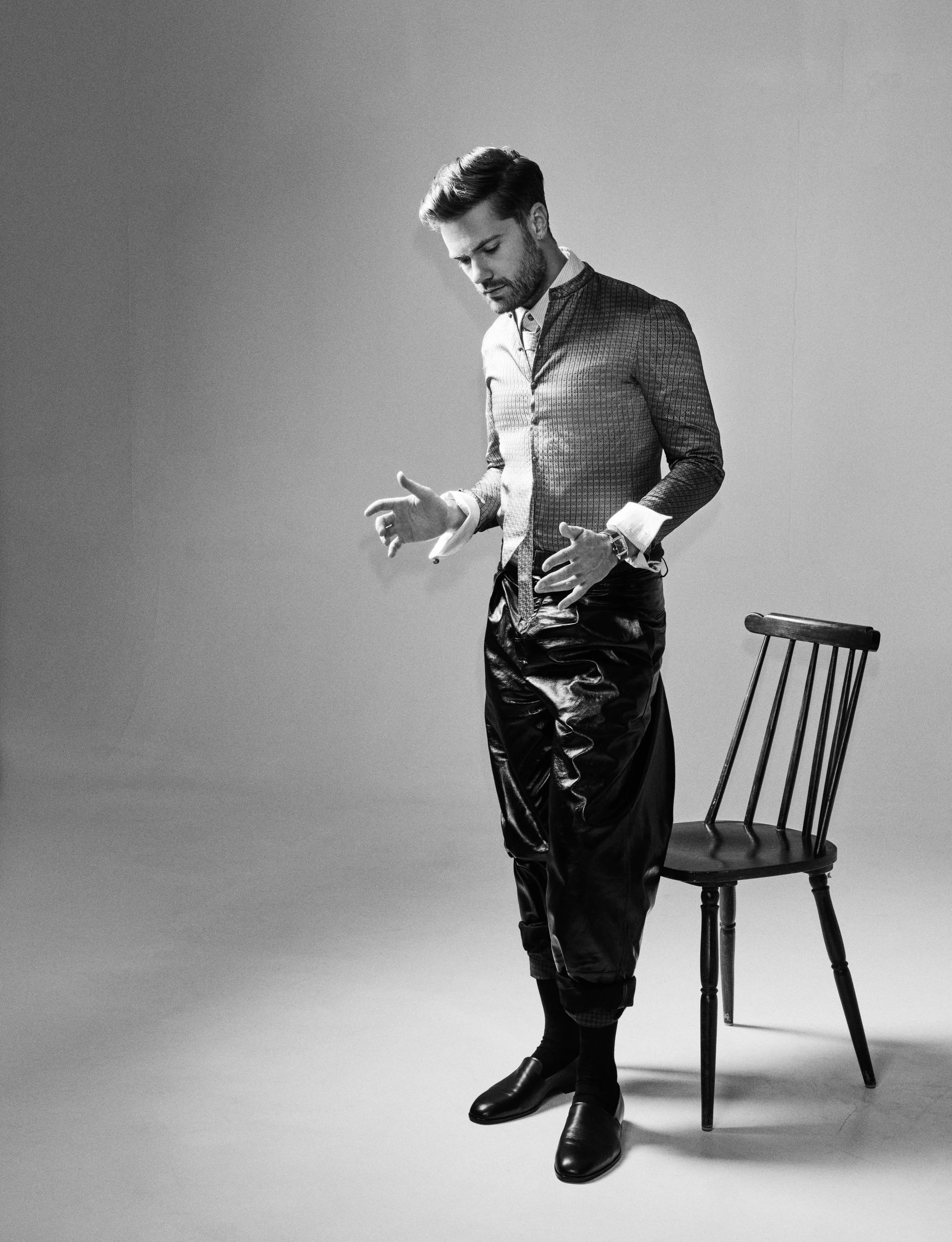
full look BOLORIA
socks FALKE
watch CARTIER
Coward has already received such remarkable recognition at the CANNES FILM FESTIVAL, before the film has even reached its wider audience. What does it mean for you to see the film resonate so strongly at this early stage?
It’s really interesting for me because, when I started Coward four years ago, I had to step over a certain amount of fear. It was a continuation of our universe, but it also felt like I wanted to step out of my comfort zone and take on this genre of film, which I feel quite dissociated from.
When I started thinking about Coward, I was full of fear, which made me understand that it was the right choice. If we don’t have fear at this point in our creative process, then that means we’re not taking risks or trying to renew ourselves. So I was drawn to it, but also very afraid of it.
Looking at Girl alongside your work, there seems to be an interest in characters searching for freedom within the worlds they inhabit. Is this something you recognise in your work, or is there another thread that feels more important to you?
What is really important for me is that I feel I have spent a lot of time in my life trying to please others. I don’t find that a very sexy thing to say, but unfortunately it’s true. A lot of us have a strong desire to belong to a group, and by doing so, we censor and wipe out parts of ourselves in order for the act of belonging to come true.
I feel that in Girl and Close (2022), especially, and Coward as well, these characters want to belong, and they will do anything to transform into the desirable. The desirable comes with many sacrifices. I feel Coward is, in a sense, a step away from that.
It begins with Pierre as part of a group. He talks like the group, and his process is one of finding freedom. The imagination of Francis, who shows him a portal to another world and another possibility, unlocks in him the idea that he can be someone else and somewhere else. He starts to liberate himself from the expectations of the time, which is an enormous, courageous act, and becomes more and more his own entity, who decides for himself. Pierre becomes very conscious of his decision to move away from a world of domination, what VIRGINIA WOOLF would call the “game of men.” I would add to Woolf: the game of patriarchy.
So, yes, I think with Coward, there is a different kind of character,one who moves more towards freedom. In Girl and Close, there is a sense that this might happen in the end, but it’s never as concrete as it is in Coward.
TEAM CREDITS:
talent LUKAS DHONT
photography ORIANE VERSTRAETEN
styling VINCENT VAN LAEKEN
grooming LEONIE GYSEL
styling assistance ANANO GOGESHVILI
editor TIMI LETONJA
interview TIMI LETONJA and LEANDRO DA SILVA
