IN CONVERSATION WITH MARKING DISTANCE
editor ELIANA CASA
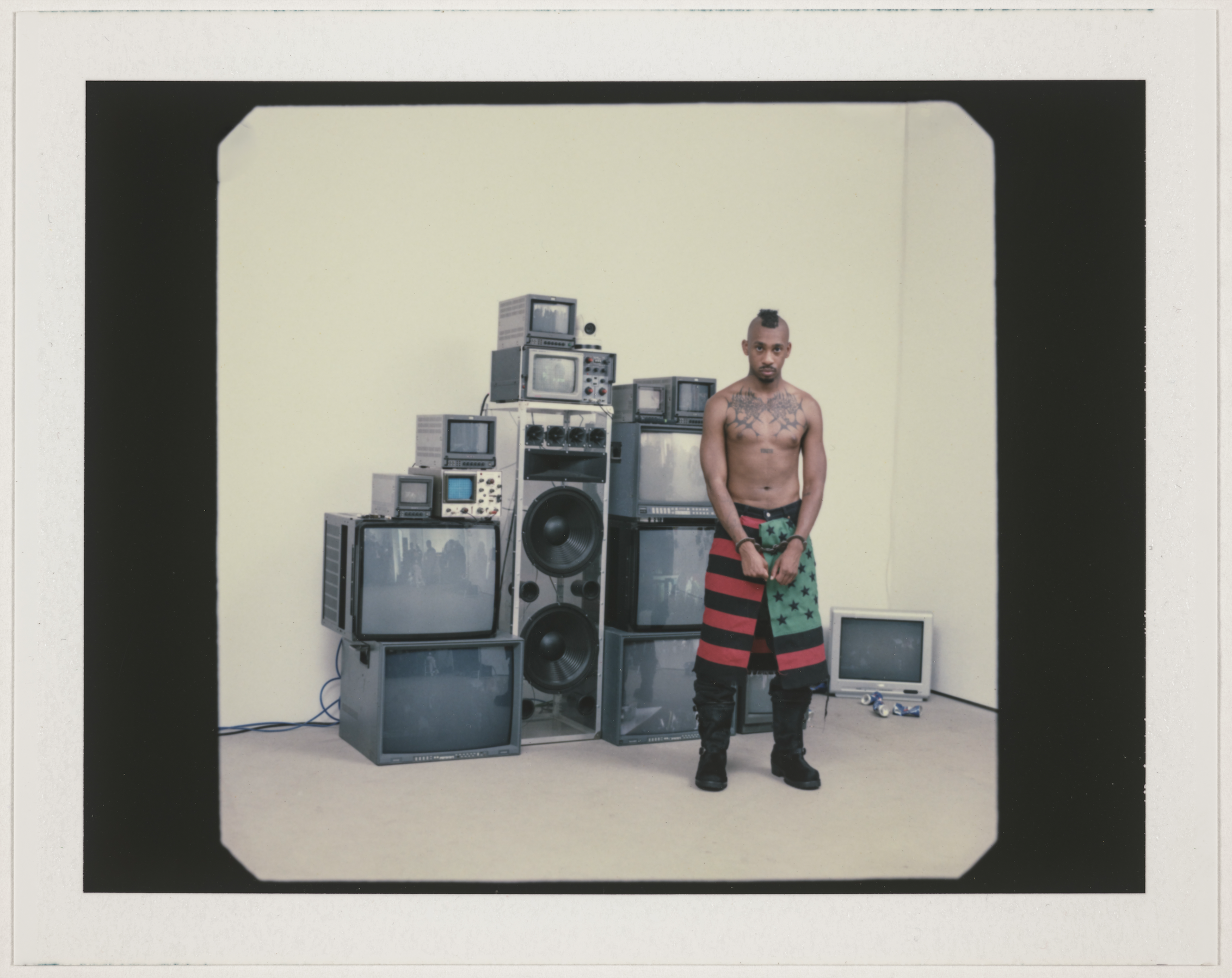
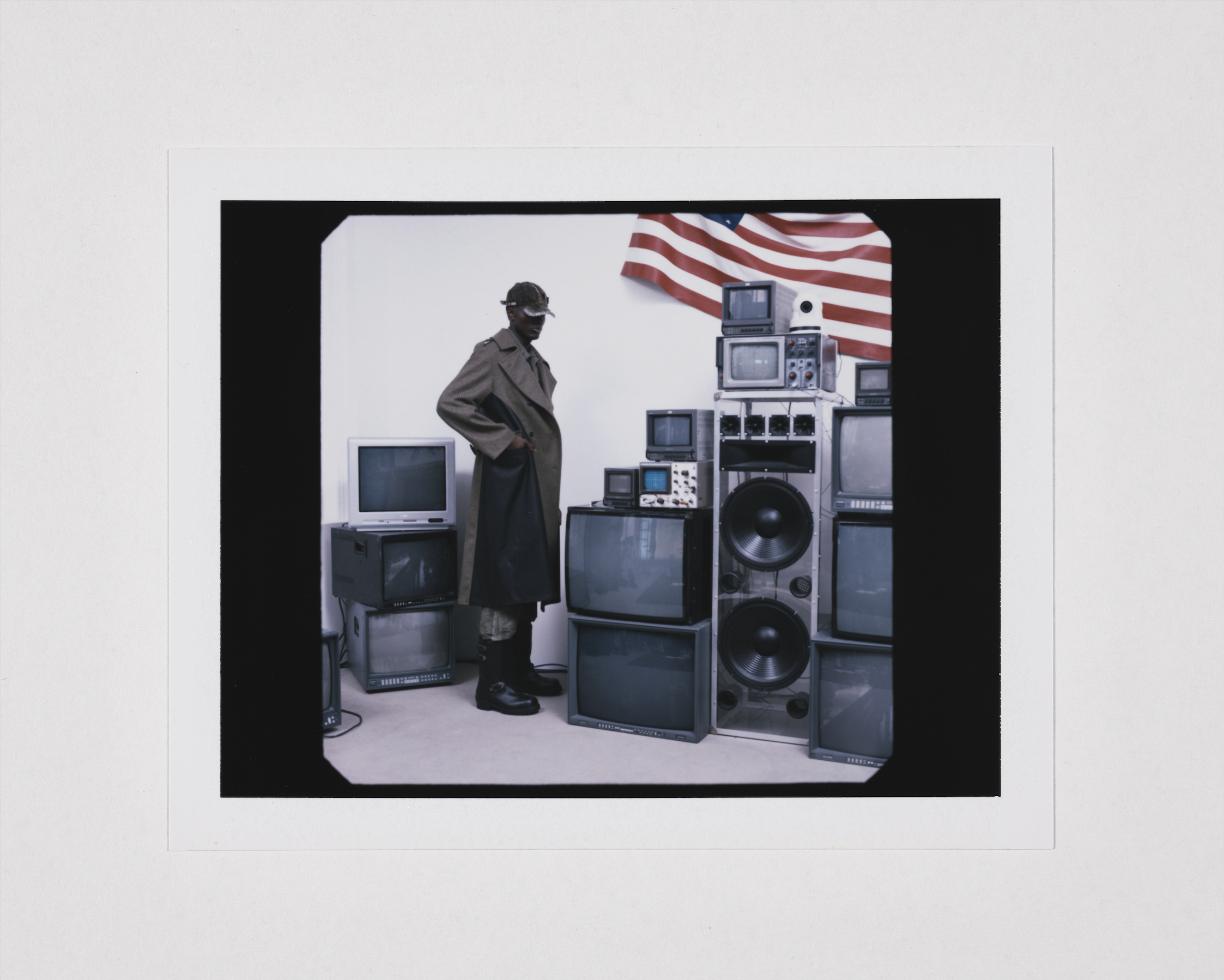
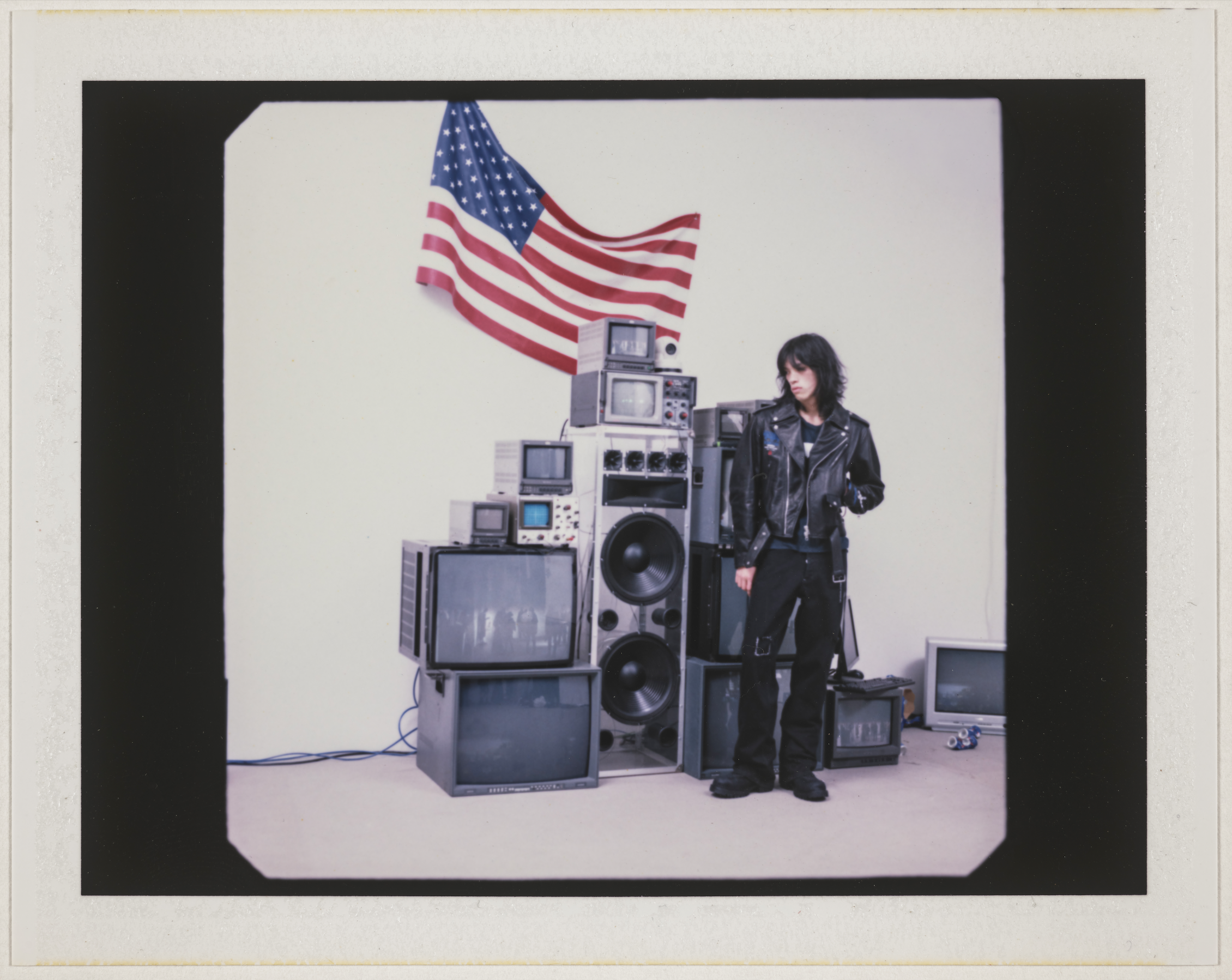
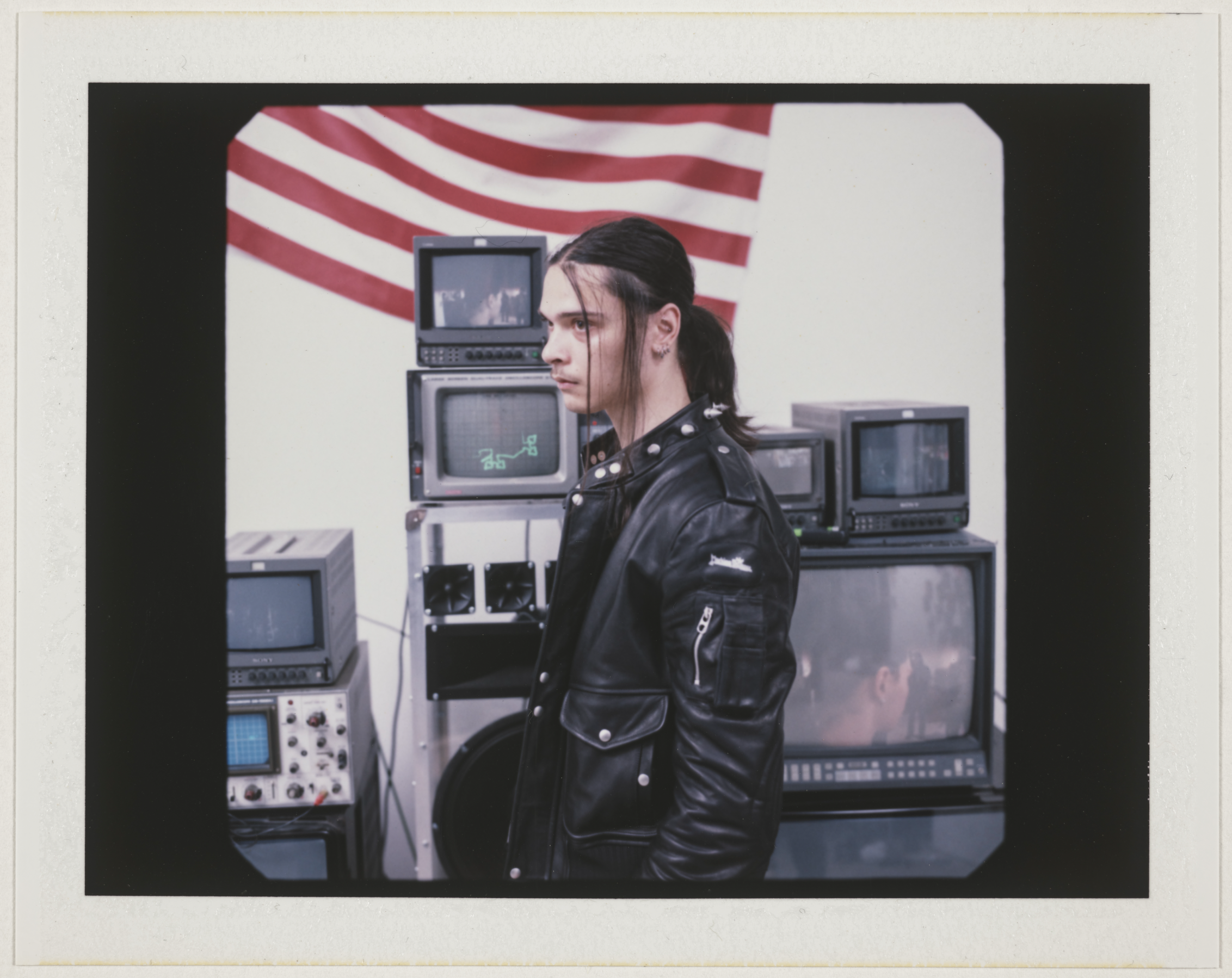
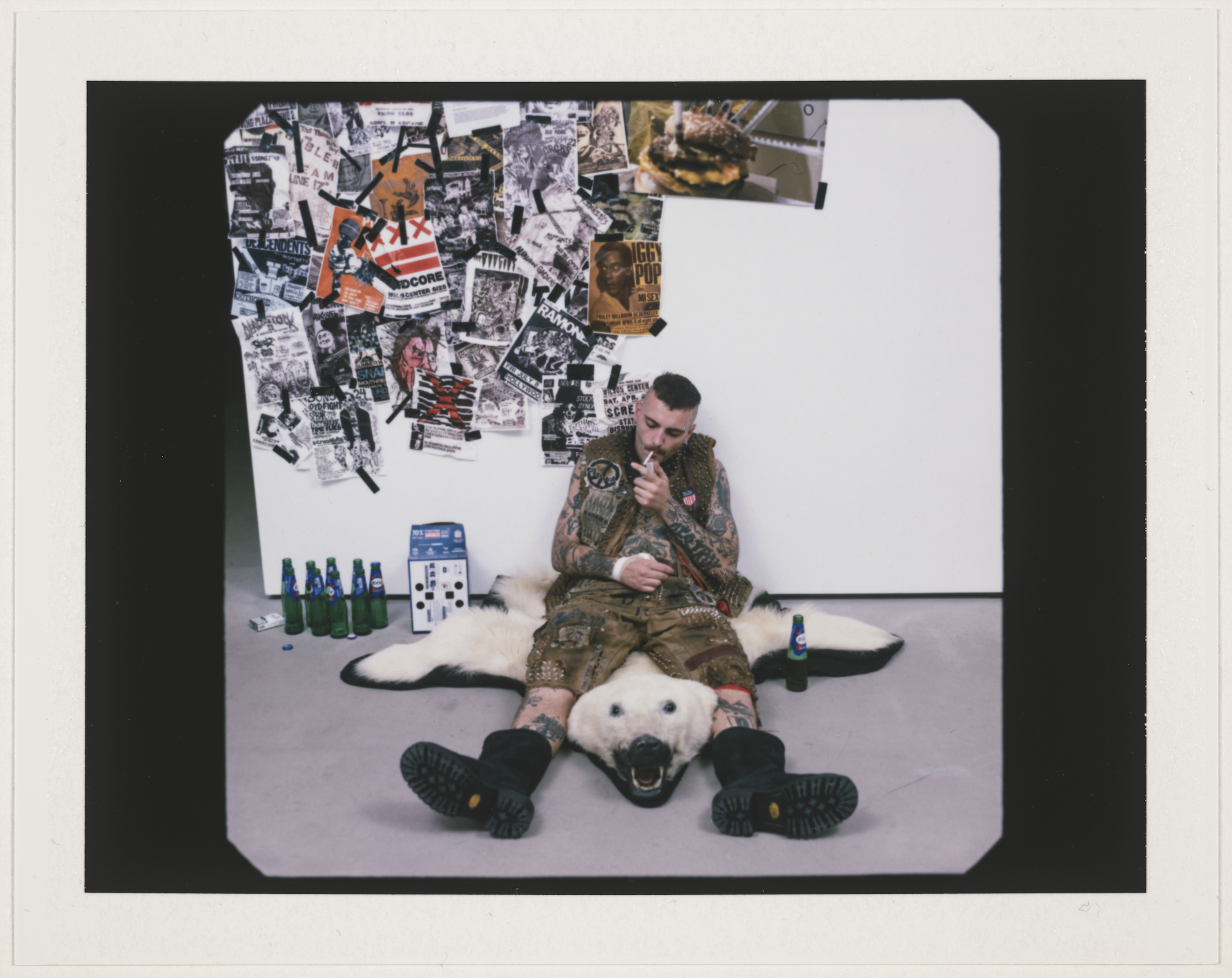
Scorpions. Snakes trapped in jars. Handcuffs. Guns. A towering American flag suspended above VCR monitors watching our every move. Collages, notes, and quotations from film, music, and history scattered across the room. Together, they construct a portrait of a violent America, the collapse of Western nihilism — and the consequences of it — caught in a cycle of power, surveillance, and destruction. This is the backdrop to MARKING DISTANCE Collection 3, that quietly confronts the realities of our time, at a moment when it's all too easy to be distracted by celebrity headlines and the endless spectacle of the news cycle.
Fresh off their Paris showroom, we caught up with founder LUKA SABBAT and collaborator LOKO to unpack the ideas behind the collection. Calling in from Rick Owens’ showroom, Michèle Lamy briefly popped into the frame to say hello, turning an otherwise ordinary Tuesday afternoon into something more exciting – a fitting reminder of the creative community that surrounds Marking Distance…
all photography by MALIN
ELIANA CASA: How do you feel after these press days in Paris?
LUKA SABBAT: A bit exhausted, honestly. But the work doesn't stop. We're heading to New York to shoot the lookbook, then the campaign.
EC: What was the first image or idea that sparked this collection? I saw snakes, scorpions, guns, a Thomas Jefferson quote...
LS: The overarching idea, from the couture pieces to the ready-to-wear, is the destruction of Western nihilism. There are strong anti-war sentiments throughout the collection, alongside reflections on corruption in government and the ways religion and faith can sometimes be used to justify violence or manipulate people. We wanted to speak about accountability and reject the idea that nihilism is a way of life.
EC: The VCR TVs throughout the showroom were really interesting. Why did you include them?
LS: It's the idea that "Big Brother is always watching." We're constantly under surveillance, and that ties into the larger themes of systems that perpetuate war and destruction.
EC: Did you experiment with any new materials this season?
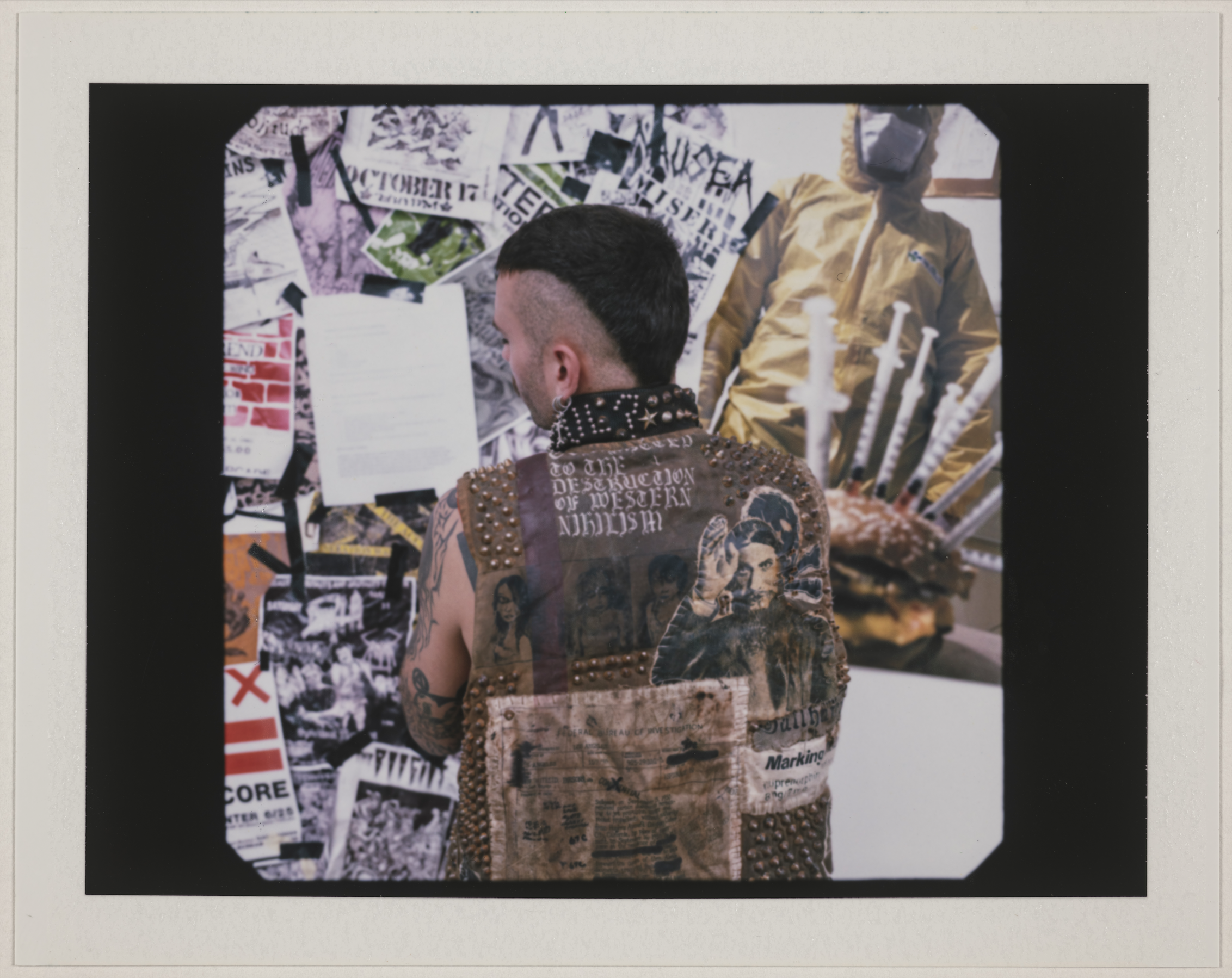
LOKO: Yes. For the couture, we introduced what I call an "animal dye." We use discarded animal by-products that would otherwise be thrown away by butchers and use them to dye fabrics. It's about reducing waste and making use of materials that already exist. It creates a unique brown hue, which you can see on the Necrocrust jacket made from hundreds of muslin, leather, and canvas patches.
That jacket was inspired by a 1987 performance by Skinny Puppy and incorporates references to industrial music, black metal, and crust punk.
LS: For the ready-to-wear, we also developed a silicone-coated jacket. It evolved from experiments with waterproof coatings, but we created a safe production process using silicone instead. Across the collection, we like contrasting rugged exteriors with luxurious interiors—many garments are lined with silk or shearling because comfort is always part of the design process.
EC: Were you concerned people might misunderstand your approach of using animal-based materials?
LS: We're not really concerned with how we're perceived. People can make up their own minds. We're simply trying to make things people haven't seen before. We're not using exotic furs or unethical materials. We're repurposing waste that would otherwise be discarded. It's fundamentally different from creating new demand for animal products.
EC: I spotted Gaspar Noé and many more visiting the showroom - how do you feel having the attention of so many characters? Are these characters part of the story as well?
A: Absolutely. Gaspar has been a friend for a long time, and we bonded over film. The collection draws heavily from cinema, with references to Cruising, The Night Porter, Breaking Point, and many others. It's less about individual people and more about our shared love of film.
Michèle Lamy has also played an important role in the brand. After seeing our previous collection, she encouraged us to develop footwear and connected us with an incredible shoe maker in Padova. The shoes became an extension of the world we're building—something easier to wear every day while maintaining the same level of craftsmanship.
So these people aren't just inspirations; they're part of the Marking Distance community.
EC: Is there one piece from the collection that holds a special place in your heart?
LS: One is the tailored suit that's entirely hand-stitched. It combines couture craftsmanship with elements of crust punk and tailoring, bringing both of our worlds together.
L: For me, it's the Necrocrust jacket. It was technically one of the most difficult pieces I've ever made. Every collection is about challenging ourselves with new techniques, and finishing that jacket made me feel capable of taking on even bigger challenges.
EC: What conversation do you hope this collection starts?
LS: Marking Distance has always been about expressing our shared interests—music, film, history—but also our political beliefs. We don't make collections simply for aesthetics. There are serious things happening in the world that deserve to be talked about.
There are lighter moments in the collection too, like the Ecstasy Xbox shirt, which explores escapism through gaming and nightlife. Moving forward, we'll continue exploring history, music, film, and politics. There's no fixed direction—we're always evolving—but we'll always have something to say.
EC: How do you balance the creative process between the two of you?
LS: We share the same vision and message, but our roles are different. Loco is very hands-on and creates the couture pieces in New York. I focus primarily on the ready-to-wear. Then we work together on everything else—the photography, casting, packaging, and rollout.
We're a very small team, so we're constantly communicating. That's why there's a consistent language running from the couture through to the ready-to-wear.
EC: Is there a collaboration you're hoping to do in the future?
LS: Not really. We already collaborate so closely with each other that we don't feel the need to bring in someone else. There are plenty of collaborations happening in fashion already—we're happy building our own world.