
IN CONVERSATION WITH MAURICE COMPTE
interview by JANA LETONJA
Cuban-American actor known for his versatility, intensity, and commitment to his craft, Maurice Compte, has spent years building one of the most respected careers in film and television, delivering memorable performances across acclaimed projects including Narcos, Mayans M.C., Power, Breaking Bad, End of Watch, Den of Thieves, and M.I.A. Now, he's stepping onto one of the biggest stages in Hollywood as part of Christopher Nolan's highly anticipated epic The Odyssey, joining an all-star cast that includes Matt Damon, Tom Holland, Zendaya, Anne Hathaway, Lupita Nyong'o, Robert Pattinson, and Charlize Theron.
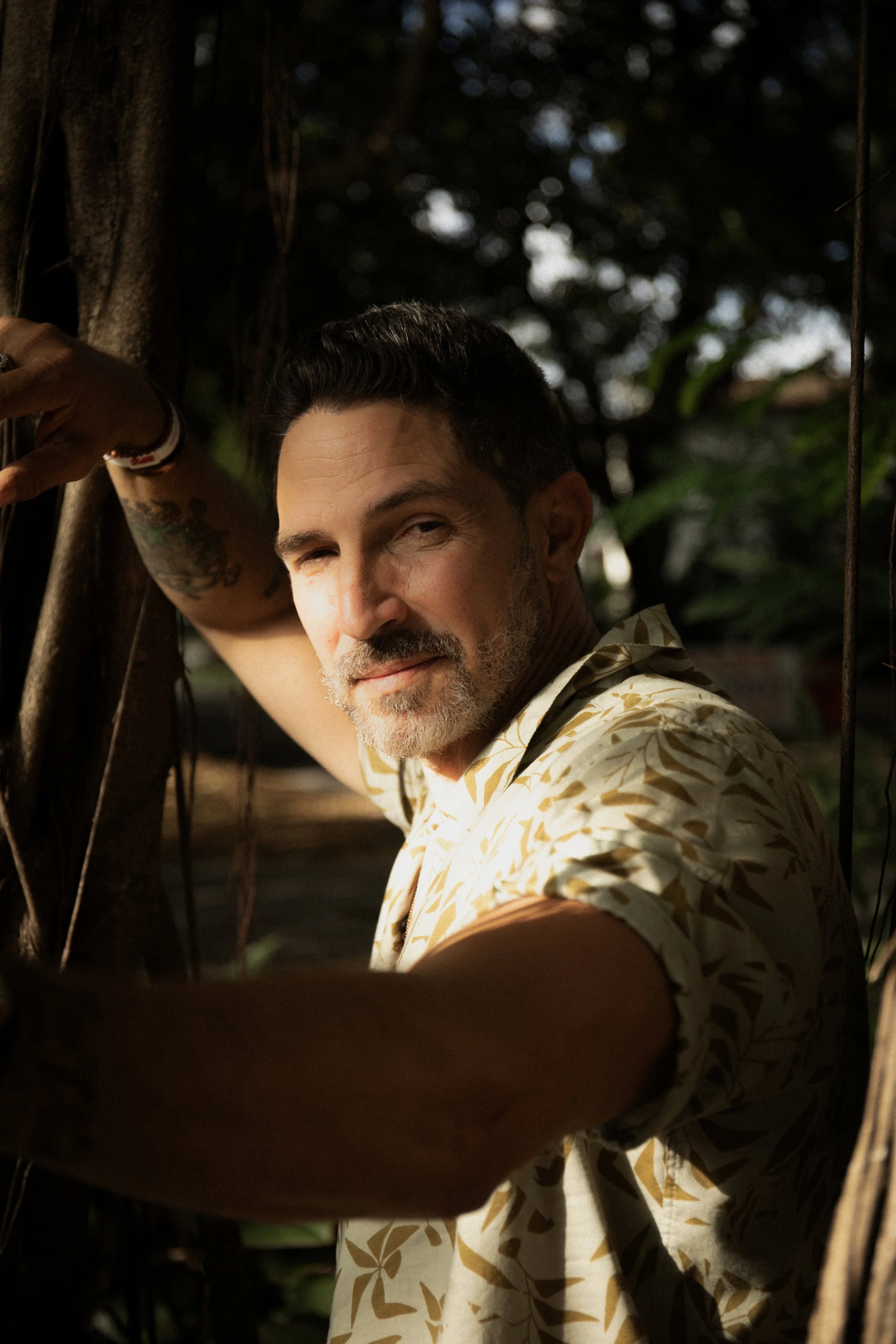
The Odyssey is one of the most anticipated films of the year. What was your reaction when you learned you would be part of Christopher Nolan's latest project?
The moment I got the call to tell me I had the part is one I’ll never forget. I was beyond elated.
It’s a very unique sense of gratitude, and difficult to explain. Christopher Nolan is one of those rare filmmakers whose work doesn't just entertain people, it becomes part of the cultural conversation for years. His films stay with you. So my first reaction was genuine gratitude. Gratitude to be invited into that world, and gratitude to play even a small part in a story as timeless and enduring as The Odyssey.
What excited me most was the opportunity to work with someone who continues to push the boundaries of what's possible in cinema. When you step onto one of his sets, you immediately feel it. Every detail matters. Every person is fully invested. There's a level of focus and craftsmanship that's incredibly inspiring to be around.
Then there's The Odyssey itself. This is a story that has survived for thousands of years because it speaks to something fundamental about being human, the search for home, identity, purpose, and perseverance. The opportunity to help bring that journey to life through Christopher Nolan's vision was something I simply couldn't say no to. For me, it felt less like taking a job and more like being invited on an adventure.
Without revealing too much, what can you share about the film and your role in it?
I wish I could tell you more, but what I can say is that Christopher Nolan doesn't approach stories in a conventional way. The Odyssey is a project with incredible ambition, scale, and craftsmanship, but at its core, it's still a very human story about identity, endurance, and home.
Part of the magic of any film, but a Nolan film especially, is discovering it in the theater without too much information beforehand. What I will say is that being on set and watching the level of preparation, precision, and artistry that goes into every scene has been an unforgettable experience.
Audiences think they know The Odyssey. I have a feeling they're going to be surprised.
You're sharing the screen with an extraordinary ensemble cast and crew. What was it like collaborating with so many acclaimed actors and Christopher Nolan?
One of the great privileges of being part of a project like this is realizing very quickly that everyone there is in service of the story. When you walk onto a set filled with actors whose work you've admired for years, there's naturally a moment of awe, but that disappears pretty fast because everyone is focused on the work.
Christopher creates an environment where excellence is expected, and ego isn't particularly useful. The atmosphere is incredibly collaborative, disciplined, and creative. He has a remarkable ability to communicate a vision while still allowing artists the space to bring something personal to the material. It's incredible to watch him work. I never went to my trailer or chair.
What struck me most was the level of commitment from the cast, the crew, and every department. There are no passengers in a Christopher Nolan film. Everyone shows up prepared and fully invested. I learned a tremendous amount simply by observing. When you're surrounded by people operating at the highest level of their craft, you can't help but leave better than when you arrived.
What do you think audiences are going to be most surprised by when they see The Odyssey?
The biggest surprise will be how fresh it feels. The Odyssey, being one of the oldest stories ever told, and one most people think they already know, comes face to face with the man who gave quantum a visual address in space and time.
Without saying too much, I don't think audiences should expect a museum piece or a history lesson, but the themes that made the story endure for thousands of years, about home, sacrifice, temptation, identity, and perseverance, are still as deeply relevant today as ever.
And then there's the scale. People expect spectacle from Christopher Nolan, and rightly so, but what has always impressed me about his work is that the spectacle serves the emotion, not the other way around.
You've worked steadily for years across film and television. Looking back, what do you think has been the key to your longevity as an actor?
I think longevity comes from understanding that this is a marathon, not a sprint. There are moments when things move quickly and moments when they don't, but your relationship to the work has to remain the same.
Early on, I stopped chasing the idea of a career and started focusing on the craft. Careers go up and down. The work is what remains, and life is my work's playground. If you stay curious, keep learning, and continue challenging yourself, you can weather the inevitable highs and lows of this business.
I've also been fortunate to work with incredible people along the way, and I've learned something from every set, every director, every actor, every success, and every disappointment. Sometimes the jobs that don't happen teach you as much as the ones that do. At the end of the day, I still feel the same excitement I felt when I first started. I still love stepping onto a set and trying to solve the puzzle of a character. As long as that curiosity remains, I think there's always room to grow.
How has your approach to acting evolved since your earliest professional roles?
In the beginning, I probably thought acting was more about showing people what I could do. As I've gotten older, I've realized it's much more about listening, trust, and getting out of the way.
I used to be very focused on technique, how to build a character, how to prepare, how to hit the right emotional notes. All of that is important, but over time I've learned that the most powerful moments often happen when you're fully present and responsive rather than trying to control the outcome.
I've also become much less interested in being seen and much more interested in serving the story. The older I get, the more I appreciate that acting is a collaborative art form. It's not about any one performance, it's about how all the pieces come together.
Experience has given me confidence, but also humility. I've learned to see the value of being in the group and part of the tapestry. Whether in the front, middle, or back. I had that experience with M.I.A., a series I filmed last year that just aired on Peacock. We became a tight family whilst we were filming, and it was such an honor to be part of that ensemble cast.
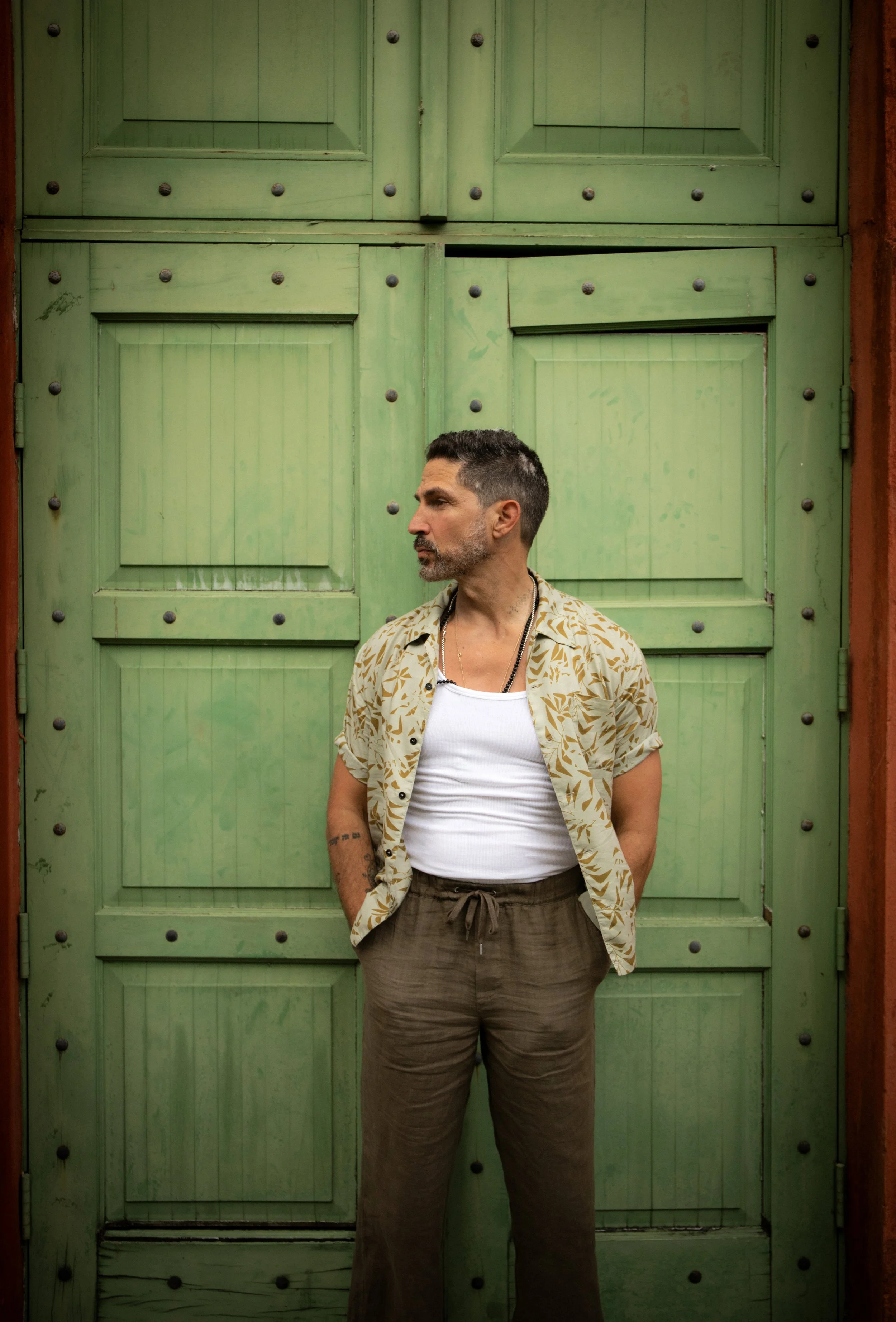
Is there a particular performance in your career that you feel doesn't get talked about enough but means a lot to you personally?
There are a few, actually. My first film, The Dreamcatcher, as well as I Do, and Fidel. Different films for different reasons. What's interesting is that the projects that mean the most to you aren't always the ones that get the most attention.
Sometimes a role becomes important because of where you were in your life when you played it. Sometimes it's because of the people you worked with. Sometimes it's because the material challenged you in a way.
I've been fortunate to work on projects that reached large audiences, but some of the experiences I treasure most are the ones where we were simply trying to make something honest and meaningful without any expectation of recognition.
For me, success has never been measured solely by how many people saw something. It's also measured by whether the work demanded something of me as an artist and as a human being.
The funny thing is, people sometimes discover those performances years later. I find that really rewarding because people are connecting with the work rather than the hype surrounding it.
As a Cuban-American actor, how has your heritage influenced your perspective as an artist?
My heritage has influenced me in ways that are both obvious and invisible. Obviously, it's part of my identity, my family history, my language, and the culture that shaped me. But more than anything, it gave me an appreciation for resilience.
Like many Cuban-American families, I grew up surrounded by stories of sacrifice, reinvention, displacement, and hope. I think those experiences create a deep understanding of what people are willing to endure for family, for freedom, and for the chance to build something better. As an actor, those are powerful emotional truths to draw from. But also, a base to move away from and circle back to.
It also gave me an appreciation for community. In Latino culture, and certainly in Cuban culture, there's a strong sense that our lives are interconnected. Family isn't just immediate family, it's often an entire network of people who help shape who you become. That perspective naturally finds its way into the characters I'm drawn to and the stories I want to tell.
At the same time, I've never wanted to be defined solely by my heritage. I see it as part of my foundation, not the limit of my range. The goal has always been to tell universal human stories while bringing the fullness of my own experience to the work.
Being Cuban-American has also taught me that identity can be very specific and very universal at the same time. The more honestly you tell the truth about where you come from, the more likely it is to resonate with people from completely different backgrounds.
What challenges did you face early on that ultimately made you stronger as an actor?
I think the biggest challenge has probably been learning to separate my sense of self-worth from any outcome, and if you aren't careful, you can start measuring your value by things that are completely outside your control.
There were periods where I knew success was just around the corner, but in those very periods, I wondered if it would ever arrive at all. Looking back, those moments were incredibly valuable because they forced me to ask a difficult question, “Would I still do this if nobody was watching?” Once I answered yes, everything changed.
Another challenge was patience. We usually tend to look at careers in hindsight and imagine they happened in a straight line. They rarely do. Most careers are built in the quiet years when nobody is paying attention, when you're still showing up, still learning, still preparing for opportunities that haven't arrived yet.
Finally, I had to learn that rejection isn't always a judgment of talent. Sometimes you're just not right for the role. It's that simple. Who knows why the timing is wrong, or some arbitrary decision has nothing to do with you at all. Not taking anything personally was big.
The obstacles turned out to be the training. They taught me resilience, perspective, and gratitude. Those qualities have probably served me more than any single role ever could.
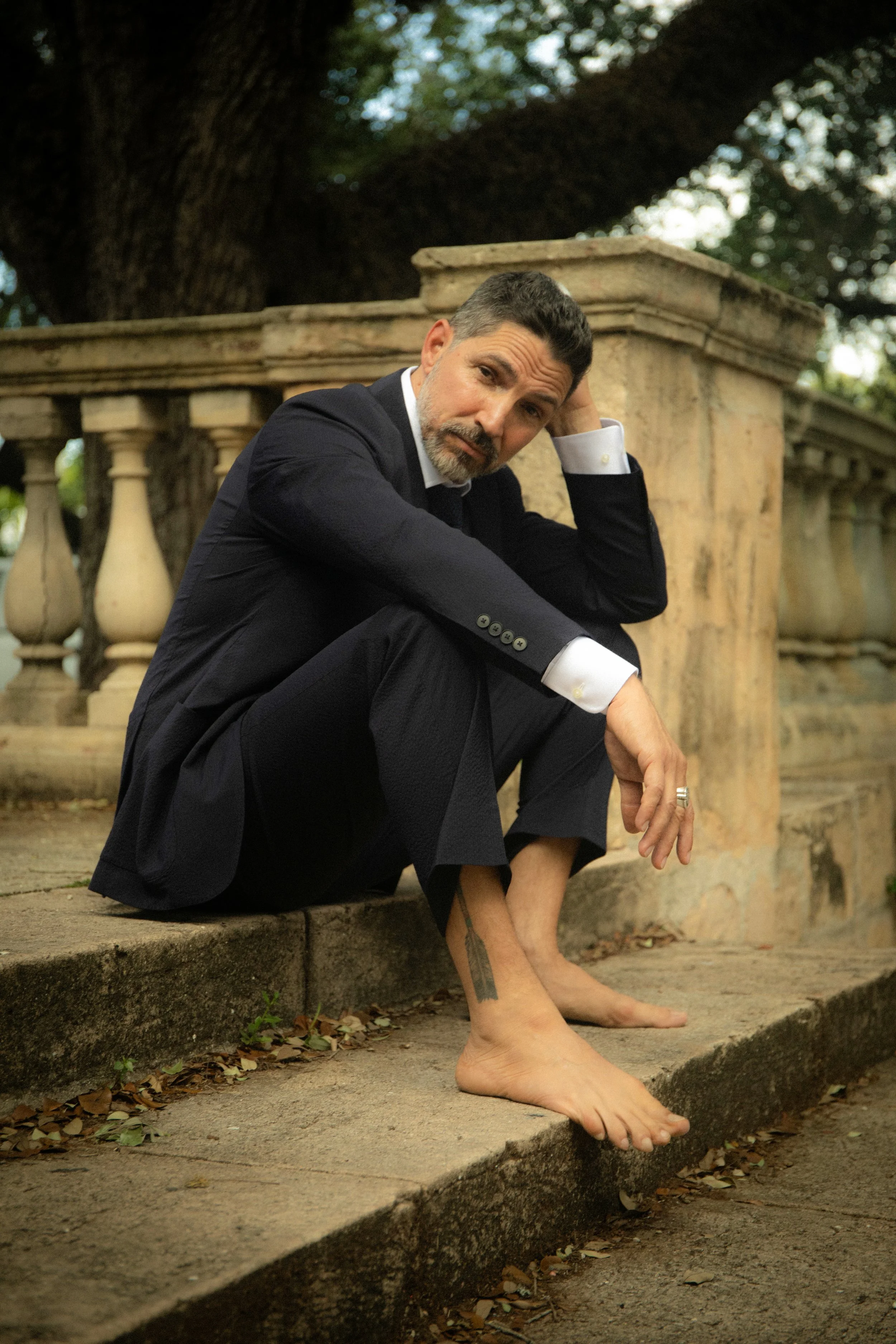
Outside of acting, what are some of the passions or interests that keep you grounded?
The things that keep me grounded are usually the things that have nothing to do with the industry. Family is at the top of that list, which has a way of keeping your perspective intact.
I'm also deeply interested in personal growth and spirituality. I enjoy exploring the bigger questions, like why we're here, how we find meaning, how we evolve as human beings.
I love reading, learning, and studying subjects that challenge the way I see the world. Whether it's history, philosophy, psychology, or science, I find that curiosity feeds both my life and my work. As an actor, you're constantly trying to understand people, and that process doesn't stop when the cameras stop rolling.
I also love to paint late into the night. I told myself when I lost all my artwork in the Palisades fires that I would start painting big, so I’m working on a huge canvas that I’ll hang in my living room opposite another one I recently finished.
Travel has also been a great teacher. Experiencing different cultures reminds you how much larger the world is than your own perspective, and I think that's invaluable both as a person and as an artist.
If you could revisit any set from your career for one day, which project would you choose and why?
That's a difficult question because every set represents a different chapter of your life. You're not just revisiting a project, you're revisiting a version of yourself.
If I had to choose, I'd probably pick one of those projects where none of us knew exactly what we had while we were making it. Like Julian Schnabel’s Before Night Falls. Julian rented out an entire hotel for the cast and crew to stay together in. It was insane. He would film all day and paint all night. My room was next to his, so I would sometimes go and sit quietly and watch him paint. Or Den or Thieves, that was special because the friendships I made on that set have turned out to be some of the most enduring.
Now I think about it, other shows come to mind…, like Breaking Bad and Dusk Till Dawn. I developed a love for the desert as I filmed in New Mexico for months, and I loved exploring the area and learning about indigenous culture and history.
Film and television are unique because they create these intense little families for a brief period. You spend months together solving problems, telling stories, and sharing experiences, and then one day everyone scatters in different directions. So if I could go back for a day, it would be less about reliving a performance and more about sitting around between takes, laughing, hearing those voices again, and sharing those conversations that at the time, probably felt ordinary.
With The Odyssey marking such a major moment in your career, what excites you most about the future?
What excites me most is that I still feel like I'm learning, growing, and enjoying myself. A project like The Odyssey reminds me of how much more there is to explore, how many great stories remain to be told, and how many artists there are still to learn from.
The most exciting part of the future is the opportunity to keep surprising myself, to take creative risks, and to work with people who challenge me to become better at what I do.
I'm also increasingly interested in storytelling from a broader perspective. Acting will always be at the heart of what I do, but I'm fascinated by the entire creative process, developing stories, building worlds, and helping bring meaningful projects into existence from the ground up. I had the good fortune to tell my dad’s story by making a series called Hotel Cocaine, which aired on Amazon/MGM. A lot of actors dream of crossing over to producing, but it’s hard to do, so I feel pretty grateful I had that opportunity.
Ultimately, what excites me is the same thing that excited me when I started, the chance to be part of stories that move people. Everything else, the recognition, the milestones, the headlines, is what I've had to work through to get to the place of enjoyment with this process.
TEAM CREDITS:
photography JUAN AZULAY
