
IN CONVERSATION WITH MIGUEL POVEDA
interview by JANA LETONJA
Solo el misterio nos hace vivir is a deeply personal documentary directed by Spanish flamenco singer Miguel Poveda, created in homage to Federico García Lorca on the 90th anniversary of his death. Set for theatrical release on the 23rd of April, the film traces Miguel’s intimate, years-long journey through the cities that shaped Lorca’s life—Granada, Madrid, Buenos Aires, and beyond. More than a tribute, Enlorquecido becomes a profound act of artistic and personal exploration, as Miguel seeks to illuminate forgotten spaces, confront historical silences, and ultimately better understand himself through the enduring legacy of one of Spain’s most influential poets.

What first inspired you to begin this deeply personal journey into Lorca’s life?
The need to feel him closer and more real by inhabiting every place he once walked through.
Why was it important for you to release Enlorquecido on the 90th anniversary of Lorca’s death?
For me, it was important to explain how and in what way a human being can transform you and change your way of living, and not because it is now the 90th anniversary. I have actually been fiilming this documentary since 2020, and I have also included footage from my personal archive.
How is this film different from a traditional tribute or biographical documentary?
It is actually neither one nor the other. It is more of a search and a discovery. It reflects how magical Federico can be and how compelling his life and work are through mystery.
At what point did the project shift from being about Lorca to also being about you?
At the moment it is approached as a letter of love and gratitude, a search from one heart to another, in pursuit of answers that are ultimately found at the end of the documentary.
What did you discover about yourself while walking in Lorca’s footsteps?
That I want to be a cultural agitator, and that I am deeply inspired by his way of bringing art closer to the people without being elitist.
The film’s subtitle says, “Only mystery makes us live.” What does that phrase mean to you personally?
It is what keeps us in a constant state of searching, and that is what makes us feel alive, the curiosity about the unknown and also about the spiritual world.
Lorca’s life was marked by beauty, marginalization, and resistance. How do you connect with those themes in your own artistic journey?
Through commitment and the desire to make the world more livable, which can be achieved by fostering culture and education.
How does flamenco, your language as an artist, serve as a bridge to Lorca’s poetry?
There is a great deal of flamenco in Federico’s poetry because it contains an Andalusian, rural landscape and very deep emotions. He was a lover of this music and collaborated with Manuel de Falla to create the first cante jondo competition. This is reflected in a large part of his work.
Did you feel a sense of responsibility when portraying such an iconic cultural figure?
With Federico, one always feels a great responsibility, especially to avoid falling into typical clichés and stereotypes. There is still an unknown and profound universe within him, and that is where one must go in order to truly understand the magnitude of his genius.
The documentary spans several years of filming. How did the passage of time change your perspective?
When the discovery appears, when I thought the documentary was already finished, something unexpected happened that gave me all the answers and the meaning of the entire project.
What role does memory play in both Lorca’s legacy and your own artistic identity?
The most important role, because as a country we have the duty to remember him and rescue him from so many years of silence and oblivion. We must not forget that he was murdered at the height of his life, without resentment, but also without forgetting.
How does Enlorquecido redefine the relationship between poetry and music?
Federico was a great aspiring musician, a poet who would captivate attention in any gathering by playing the piano and singing popular songs. He also played some guitar, and that musicality is present in much of his work. For me, he is one of the most musical poets and playwrights, and reading him invites you to sing him.
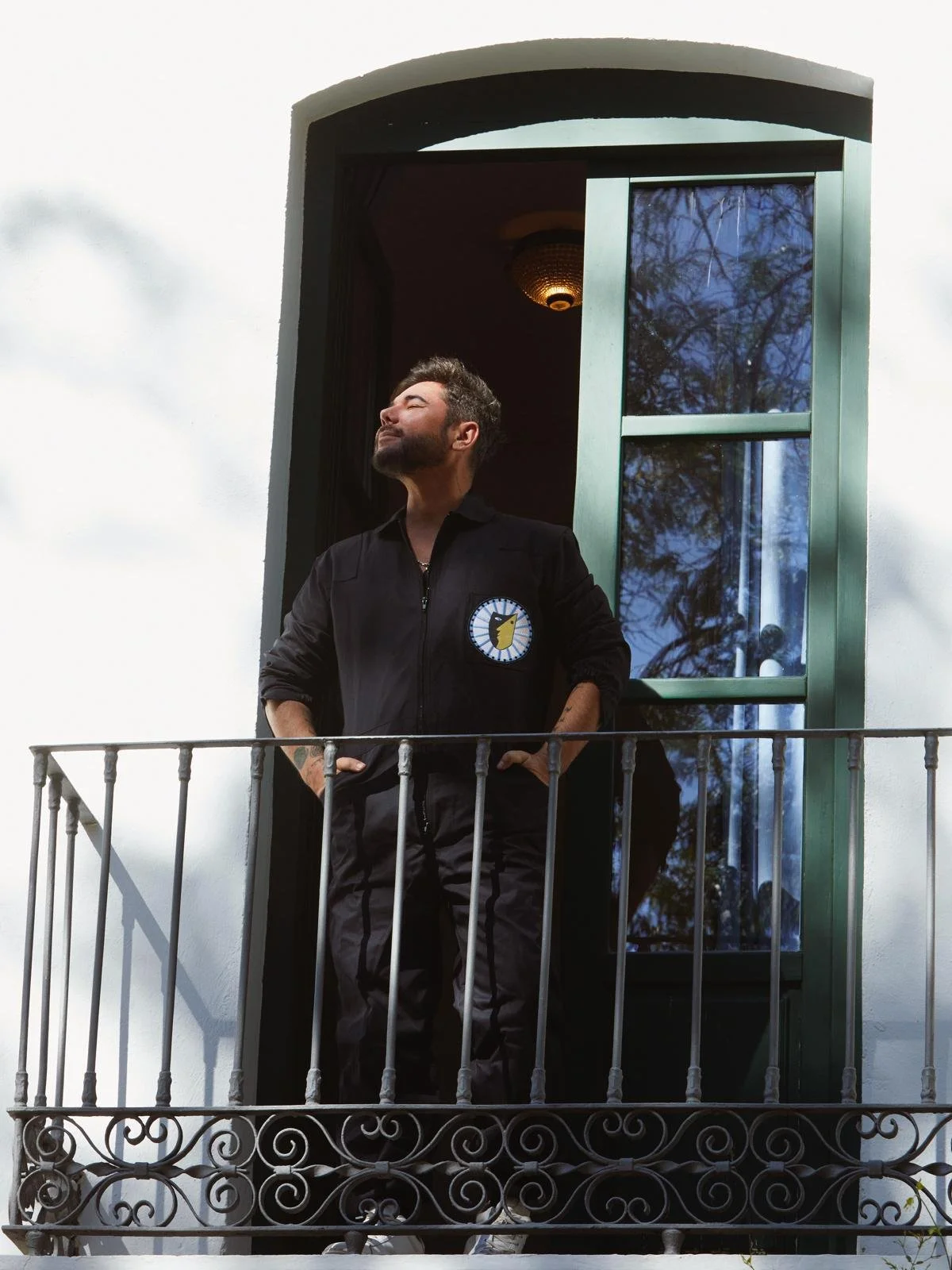
TEAM CREDITS
talent MIGUEL POVEDA
photography JAVIER SALAS
editorial director and interview JANA LETONJA
editor TIMI LETONJA
