
Interview by Samo Šajn
Nineties Techno Redux is the new project from New York producer and DJ Holden Federico. His debut album under the alias, “Leak,” is out 20 November on SK_eleven. The 17-track record brings the energy of his club sets into more melodic territory, shaped by memory and nostalgia. We spoke with Federico about how algorithms shape our relationship with music and why improvisation matters to him.
You’ve spent the past five years producing techno as Holden Federico. What did Nineties Techno Redux allow you to explore that felt different from your work under your own name?
It gave me an entirely new lens. With the techno I produce under my own name, the premise is to try to evolve the genre from within. Take the existing constraints that make something physically powerful on the dancefloor and subvert them in some way. Place melodies and musical themes in a form of music where melody doesn’t typically belong.
With Nineties Techno Redux, the aim is to do the opposite. Take the songwriting and melodic freedom that comes with breakbeat, IDM, and other forms of experimental music, and infuse it with the physical urgency of modern techno. For the past few years, I’ve found myself wanting to listen to music that has the adrenaline surge of a peak-time track at 4 a.m., but with a very different emotional quality. What if a song could give you the rush of Luke Slater with the emotional depth of something like Interpol or Lana Del Rey? Maybe that’s an impossible task, but it’s one that Nineties Techno Redux allows me to explore.
Why did you choose the name Nineties Techno Redux, and how does it connect to the music on “Leak”?
Nineties Techno Redux has been my handle online for years. I didn’t really think too hard about it. I guess back in the beginning, it represented the spirit I wanted to bring to my music. Revisiting old ideas and reimagining them for today.
“Leak” explores memory and nostalgia. Is there a personal memory or period in your life that shaped the album?
As a teenager, I took long train rides every day to get to school. It wasn’t a conscious choice, but in many ways, looking back, this album was made for those moments. Looking out the window, wondering what lay ahead. Who will I be? What will I one day become?
A lot has been said about how modern technology and phone addiction rob us of our time. But they also rob us of our ability to dream. Sitting quietly on a speeding train, listening to your favorite song, noticing the landscape, noticing the sky, not looking down at a screen every few seconds, letting your mind and thoughts wander into something unknown. This blank space to daydream used to come naturally. Now it requires a lot of discipline. Sometimes it can feel impossible. I think when we lose touch with our ability to daydream, that’s when we start to stagnate. That’s when we lose touch with one of the most important things that move us forward.

The album describes a longing for an imagined past. How do you separate what you actually remember from what nostalgia makes you believe?
There’s a beautiful tension in memory and nostalgia that more abstract art forms like music enable us to explore so well. What’s the warm feeling I’m actually trying to return to? Did it happen the moment a photo was taken, or does it exist most strongly in my head as I look back on some remembered moment from the past? Did the moment itself feel as potent as I remember it, or has the passing of time amplified my perception of what it meant? I don’t have the answer. But every time I sit down to make music, I get to wrestle with that in some way.
You connect the record to the ways AI and algorithms are changing our lives. How have those changes affected your own relationship with music?
Algorithmic media is now inescapable. There’s a person or company trying to predict, statistically model, or influence every decision we make at every point in our day. Usually so they can sell us something or capture our attention.
The only answer, in my view, is to reject this. Embrace what can’t be modeled and predicted. For me, that’s improvisation and feeling. Sitting at the piano. Resampling a synth line over and over. Trying to transmit a feeling into a spontaneous musical idea. Maybe I’ll be proven wrong, but I don’t think AI will be able to do that. Or even if it can simulate doing these things, we need to prize the authentic version of creation so that we can discern real human feeling from something that’s just trying to mimic it. It’s not a question of “Will AI replace human creativity?” The better question is, “Will we remember that we deserve better than that?”
Kraftwerk and electronic music released on Warp Records around the turn of the millennium inspired “Leak.” What feels relevant to you about their approach today?
I love their approach to songwriting. In songs like “Computer Love,” there are new melodic ideas at almost every turn of the song. The hooks keep building on one another, and the call-and-response melodies are all so perfectly crafted. I don’t think I’ve heard electronic music with so many distinct musical ideas. Kraftwerk were the first to do it, and I don’t think anyone has done it better since. Early Warp releases get close. Even on their earliest compilations like “Artificial Intelligence,” the songs are really musically rich. Lots of different hooks and great chord progressions. I remember reading an interview with Aphex Twin a while back about how he was trying to pick up what Kraftwerk was doing and run it through a Drexciya lens. His early stuff makes a lot of sense that way.
So much of the dialogue around these artists today focuses on their contributions to sound design. But I see them as groundbreaking composers. They put so much music into their vision for electronic music. I hope to carry that forward because I think the best electronic music has the ability to transcend its electronic context. Why not try to make a track that works on the dancefloor, but also give it a melody that someone can go home and play on the piano or their acoustic guitar? That type of music will live forever.
The album combines emotional melodies with futuristic digital sounds. What does your process look like when bringing those elements together?
Everything usually starts with a synth or a keyboard in some way. Feeling my way through different melodies and chords. Even if I end up stripping all of that away, it has to work as a piece of music first. Then I’ll turn to the computer and evolve things with different drums and processing approaches. But whatever I do, it needs to start from a place of feeling and emotion.
Across 17 tracks, “Leak” moves beyond the techno you’ve released under your own name. Which track pushed you furthest outside your comfort zone, and why?
I think they all pushed me outside my comfort zone in equal but different ways. It’s part of the process. A song never really feels done to me if I haven’t pushed it to a point that feels at least a little uncomfortable. That’s always where the interesting ideas lie.
You regularly perform at BASEMENT in New York. What has that dancefloor taught you about human connection, and did those experiences influence “Leak”?
BASEMENT is a very special place. I love stepping into that booth. There’s something exhilarating about playing for that dancefloor because the club and setting have all been perfectly dialed in, and you’re experiencing this in New York, a city that defies all description. The old sayings are true. To make it as anyone in New York, whether you have a corporate job, you work in the service industry, you’re an artist, whatever you’re doing… it requires so much hard work. No one I know is coasting. So if someone takes time out of their day to listen to my music, spends their paycheck to trek across town and come and see me play, I owe it to them to give them the best show possible.
All of this has informed not just the music on the record but the live show I’ve been developing around “Leak.” How can I show people an entirely new side of what live electronic music could look and sound like? What does it mean to be a live electronic musician today? There’s a lot of opportunity. I’m excited about it.
You worked with Cobey Arner on the album’s photography. How did you translate ideas of fading memories and human longing into images?
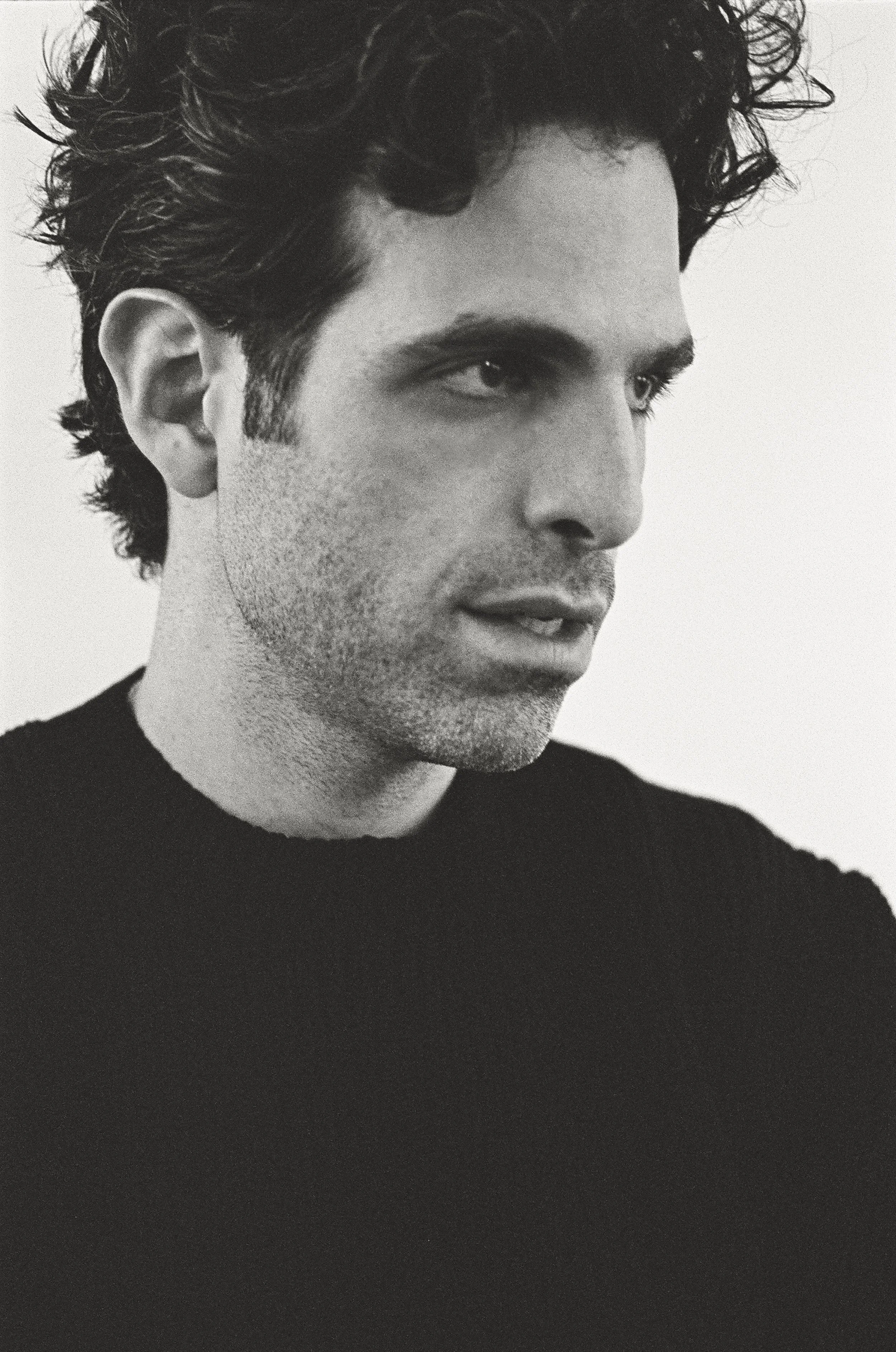
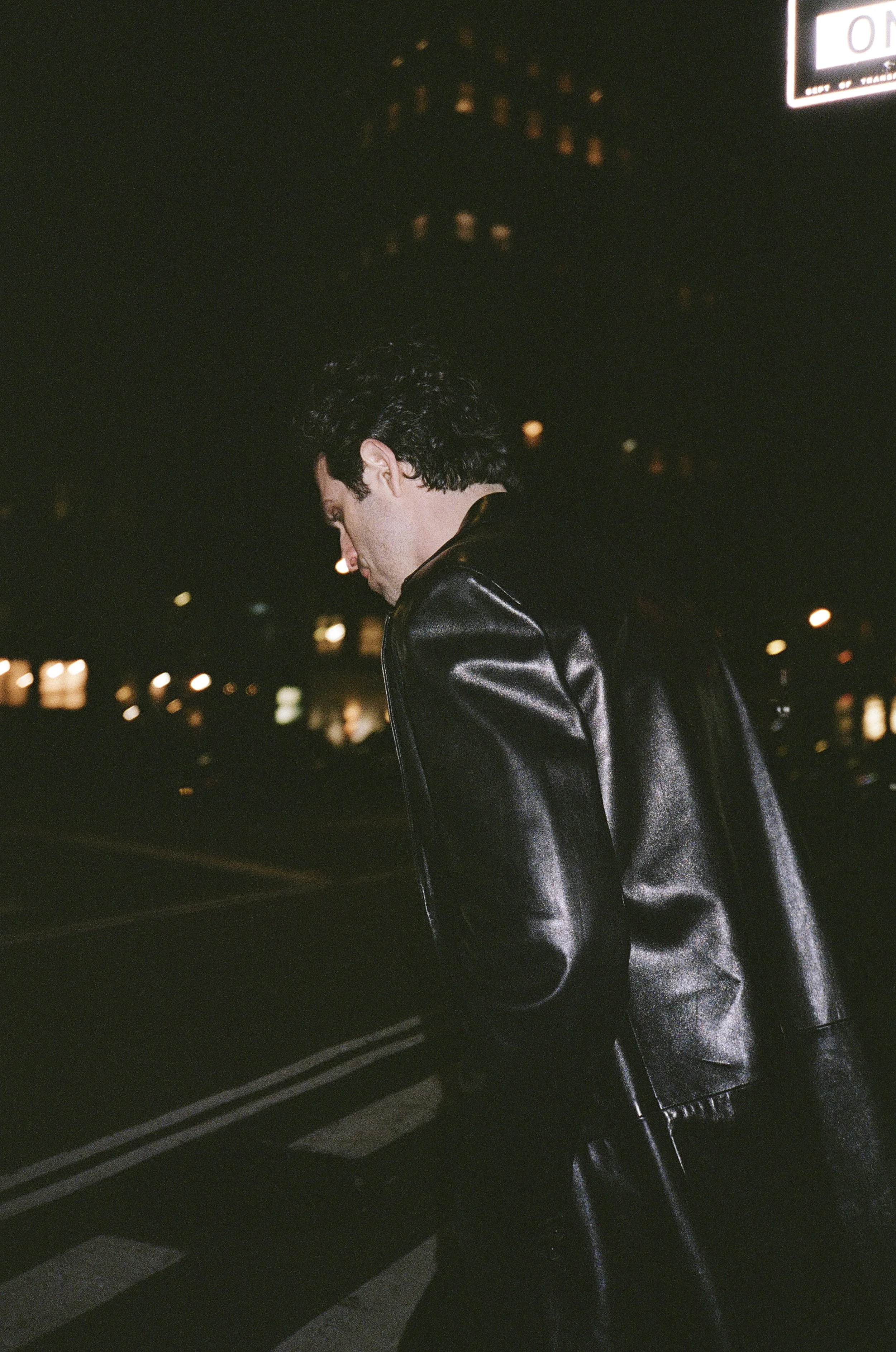
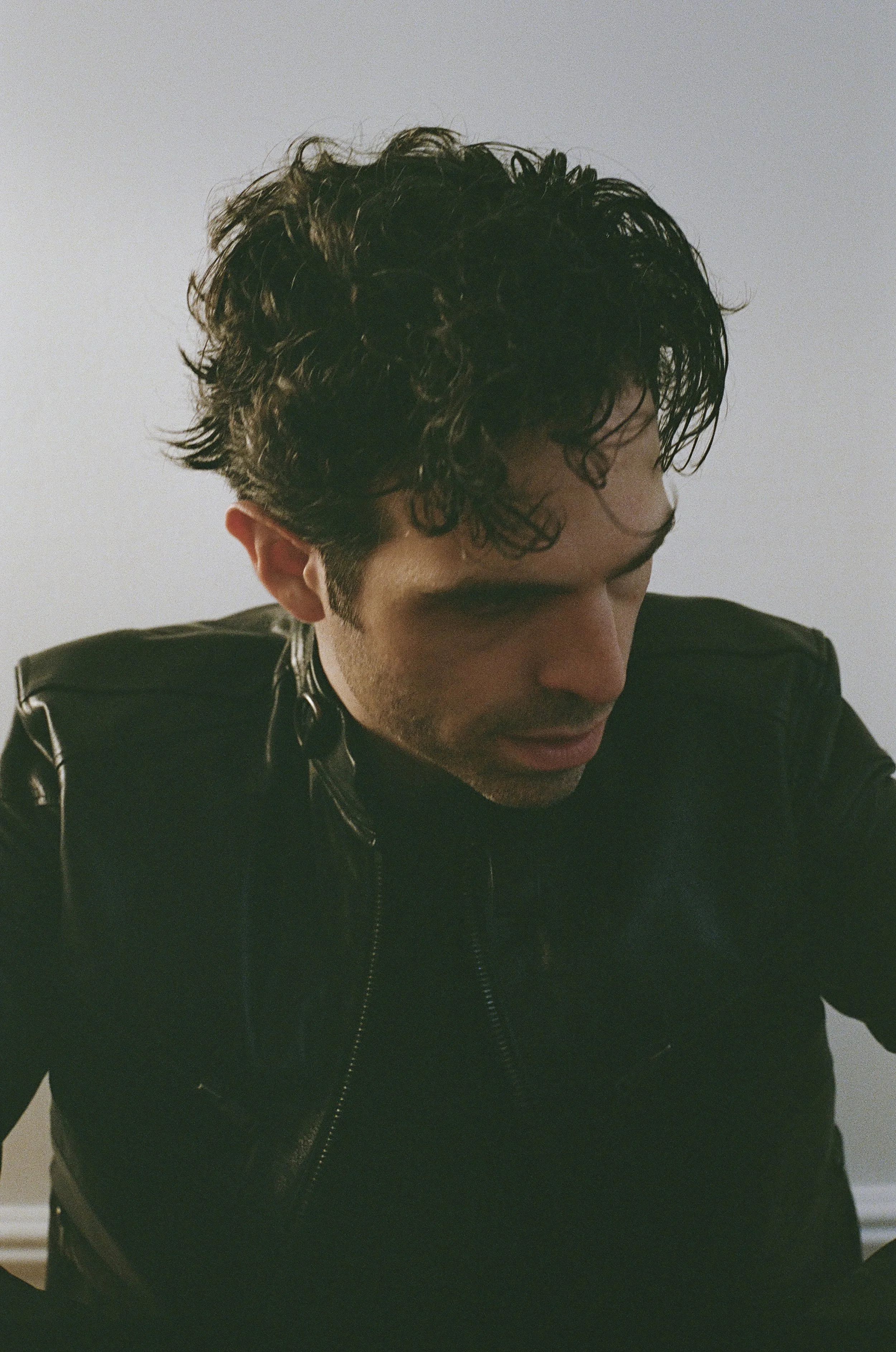
Cobey is one of my favorite people to work with. Between us, the ideas never feel like they have to be too explicitly stated. We can have a conversation about bands, movies, maybe look at some old images. We both love Mark Borthwick. I’m pretty sure when we first met at a party, we just ended up talking about Mark Borthwick’s work for Helmut Lang, and from there, working together just came easily.
But like the songs on the album, emotion was the key. We were trying to capture the look of something you remember, but your view of it is imperfect, distorted in some way. It’s there right in front of you, but the feeling is impossible to fully grasp.
