
IN CONVERSATION WITH ONE CHICAGO CAST
interview by JANA LETONJA
Few television franchises balance action and emotion quite like One Chicago. Week after week, its interconnected stories remind viewers that behind every emergency is a deeply human story. This season, Hanako Greensmith, Arienne Mandi, and Jessy Schram continue that tradition through three unforgettable characters, each navigating the demands of service, ambition, and personal growth. We caught up with the actresses to talk about what’s next for their characters, the craft behind their performances, and the lives they lead when the cameras stop rolling.
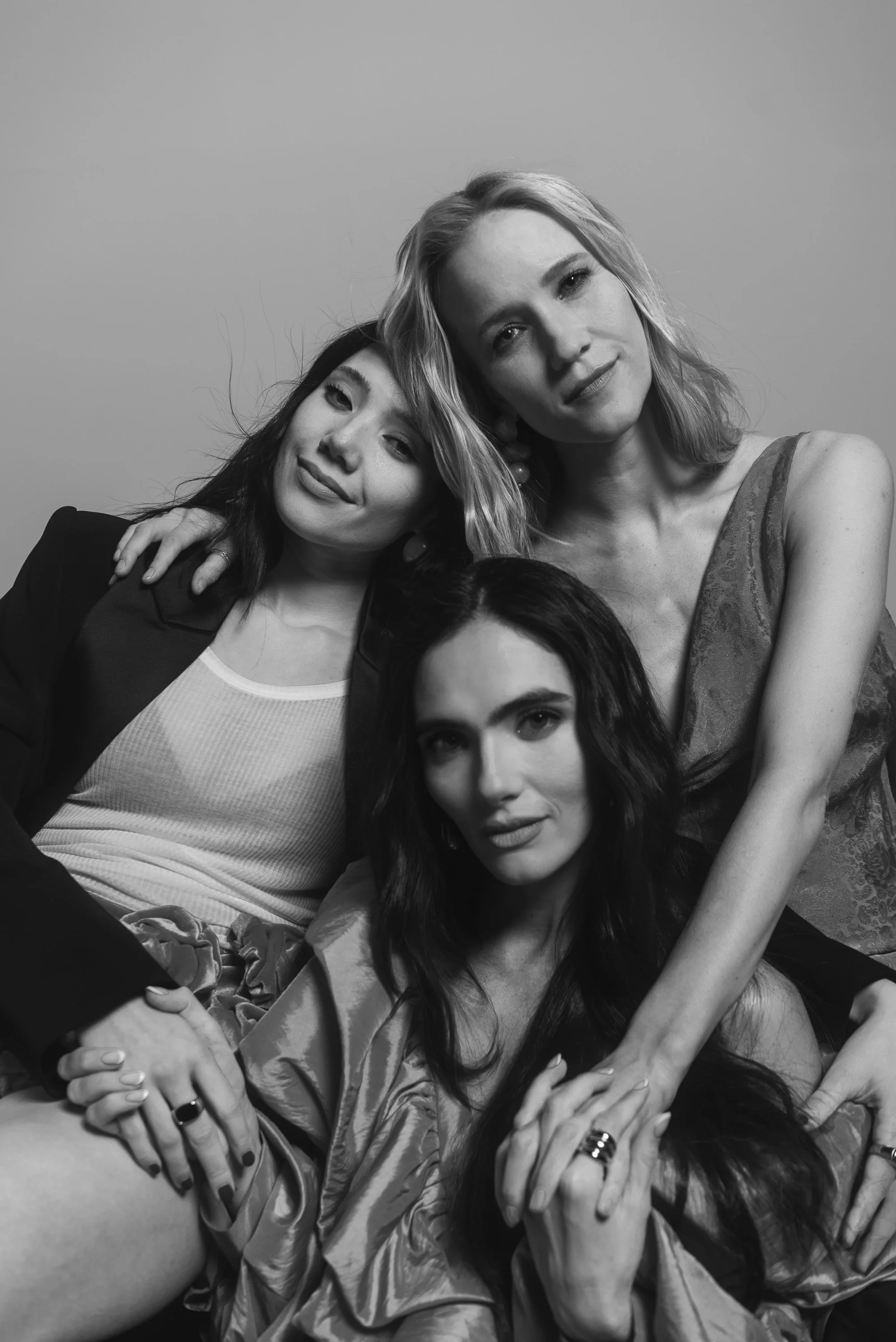
Jessy Schram:
dress TESS MANN ATELIER
earrings SAULÉ
rings BIBI & KIM
shoes 275 CENTRAL
Hanako Greensmith:
jacket NADINE MERABI
top stylists’ own
shorts BALYKINA
earrings SAULÉ
rings BIBI & KIM
shoes 275 CENTRAL
Arienne Mandi:
jacket RVNG
shorts NANA JACQUELINE
earrings and rings BIBI & KIM
shoes LUCASHEVA FOOTWEAR STUDIO
Hannah Asher has experienced one of the most compelling journeys in Chicago Med. What has it meant to grow alongside her?
Jessy Schram: With Hannah, she’s definitely someone I was nervous to play when I first got the role. She had a confidence that intimidated me. She was also actively struggling with addiction at the time, while still being a leader in what she was doing as the head OB-GYN. Addiction has touched so many lives in so many different ways, whether it’s personal or through somebody you know, so she was a lot to take on in terms of wanting to make sure that I got it right.
Getting to learn Hannah, fall into her, genuinely walk in her footsteps, and make her my own, rather than worrying so much about what was right or wrong, has been such a gift. A lot of times on TV, you see a character like this going in one direction, or their story is cut off quickly, or there’s a lesson you’re supposed to learn really fast. With our show, they gave her the ability not just to survive, but to thrive. She got to come back and fight against stigmas. She got to be an advocate for women’s health and for herself.
Now that she’s gone through this pregnancy journey as well, she’s gone from being very alone in the world to having someone and a purpose to belong to. I never could have imagined how deep this character would go when I first signed onto the show. I’ve definitely gotten to walk in her footsteps and, in both my personal life and her life, create more abundance, I guess you could say. I’ve learned a lot from Hannah.
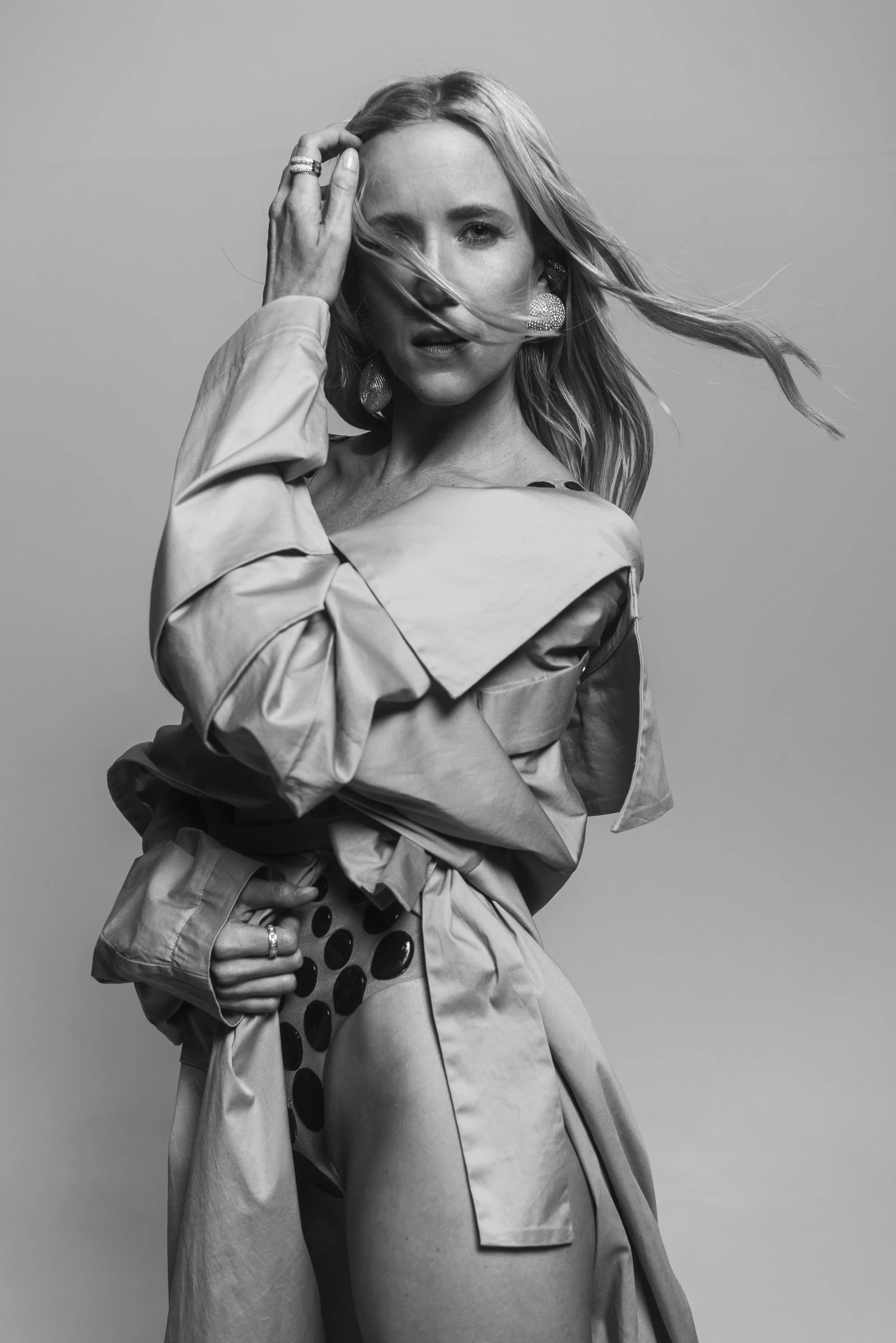
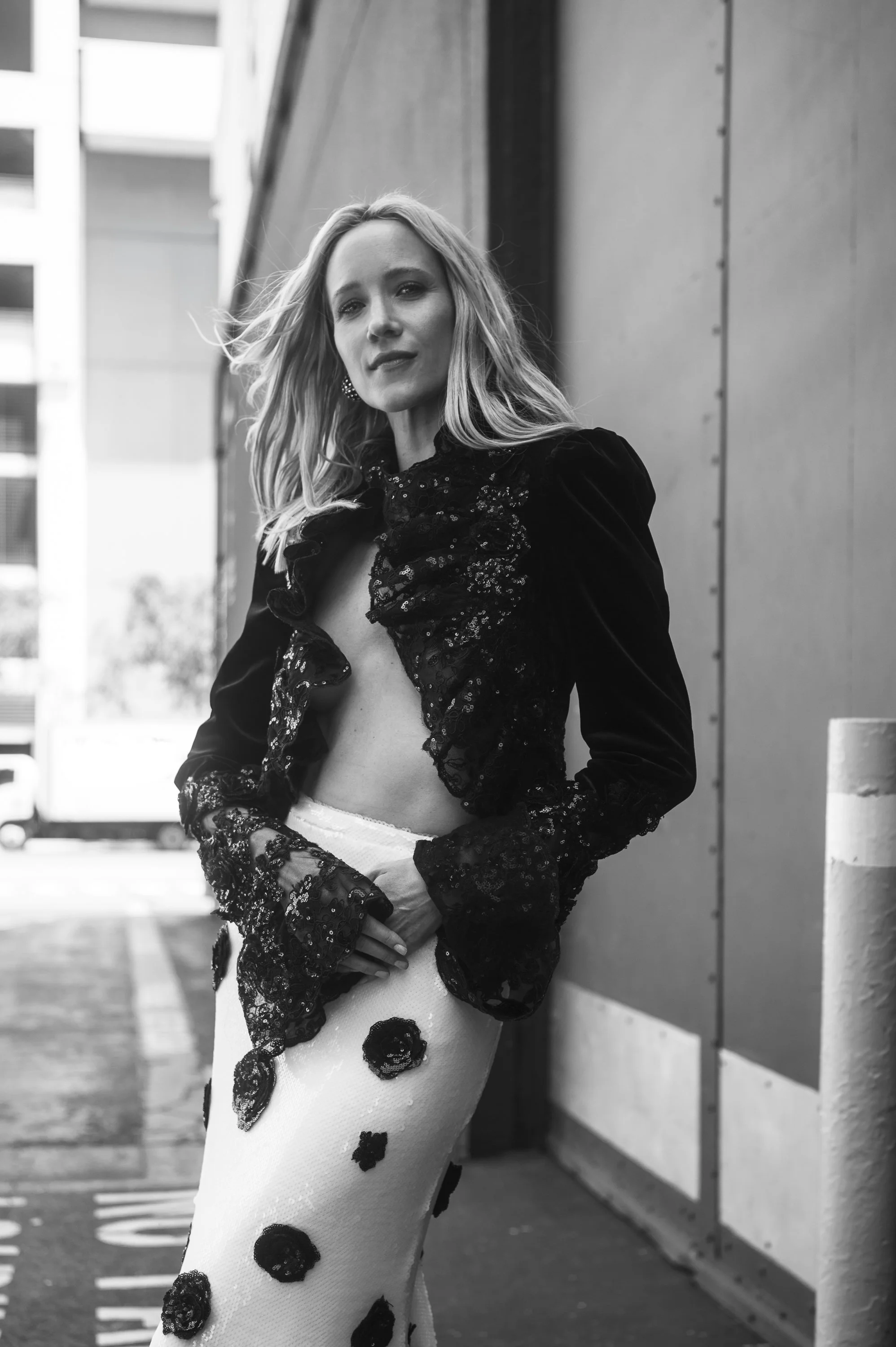
left:
jacket JLUXLABEL
bodysuit EMA SAVAHL DESIGN
earrings SAULÉ
ear cuffs SUSANA VEGA JEWELRY
rings NICKHO REY and BIBI & KIM
shoes 275 CENTRAL
right:
jacket and skirt RVNG
earrings SAULÉ
rings NICKHO REY
shoes 275 CENTRAL
How do you prepare emotionally for a character whose story touches on recovery, resilience and second chances?
Jessy Schram: There are different ways, to be completely honest. I think what’s great about our show is that while it’s a medical show, it also has so much that’s personal. I definitely take different approaches to the different types of scenes that we have.
We have a scene coming up where she needs to be a very strong advocate for somebody, and it’s all medical. It becomes about how you pull out this part of the character where everything else fades away and there’s one specific task you’re working toward. That’s when I, as Jessy, will research everything because I feel like you can learn something better when you know what it actually means. Really knowing what you’re talking about only helps with that confidence and belief in what’s happening.
When it comes to playing the more personal scenes and how those experiences affect the character, I really put Hannah’s history into my mind. I also try to pull from some of my own experiences and see what matches with the track record we’ve established for her. A lot of it is also creating backstory that no one else may know about, but that I live with as her.
Chicago Med continues to balance high-stakes medical cases with deeply personal character stories. What do you think makes that combination resonate so strongly with audiences year after year?
I feel like we’ve found a really great mix of the personal and romantic with the medical. When it comes to the hospital side of things, we’re showing somebody’s worst day, while for the providers, it’s somebody’s everyday. I think most people can relate to the patients coming in and out of the hospital. The fears it plays on are those of everyday people living through experiences that maybe you’ve had yourself or that represent your worst nightmare. So there’s a really relatable element to being set in a hospital.
Then, when it comes to the personal side, there’s obviously relatability because everybody’s human. You’re taking these characters who are making superhuman decisions on a daily basis and getting to see that they’re human and make mistakes, too. Even on their worst day, they still need to prioritize, block things out, compartmentalize, and move forward. So I think there’s a lot of relatability even though they’re in these superhuman situations.
Hannah has experienced tremendous growth over the past few seasons. How did the events of last season’s finale change her perspective, and how will they influence the choices she makes moving forward?
Jessy Schram: I think it changes everything for Hannah. The finale of last season changes everything. The theme of last season was “we’re running out of time,” and the theme for this season is “new beginnings.”
Like I said before, Hannah has very much been a loner. Her family isn’t always supportive. She’s been alone in the world. So now, to have this soul, this being, this purpose, there’s extra pressure for her to be okay in her sobriety and in how she does things.
There’s extra pressure for her to figure out what motherhood and a career look like. There’s extra pressure for her to understand what co-parenting looks like, or possibly a romantic connection. I think it creates extra pressure, but it also creates more of a priority to live life to its fullest.
Having this baby changes everything for Hannah. I think we’re going to see new sides of her personality and see her respond differently to things she might have put up with before.
What can the fans expect this season, without giving too much away?
Jessy Schram: Well, to be completely honest, I’m somewhat in the dark, too. I know that motherhood and balancing a career will come into play. I know that sleep deprivation is going to be a huge theme for Hannah. And then there’s obviously the thing I think most people want to see play out, which is the Archer-Asher relationship. I will say that they’re going to explore what co-parenting looks like and whether that’s a mix that works for them or not.
Your career spans drama, fantasy, action and romantic films. What keeps you excited about taking on new roles?
Jessy Schram: I love to look for the challenge. I love to look for the thing that’s new in everything I do. Even if it’s the same genre or the same format of a storyline, I’m constantly looking for the thing that, as a person and as an actor, is going to push me a little bit.
Whether it’s learning a new skill, like how to rescue elephant seals because that’s what my character does, learning medical terms, or getting to interview people and go deep into the sobriety journey, I’m always looking for the thing that’s going to keep it new for me.
I think there’s always an opportunity. If I’m not curious about the material, or if I can’t find anything that I’m curious about with the character, then there’s no reason to waste time on it because I like to put my all into everything I do. I need to be curious about what’s happening or who I’m playing.
You’re also passionate about philanthropy and animal welfare. Why have those causes become such an important part of your life?
Jessy Schram: The groups I’m usually in touch with, Corazon de Vida, Red Eye in Watts, California, Liberia Chimpanzee Rescue & Protection, and Leila Rose Rescue Ranch, are organizations that I’ve had firsthand experience with. I’ve gotten to see where donations go, what needs help and how it needs help, and really understand what’s happening.
I think when people are vulnerable, those are the people, animals, or souls that we need to help the most. Vulnerability is definitely the thing that hurts my heart the most. To be able to provide help, support, or hours—for me, it’s more the hands-on hours—is something I’m really dedicated to and interested in.
I also tend to choose smaller groups where I’m able to see the growth that comes from what you’re putting in. If I’m involved with a fund, for example, I can see that these kids are now going to college. I can see that the money isn’t just being spent on superficial things, it’s being used for nutritious food or to help someone develop a skill. It’s really about providing a foundation. With the chimps, for example, it’s providing food for the caretakers who are protecting them 24 hours a day.
With philanthropy, I choose these groups not only because I see the impact these organizations have on the communities or issues they’re tackling, but because a lot of the time they’re helping people or souls in vulnerable places. I believe that no matter what language we speak, or what physical differences or barriers we have, we’re all the same. We need to support each other. We all need eye contact and to know we’re not alone.
The groups I’m involved with allow on-the-ground volunteering opportunities, and when you can have that connection firsthand, it only creates a deeper involvement. It also lets you see the impact that a simple dollar or a simple hug can have.
How do you continue to challenge yourself and stay inspired outside of your work on screen?
Jessy Schram: Oh, wow. I think it’s almost the same reason I like to volunteer and be involved with different charities, connection. Connection keeps me inspired.
I love meeting strangers. I love wandering down the street and seeing the way the light hits something. I love things that make me feel. So the things that inspire me could be a really weird dance class that I feel super uncomfortable in, or a clown class, or having a conversation with a random person on the street that day.
What’s coming up next for you, outside of Chicago Med? Are there any upcoming projects or personal ventures that you’re excited for audiences to discover?
Jessy Schram: Chicago Med is returning really soon, and I can definitely tease that I will be on TVs during the Christmas season yet again.
You’ve been part of Chicago Fire since Season 8. Looking back, how has Violet evolved alongside you?
Hanako Greensmith: Wow. I think Violet has been emboldened by the experiences she’s had on the job, and I think she’s been humbled by the many lessons of life that have unfolded in front of her.
I would say the same goes for me as well. I don’t think I always had the same amount of fiery confidence that Violet has, but I think there’s a lot that I’ve learned via osmosis in the process with her.
Violet balances strength with vulnerability. How do you approach finding that balance as an actor?
Hanako Greensmith: I think it’s a matter of really understanding a scene and doing the work to understand the relationships that are being written.
More often than not, in the human experience, we’re all humbled by any intimate relationship we share with someone. In all of these wonderful relationships she’s gotten to have, I think that has softened her in a big way, and it’s been easy to follow her lead in that way.
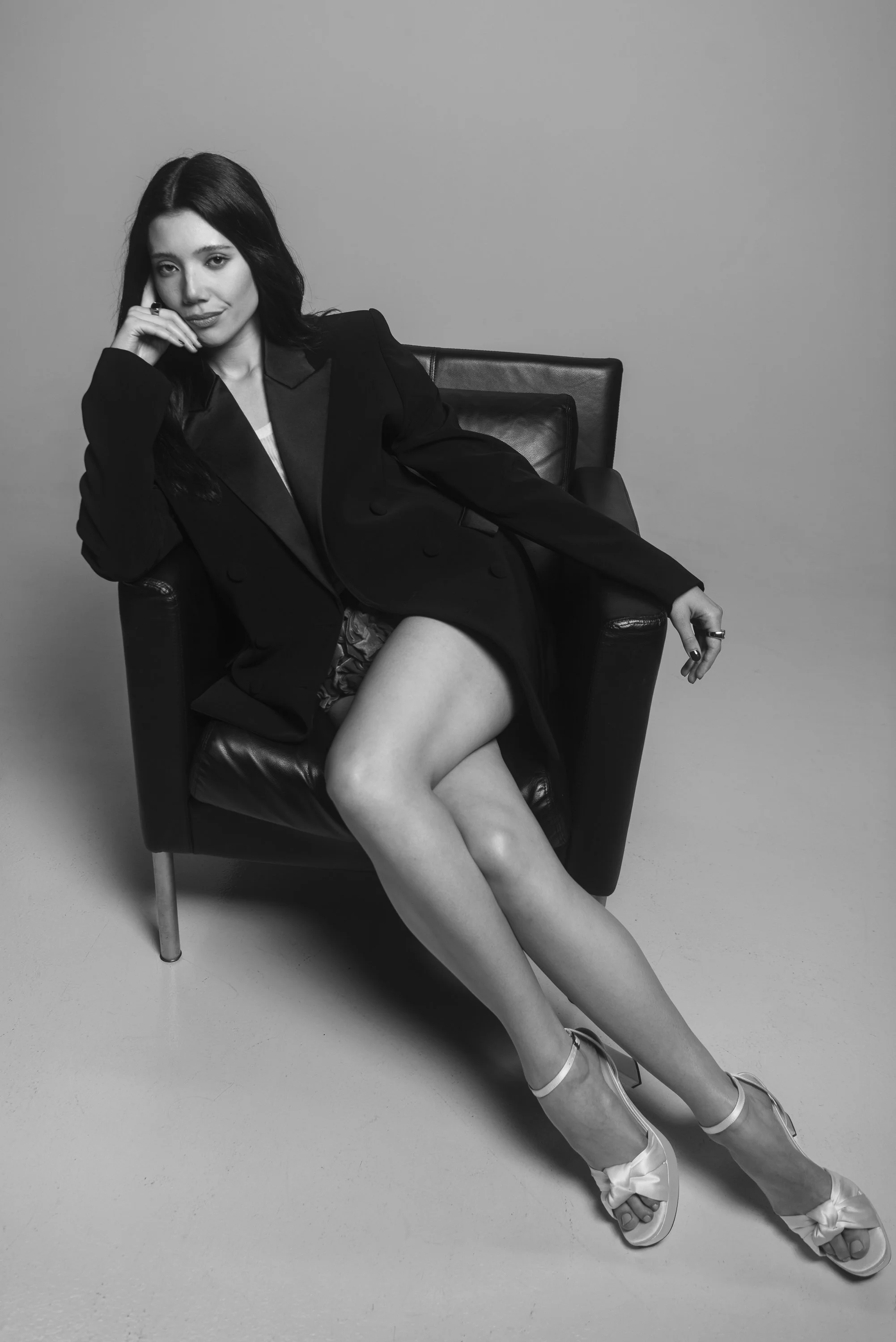
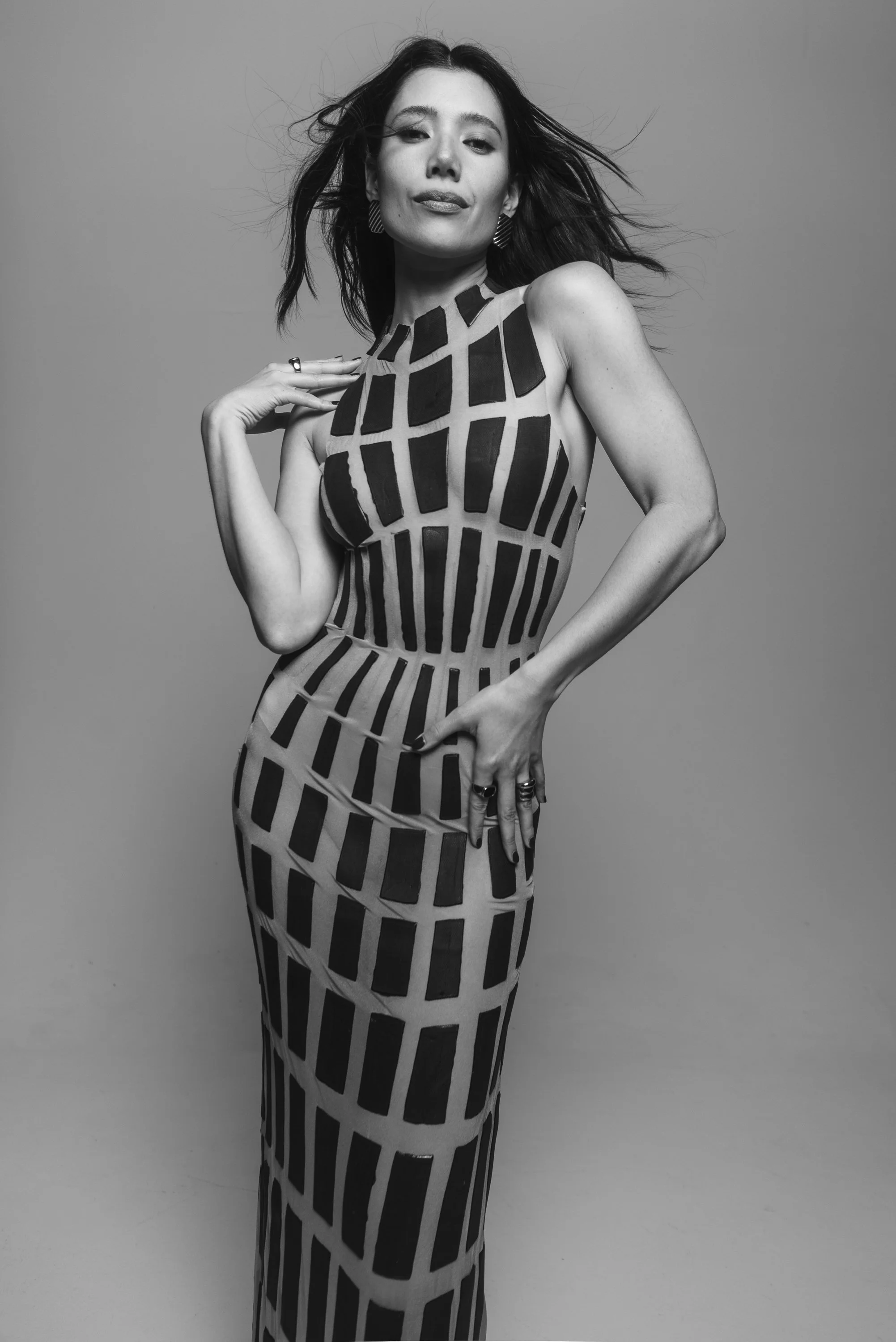
left:
jacket NADINE MERABI
top stylists’s own
shorts BALYKINA
earrings SAULÉ
rings BIBI & KIM
shoes 275 CENTRAL
right:
dress EMA SAVAHL DESIGN
earrings and rings BIBI & KIM
shoes 275 CENTRAL
What moment from the show has stayed with you the most so far, and why?
Hanako Greensmith: It’ll probably be the same moment you’re thinking of. It’s the one that really changed things for me and for Violet, the scene where Hawkins died. That changed a lot for both me and her.
For me, I had never had such a high-stakes, demanding, challenging scene before in my life. I didn’t know how I would be able to encompass this shock and grief all in one scene. Being able to come away from it feeling like I’d given my all, and then seeing how it resonated with and impacted the audience, instilled a confidence in me that I really didn’t have before. I’m so grateful for that.
For Violet, it was one of those huge moments in her life where that kind of grief changes a person. It took away so much of the foundation that she had in her life and that she had known of herself. It brought us a new version of Violet after that.
Season after season, we’ve watched Violet grow both personally and professionally. After the events of last season’s finale, where do we find her emotionally as the new season begins?
Hanako Greensmith: Emotionally, I think we find Violet in a complex situation, without giving away too much. This family that we have in the firehouse is incredibly close-knit, and I think when anything happens to anyone within our community, it impacts us all very deeply. You’ll definitely see that impacting Violet in numerous ways as we step into the new season.
What can fans anticipate when the show returns this Fall?
Hanako Greensmith: There are joys to come. There are hardships to come, as with any new season. I think it’s also going to take a lot of banding together as a team and seeing where we can bolster our community as best we can. That’s what we do best as a family on the show, and you’ll definitely get plenty of that.
Before television, you worked in theatre. How has your stage background influenced your screen performances?
Hanako Greensmith: When I first started, if you watch some of my earlier episodes, I think you can tell that I’m almost projecting on camera. I’ll have a very intimate scene with someone, and yet I’m like 10 clicks louder than they are because I’m so accustomed to being told I was too quiet on stage. So I was basically yelling when I was two feet away from someone and there was a camera two feet away from my face. That was definitely a learning curve for me when I started.
On the positive side, even though we have the luxury of take after take after take, there’s still this need to be quick on your feet and able to adjust, even if something didn’t work out 100 percent perfectly for every department, including yourself. That kind of flexibility that comes with theater is never a bad thing to have in any realm of your life, but particularly in film.
Outside of acting, what inspires you creatively?
Hanako Greensmith: Oh, girl. I’m figuring that out right now. I would say the thing I’m drawing upon most, when I can, is as simple as just being outside. It sounds so corny, but it’s so important for me to be able to dull so much of the noise.
Our schedules are really demanding, and all of us have to sacrifice so many elements of our personal lives to create this wonderful show for everyone. Sometimes that takes away from my most honest need, which is to be able to touch grass and listen to the birds. When I’m in that space, I feel so much freer to write or sing or call friends. I feel so much more connected to myself when I’m outside in nature and given some space to really breathe and have some quiet.
If you could explore one completely unexpected side of Violet in the future, what would it be?
Hanako Greensmith: Lucky for me, we’ll get to explore some of it this season. I would love to see more of Violet’s backstory. I’ve been so lucky to explore her in multiple exciting relationships, both platonic and romantic, but I’ve always wanted to know where does she come from, why is she the way she is.
I’ve made up so many stories, but this season, I think we’ll really get to understand why she is so wildly independent and why she’s so almost psychotically confident in so many realms of her life. What in her past has emboldened her, almost out of necessity, to be these things?
I think we’ll get some answers to that this season. We have some of her backstory that I think will be really exciting to dive into. We also have some great new characters coming into the firehouse. I know change is hard, but I have to say, I think the audience is going to like what our writers’ room is bringing to the show. We’re going to see more of the dynamic between Novak and Violet, which I know is a fan favorite and something we enjoy as well. I’m also anticipating more time between the women of the firehouse. There are so few of us.
What is your take on the One Chicago crossovers that we fans love so much?
Hanako Greensmith: The crossovers are grueling and demanding and difficult, but rewarding. I think the product we get out of them is so worth the commitment and time that everyone puts in, especially because we see how much joy they bring to the fans. It’s a really fun, chaotic time. The stakes are high. The pressure’s on.
It’s also like hanging out with your cousins. It feels like they’re the cousins you never get to see, but when you do, it still feels like family. It feels fun and fresh, even with people you don’t necessarily know extraordinarily well.
We’ll see, I still don’t know for sure if it’s going to happen again this season. It used to be something that only happened every couple of seasons, but the past few years we’ve been doing one every season. It keeps the universe really integrated in a way that we normally aren’t.
Looking ahead, what is coming up next for you besides Chicago Fire?
Hanako Greensmith: My dad is the director of a music festival out in Nevada. He’s a classical musician, so we’ve kind of made it a family affair ort he past few years. I go and help him with the programming.
It’s great because I so rarely perform live now, so I usually get to go and sing in a concert, which is always really fulfilling and funny to do as a family. It’s something I did when I was younger, and to do it again now as an adult with my family feels really special.
Other than that, I’m writing my first short, which I’m really excited about. I’m hopeful that I’ll be able to direct it sometime next summer. Fingers crossed, if everything comes together.
Eva Imani is a fearless and highly skilled officer. What immediately drew you to the role and joining Chicago P.D.?
Arienne Mandi: Like you said, she’s a fierce human. She’s someone who has been on the go her entire life and has devoted her life to searching for someone she loves who was essentially taken from her and her family.
She’s not used to being around consistent groups or working with people consistently. She kind of works on her own. I think I was really drawn to understanding what makes a person like that so solitary and how they operate. What drives them? What gets her out of bed every day? What is she thinking about when she goes to sleep?
Really, it’s about her purpose and how that changes along the journey we see her on in Chicago P.D.
Coming from a military background, Eva brings a different energy to the team. How did you prepare for that mindset, and to work with a team leader like Voight?
Arienne Mandi: I think Voight and Imani are just mirrors of each other, so I don’t know that there was too much preparation there. They’re really cut from the same cloth. They break their own rules and all the rules around them to do what’s right in their minds. If anything, she’s someone who doesn’t take his crap. She dishes it out as much as she gets it from him.
From day one, between Jason and me, it was really seamless. We were cracking jokes between takes and having fun. We kind of spoke the same language, like two peas in a pod. I think there had to be an equal counterpart, someone who could hang with that energy that he gives.
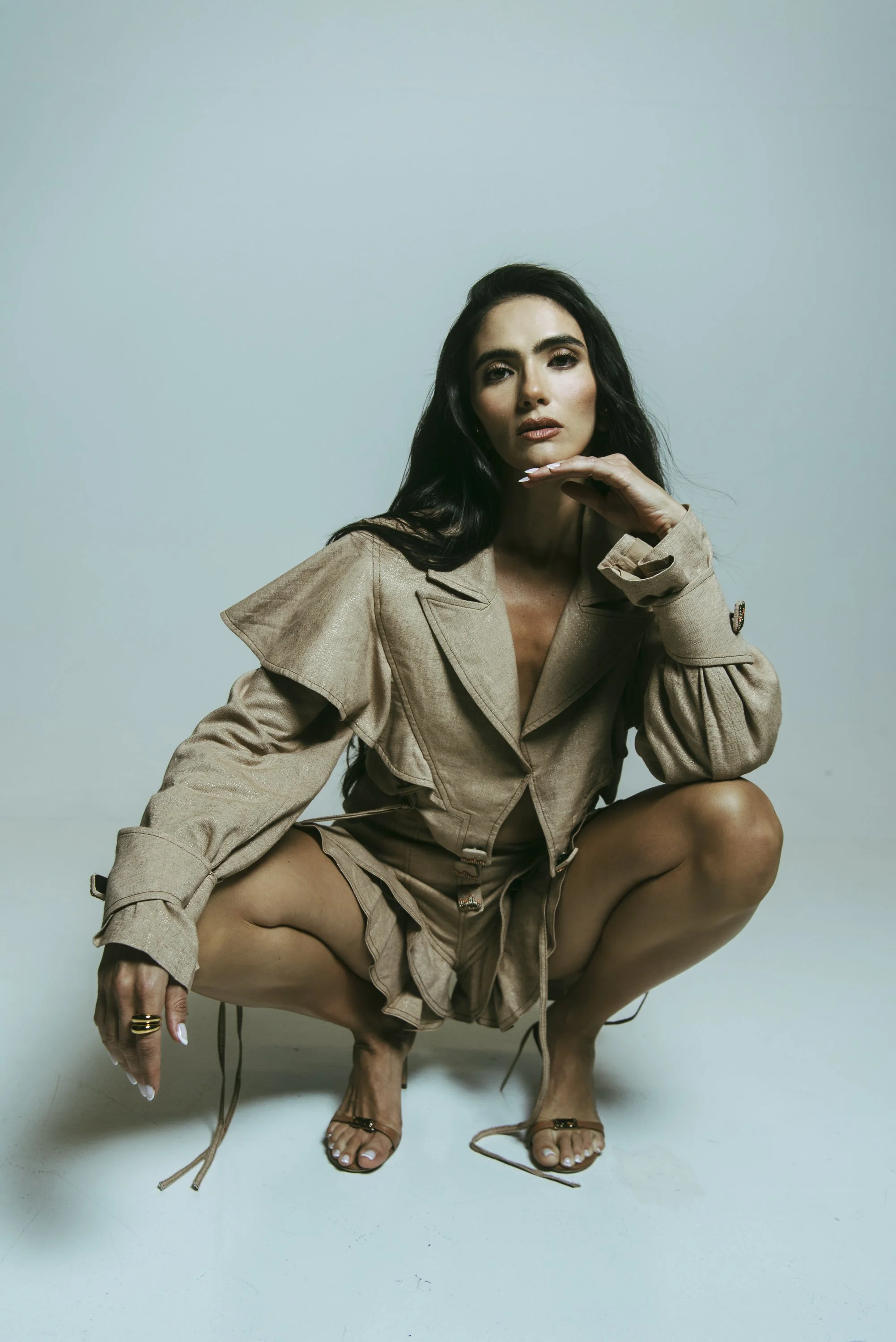
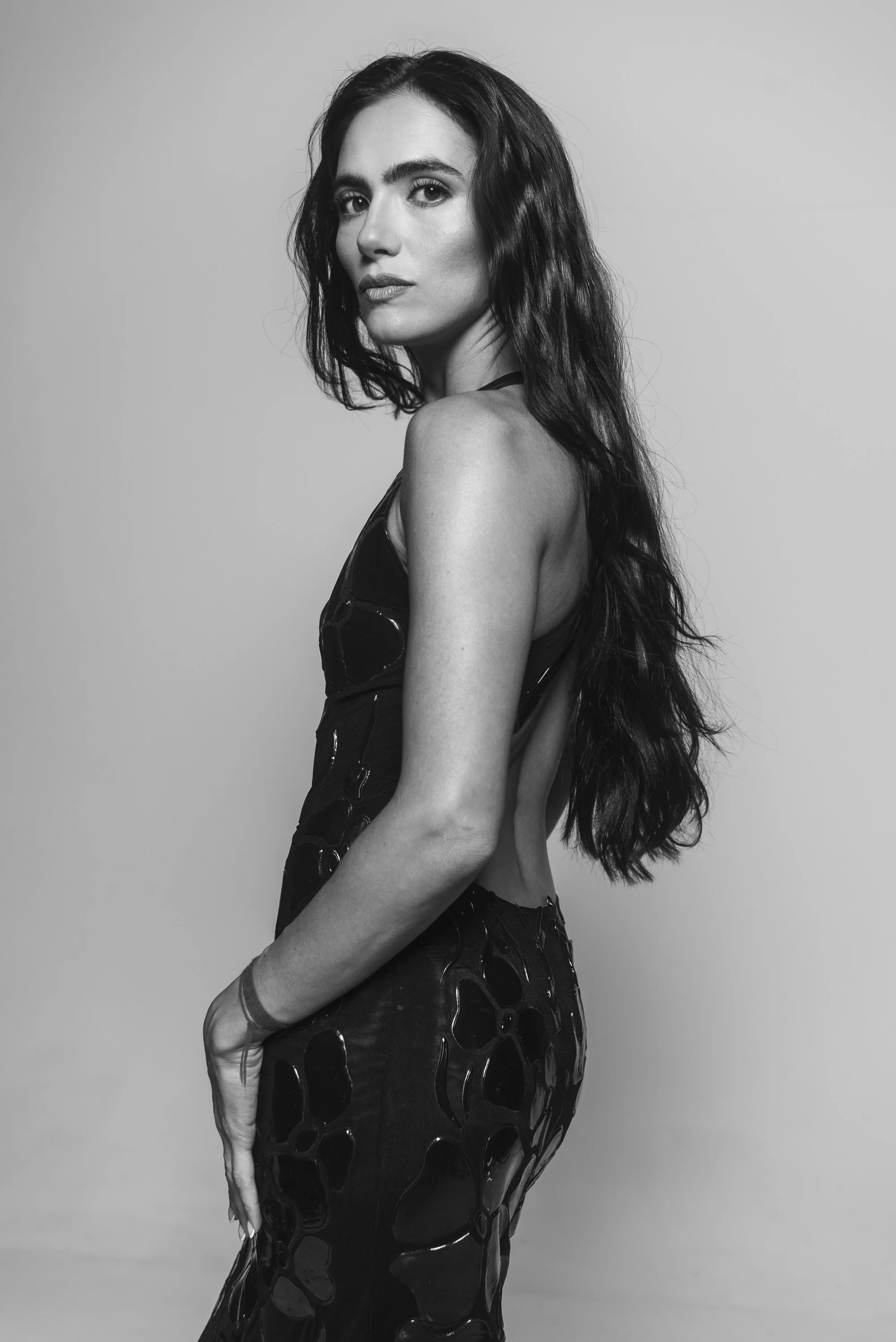
left:
short set HALEIA
earrings SAULÉ
rings BIBI & KIM
shoes LUCASHEVA FOOTWEAR STUDIO
right:
dress EMA SAVAHL DESIGN
earrings SAULÉ
ear cuff ETTIKA
rings NICKHO REY
shoes 275 CENTRAL
Chicago P.D. is known for balancing action with emotional storytelling. Which aspect do you enjoy most as a performer?
Arienne Mandi:It’s so fun to do the action sequences because we have such a wonderful team of stunt performers and coordinators who are incredibly talented. They choreograph these wonderful fight scenes and driving scenes.
Just the other day, my double taught me how to bring a car to a screeching halt where it kind of swerves off to the side. That’s something I probably never would have known how to do before this, so that’s always really fun.
But I think the emotional stuff is what I really like to sink my teeth into. I love the way our episodes have a case at the center that somehow mirrors something we’re going through in our personal lives. I love exploring the personal side because that’s what we all relate to, right?
There are so many avenues to explore. There’s not just one way to do it, and you’re left thinking about the scene you shot. Collaborating on set is always so much fun because everyone comes with different ideas, and everyone is so willing to have a conversation, shift things, change things, or find a different way of doing something.
Last season ended with plenty of unresolved tension for Eva. As the show returns, where do we find her, and what can you tease about what’s ahead for her in the new season?
Arienne Mandi: I can tease that while she gets some closure from finding her sister, in the first episode we find out which version of this person her sister is. I wouldn’t necessarily say it’s closure, but the door is opened for what comes next for Eva and what will happen with her sister.
Once there is some information or closure on that, the question becomes what does life look like for her afterward. Her purpose has shifted. She’s no longer always on the run looking for her sister, which was everything that drove her last season. Now that she’s found her, it’s almost like, what do you do after all that?
Your work often explores themes of courage and resilience. Are you consciously drawn to those stories?
Arienne Mandi: Absolutely. Something I really love, in addition to exploring themes of courage and resilience and how the underdog comes to the surface, is doing it through the lens of different cultures. That has always been really interesting to me.
That’s also something I look for in the jobs I choose, exploring different characters from different backgrounds that are similar to my own. That’s always great to tap into.
I always wonder how people get through things because it’s life, it’s everyday life. It’s what we go through. It’s the thing that keeps us getting up in the morning and keeps us up at night because our heart is yearning for it, or it’s our passion, or whatever it may be. Those things really excite me, and I think purpose is among those things as well.
You have Latin and Middle Eastern roots. How important is authentic representation in the projects you choose?
Arienne Mandi: I think at the end of the day, we’re making art. Let’s say I’m half Chilean, like I am, and I take on the role of a woman who is Mexican or Colombian or of another Latin background. I think it’s my responsibility to do the research to properly represent that.
I don’t think people should be banned from representing other cultures because they’re not that in real life. Then what is the point of being an actor, right? But I do think it’s our due diligence, like with anything else, a profession, a background, a type of personality, to do the research to properly portray that person.
Authenticity is important, and it’s always wonderful that there’s more diverse representation among actors. But I also don’t think people should be limited or denied an opportunity if they’ve done the utmost research and someone watching on the other end says, “Oh, my God, I would’ve never known the difference.” That is the beauty of making art. I don’t think it should be limiting in that sense.
What have you learned about yourself through portraying women who refuse to compromise their values?
Arienne Mandi: I think I’ve learned that my limits are always much greater than I give myself credit for. In portraying these women, I put myself in these circumstances, and while I may think my limit is in one place, it always seems to be so much farther than I thought.
That’s a testament to the resilience of humans. If you really force yourself into a situation, you can be a lot more capable than you think you are. That’s what I learn every time. Time and time again, it seems that my limits just keep getting pushed, and I’m grateful for it. That’s where the growth is. It’s the thing I look forward to most as I go through each project and each year of life.
Looking ahead, what excites you most about this next chapter of your career?
Arienne Mandi: Collaborating with people who are just as excited to make beautiful art, tell compelling stories, bring truth to those stories, and just have fun doing it.
What is your favourite part of being a part of the One Chicago family?
Arienne Mandi: It reaches so wide. The family that I’ve felt is not only within the Dick Wolf community of cast, crew, producers, and everyone else. I’ve felt it from fans all across the country and all across the world. They relate so deeply to these characters, and they’ve been on their screens for 14 years and counting. I think it’s really such an honor.
Just the other day, I was flying back into Chicago, and a lovely man, I believe his name was Hector, stopped me. He said, “You know, my wife and I feel like you’re part of our family. We watch you guys every episode, and we feel like you and Torres are part of our family.”
I was so moved because people really relate to these stories. They touch people’s lives because they’re real stories about dimensional people who have light and shade to them, like every person does. I think Chicago P.D. does a really good job of displaying that.
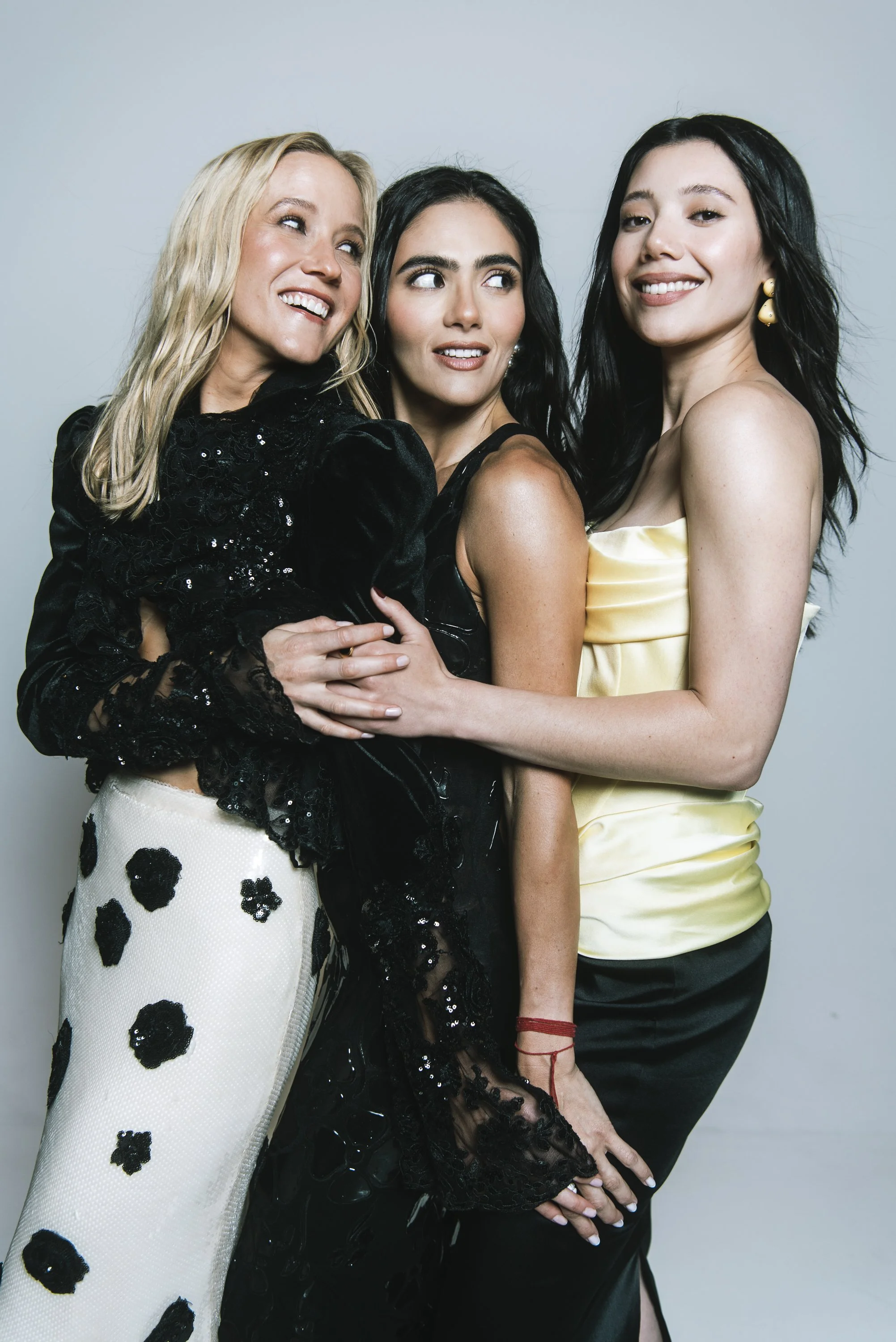
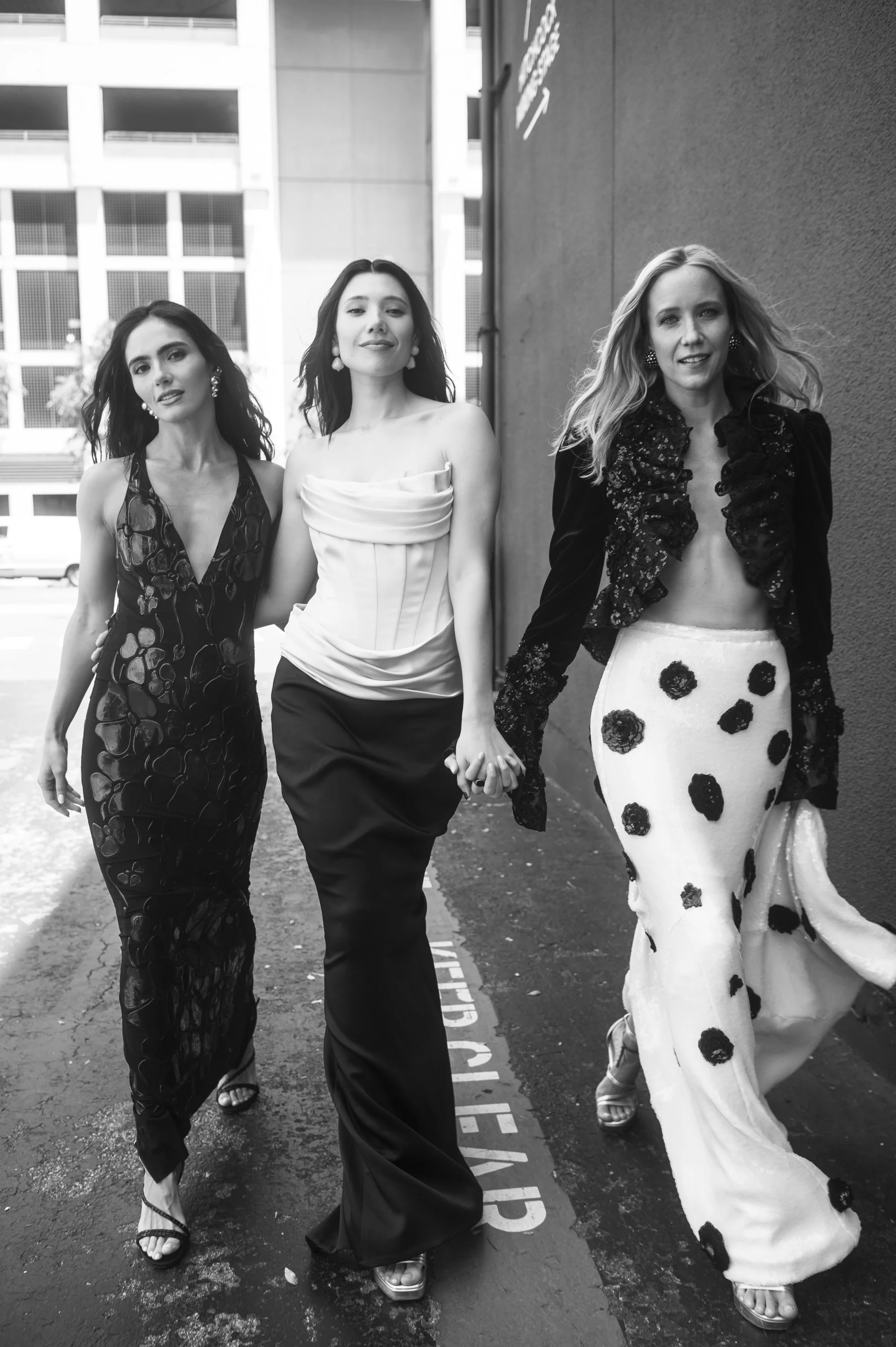
Hanako Greensmith
dress BALYKINA
earrings SAULÉ
rings BIBI & KIM
heels 275 CENTRAL
TEAM CREDITS:
talents JESSY SCHRAM, HANAKO GREENSMITH and ARIENNE MANDI
photography RETO STERCHI
styling DINA & ELANA SOLOMON at Honey Artists
makeup ROBERT BRYAN at The Wall Group
hair GEORGE COZMA at The Wall Group
styling assistants PRISCILLA NATALINA and ALEX RICHARD
makeup assistant MILA KWAN
hair assistant MARLENE GONZALEZ
editor TIMI LETONJA
editorial director and interview JANA LETONJA
