
IN CONVERSATION WITH OPÉRASPORT’S STEPHANIE GUNDELACH AND AWA MALINA STELTER
interview by MAREK BARTEK
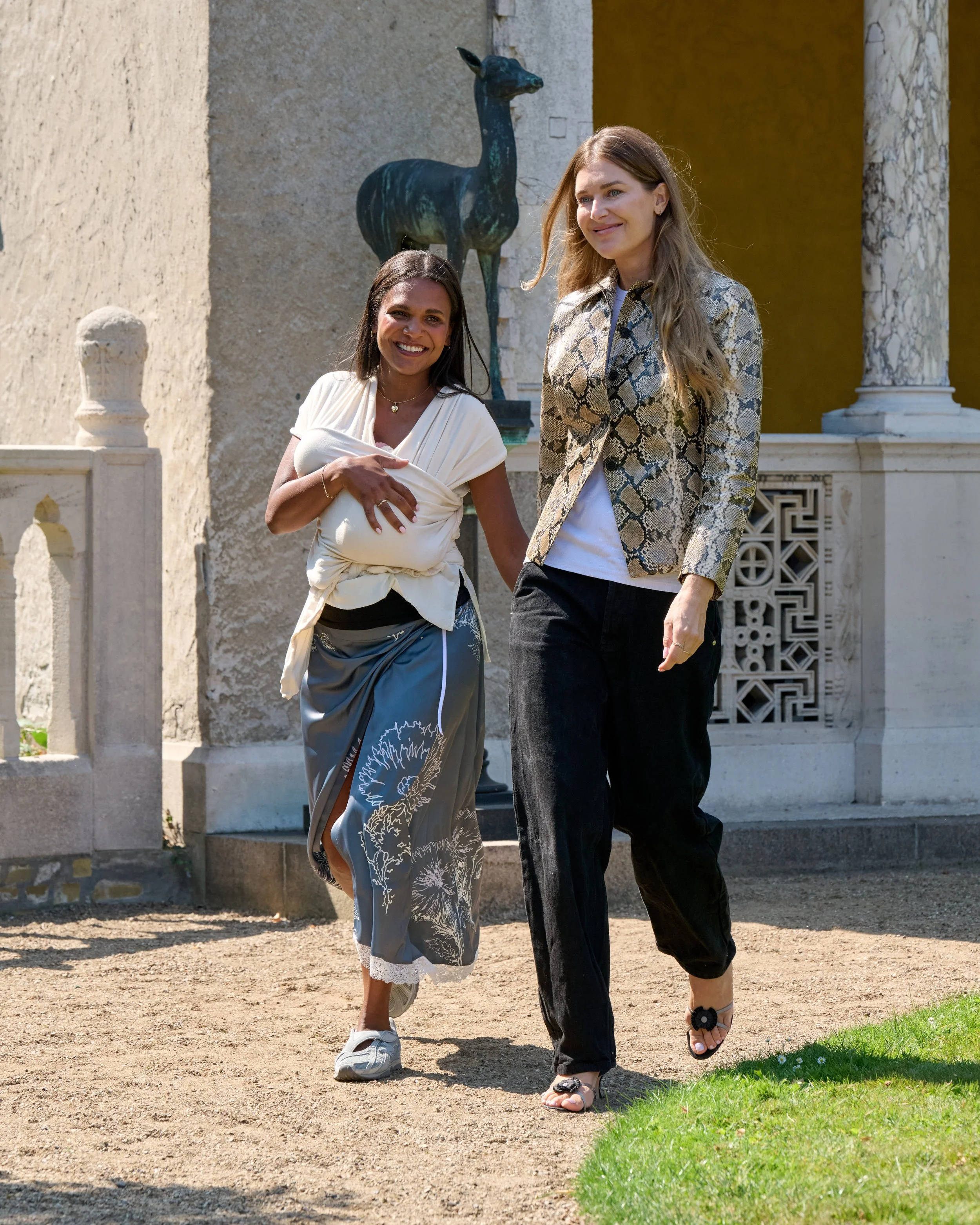
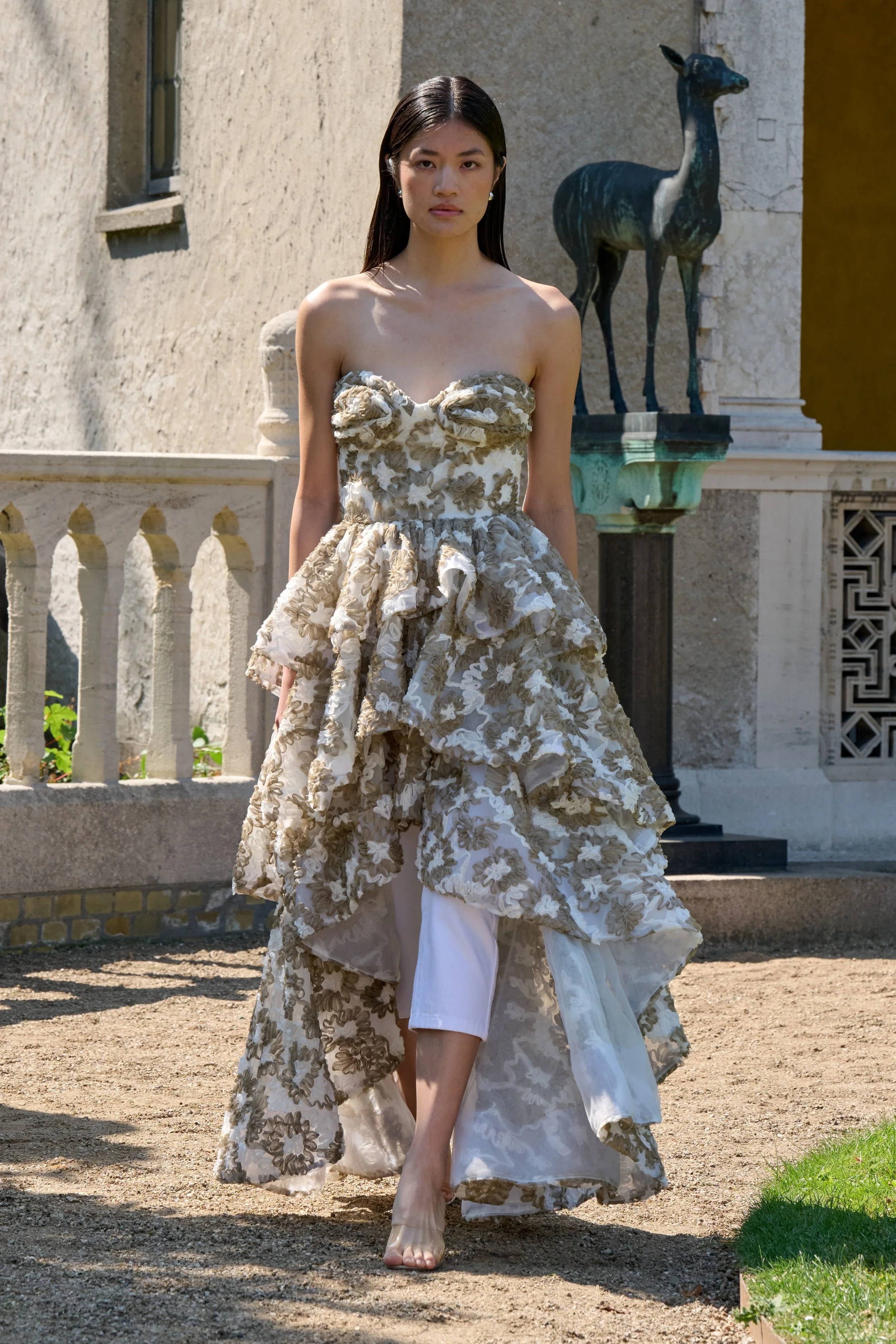
On the first day of Copenhagen Fashion Week, OpéraSPORT opens a new chapter with Growth. Presented in Carl Jacobsen's Garden, the collection explores the dialogue between structure and softness, drawing on the landscape that surrounds it while continuing the brand's evolution. Ahead of the show, we sat down with founders Stephanie Gundelach and Awa Malina Stelter to discuss the ideas behind the collection.
all images courtesy of OPÉRASPORT
The title of the collection is Growth. It's a beautiful title that can be interpreted in so many different ways. What kind of growth were you thinking about while designing this collection?
Awa Malina Stelter: It means a lot of things to us. On one level, it's about the garden where we're showing the collection and where we found our first inspiration. It's literally a garden where flowers are blooming and everything is growing.
But it's also about where OpéraSPORT is as a brand at the moment. We're in a place where we're growing, so that naturally became part of the inspiration as well.
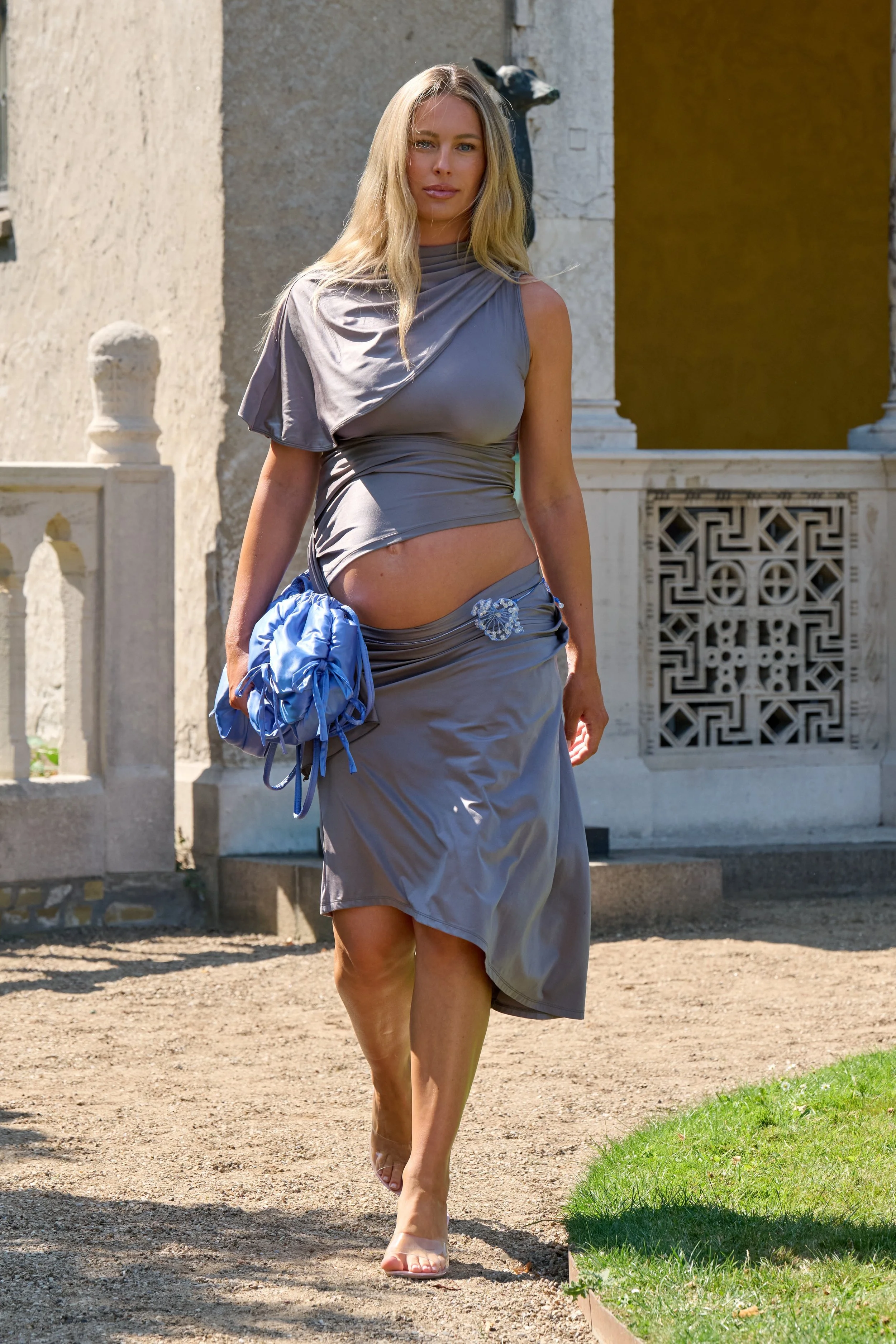
And personally, we're both growing too. I'm quite literally growing because I have a growing belly, while Stephanie is going through her own personal development. So there are many different aspects to what growth means.
Stephanie Gundelach: For me, growth is very much about evolution — personally, creatively and as a brand. It's about embracing change, finding strength in new beginnings and trying to find beauty in the unexpected.
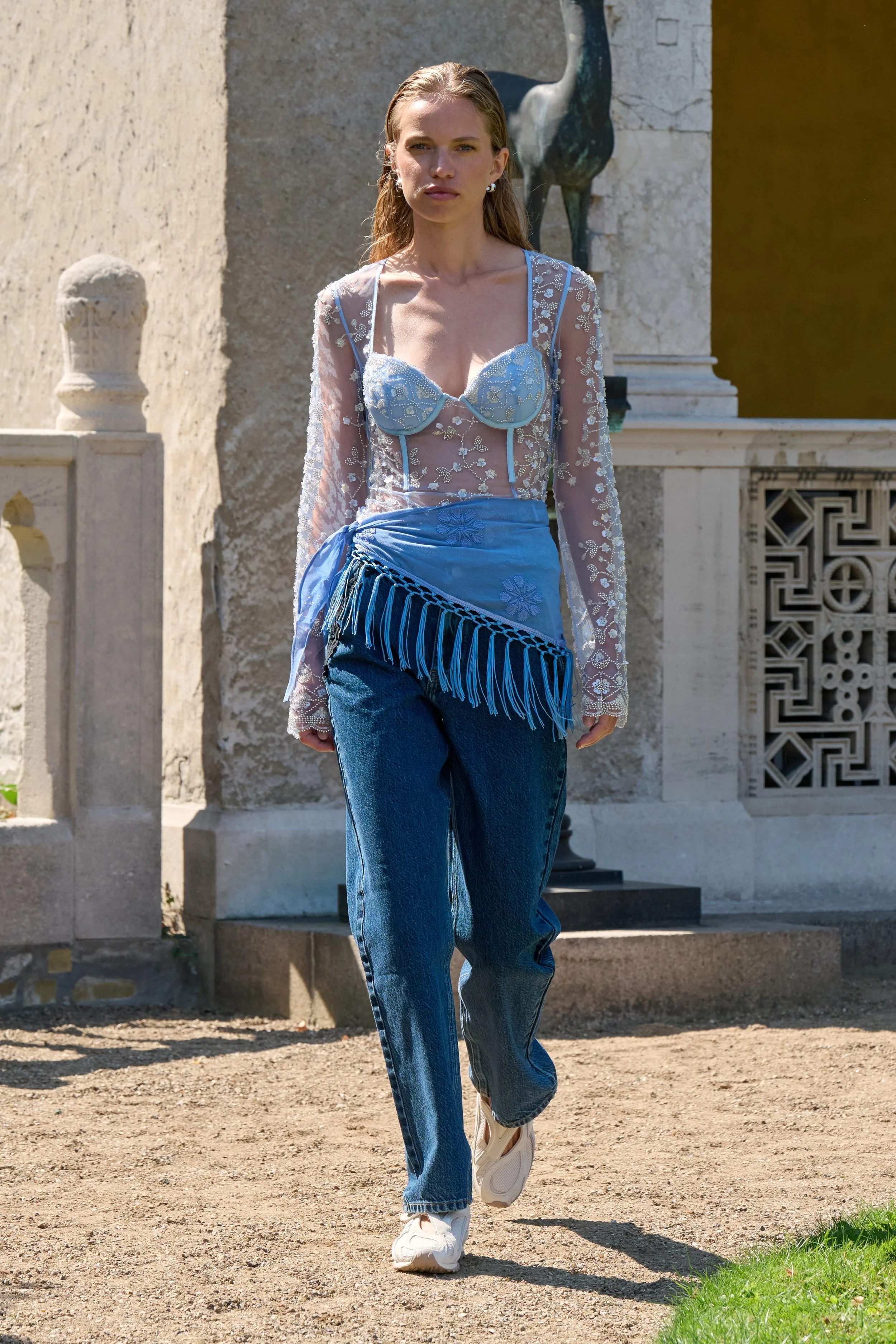
You've mentioned the garden already, so why did that space feel particularly relevant to OpéraSPORT today?
Stephanie: The balance between nature and structure reflects our design philosophy really well. The garden is calm, timeless and full of quiet beauty, and that's something we feel very connected to.
Showing the collection inside Carl Jacobsen's Garden creates a direct dialogue between the clothes and their inspiration. How did designing with that specific setting in mind influence your creative decisions along the way?
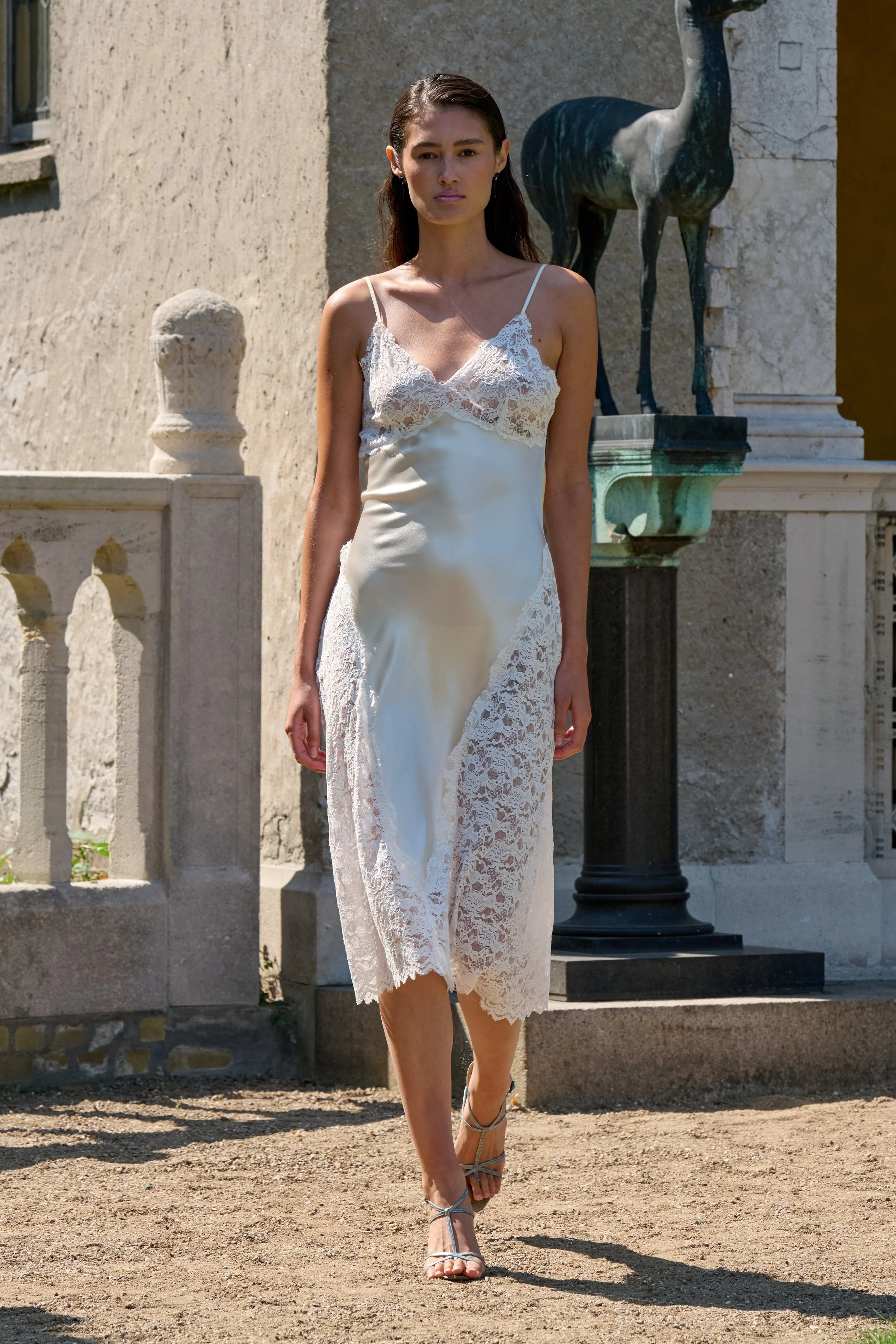
Stephanie: It definitely influenced us. Even when we were working on the floral print, it was important that the flowers featured in the collection actually existed in the garden. We spent a lot of time reading about the garden, learning which flowers grow there and understanding the story behind them. There are a lot of little details that come from that research.
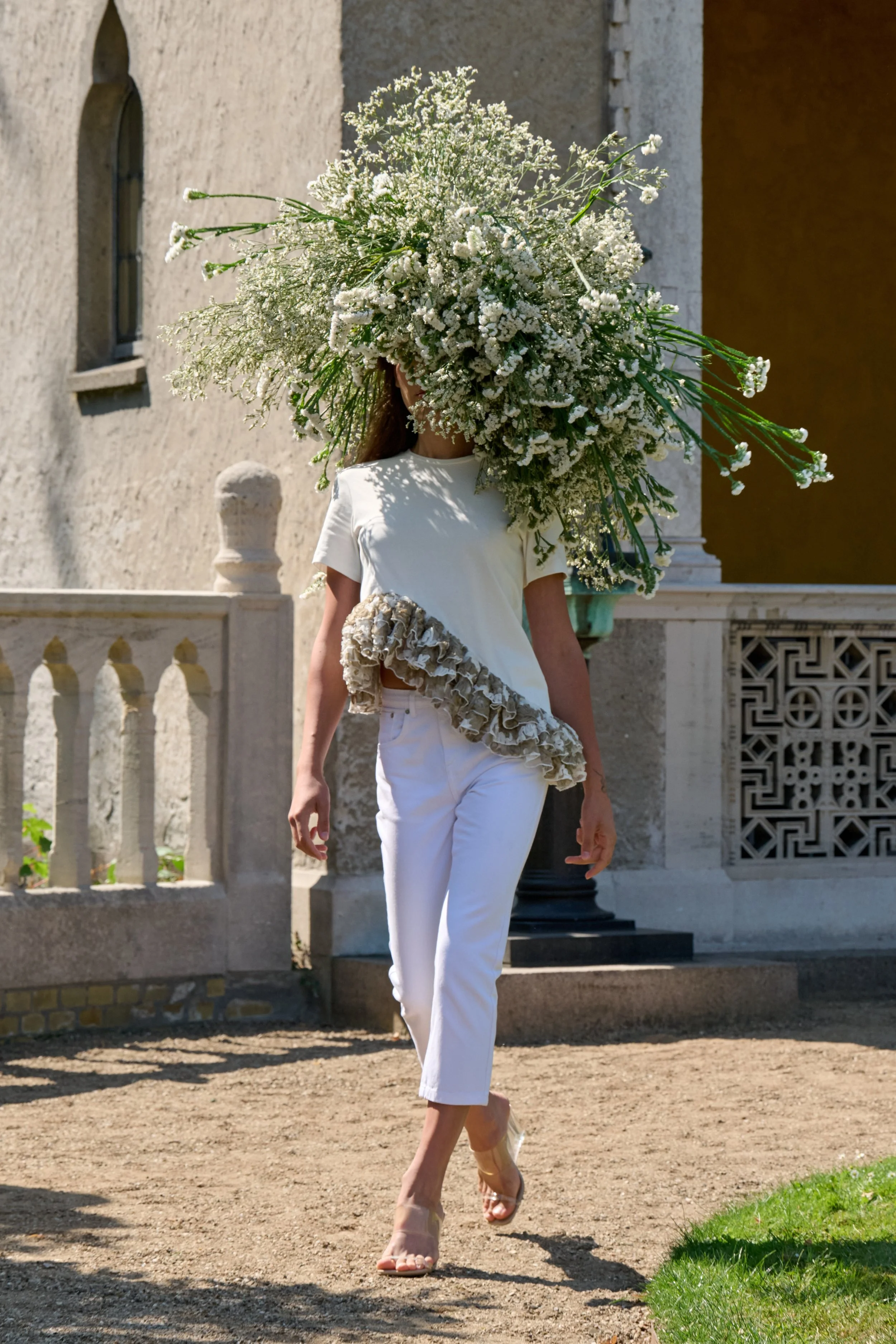
Awa: We first visited the garden about a year ago. We noticed the thistle flowers growing there, and they eventually became part of one of our prints. I would say it's a very romantic collection. There are flowers throughout it, and during the show we're even going to place flowers from the garden itself on some of the models.
Your design language has always explored the relationship between structured tailoring and the softness of draping and knitwear. How has that balance evolved in this collection compared to previous seasons?
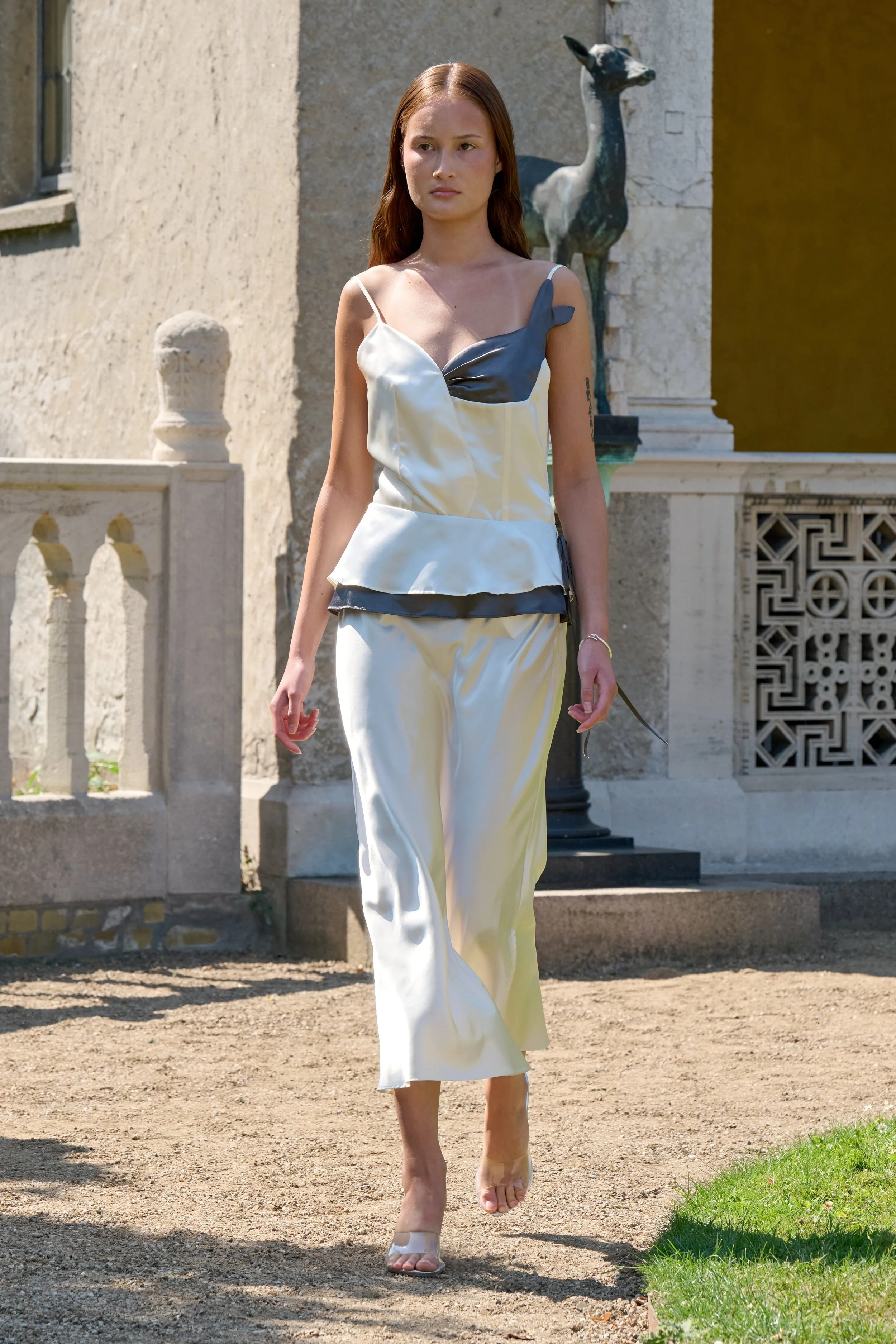
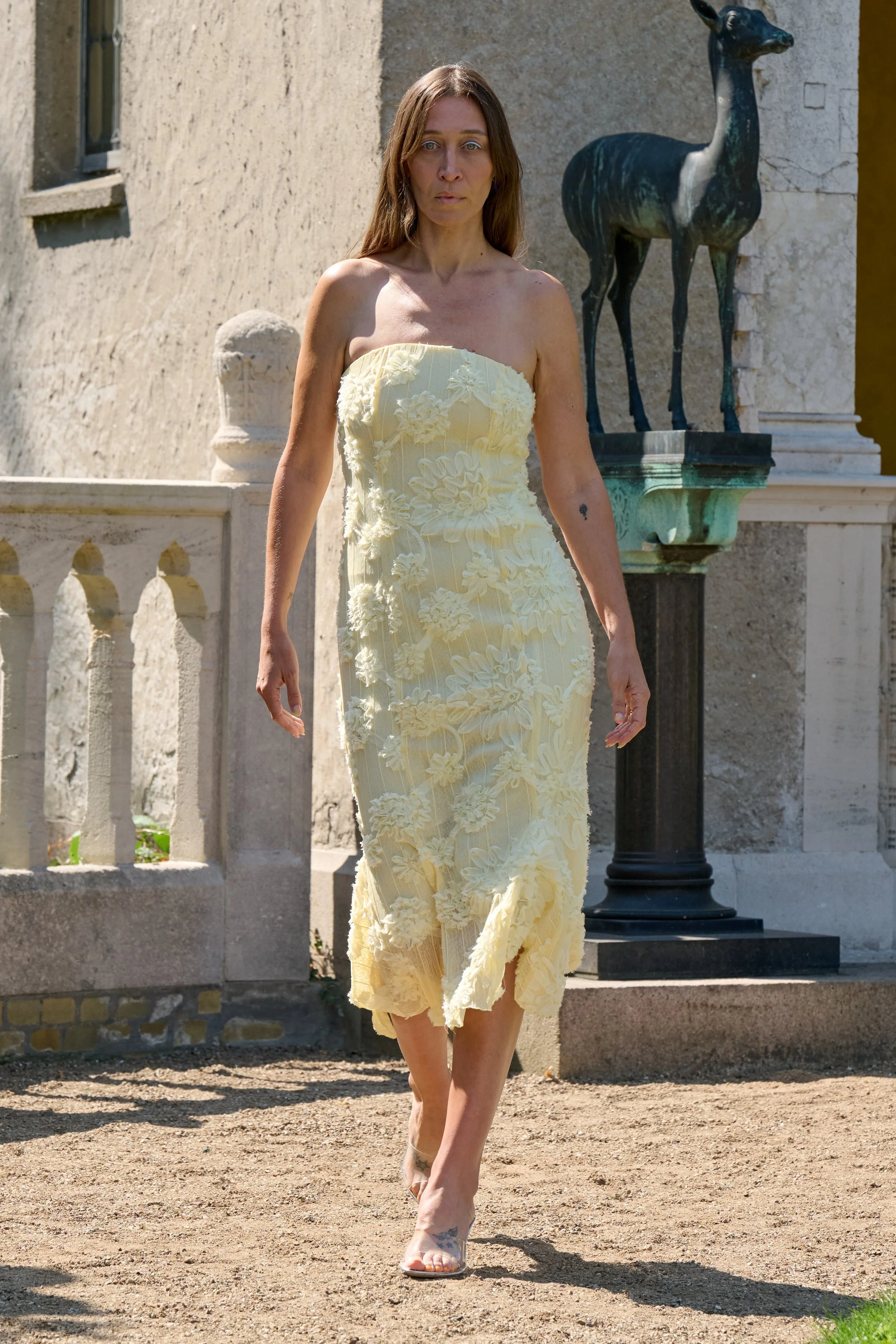
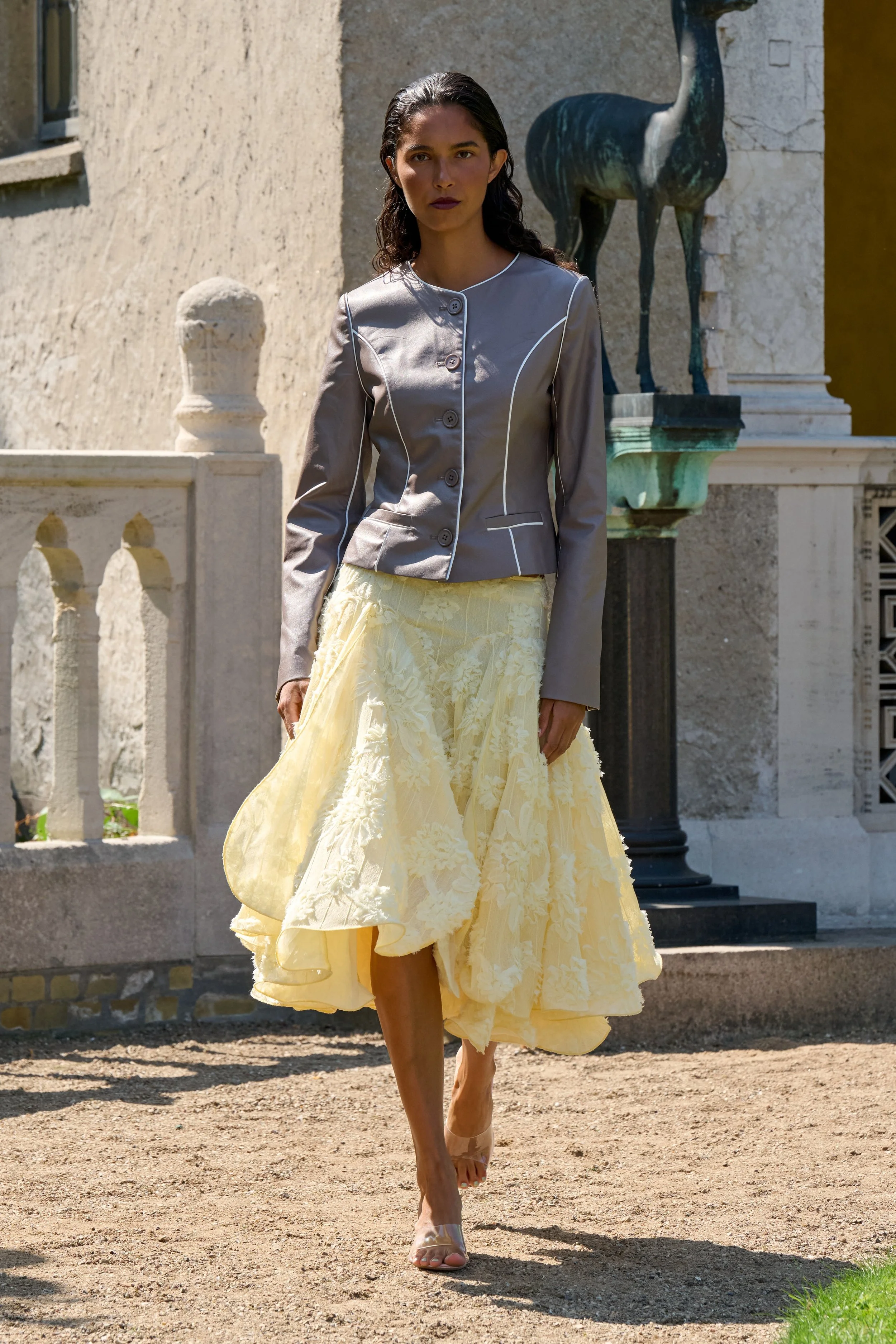
Stephanie: I feel like the contrast has become more refined. The tailoring is sharper, while the lace, florals and draping bring softness and ease. It feels more balanced this season.
Awa: And it's also become more sculptural. I think people will really see that in the collection. The pieces are definitely more sculptural than what we've done before, and they're also more suited to the runway. We're very proud of where the collection is right now.
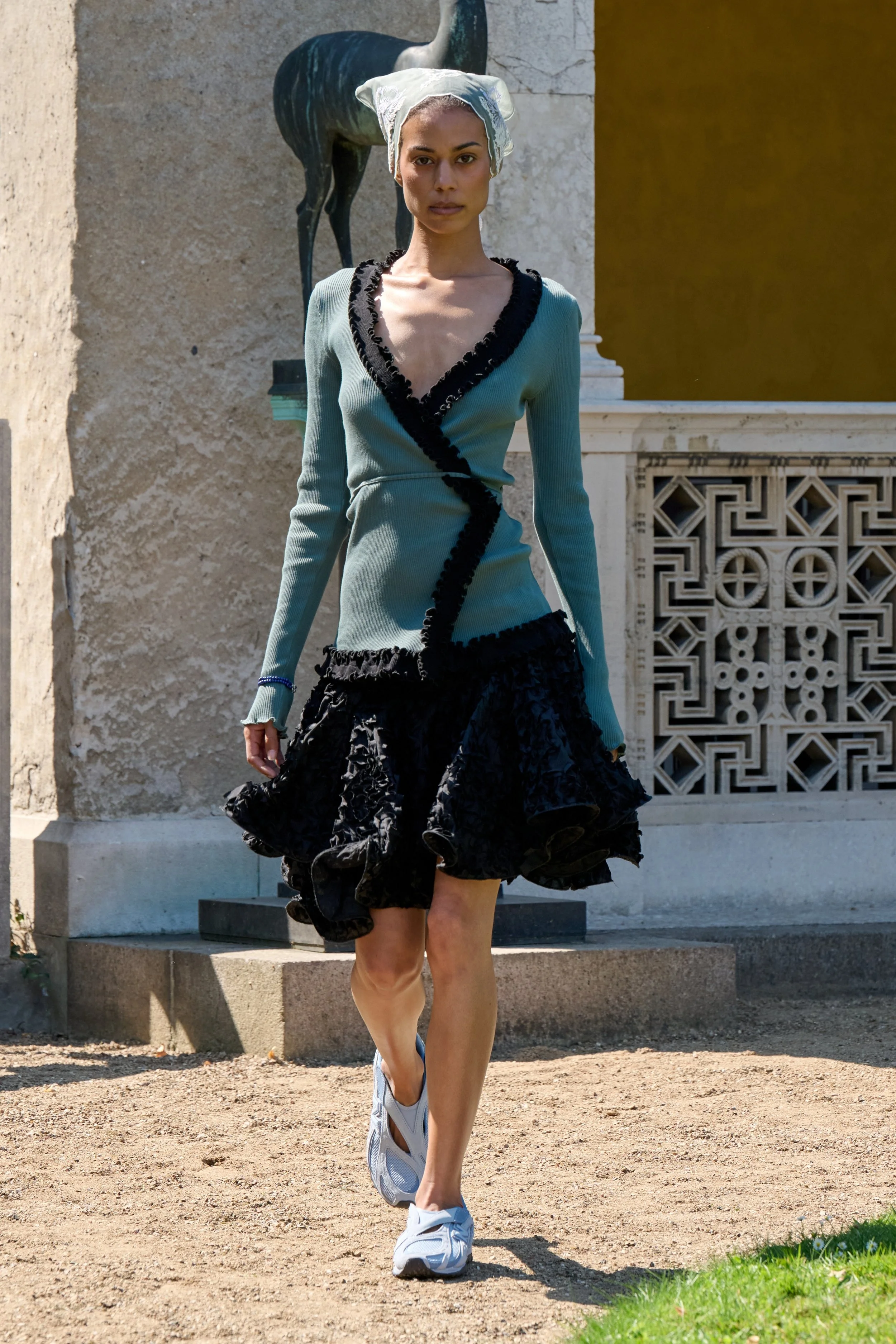
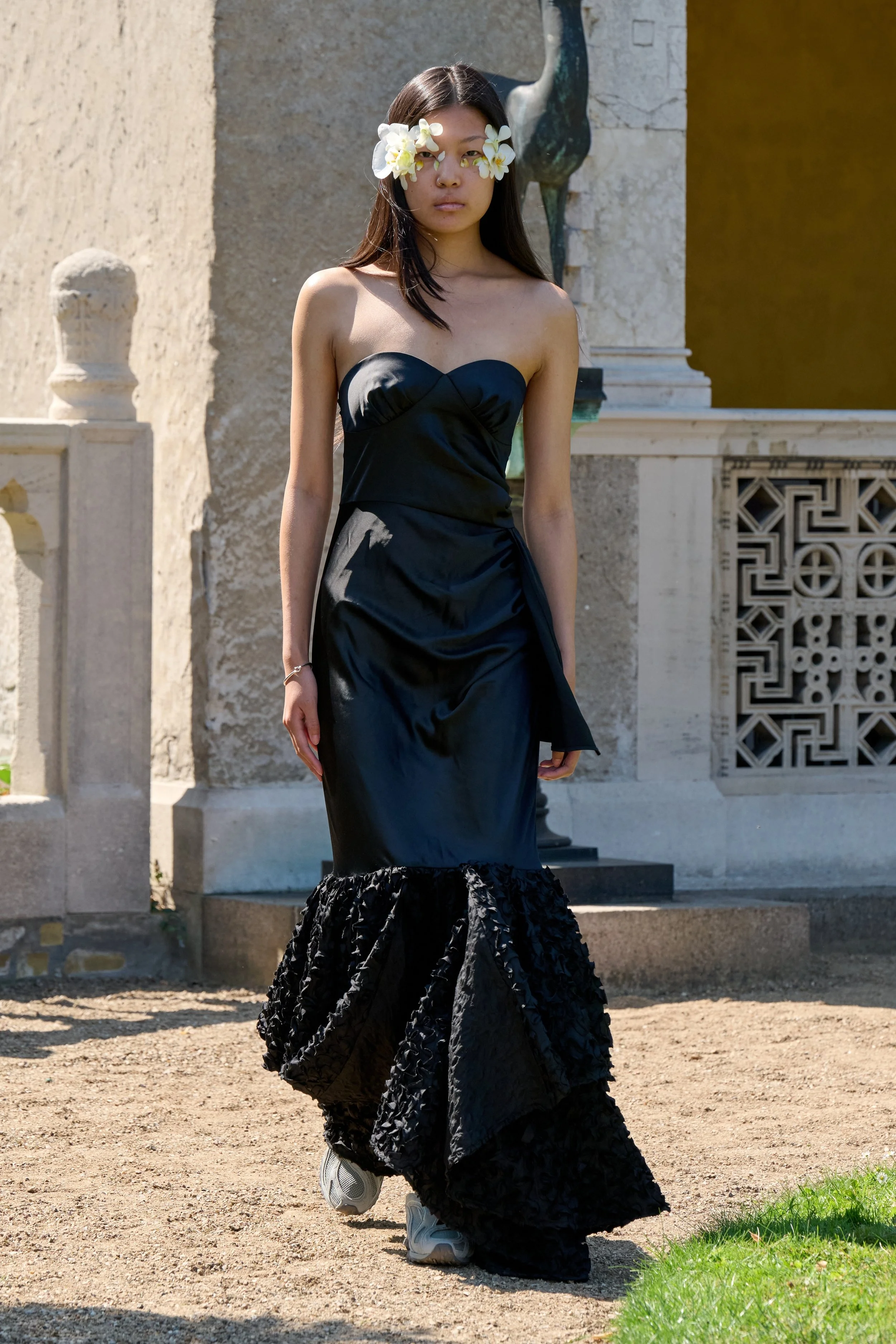
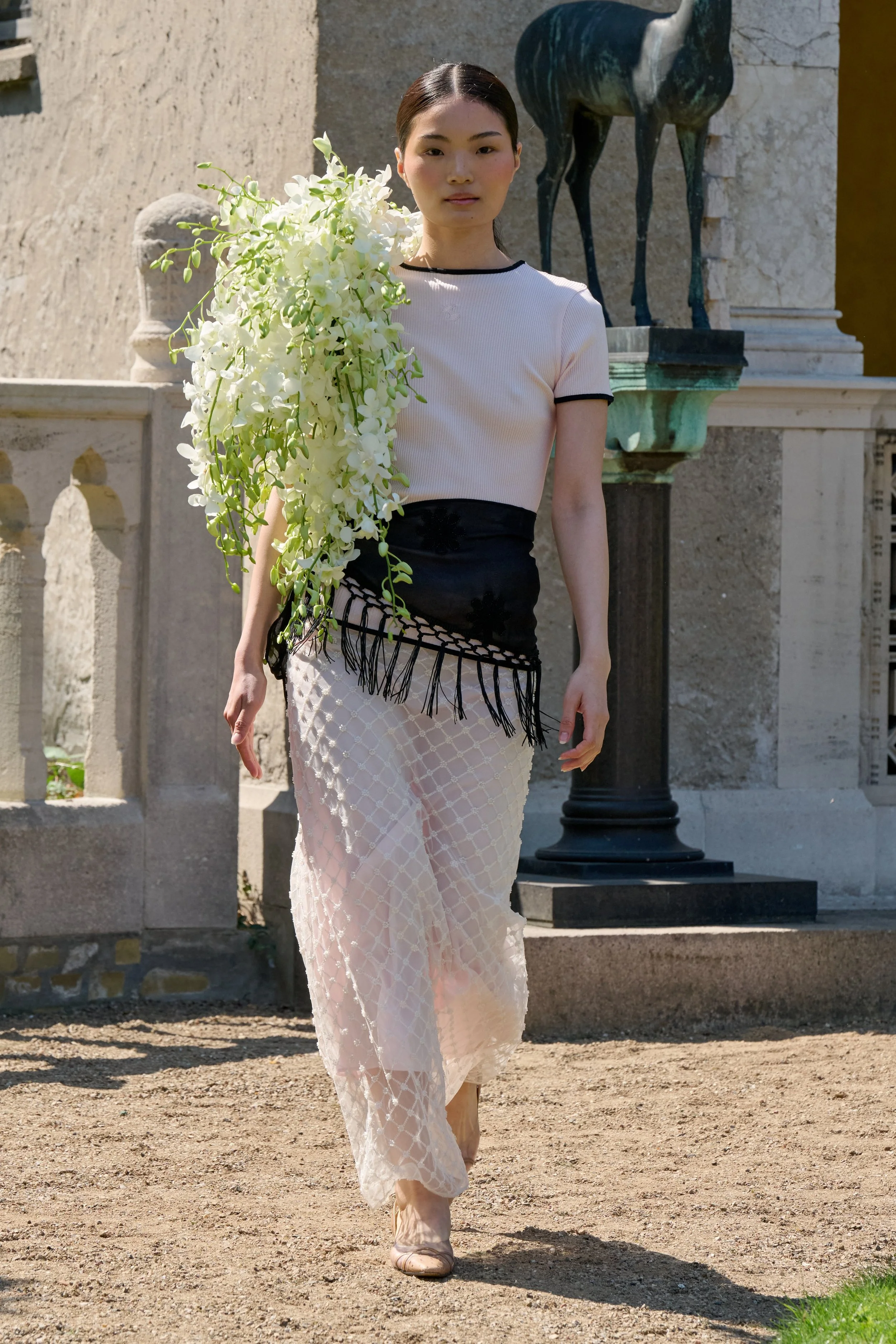
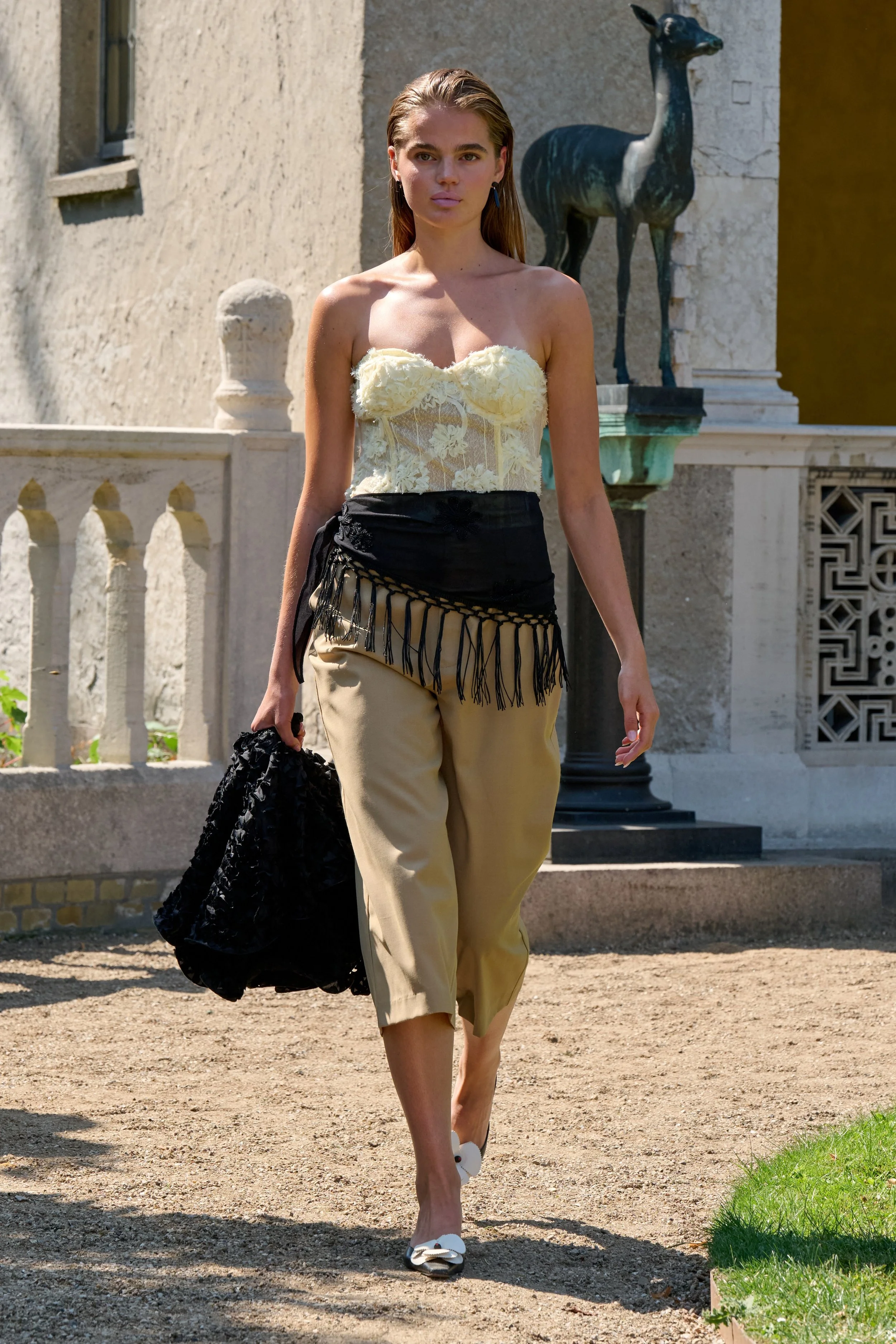
Many of the looks feature draping, sheer layers and fluid fabrics. How do you approach designing garments that are meant to move with the body rather than exist as still silhouettes?
Stephanie: We always think about clothes as something that lives on the body. Movement creates emotion, so we choose fabrics and constructions very carefully to create that sense of fluidity and lightness.
We spend a lot of time handling fabrics, going through archives and really understanding how they move. We want the garments to come alive when someone wears them.
You also mentioned that the collection is more sculptural than previous seasons. Did you find yourselves pushing into new territory and trying to surprise yourselves creatively?
Awa: Definitely. We've challenged ourselves to push the designs further than before and explore different silhouettes that still move naturally with the body. We wanted them to feel almost like flowers in the wind.
Because we're showing outdoors, we're excited to see how the garments respond to the natural movement of the air. Of course you'll see them moving as the models walk, but hopefully the wind becomes part of the show as well.
We're not completely finished yet, but we're very happy with the result so far.
Stephanie: We're also introducing storytelling into the show for the first time. If you pay attention to the order of the looks, you'll notice that we're really telling the story of growth. It begins with the smallest seeds, reflected in the textures and details of the garments, and gradually evolves throughout the collection until everything reaches full bloom.
We really hope people notice that narrative because we've tried to make it much more obvious this season.
Copenhagen Fashion Week has become synonymous with sustainability, and it's something that has been central to OpéraSPORT since the very beginning. As the brand continues to grow creatively and push into new territories, how do you continue approaching sustainability?
Awa: Sustainability has been part of the brand since we started, so it remains one of our biggest priorities. We still mainly work with recycled and organic materials.
Another important part of our approach is minimising overproduction. We don't produce more than we believe is necessary. We only put into production what we genuinely think deserves to exist, and that's still a very important principle for us.
We're also constantly looking into new materials that are kinder to the environment and thinking about how we can improve each season.
But ultimately, the most important thing is creating garments that last. We don't want to make pieces that only exist for one trend or one season. That has always been the foundation of our design process.
Stephanie: I also think our approach has become more holistic over time. It's about making thoughtful choices at every stage of the process.
This season we've introduced vegetable-tanned leather, which is new for us. Otherwise, we're continuing to work with our organic cotton knits, organic linen and recycled materials. Because it's a summer collection, breathability was naturally an important consideration as well.
Looking at the collection as a whole, what do you hope people take away from seeing it? What do you hope stays with them after the show?
Stephanie: We hope people leave with a sense of optimism and confidence. We want them to feel that growth can be both powerful and gentle at the same time.
Awa: Exactly. We hope the collection reminds people that growth is about believing in meaningful transformation and embracing the different transitions we experience throughout life.