
IN CONVERSATION WITH PAOLO ROVERSI
interview by ELISABETH BERGER WALDENEGG
Born in Italy in 1947 and based in Paris since the early 1970s, Paolo Roversi is one of the most influential fashion photographers of the past four decades, whose work spans from magazines to fashion houses such as Comme des Garçons and Dior. His portraits of figures including Kate Moss, Natalia Vodianova, Rihanna, Kate Middleton, and Emma Watson have become widely recognised images in contemporary fashion and portrait photography. Roversi’s work has been characterized by a painterly, often monochrome aesthetic that uses shadow and light to create an intimate atmosphere. His photographs have been exhibited internationally and are included in several museums’ permanent collections.
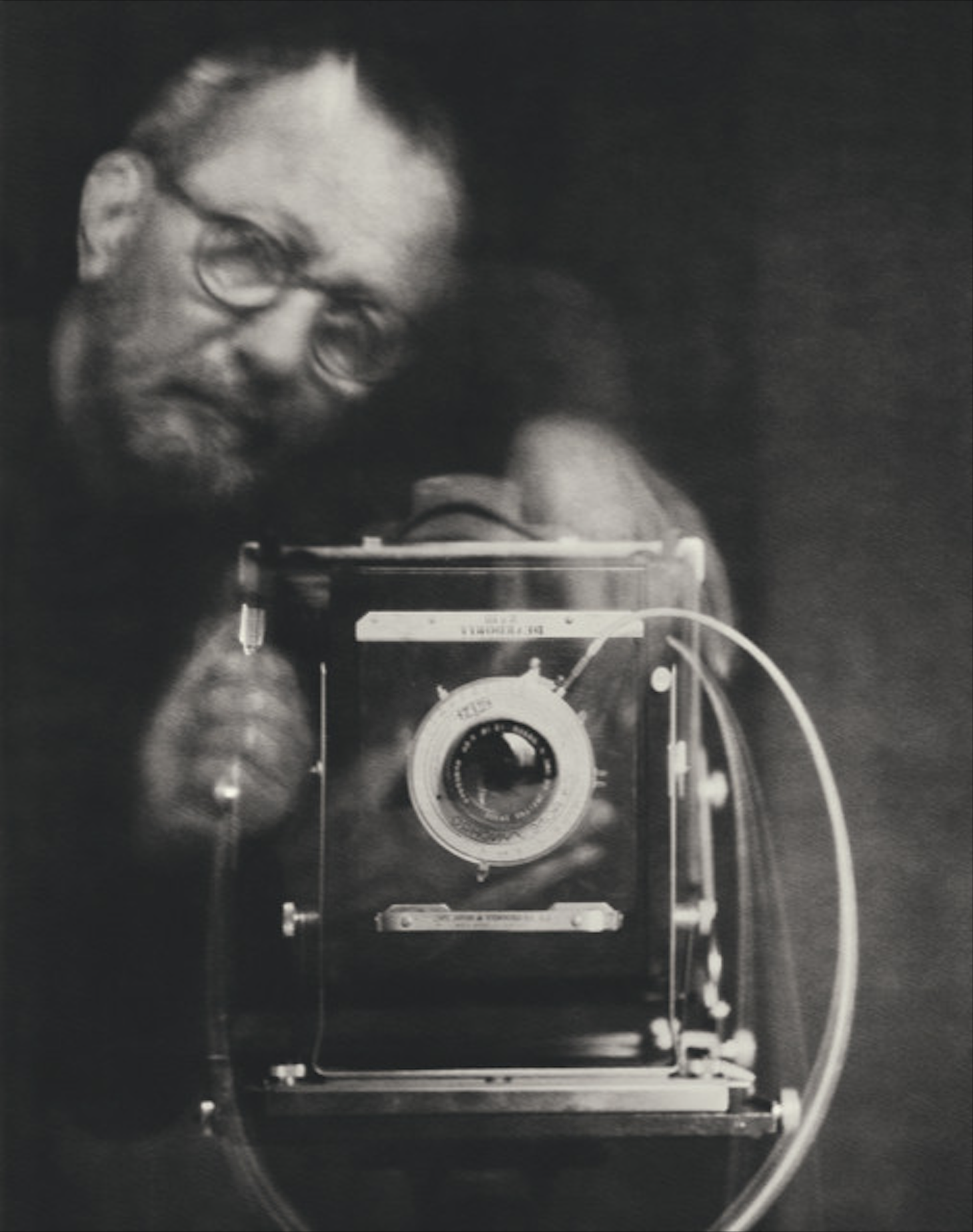
Paolo Roversi, auto-portrait, courtesy of Pace Gallery
Photography today is shaped by speed, endless image production, and artificial intelligence. How do you see the future of photography? What went missing, and do you see AI as a threat to photography?
I think photography is in danger. Media and the way images are produced and circulated today created an endless flow of pictures. Everyone takes photographs all the time, and they spread instantly through platforms like Instagram, creating a kind of pollution of photography. At the same time, everything has become much faster, with constant pressure to produce many images in very little time and often with smaller budgets. In this process, photography is at risk of losing something essential: its depth, the time it needs, and its sense of presence.
For me, AI has nothing to do with photography. Photography needs emotion, feeling, and humanity – something mechanical images can never replace.
What I also miss very much is Polaroid. I worked with it for decades, and when they stopped producing it for industrial reasons, it felt like a crime to me. Instant photography was one of the most important inventions of the twentieth century, because it created a physical relationship to the image – something that is slowly disappearing today. But whatever AI or the media does, photography will survive, it always survives.
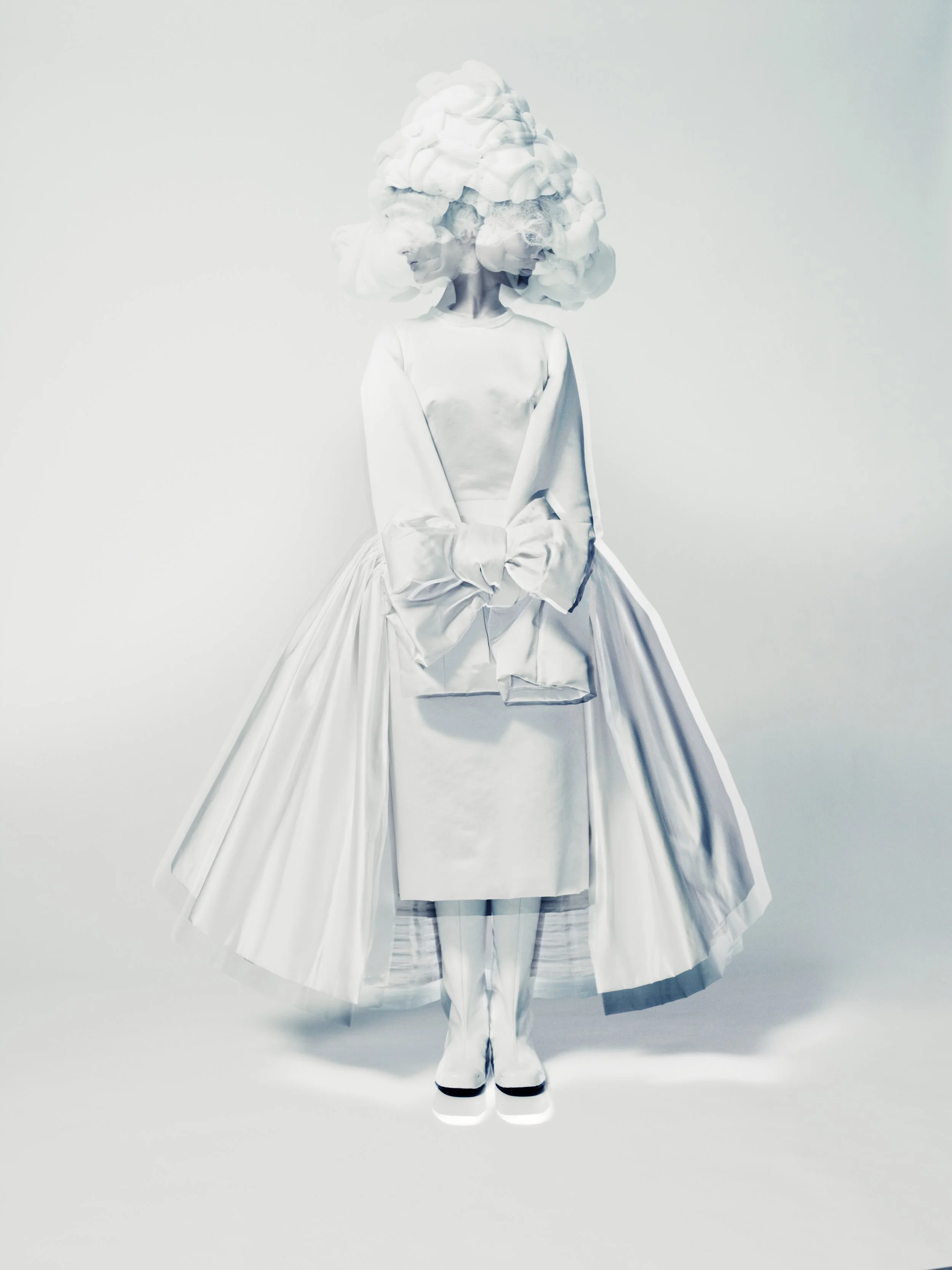
left:
Paolo Roversi, Anna Maria for Comme des Garçons, Studio Luce, Paris, October 6th, 2011, courtesy of Pace Gallery
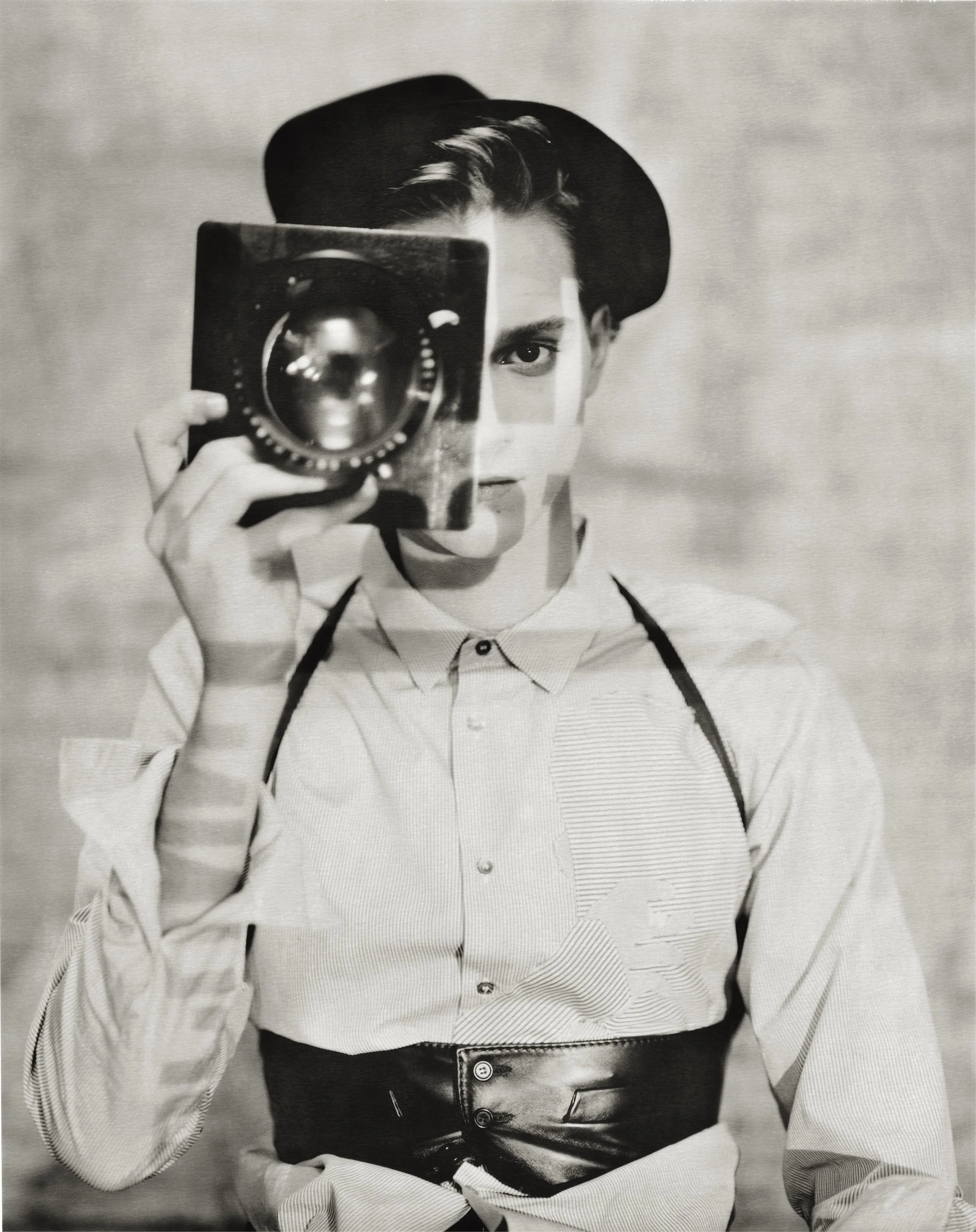
right:
Paolo Roversi, Charles with Lens, Studio Luce, Paris, December 5th, 2005, courtesy of Pace Gallery
Your portraits often feel like inner encounters rather than constructed images. How do you connect with the person in front of your camera?
There are no rules and no method. Every encounter is different, and it always depends on the person in front of the camera as well as on my own state of mind that day.
For me, a portrait cannot be constructed. It is an exchange of emotions, feelings, and ideas – nothing logical or rational. I never construct a story before taking the picture because the image comes from the moment, and you cannot create it beforehand.
The connection that passes between two people – between the model and me – is what becomes the photograph. It is about seeing, feeling, and not thinking too much.
You are especially famous for fashion photography. In your images the model and the clothes seem equally important. How do you balance these two presences, and what differentiates fashion photography from portraiture for you?
For me, fashion photography is a double portrait: the portrait of the woman and the portrait of the clothes. The magic comes from the relationship between these two energies. The garment comes alive through the body, while the body is transformed by the garment, and what I try to capture is that exchange between the model and the clothes.
In a way, however, everything I photograph is a portrait. Whether it is a woman in a dress for an editorial, a teapot, or a tree, I approach it in the same way. I always try to isolate my subject as much as possible, removing everything that is not necessary so that only the main presence remains. In this way, the image becomes a kind of vis-à-vis, an encounter without distractions.
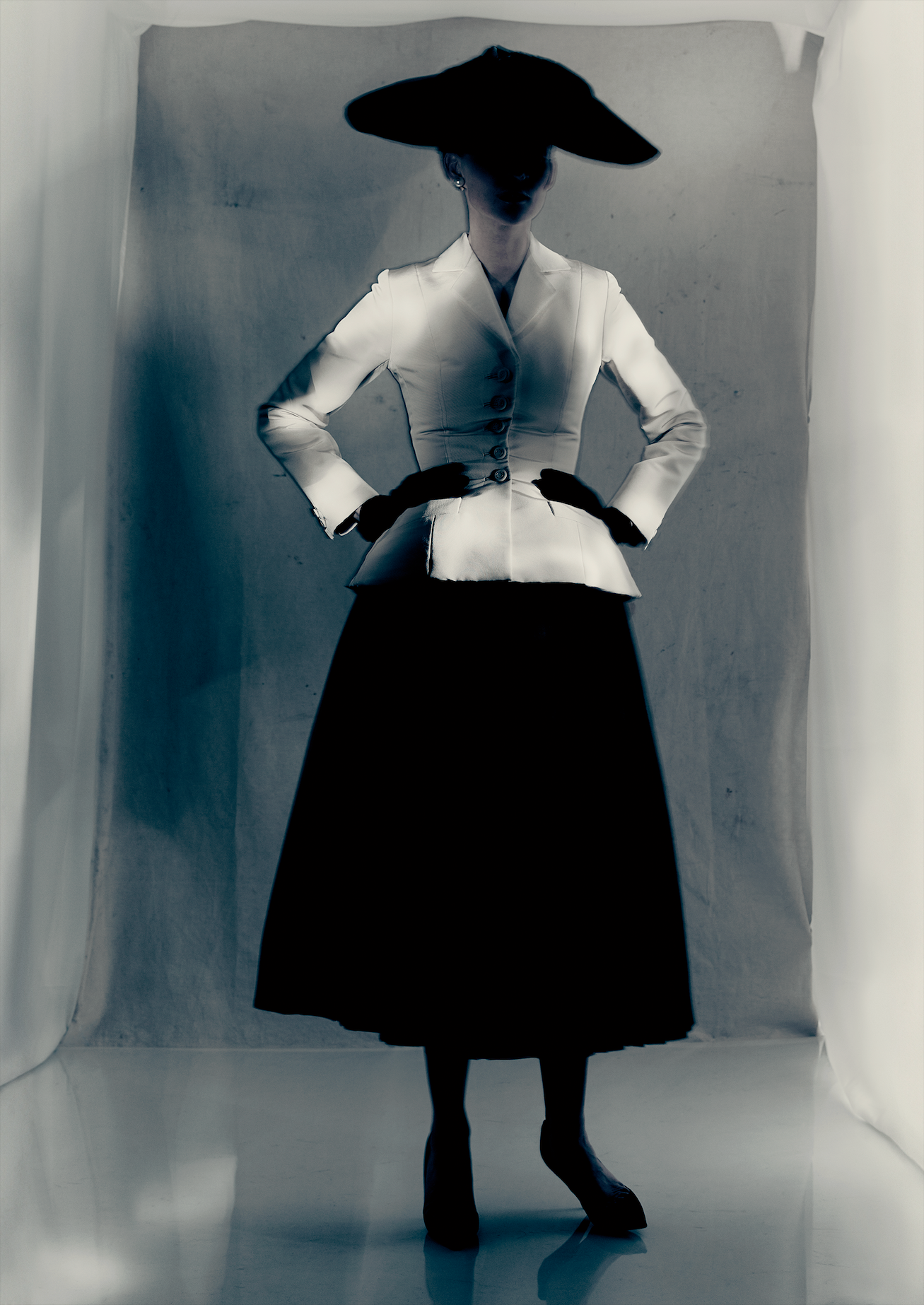
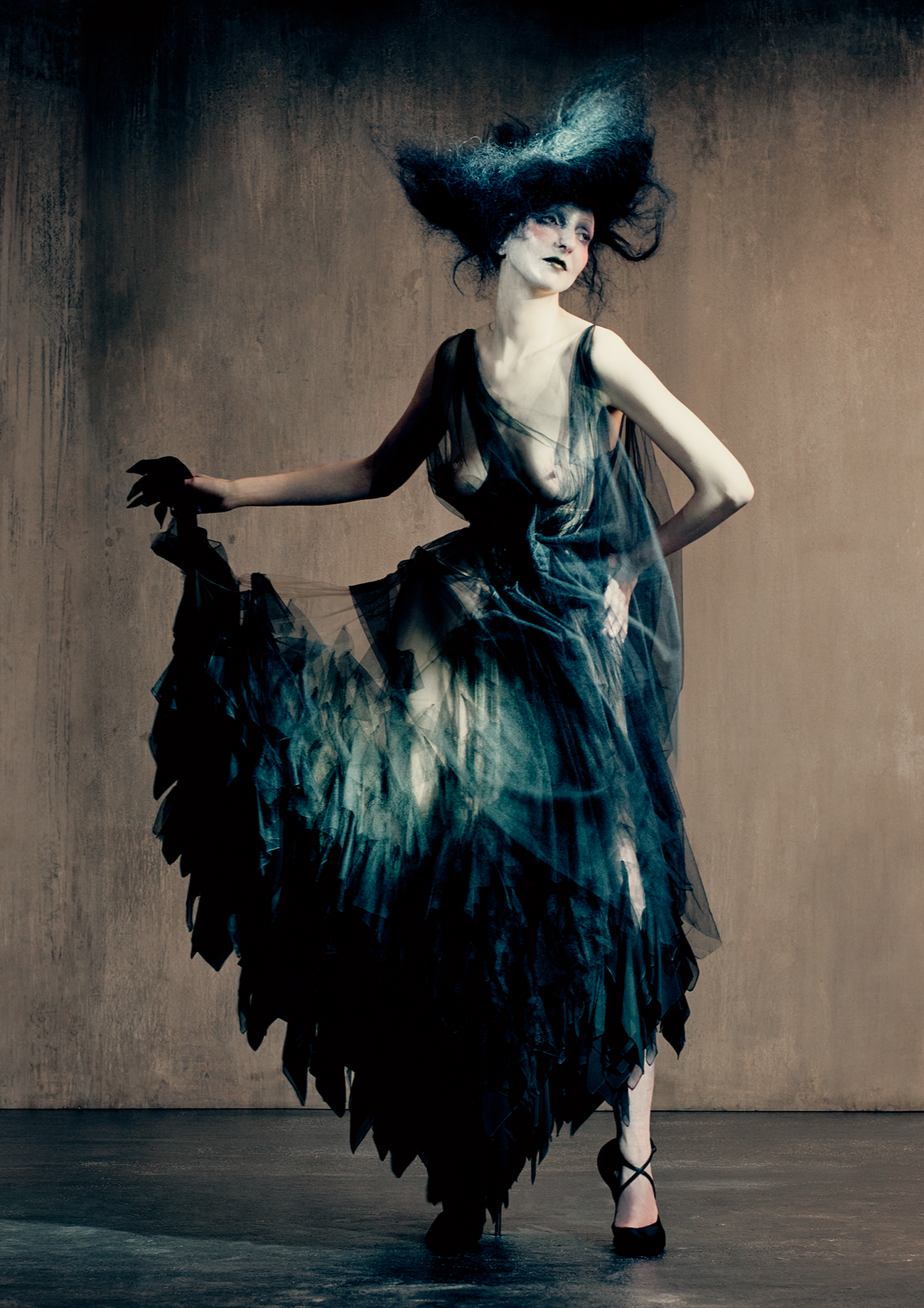
left:
Paolo Roversi, Audrey for Dior, Studio Luce, Paris, February 2nd, 2016, courtesy of Pace Gallery
right:
Paolo Roversi, Tish, Paris, 2024, courtesy of Pace Gallery
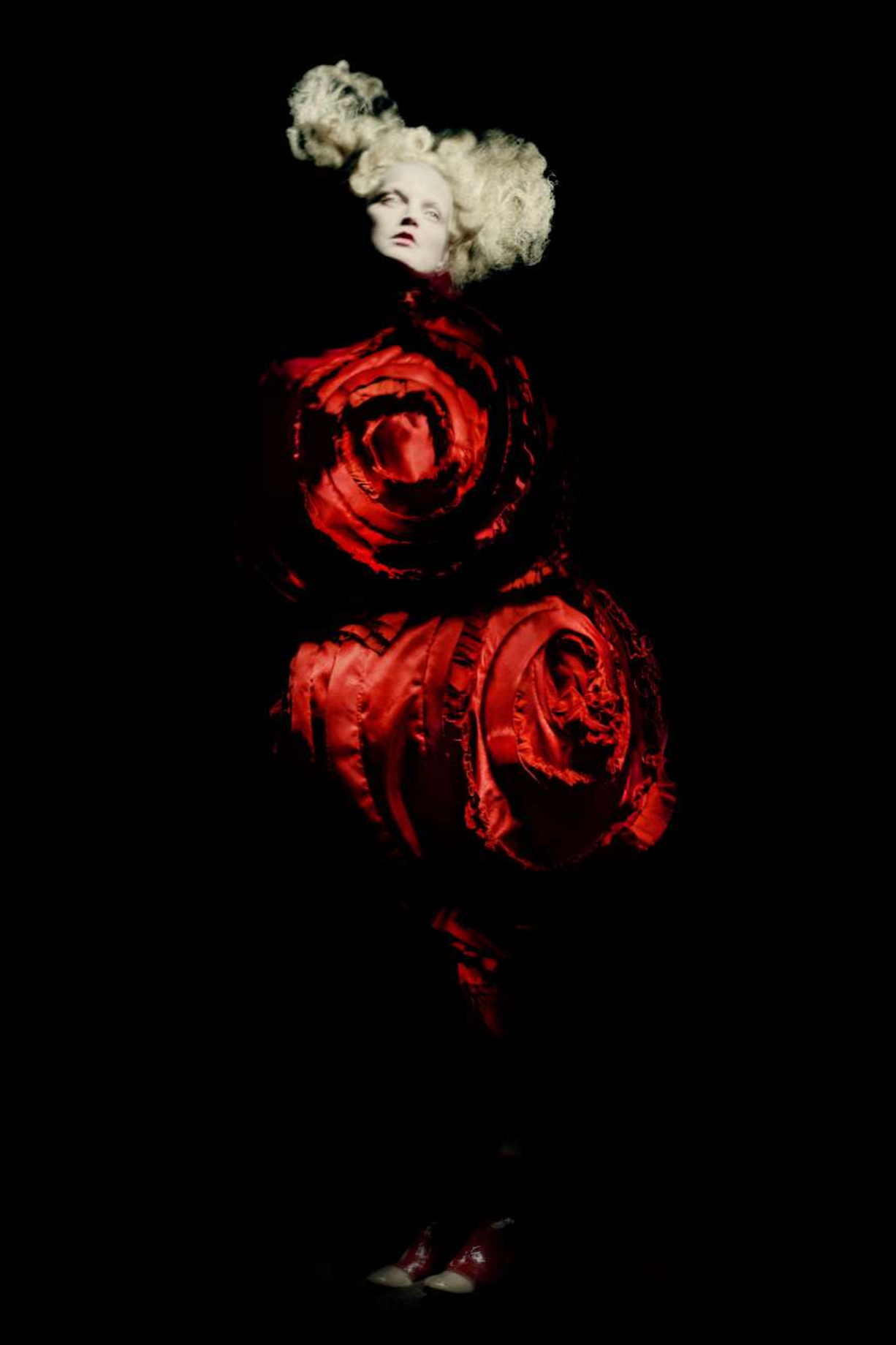
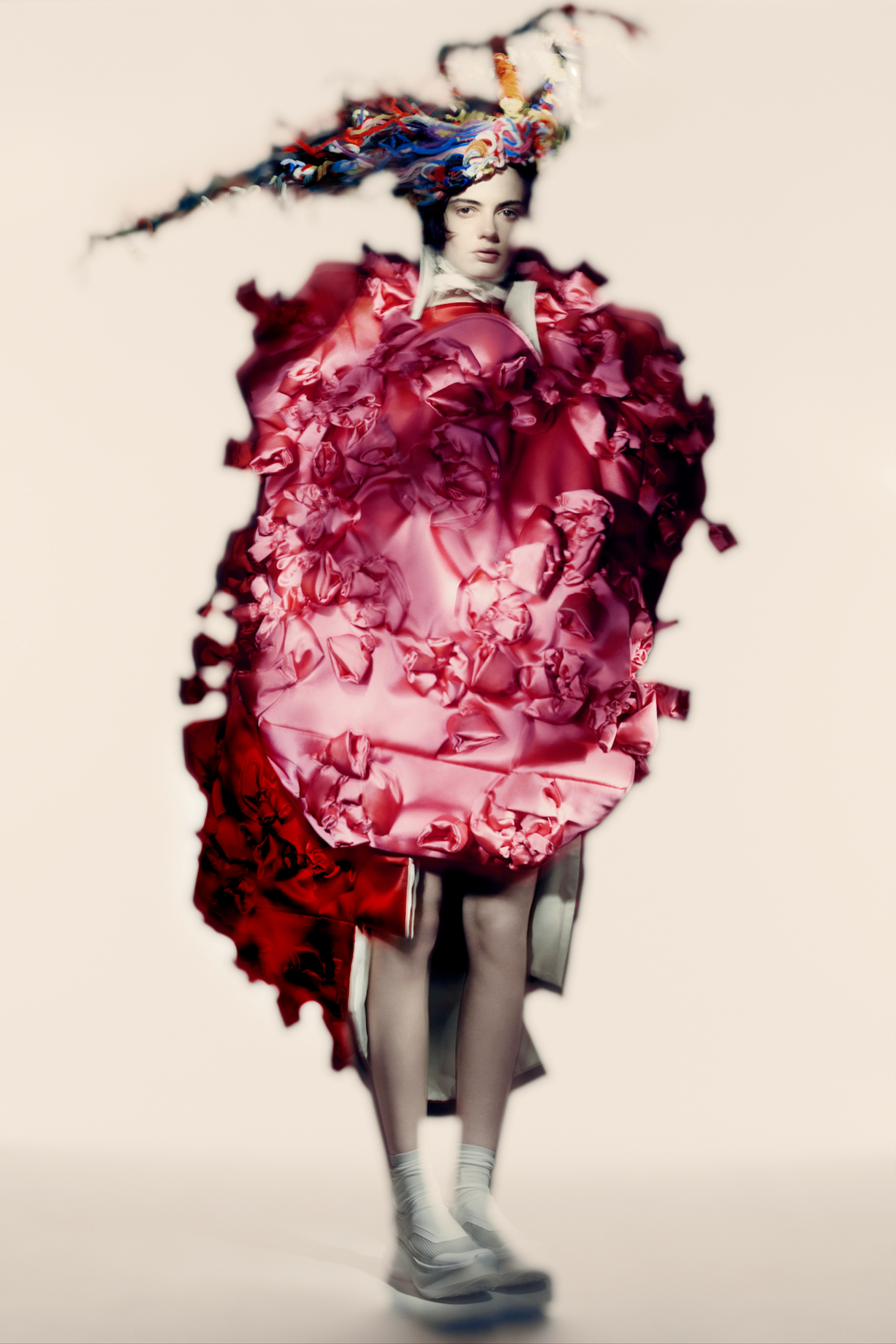
left:
Roversi, Paolo, Guinevere for "Blood & Roses", Studio Luce, Paris, January 5th, 2017, courtesy of Pace Gallery
right:
Paolo Roversi, Sihana, Paris, 2023, courtesy of Pace Gallery
Time seems almost tangible in your photographs. Is time a material like light to you?
Photography is always a mixture of time and light. I cannot say which of the two is more important, but time has always been essential for me, as a photograph needs time to truly exist. The magical thing about time is that it creates space for something to appear, perhaps the soul or simply the presence of the person. I learned to love time as part of photography when I worked with an 8×10 camera and very slow materials that required long exposures. With longer exposures, the presence of the person becomes stronger, while a portrait taken very quickly with flash does not allow the same depth.
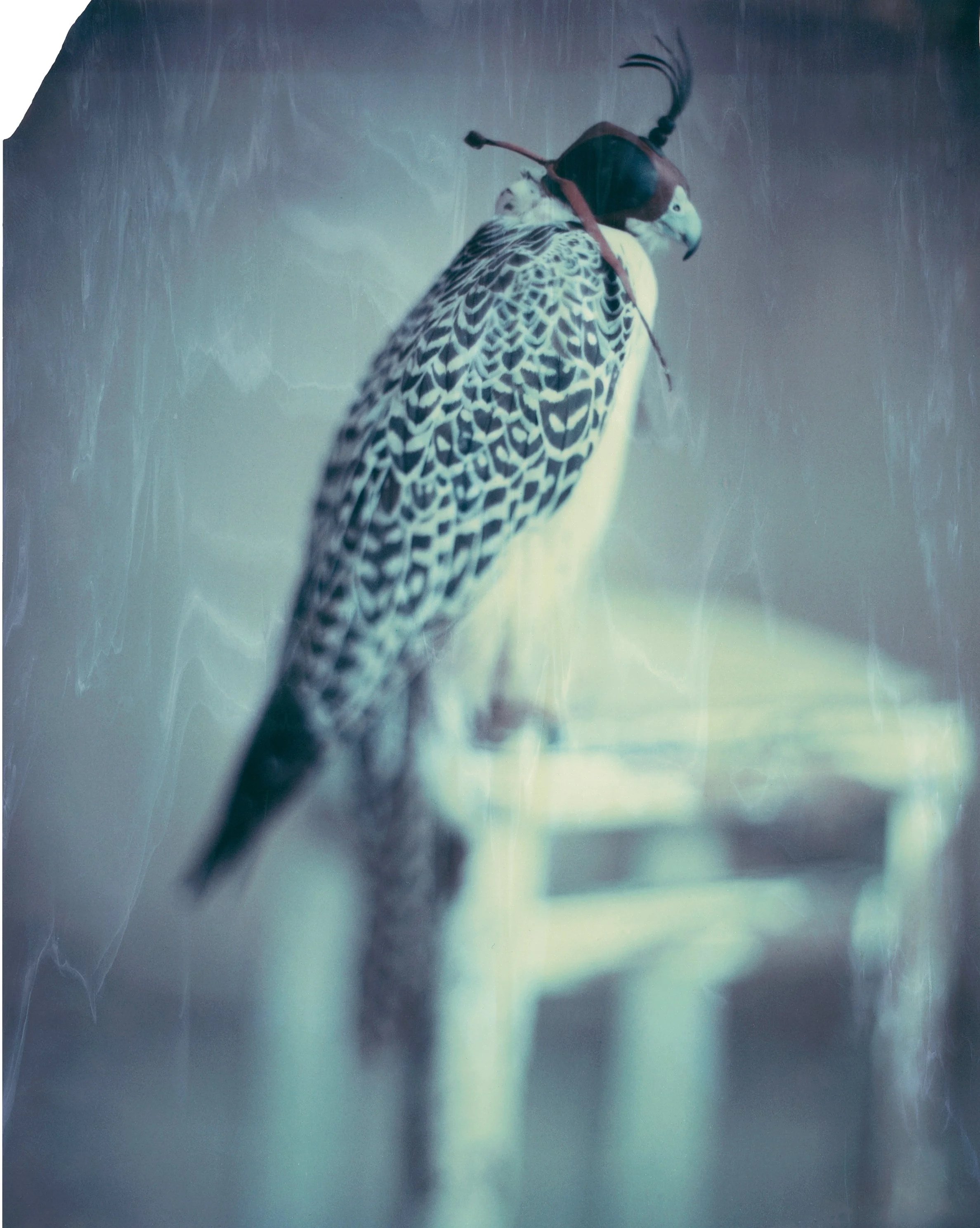
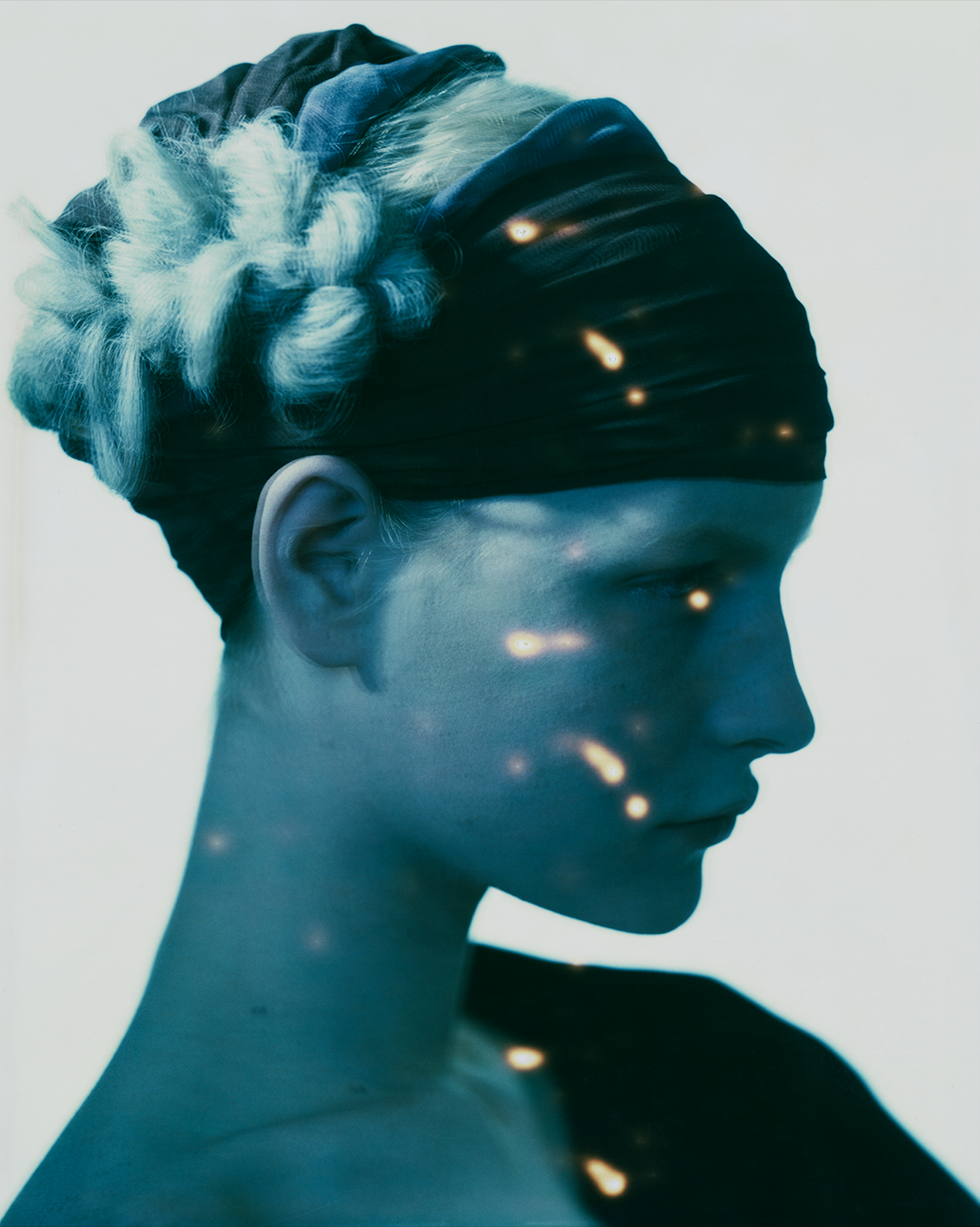
left:
Paolo Roversi, Hawk, Paris, 2020, courtesy Pace Gallery
right:
Paolo Roversi, Kirsten, Paris, 1990, courtesy Pace Gallery
Beauty has always been central to your work. What does beauty mean to you today?
Especially nowadays beauty changes all the time but for me. It will always stay a mystery, and I prefer to keep it that way. I do not want to define it.
What interests me is the search for beauty – the feeling of approaching it, almost touching it, and sometimes losing it again. That movement is important because it keeps the desire alive.
Is there an image you remember vividly that you never photographed? And is there a person you've never taken a photo of but would really like to?
There are many moments that I missed or simply could not photograph, and they remain very clearly in my mind. Every photographer should write a book about the photographs they never took; trust me, it would be a huge book.
One moment I remember very well happened in India. A circus was passing along the road with animals and performers, and the scene was incredibly beautiful. I had no camera with me, but the image has stayed in my memory ever since. The funny thing is that sometimes the photograph you never take remains longer in your mind than the one you actually captured.
There are many people I would love to photograph, and they are not necessarily celebrities or models. I am always drawn to mystery, to faces or presences that feel unusual, because this sense of the unknown creates the desire to photograph. Sometimes I pass someone in the street and suddenly wish I could make a portrait, and afterwards I often regret not asking.
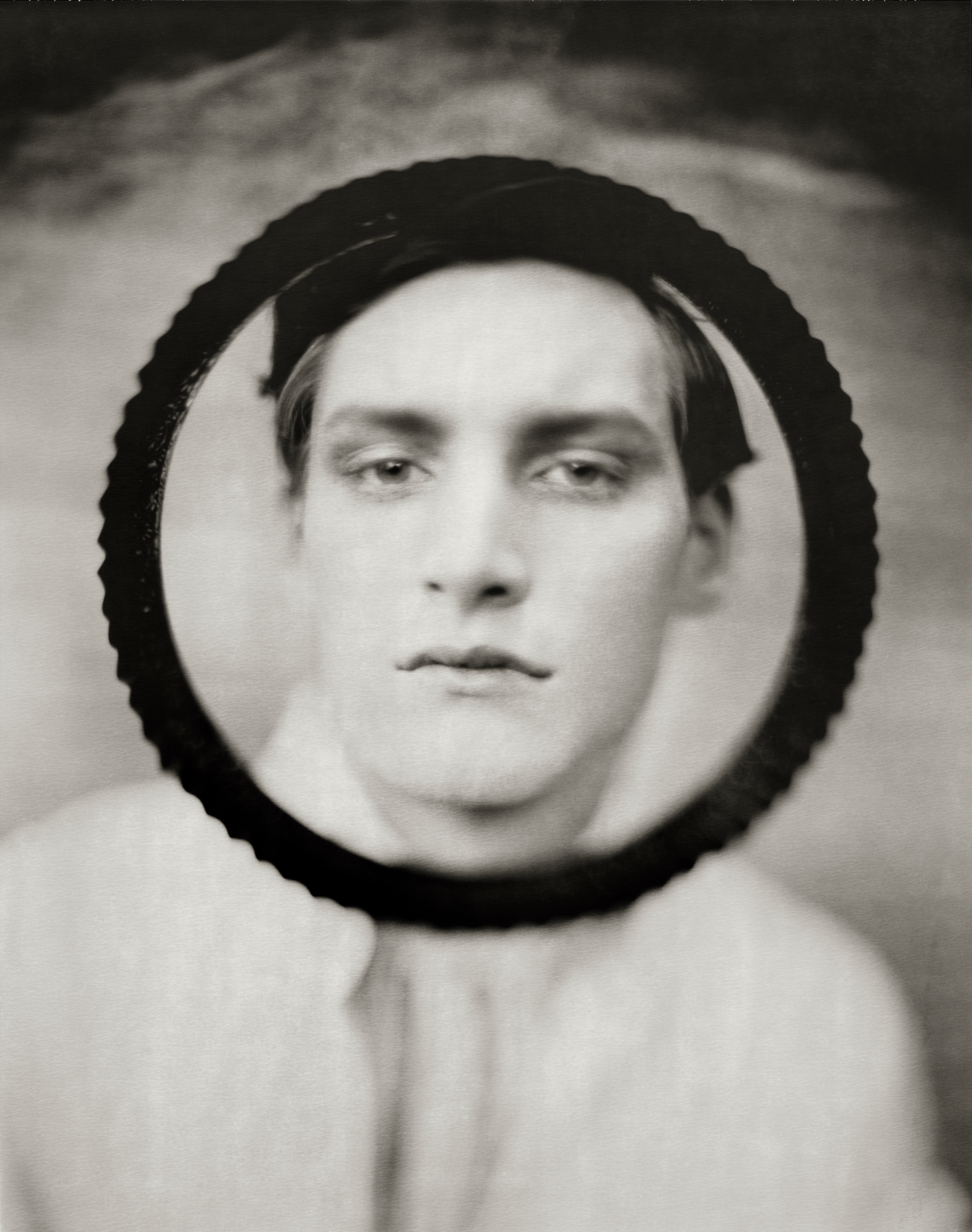
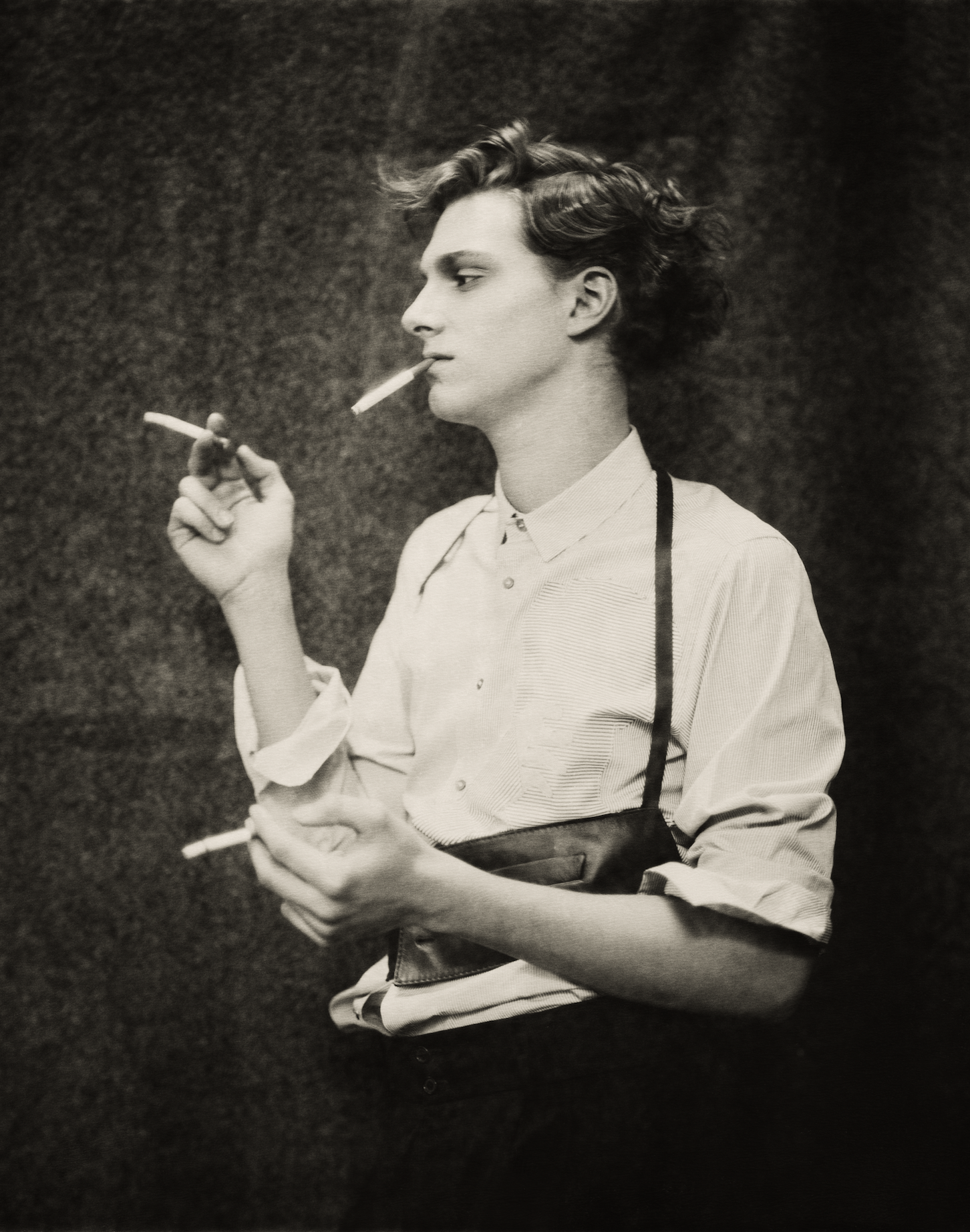
left:
Paolo Roversi, Jerome, Studio Luce, Paris, December 5th, 2005, courtesy of Pace Gallery
right:
Paolo Roversi, Jérôme, Paris, 2005, courtesy of Pace Gallery
Do you consider your photography to be art?
“Art” is a very big word, like “love” or “soul,” and it is difficult to define. I tend to think of myself more as a craftsman, working in a studio with my tools, where what matters most is the intention behind the work. Of course, when I see my photographs on museum walls, I feel happy and the photographs themselves seem proud to be there. In that context, they may look like art but whether they truly are art, I cannot say.
For me, being a photographer is closer to being an author than to being an artist. There are many different kinds of writers: novelists, crime writers, romance authors and every book is different. In that same way, every photograph is unique, and they cannot really be compared.