
IN CONVERSATION WITH RASMUS MUNK, ANDONI LUIS ADURIZ AND ANTONIO BACHOUR
For Apapaxoa 2026, three distinctive voices in contemporary gastronomy come together in Mexico: Andoni Luis Aduriz, Rasmus Munk and Antonio Bachour. Bringing together avant-garde cuisine, creative pastry and a shared spirit of experimentation, the chefs offer three different perspectives on food, culture and the dining experience. Ahead of their collaboration at Xcaret Hotels, we sat down with the trio to discuss their approaches to gastronomy, the ideas that shape their work and what they hope to bring to the table in Mexico.
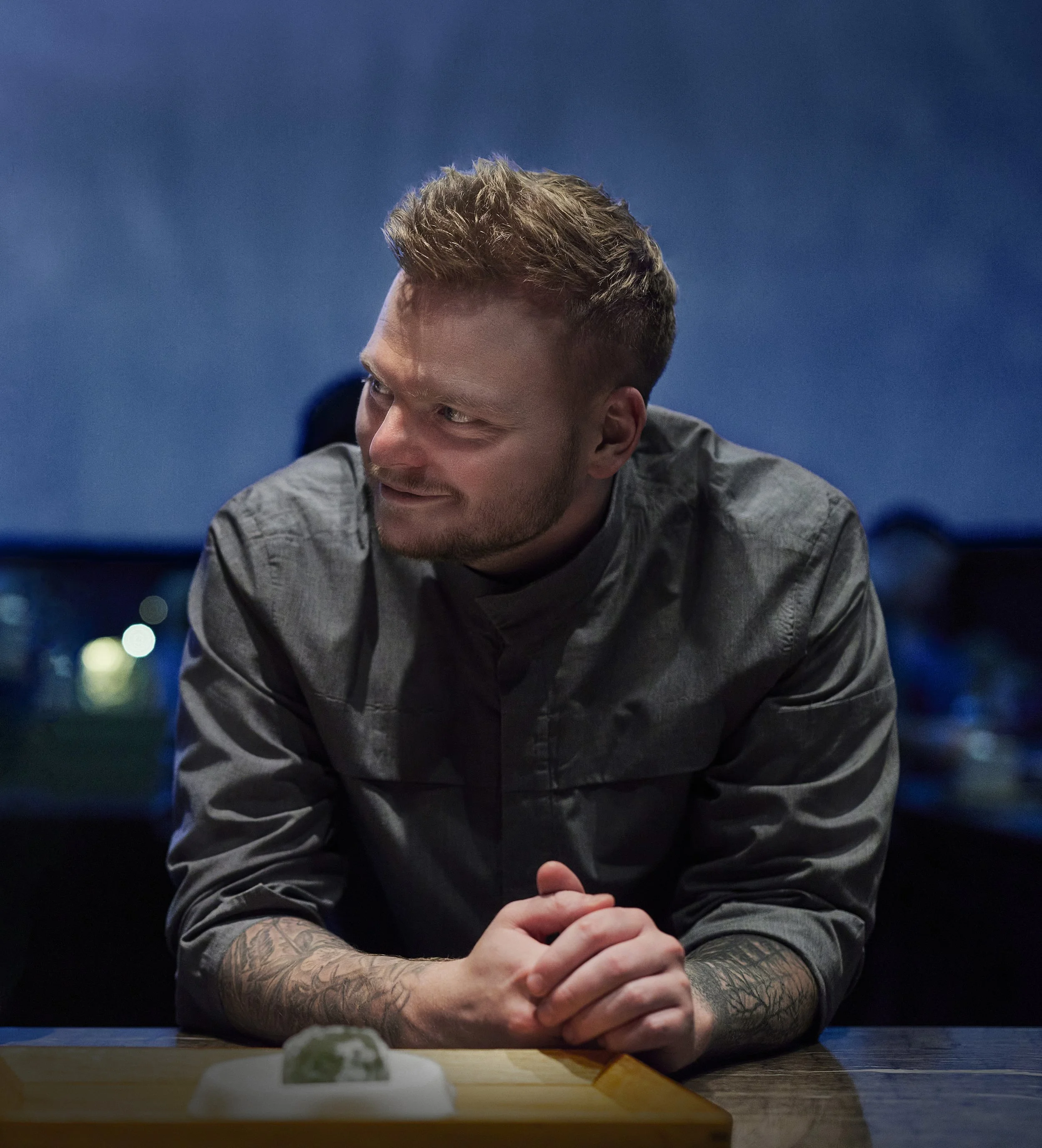
Rasmus Munk
Alchemist has pushed dining into territory that can be sometimes uncomfortable. Where do you find a balance in challenging a guest without overstimulating them?
It is very important not to overwhelm the guests. Among the 35 dishes we serve on a night there are probably seven-eight that have strong political or environmental statements built in. We space them out in the experience, so that they are intermingled with fun, surprising, or just moreish dishes – it wouldn’t work at all if it was five hours of constant provocation.
What is the most important idea you want a guest to take away from an evening at Alchemist?
The experience is filled with many impressions, and that is on purpose, so that every guest can take with them the issues and emotions that resonate the most with them. Basically I want them to eat, and then think. What they think about will vary from guest to guest. I often get messages from guests saying that a certain dish has inspired them to make changes in their life, but just as often they tell me about how being in our immersive dome has affected them emotionally or how our interactive art installation rooms have moved them in some way. So I think that every guest is individual when it comes to what resonates the most with them – and I really like that it is that way.
If you had to strip Alchemist down to one essential idea, rather than its technology, theatre or spectacle, what would remain?
The ambition of changing the world through gastronomy.
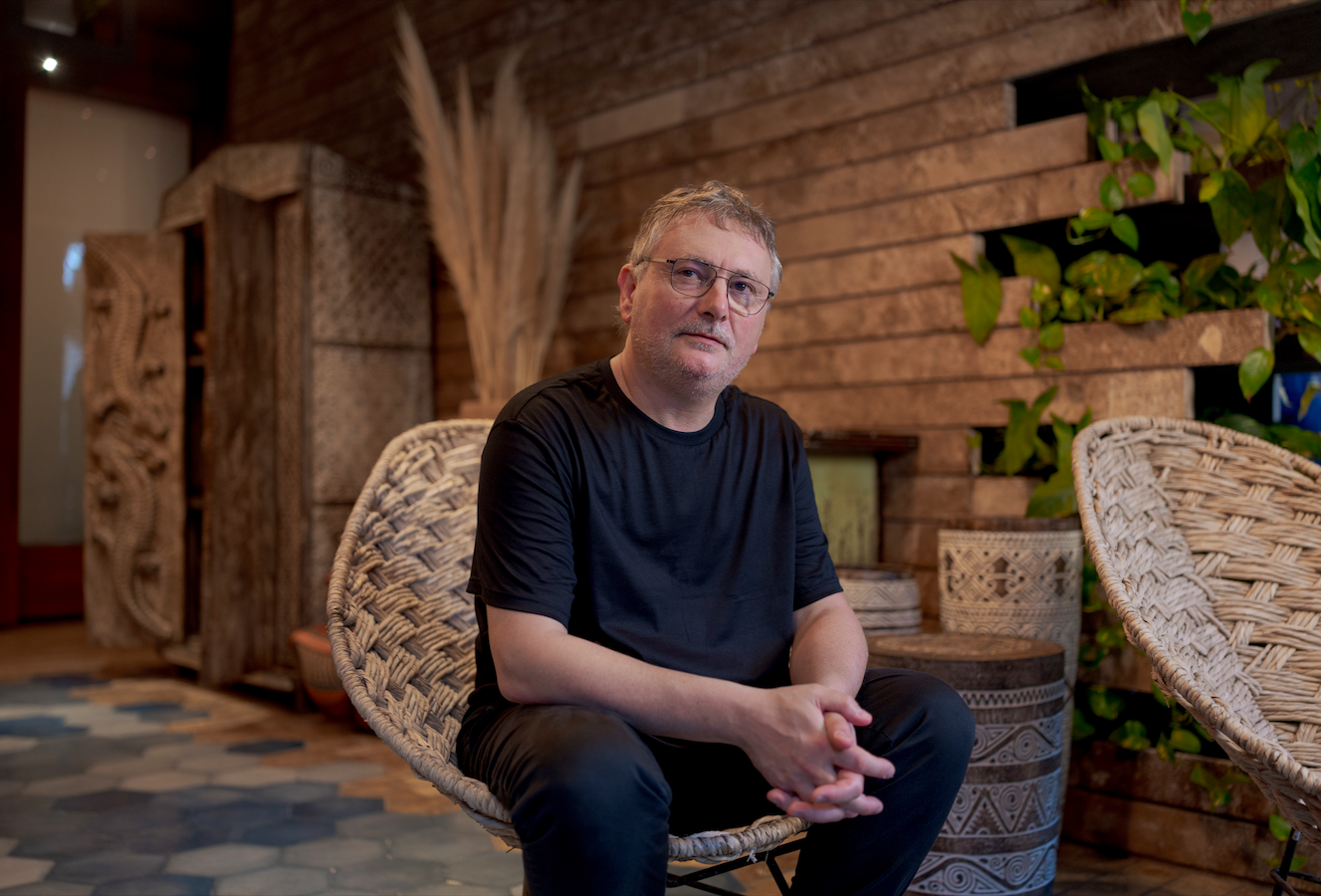
Andoni Aduriz
You’ve spent much of your career challenging diners’ expectations. Do you think diners today are more open to being surprised, or quite the opposite?
Since I started at Mugaritz almost 30 years ago, I have witnessed countless people getting on and off the gastronomic train. Many came with a genuine interest and a great deal of experience, returning almost every year to taste what we were doing. Diners from Chicago, Brazil, Austria and all over Spain who kept asking us to push further and further in the direction of our work. Some grew older, others dropped away as their lives or interests changed, and many were simply part of gastronomy because it was a trend.
Diners come and go, projects remain. And because there are millions of people in the world, there are all kinds of profiles, from those driven by an almost boundless curiosity and a desire to explore, to those who simply want to eat the same thing in a different way.
Mexican cuisine carries so much history, symbolism and identity. How do you approach working with a culture whose culinary language is already so powerful and rooted?
With a translator. Everything we propose at Xal goes through Jordi Bross, who has been part of Mugaritz’s creative team for many years. He knows the Mexican mindset and palate extremely well because he is from Mexico and took his first steps in the kitchen there.
I was very aware that, no matter how much effort and commitment I put into the project, if I did not get the accents right, the work would not reach where we wanted it to.
You’ve often treated the diner almost as a participant in the experience. What do you think restaurants can make us think about, or feel, that other forms of art cannot?
The philosopher Daniel Innerarity explains that Artificial Intelligence will only go as far as an intelligence without a body can go. And Antonio Damasio, the neuroscientist and director of the Institute for the Neurological Study of Emotion and Creativity in the United States, often argues that the mind emerges from the body and that, therefore, we do not think “despite” the body, but thanks to it.
Emotions are records of what the body feels in response to particular stimuli. And cuisine, without entering into the debate over whether it is art or not, is one of the most multisensory and educational activities that exist, because it involves knowledge. Those emotions are not merely reactions to external stimuli, but complex bodily processes that play a fundamental role in our mental lives.
Tell me what you eat and how you eat, and I will tell you who you are and how you are.
You’re sharing the kitchen with Rasmus Munk and Antonio Bachour. What do you think each of them brings to the table that you could not create on your own?
Both Rasmus and Antonio have built long and accomplished careers shaped by their own experiences, desires and circumstances, which are different from mine. From that starting point, it is inevitable—and desirable—that we do not think alike and, therefore, do not cook alike.
Each of us expresses ourselves through those differences, and fortunately, that is what makes us distinct.
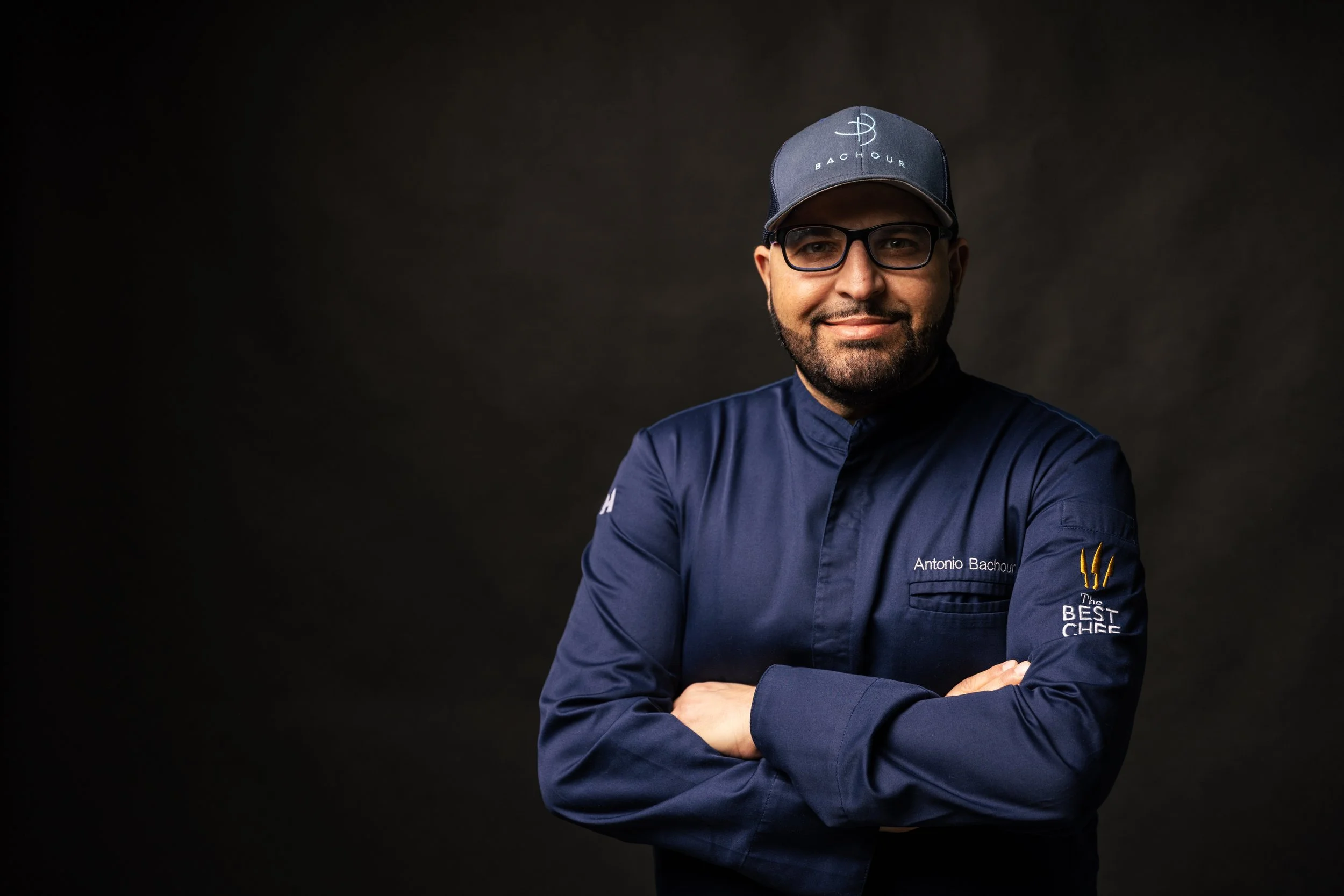
Antonio Bachour
You’ve helped redefine what modern pastry can look and taste like. What still excites you about dessert after achieving so much in the field?
What still excites me is that pastry has no limits. No matter how much I have achieved, I still feel like a student every day. A new ingredient, technique, culture, or memory can inspire something completely unexpected. I love creating desserts that are visually beautiful, but flavor, texture, and emotion must always come first. The greatest excitement is transforming a simple idea into an experience that surprises people and creates a lasting memory. That curiosity and desire to keep evolving are what continue to drive me.
Pastry is often associated with sweetness and pleasure, while Andoni and Rasmus frequently use food to provoke deeper emotions or questions. Can a dessert make someone uncomfortable, or make them think?
Absolutely. Dessert does not always have to be only sweet, beautiful, or comforting. It can challenge expectations, awaken memories, and even create a moment of tension or surprise. Ingredients such as bitterness, acidity, fermentation, smoke, or savory elements can make people stop and question what dessert can be. But for me, provocation must always have purpose. I want the guest to think and feel something, but I never forget that the dessert must still be delicious. The strongest desserts are the ones that create emotion while leaving you wanting another bite.
Mexico has given the world extraordinary ingredients such as cacao, vanilla and corn. Which Mexican ingredient do you think deserves to be looked at in a completely new way?
I believe corn deserves to be explored in a completely new way. Mexico has an incredible diversity of corn, with different colors, aromas, textures, and levels of sweetness. In pastry, we often see it only in traditional preparations, but its potential is much greater. It can be transformed through roasting, fermentation, caramelization, or nixtamalization and used in creams, mousses, ice creams, viennoiserie, and even chocolate creations. For me, the challenge is to respect its history and Mexican identity while presenting it through a modern pastry language that surprises people.
