
IN CONVERSATION WITH REMO AND MARIO CAPITANEO
interview by TIMOTEJ LETONJA
Built on years in some of Italy’s most exacting kitchens, brothers Remo and Mario Capitaneo arrive at Verso with a clear sense of direction. Their approach strips fine dining back to its essentials — ingredients and balance. Working directly in front of their guests, they trade distance for dialogue, building a cuisine shaped by instinct, contrast and closeness.
all images courtesy of VERSO
You both come from Puglia but built your careers in some of Italy’s most rigorous kitchens. At what point did you feel ready to define your own voice?
We think it’s important to describe our professional careers in order to understand why we were ready to define our own new choice. We were born in Puglia but we came to the North of Italy when we were young because our father who has always been working as hotel and restaurant manager, got a job on the Garda Lake as Hotel manager. We attended school on Lake Garda. And actually we started to work also there in small restaurants.
In the early part of our professional careers, an important experience was certainly that of the Grand Hotel Quisisana in Capri, where we worked together. But our careers essentially began in Milan.
We worked together alongside Andrea Berton at Trussardi alla Scala in 2006, where I (Remo) remained for three years until we earned our second star. Mario, on the other hand, stayed about half that time before moving to work in Carlo Cracco's kitchen.
After Andrea Berton, in 2009, Remo joined Enrico Crippa's team at Piazza Duomo in Alba, and after about a year and a half, he returned to Milan to work with Enrico Bartolini, who was just then moving from his restaurant in Montescano to the Devero Hotel in Cavenago.
And there we worked together again for a short time, since Mario then went to work on two of Enrico's projects, one in Lugano and the other in Bergamo.
In 2016, we moved with Enrico to Milan's Mudec, where we stayed until 2020. And in 2019, we celebrated the return of the 3 Michelin stars to Milan with him. We remained close collaborators with Enrico Bartolini until November 2020.
So after such important experiences we thought it was the right time to make our own choice! If Verso is a “direction” rather than a destination, what are you moving away from in contemporary fine dining and what are you moving toward? It’s sure and definitive the fact that we are moving away from the “distance “ that nowadays you can feel in fine dining between the chef and the client.
Non only physically, working and preparing dishes right in front of him, but also psychologically, presenting a cuisine where, in a refined way, we present and enlighten pristine ingredients through different cooking techniques. This way we move towards new clients needs, that , also in fine dining, are more and more a request of new dishes , made of taste and interest, more than looks and frills.
Do you think being brothers makes your collaboration more intuitive or more demanding?
The fact that there are two of us is an added value. During the process of creating a dish, each of us has his own ideas, which are sometimes taken and used individually. So, in a dish, the sauce might be Remo's idea, while the side dish might be Mario's. But other times, the two ideas are combined to create a new one through discussion and comparison.
In every dish we try to combine our two personalities, which are very different.
You’ve eliminated the physical boundary between kitchen and dining room. What emotional shift do you want guests to experience in that proximity?
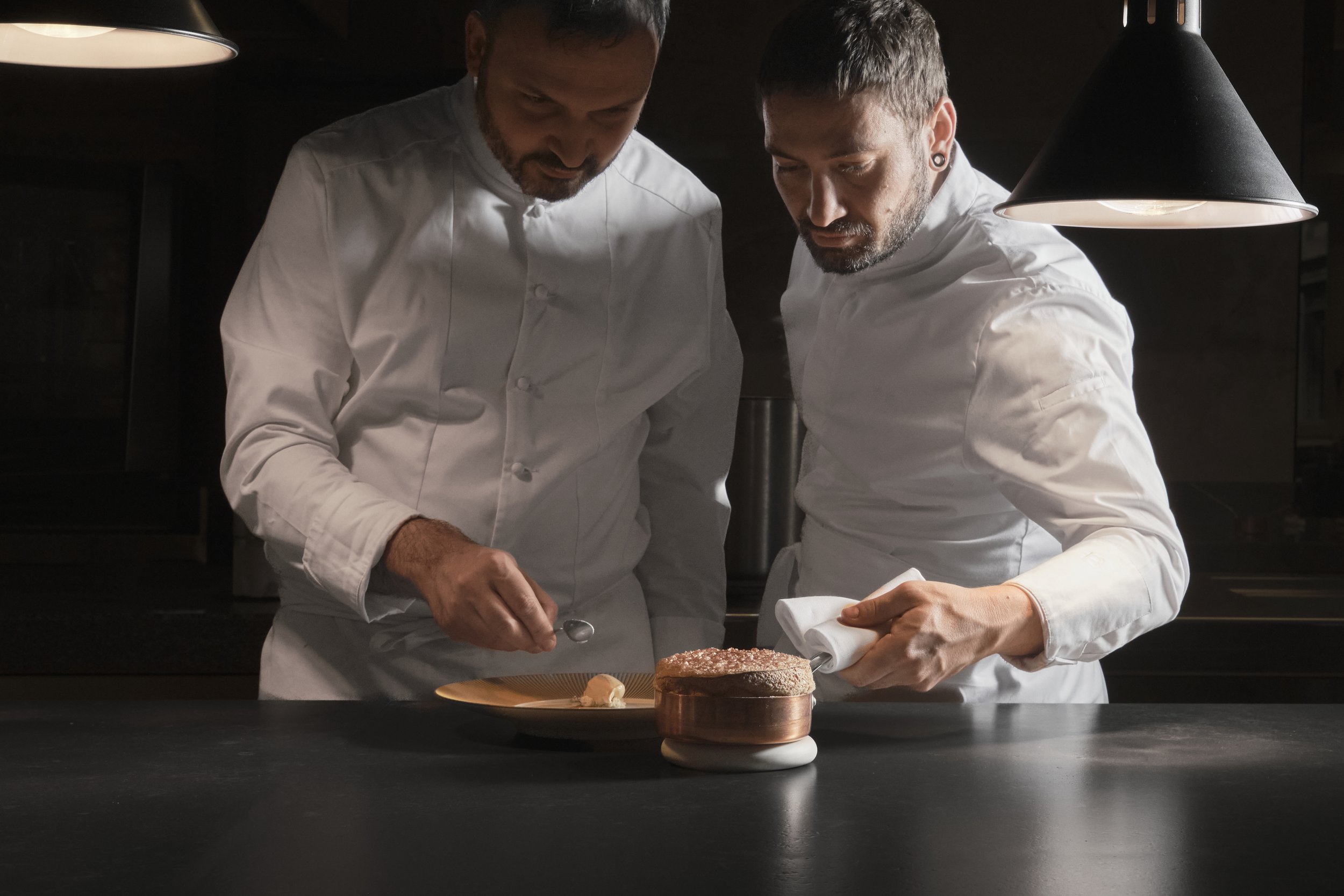
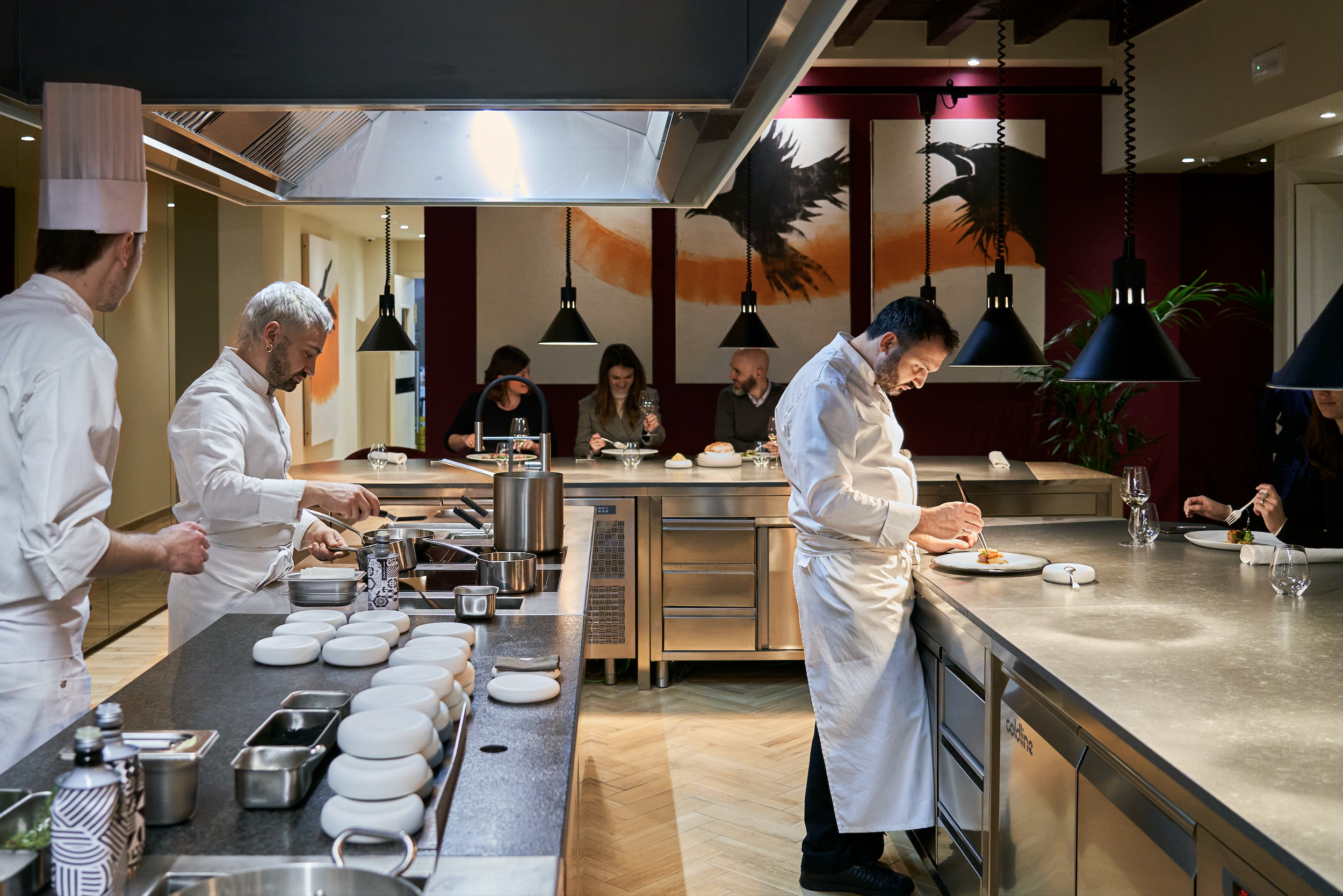
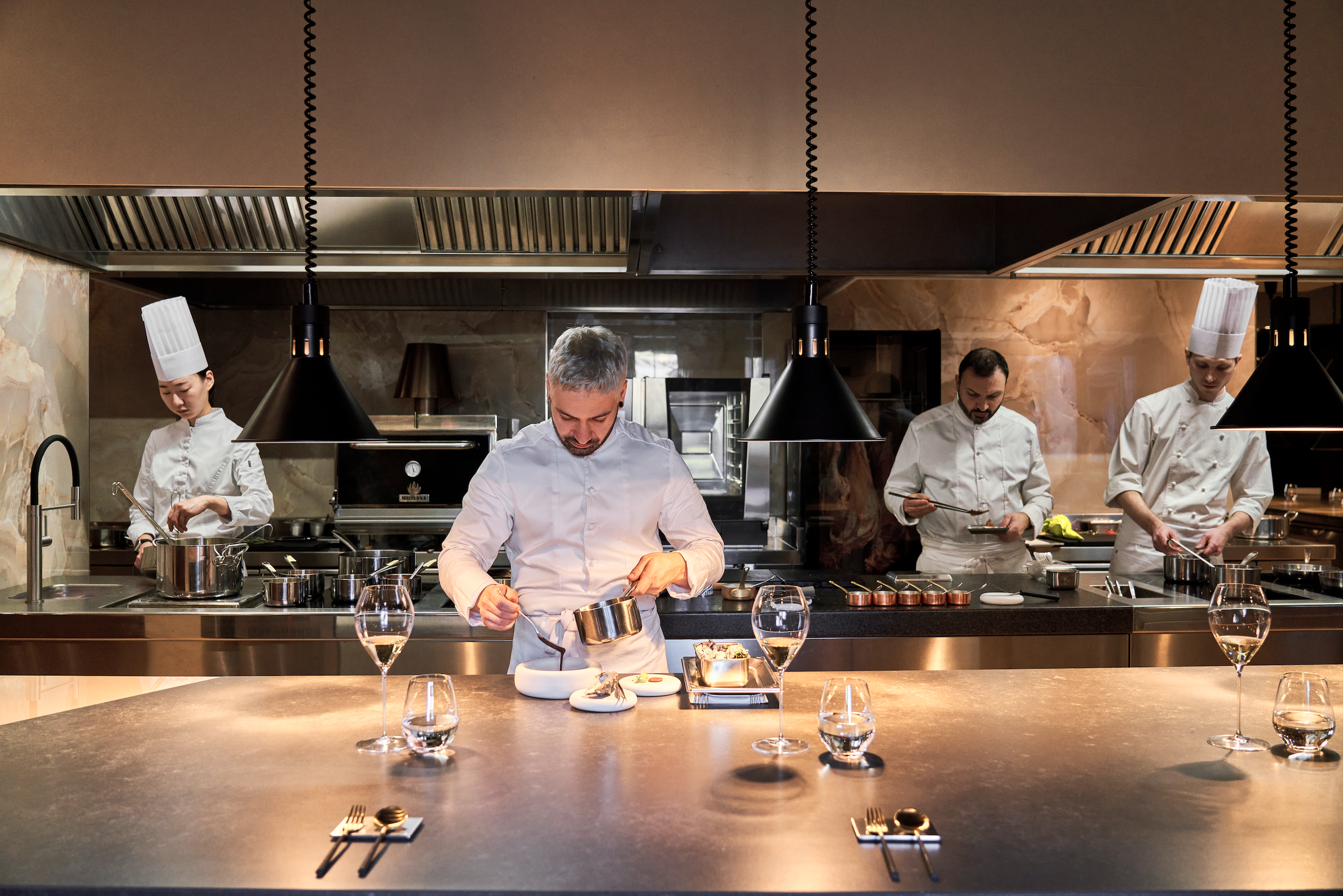
Verso aims to be a restaurant that is highly customer-focused, yet not overly rigid and formal in its service. The two of us and our team work behind the three chefs' tables, and while we cook, we're in constant dialogue with the customer sitting in front of us, assisted by the dining room staff.
We imagined a restaurant where the barrier between dining room and kitchen dissolves. A single, open space. An open, expansive, overflowing kitchen that peacefully invades the dining room, merging into a single space. Our desire was to welcome our guests in a pleasant and informal setting, offering an experience with a different perspective than that of a traditional restaurant. The setting is simple, but the atmosphere is warm and welcoming. Guests are immersed in what's happening in the kitchen, yet nothing ever overwhelms them. They are always the center of our attention.
What does “hospitality” mean to you today, beyond service?
That is exactly what we not only mean, but also put in action: no boundaries between “Us” and “Them,” between chefs and clients. One room, three confronting tables, to serve, eat, discuss , confront.
Your menu is built around what your producers bring you, not the other way around. Does this approach limit creativity or actually sharpen it?
Our cuisine begins with the selection of ingredients, the raw materials we select obsessively. Ready-to-use ingredients have never been considered. Instead, a great deal of effort is dedicated to seeking out, choosing, and identifying the best, strictly seasonal ingredients. And researching the source is crucial. This includes the precise choice to work with "artisans" and not "suppliers."
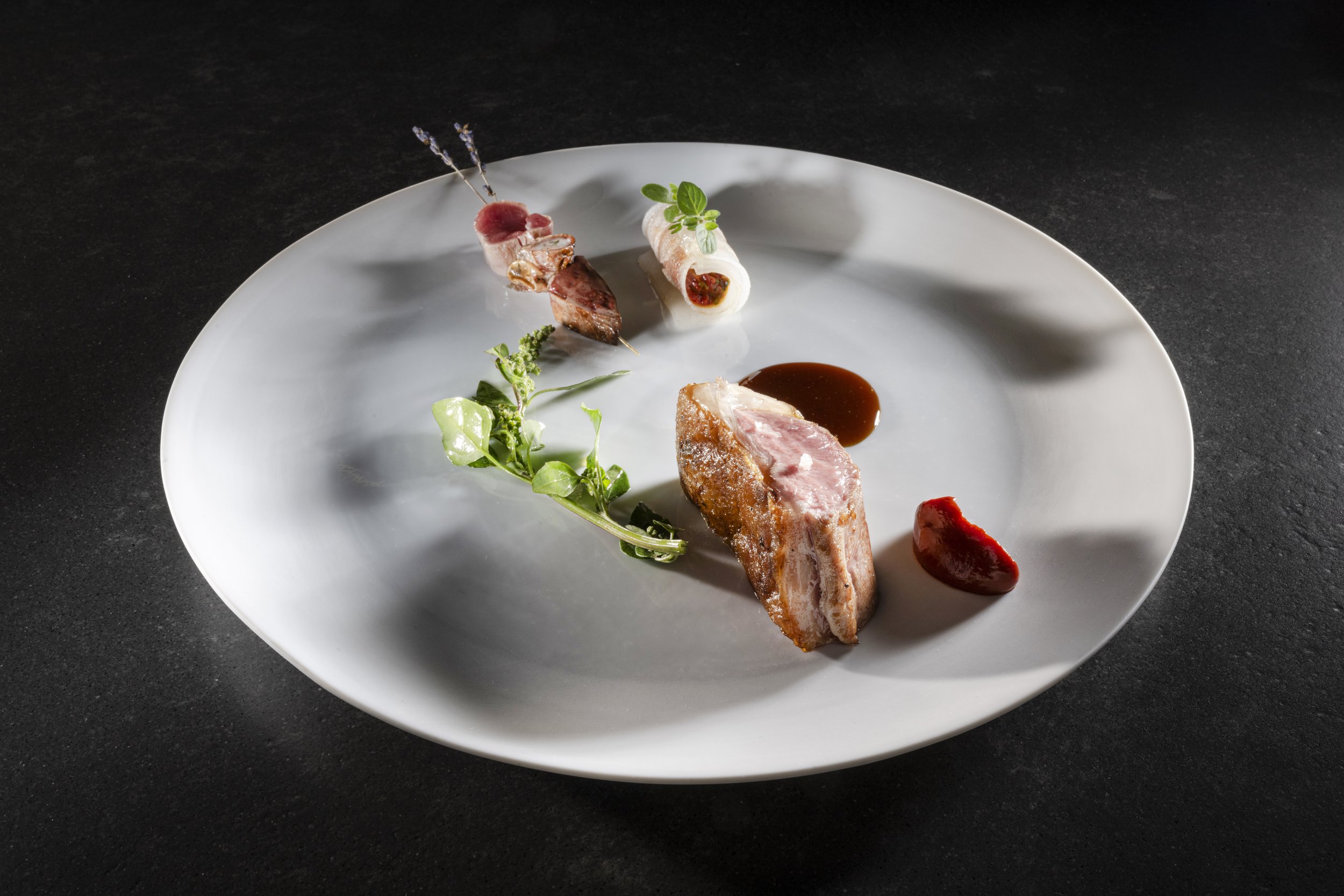
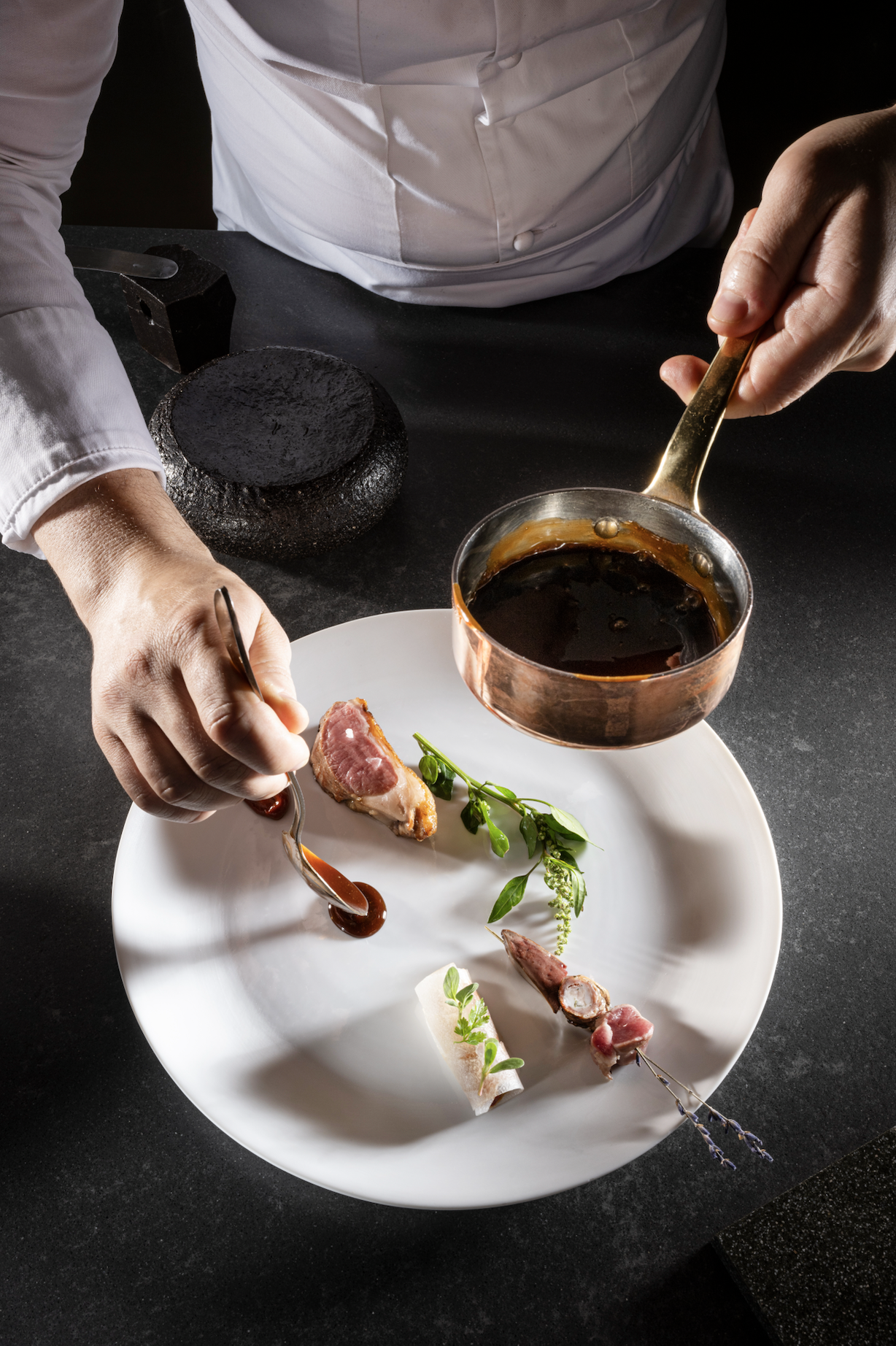
As for meat, for example, where we choose farmers who stand out for their product quality, but also for their ethic value and respect for the animals. For vegetables, we collaborate with a selector throughout Italy who selects the best greens, always and exclusively from small producers. From these artisans, we learn a lot about seasonality and the rhythms of nature, factors that greatly influence Verso's menu. Every week, we listen to what they offer and build the menu around that ingredient rather than another. This way, Verso is able to offer red-legged partridge, wild quail, or deer, always at the perfect moment in terms of aromas and textures.
Therefore, raw materials and seasonality are the key words in Mario and Remo Capitaneo's cuisine. The direct and close relationship with the producer is crucial and also gives us ideas on how to treat that raw material, which changes from time to time. For example, lamb meat changes depending on the animal's diet at a given time of year, and knowing this, we try to create a dish with combinations that take into account the characteristics of that ingredient at that time of year. For us, this dialogue with suppliers is always a stimulus and not a limitation on our creativity.
You speak about recognising every ingredient on the plate. In a time of increasingly conceptual cuisine, is clarity your form of radicalism?
“Conceptual” means “coming out of a concept,” Human thoughts. Our cuisine comes out from farmers and people living the essence what is around them Nature thoughts. A big substantial difference.
How do you balance memory your roots in Puglia with the constant push toward innovation?
If you have no “natural’ and pristine ingredients (as in Puglia we do) you’ll end up nowhere with your innovation. Innovation cannot “cover” the faultd in components. Never.
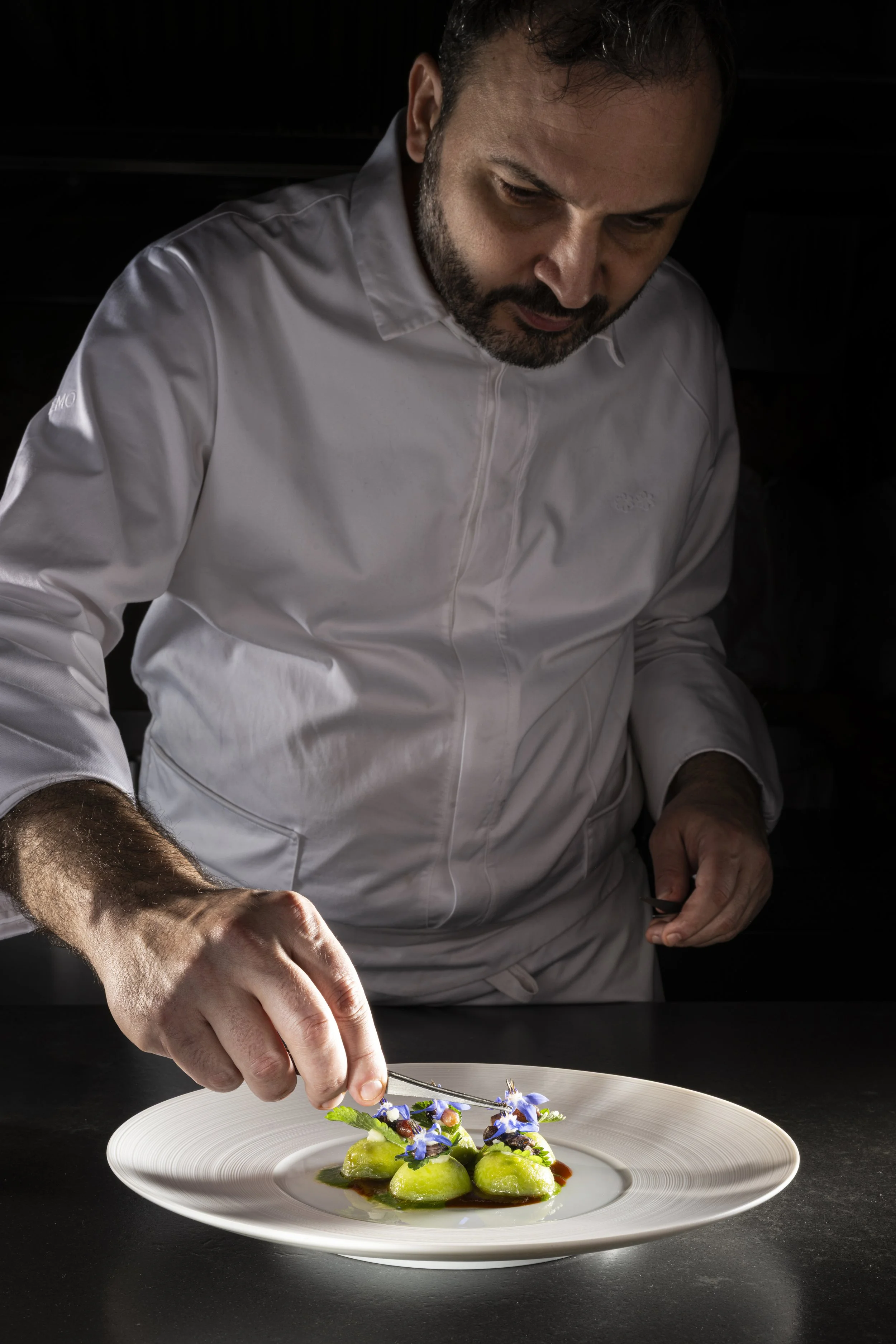
Dishes like almond ravioli with sea elements or scampi paired with hare feel almost like dialogues between land and sea. Is contrast your primary language?
In every dish, we try to combine our two very different personalities. We love playing with these differences and contrasts, using ingredients that at first glance might seem to belong to different and contradictory worlds, but then, when prepared in a certain way, actually work. The key to our cuisine is balance.
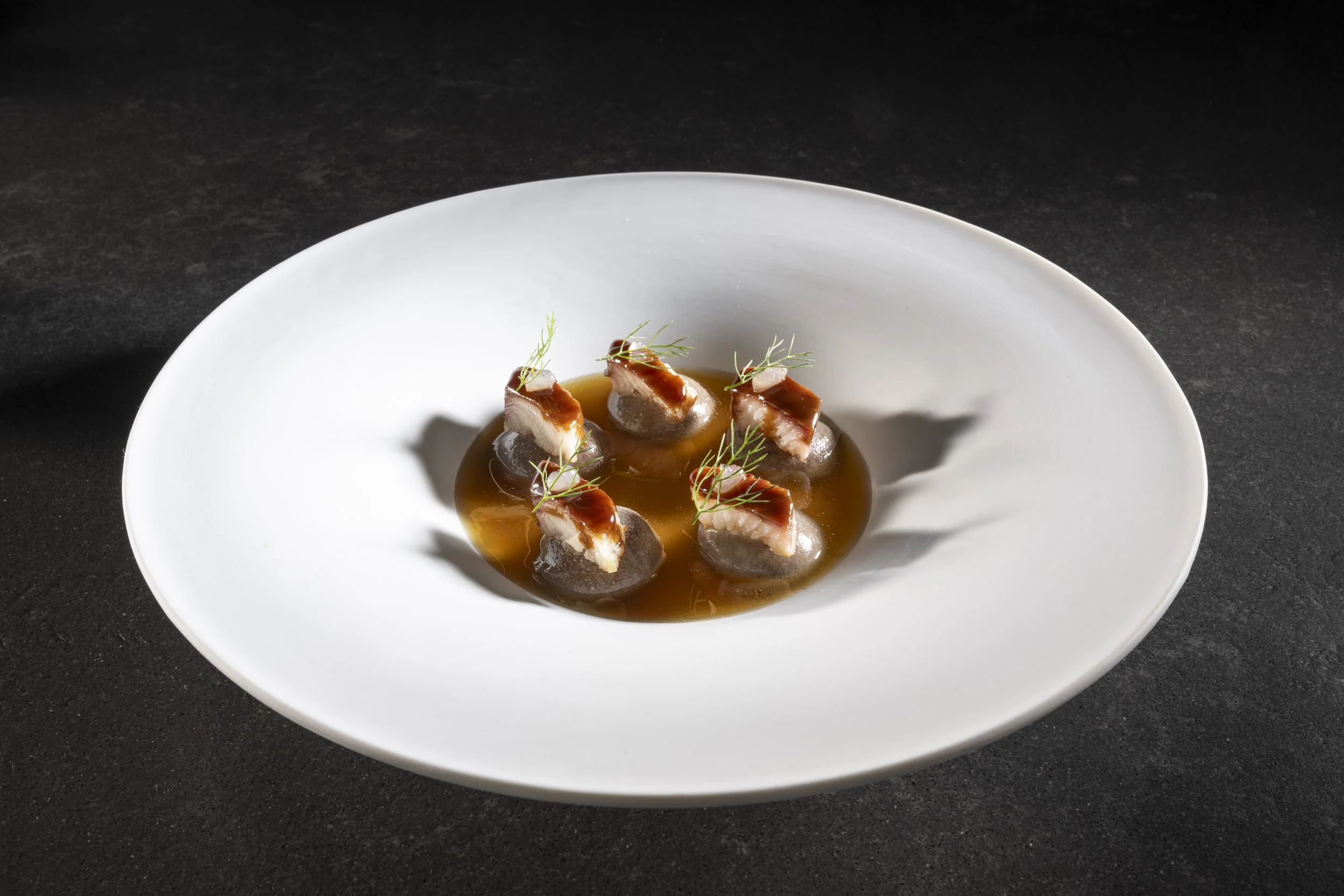
For example, let's take two ingredients like tripe and lobster. Two elements that are very distant, belonging to different worlds. Our challenge is to find the common ground between them and combine them with other elements to create a balanced flavor. Finding balance between two ingredients that are polar opposites is a reflection of who we are. Two very different personalities, with opposing characteristics, but who find their balance in cooking. On the menu, almost every dish embodies this characteristic.
When you create a dish, do you start from an ingredient, a technique, or an emotion you want to evoke?
The process of creating a dish begins with an ingredient and the inspiration it conveys to each of us. The ideas for our dishes arise, on the one hand, through direct contact with the ingredients using our five senses, but also from the stimuli we receive from the places we frequent, the city we live in, and our interests: design, fashion, and perfumes for Mario, and music for Remo. We try to consider all the ideas that come to mind while walking in the center of Milan, eating at restaurants around the world, visiting a museum, etc.
With only 28 seats and chefs directly engaging with guests, the meal becomes almost theatrical. Do you see yourselves as performers as much as cooks?
In one way, a chef in front of a client is always a performer… but on the other, we are Italians : our mamas have always cooked in front of us. Was that theater? No… it was “family”, or meant being “closer,” This is ultimately what we mean with the name VERSO.
How do you maintain spontaneity in such a controlled, high-level environment?
By being highly dedicated to the satisfaction of our clients. If you always have the client in mind, you must be spontaneous.
Receiving two Michelin stars within 10 months is extraordinary. Did it validate your vision or increase the pressure to constantly exceed it?
Definitely it was a honor and a satisfaction. But the minute after they give them to you, you start thinking of how to keep them and maybe increase them.It’s normal. A never ending story.
You aim to make fine dining more human and less ritualized. What do you think the next generation of haute cuisine will reject?
I cannot speak for them… but for sure less test her, less frills, more taste and less “ composition “ in the dish. A more direct relationship with the taste of their clients.
Outside the kitchen, what inspires you visually or emotionally: art, fashion, architecture?
As we said befiore design, fashion and fragrances for Mario and music for Remo.
If you had to describe each other in one ingredient, what would it be and why?
For Remo, the ingredient that best represents him is game. Because it's an ingredient that requires rigor and precision to be prepared and reflects his personality.
Caviar is the ingredient that inspires Mario. He loves to use it not for show-off, but for its ability to create subtle contrasts of flavor and texture. An elegant ingredient, capable of creating contracts which reflects Mario's personality.