
IN CONVERSATION WITH RIEKO
Interview by Samo Šajn
RIEKO is a Japanese experimental composer and multidisciplinary artist working across music, performance, and visual art. A graduate of the Royal College of Art and a former resident of Tate Modern and Tate Britain. Her new single “Fruit” introduces her upcoming EP Zakuro, blending mythology with layered sound. The art film serving as the music video for “Fruit” will premiere in London at the Institute of Contemporary Arts on 7 March.
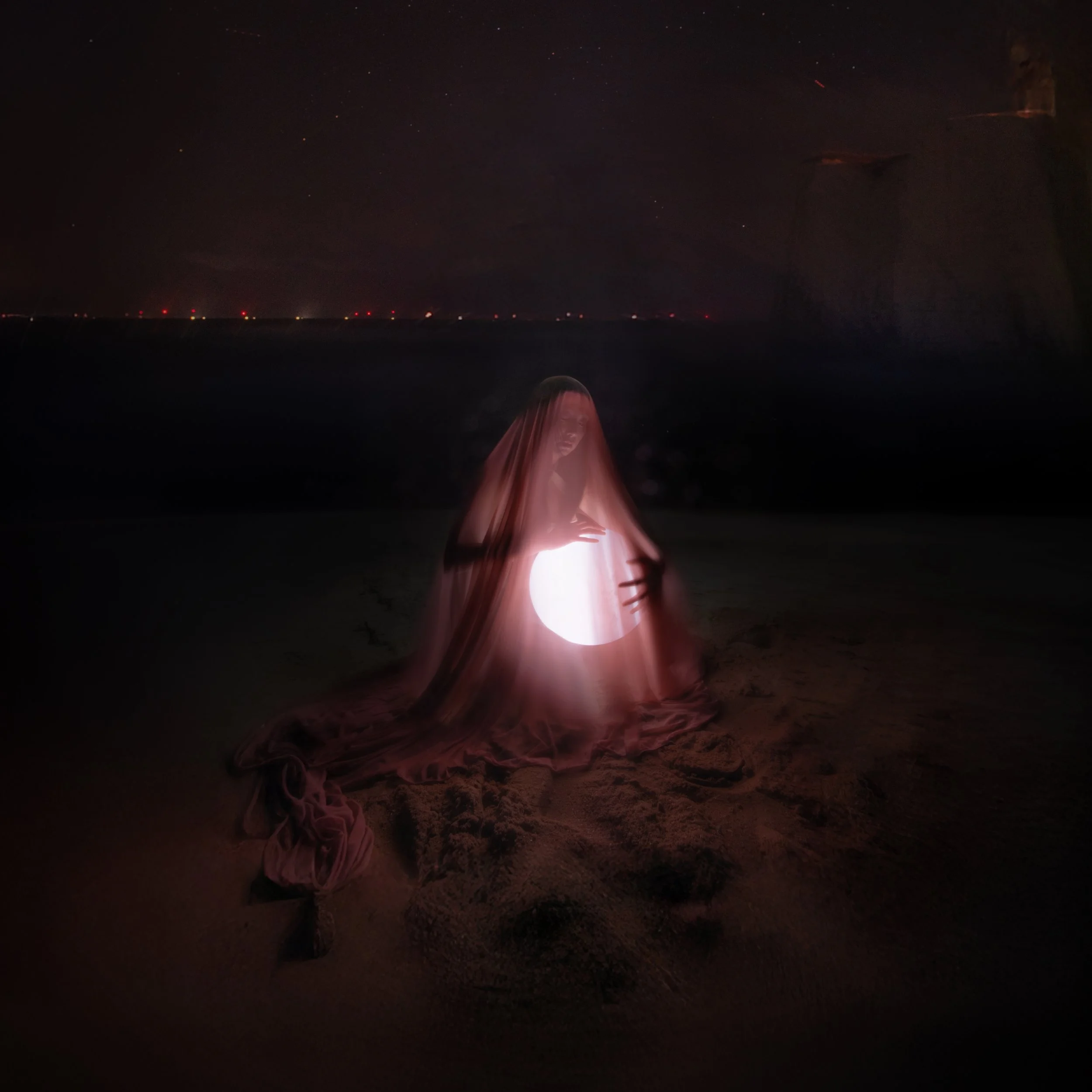
You work across music, performance, and visual art. How do these different mediums influence each other in your practice, and how do you decide where an idea belongs?
My artistry is a spiritual dance between observing the world and trusting my intuition. I do not define myself by medium, because my gift has always been fluid and oracular.
As I returned to my musical roots through my work as a visual artist, it felt natural to combine performance, film, fashion, and movement in the spectral way I experience reality. I translate a specific feeling into each medium, building mythopoetic worlds through symbols, embodiment, and ritual.
In songwriting, I often hear fragments of melodies and lyrics in dreams, which I crystallise through improvisation and automatic writing. When composing, I simultaneously see visual vignettes in my mind, parallel lives where I explore alter egos. The embodiment, scenery, and cultural placement are all central to my process.
Since playing violin from a young age, I have heard orchestral compositions in my head like radio signals. Over the past few years I have refined my production skills to realise them, and Zakuro, meaning “pomegranate” in Japanese, is the first complete expression of this way of working.
Your new single Fruit has a very striking sound and story. What inspired you to create this piece, and what does it represent for you personally?
“Fruit” marks the moment of transformation within the narrative of Zakuro. The EP is inspired by the Buddhist tale of Kishibojin, a child-consuming demon who becomes a protector after experiencing the grief of losing her own child. In Japan she is often depicted holding a pomegranate as a symbol of life’s sanctity.
I am drawn to mythology as a way of reinterpreting culturally specific stories in a universal register. To embody a deity is to embody a heightened state of human consciousness. I felt aligned with Kishibojin during a period of global reckoning, socially, politically, and ecologically.
“Fruit” moves from depletion toward a vulnerable declaration, “You need me,” acknowledging our intrinsic interconnection. It reflects a desire for reciprocal, sovereign love beyond systems of oppression and extraction.
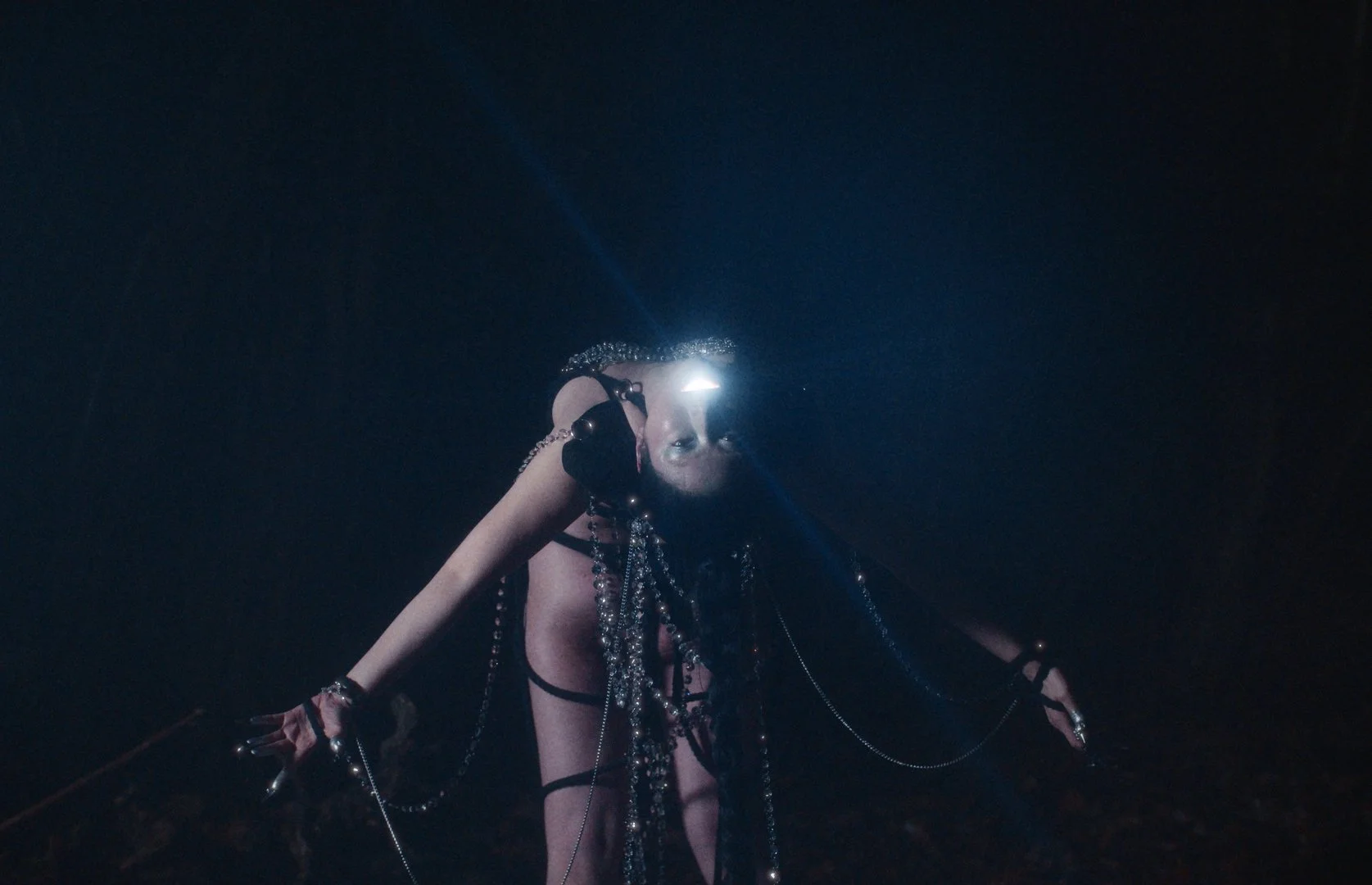
Fruit is the first release from your upcoming EP Zakuro. How does this single set the tone for the rest of the record?
“Fruit” acts as the compositional climax of the EP and introduces sonic threads that unfold across all four tracks. Sparse cello lines and ghostly violins foreshadow fuller orchestral swells, while textured beats gradually evolve into a more left-field club energy toward the end of the record.
Lyrically, the fruit becomes a metaphor for radical hope in the face of collapse, planting seeds for futures we may never see.
I worked closely with Mariano Sibilia, also known as Yraki. Our collaboration began through spontaneous voice notes and poetic descriptions of textures. We recorded vocals, instrumentals, and even the sound of biting into fruit, slowly sculpting each track together. He also mentored me in strengthening my production skills and trusting my artistic instincts.
The music video for Fruit is visually stunning and layered with mythology. Can you share how the concept came together and what story you wanted to tell?
I began writing “Fruit” while recording my debut EP Regenesis and was already sketching visual storyboards of Kishibojin. These images were minimal but symbolic, red pigment across eyelids, white light spilling from parted lips, a long braid of hair.
Over time, those early visions evolved with my collaborator Jesse May Fisher. The film ultimately became a reconciliation between the monstrous and the divine, an attempt to integrate the shadow and light that coexist within all of us.
You collaborated closely with director Jesse May Fisher on the video. What was that process like, and how did you combine your creative visions?
Jesse and I met at the Royal College of Art during the pandemic and have collaborated ever since. Even while writing the song, I knew I wanted her involved in shaping its visual world.
We drew from our respective Japanese and Irish Pagan lineages through a contemporary lens, shaped by our shared attraction to darker, ethereal aesthetics. Rather than leaning into literal pomegranate imagery, we focused on the internal transformation from demon to deity.
The braid being pulled from my throat became a central symbol, echoing an ouroboros and suggesting release and rebirth. It was important that the transformation felt embodied rather than illustrative.
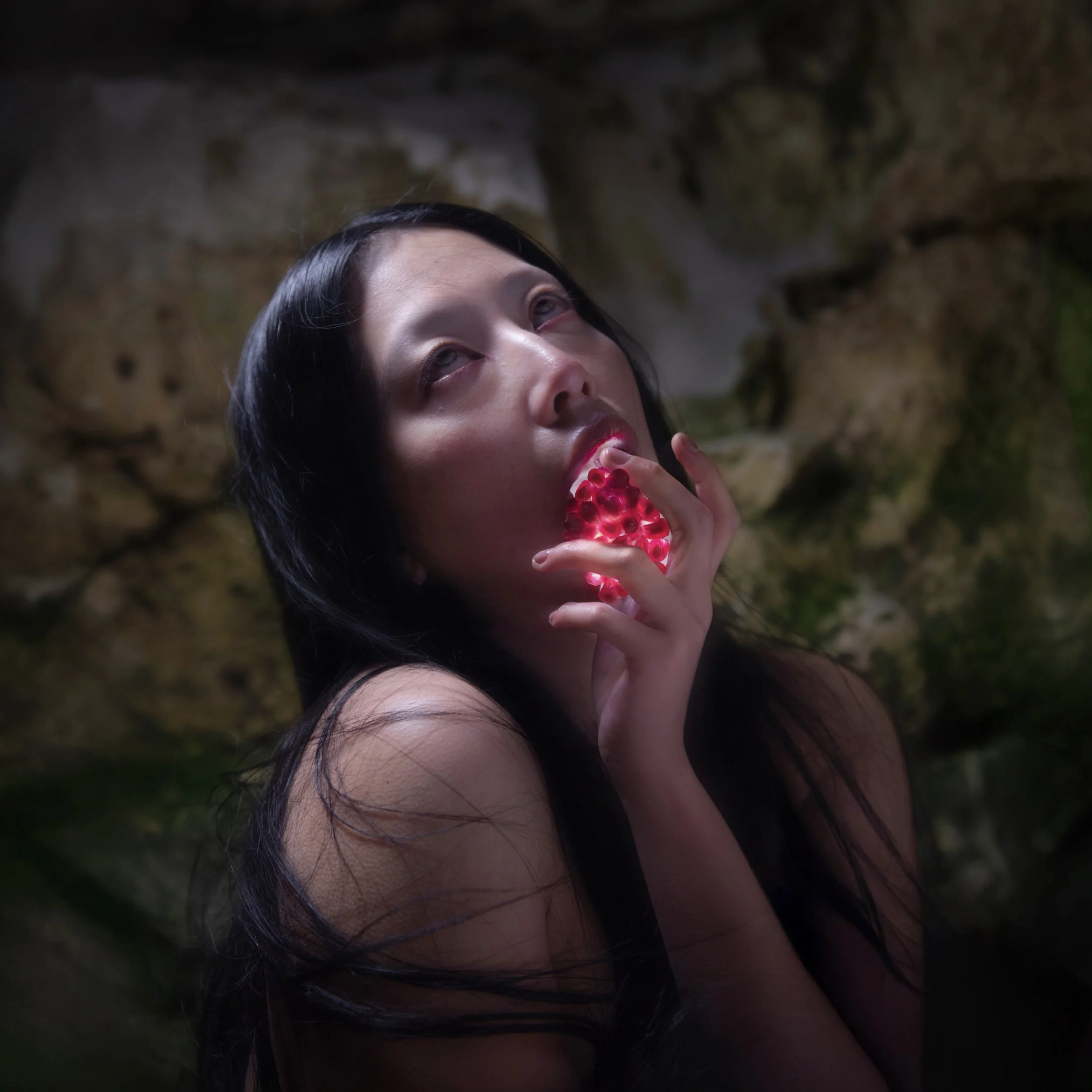
Collaboration seems central to your work, from choreography to styling to your own platform, Diasporas Now. How do collaborations shape your creative decisions?
I choose collaborators intuitively, in much the same way I curate through Diasporas Now, the live art platform I co-founded. Shared sensibilities and aligned timing are essential.
For “Fruit,” choreographer Lewis Walker helped expand my movement language into gestures of ritual and possession. Styling also played a crucial role. Suzie Walsh created sculptural garments that physically shaped the character, complemented by otherworldly make-up from Dasha Taivas and Desi Lazarova.
Through Diasporas Now, I also work closely with my co-founder Lulu Wang, building the platform’s infrastructure while continuing to perform together. Community and authorship are deeply intertwined in my practice.
Looking at this new release and the upcoming EP, what experience or feeling do you hope audiences take away when they see and hear your work?
I hope the work holds people in tender resilience, reminding us that compassionate transformation remains possible even in uncertain times.
“Fruit” is released on all platforms on 13 March via Diasporas Now.
Photo credits:
Photography: Lucy Feng
Creative direction: RIEKO, Lucy Feng, HYDRA
Talent: RIEKO
Wearable artefacts: HYDRA
HMUA: Natasha Lawes
Photography and production assistant: Nadia Khivrych
“Fruit” Video credits:
Director: Jesse May Fisher
Creative directors: RIEKO, Jesse May Fisher
Producers: Jamila Hardy, Ynez Myers for Agile Films
1st AD: Gav Mukerji
Runner: Meysoun Khan
DOP: Adam Barnett
1st AC: Danny Strasser
Camera trainee: Jessica Meta
Steadicam op: Emil Vidov
Gaffer: Ian Blackburn
Spark: Jordan White
Stylist: Suzie Walsh
HMUA: Dasha Taivas
Nail artist: Desi Lazarova
Movement director: Lewis Walker
Editor: Amy Dang for Avenues
Colourist: Sharon Chung for Wash
