
IN CONVERSATION WITH SEBASTIAN AMORUSO
interview by JANA LETONJA
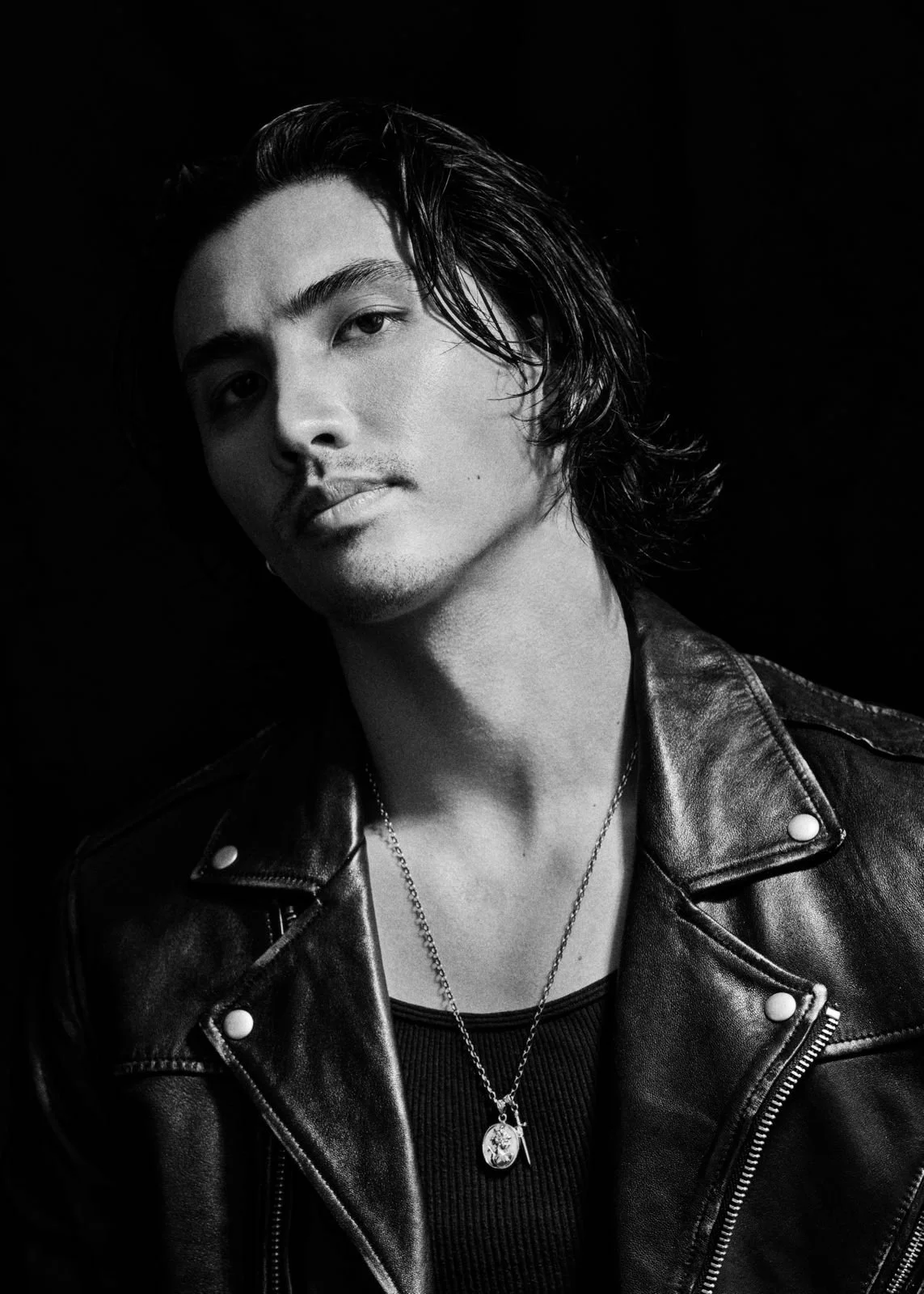
Rising actor Sebastian Amoruso steps into a defining moment with Season 2 of Avatar: The Last Airbender, which premiered on 25th June, where he portrays Jet, the complex and polarising leader of the Freedom Fighters. With a background spanning stunt work, screen acting, and theatre, including productions like Heathers: The Musical, Sebastian brings both physical intensity and emotional nuance to the role. As anticipation builds for the new season, his performance signals the arrival of a talent unafraid to explore the tension between heroism and extremity.
What drew you to the role of Jet in Avatar: The Last Airbender?
I grew up a fan of the series. It holds a special place for me because it was one of the rare things on television that let young people process grief, family trauma, and abuse in a place where they didn’t feel alone, whether that’s Zuko carrying his duty to the Fire Nation as a scar etched permanently on his face, or Jet carrying the burden of stopping children from being terrorized the way he was.
So, what drew me to Jet was the contradiction. He’s charismatic, brave, wounded, and genuinely trying to protect people, and his pain has hardened into something dangerous. He’s not a hero or a villain to me. He’s a kid the Fire Nation took everything from, who then gathers other war-wrecked children, gives them a family, and tries to protect them the only way the world ever taught him. In a less broken world, that might have made him a hero.
What I care about most is keeping that true. Often in life you aren’t handed perfect options. Jet has to make the best choice available to him, and that means every step of his journey can be misunderstood. He believed he was doing right for himself and the people he loved, even when it didn’t look that way. Most of us know that feeling, choosing between two highly consequential things and living with it. Characters like Jet force us into a more nuanced way of judging people and their actions. In a world governed by superpowers, of course, power is unequally distributed, and of course the people not born into it have to make decisions that aren’t morally or socially clean but are still, somehow, the right ones. Whether Jet got it right in season two is up for debate, but I’ve agonised over decisions like that in my own life, and those are the moments that show who you are underneath. What you value. When you have to sacrifice your own self-preservation, like he does, to make the choice that aligns with who you want to become. Understanding him isn’t absolving him. It’s refusing to flatten him.
Jet is a fan-favourite but also a morally complex character. How did you approach that duality?
I tried to approach him without judging him. The trap with a character like Jet is playing the cool rebel or the angry extremist; neither of those alone is human enough. I wanted the wound underneath the ideology. His heart is in the right place; his pain is driving the vehicle. I played him with compassion, but not permission.
He makes a lot of mistakes, but mistakes that make sense given what he had to survive. I didn’t want to soften his decisions or steer him toward some cleaner ideology; I wanted to ground them in his reality. He pushes people away because it’s the only way he knows to keep them safe. He enacts violence to prevent violence on the people he loves most. That depth is the hard part, as an actor and as a person, because we’re constantly fed black-and-white narratives, especially in children’s media, probably because it’s easier for parents and for social cohesion. But the real world isn’t cut and dry, and as a young man, Jet had to discover that in a way that galvanised him toward the ultimate sacrifice. He genuinely wants to do good, the only power he has is his own competence in combat.
As I’ve gotten older, I have far more empathy for characters like him, and I find them more compelling to play and to watch. There are endless books on morality and ethics, but the true measure of a person at the end of their life is the effect they had on the people around them. By that measure, a character as morally complex as Jet can still leave the world a hero. He doesn’t have to be understood to be one, though that’s the great tragedy of the world he’s placed in.
What aspects of his personality did you find most challenging to embody?
Balancing his charm with his volatility. Jet has to be magnetic enough that people would follow him and dangerous enough that you understand why his choices become frightening, in the same moment. I never wanted the charm to read as fake, because Jet isn’t pretending to care. He really does. The hard part was letting the audience feel the sincerity and the danger together. The key was never playing him as someone who thinks he’s dangerous. He thinks he’s right. That’s much more frightening.
The other hard part was his loyalty, specifically the way he’s willing to abandon people. That’s the opposite of me. It would take an enormous, functionally dangerous reason for me to leave my family or someone I love. There are people I’d move mountains for, take the slings and arrows of the world to protect, so I had to justify Jet’s actions against my own beliefs. It had to become real enough to me that he was forced to leave his friends for the right reasons, even when it wasn’t shown that way to the audience.
How do you think audiences respond to his choices this season?
People will have strong feelings, which is exactly the point. Some will understand him, some will be frustrated by him, some will feel both at once. He forces a conversation about what happens when pain becomes political, or when survival becomes an excuse to dehumanise someone else. Even when people disagree with him, my hope is they still feel the humanity underneath the choice.
Honestly, I think until the monologue at the end of episode five, you’re meant to be frustrated with him, and confused by what happened to him. That was intentional, a way to subvert the expectations we all carry for a character we know so well, and to add depth. It was my own first experience of him reading the scripts. He doesn’t get the original’s final tragic rebel stand, turned into a kind of Manchurian candidate by the Dai Li, dying against the exact system he opposed, but I think his final moments in our version are stronger, and in some ways more heroic. By the end, you know who Jet is. You understand his pain, his grief, his fight, his love for other people. I think audiences will be frustrated by how the world and certain people treated him, but that’s what it means to translate a broken, unjust world of superpowers and abused power into something real. That frustration should teach you something about the world we actually live in, more than the cartoon could.
Your background as a stunt performer adds a unique layer. How did that inform your performance?
Action is never just action. How someone fights tells you who they are. Jet moves like someone who grew up surviving, not training formally.
One thing I deliberately changed between the original and our version was giving his fighting a deeper truth to his Earth Kingdom origin. In the original, he’s a finesse fighter, agile first, swordsman second, precise and capable. I loved that, but after season one I wanted his fighting to symbolise his relationship to power. I wanted him physically stronger than the firebenders he had to fight, because that strength was one of his only weapons. So I traded some of the cunning for real strength, physical, mental, emotional, because I think it did justice to his journey. He’s been through serious trauma, and rather than move through the world calloused, it felt more honest to let that trauma actually affect him and build real strength out of it. My hope was to balance those two sides into a more grounded, more resonant version of him, for the fans who loved him and the ones who didn’t.
I trained boxing hard for two years before season two, and it changed how I understood violence from the inside. Trauma lives in the body, and his carries the same urgency and survival instinct as his mind. The dual hook swords were their own way in, a weapon built to kill, and he carries two. He didn’t get the luxury of a safer tool.
For some people, stunts are an excuse for reckless behaviour and a way to monetise it. For me, stunt work has always been a proof of becoming. To execute a stunt, you have to put real faith in yourself and the people around you. You’re in genuine danger, and you have to believe you’ll come out the other side, and that takes real motivation. Through the stunt work on Avatar, I proved to myself that I cared about the story and the character enough to push through a broken leg, a concussion, and a lot of other bruises for the sake of being truthful to his experience. Jet would expect nothing less from someone representing him, and I think we have a responsibility, with a mythos this visible, to fully bring ourselves to the work. I also learned a lot about protecting my instrument in the process. I came out of it with a physical performance I’m as proud of as my work in ballet, dance, theatre, Muay Thai, boxing, and my other combat disciplines.
What was it like stepping into such an established and beloved universe?
Intimidating, but special. Avatar meant so much to me growing up, it was one of the only places outsiders got found-family and real, difficult themes, and I was one of those kids, so I felt a responsibility to honour what fans already love while keeping the character alive in this version. You can’t approach a world like that casually. But once you’re on set, you have to release the pressure and focus on the truth of the scene, moment to moment.
There’s a specific difficulty in joining an environment that’s already so lived-in. To an extent, people on the production expected me to be Jet, because that was the only lens they had for me, and that was hard to navigate while I was also struggling as an actor to justify his actions against my own moral centre. Different projects demand different things, and this one taught me patience and self-focus so I wouldn’t derail my own performance. Being misunderstood as a person can be destructive, especially if you grew up not being understood or being misrepresented to the people around you. Stepping into Jet, I felt that in a big way, and it showed me the real effect a character can have on the actor playing him. I usually work very methodically, and this taught me about isolation, not as punishment, but as a form of self-acknowledgement when the world around you doesn’t see you. I was lucky to have a wonderful crew, removed from that world, who treated me as the actor I am rather than the character I played, which is part of the curse of playing a villain or an antihero. That’s part of the journey for me. It taught me to have faith in the process and in my own abilities, and to accept that not every environment will be ideal for my goals. I can be rigid in what I expect of myself, but I also need empathy and respect for the situation I’ve been placed in.
You’ve worked across television, film, and theatre. How do those mediums influence each other in your process?
What I love about film is that your experience of the character gets to be real. In theatre you’re always aware of the audience, people rooting for you or hating you, living your triumphs and defeats with you. On camera, all you have is a crew and a lens. That lets you strip away the social instinct to be liked, to be fed energy by the room, and just live inside the character and the frame. It’s a meditative kind of work, and I’m almost religious about it.
Some of the most intense moments of my life have happened on camera. Both of them, as it turns out, death scenes. In I Know What You Did Last Summer, my final scene as Johnny had me dragging myself across a waxed gym floor. I threw up after we finished. A full day of screaming, and being screamed at by my brilliant director to get me there, had my adrenaline so high I thought I’d faint.
My sacrifice as Jet was similar. I let myself fully believe it was the end, that a specific part of me was dying with him, my dreams, my innocence, a piece of my identity. I accepted the fate and acted with total abandon. Between the wind machines and the scale of the production, it’s one of the most memorable things I’ve ever done, and something I needed spiritually as much as artistically. Those extreme moments are always a fight between two truths. It has to mean something to the audience, and it has to mean something to you. You don’t always get to have both, but you hope the biggest moments find that middle ground. I found it this season in a way I couldn’t have replicated knowing I had to do it six more times that week. Film asks for a deeper level of commitment, and it has me in a chokehold. Maybe when I start to miss the revelry and the final bows, I’ll go back to the theatre.
Theatre, for its part, gave me discipline and taught me to sustain energy through a whole arc, the whole body, the whole room, no editing to hide behind. I did a play called 410[GONE] where I had to take my own life on stage, eight shows a week, for four months. That teaches you something brutal about commitment and about protecting yourself. It taught me artistic hygiene, that stepping into someone else bleeds into your life whether you like it or not, and you have to consciously decide what you take from a character and what you leave behind. That lesson came back around hard on Jet. Each medium sharpens a different muscle. Theatre asks for the whole room, screen asks for the smallest true thing. What I want is to bring them together.
As an actor of Chinese, Japanese, and Italian descent, how do you approach representation in your work?
With care, but also with normalcy. Representation matters deeply to me, but I don’t want identity to become a slogan or a limitation. I want to play full human beings — desire, flaws, humour, darkness, romance, contradiction, power.
Being Asian was always part of my life, but the industry made me aware of it in a way I never had been. I grew up in Washington, D.C. I’m as American as it gets, and I still hit moments where that gets treated as conditional because of how I look. Being mixed makes you especially aware of how people try to categorise you from the outside, and how flattening that is. Asian people aren’t a monolith. Asian Americans aren’t. Mixed people least of all. For Asian and mixed men especially, the boxes have always been narrow — sidekick, villain, martial artist, comic relief, someone whose inner life is a footnote. My interest is in expanding what someone like me is allowed to be on screen.
This is actually where I’ve fallen in love with fantasy, as a genre and as an idea. Fantasy has an intimate relationship with the imagination, and as someone who’s been limited by a category, it’s a place where I get to be unburdened by the label of Asian or Japanese American. You can simply exist in that world, and it becomes the audience’s job to fill in the blanks rather than find reasons to justify why an actor who happens to be a minority is “allowed” to inhabit a character. I believe, maybe naively, that fantasy will save me as an actor and a person of color, that it can let people experience what I actually have to offer as an artist, instead of interpreting me through the constraint of a demographic or reading me as symbolic inclusion. I hope there’s more of that ahead, because the cumulative disadvantage of not getting to participate in and refine the fundamental experiences of this craft is real, and it kneecaps actors of color before they ever get going. Growing up, Avatar was one of the only places I saw that trusted kids like me with real emotional weight, and it stayed with me. So representation, to me, isn’t perfection. It’s dimension. If kids who look like me get treated with a little more imagination and kindness because someone in my position did the work honestly, that’s the whole point.
As your career continues to evolve, what kinds of roles are you most drawn to?
Characters with emotional weight and moral tension, people who live between danger and vulnerability, capable of violence or intensity but with a heart the audience can still reach. That’s the register I’m most alive in. Jet lives there, most of the characters I’m drawn to do.
I love action, fantasy, romance, noir, and psychologically driven drama, and especially work that lets those overlap, because that’s where my own aesthetic lives. Cinematic and physical, but still intimate and emotionally specific. I want to keep doing my own physical work, because the body is where so much of a character’s truth lives, but I never want the physicality to be the whole point. The reason it matters is what’s underneath it.
Longer term, I want to carry the emotional centre of a story, not just its intensity. The dream is a part that gets to be dangerous and tender in the same breath, a romantic lead who’s also a little haunted, an antihero you can’t quite let go of. If it’s grounded, morally complicated, and asks everything of me physically and emotionally, that’s the one I want.
How do you enjoy spending your days off?
I need a mix of movement and quiet. When I’m working, life gets very intense and narrow, so on days off I come back to simpler things.
Right now, I spend a lot of that time in the gym, training. I’m pushing to transform myself for the kind of roles I want to be doing next. Music is another big one. I write and produce under the name DIVINITI, so a lot of my “off” time isn’t really off, it’s just a different kind of making. I’ll play guitar, work on a track, scream into a microphone until my neighbours come hunting for me, chase something poetic until it finally sits right. And then there’s cars and motorcycles. I love building, modifying, and researching them. Every machine has its own personality and history, which is probably why I love them as much as I love storytelling. Honestly, a good drive or a ride resets my brain more than almost anything. It’s the closest thing I have to meditation.
Beyond that, it’s the basics that keep me human. Food, films, sleep, and the people I love. When the work has been asking everything of you, coming back to those simple things is what lets you go do it again.
TEAM CREDITS:
photography EMILY SANDIFER
