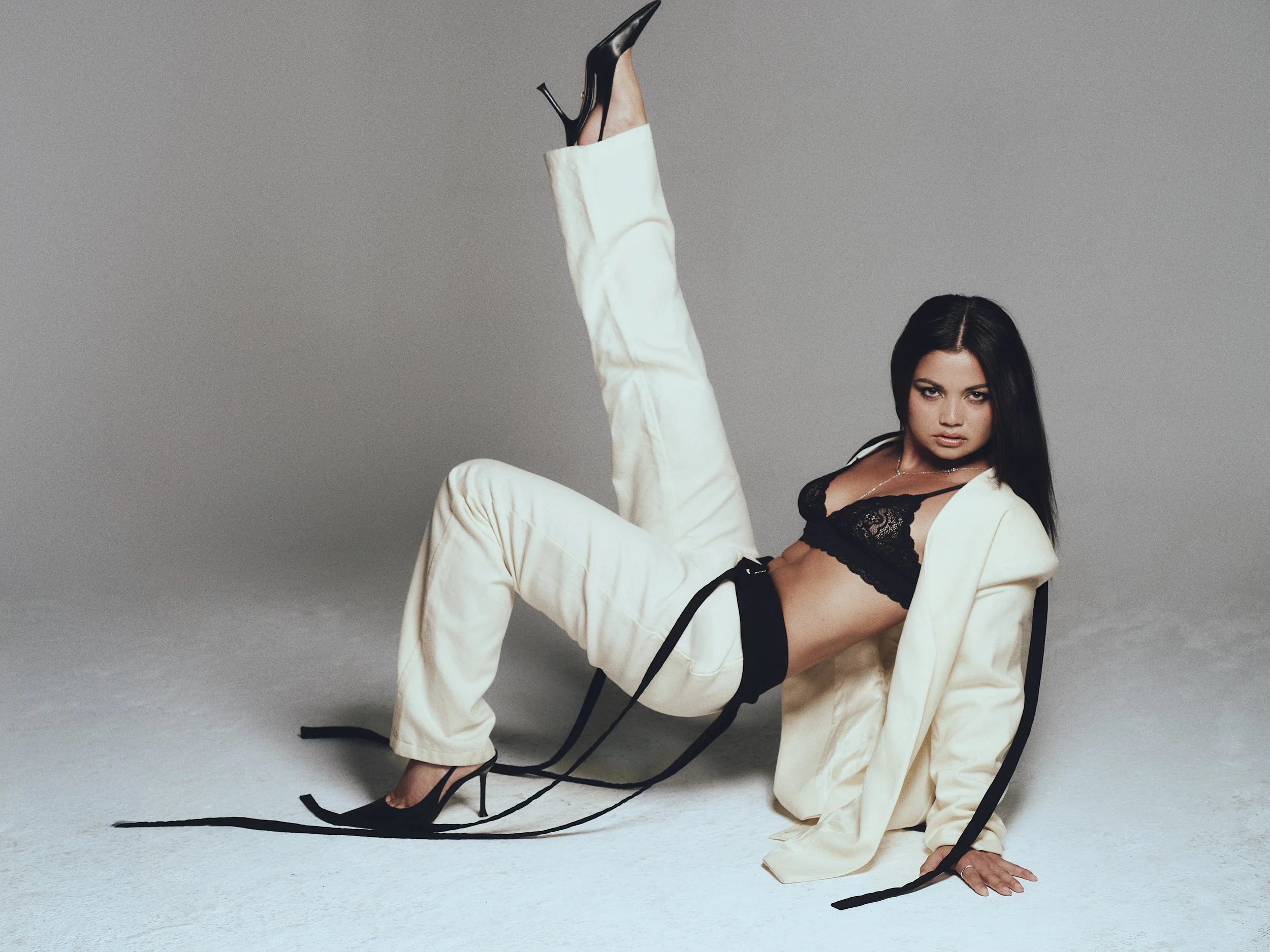
interview by JANA LETONJA
Hawaiian-born actress Siena Agudong is stepping into one of her most anticipated roles yet, starring as Sue Snell, the best friend and storyteller at the center of Mike Flanagan’s reimagining of Carrie for Amazon. The role marks an exciting new chapter for Siena, who has already built a devoted Gen-Z following as Dallas opposite Noah Beck in the hugely successful Sidelined franchise. She currently stars in the Tubi horror-comedy Buzzkill and with Carrie arriving this October and the third and final Sidelined installment following in November 2026, she is entering a defining moment in her young career.
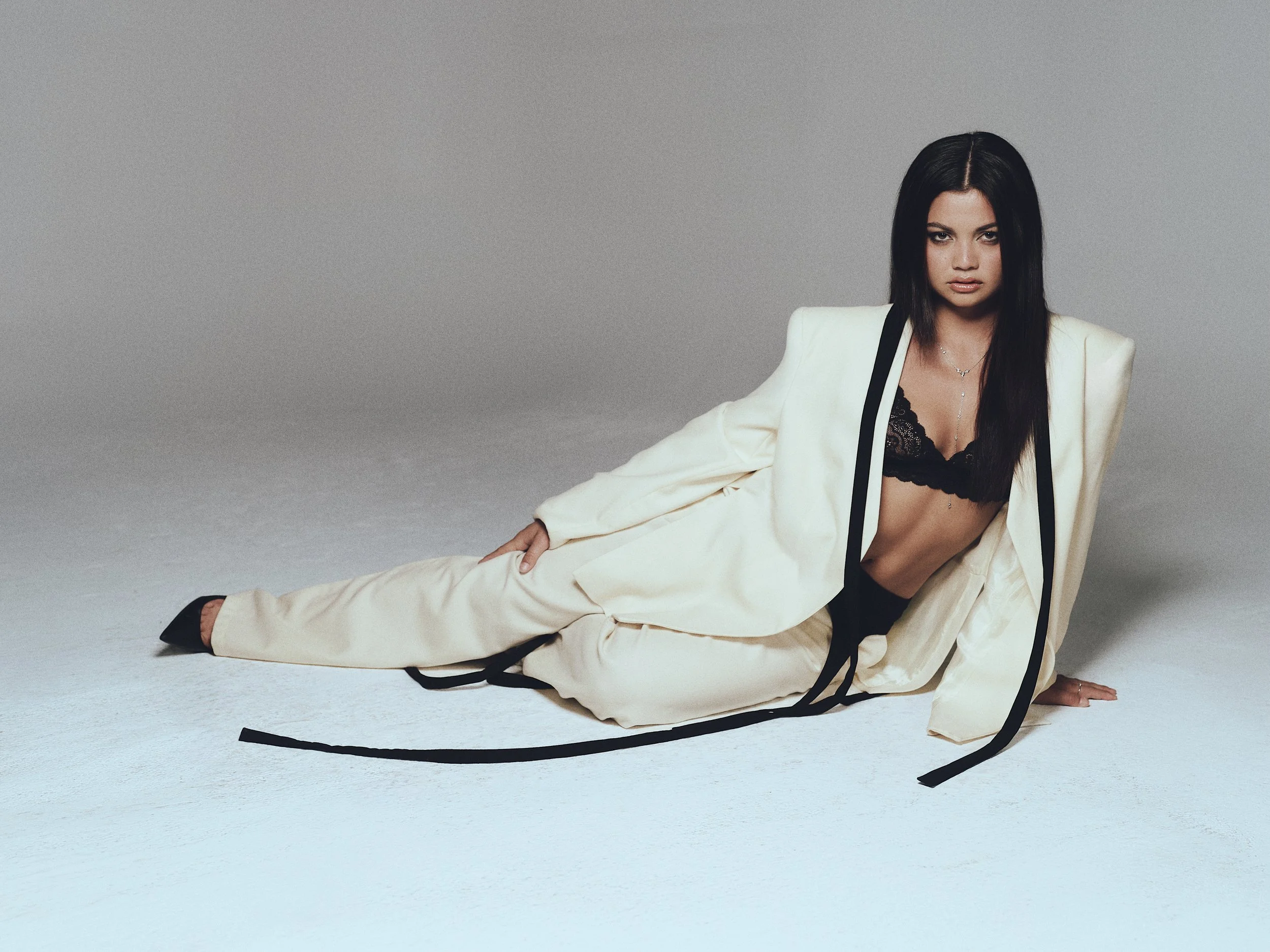
photography by JONNY MARLOW
You were the first actor cast in Mike Flanagan’s Carrie. What do you remember about finding out you had the role, and what did it mean to know you were helping set the tone for his new adaptation?
I was filming Sidelined 3 when my agents called to tell me I was Mike’s choice for Sue Snell. When I first read the audition sides, I remember feeling so connected to Sue in a way that felt different from other auditions. Mike’s writing has that ability to make you feel seen. All that was left for me to do was to surrender to the honesty that I found in the role. The most surreal part was that Mike could see that genuine connection. Knowing that he recognized that authenticity told me everything I needed to know about the tone of the show.
This time, Sue is not only part of the story but also its storyteller. How did that perspective change the way you approached playing her?
At the start, Mike mentioned that Sue was the moral compass of the show, but that didn’t change the way I approached playing her. Any character in this show could’ve told the story, the audience just happens to hear it from Sue’s perspective. I really liked not having an idea of how Sue would feel by episode 8, discovering that with her over the season was exciting to me.
Carrie has been interpreted by several generations of filmmakers and actors. How much did you want to engage with those earlier versions, and how much did you deliberately keep your distance?
Before filming, I hadn’t watched any of the other movie adaptations, but I did keep Stephen's book glued to my side until it literally fell apart. Once we stepped into rehearsal, Mike gave us a safe space to play. He said there is no right or wrong, and in our story, these characters belong to us. It was the most powerful thing he could’ve said on day one and a big reason why I’m so proud of what this ensemble found amongst one another.
Mike Flanagan has such a distinctive approach to horror, often finding something deeply emotional underneath the scares. What surprised you most about working with him?
Working with Mike, I was in awe of his commitment to creating an environment where every department, team member, and artist feels supported and inspired to do their best work. His prep and dedication are unmatched.
Without giving anything away, what feels most contemporary about this reimagining of Carrie?
Our Carrie takes us into a modern-day school setting where social media exists loudly within school halls. In a way, its presence acts as another character in our story. What I love so much about our Carrie is that it holds up a mirror to society. Carrie is a story about kindness versus cruelty. It is more relevant today than it ever has been, especially in a digital age too comfortable with casual cruelty.
The story deals with bullying, belonging, shame, and the sometimes-brutal dynamics of being young. Did playing Sue make you think differently about any of those themes?
Playing Sue sparked a lot of self-reflection. It was an opportunity to ask myself one of the questions Sue faces, “What does it mean to be kind?” Throughout the season, Sue’s world unravels and rebuilds around this principle. It made me think about the type of kindness that asks something of you, and how we’ve lost sight of what that really means in a society that would rather perform kindness than actually practice. In our show, Carrie represents kindness in its purest form. She showed me that there is nothing more powerful. I hope audiences will let their empathy guide them to ask themselves similar questions as they watch the series.
Horror can demand a very different kind of performance from a romantic comedy. What did Carrie ask of you as an actor that you hadn’t been asked to do before?
Carrie made me feel nostalgia for childlike innocence. “We were kids” is a line repeated throughout the series, and I hope that audiences will understand by episode 8, just how much weight that sentiment holds. This series made me feel more vulnerable than ever, reminding me of the preciousness of our younger parts.
Sidelined: The QB & Me developed a huge Gen-Z following. When did you first realize that Dallas and Drayton’s relationship had really connected with audiences?
There were two viral waves that rolled through TikTok after the first film, including the “Not my name quarterback,” trend that made me realize how much audiences connected with the film. There were also groups of friends posting their watch parties when the films would come out. Seeing the movie become an excuse for a girls' night was the most joyful outcome I could’ve imagined.
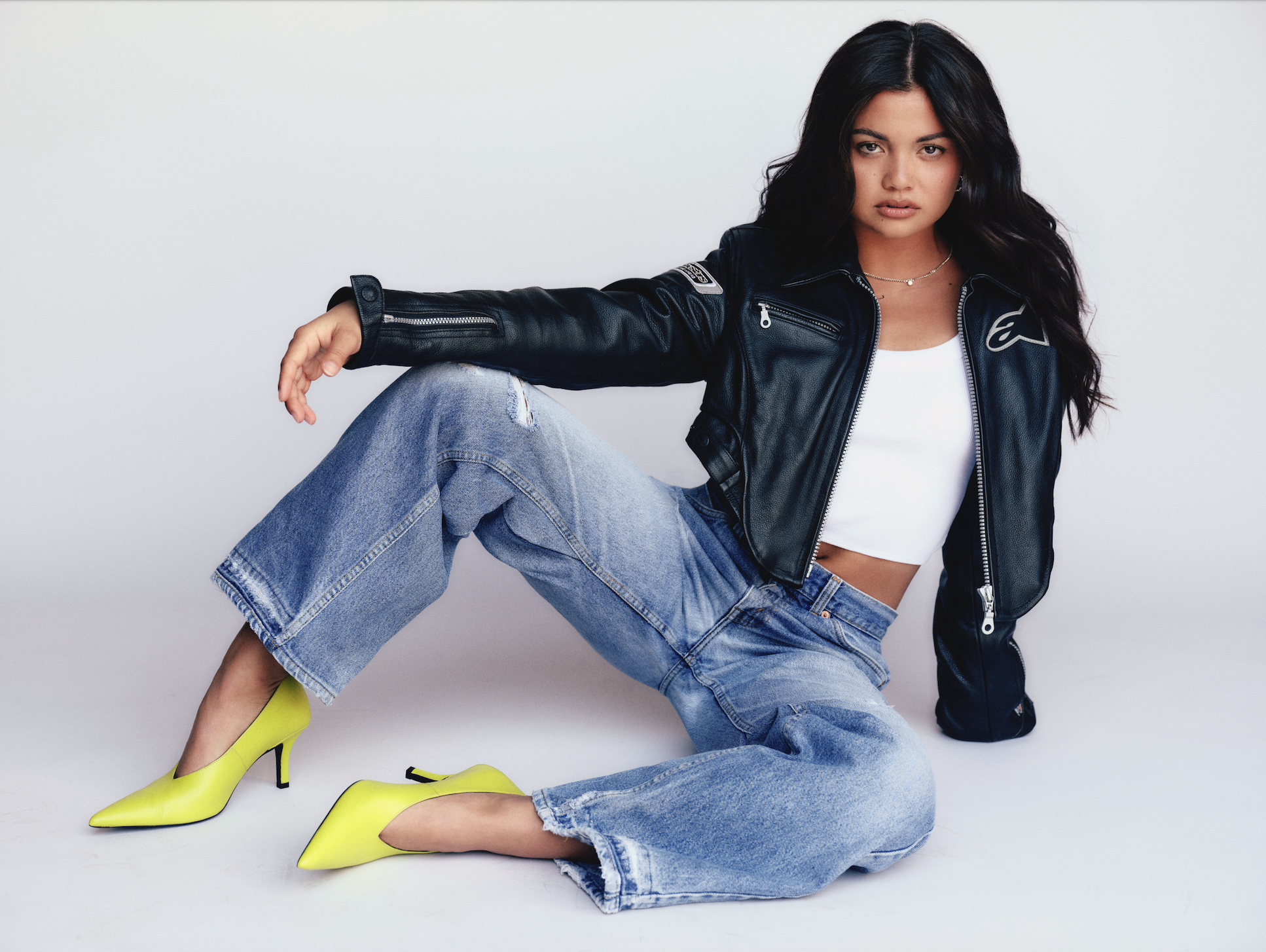
You and Noah Beck have now spent several films building these characters together. How has your creative partnership changed from the first Sidelined to the final installment?
In the first movie, Noah and I shared a lot of movie-firsts. There was so much newness knowing we both hadn’t done a romance before. Having the rare opportunity to do a trilogy meant taking advantage of our own personal and professional growth between movies. As much as it’s Dallas/Drayton, it’s also just Siena/Noah growing up, learning new things, and experiencing life. I hope audiences can feel that.
You recently wrapped the third and final Sidelined movie. What was it like saying goodbye to Dallas after living with her through three films?
An actor I’m working with right now, Joe Taslim, just said something to me the other day, “One of the gifts of this job is that you never lose the people you played on screen. Their lessons are yours and what a blessing that is to know another just as you know yourself.” Dallas has had a huge influence on who I am today. Before the first movie began, I was drawn to Dallas’s confidence as it was something I hadn’t yet found in myself. After having the chance to embody that courage over the last three years, it has made it much easier to find my own. Even though we’re saying goodbye to these characters on screen, I remind myself and anyone who feels similarly inspired, Dallas ain’t going anywhere.
You grew up in Hawai’i and started acting very young. As your career enters this new phase, what parts of where you come from do you feel you carry with you onto every set?
I feel so blessed to carry home with me as I travel between sets. Hawaiʻi teaches you that everyone is “ohana” (family). This is something I hold close to my heart, and I aim to find for every job. It’s a gift to have family on every project. “Aloha” teaches you to walk into every room with wonder and gratitude for the place, the moment, and the people. I travel far from home, and I’m away more often than not nowadays, but as cheesy as it sounds, Hawai'i has taught me how to find home in every room and every person.
You have two very different worlds colliding in your career at the moment: teen romance and one of horror’s most famous stories. What kinds of roles are you hoping people will see you in next?
I’ve had the incredible opportunity to expand into different spaces over the years, and I’ve fallen in love with playing in different genres. Right now, working in the action and stunt world is bringing me so much joy. I grew up on Jackie Chan and Bruce Lee and even did parkour as a kid because I wanted to be the next Ninja Warrior. I am currently on the set of Extraction 3, learning from the best and pinching myself every day. I don’t know where I’m headed after this movie, but I do know that I’ve found my heroes on this set and have plans to hold their lessons close.