
interview by JANA LETONJA
At the intersection of ancient wisdom and contemporary digital culture, SOTCE is redefining what spirituality looks like for a new generation. The New York-based artist, writer and spiritual guide has cultivated a distinctive creative universe where Buddhist philosophy meets internet-native storytelling, blending meditative memes, poetic video diaries and reflections on modern existence. After spending a year at a Buddhist monastery in India, she returned with a new perspective on consciousness, connection and the search for meaning, eventually building a devoted community of hundreds of thousands across social media. Through her signature sotce method, she has transformed spiritual teachings into an intimate, visually compelling language that resonates with a generation navigating an increasingly chaotic digital world. Her debut novel is set for release in September 2027.
Your work exists at a fascinating intersection of Buddhist philosophy, contemporary art and internet culture. How would you describe the world you’ve created through SOTCE to someone encountering it for the first time?
It is just about getting better, trying to know myself better, and not live in doubt or fear. Decide who I am, and who I’m going to be, and what kind of life I want to live.
You spent a year living at a Buddhist monastery in India. What initially led you there, and was there a particular moment during that experience that fundamentally changed your understanding of yourself?
I have spent cumulatively many years now studying and living in monasteries and monastic communities. It is just really good people, the best people, and a really sweet rhythm, and those places are where I feel the safest. Whenever I leave a dharma center, I miss it.
Buddhist philosophy often encourages us to release our attachment to identity and ego, while contemporary culture seems increasingly obsessed with defining and presenting the self. How do you navigate that contradiction?
It is endlessly fascinating to me when things don't make sense or fit together. I don’t think they have to, or are supposed to. I’m not sure they ever do and I love the feeling of that, and especially being at the apex of that feels like I am touching something special.
You’ve developed what you call the sotce method. What are its central principles, and how can someone begin incorporating them into everyday life?
This is a practice or project that I started to address the overwhelming response to my work. So many young people, primarily women, reaching out to me with questions about how they could live well and live better in their own lives. It is a huge honor that they come to me for my perspective, and trust me to sit with their secret thoughts.
There’s a growing fascination with spirituality among younger generations, particularly those who may not identify with traditional religious institutions. Why do you think so many people are searching for alternative ways to find meaning today?
Terence Mckenna has a quote where he predicts how things are going to get weirder and weirder and eventually the contradictions are going to rise to an extent where people have to think about them, and talk about them.
We often associate spiritual growth with becoming calmer, happier or more enlightened. What do you think people misunderstand most about the reality of spiritual practice?
It’s a good metric for progress to check in with your mind whenever you have a moment and see how you are doing and feeling. Are you relaxing more, and opening up more? All roads you take should lead you to that place of quiet understanding. I think what people may gloss over is the amount of diligence and sort of pointless seeming routine toil it takes to really see tangible progress from applying teachings or a practice.
Your work has a very distinctive visual atmosphere: quiet, intimate and almost cinematic. How consciously do you approach aesthetics, and what role does beauty play in communicating spiritual ideas?
I like what I like. I have always had a strong sense of what I liked and what was for me since I was very young.
In a world where everything seems to be documented and shared, do you believe it’s still possible to experience something entirely for ourselves, without the impulse to turn it into content?
Yes, definitely, but I also think we do not go through life alone in any way. Every thought, word and action connects to every living being we come in contact with.
Your debut novel, releasing in September 2027, marks an exciting expansion of your creative practice. What inspired you to move into fiction, and what did the novel allow you to express that your digital work couldn’t?
I felt like I had a story in me and I could not go any further unless I sat down and got it out. It was an experiment of course, and it might sound funny, but I felt like God was with me when I wrote it. Like he was sitting next to me and holding my hand.
Loneliness, anxiety and the pressure to constantly achieve seem to define much of contemporary life. What do you think our generation most urgently needs to unlearn?
I don’t really want to tell people what to unlearn. I suppose I don’t like a lot of contemporary fashion and I dislike laziness. There is so much emphasis on individualism to the extent that everything becomes reiterative gray sludge.
As your creative world continues to expand beyond social media into literature and other forms of expression, what are you most curious about exploring next? And what does a meaningful life look like to you today?
I am happy to be involved in many projects, working with so many interesting dedicated minds and gaining new perspectives and skills. I want to take all actions from a place of feeling safe and generous. I have been focusing on in-person events, like the schools I have been producing in Finland and Estonia. I have a perfume coming out next month. And some day, I would like to paint again.
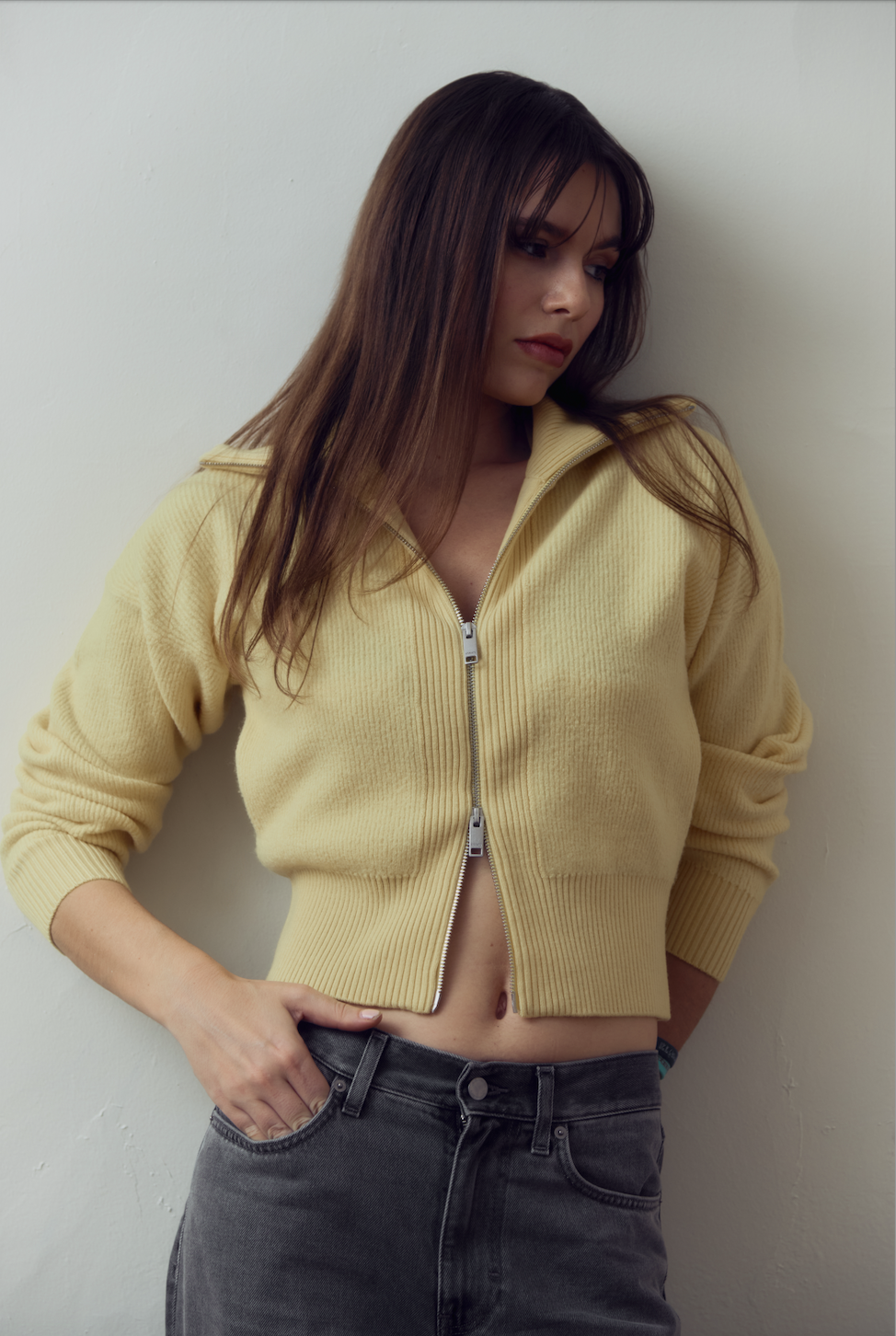
TEAM CREDITS:
creative director and producer NAJID ALI
photography SELWYN TUNGOL
styling AXEL ARIGATO
photography assistant LAERKE ROSE MOELLEGAARD
