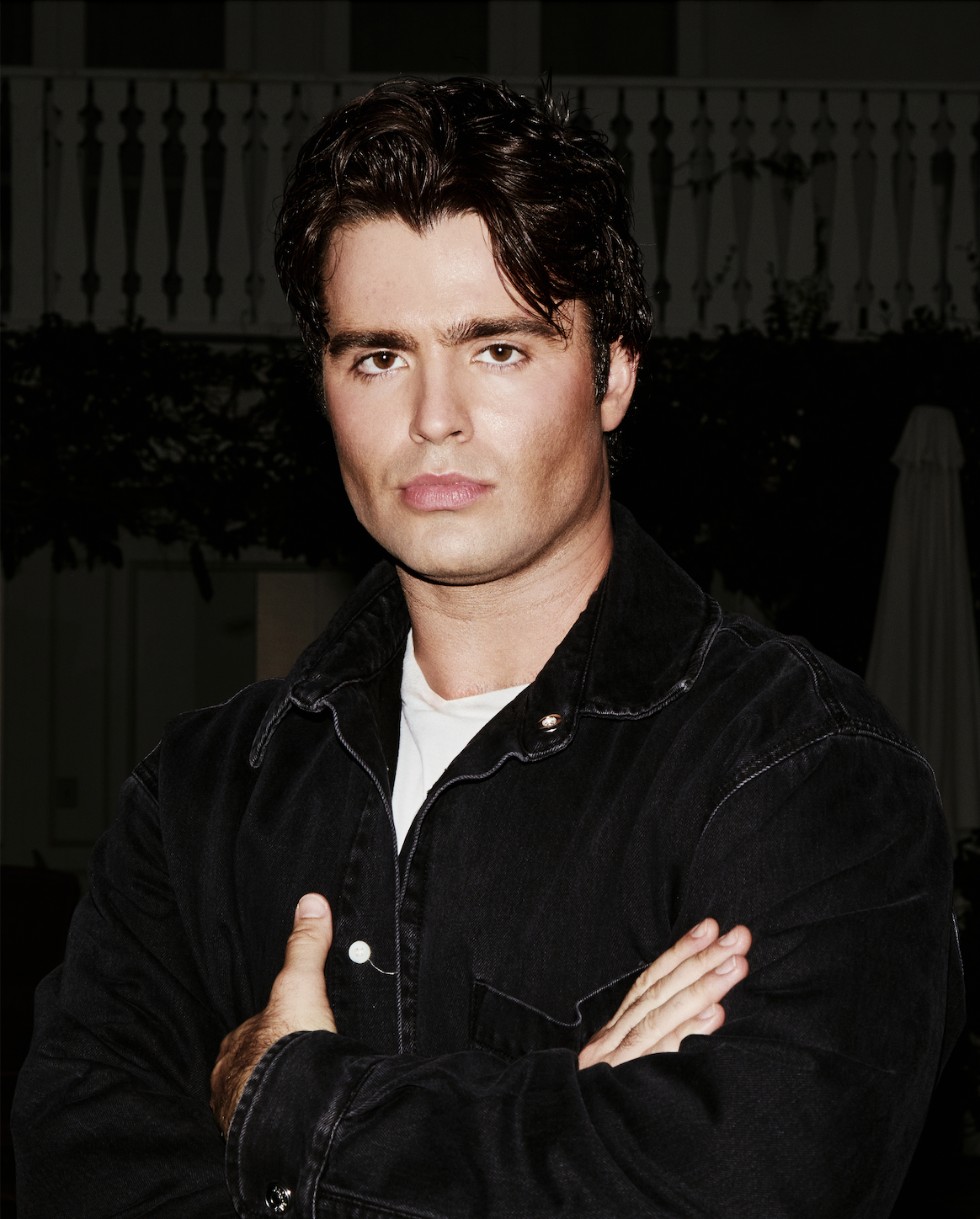
IN CONVERSATION WITH SPENCER BOLDMAN
interview by JANA LETONJA
Actor and executive producer Spencer Boldman enters darker territory with You Can’t Leave, an upcoming supernatural thriller arriving in theaters October 16. He stars as a young man whose search for his missing sister draws him and his friends into a forest from which there appears to be no escape. With the film’s trailer already attracting significant attention ahead of its release, You Can’t Leave also marks an evolution for Spencer behind the camera. We speak with him about embracing darker material, balancing acting with producing, building suspense on set, and entering a new chapter in his career.
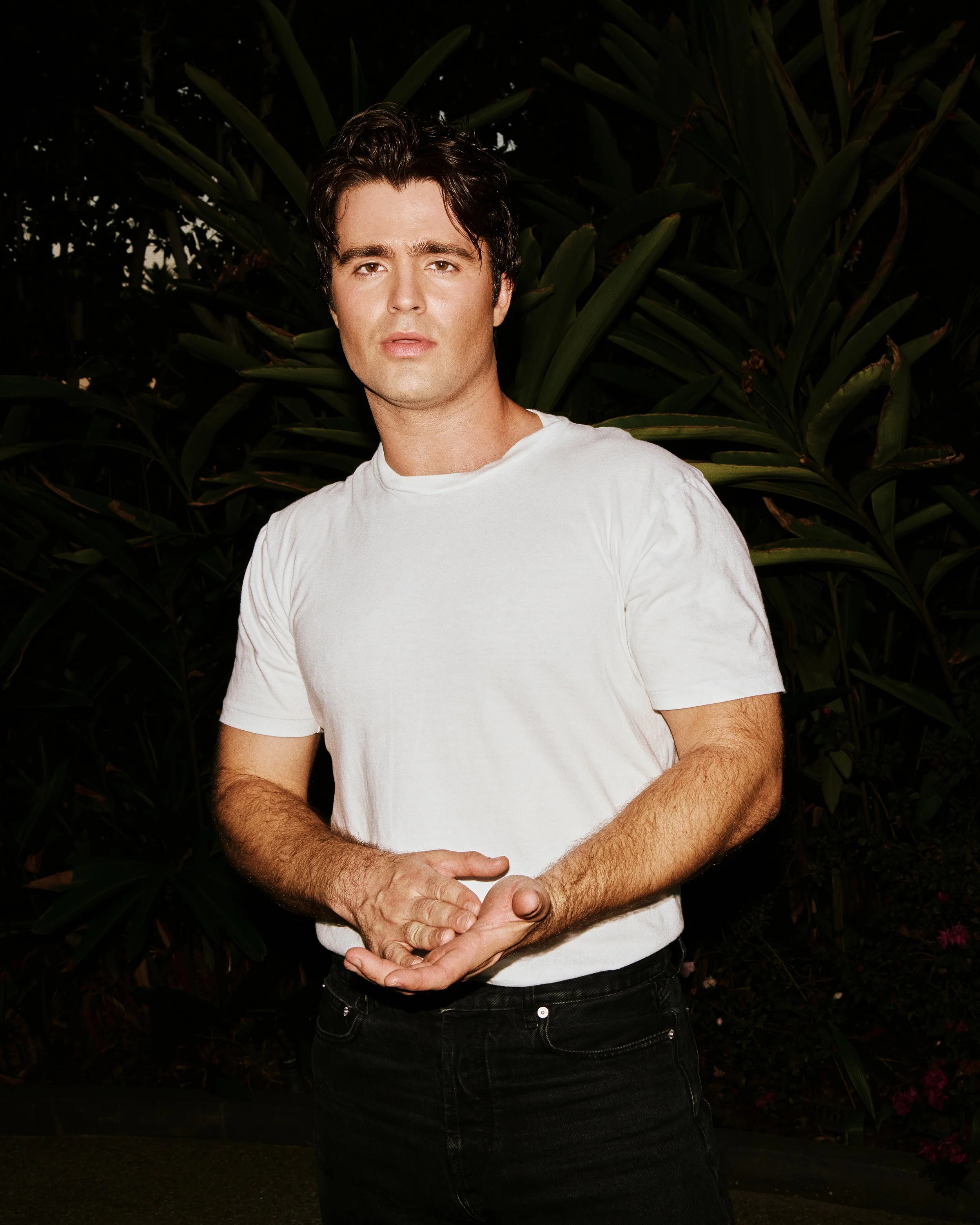
photography by TYLER NEVITT
You Can’t Leave takes you into much darker territory. What initially drew you to this story and made you want to be part of it?
Ari Aster, Robert Eggers and David Fincher are some of my favorite directors and they explore darker territory in a way that inspire me artistically. As an actor, I am really drawn to a dramatic performance despite my background in comedic roles. You Can’t Leave gave me an opportunity to showcase a lot of dramatic ability that I haven’t been able to do on camera before. There are so many sub genres in the horror category. This project leans more mind bending/ psychological thriller and I had a blast with it. It also filmed in Texas so I got to sleep in my own bed at night which is always a plus.
How did you approach portraying fear in a way that felt authentic rather than simply performing the conventions of a supernatural thriller?
Whatever I act in, I search for the truth in the scene. My training isn’t in performing, it’s in connecting with the raw emotional reality the character is experiencing. The source my performance stems from is truth and I spend a lot of time unpacking the what and the how in the character’s journey, and connect core emotions that support that blueprint. In You Can’t Leave, James is trying to find someone he loves who is in danger. As a man, I am very protective of the people in my life and could easily identify with the emotional stakes of the movie.
What did this role demand from you physically and emotionally that you hadn’t experienced on previous projects?
Emotionally, the stakes are high for James and my performance had to meet that moment. One of my favorite scenes of the film is when James is processing the first big deaths. I remember feeling so connected to that scene when I was filming it and I hope people see that. Additionally, You Can’t Leave has a ton of action in it as the characters peel back the layers of the web they’re stuck in. I ran through the woods from an evil entity, fired guns, drove a sports car, kissed the girl and went into a miles long, underground dirt tunnel. I have never done all of that in one movie before. I felt like a baby Tom Cruise.
Genre films often work because of what they withhold from the audience. How did you navigate knowing the larger story while keeping your character grounded in what he understands at each moment?
Mystery is the key to any character. The less that is said and the more that is shown allows the audience to come to the realizations on their own which lends itself to a better viewing experience. In projects I’m a part of, I never want to patronize the audience and I’m inspired by stories that really make the viewer think. That’s why you hear the greats always say “Acting is reacting.” A grounded performance is key and I think if there is a level of mystery in an actor, that translates to how they convey a character.
You’re also an executive producer on the project. How did being involved as a producer change the way you approached your work as an actor?
It was an opportunity I am really grateful for. I have been in the business almost 20 years and appreciate that that experience was valued. These last few years, I have really invested a lot of time facilitating projects for myself, stories I want to tell, characters I want to play. I love being the paint, but it’s really fun being the painter sometimes as well. For You Can’t Leave, since it is my first producing venture, I was absorbing as much as I could and collaborating where it was appropriate. My production company that I started with my longtime manager really emphasizes partnership with other artists. We always say it’s “we-go” not “ego”. When you collaborate with the right people, it always makes the project better.
What surprised you most about the realities of producing a film once you experienced the process from the other side of the camera?
The film business is difficult, but I love a challenge. This is an independent film. Our budget was a fraction of Obsession’s and they had a pretty small budget. In an industry where time is money, that was the biggest challenge for us. You always want more time. You’re up against weather elements, delays, logistics and all of that compounds. From an acting standpoint that meant we were only given a couple takes per scene, so we all needed to be on our A game. It was a cool exercise in taking the training I’ve prepared for years and having it meet that opportunity. This film was collectively made from a group of passionate young artists and if one department was off, it could potentially derail the day. I was really inspired by how invested each member of this crew was. We didn’t have a single bad day.
Has executive producing changed the kinds of projects you want to pursue, or perhaps create for yourself, in the future?
It has, because I love the entire process of filmmaking. I love the collaborative nature of this art form and I am really interested in being included in creating the world my character is apart of. I have been writing for years and I have never been more fulfilled taking themes that have inspired me personally and implementing them in a story I think people will love.
The trailer has generated an extraordinary level of attention ahead of the release. What has it been like watching audiences begin to react to something you’ve been so closely involved with?
Making a movie is hard. Getting people to watch it is harder. We live in a day and age where getting an audience’s attention is almost impossible. I think when you have a good product, the audience will follow and I love that the trailer struck such a cord with people.
You’ve been working as an actor since you were young. How has your definition of a fulfilling career changed as you’ve grown within the industry?
The more time I have spent in the business, the more I am fulfilled by being a part of a group of people, big or small, that are passionate about making films. That is contagious and my goal as an actor, producer and writer is to inspire other people to be creatively free. I know what I like and am confident in my taste, my vision, but I am just one perspective. I think you have to create a space where people can offer their vision too and let the best idea win.
Fashion and cinema have always shared a fascination with transformation and creating personas. How would you describe your own relationship with style at this stage of your life and career?
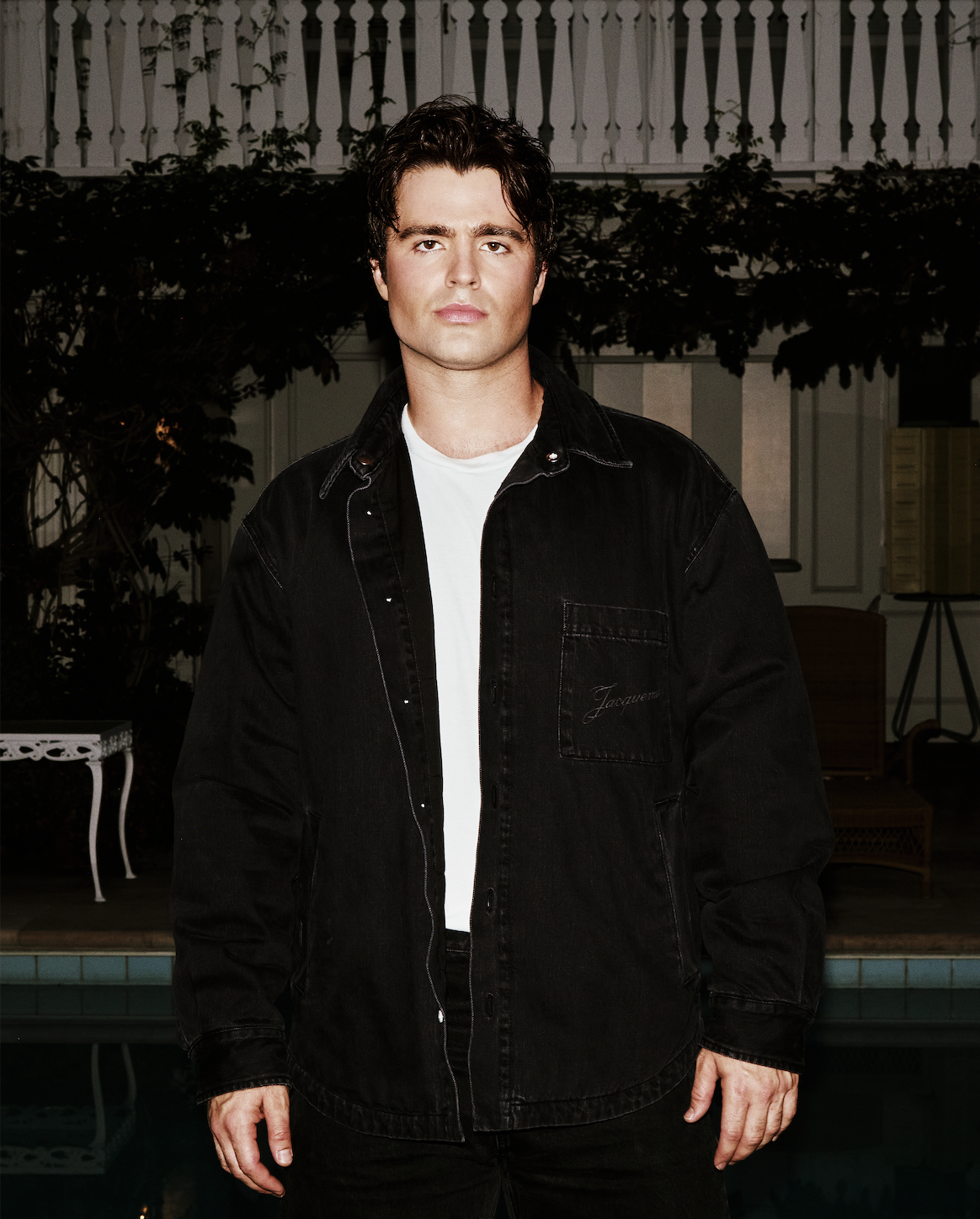
I have gotten bolder with my fashion choices and that directly correlates how I am navigating the business at this stage of my life and career. I don’t want to ask for permission to tell the stories I want to tell, I am hell bent on going out and figuring out how to make it happen. There are no rules in art and there are no rules in fashion, and there are no rules in living your life authentically, boldly. I wore archival Pierre Cardin, 1991 to the You Can’t Leave Premiere. It was a big Tim Burton style coat and a gladiator style chainmail shirt. It all weighed 50lbs and I sweated a bunch, but it felt like it told a story and was on theme with the movie. It was the most fashion forward look I’ve done on a carpet and I asked permission from no one to wear it.
As you move between acting and producing, are you becoming more interested in having greater authorship over the stories you tell?
Of course, and I really think as an actor in 2026 that is the only way forward. I am constantly sharing with people what I am doing and how I am doing it because I want other people to feel emboldened to not only take control of their career but also feel the creative fulfillment I have felt with writing and producing. Start now, start small.
What feels most exciting to you about the chapter that begins with You Can’t Leave?
Whenever a movie comes out, there is always momentum that follows. I knew this was all coming and have launched a production company that includes a slate of projects I am really passionate about. You Can’t Leave hits theaters October 16th. I have a Ronnie Milsap biopic I am producing and starring in. I am developing a TV show called Alive based off Christopher Castellani’s newest novel Last Seen and I just wrote, directed and starred in my first short film titled End of August. What excites me the most is being bold. Putting myself out there, in the path of success, with projects I love, made with people I love.