
IN CONVERSATION WITH TANIA SANTANA
interview by JANA LETONJA
Tania Santana continues to emerge as one of the most compelling talents from the Canary Islands, bringing emotional sensitivity and quiet intensity to each of her performances. After gaining recognition for her role in Hierro alongside Candela Peña, she now stars in Tal Vez, director Arima León’s poetic new feature. Set for release in July, the film explores memory, desire, and imagined histories through a reimagining of the relationship between legendary trapeze artist Pinito del Oro and poet Natalia Sosa. A graduate of the Canary Islands School of Actors, Tania has steadily built a career defined by thoughtful performances and a strong connection to emotionally driven storytelling, positioning herself as a rising voice within contemporary Spanish cinema.
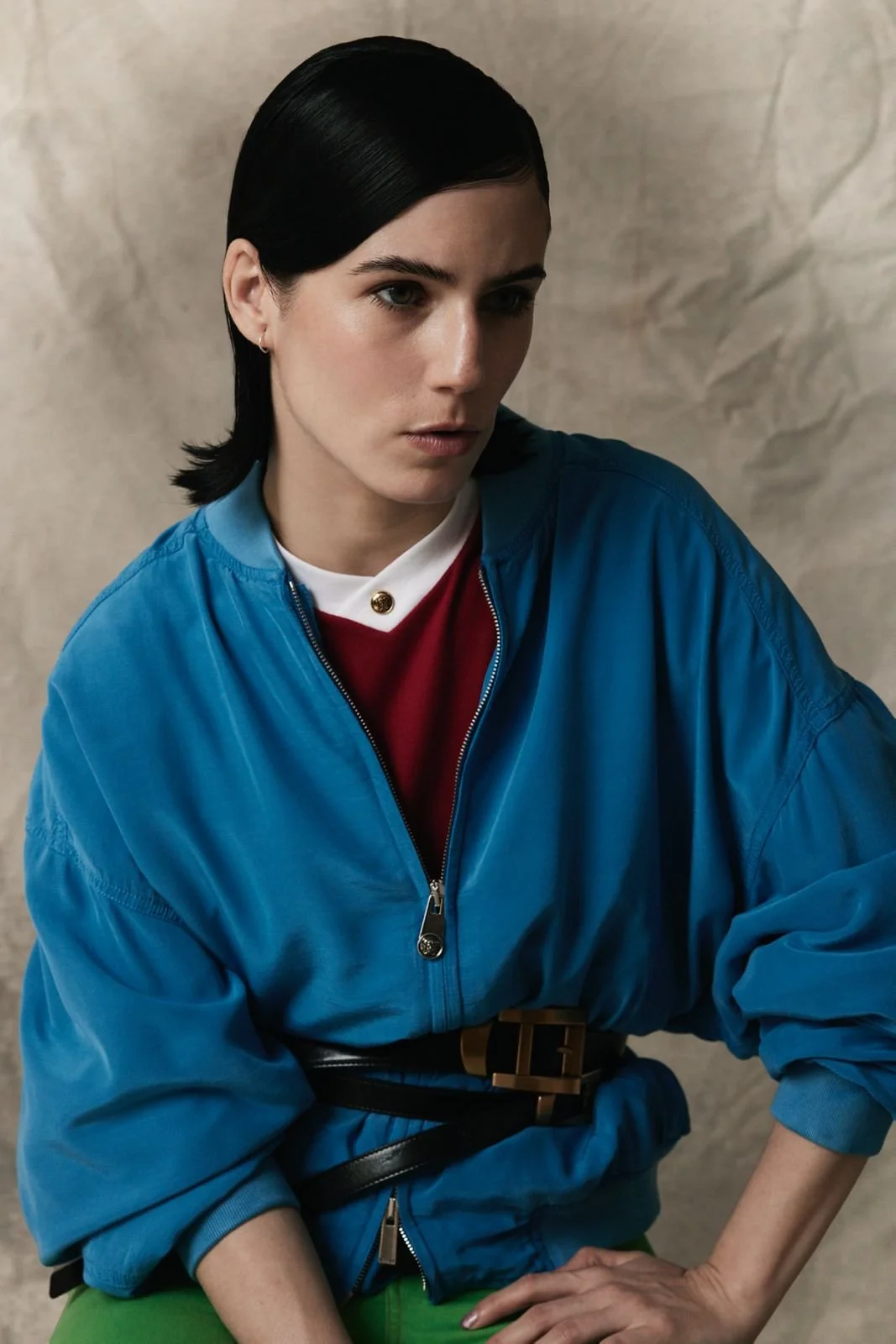
full look VERSACE
Tal Vez feels incredibly intimate and poetic. What initially drew you to the project?
I’ve known this story for quite a long time, and I’d be lying if I said the thing that struck me most wasn’t discovering Natalia Sosa and realising that, despite being from the same island, I had never heard of her before. Discovering her poetry and, much later, the relationship she had with Pinito del Oro was really fascinating.
I’d say it was the Canarian identity of the project as a whole that attracted me the most. Poetry born in the Canary Islands and set in a specific place and time on my own island. I think that made me empathise with it deeply, because everything felt familiar to where I come from. The way the characters speak and the places where the story unfolds, that’s how I speak, and this is where I live.
And on top of that, I’m hopelessly in love with love stories and with stories that exist outside the norm.
How would you describe the emotional world of the film?
I’d describe it as a dream you always want to return to. Turning a nightmare into a beautiful dream.
Natalia constantly returns to the circus, because that’s where she remembers being happy. Almost as if it were the only thing that helped her keep going at times, since she had quite a difficult life. And I think that through the letters she exchanged with Pinito, she was able to reconnect with what she felt while they were on tour together.
That dreamlike feeling is very present throughout the film, especially in the circus sequences. At the same time, water also plays an important role. We often see the sea, which is where Natalia goes when good or bad things happen to her. As if she goes there to reset herself between the waves, and to reconnect with who she is.
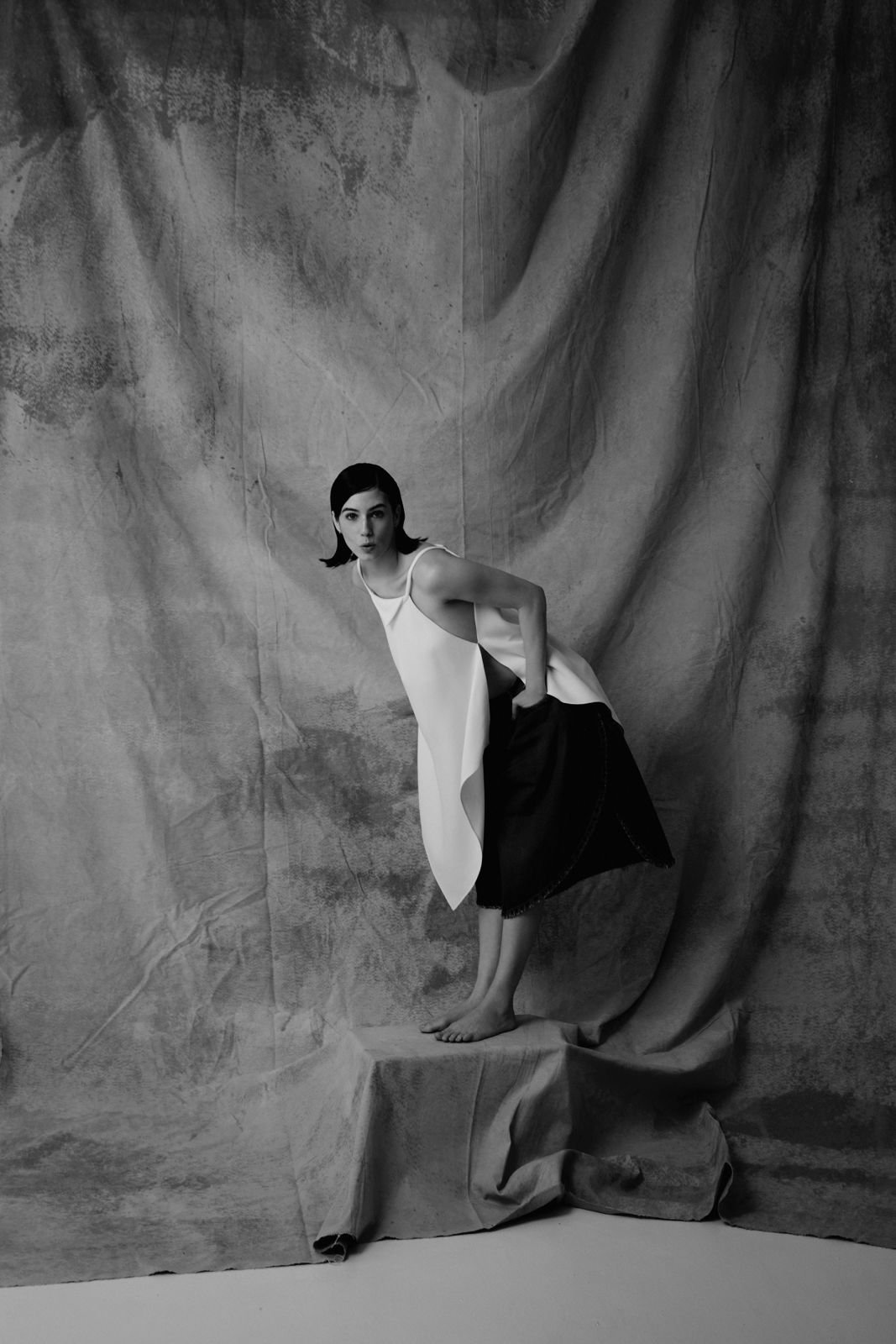
full look BALENCIAGA
The story reimagines the relationship between Pinito and Natalia. What fascinated you most about that premise?
Forbidden love stories always feel beautiful and heartbreaking to me at the same time. I think that not being loved back, whatever the reason may be, always leaves a sense of emptiness behind.
What interests me is how that feeling transforms over time, how love evolves, if it doesn’t remain stuck forever. And in this case, it evolves into a kind of lifelong companionship. In a way, only you and that person truly understand the relationship and trust you share, and I find that very special.
You don’t connect with everyone like that, especially from such a distance. A relationship that lasts through time becomes something really beautiful, because you end up knowing how that person thinks or reacts, even when they’re far away.
Being able to tell a story like that felt like a gift to me. Love through distance, through time, and through transformation.
What kind of preparation did you do to connect with the historical and emotional layers of the film?
I had read Natalia’s books several times, and every time I re-read them, I discovered something new. But one thing always remained, the intensity with which she approached life. Through her writing, I felt she was someone who experienced everything very deeply. That was something director Arima and I understood very clearly from the beginning. And from there, I started working with a coach who helped me enormously.
This is my first leading role, and I’m in around 90% of the film, so that level of responsibility made me feel like I really needed to feel prepared and secure. There’s a lot of poetry in the film, and that was something I worried about a lot. I didn’t want it to sound melodramatic, not that I have anything against that, but I felt this story didn’t need it.
With my coach, Sonia Castelo, who is wonderful, we started approaching the poems through imagery, and I think that was the key to making them feel truthful. With Natalia, I felt connected from the beginning. I understood her way of seeing life very quickly. I guess maybe I share a little bit of that myself. But once I knew I was going to play her, I fully immersed myself in her psyche.
And the historical side of the film also came very naturally once we arrived on set and saw everything fully transformed into another era. The costumes, the hairstyles, the makeup, it’s incredible how those things instantly transport you to another time.
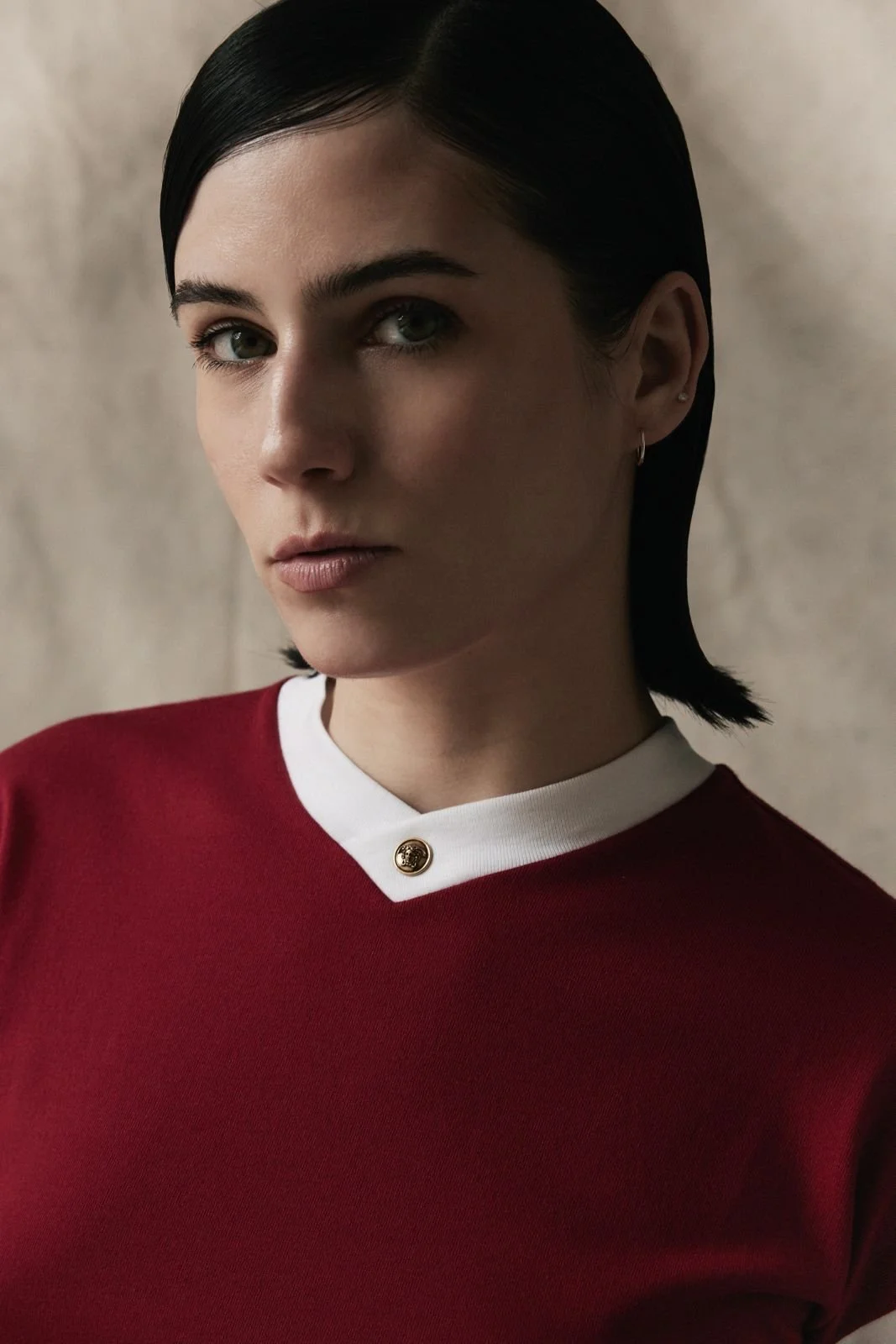
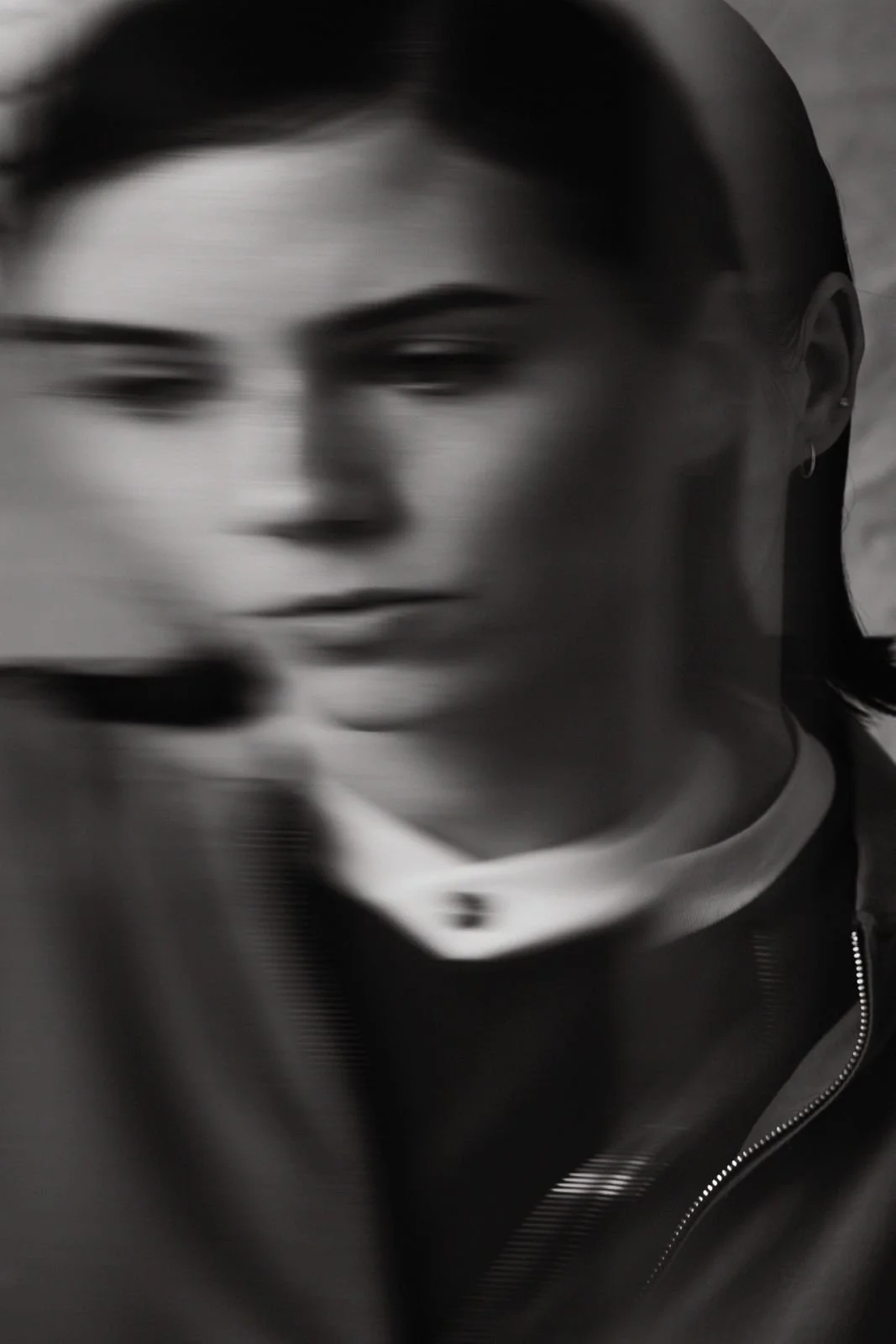
full look VERSACE
How was it collaborating with Adriana Ugarte on such an emotionally driven project?
Honestly, I’ve been incredibly lucky. From the rehearsals, we already had a really strong connection. I think it was because this story moved both of us in the same way, and we were both deeply motivated by it.
She’s an incredibly committed person who truly loves her work, and being around her makes you enjoy the process even more. We also share the same sense of humour in many ways, and outside the set, we got along really well. I honestly can’t imagine anyone else playing Pinito.
What do you think Tal Vez says about love, longing, and the stories we imagine for ourselves?
I think there are people who mark us forever, for better or worse, and sometimes despite ourselves. We don’t always choose who we fall in love with.
And I think the film also speaks about what we do with all those feelings we can’t openly show to the world. Because sometimes it isn’t allowed, or because showing them could mean losing more than we gain. Sometimes all you can do is accept life as it comes and try to live with it the best way possible.
You first gained recognition through Hierro. Looking back, how important was that role in your career?
It completely changed my life. After Hierro, I left the island and moved to Madrid. It was the first time I truly felt that my dreams could actually become real. I had always imagined moving to mainland Spain and trying to become an actress in a bigger city. A lot of people from my acting school tried it too, and it almost felt like simply leaving the island already meant you were chasing your dream.
Then you arrive in Madrid and realise everything is much harder than you imagined. You’re not only fighting for your dream, but also dealing with the loneliness of living in a city that moves at a completely different rhythm. At the same time, it gave me a much more realistic perspective on the profession. I started auditioning more, understanding the industry better, and finding motivation from a different place. New challenges.
In the end, this profession is a long-distance race.
What have you learned about yourself as an actor since your early work?
I think I’ve learned a lot. Even though every time a new project begins, fear always comes knocking at the door again. But once filming starts, it slowly fades away.
I’d say I’ve learned to accept rejection, because there’s a lot of it. And little by little, I’ve also learned not to compare myself to others so much. To accept that my path is unfolding the way it is, and that it’s neither better nor worse than anyone else’s. It’s about embracing who I am and never stopping learning. I genuinely love learning, whether it’s through classes or through work itself.
I love being an actress, and because there can be such long pauses between projects, when one finally comes along, I try to give it absolutely everything.
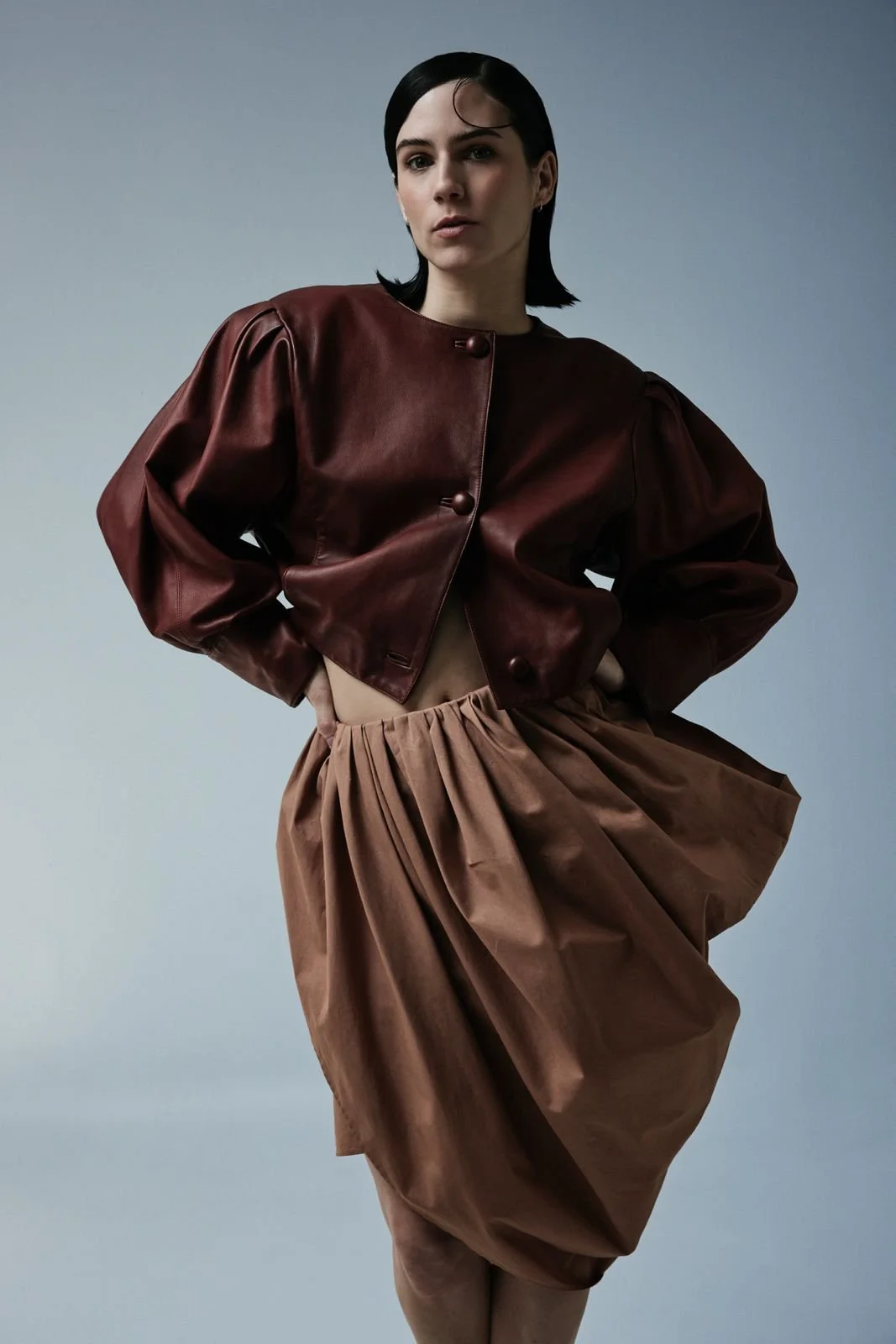
full look CHLOÉ
Growing up and training in the Canary Islands, how has that environment influenced your artistic identity?
I didn’t fully realise how much it had shaped me until I left the island and got older. I think sometimes it’s hard for people to understand, but growing up on an island, with a different accent, and coming from a working-class background can make you feel like becoming an actress might not really be within your reach.
At the same time, I’m grateful I didn’t think that way when I was younger. When I dreamed about acting as a child, I never thought it was impossible. Quite the opposite, I imagined myself making films all around the world.
Then you enter drama school and realise things are more complicated than you expected. Your accent, your profile, suddenly all these things come into play. But in the end, everything comes down to the passion you feel for this profession. When you don’t even have a Plan B because your Plan A already takes up your whole life.
While studying acting in the Canary Islands, I formed a theatre group with some classmates, many of whom also appear in Tal Vez, and after graduating, we kept making theatre and audiovisual projects together. I think it’s very important to find people along the way who are just as passionate as you are, people who keep motivating each other so that spark never disappears.
What kinds of stories or characters are you most drawn to creatively?
I really love horror stories and psychological thrillers. I’m very drawn to contradictory characters, because human beings are deeply contradictory themselves. And I’d even say I’m especially interested in politically incorrect characters. I think I have a soft spot for lost causes. There’s something exciting to me about going against what people expect from you, obviously, as long as nobody gets hurt. I’m attracted to rebellious, rough-around-the-edges characters. But at the same time, I’m also drawn to characters searching for justice.

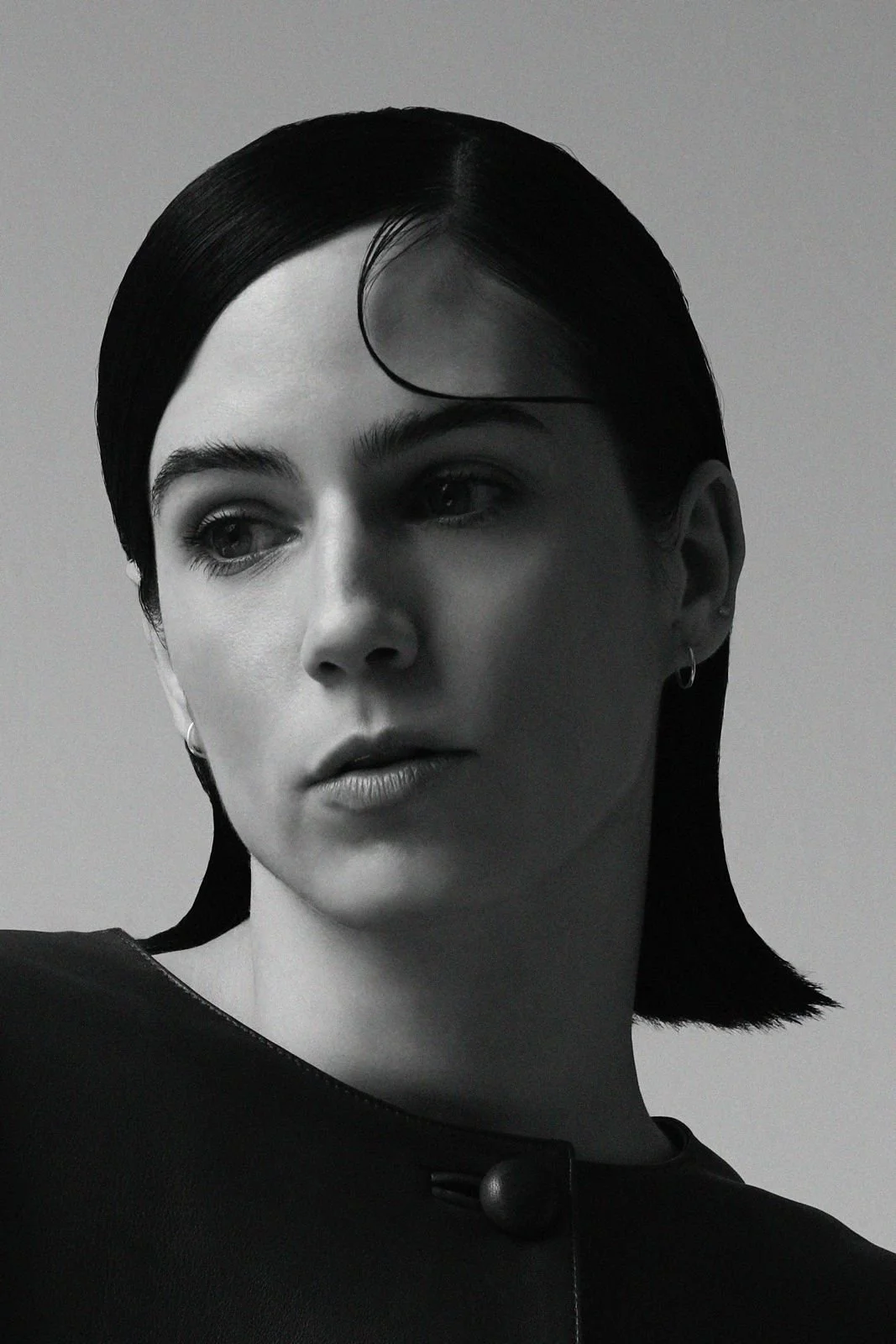
jacket CHLOÉ
Spanish cinema often embraces emotional subtlety and atmosphere. Do you feel connected to that tradition as an actor?
Yes, absolutely. I really love Spanish cinema. I think there’s an increasing interest in making deeper and more unique films, and I’d love to continue discovering myself through different kinds of characters. I’m very excited to keep working and growing.
Outside of acting, what inspires you creatively the most?
I’m actually a very normal person, I don’t consider myself particularly eccentric. I really enjoy spending time with my family. We’re very close, and they’re my foundation. I also have a twin sister, so whenever I can, I try to spend time with my family even though we don’t live in the same place anymore.
I love plants, and in the future I’d love to learn more about gardening and maybe even take a course. It’s something that genuinely makes me happy. I also really love photography, and I carry my film camera everywhere with me. I’ve recently fallen back in love with reading, and I find a lot of inspiration in books and in cinema. I’m very inspired by everyday life and by sports as well.
Looking ahead, what kinds of projects are you hoping to explore next?
I really love intimate cinema. The kinds of stories it tells move me deeply, both personally and as an actress. I’m also very drawn to psychological thrillers, and I hope one day I get to play a truly complex character in that world.
At the same time, I’d also love to do roles that feel far away from who I am personally, like playing a mother, or characters completely different from myself.
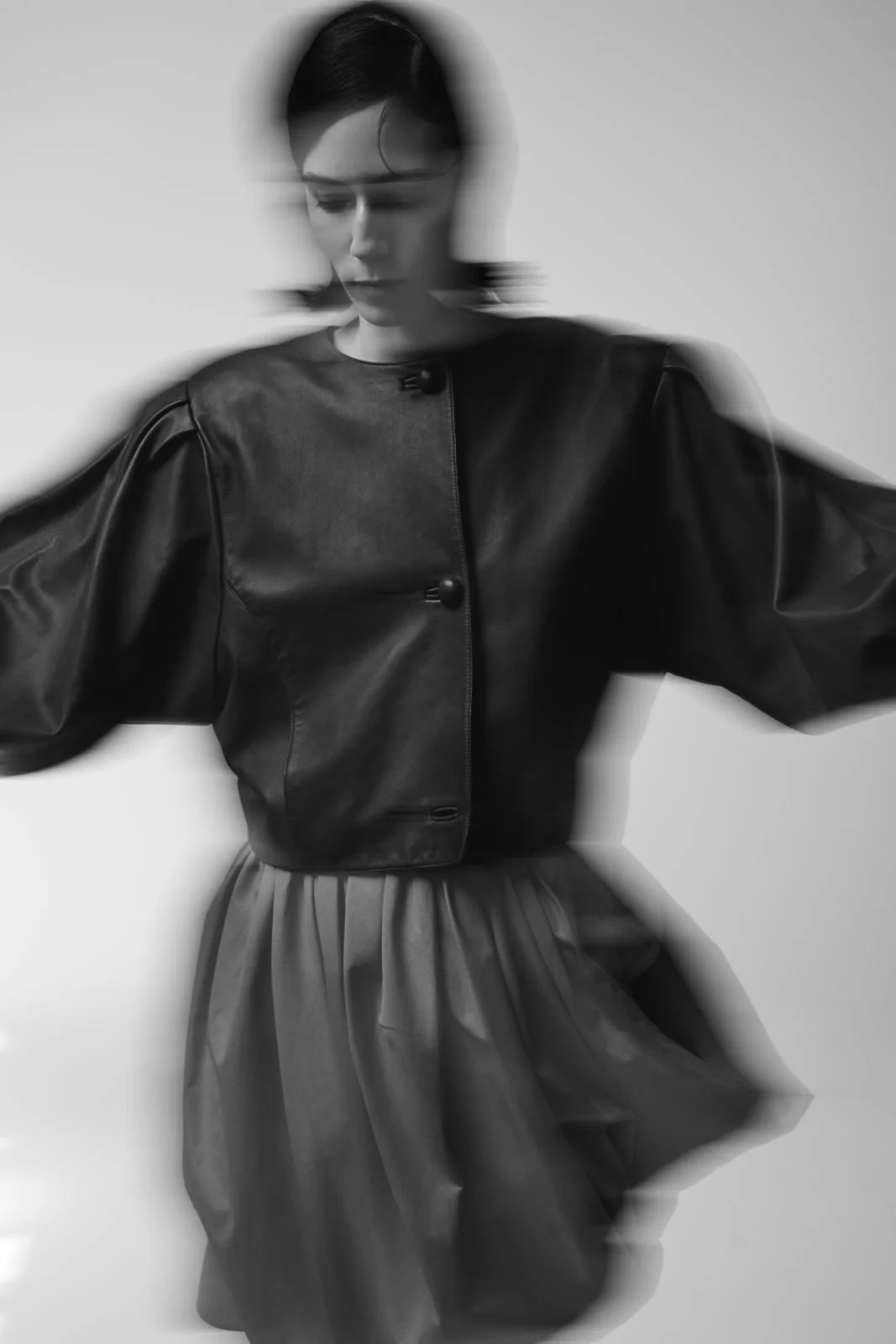
full look CHLOÉ
TEAM CREDITS:
talent TANIA SANTANA
photography DAVID VICHO
styling SERGI PADIAL
makeup CELIA MOLLA
studio STUDIO 101 BCN
special thanks SANTA EULALIA
editor TIMI LETONJA
interview JANA LETONJA
