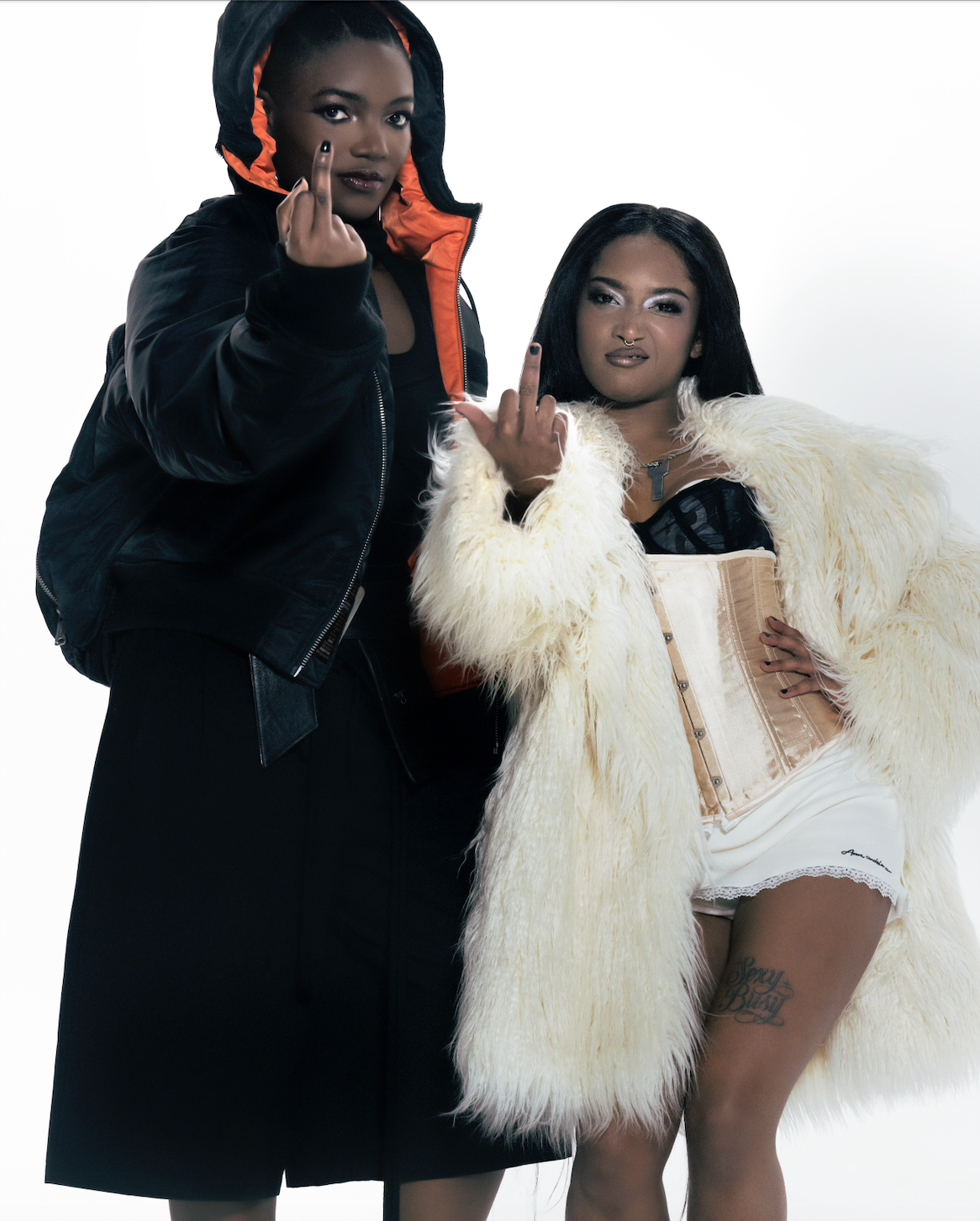
interview by DEBORAH DRENOFCI
A curious soul who loves to add intensity and emotion to her sound, Cameroonian-French DJ and producer TATYANA JANE is always pushing to be the best artist she can be. From leaving home and finding strength to her early influences, she has drawn her musical education from the school of life, with her heritage running through her music. Her recent run speaks for itself. She played the closing ceremony of the Paris 2024 Olympic Games, toured with SKIN ON SKIN, made appearances for LOUIS VUITTON, and went B2B with SKRILLEX at Berghain. She went on to join the French label ED BANGER, where she released her latest EP, Discordia, a beautiful manifestation of her love for rap and electronic music. Her journey has taken interesting turns, from discovering SKRILLEX and being inspired by his sound to spending time in his studio, with him becoming a mentor.
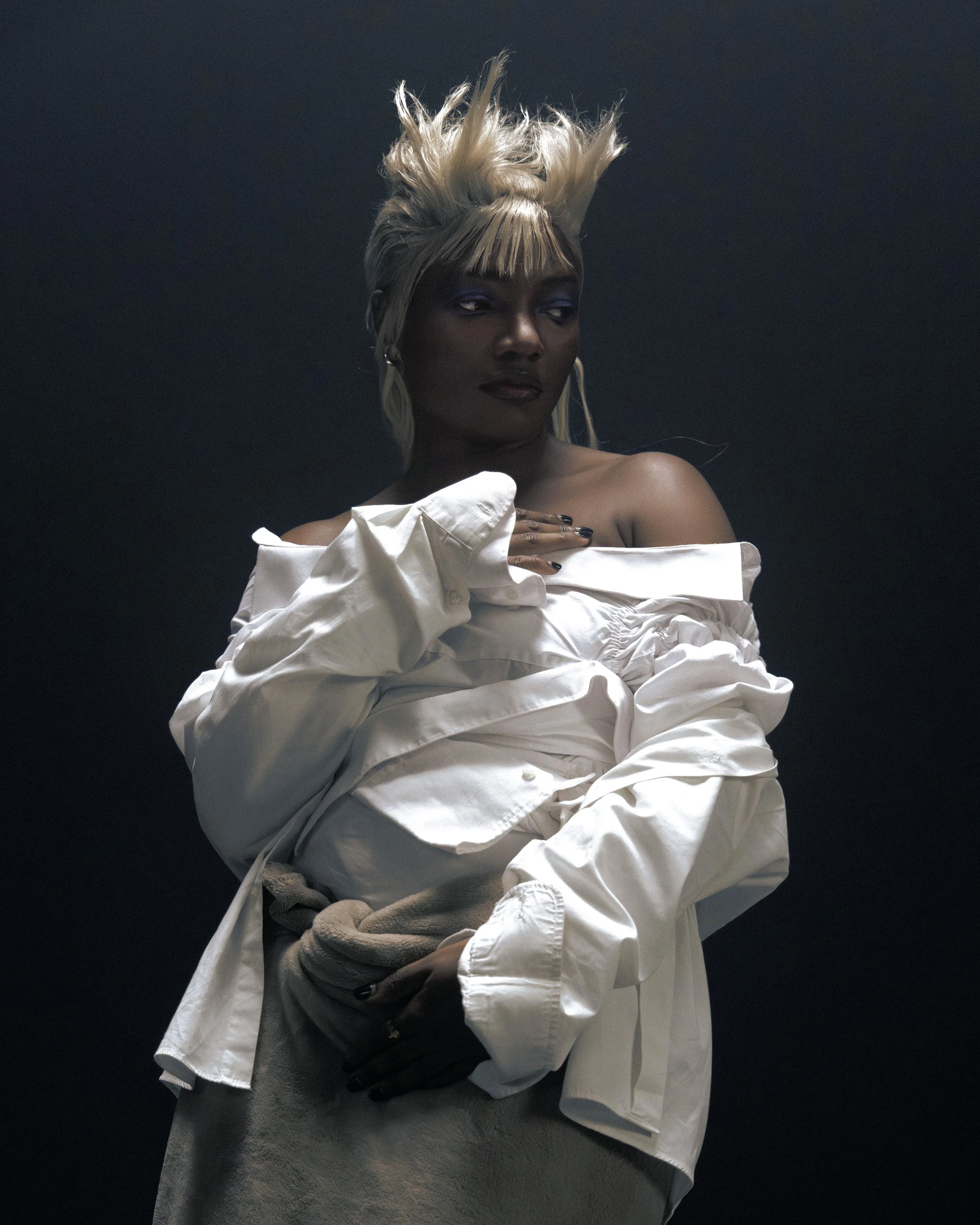
photography by OLIVIA SCHENKER
Discordia feels like a journey, full of intensity and emotion. Tell me about your early influences and your Cameroonian heritage. Beyond the music, what shaped you into the artist and the woman you are today?
The most important event in my life was when I left my country to go to France. It was a big fracture, a big thing for me, because I was 10 years old. I don’t know why, but it built a kind of resilience and courage in me. It taught me to be brave. I always felt super mature for my age. It was difficult for me to grow up without my parents, without my family, but on the other hand, it was a good thing, because I was super curious about freedom, super curious about music, and about becoming my own person. I think when you leave your parents and your family, you grow up alone, and you become in tune with your personality and your sense of self.
I think that’s the most important thing for me, because I know myself very, very well. I know what I want to do, and what energy and what feeling I want to transmit to people. Today I use music for that, but maybe tomorrow I’ll use images or another kind of art. For the moment, I think growing up in Cameroon and leaving my country and everyone, that built me like a rock. I never want to give up, never. For me, I don’t have any other path. I just have to do what I have to do, you know?
It was something very aggressive for me, because when I was sad, I couldn’t just hug my mom or my dad. It was very lonely. And all these feelings are what I want to bring into my music. I want people to feel that.
Was there someone in your life who encouraged your creativity and pushed you forward?
My son. Definitely my son. Now that I have him, I just have to be an artist for him, to give him a good example, to show him that if you like something, you just have to do it and follow your dreams, follow what you want. It’s possible to do that, even if you are Black, or a woman, or a man, or [unclear]. It’s important for me to give him a good example. I made two of my last EPs when I was a mom and pregnant. I was pregnant when I finished the last one before the EP on Ed Banger. So I think my son shaped the artist I am now, definitely. He gives me a lot of inspiration. It’s electric for me.
Is your son also on an artistic path?
He takes drum lessons, actually. But he listens to too much Daft Punk. He’s a really big fan of Daft Punk. I don’t know why, because I’m more of a Justice fan. Last month, he told me something like, “Now that Daft Punk don’t want to wear the masks anymore, can they give me the masks?” And I was like, “Maybe. You should ask them.”
Discordia brings together rap and electronic music, two things you love. How did rap first come into your life, and what did it give you?
I started my music adventure with rap because of my big brother. He really liked Tupac, Notorious B.I.G., and, unfortunately, R. Kelly. I remember the first tape I had was Tupac, Dear Mama, and I was like, “Oh, wow, this is so cool. It’s so emotional.” I didn’t understand anything. I just understood “Mama,” but it was so cool. I grew up with rap culture, American rap culture, not French rap. So American culture came first in my life. I listen to a lot of rap now, French rap too. But I think I like it for the performance.
And electronic music? When did you discover it?
Very quickly after rap. When I was around 7 or 8, I discovered Justice, Mr. Oizo, The Bloody Beetroots, Daft Punk, and Stardust. And I was like, “This is so cool. It’s so fresh.” It just gave me a vibe, like, I just want to be happy. I discovered Skrillex at the same time too. I think I was 9 or 10, something like that. And I was like, “What is this?”
When I started to make music, I wanted to make music for my friends, my rapper friends. So I started to make beats on my computer. I was around 15, and I was like, “Okay, I want to do something for my friends.” I was writing some texts and trying to rap on my own beats, actually. That’s how I started my music. Very, very quickly, I went from rap and beatmaking to house, and to something more Detroit.
How was it working with Skrillex? What did that time in his studio change for you?
Oh my God. How can I talk about Sonny? He is an alien! That guy is too cool. He’s too strong. He can do everything so fast. He has the idea, and he makes it at the same second, you know? The idea and the realisation are there at once. And his studio looks like a kid’s bedroom. Not too luxurious. Super simple and cool. And this guy knows everything about music. He just told me, “Okay, I listened to your music. I understand what you want to do, and I’m going to help you do that.” And I was like, “Okay, bro. You are the key.”
I spent 12 days with him in his home studio making music. At the beginning, he said to me, “I know you’ve been producing for a long time, but it’s important to start from the beginning. So you’re going to do the kick like this, the snare like this. I know you know all that, but trust me, do it. Afterwards, it’s going to be easier and obvious for you.” And I was like, “Okay, I trust you.” And it was. I made a lot of music with him in his studio. I was like, “Okay, I’m going to see my guru, the guy whose music I love.”
There are two guys whose music I really love, and I make music because I discovered them: Justice and Skrillex. I also have women artists I like, but Justice and Skrillex are the two who made me say, “Okay, I want to do the same.”
How do you usually start a track? With a rhythm, a feeling, a sample?
It depends on the moment. Sometimes I just make music so that I don’t lose my skills. Every day I open my computer and do something. I practice. I take a sample and I do some stuff. Sometimes when I do that, I find a good rhythm and I keep it. So sometimes it’s just practice, and when I find a good idea, I keep it and I create a bounce.
Sometimes I just have the idea in my head that I want something super aggressive, or I want something super basic, other times I want a good introduction. I’m looking for the reaction of my crowd. I really look for the reaction of my crowd. I start something because I want a specific reaction, and when I try the track at the club and I don’t get that reaction, I say, “Okay, tonight I’m going to change it. I’m going to put in more bass, or something more melodic.”
I build my tracks in several stages, not all at the same time. When I have the idea, it takes me about 20 minutes to fix it and get the big picture. After that, I play with it. I change the middle, I change the rhythm, all that stuff, just to find the good groove, because it’s not easy to find the good groove, or the good melody, or even the good lyrics. Sometimes you have to search for more than just the idea you have initially.
When I start, I always start with my kick, snare and drums. For me, the most important parts of my music are the drums and the bass. If I have a good rhythm and good drums, the rest is okay. It’s easier for me, because the vocals can adapt to the drums. So for me, it’s very important to have the rhythm first, and to be sure that people are going to dance, or scream, or twerk to this one. After that, I put in the melody and the vocals, if I have them.
It’s been a while since Ed Banger welcomed a female artist, so it’s really exciting to see you join the family. What does it mean to you to be part of it?
It’s a big deal. I have several feelings about it. I’m super proud of myself, and I’m super proud of the label too, because 20 years later, they keep shining. So it’s cool. But at the same time, it’s a big responsibility for me, because I have to be very exemplary. It gives me the challenge to push my music and my art very, very high now.
I have several projects in my pocket, actually, and I want to sing too. Just put my voice on my tunes, actually, and maybe build something more like a show. I don’t know if you know Ninajirachi but I really like her, and I want to do something like her. Super nerdy, but at the same time super sexy, and singing. It’s important to me to start building a performance like that. Because I want to dance, and I want to sing at the same time. I think I can give more to my crowd than just DJing.
Seeing more women at the front of electronic music feels more important than ever. What has your own journey taught you, and what would you say to the young women who want to follow your path?
I think you don’t have to think a lot. Just do what you love, be very focused on it, and be true to your own heart and your own personality. Just do what you want, you know? I think a lot of girls have a lot of fear, like, “Oh, I don’t do this thing super well.” But who cares really. It’s not a problem. The most important thing is that you have to express what you have inside you, and you force people to like you with your personality. I think everybody has something to give. You just have to find it. Because sometimes you have to learn to find what you want to give.