
IN CONVERSATION WITH TOY TONICS
Interview by Samo Šajn
Berlin collective Toy Tonics has built one of Europe’s most joyful dancefloor movements of the past decade, blending house music with fashion, art and design into a colourful, community-driven scene. Led by founder Mathias Modica, a long-standing DJ and key figure in Germany’s club culture. The collective just released a documentary directed by Manuel Werner, capturing their rise from intimate Berlin parties to an international force. Alongside their new event concept launched this year, the Toy Tonics "Art Jams" at Studio 1111, and their forthcoming compilation series Wildstyle House.
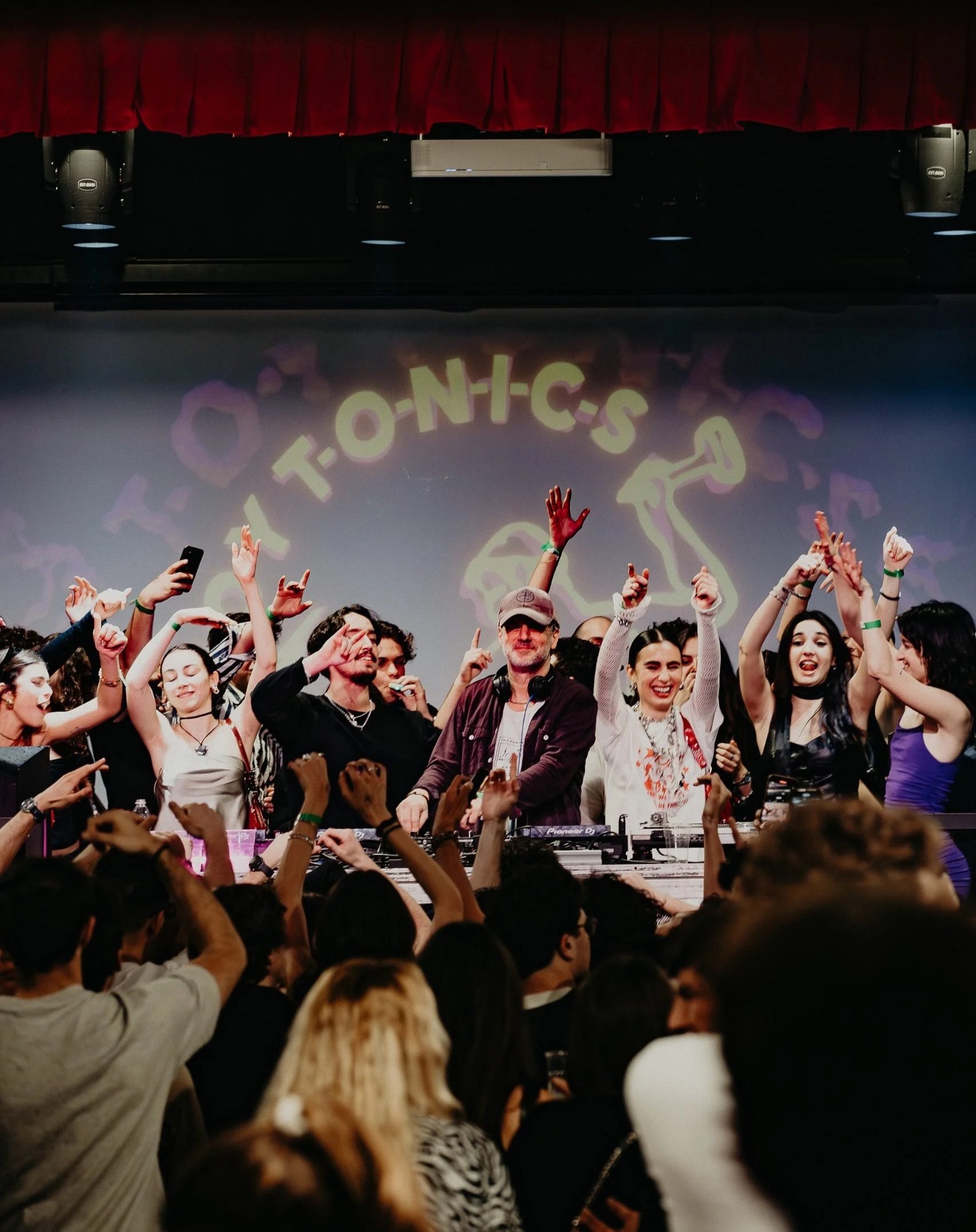
Toy Tonics has grown far beyond a club night. How do you usually explain what it is to someone who’s never experienced it?
We are coming out of a decade where hard, dark and monotonic electronic music grew from the underground into the mainstream. Techno DJs are fancy Instagram stars now, and monotone trance sounds have become music for the masses. Everything is dressed in black and sounds and looks the same in this commercialisation of electronic music.
With Toy Tonics, we stand for the opposite: a colourful, individualistic, musically diverse attitude in music, clothes and the people around us. We started presenting our music and crew in illegal spaces in Berlin five years ago. These parties grew very fast, and then clubs like Griesmühle, Funkhaus and Panorama Bar invited us to bring our sound and community.
Last year we did 190 parties in 20 countries. We are invited to some of the leading clubs in the world because the way we mix different sounds and styles, and the positive vibe of our community, brings a new freshness to their spaces.
The documentary follows Toy Tonics at a moment where things are moving very fast. What made you want to document this period of the project?
We think the music, the mood and the people who come to our parties are quite different from many other events. At most of our Jams we do not need a “no photo” rule because people come to dance, to meet and to communicate with others. The positive energy and the beauty of the atmosphere at our parties, and the great styles people wear, are worth showing to the world.
Your parties are known for feeling open, friendly and fun. What do you think people notice first when they walk into a Toy Tonics night?
The smiles on people’s faces. The positive vibe between the crowd and the DJs. And the beauty and quality of the music our DJs select and play. No bangers, no obvious hits, but a very special way of selecting tunes and creating flow. It comes from the Larry Levan, Ron Hardy and Daniele Baldelli school of DJing.
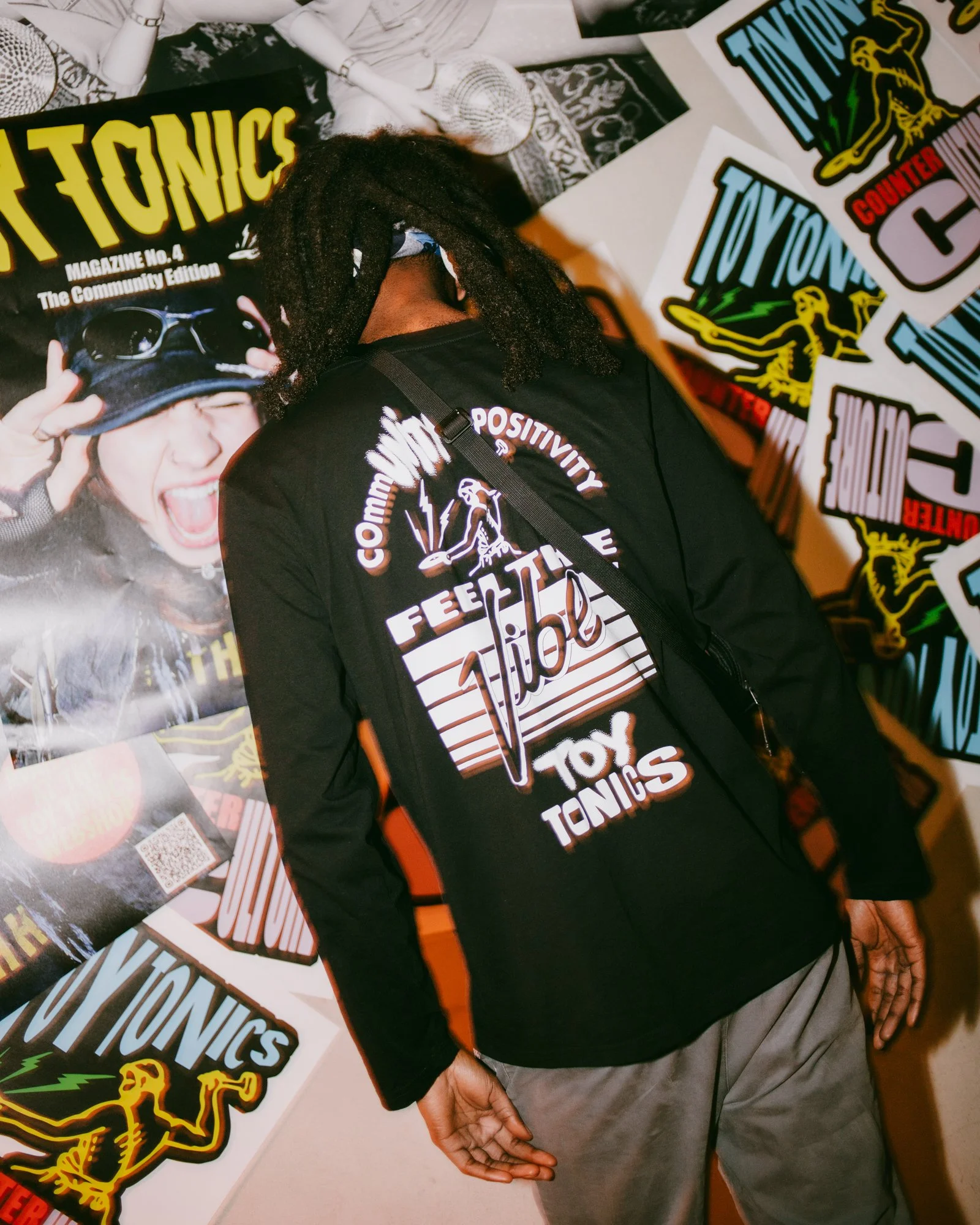

Phones don’t really feature at your events, without any official rules. Why do you think that happens so naturally?
Because people who love Toy Tonics come for the music, to meet others, to dance and to connect. We are not a DJ crew created from and for TikTok, nor one that attracts people who just want to prove “they have been there” or follow a trendy name. Toy Tonics is culture, not a trend. People come for that culture, not for posing.
Music, fashion and art feel tightly connected in the Toy Tonics world. How do those different scenes influence each other in your day-to-day work?
Music and pop culture always move in circles, like fashion does. But for us, fashion is not important. We are interested in style. The style of music. The style of design. The style of how people choose their outfits. Not in a fashion-led way, but more in an anti-fashion way. We are interested in diversity and individuality in culture. And that naturally connects music with clothes, art and design.
You’ve played everything from small underground spaces to major venues and institutions. What changes when the room gets bigger, and what stays the same?
We try to create an intimate atmosphere even when the room is big. Our DJs are very good at reading a room and connecting with the audience, creating a sense of family even if there are 2,000 people. A good DJ connects with the front rows and uses visual and emotional energy so the vibe moves from person to person. It is not about hands-in-the-air hysteria. It is about emotion travelling from human to human. That is possible in big rooms too. It is about musical selection, understanding emotion, and having the experience and sensitivity to build the right dramaturgy. It is the art of DJing.
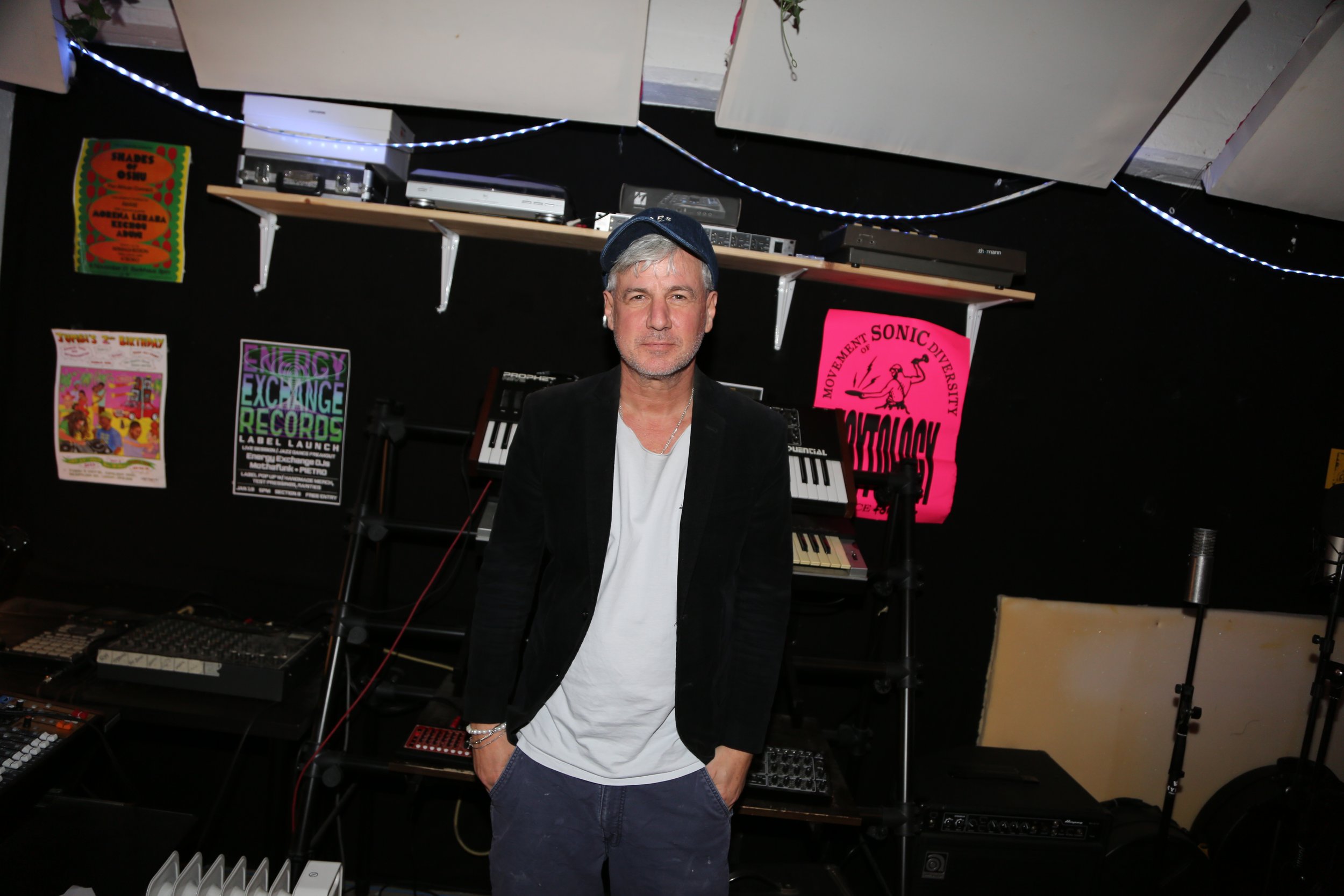
With the new compilation coming at the end of February, what kind of sound and energy can people expect?
“Wildstyle House” is made to show the different new wild styles in house music that are emerging right now. There is a new generation of producers creating interesting sounds inspired by 70s and 80s funk, Y2K indie dance, and Latin or African funk, not Afro house. We want to highlight these new talents and their fresh approaches.
With projects like the Studio 1111 residency, Toy Tonics is experimenting with new formats. What do these spaces allow you to do that a regular club doesn’t?
Berlin is changing a lot, similar to how London changed in the early 2000s or New York in the early 90s. New clubs and venues are opening, along with a new generation of creatives and party people looking for new ways to go out. Our Berlin following is very young, around 20 to 28 years old. Many of these new people come to our events, and we felt it was worth trying a different kind of party in a different kind of space.
We are strongly connected to the new underground art and design world, so we started these Toy Tonics Art Jams once a month. We invite a visual artist to create digital visuals and a small exhibition in a space very different from traditional techno clubs. It has a 360° visual wall, and without a strict no-photo policy, unlike many Berlin clubs, we can show the artists’ work beyond the room.
With the documentary out, a new compilation coming, and a busy year ahead, what are you most excited about?
Meeting new people. It is all about meeting interesting people around the world. We have tours in the USA, Brazil, Mexico and Australia in 2026, and we will meet great humans everywhere. That is the best part of our job.
