
IN CONVERSATION WITH VICTOR INTERNET
interview by JANA LETONJA
After building a devoted audience with his genre-blending sound, Victor Internet, the Chicago-born independent artist known for writing, producing, and recording his own music, is entering a new chapter with sin ti, his first-ever Spanish-language single. The bachata-trap-inspired track offers a preview of his upcoming project Glitter Pop, exploring themes of nostalgia, memory, and self-discovery.
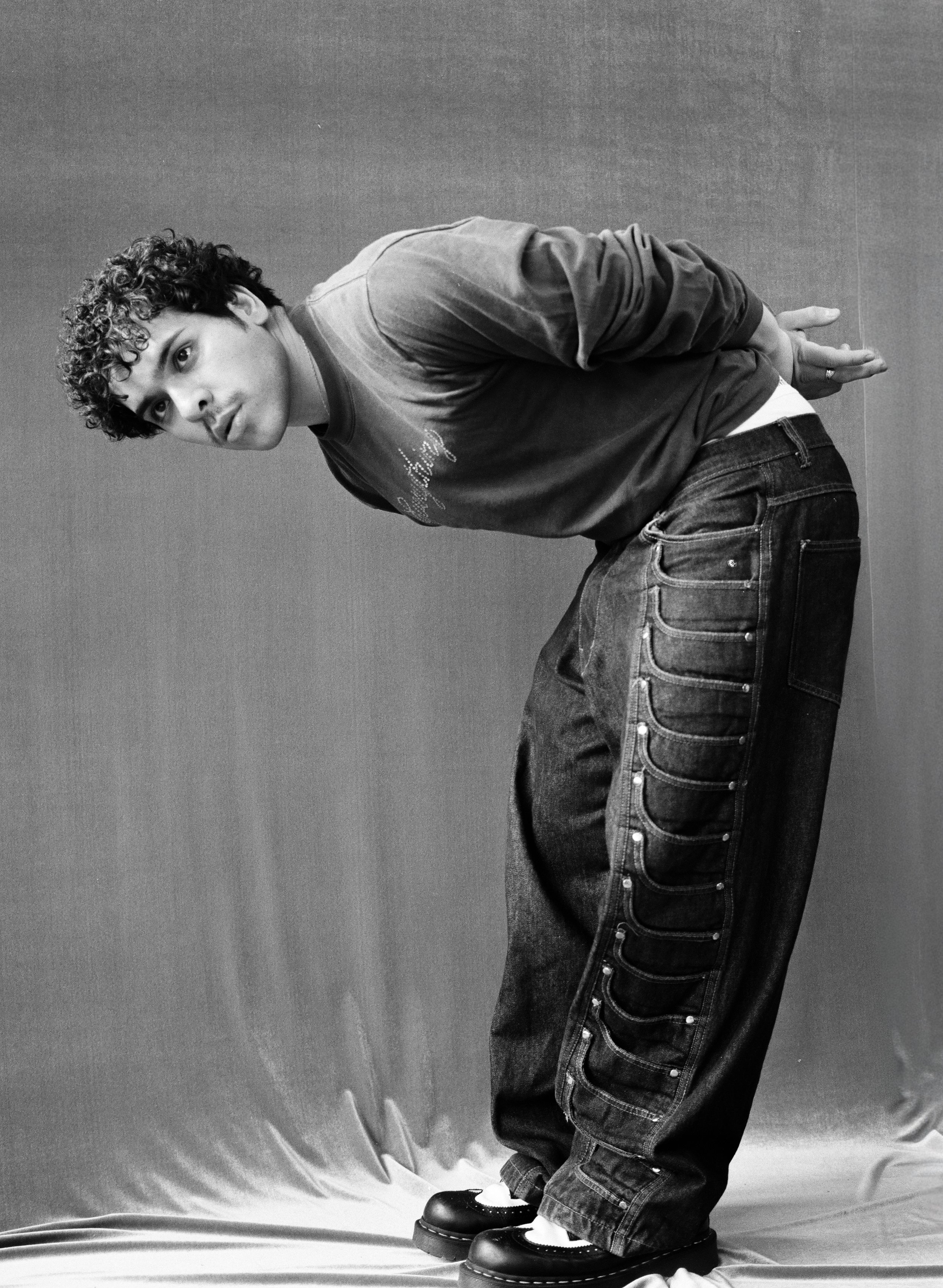
photo credit: JAMAR MITCHELL
Congratulations on the release of sin ti. How does it feel to finally share your first Spanish-language song with the world?
Thank you. It feels exciting because I get to connect with my people, especially my family, who for the longest time didn't fully understand my music because they all mostly speak Spanish. My parents were born in Mexico and understand little English, so it's a very special feeling when you can write something that will click instantly for them.
What inspired you to write sin ti, and what story were you trying to tell?
sin ti was inspired by a person I was seeing for some time. It's very dramatic, but I remember at the time it felt like I was going to die if we weren't hanging out that week. Ultimately, we decided we were better off as friends, but I think there's something beautiful about living and feeling these things. Most of my songs aren't just one story, they can be multiple stories meshed together. For this song, I wrote about how shattering it felt to not be around this person and added the hair detail later. The lyrics say things like “Tú me estás matando” and “Tu cabello cambió desde que te vi.” It's funny because her hair looks exactly the same. You know when an ex buzzes their hair or bleaches their eyebrows post-break-up? This is like my nod to those experiences.
Why was now the right time to release music in Spanish?
I remember having a conversation with my friend Moni about how, despite our friends being Mexican-American, we all speak little Spanish amongst each other. That stuck with me for some time because I hadn't learned English until the 4th grade. Spanish was my first language, and in that moment I felt like I had neglected such a crucial part of my identity. Why wasn't I singing in the language I grew up speaking? Reclaiming that language for myself is part of a bigger reclaiming happening now. With the ICE raids happening in our communities and the violence against our people, it's important now more than ever to be making art as a Mexican-American person. Writing songs in your bedroom when the world is trying to make you feel small is its own kind of resistance. Music is how we decorate time. In times like these, me and my peers are interior designers. If we can be a light and inspire others to make art and follow their dreams during these times, then we have done our job.
You describe the song as a blend of bachata and trap. How did you develop that sound?
I grew up on SoundCloud, so I feel like I was exposed to possibilities I never imagined. There is pluggnb, digicore, hyperpop, etc. In high school, I took a Björk Come to Me acapella from YouTube and produced a trap beat around it. It helped me realise that I can pull from different influences to make something unique. I always start with the melody and vocals, and then I play around with different rhythms and drum ideas. For sin ti, I played around with baile funk rhythms, but the bachata drums just felt right. I really loved how the chorus sounded with bachata drums behind it, and when I recorded the verse, I decided to throw in the trap drums. The textured organ chords marry everything so beautifully. I didn't go into this one thinking I was going to make bachata trap, but I'm glad it turned out the way it did, and I hope it can inspire others to try something similar.
Did writing in Spanish change your songwriting process or the emotions you wanted to express?
100%. There are certain feelings sung in Spanish that just don't hit the same in English and vice versa. Going back to songwriting in Spanish was genuinely exciting for me because I was able to reconnect with my younger self and write something my family could actually listen to and understand. My dad is a Mariachi and a lot of that music carries so much passion and drama. I grew up hearing that kind of feeling before I even had words for it. I call it 'yearner music', and I think Spanish takes it all the way.
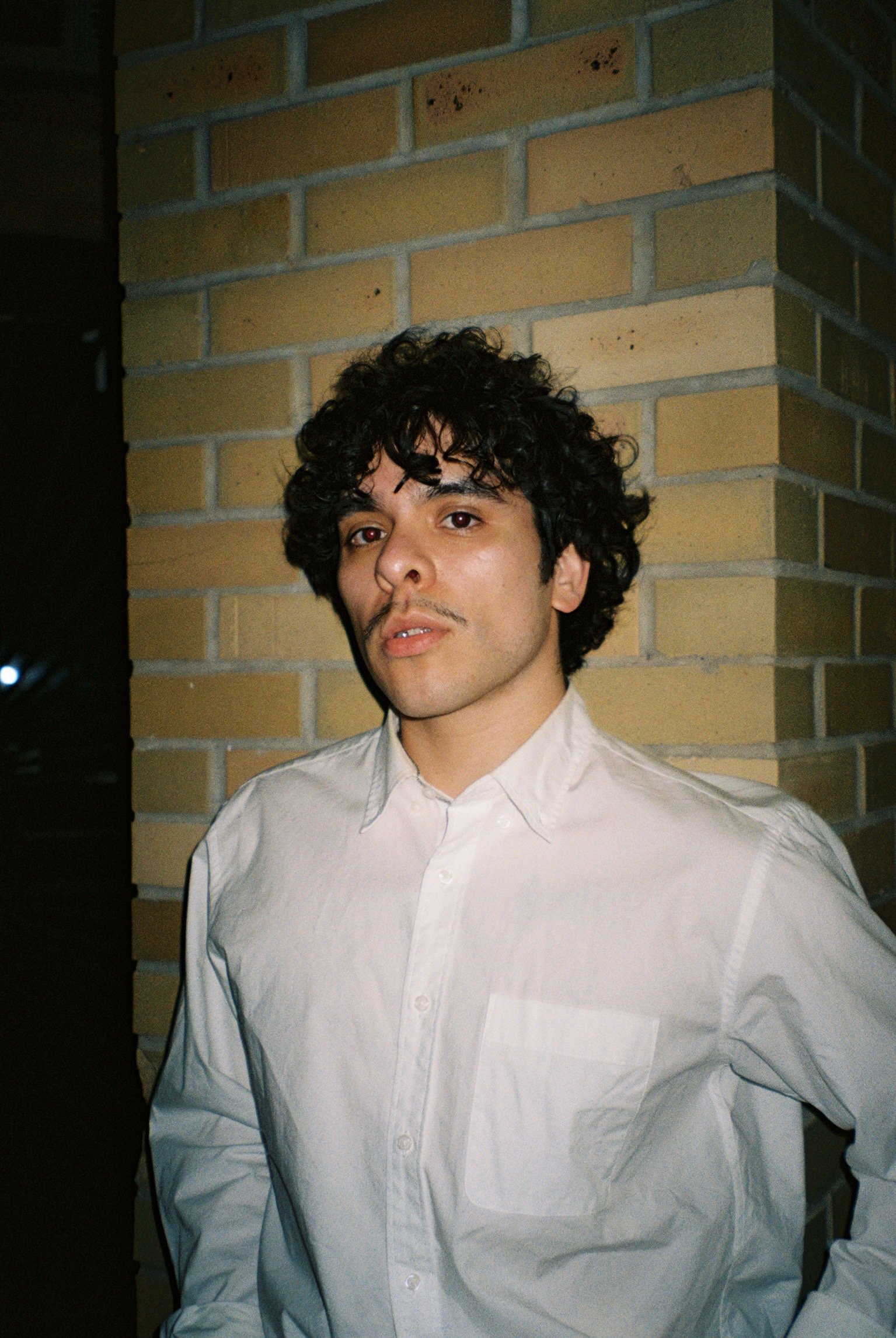
photo credit: ANDREA DIAZ
What does reconnecting with your roots through this song mean to you personally?
When I was younger, I went to elementary school with mostly white kids, and I was in ESL classes. I remember feeling left out of conversations, friendships, and basic play. I couldn't connect with them in the way they connected with each other. I started to dislike speaking Spanish, and if my parents spoke to me in Spanish at school, I would feel a sense of embarrassment. It took me some time to process these feelings. When I started touring and seeing that most of my audience looked like me, I realised that I was repressing the best part of myself. Being Mexican-American and bilingual was not a curse, it was a blessing. Being able to write in Spanish and produce a bachata shows exactly that. The ability to pull from two different worlds to create something special is me reconnecting and falling in love with my roots.
Glitter Pop explores nostalgia, memory, and self-discovery. How does sin ti introduce those themes?
At its core, sin ti is a yearning anthem. The line “Tu cabello cambió desde que te vi, tu mirada no me deja ir, se me hace difícil estar sin ti” is a universal feeling. Missing someone you used to see all the time, running into them on the street and noticing that they changed their style, going home and trying to erase traces of them in your mind. For me personally, even though this person and I decided we were better off as friends, of course I'm going to be devastated, and of course I'm going to cry to Joni Mitchell in my bed thinking about this person, but the process of letting go was really powerful for me too. At some point, acceptance is where we find peace. For me, it wasn't about settling for a friendship, but accepting one. It's funny because this person may never realise the song was written about them, but I think it's beautiful that I was able to make art out of the situation.
Your music has always been self-produced. What do you enjoy most about having complete creative control?
No one can tell me no. I think that is the best thing ever. In a traditional studio setting with producers, managers, and executives involved, they may initially cringe at a bachata trap. Being self-produced and independent, I am able to execute ideas at my pace and without the opinions of higher-ups. This ultimately sets me up for success because I am given the chance to experiment and unlock new sounds that otherwise would've been vaulted or turned down. I think back to 2019 when I released a demo called I KNO V3 on SoundCloud that blew up to the point where fans blew up my Instagram DMs asking me to release it on streaming platforms. Mind you, it was version three. It wasn't even mastered yet, but this raw idea captivated my fans and earned me another hit. That's the best part about full creative control. You are ultimately trusting yourself and your ideas. I still collaborate though, just on my own terms. Throughout this album, I've been working with my friends Ivan, Marjorie, and Jaime. They help with creative direction and the visual world of Glitter Pop. It's always a good feeling when you collaborate with longtime friends, that kind of trust is everything.
You’ve been making music since your teenage years. Looking back, what has changed the most about your approach?
It's been eight years, I can't believe it. As I've gotten older, I've become more vulnerable in my writing. Years ago, I wouldn't write about an ongoing situationship, but now I get excited at the thought of making a song out of it. That same openness has changed how I move through the world too. I remember turning 21 during the pandemic and barely going out, and now that I'm older, I love to go out dancing with my friends. I am constantly pulling from real life. There is a bar in Pilsen, Chicago, where I live, called Pennywhistle Tavern. Me and my friends will go dancing there and grab drinks, but I have also become somewhat of an avid eavesdropper. I'm always picking up on conversations around me, and sometimes all it takes is one line to birth a new song. I am always ready at the club with my notes app and voice memos app. I want my music to feel like an intimate conversation with a friend, and I think that starts with me actually being that open in my own life.
Artists often talk about stepping outside their comfort zone. What challenged you most while making this record?
My biggest challenge while making this record was the writing, specifically knowing when to pivot between Spanish and English since a lot of the songs on this project are bilingual. I tried to be very intentional about these changes throughout the songs, going as far as changing the chord progression where the Spanish started or switching up the drums. That kind of intentionality takes patience, and patience has always been hard for me. I hold the belief that songs are given to us by God. Whenever I found myself burnt out and I didn't want to look at my laptop anymore, I would leave the house. I would run for miles, do some callisthenics at the park, or meet a friend for coffee. If the song is meant to be, it is meant to be. As much as I would love to pull a song from thin air, I think that the best songs come to us with time. Sometimes God pushes us to live a little more so that we have something to pull from. I think that has been my biggest lesson in writing Glitter Pop.
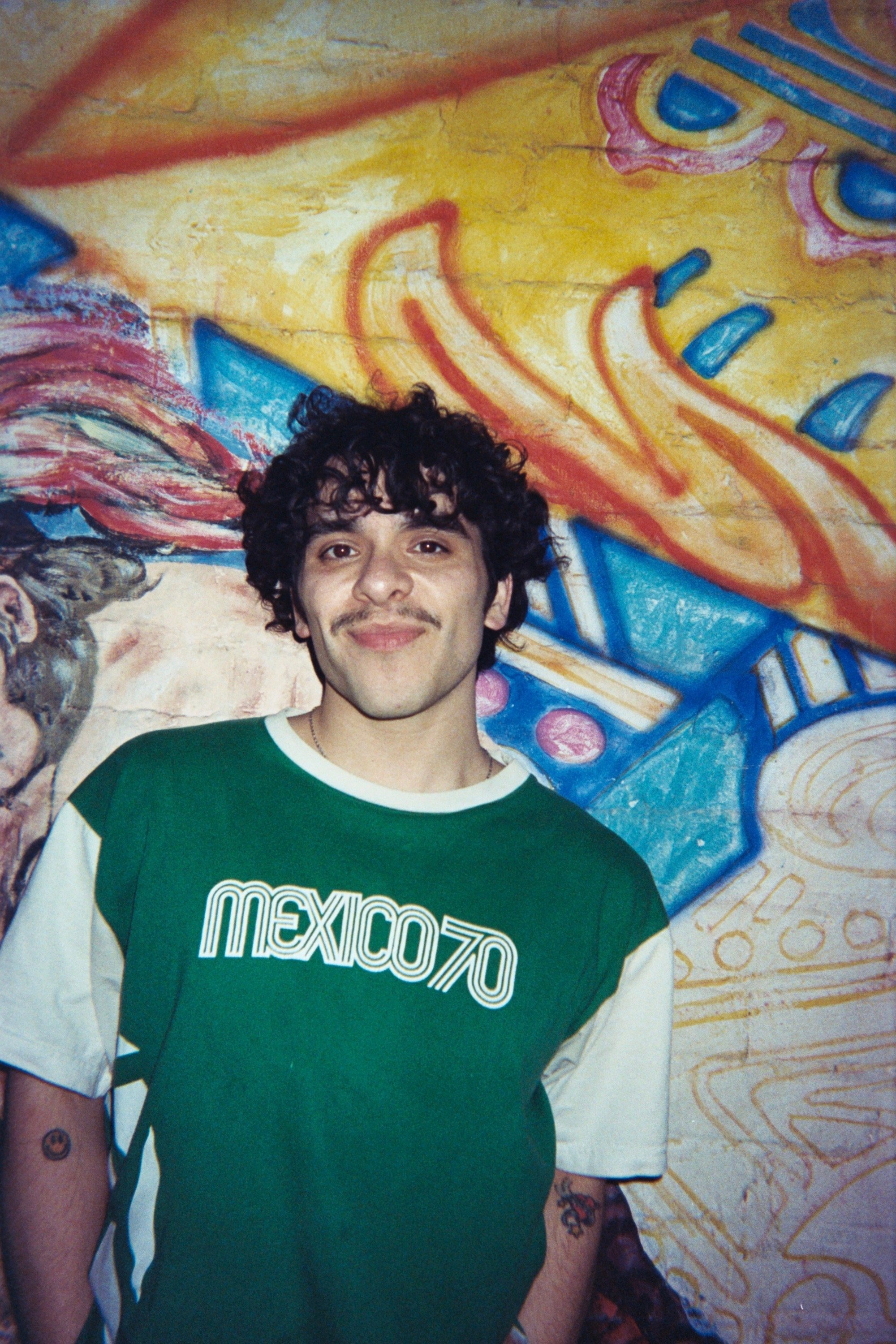
photo credit: ANDREA DIAZ
Your music has connected with listeners around the world. What do you hope Spanish-speaking audiences take away from this release?
sin ti is for the yearners, especially the ones who grew up speaking Spanish at home and English everywhere else. sin ti was made for leaving your situationship's house on a late summer night and wondering why you keep doing this to yourself. Honestly, I don't want to overthink what people take from it. I just hope it's fun and if it makes someone feel a little less alone in being dramatic about a person who doesn't deserve it, even better.
What can fans expect from Glitter Pop that they haven’t heard from you before?
There is some real Mexican magic happening inside Glitter Pop. I'm not trying to break new ground or do something that hasn't been done before, I'm just being the most authentic version of myself and that honesty is what ends up sounding different. You can expect the rawest, most vulnerable version of Victor yet. It's all so exciting, I really hope to inspire the next generation of Mexican-American artists that are growing up the same way I did.
Are there any dream collaborations, especially with Latin artists, you’d love to pursue?
There are actually a few features on the record that I secured, and I'm so excited for everyone to hear them. There's a group called AQUIHAYAQUIHAY from Mexico, and I had the honor of collaborating with one of the members on a track for my album. Top secret stuff for now.
Outside of that, there are some newer Latin artists that I am obsessed with right now. I'm a huge fan of Rusowsky, Alanis Yuki, Izatkm, Doony Graff, and so many more. I think we would all make something unique because they're also experimenting with different styles all the time. There are also artists I've admired forever and just haven't linked up with yet. Junior Mesa, Roy Blair, Sam Austins. I'm really into Fakemink. I wonder what a Fakemink bachata would sound like, maybe that's the next one after AQUIHAYAQUIHAY. In all seriousness, I respect these artists so much, and they inspire me with the ways in which they push genre boundaries.
Finally, what’s one thing you’re most excited about for the rest of this new era?
I'm excited for my family in Mexico to listen to the album. I've been dropping music mostly in English all these years, and to know that I can finally share my music with my family is heartwarming. For them to understand it and vibe out, it's a blessing for sure. I can't wait for my abuelita to listen to a Spanish DnB jersey song for the first time. It's going to be awesome.
