
IN CONVERSATION WITH PAOLO CASAGRANDE
interview by Timotej Letonja
Paolo Casagrande is the Executive Chef of Lasarte Restaurant in Barcelona, where he leads the kitchen with creativity, precision, and a commitment to culinary excellence. Working closely with Martín Berasategui’s gastronomic philosophy, Casagrande has played a key role in maintaining Lasarte’s three Michelin-starred status. His talent and dedication have earned him international recognition, including the prestigious 3 Knives award from The Best Chef Awards in 2024 and 2025.
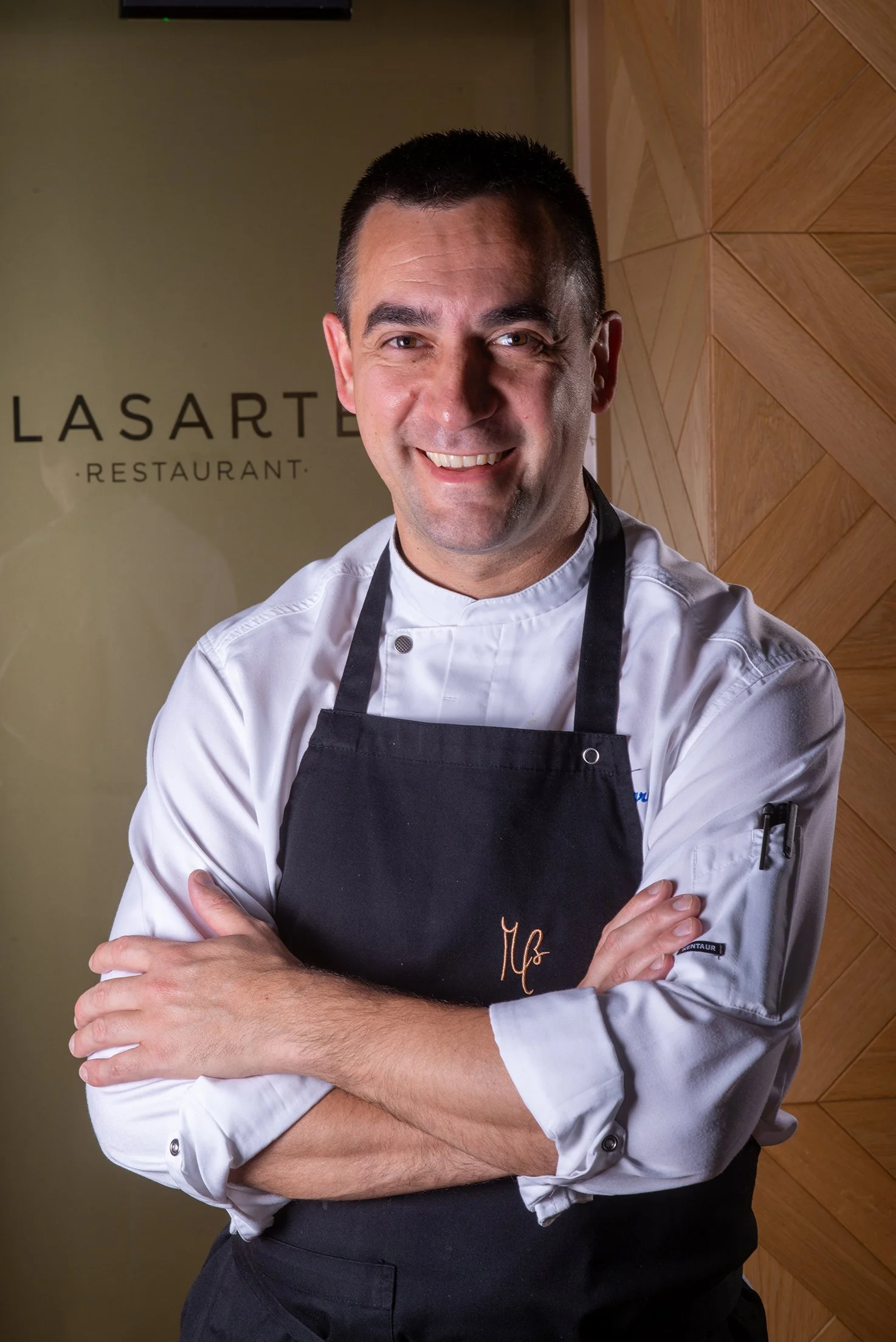
Your career has unfolded across three very different culinary cultures: Italy, France and Spain. Looking back, which country has shaped your philosophy most profoundly, and how do those influences continue to coexist in every dish you create today?
Italy gave me my roots and a very direct, emotional relationship with cooking. It was there that I learned a great dish can be built from just a few elements, provided the produce is exceptional and there is a clear idea behind it. France taught me rigour, precision and a highly structured approach to fine dining. Spain, and especially my years working alongside Martín Berasategui, taught me to keep questioning myself and to explore with greater freedom.
It would be impossible to single out any one of those cultures, because my cooking stems precisely from the dialogue between all three. From Italy, I retain a certain sensitivity and respect for simplicity; from France, discipline and technique; and from Spain, creativity and the desire to evolve. Today, these influences come together naturally in every dish.
You have worked alongside Martín Berasategui for more than two decades, an exceptionally long creative partnership in contemporary gastronomy. How has that relationship evolved, from the bond between mentor and protégé to a true creative dialogue?
When I met Martín, it was very much a relationship between a master and a young chef who still had a great deal to learn. I was struck by his energy, his discipline and his ability to inspire enthusiasm. He placed his trust in me very early on and gave me responsibilities that enabled me to grow, first in Tenerife and later in Barcelona.
Over time, that relationship developed into a dialogue built on trust and respect. We continue to share ideas, products and the same drive to improve. I am still learning from him, and we always say that we remain apprentices. Today, our creative exchange is very natural: he gives me the freedom to develop my own perspective, and we share the same understanding of gastronomy. After more than twenty years, that trust remains the driving force behind our partnership.
Lasarte has retained three Michelin stars since 2017, but sustaining excellence over time is arguably more difficult than achieving it. How do you ensure that you and your team remain creatively curious without chasing novelty for novelty’s sake?
Earning a distinction is important, but retaining it requires you to question yourself every day. The risk arises when you believe you have already arrived or begin repeating formulas that worked in the past.
At Lasarte, we try to maintain a constant sense of curiosity without pursuing novelty for its own sake. A new dish only makes sense if it evokes a different emotion, offers a more precise interpretation of the produce or represents a coherent evolution of our cooking.
Listening to the team is also essential. Creativity does not come from the chef alone, but from working together, experimenting and, very often, making mistakes. The three stars are not a final destination; they are a daily reminder of the responsibility we carry and an incentive to keep improving with humility and curiosity.
Respect for produce is a recurring theme throughout your biography. At a time when technique tends to attract much of the attention, do you think contemporary fine dining has become too focused on presentation and not focused enough on ingredients?
For me, everything begins with the produce. You need to understand it, respect its seasonality and know what treatment it requires. Technique comes afterwards, always as a tool. The best technical work is often the kind you do not notice, the kind that allows the produce to express itself naturally.
Technique is indispensable, but it only has meaning when it helps preserve the essence of an ingredient or reveal a new dimension of its flavour. If technique ends up overshadowing the produce, we risk losing sight of what truly matters.
Fine dining also has an aesthetic and creative dimension, and that is part of the experience. But for me, flavour must always take precedence over effect.
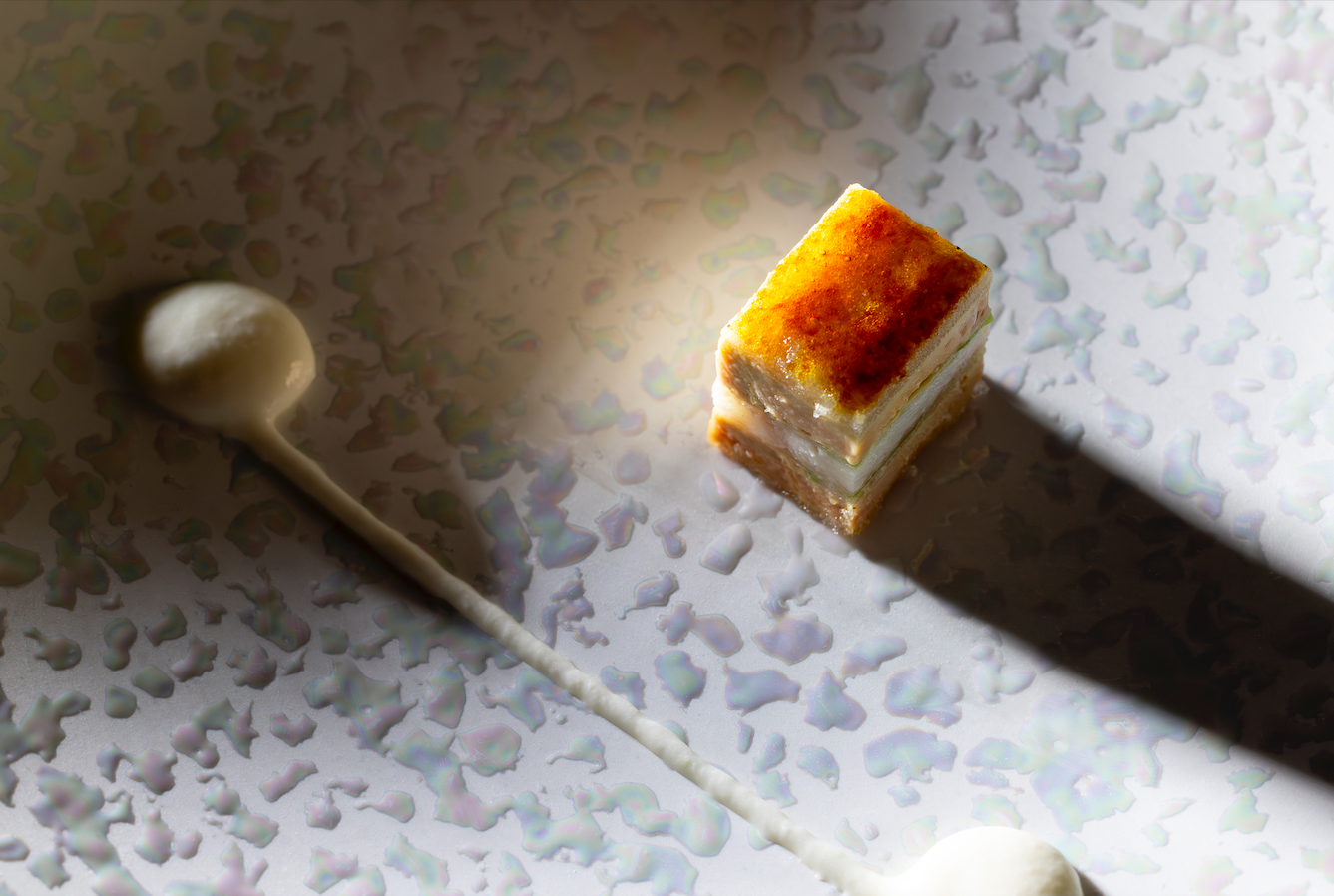
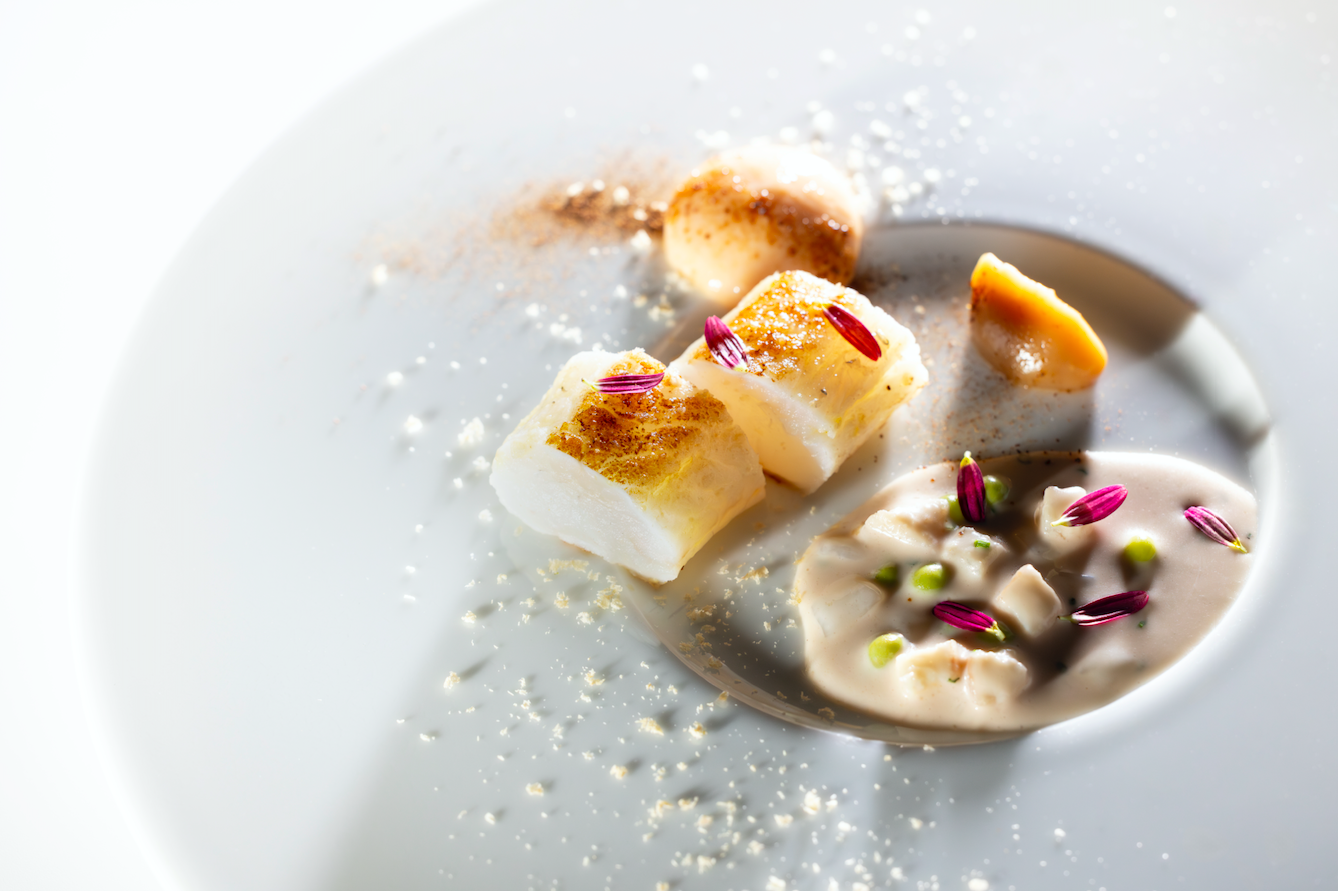
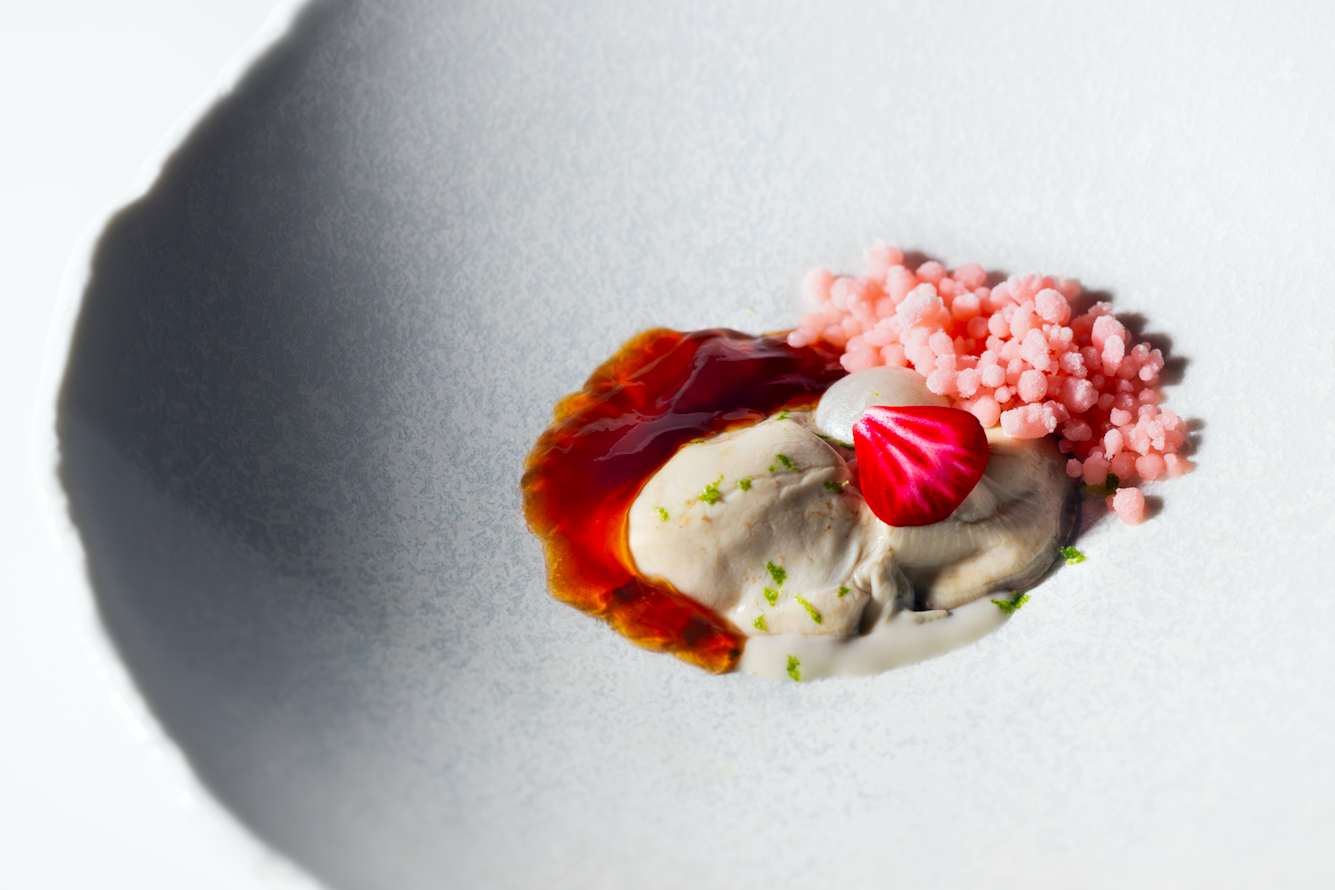
Italian cuisine is often associated with emotional simplicity, while Spanish fine dining has become closely linked to innovation and experimentation. How do you reconcile these two culinary languages in your own cooking?
Italian cuisine taught me that emotion can arise from simplicity, from a recognisable flavour or from a memory. Spanish cuisine, particularly in recent decades, has shown an extraordinary capacity to innovate and expand the boundaries of gastronomy.
In my cooking, I try to make these two languages complement one another. Creativity and technique should always result in a dish that is clear and coherent. I am not interested in complexity for its own sake, but in balance: a great deal of work may lie behind a preparation, yet the diner should experience it effortlessly.
My Italian side emerges through that emotional memory; Spain has given me the freedom and courage to explore. The result is not intended to be Italian or Spanish, but a deeply personal cuisine.
You have been described as a calm yet demanding leader. What have you learned about leadership in the kitchen over the years, and how has your understanding of discipline changed since becoming a head chef?
When you are young, it is easy to confuse discipline with control. You think leadership means supervising everything and correcting every detail. Over time, you come to understand that a team grows when demanding standards and trust coexist.
I remain very rigorous, because fine dining requires consistency, precision and attention to detail. But today, I try to explain the reasons behind what we do. When someone understands the intention behind a preparation, they can take on responsibility and contribute their own sensitivity.
I have also learned that a chef’s state of mind sets the tone for the team. Calm does not mean a lack of intensity; it means knowing how to manage pressure and create an environment where people can work with focus, respect and discipline.
Fine dining is increasingly expected to engage with issues such as sustainability, ethics and local sourcing. Beyond working with exceptional ingredients, what responsibility do you believe a restaurant with three Michelin stars bears towards the future of gastronomy?
A restaurant with three Michelin stars enjoys considerable visibility and, therefore, bears considerable responsibility. Selecting exceptional ingredients is not enough; we must ask where they come from, how they are produced and what impact our work has.
Sustainability is not a trend, but a way of understanding cooking: respecting seasonality, reducing waste, making better use of every ingredient and working with suppliers who share our values.
We also have a responsibility towards people. The future of gastronomy will depend on our ability to look after our teams, pass on our craft and provide a professional environment that is demanding yet sustainable. Ultimately, excellence only has meaning when it is accompanied by responsibility.
Many chefs speak about finding their own voice, but you have built much of your career within one of the world’s most respected restaurant groups. How do you balance preserving Martín Berasategui’s legacy with the need for Paolo Casagrande’s identity to continue evolving?
I have never regarded Martín’s legacy as a constraint; on the contrary, it has been the foundation from which I have been able to grow. We share fundamental values, including respect for produce, discipline, generosity towards the team and a desire to move people.
Preserving that legacy does not mean repeating dishes, but understanding a way of working and allowing it to evolve. Martín has always given me the freedom to develop my own culinary identity, and that trust has been fundamental.
My identity has developed naturally from my Italian roots, my training and more than twenty years of working alongside him. I do not need to distance myself from that world to express who I am; my voice lies in how I interpret it and help it continue to evolve.
Precision is often seen as one of the defining qualities of fine dining, although memorable meals tend to be remembered more for how they make us feel than for their technical perfection. In your opinion, what transforms a technically flawless dish into an emotionally unforgettable experience?
Technique can make a dish flawless, but it cannot guarantee that it will be memorable. For a dish to move someone, it needs a clear intention, a combination of flavours that makes sense and, very often, a connection with the diner’s own memories.
A moving dish does not have to be spectacular. It can be delicate, restrained and apparently simple. What matters is that it feels honest and that every element is exactly where it belongs.
Everything surrounding the experience matters too: the pace of the service, the dining room, the company and the moment in which it is enjoyed. That is why, at Lasarte, we see the kitchen and dining room as part of the same language.
After more than twenty years at the highest level of international gastronomy, what continues to excite you when you enter the kitchen each morning, and what ambitions have you yet to fulfil?
I am still excited to walk into the kitchen and feel that there is always something new to learn. Every day, an ingredient, a conversation or an idea can open up a new path.
Watching the team grow also inspires me. Seeing someone gain confidence, find their place and develop their own perspective is one of the greatest rewards of this profession. After so many years, I believe more than ever in the value of working together.
I do not think too much about a final destination. My ambition is for Lasarte to continue evolving without losing its esse
