
IN CONVERSATION WITH YARA SHAHIDI
interview by JANA LETONJA
Yara Shahidi has established herself as one of the most influential multi-hyphenate voices of her generation, balancing acclaimed performances, producing, activism, and cultural leadership with remarkable ease. Best known for her breakout role as Zoey Johnson on Grown-ish and Black-ish, she has consistently used her platform to champion representation, education, and social change while building a career that moves fluidly across film, television, and media. A graduate of Harvard University, she continues expanding her creative influence through acting and producing projects, including The Beekeeper 2 opposite Jason Statham and Netflix’s One Attempt Remaining. From becoming Disney’s first Black Tinker Bell in Peter Pan & Wendy to hosting The Optimist Project, Yara continues to shape a career defined by intelligence, intention, and meaningful storytelling both on and off screen.

full look MIRON
ring HOUSE OF EMMANUEL
shoes LE SILA
You’ve built such a multifaceted career across acting, producing, activism, and media. How do you personally define success at this point in your journey?
At this point in my journey, having acted for 22 of my 26 years, I’ve always enjoyed the act of being creative. I’ve felt so much gratitude for being able to step into academia and producing, and I feel like my career has evolved naturally without needing a five-year plan or a static goal in sight. I’ve simply been along for the ride.
This stage of my career has been especially reinvigorating because it’s what I consider my “year of experiences.” After stepping away from Grown-ish, a show that, along with Black-ish, took me through nearly a decade of my life, I’ve had the opportunity to focus less on what the “right” next move is and more on what the new next move is. What haven’t I done yet? What is there left to explore?
Twenty years into my career, every project I’ve touched has been completely different from the last, and I think that’s acting at its best, an opportunity to be endlessly curious. So success, to me, is being able to push myself into something new, letting go of a fixed idea of what something should look like, and prioritising what feels right. That approach has treated me well.
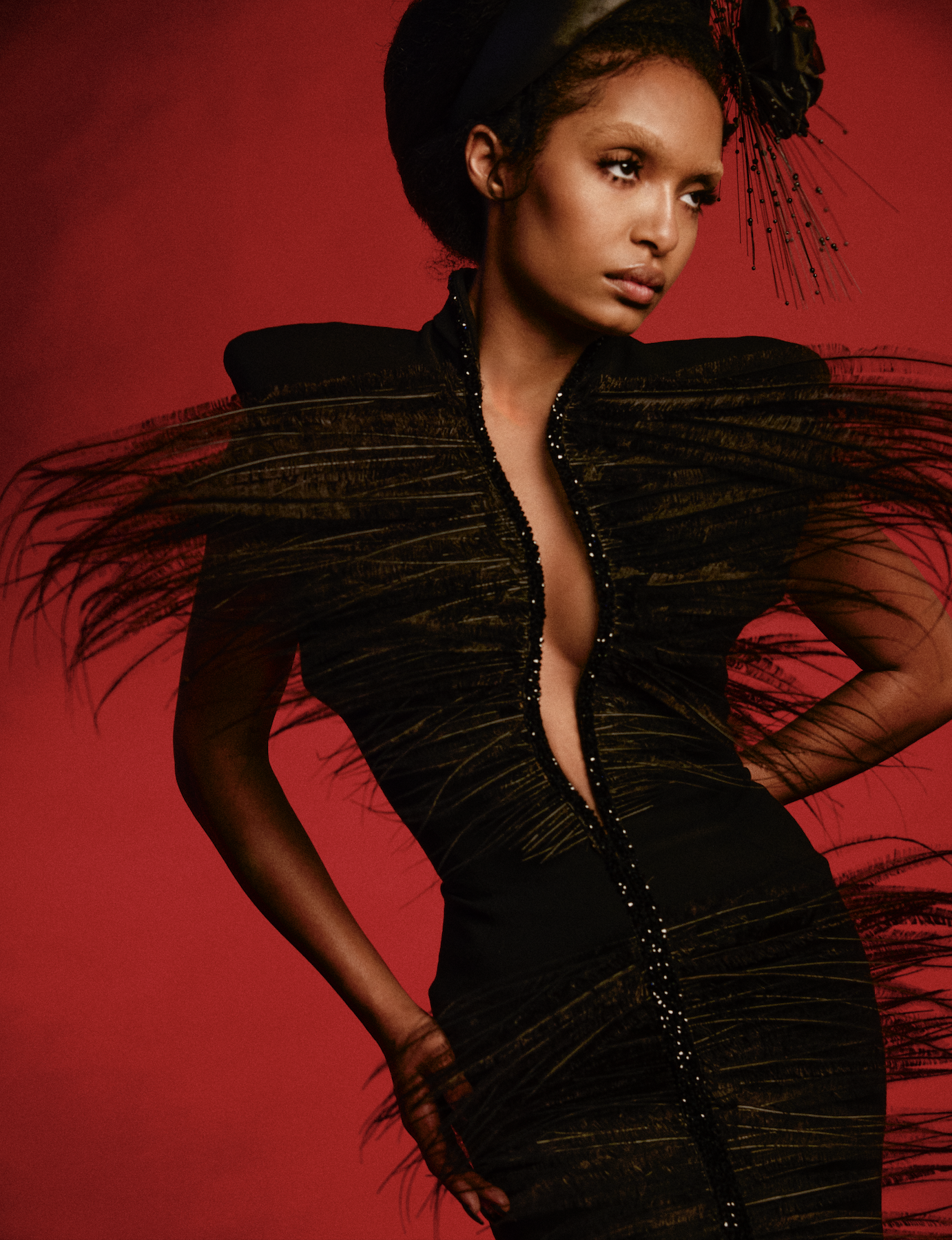
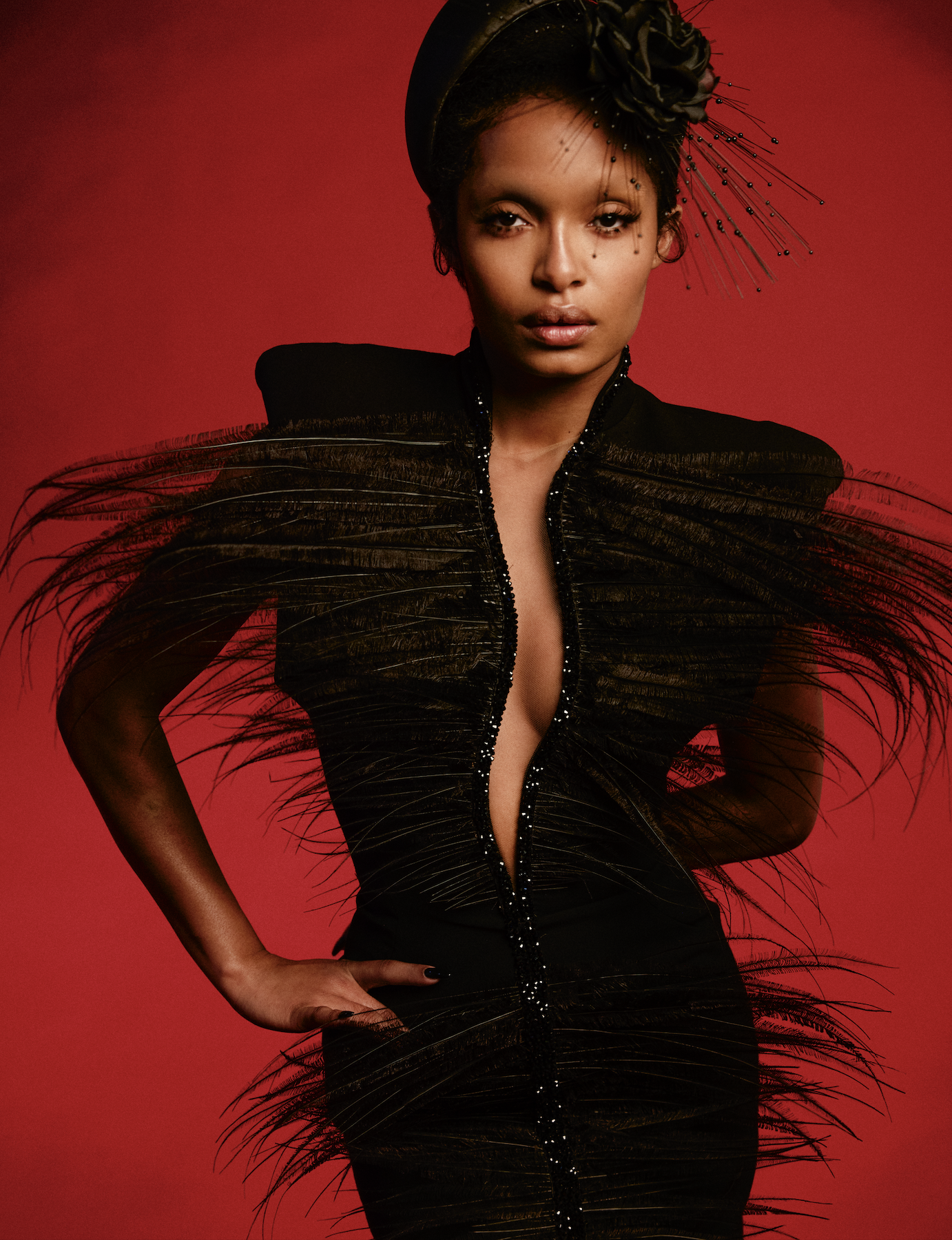
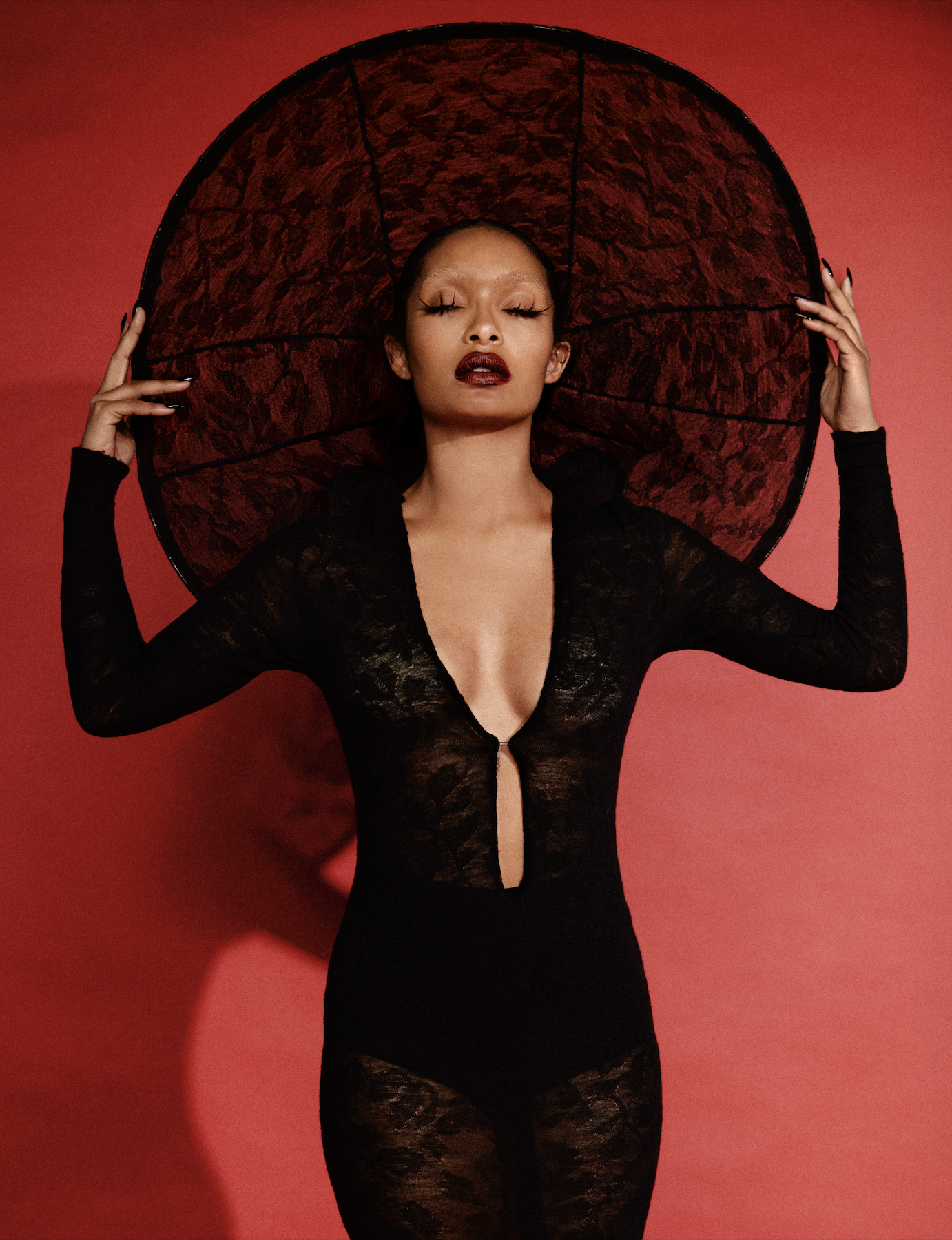
dress STEPHANE ROLLAND
head piece RINALDY YUNARDI
Looking back, how much did Black-ish and Grown-ish shape your identity both professionally and personally?
Black-ish and Grown-ish carried me through so many milestones, both personally and professionally. They taught me what it means to be part of an ensemble, then what it means to lead a show, and eventually what it means to be a producer and executive producer.
They were the best training ground I could have asked for, and I was lucky to do it alongside people I genuinely loved and respected. It gave me a safe space to experiment, not only with how I wanted to show up as an actor, but also how I wanted to show up as a collaborator and producer.
One thing I took from those experiences was the value of true collaboration. The department heads on Grown-ish encouraged curiosity. The hierarchy was intentionally flattened, and everyone, from writers and directors to grips and sound technicians, was empowered to contribute. It felt like a collective effort to build something meaningful. That’s something I continue to seek in every project, environments where people feel valued as experts in their respective fields and where collaboration is at the centre of the process.
Your upcoming projects span very different genres. What excited you about joining The Beekeeper 2 opposite Jason Statham?
What I can say is that The Beekeeper 2 has been an absolute treat. I haven’t really worked in the action genre before, unless you count my tiny role in Salt, where I got to take Angelina Jolie’s dog while she was busy being a CIA operative. I was eight years old, and honestly, watching her scale walls and perform those stunts sparked my love of action films, especially women in action films.
I’ve also practised karate for much of my life, so I’ve always loved the genre. And Jason Statham is truly one of the best when it comes to his craft.
What struck me most was the atmosphere on set. Much like the environment we built on Black-ish and Grown-ish, Jason has created a team that feels like family. Many of the crew members have worked with him for years. The set runs like a well-oiled machine, and it was incredible to observe and become part of that. I can’t wait to share more. I learned so many new skills and had the chance to show up very differently from characters like Zoey or Tinker Bell.
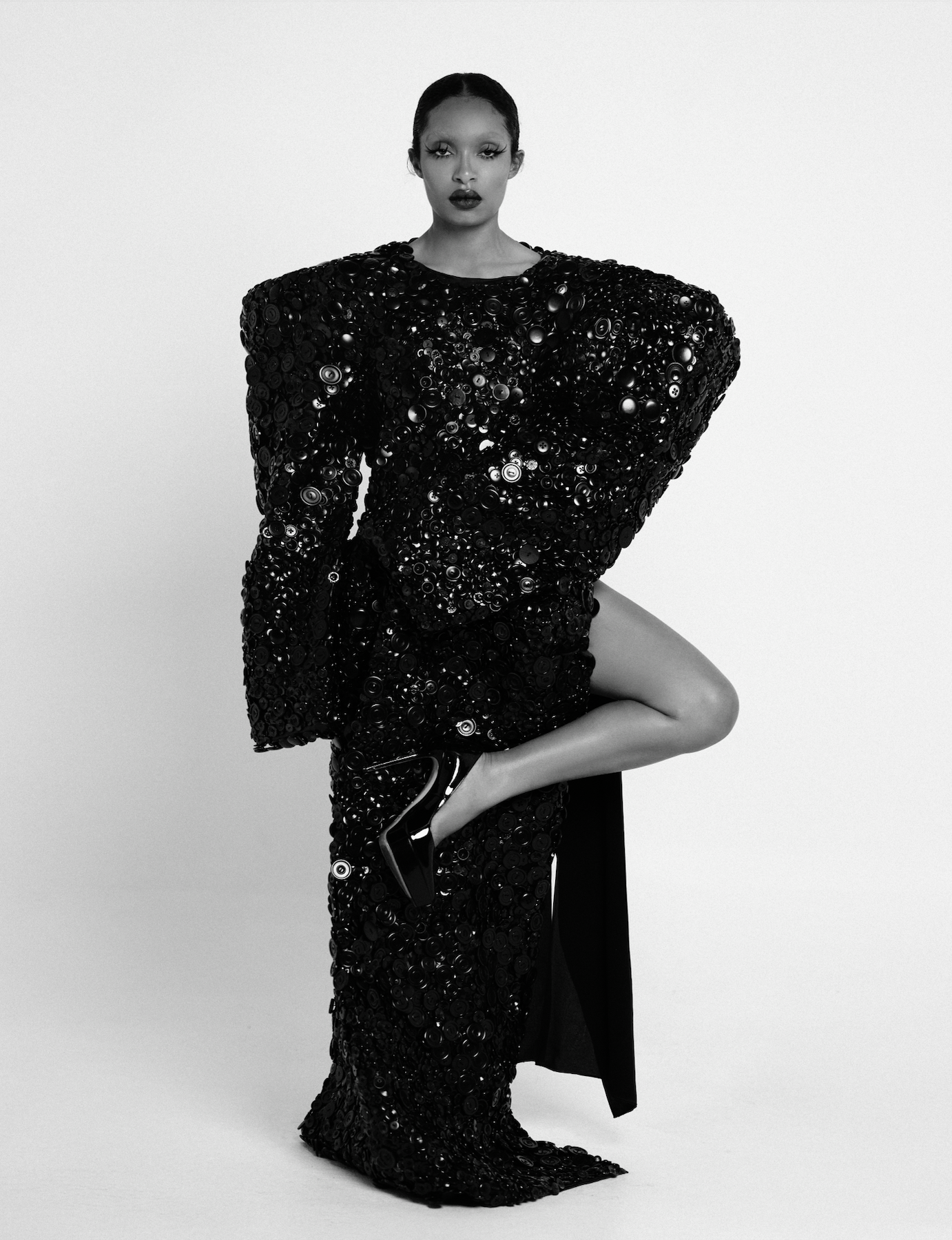
dress KILIAN KERNER
shoes LE SILLA
How has your approach to choosing roles evolved over the years?
Toward the end of my time on Grown-ish, I became very focused on finding the “perfect” next role. I think many former child actors feel pressure to carefully orchestrate how they reintroduce themselves to audiences. I had this idea that the perfect project would eventually arrive. The perfect character, the perfect director, the perfect distributor, the perfect script. But stories don’t work that way. Scripts are living, breathing things that continue evolving until audiences finally experience them.
Because I was chasing perfection, I sometimes overlooked projects that were genuinely great. I had become so focused on finding the “right” next move that I lost sight of what drew me to acting in the first place, a love of stories.
Everything changed when I reframed this period as my “year of experiences.” Instead of asking whether something was strategically correct, I started asking what experiences I hadn’t had yet. What genres excite me? What characters move me? What questions am I interested in exploring?
I shifted from being vehicle-first to character-first. No one can predict how a project will ultimately be received. Some beautifully written projects don’t connect with audiences, while overlooked projects become cultural phenomena. Once I stopped trying to predict outcomes and focused on whether a character excited me, my decisions became much more intuitive. My yeses and nos became anchored in curiosity, growth, and the questions I’m exploring as a young person.
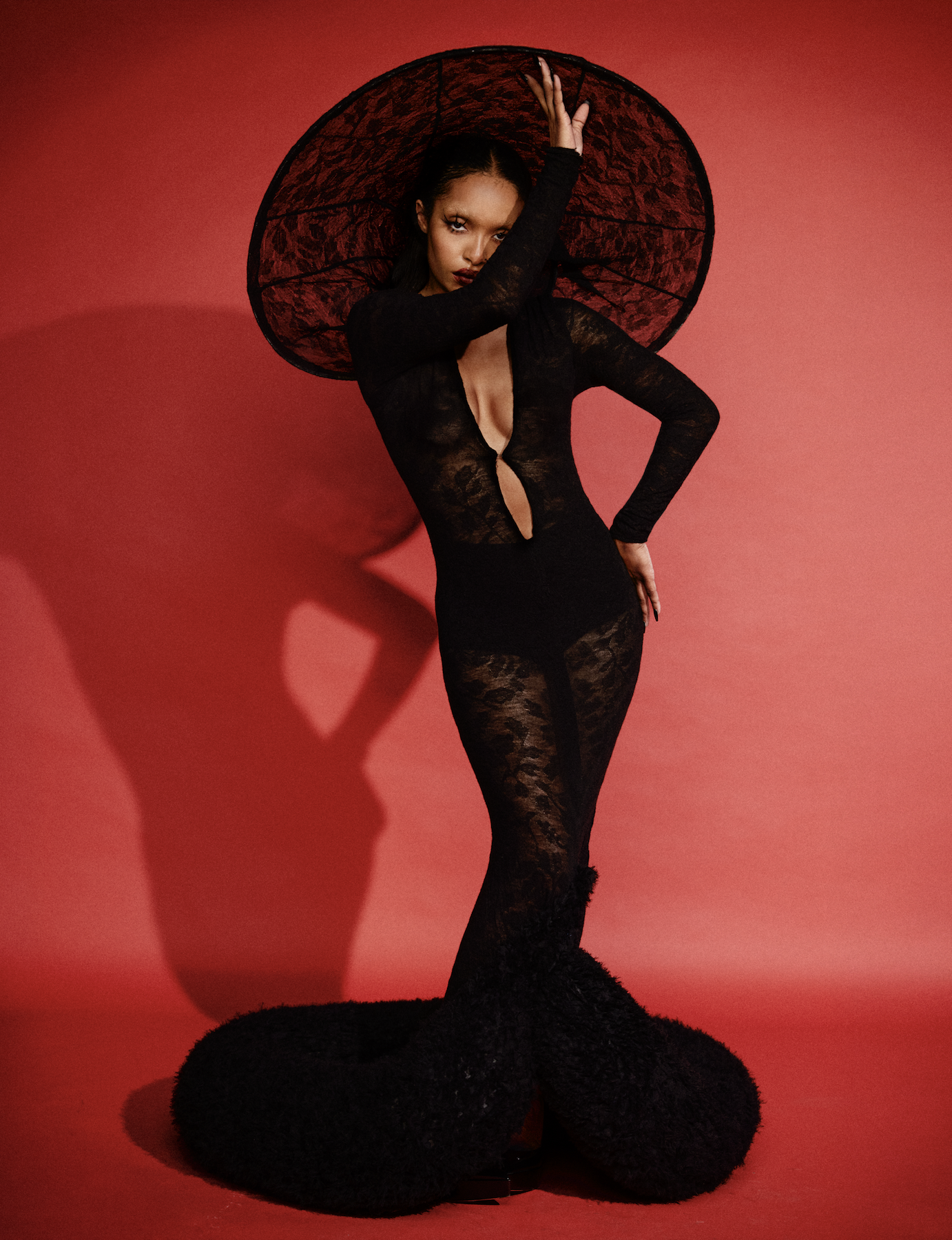
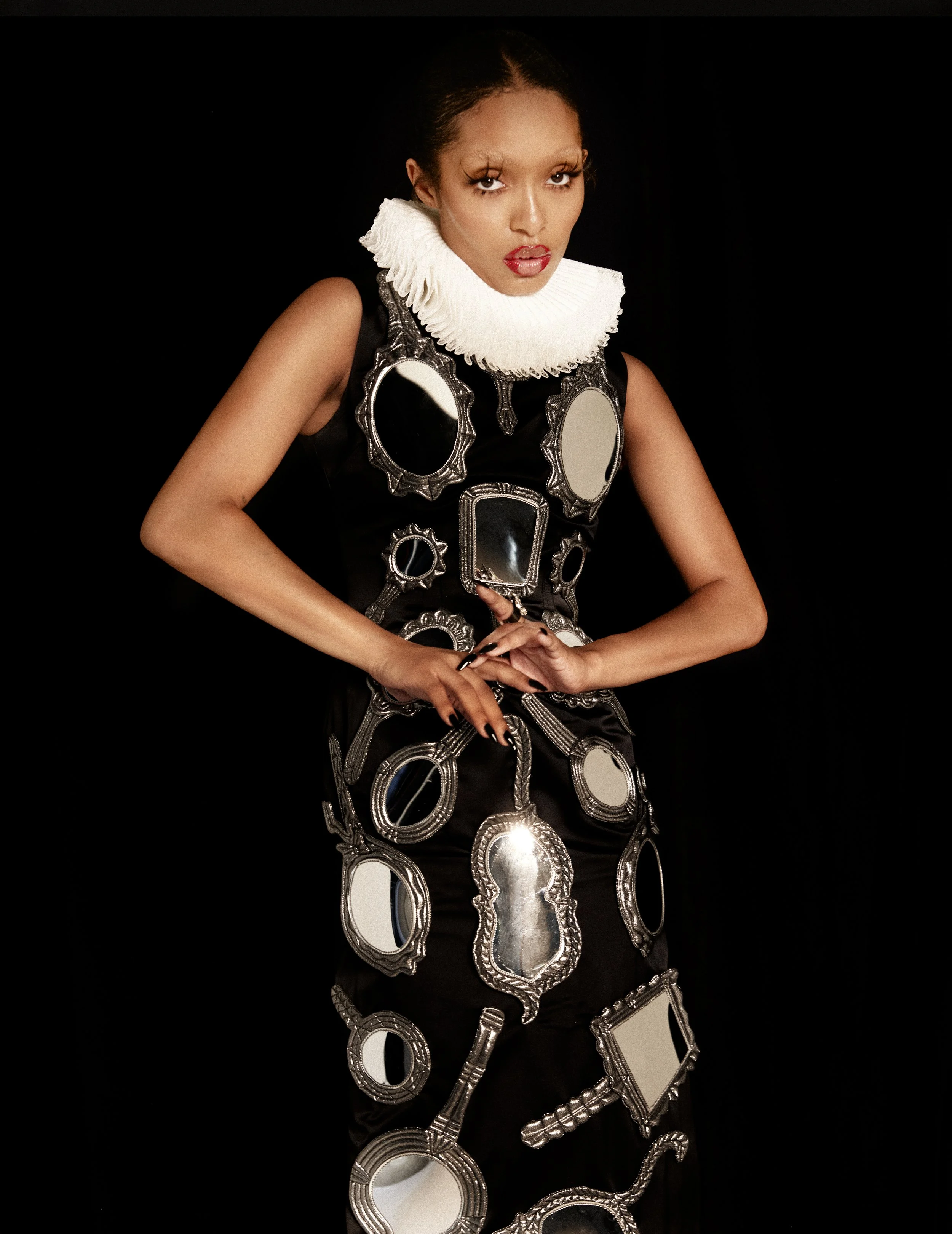
dress BAD BINCH TONGTONG
shoes FLOR DE MARIA
You’re also producing more through 7th Sun. What kinds of stories are most important for you to bring into the world?
Grown-ish really shaped my first steps into producing, and when my mother and business partner, Keri Salter, and I launched 7th Sun, it felt like a natural evolution. We realised we’d already been doing this work behind the scenes for years.
We share a very aligned vision. We love character-first storytelling and stories that immerse audiences in worlds that feel familiar yet underexplored. Whether it’s fashion, academia, or the art world, we’re always asking, “How can we open the door a little wider and invite audiences inside?”
Another thread that has emerged organically is intergenerational storytelling. Whether it’s family or chosen family, we’re fascinated by how people across generations approach the same questions differently. Through those relationships, we’re able to explore universal themes from multiple perspectives. Ultimately, we start with curiosity. We begin with what excites a writer, and it’s always amazing to see where that curiosity leads.
How different does storytelling feel when you step behind the camera as an executive producer?
Honestly, the lines have always felt somewhat blurred for me. I’ve been fortunate to work in environments where actors were invited into the larger creative process, so I’ve always felt invested in the overall success of a project. Whether acting or executive producing, the goal is ultimately the same: figuring out what best serves the story.
As an actor, it’s easy to focus on making your character compelling. But the more important question is how that character serves the entire piece. How does their journey elevate the story, the ensemble, and the work being done by every department.
Executive producing feels similar. You’re building teams, creating alignment, and helping different creative voices come together around a shared vision. Because I’ve always approached acting from that collaborative perspective, producing has felt like a natural extension of the same mindset.
dress ABODI
shoes FLOR DE MARIA
ring HOUSE OF EMMANUEL
You balance intellectual curiosity with mainstream entertainment in a really unique way. How important is education and conversation within your work?
Education and conversation are integral to my work because they are integral to my life. I was raised in a very intentional way. My mother gave me the opportunity, again and again, to develop my voice and perspective. I had an incredibly curated bookshelf, and because my mother and business partner, Keri, began in education before moving into the nonprofit space, she gave me a very unique understanding of entertainment as storytelling, something connected to the world around us, not separate from it.
It all unfolded naturally. It wasn’t until later in my career that I realised there was a through line of education and conversation in my work. I didn’t set out thinking television should function as a PSA for cultural or social issues, but I was naturally drawn to stories that engaged with the world.
Starting on a show like Black-ish, which was unabashedly in conversation with culture while also prioritising comedy, proved to me early on that those things can co-exist. You can have heavy conversations while making truly enjoyable media.
Now, whether I’m acting or producing, I start with story first. What does this character allow us to talk about? How can this arc make people feel less alone? When you begin from a creative place and stay grounded in truth, the education is naturally baked in.
Our lives are a lifelong education. Everything that happens in our communities is a lesson. When stories are anchored in reality, the lessons reveal themselves. Sometimes you realise, “Oh, this is about chosen family,” or, “This is about gender disparities,” or, “This is about both the burden and joy of being a Brown woman in community.” That’s how it has always happened for me, and it remains deeply important.
What inspired you to create The Optimist Project podcast, and what have you learned from speaking with changemakers across industries?
The Optimist Project was something Keri and I created because we wanted to have more direct conversations with the community we’ve built, and with the people who were already moving us behind the scenes.
As much as film and television can be natural mediums for bigger conversations, we realised that some of the most moving conversations happened after someone called cut, or when we ran into filmmakers, artists, or changemakers at conferences, lunches, dinners, fashion shows, or festivals. Those were the moments when people talked honestly about what it means to be human, how they find joy, and how they replenish themselves in difficult times.
But many of those conversations were happening in exclusive spaces. Access has always been important to us, so The Optimist Project became a way to break down those walls. The podcast isn’t really about people’s careers, even though we’ve been lucky to speak with people who have incredible careers across industries. It’s more about what underpins those careers, their personal practices, what keeps them up at night, how they care for themselves, and how they move through the world.
We also wanted to create a space for thoughtful interviews that still felt safe. We’re not looking for a viral, controversial clip or to take people out of context. We want guests to feel they can be honest, vulnerable, and fully represented. Because of that, people have opened up about their mental health, spiritual practices, religious practices, personal routines, and how they shake off hard moments. Hearing changemakers be that honest has been incredibly refreshing for me as an interviewer, and it’s something we want to continue doing.
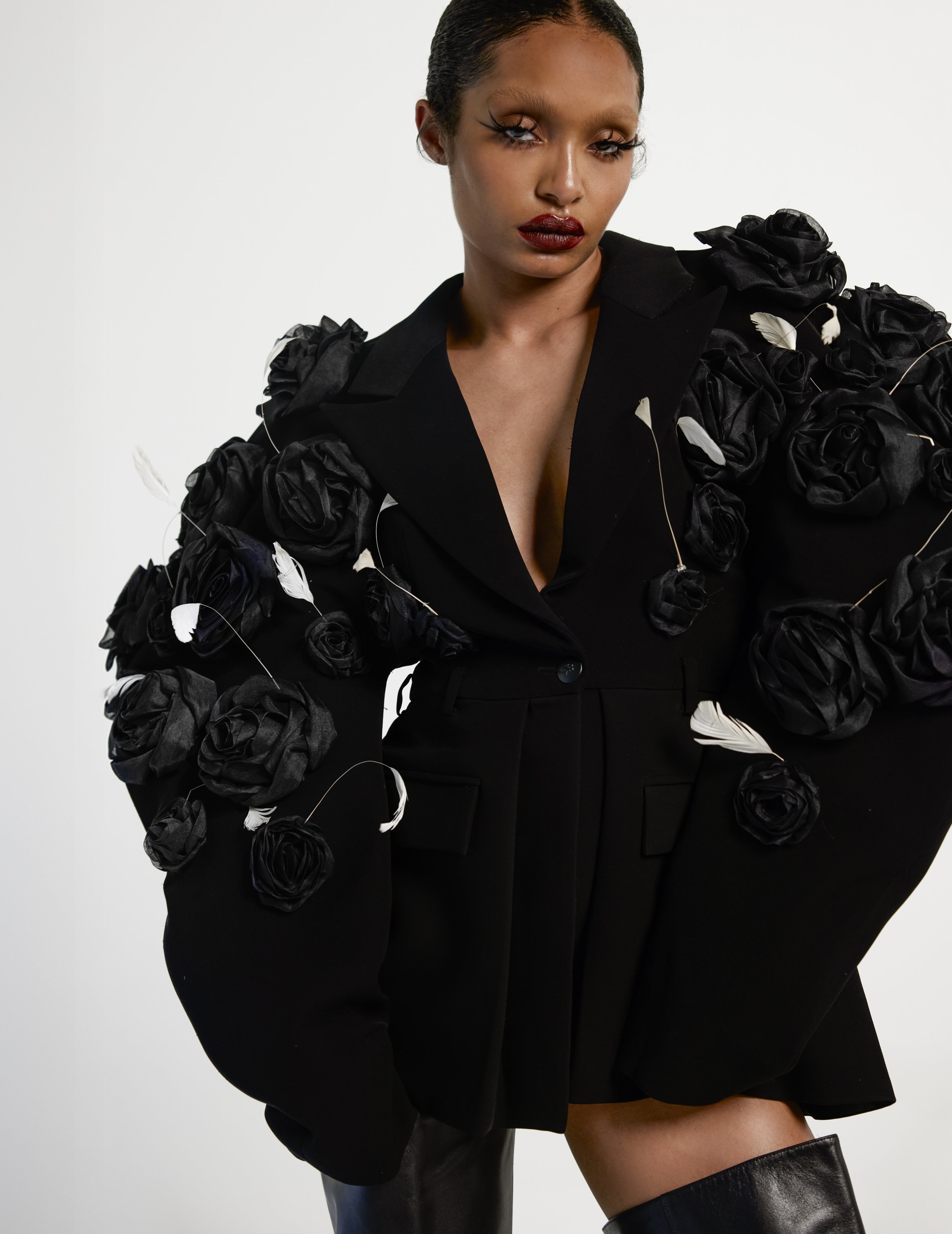
blazer FALGUNI AND SHANE PEACOCK
boots FLOR DE MARIA
As someone who graduated from Harvard University while maintaining a major acting career, how did you navigate that balance?
It definitely wasn’t just me. It took a team of people who invested in me not only as an actor, but as a human being with curiosity. That starts with Keri. Together, we built a team that wanted the best opportunities for me professionally while also honouring my desire to go to school. When I joined CAA at 16, I was very honest about wanting to attend university. Some people warned me that I might “miss my moment,” but the people who stayed with me understood that the moment wasn’t going anywhere. The moment is where we make it.
It took a lot of coordination, from producers, from the Grown-ish team, from so many people, to make it possible. It meant planning flights, class schedules, and production calendars around each other. Instead of saying, “You signed a six-year contract, come back to LA and film,” people said, “She wants to do this. Let’s figure out how.”
It was a lot of work. I don’t know if I could do it again, but I’m so happy I did. I needed that balance. I needed space to be intellectually curious and pursue interests that had nothing to do with my career, whether that was healthcare and morality, a class on hip-hop sampling in the hip-hop archives, or Old English. I needed to let my brain do hard work outside of acting. And then it was also beautiful to return to my work, to 18x18 and everything I was creating at the time, with a sense of agency. I don’t think one part of my life would have been the same without the other.
How do you personally stay grounded while operating in so many public-facing roles?
I could call it luck, but I think I’ve been fortunate that the people who have grown up with me support who I am as Yara.
The people I cross paths with are usually very respectful. I didn’t take a single photo with anyone while I was in Boston because people respected that I wasn’t taking photos while I was at school. But we still had incredible conversations.
I’ve been granted a world of balance. Sometimes I’m on a red carpet or doing something very public, and that comes with photos and interviews. But I’ve also always been able to step away and be quiet. People still share their love, and I receive it, but I’ve never felt that being public-facing has stopped me from living my life. Part of that is because I’ve chosen to be authentically Yara in public too. I love having a personal life and not sharing every detail, but the Yara you meet at dinner with my friends is the same Yara you’ll meet at an event. I’m proud that my friends can come to work with me or attend events and still see the same person. It doesn’t feel like I flip a switch. I just move through the world as myself.
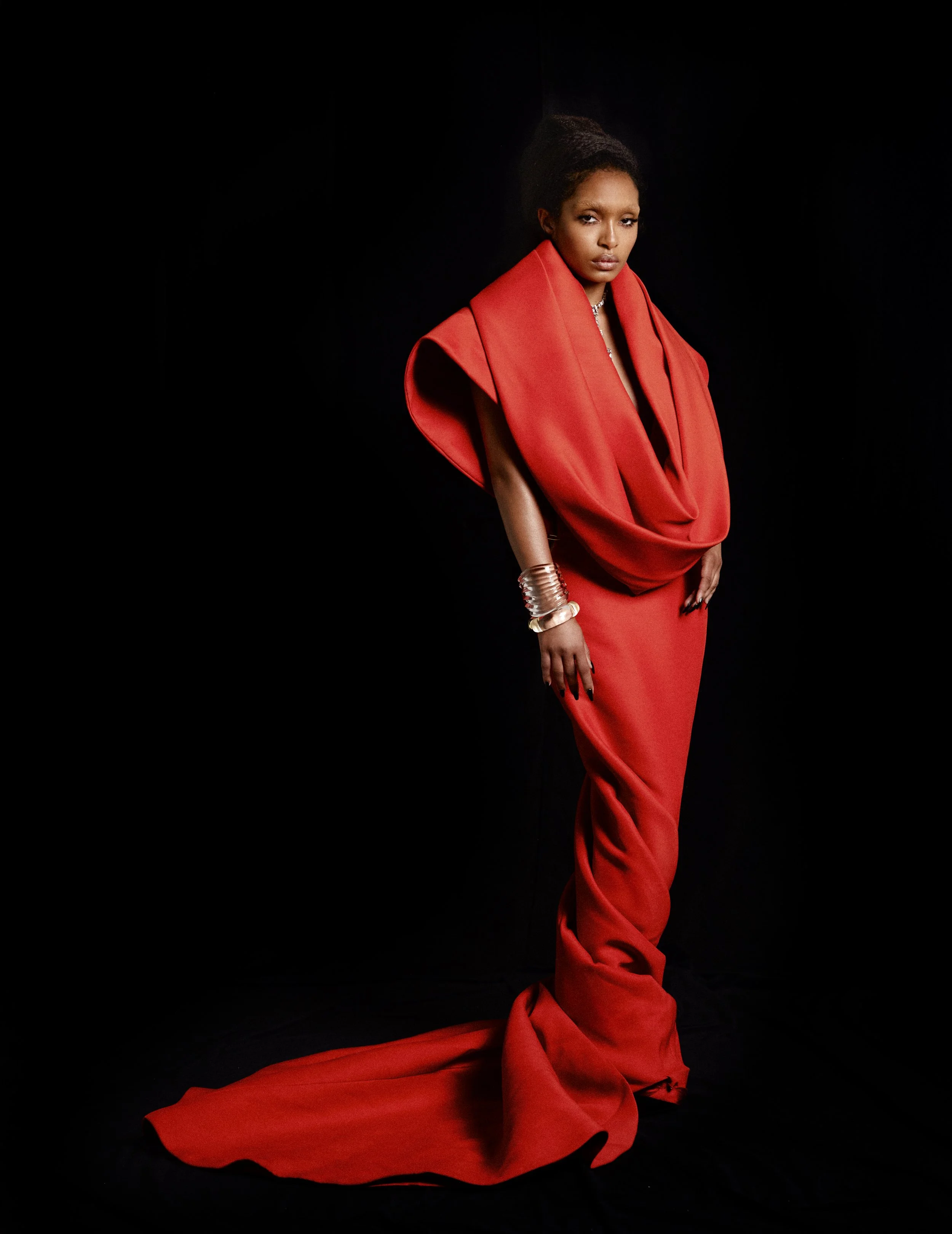
dress STEPHANE ROLLAND
shoes LE SILLA
cuffs ALEXIS BITTAR
necklace CRISTAHLEA
Fashion and visual identity also seem deeply connected to your public presence. How do you view style as a form of communication?
Fashion and film have always been connected for me. Style is a visual language. My fashion choices are some of the few moments when I’m off-screen and get to tell my own story. So much of what I do involves lending my skills to someone else’s vision, but when I step onto a carpet or into a fashion moment, I get to craft who Yara is. It becomes completely about me as an individual.
As a history nerd, fashion has always fascinated me. Even before I had access to incredible brands, I was saving Givenchy clippings, film references, and images from political movements. I was interested in what people wore, how that communicated something to an audience, and how the people I admired used fashion to start conversations or reclaim space.
That’s why I don’t just enjoy fashion, I have a deep love for it. It’s also a space where artisans across fields come together. You can have a DP from a major film, an incredible atelier, set designers, and a beautiful location all collaborating on one visual idea.
Fashion challenges me to ask, “How are we using visuals to be in conversation?” I often rely on words, but fashion forces me to distil a message. What is the clearest version of what I’m trying to say? How can I communicate it so clearly that people feel it without me having to explain?
What conversations or issues are most motivating you right now, creatively and socially?
Creatively, I’ve been diving into the niche stories we haven’t told yet. I’ve been in a real Yukio Mishima phase as a reader, and I find his work fascinating because it offers such an interesting glimpse into global conversations about absurdism and the meaning of life.
As someone who spent years studying the absurdism of US politics and the absurdism of life, how we are all supposedly in pursuit of freedom while so many people actively try to interfere with the freedoms of others, it’s refreshing to develop a more global understanding of those conversations.
Socially, I was recently at the Peabody Awards, and it was incredible because it brought so many of my favourite people into one room. Journalists, documentarians, and storytellers who are not only highlighting specific issues but also showing how those issues are part of a larger web.
This has been a time when I’ve leaned into my studies, including reading Gramsci and spending a year writing a thesis on Sylvia Wynter. It has reminded me that storytelling is more important than ever because storytelling is how we mediate news. In this attention economy, so much depends on whether a story is compelling enough to make people pay attention. How we tell stories shapes how we value other people and how important we believe their lives are in relation to our own. That’s why I’ve been so motivated by new forms of storytelling across podcasts, documentaries, television, and film, spaces where people are centring others’ stories and weaving current events into narrative.
It may sound broad, but it all connects to my ongoing love of education. I am who I am because of how I was educated and informed growing up. As much as we talk about culture wars, we are also living through narrative wars. There has been intentional narrative erasure, and we know stories matter. Caring about a community can begin with something as simple as whether that book made it onto a syllabus, whether students got to read Beloved by Toni Morrison or Sandra Cisneros.
That is what I’m tracking most closely: how we continue to push forward at a time when so many communities have been narratively condemned.
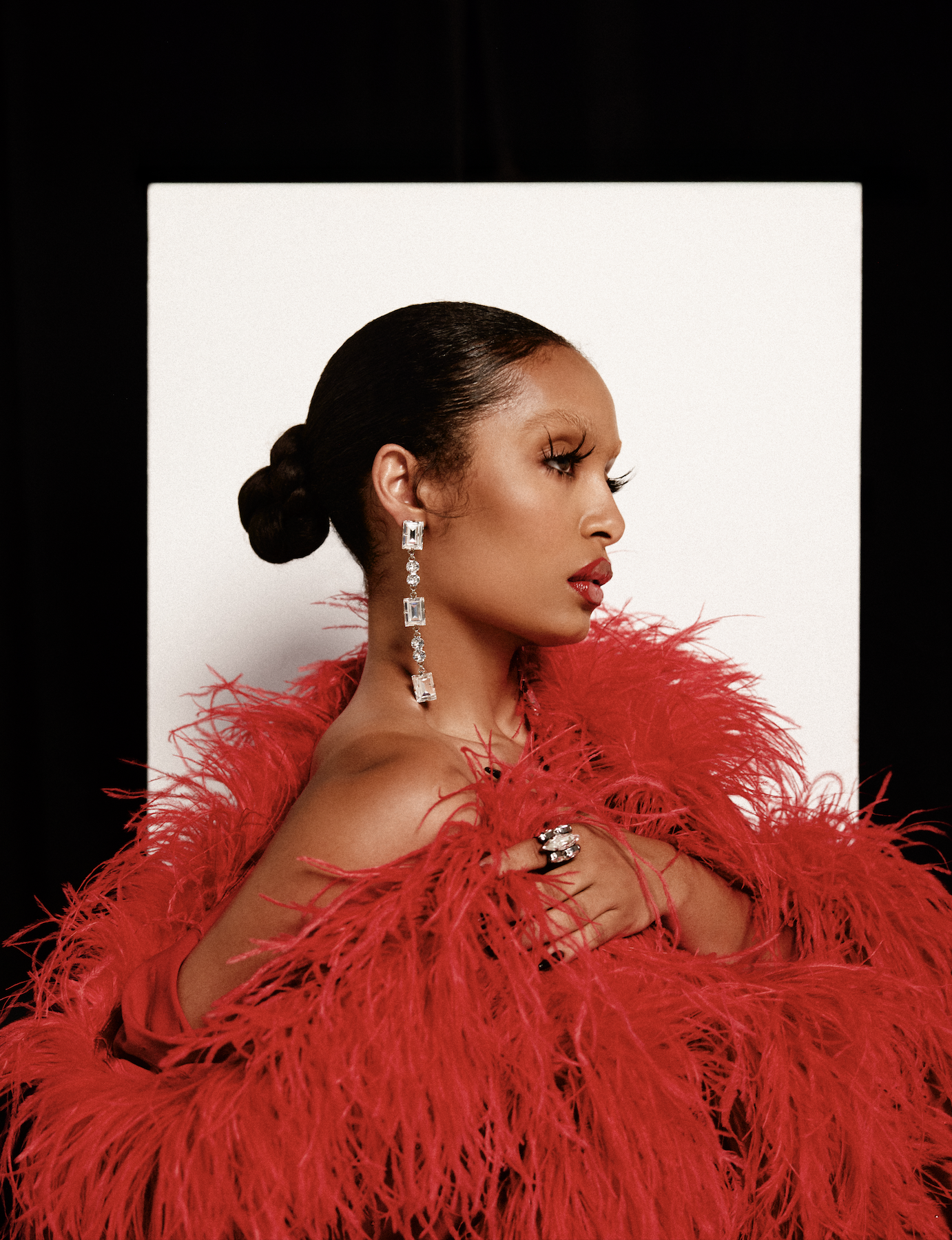
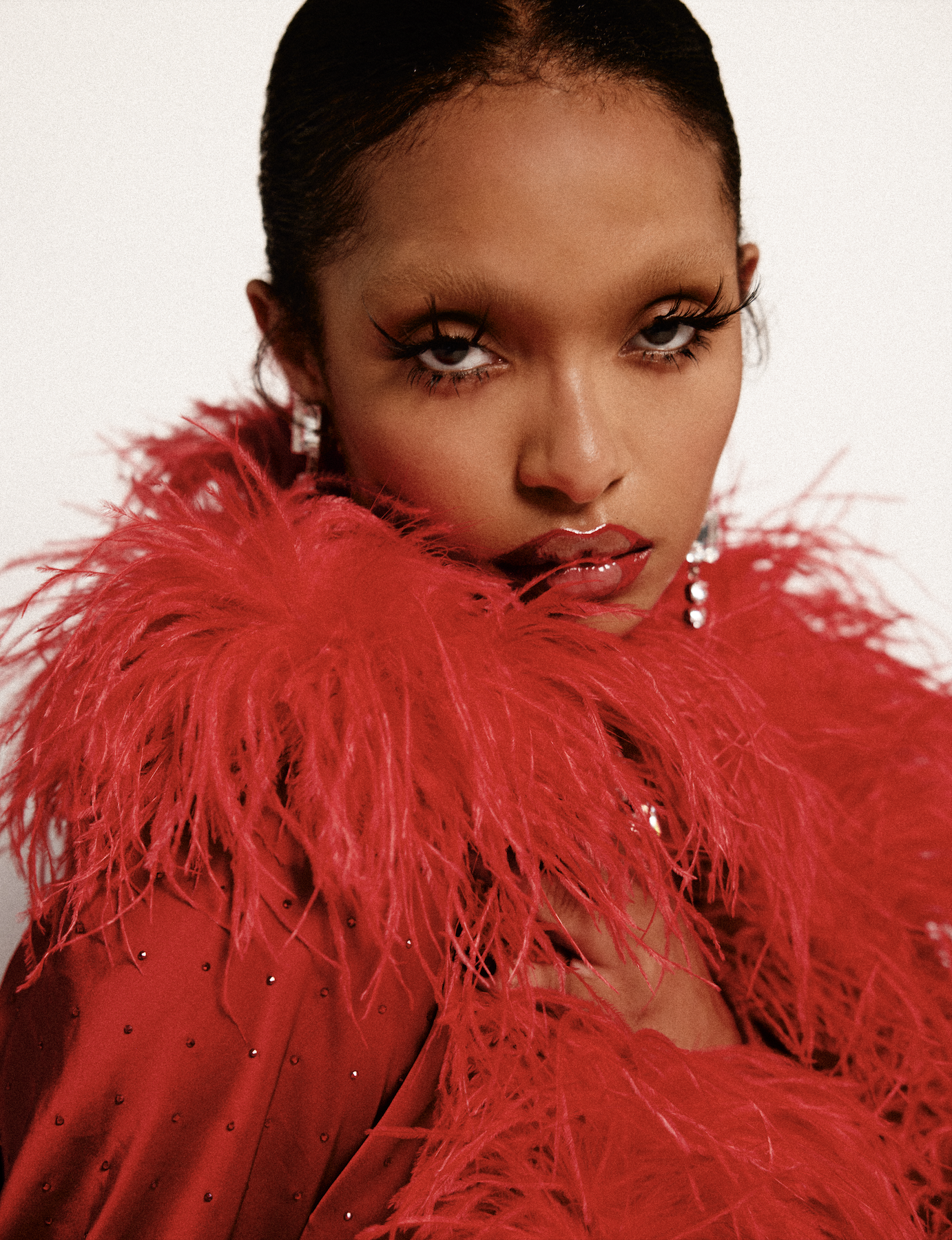
full look MIRON
ring HOUSE OF EMMANUEL
shoes LE SILA
TEAM CREDITS:
talent YARA SHAHIDI
photographer TYLER PATRICK KENNY
stylist WILFORD LENOV with TUNNEL MEDIA GROUP
hair SHERRIANN COLE with A-FRAME AGENCY
makeup CHERISH BROOKE HILL with FORWARD ARTISTS
nails TRACY CLEMENS at STAR TOUCH AGENCY
styling assistant GETHSEMANI SANCHEZ
video MEECH with TUNNEL MEDIA GROUP
special thanks VISION STUDIO for the location
editor TIMI LETONJA
interview JANA LETONJA
cover design ARTHUR ROELOFFZEN
