
BLACK KIDS BEHIND THE SOUND DETROIT SENT AROUND THE WORLD
words by DONA TODOROVSKA
This year’s edition of Dekmantel opened unorthodoxly inside Oude Kerk — Amsterdam’s oldest parish church. Space Afrika performed beneath centuries-old structures alongside violinist Vanessa Bedoret, guitarist Gabriel, and vocalist Axelle Fanyo, with the decks behind a mesh screen. Before a single beat dropped, the performance had already made a quiet, yet powerful argument: the DJs weren’t necessarily the most important person in the room. The video, live vocals, echoes, instrumentation, art installations, and the church itself came first. The duo stayed hidden for the entire set, their faces never fully visible until their final bow.
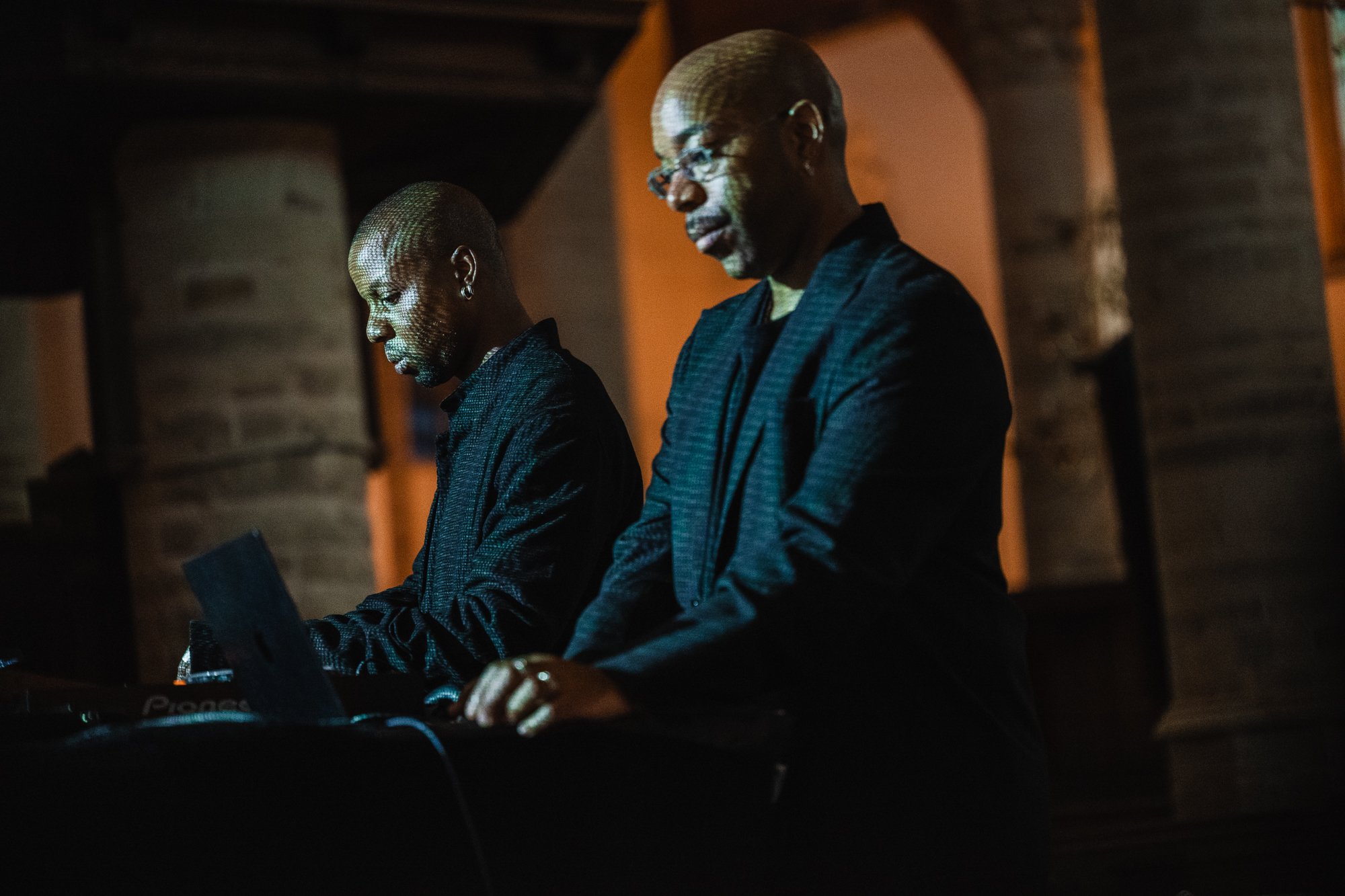
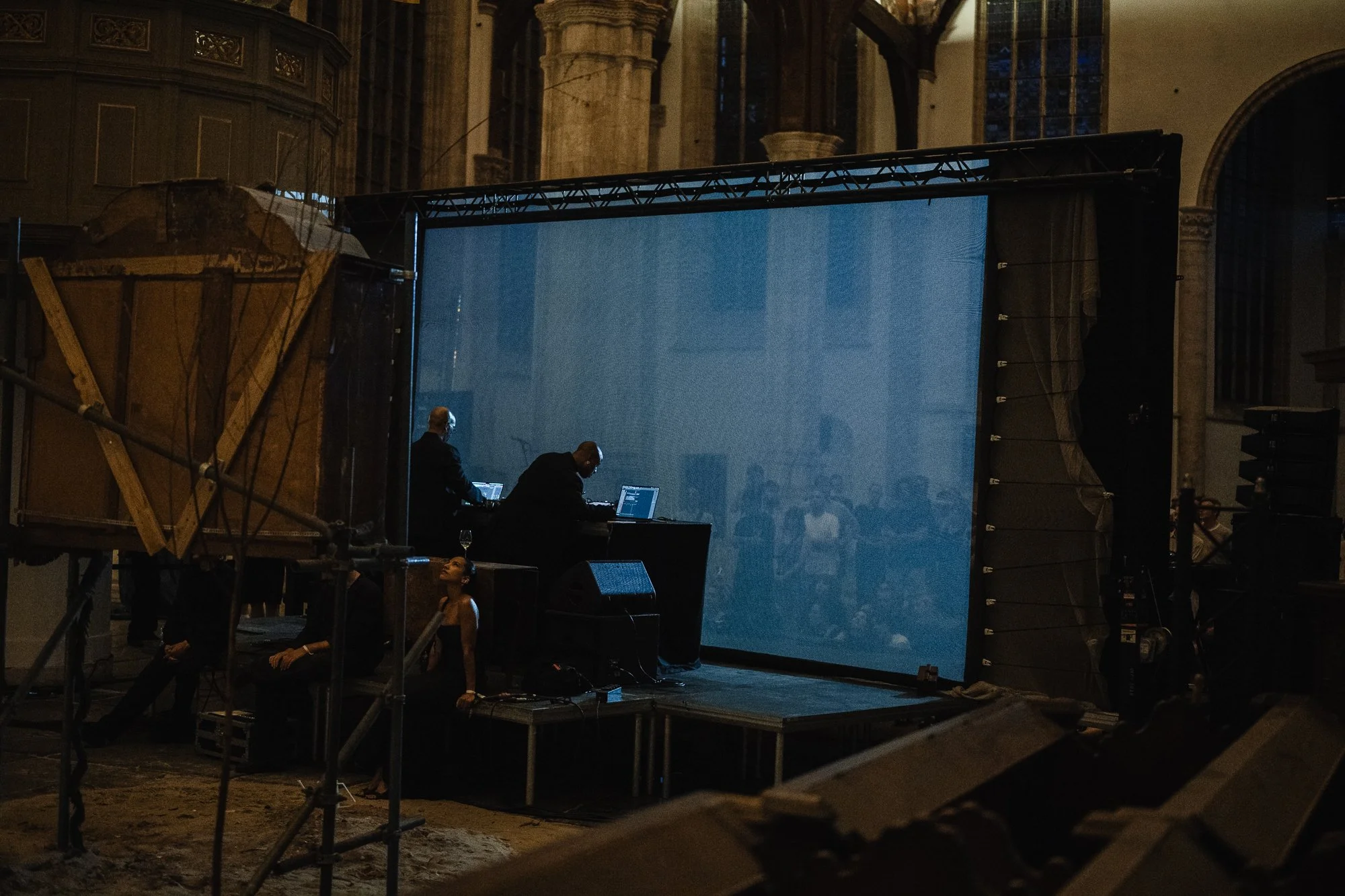
photography by ANGELINA, courtesy of DEKMANTEL
The next night, at Melkweg, Juan Atkins made the same choice — only from a completely different angle. Presenting Infiniti, he stood on stage behind a hologram that began visually morphing alongside the sound and space around him. As the show progressed, the hologram shifted to include images of Atkins himself, his figure essentially obscured by a projected, futuristic double. Still, his signature glasses remained, making their mark on yet another crowd. Where Space Afrika's set felt cinematically produced and artistic, Atkins’ felt engineered, ahead of its time in the way his artistry always has been. In both cases, the gesture felt undeniably similar: to disappear behind the image and let the work carry the presence.

photography by LAURA VAN DER SPEK, courtesy of DEKMANTEL
But this wasn’t the first time we encountered Atkins. Earlier that day, at De Balie, Hannah Pazzack led a Q&A with Atkins as part of the Dekmantel Conference. We came with a mission to get one question answered: what is still misunderstood about Detroit techno?
Detroit techno emerged out of a city in industrial collapse with automation hollowing out the automotive plants that once defined its economy. Whole neighborhoods left in the smoke of factories run down or shut for good. For Atkins, science fiction became an escape from that grind, and the sounds built out of it carried both the weight of what Detroit was losing and the release of imagining a utopia past it. His response to us refrained from the answers that have carried the conversation for forty years including ⸺ synthesizers, Belleville, Kraftwerk ⸺ and instead pointed to the core, “A lot of the music was made by Black kids from the ghetto. That’s the difference. You can hear it in the notes – it’s a little more groovy, a little more funky."
Atkins challenged our perception of Detroit techno merely as a sound, and reminded us to think about it as a place, a community, a group of people first. Music, even more specifically sound, is one of the most omnipresent expressions of human creativity and culture, traveling around within each of us and our own lived experiences with it. The movement of sound doesn’t happen in isolation, even though it may seem so at the time. Music is always traveling between cities, clubs, records, people, and eventually continents.
“In America you almost had two or three different Americas,” he went on, unprompted, explaining why the music had to leave Detroit before it could come back. “Everything was so segregated that Black crowds didn't know what white crowds were doing, and white crowds didn’t know what Black crowds were doing. So in the early days we had to come to Europe for anybody to understand what was going on, and eventually the music went back to the US as ‘mainstream.’”
Since 2018, HECHA / 做 have run a campaign called Make Techno Black Again, with the writer DeForrest Brown Jr. as a prominent voice, pushing for a better understanding of: techno as Black music that happens to sound technological — not technology that happened to be made by Black people. Brown made this argument in his liner notes for Cybotron’s 2024 release Parallel Shift, before we ever raised the subject with Atkins. Technology might have provided the sound but it is the Black experience that shaped it and put it into context.
The more time we spent at the festival, the more we wondered what happens when those people and places become history, and when the sounds they once created are inherited by people who weren’t there.

photography by LAURA VAN DER SPEK, courtesy of DEKMANTEL
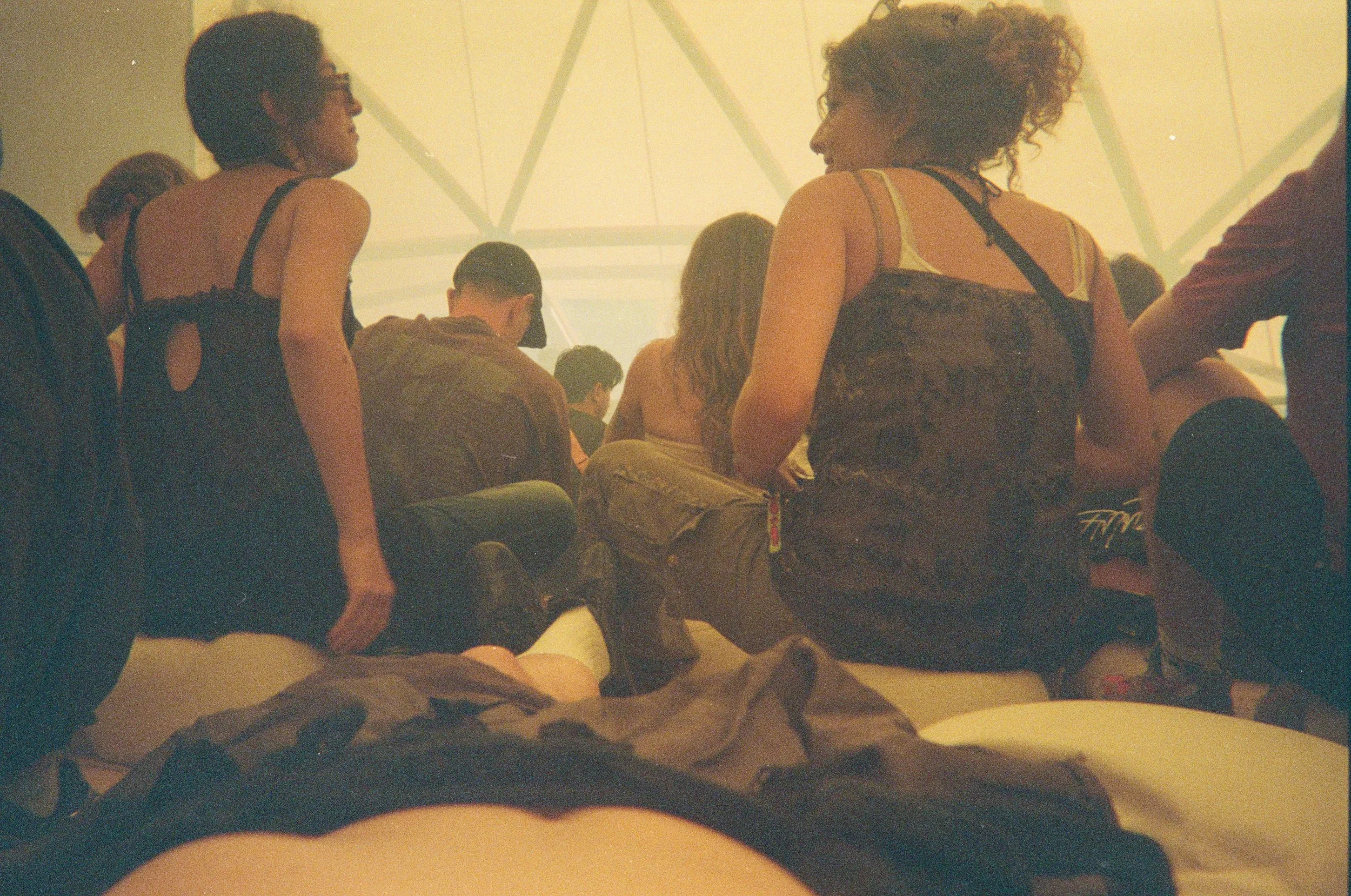
photography by DONA TODOROVSKA
Later that week, we could hear this evolution of sound coming from its originators and at the festival itself. On Friday, Ron Trent presented LA MARR Live with Pablo Color at Greenhouse. The room felt completely different from the dance floor we expected it to be: people were lying or sitting on the floor, listening. Trent’s sound lineage was there, but so was something contemplative: a live set that asked its listeners to be present with the sound rather than simply respond to it. It wasn’t about moving to the music, rather allowing it to move through the room (and us). Later, Carl Craig and Actress had the Greenhouse stage bopping. It was danceable, groovy, light but sensual. We watched as friends and the crowd fell in love with this merging of cities, sounds, and genres, and thought back to the groove and funk Atkins had pointed to earlier in the week. The music was changing shape, but something in it remained recognizable.
This year, the Dekmantel team introduced ‘At Dawn’, a new morning programme built around reflection and experimentation. Among its special programming was Detroit techno pioneer, Jeff Mills, debuting ‘STARGATE’ as part of the first edition.
"Having Jeff Mills be part of the first edition of At Dawn felt especially significant to us,” the Dekmantel team told us. “He played an extended morning set, exploring house music in a way that connected naturally to the origins of the genre and to the idea behind At Dawn itself."
This choice felt fitting. Mills has been woven into Dekmantel’s history for years. “It’s also hard to tell the story of Dekmantel without Mills,” they explained. “He has been part of so many defining and intimate moments in our history. Having him there for the beginning of this new morning chapter made it feel all the more special.”
Throughout the week we witnessed old ideas becoming new again. New artists reaching backward. Older artists continuing to experiment. Genres melting into one another. Rock was appearing inside electronic sets, punk was surfacing in rooms built for techno, Skrillex resurfacing — but none of it sounded like revival. It was a representation of sounds that had never stopped being reinterpreted, generation after generation, refusing to sit still long enough to become just history.
So what happens when a sound that once needed to leave home to be understood becomes a point of reference for another culture – one that finds its own meaning in the music and continues to evolve it?
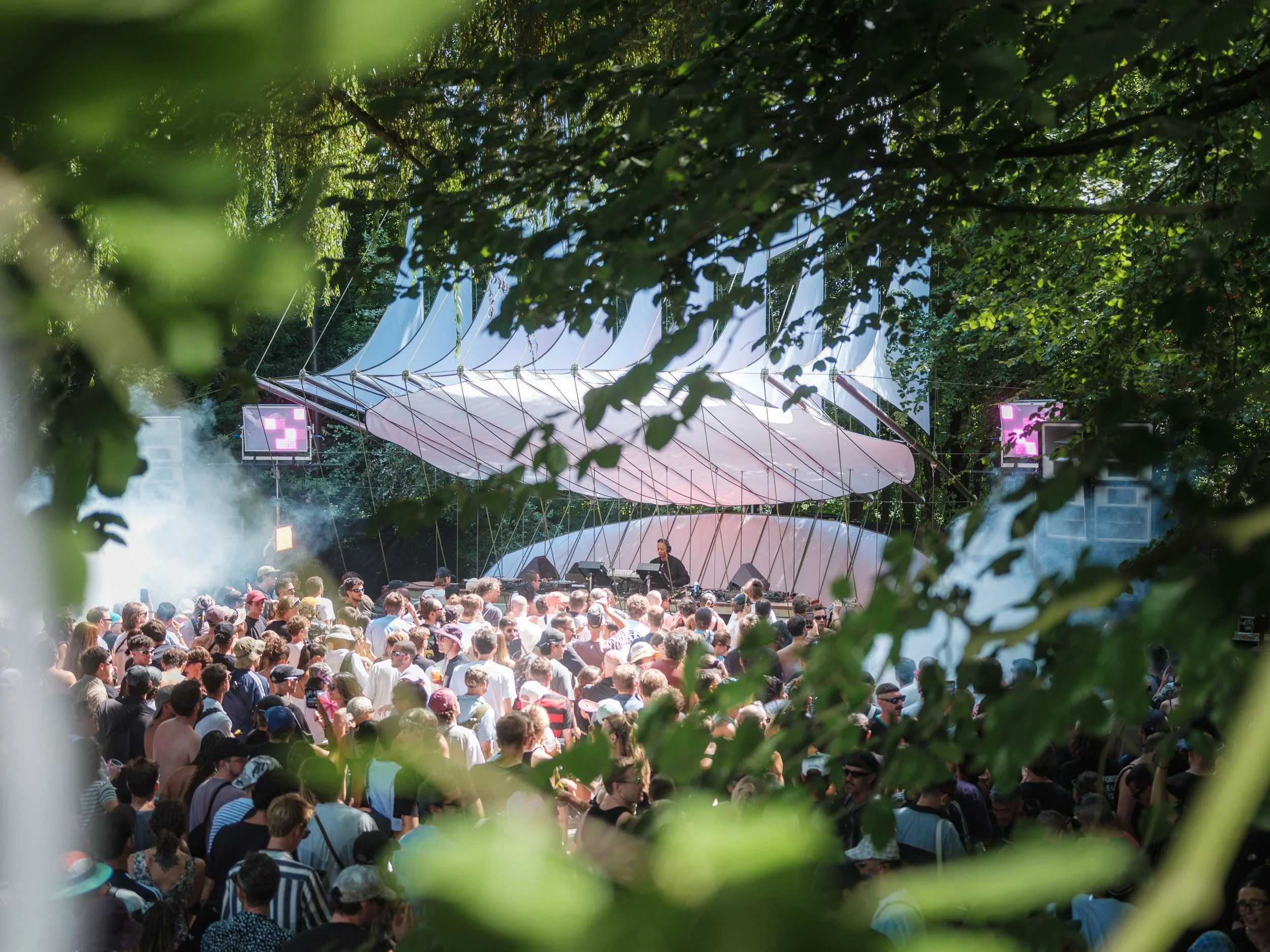
photography by ALEX HEUVNIK, courtesy of DEKMANTEL

photography by BIANCA PAUL, courtesy of DEKMANTEL
By the end of the weekend, we kept thinking about Atkins’ answer. It’s easy to arrive at Dekmantel and see the history: the names, the machines, the records. It’s harder, and more important, to remember the people behind it.
The Dekmantel team closed the festival with that instinct. The last set of that weekend, at the Loop stage, went to Benny Rodrigues, a Rotterdam-raised DJ & Producer whose sound sits between deep tech-house, and stripped down, Detroit-inflected techno. Writing about the set afterward, Rodrigues says he wanted to honor the rooted Chicago / Detroit spirit that Dekmantel carries since day 1” – house and techno “not separated, but together,” which he called “the mother and father of this whole thing.” He built his set to move the same way: soulful and funky, explosive in places, introspective in others. He dedicated it to DJ Deeon and K-Hand, both gone now, putting Chicago and Detroit side by side once again.
America’s Midwest presence is unmistakable at this year’s Dekmantel, not as history being honoured from a distance, but as an ongoing conversation the rest of the line up kept answering back to. Juan Atkins, one of Detroit's founding figures with Jeff Mills & Underground Resistance, Carl Craig, and Dopplereffekt filling out the rest of the lineage. Chicago’s Ron Trent, DJ Sprinkles, and Octo Octa carrying the parallel story next to it. And across the European artists on the lineup, from Benny Rodirigues, Marcel Dettmann to Helena Hauff to Ben UFO, Objekt, and Jane Fitz, the thread back to Detroit and Chicago was never far beneath the surface.
In the case of Detroit techno, before it was history, before it was mythology, before it became the soundtrack to somebody else’s idea of the future, it was about the Black kids mending their experiences in Detroit into a movement that continues to shape culture to this day.