
‘BLUE HERON’ REVIEW: SOPHY ROMVARI’S FEATURE DEBUT IS A POIGNANT TIME WARP
words by SONNY NGO
For Sophy Romvari’s feature-length debut, the Canadian-Hungarian filmmaker draws from her shattered memories to tell the story of how her home was torn apart by a disruptive family member. It’s a semi-autobiographical film based on and expanding her 2020 critically-acclaimed short Still Processing – Romvari’s graduate project at York University. Told through fractured perspectives, Blue Heron blurs the line between fiction and reality, exploring how childlike innocence shapes memories and how flawed they actually can be in retrospect. It’s a masterful display of Romvari’s talents, ushering her as one of the year’s most exciting writer-directors to watch for.
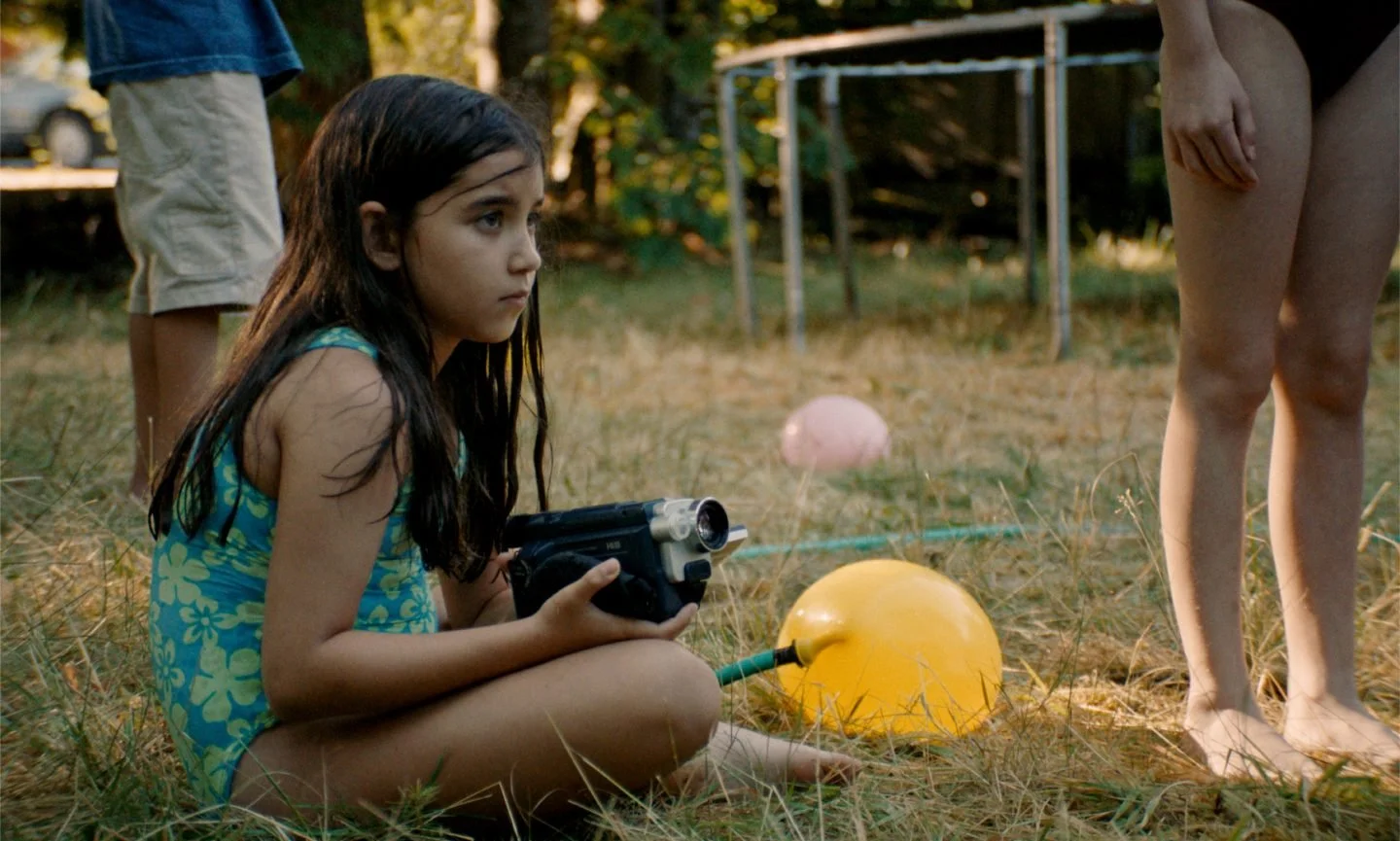
image courtesy of CHERRYPICKERS
The film centres the eight-year-old Sasha (Eylul Guven) as she and her Hungarian family move to Vancouver Island in the late 90s. The six person household is excited for the fresh start: the outdoors environment is a perfect beginning to the summer. But there are some complications with their change of residence. For one, the unnamed father (Ádám Tompo) finds himself overextended behind his work computer, leaving the nameless mother (Iringó Réti) the taxing job of entertaining their four kids. She does her best though, taking them on beach trips and playing together on the backyard trampoline. But then there is Sasha’s older stepbrother Jeremy (Edik Beddoes) who proves to cast the largest shadow over them. Showing increasingly erratic behaviour, he poses trouble and, at times, danger to the family. His unpredictable efforts to defy his parents raise anxieties within the ménage, eventually forcing them to make impossible decisions as they face his provocations. And although Sasha doesn’t quite understand the gravity of the situation, she too senses that something is amiss.
At first glance, the childlike perspective of Sasha establishes a warm and intimate film. Yet the distance between Jeremy and the family remains stagnant throughout, portrayed beautifully by cinematographer Maya Bankovic who shoots with a long lens to emphasise the space between them. Romvari’s directing further underlines the physical and emotional gap between him and the family: the camera zooms around slowly and lingers around corners and curves. It’s as if we are there with them, but never fully invited in. It’s a striking visualisation of the lack of closeness between Sasha, her parents, and Jeremy. It’s a distance that keeps on growing and growing, strengthened by the seemingly ordinariness and simplicity of the everyday. We hear the lawn mower as loud as we hear the birds, and it feels as if these sounds continue to swell as Jeremy continues to fade away from the family picture. It creates a disconnected ambience only the mind of a child can conjure up – or the memories of an adult.
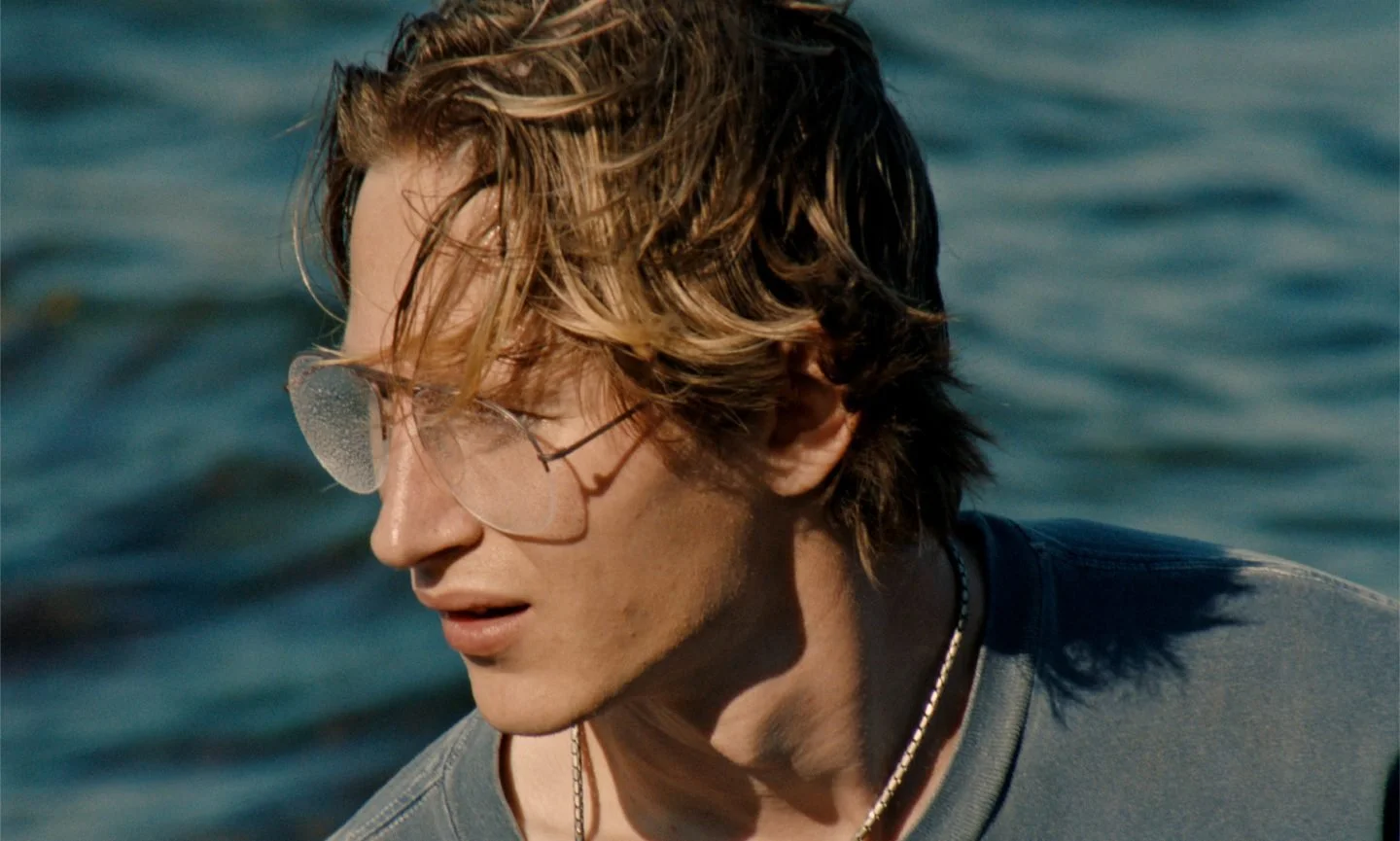
image courtesy of CHERRYPICKERS
Halfway through the film, we are introduced to a fully grown Sasha, now played by Amy Zimmer. She has become a filmmaker and when we first meet this version of her she is videoing a group of social workers as they analyse Jeremy’s casefile, unbeknownst to the fact that he is her brother. Sasha is clearly trying to make sense of her troubled childhood, which for a long period of the film remains mysterious to us as well. While we do get glimpses of how it was, just as Sasha, we remain at a distance. To adult Sasha, the world has gone more bleak: warm colours are exchanged for a cold, sleek, and modern look. Any of its prior rose tints and saturated hues have been stripped away, or perhaps they had only ever existed in her memories.
In an article for CBC Arts, Romvari describes the film as her “most significant attempt to capture just how fallible memory is.” We see it in a multitude of ways, such as the manners in which perspectives shift or how Sasha’s parents take a camera with them to capture their happy moments: the children being together in the kitchen, jumping on the trampoline, or simply being. These details make the film one that can be rewatched over and over, each time offering a reawakened appreciation for Romvari’s sophisticated directing – as if recollecting pieces of a shattered memory made a bit more whole.
Blue Heron is a tender portrait of the slow decay of childhood innocence. Emotionally, it hits even harder considering how much of Romvari’s personal life influenced the filmmaking process. Considering her oeuvre, it feels like she has been building up to this starmaking debut for a long time. At its climax, perspectives collide, time warps, and memories reconstruct. It’s a quiet implosion of emotions and stellar filmmaking on all fronts. The film poignantly shows us how our childhoods are something we carry with us the entirety of our lives. It’s in empty rooms, still photographs, and ephemeral memories; creeping up like a thief in the night and piercing through all the nostalgic shields of our brains. It can be happy, miserable, soft, warm, cold, light, and heavy. But despite everything, Romvari reminds us that love is strong, and love is patient – enough to carry us through all of life’s motions.
Blue Heronpremiered during the Locarno Film Festival and will be released in Dutch cinemas starting June 4th.
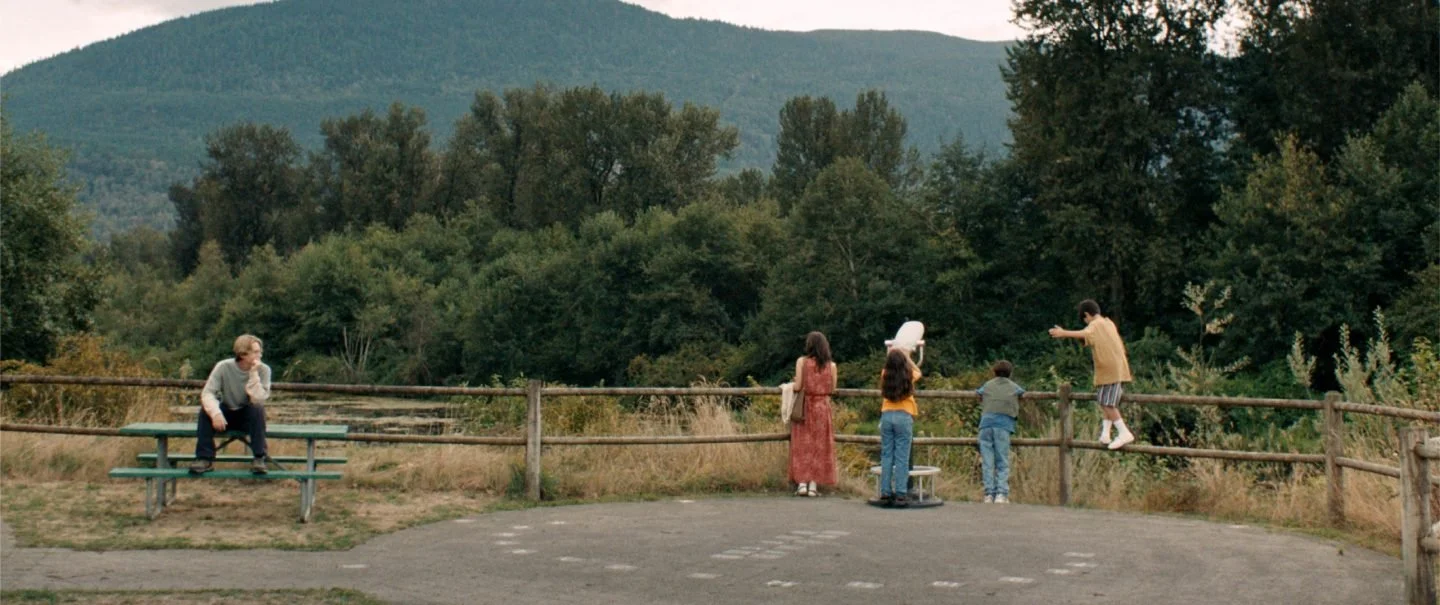
image courtesy of CHERRYPICKERS