
DISPLACEMENT FILM FUND: CATE BLANCHETT PRESENTS FIVE TOUCHING SHORT FILMS AT IFFR
words by SONNY NGO
On Friday, the first five short films supported by the Displacement Film Fund (DFF) had their world premieres at the International Film Festival Rotterdam. The programme was set up with the help of a handful of sponsors and partners, including Uniqlo and IFFR’s own Hubert Bals Fund, to highlight stories from the displaced. As one of the initiators, Cate Blanchett was welcomed by the festival in dialogue with Maryna Er Gorbach, Shahrbanoo Sadat, Hasan Kattan, Mo Harawe, and Moahammad Rasoulof – the films’ directors.
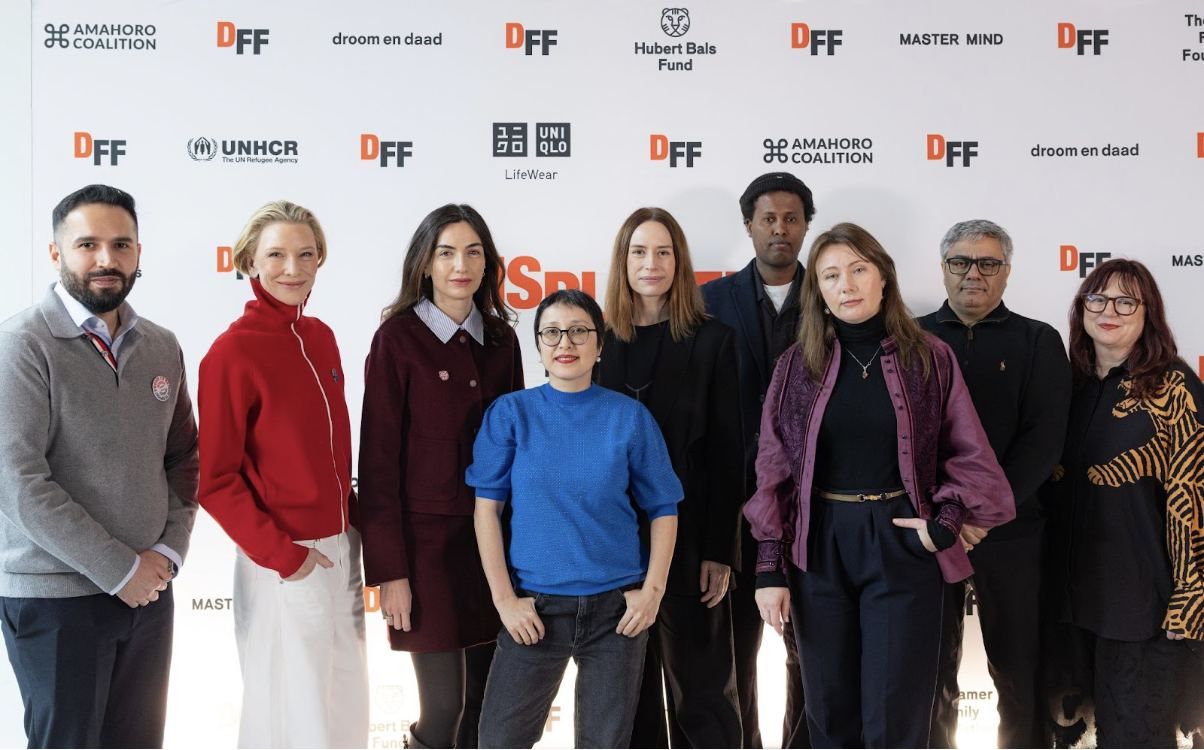
image courtesy of the Displacement Film Fund and IFFR
It was only a year ago when Blanchett announced the film fund during IFFR, and now a year later we are presented with the first projects. These films were created at an incredible pace, but such velocity is essential when atrocities of war continue to displace people. Each of them is a formidable body of work, but as a collective they are even more monumental. They are profound, shocking, tear jerking, hopeful, and at times humorous. During the press conference Blanchett underlined: “The experience of being displaced is not monolithic.” The filmmakers all come from different backgrounds: Ukraine, Afghanistan, Syria, Somalia, and Iran. “There are commonalities and themes that emerge, but they are wildly different. Each is so distinct and comes from the inner being of these filmmakers…I was so alive to the different perspectives,” she added.
Er Gorbach’s Rotation opened the cohort and follows a young Ukrainian woman as she trades regular life for the military. The film is a ghostly experience as she recollects and re-experiences the war, and envisions a doomed future scenario. At the conference, Er Gorbach shared how she intended to explore a “displacement from normality,” and how people did not choose to go to war, but were forced to.
Super Afghan Gym is a comedy – the only one in the catalogue – that centres a group of women helping each other exercise and lose weight in Kabul. Inspired by Sadat’s own experiences in the gym, where she was surrounded by images of hypermasculine men, the film scrutinises the patriarchy in Afghanistan through wit and humour. Moreover, it gives insight into the way women attempt to keep their lives moving under the immense pressures of the Taliban. On this note, Sadat shared how on the one hand Afghan men deny the existence of women going to the gym, on the other, Afghan women tell her how they have been visiting ever since the Taliban regime took over. Sadat concludes that she hopes that the film illuminates how “no one can limit a human.”
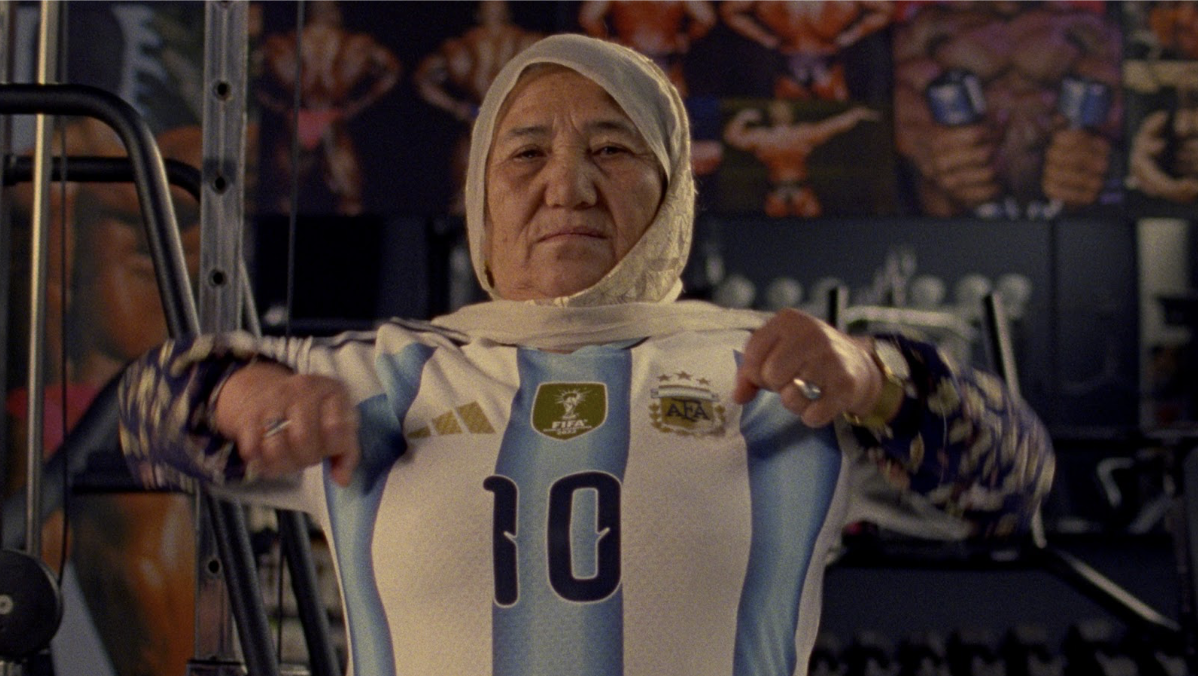
image courtesy of the Displacement Film Fund and IFFR
Mixing archival footage and shots captured on iPhone in London, Kattan and co-director Fadi Al-Halabi share a heartrending documentary about the horrifying events in Syria and the wearisome asylum seeking process taking a toll on mental health. A truly saddening story that moved my entire audience during the screening, the film shows how colossally devastating war can be. Allies in Exile elucidates how friendships, families, and homes are ripped apart, and how vastly different life can be for each individual asylum seeker. Kattan shared: “Every frame is a memory, a part of my life.”
In Whispers of a Burning Scent, a keyboard-player at a Mogadishu wedding is suddenly taken to court as he allegedly married a demented, 75-year old woman in order to sell off her properties. The film is a quiet mystery that never answers whether he did marry her for love or for the money – that is up to the audience to decide. Harawe shared how there are “different forms of displacement,” and how for this film, he wanted to tell a story about the feelings of displacement. He further shared that being able to go back to Somalia to help build the country’s film infrastructure was one of the things he cherished most about the entire process.
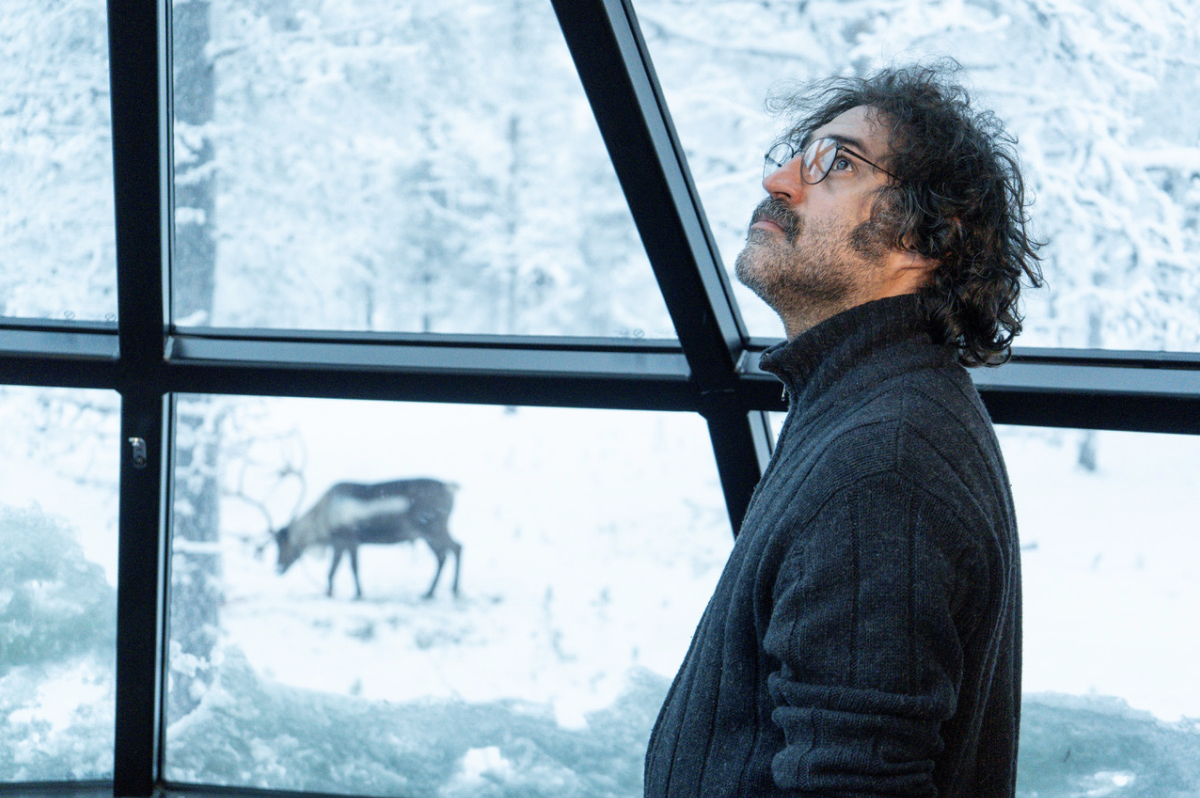
image courtesy of the Displacement Film Fund and IFFR
Finally, Raslouf’s Sense of Water explores how an Iranian writer in Germany struggles with love, language, and understanding. It’s an excruciating story that delves into what it means to lose parts of yourself, and the medium through which you express it. Raslouf, who was forced to flee Iran himself shortly before the premiere of his Oscar-nominated The Seed of A Sacred Fig, was visibly moved during the conference. He explained how the film came to life through a deep curiosity for the past, future, and present; and a yearning to create a story that is interesting for everyone, in spite of language barriers. But he emotionally finishes: “Still some things are more important than words, like what is happening in my country right now.” The entire room went silent.
For many of these creators, filmmaking has been a therapeutic, healing experience. Kattan shared how filmmaking is his way of bringing in home, while Sadat explained how film is her way of finding her voice. The question remains of what will happen next with these films. I do hope they get a wider distribution: we should all see what is happening with our world, and how it affects the displaced. Blanchett seemed to share the same sentiment as she hoped for us to not be “displaced from our own humanity.” Time will tell, but the day ended with a glimmer of hope: the second edition of the film fund is officially on the way.
IFFR 2026 runs from January 29 until February 8. Films from the DFF will still screen on February 1 and 6.