
words by DEBORAH DRENOFCI
“Let’s go home, Papa.” “Where is that?” This brief exchange might as well be the pathos of Paweł Pawlikowski’s Fatherland, which premiered at Cannes, where Pawlikowski won Best Director award. The 80-minute film takes us to post-war Germany in 1949, still in ruins, waiting to be picked up and to rekindle a stripped identity. It follows German novelist and Nobel laureate Thomas Mann (Hanns Zischler) back to Germany after sixteen years of exile in America, to receive the Goethe Prize. He is accompanied by his daughter Erika, played with grace by Sandra Hüller. Then there is Thomas’s son Klaus (August Diehl), also an exiled writer, struggling with depression and drug abuse. Klaus is the beautiful opposing force of the film. Shot in monochrome by Łukasz Żal, with a camera that barely moves, as if holding its breath between scenes, the film distils through its lack of colour the stillness of complicated wounds that turn into a numbness, one only understood through the longing to belong once more. Fatherland doesn’t return to history merely to recount events, but to capture, with restraint, the politics of a man’s heart — his relationship with his family, with himself, and with home.
The film opens with a phone call between Erika and Klaus. It’s intimate. Full of a quiet anger you can see absorbed in the cigarette Klaus is smoking, a sadness gathered over years, and the sarcastic charm siblings tend to share. Erika asks Klaus to join her and their father on the trip. Klaus refuses. This duet sets the tone of the film and sheds some light on the many-layered relationships to come. From the first scene, the siblings pull in opposite directions. Erika seems to be a collector of anger, suffering, and silence. Klaus is not. His character is a quiet explosion, whatever he carries. Erika represents an acceptance of her father’s ways, Klaus a challenge, political and spiritual — one Thomas Mann himself perhaps never fully became.
The first stop is Frankfurt — Goethe’s birthplace, part of the capitalist West. It is there that Thomas receives the Goethe Prize. He is welcomed with applause and reverence, but it doesn’t take long for him to unsettle his hosts by announcing he is considering a trip to Weimar — the communist East, still shadowed by the Nazi past — to accept a second award. Thomas’s easygoing, almost numb approach to past and present politics reveals a quiet pact with himself to stay above it all. The tension sits somewhere between “Goethe is neither in Frankfurt nor in Weimar” and Thomas Mann’s American passport. He turns the whole “where is home” question into a witty dialogue with no answer.
Halfway through the film, news arrives that Klaus has died. Erika’s heart breaks. Thomas, on the other hand, keeps to his schedule, perpetually composed. But Klaus’s presence persists, unexpectedly, through his novel Mephisto. The book follows a self-absorbed actor who sells himself out and collaborates with the Nazis — a character based on Gustaf Gründgens (Joachim Meyerhoff), Erika’s ex-husband, whom she gives a good slap at a party in Frankfurt. Through it, Klaus’s fierce, painful politics, and his mastery in putting them into words meet his father tête-à-tête.
In the end, there is Bach’s music. There is relief, and some tears are shed, yet Thomas and his daughter are still full of things left unsaid. An indirect directness that is the fatherland. Where is that?
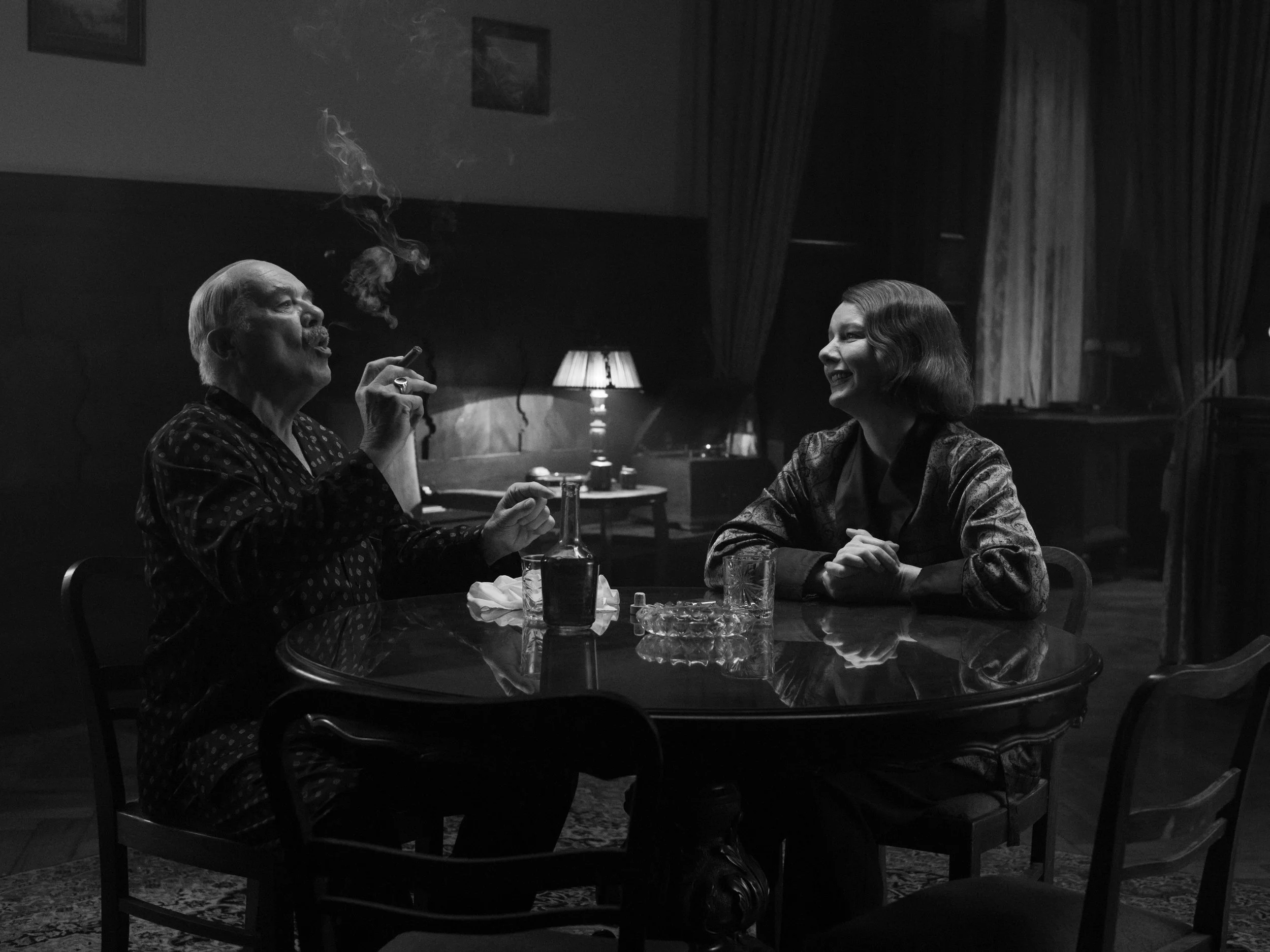
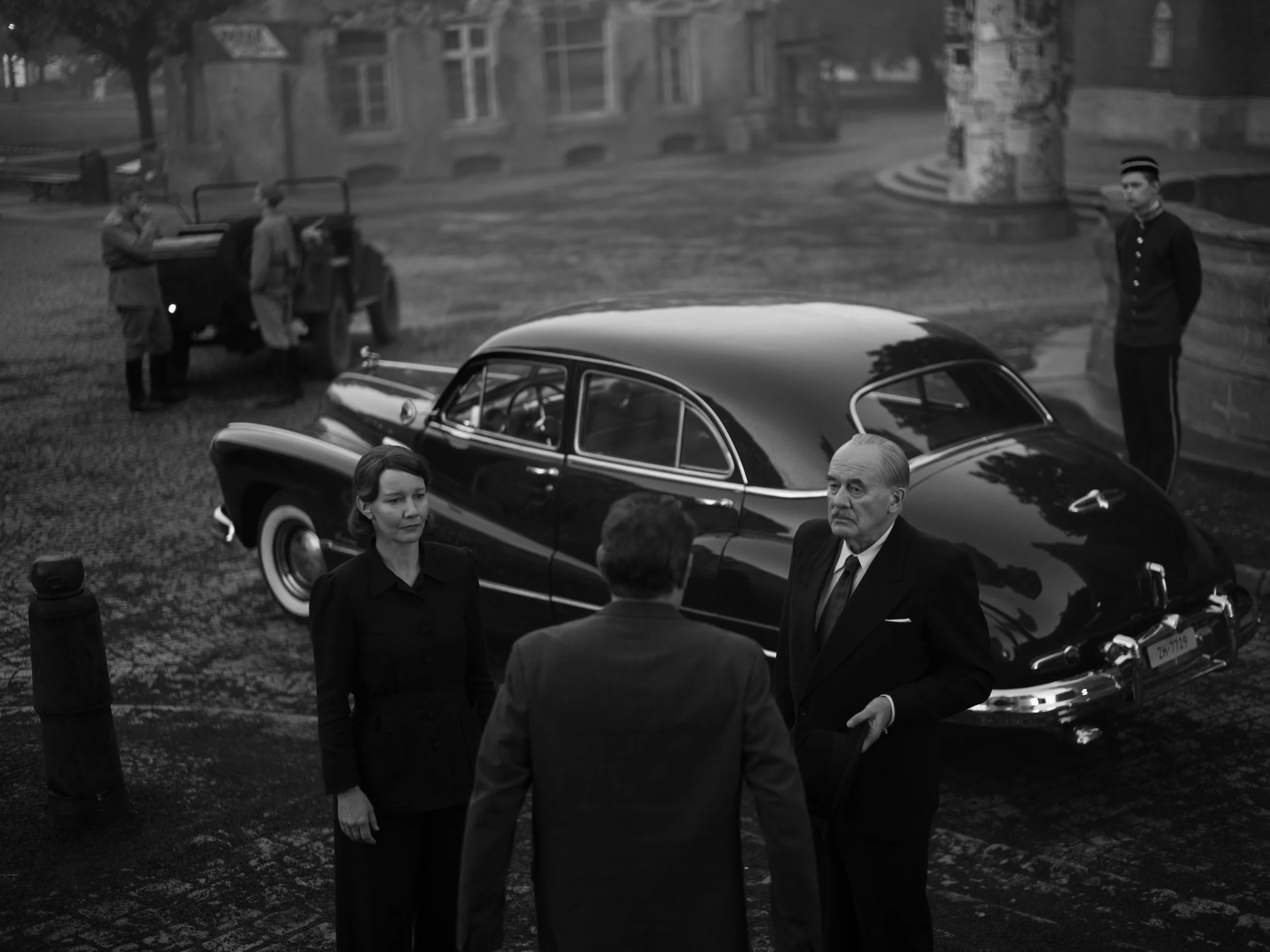
stills from FATHERLAND (2026)
