
KIM PETRAS’ NEW ALBUM ‘DETOUR’ TAKES THE DIRT ROAD TO GREATNESS
words by FRANCESCO PIZZUTI
Kim Petras has never really moved in a straight line. Detours, stop signs, dirt trails, and backroads have always been part of her journey, both musically and personally. Her career has always felt like a glittering interruption, with a self-made force that always made her impossible to be easily absorbed by the mainstream machinery around her. With Detour, her anticipated new studio album, she leans fully into that refusal. The title says everything: this is not so much a route change as it is a declaration of escape from expectation, industry pressure, polished perfection, and the clean binaries of the music industry and society at large.
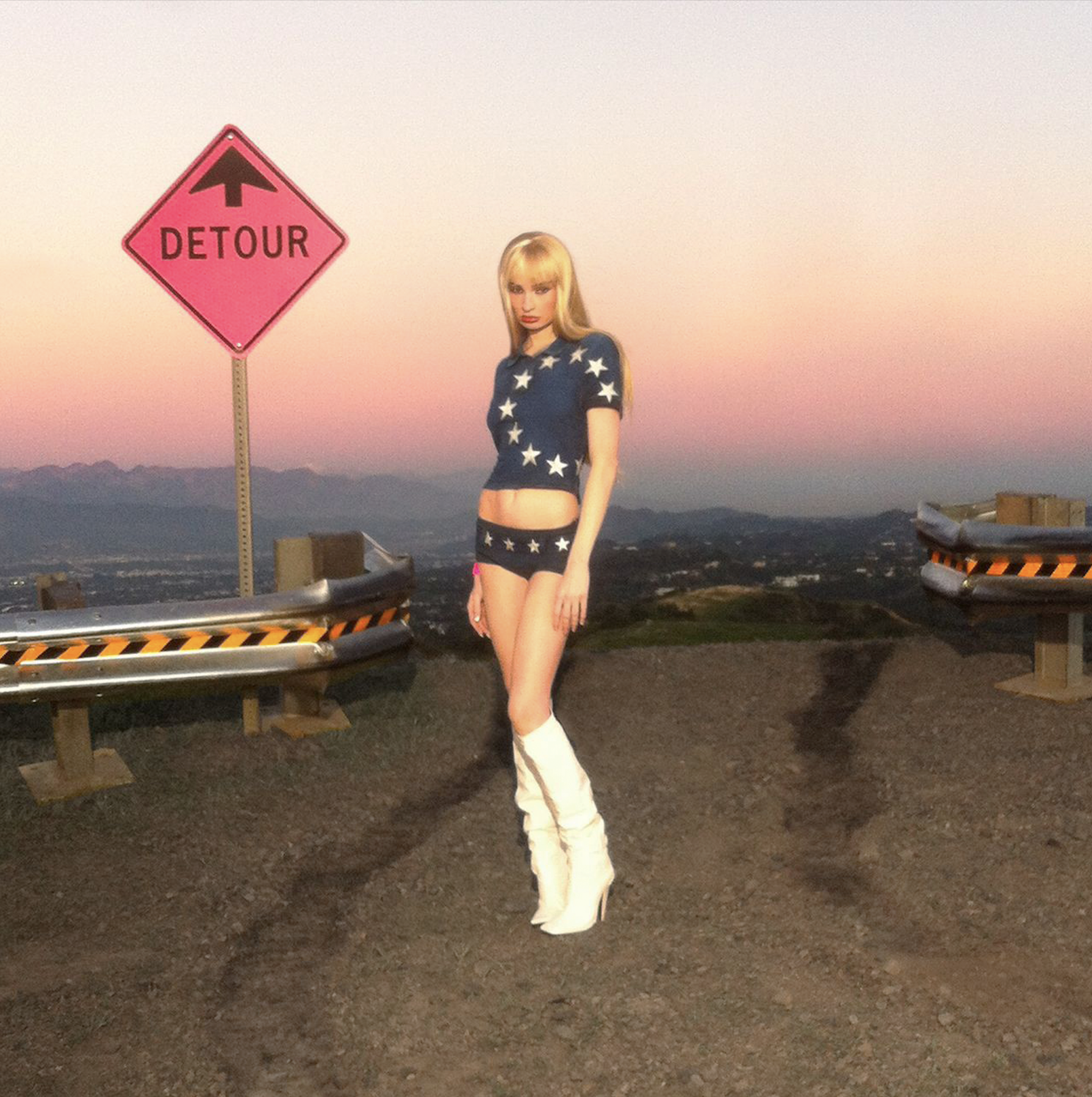
image courtesy of ELI SHEPPARD
Released via BunHead Records, the independent label Kim started in 2016, Detour is flooded with the elements that made her a beloved cult pop force in the first place: club-rooted production, emotional messiness, camp, attitude, and a kind of honesty that always resonates. Executive produced by Kim and Margo XS, the album brings together thirteen tracks that feel eclectic but still unmistakably Petras. From DTLA and I Like Ur Look to Need For Speed, Jeep, Basketball, and Freak It, the record builds an entire universe of movement, tension, desire, and reinvention.
The album’s visual world captures Detour’s subversive power stunningly. Working with creative director Eli Sheppard, Kim rejects the sterile pop-star fantasy in favour of something more grounded, chaotic, and tactile. A lot of it was shot on an iPhone 4, with elements like receipts, parking tickets, construction references, second-hand fashion, and archival pieces inhabiting this visuality: everything feels touched, lived-in, collected along the way. This is not a scenic detour. It is traffic, grit, roadblocks, and still choosing to move.

image courtesy of CHARLIE MCHARG
Her new music video for Brutalist, which just came out today, embraces this spirit perfectly. The song itself carries a rebellious yet feel-good confrontational energy, almost like protest music filtered through Kim’s pop instinct; looking at the current state of the world without becoming heavy-handed. The video, filmed with a vintage camera that gives it a blurred, imperfect texture, feels rough yet glamorous, capturing destruction on a pair of heels, coexisting in a duality that rejects hyper-clean digital pop. Its roughness becomes part of the emotion.
There is something gorgeously early 2010s about the album’s music videos that feel like but from a Tumblr-era fever dream, cinematically elevated through indie film language and a slight Sofia Coppola haze of soft alienation and careless glamour, intimacy at a distance. Each video feels like a different stop on the same bumpy road.
With Detour, Kim Petras enters her brightest era yet, showing us how the detour looks better than the destination ever could.
