
BERLIN IN SEVILLE: LOVE, PASSION AND THE ART OF LOSING CONTROL
words by LEANDRO DA SILVA
In Berlin and the Lady with an Ermine, elegance arrives already stained with danger. The second chapter of Netflix’s Money Heist spin-off abandons the icy precision of Paris and moves south, into the heat and theatricality of Seville, a city that transforms the series into something darker, more sensual and instinctive.
This time, the heist itself feels almost secondary. Beneath the gold, deception and spectacle lies a story driven by revenge, obsession and emotional excess. During conversations with the cast, one idea kept resurfacing in different forms: everyone in this universe seems dangerously close to collapse.
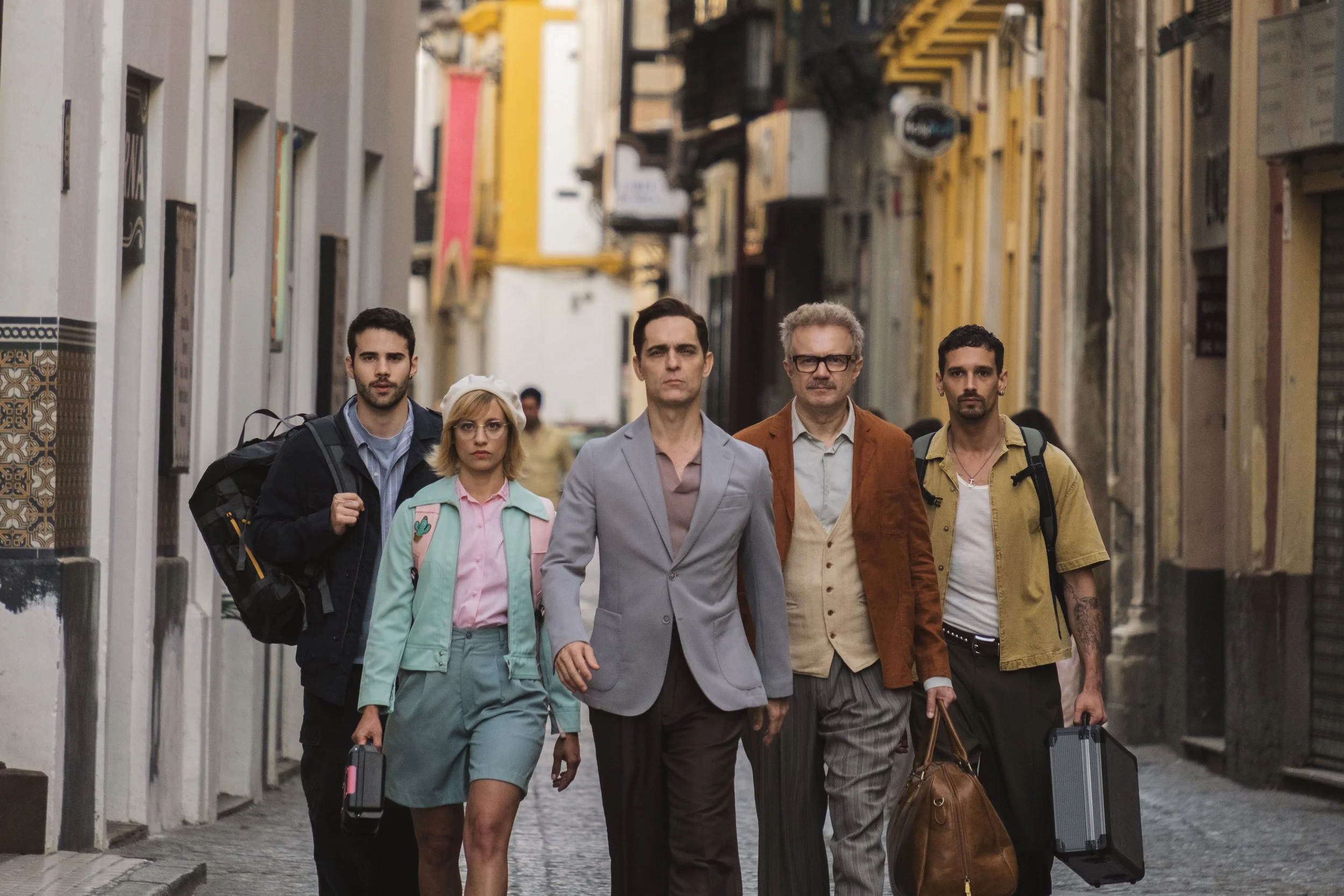
all images courtesy of NETFLIX
Seville becomes the perfect backdrop for that unraveling. Actress Marta Nieto, who plays Duchess Genoveva Dante, described the city as “another work of art in itself,” a place whose atmosphere, culture and even smell permeate every frame. Begoña Vargas, who plays Cameron, echoed that feeling, reflecting on the contrast between Seville’s beauty and the increasingly dark emotional spaces the characters inhabit throughout the season.
That contradiction defines Berlin and the Lady with an Ermine. Everything feels heightened: romance, tension, humor and violence. Even the cast struggled to define the tone in conventional terms. Michelle Jenner, who plays Keila, compared its energy to “another code,” something almost theatrical or comic-book-like, while José LuisGarcía-Pérez, who plays the Duke of Málaga, described the characters as people permanently “living on the edge.”

The season plays less like a traditional heist thriller than an emotional fever dream disguised as luxury entertainment. And unlike the first season, the fracture now comes from inside the gang itself.
Julio Peña Fernández, who plays Roi, explained that the characters begin this chapter already carrying the emotional weight of what happened between heists, creating relationships that feel unstable, intimate and increasingly dangerous. “Things get out of hand,” he repeated, a phrase that quietly defines the entire season.
Love becomes both a weakness and a form of sabotage. Nearly every actor spoke about vulnerability in one way or another. Michelle Jenner noted that the series finally allows audiences to see “another side” of the characters, one shaped by fragility and emotional exposure. Joel Sánchez, who plays Bruce, described how Bruce and Keila slowly begin absorbing parts of one another’s personalities, blurring the boundaries between performance and intimacy.

For Cameron, the season revolves around contradiction: logic versus desire, instinct versus emotion. Roi responds differently, throwing himself deeper into risk and action as a way of coping with pain. Tristán Ulloa, who plays Damián, meanwhile, emerges as the reluctant moral center of the group, someone still trying to preserve order inside a world increasingly driven by impulse.
That fracture extends directly to Berlin himself.
Pedro Alonso, who portrays Berlin, plays the character with even greater darkness this season, but also with a strange sense of introspection. Revenge may initially drive the story forward, particularly through Berlin’s connection with Candela, played by Inma Cuesta, yet the series seems far more interested in what revenge reveals emotionally than in the mechanics of the plan itself.
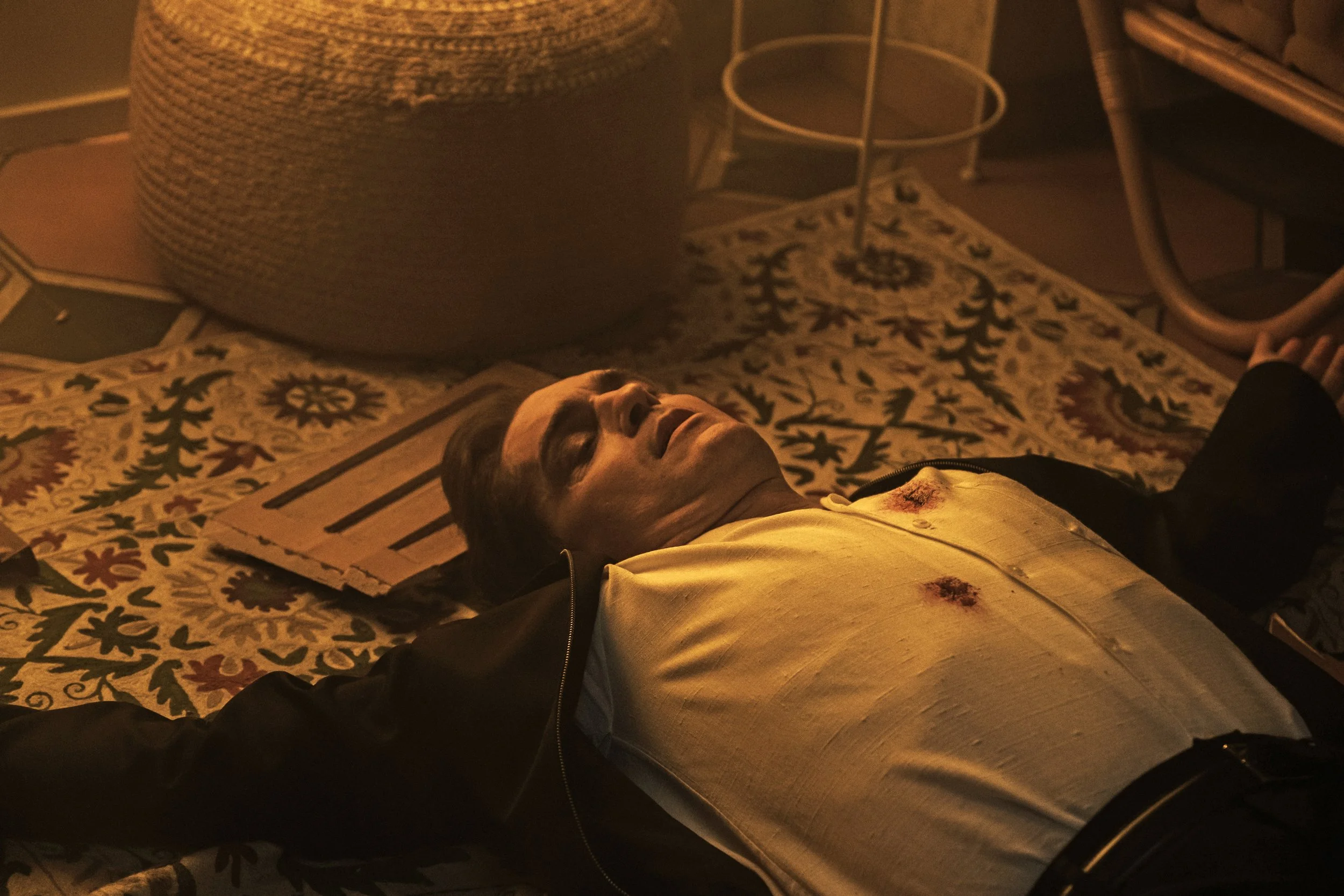
In conversation, Alonso spoke about Berlin almost less as a role and more as an experience, something that has changed the way he listens to life itself. It’s an unexpectedly reflective way of describing one of television’s most charismatic criminals, and perhaps the clearest indication of how much the character has evolved since Money Heist.
Throughout the season, Álex Pina’s universe continues to indulge in excess: luxurious settings, seductive manipulation, dramatic emotional swings and danger wrapped in beauty. Yet beneath all the spectacle lies something unexpectedly fragile. Everyone in Berlin seems desperate for connection, even at the cost of destruction.
Across every conversation with the cast, the same ideas kept resurfacing: risk, desire, vulnerability, surrender.
Not strategy. Not robbery. Not even victory.
And that may be what ultimately separates Berlin and the Lady with an Ermine from what came before. The real tension this season is no longer whether the plan will survive, but whether the people inside it will.
Inside the Minds of the Showrunners
If the cast embodies the emotional collapse of Berlin and the Lady with an Ermine, showrunners Álex Pina and Esther Martínez Lobato reveal the architecture behind it.
Behind Seville’s gold-lit atmosphere lies a deliberate philosophy: this season was built around emotional surrender.
For Pina and Martínez Lobato, moving the story from Paris to Seville was never purely aesthetic. After expanding the Money Heist universe across cities around the world, they wanted to return to Spain, but more importantly, they wanted to shift the emotional language of the series itself.
Paris represented elegance, restraint, and control. Seville represented passion.
“This is the explosion of the senses,” Esther explained while reflecting on the tone of the season. That idea permeates every layer of the story. The romance is messier; the humor is darker, and the characters are far more impulsive than before.
Under Seville’s heat, Berlin stops feeling calculated and starts feeling instinctive. The city functions almost like a living organism inside the narrative, amplifying every emotional impulse until it becomes impossible to ignore.
And at the center of that shift is Berlin himself.

According to Pina and Martínez Lobato, one of the season’s central ideas was forcing Berlin to fall in love with someone entirely unexpected, someone who disrupts his own carefully constructed image of sophistication and control. Candela enters his universe not as perfection, but as interruption. She is visceral, emotional and impulsive: everything Berlin normally pretends to keep at a distance.
At the same time, Berlin is beginning to confront his illness more directly. Mortality quietly lingers beneath the glamour of the season, transforming the heist into something more existential than strategic. Revenge may move the plot forward, but emotionally the story becomes urgency, characters desperately trying to feel alive before time runs out.
That urgency spreads throughout the entire gang.
Damián becomes emotionally compromised in ways that threaten the stability of the operation. Keila is pulled into an impossible emotional triangle. Cameron exists in a constant battle between instinct and reason. Again, desire interrupts the plan.
For the creators, sabotage is essential.
Pina described the writing process as a constant inversion of expectations. Whenever audiences believe they understand where the story is heading, the characters deliberately move against logic, against safety, and often against their own survival instincts. In Berlin, predictability is the enemy.
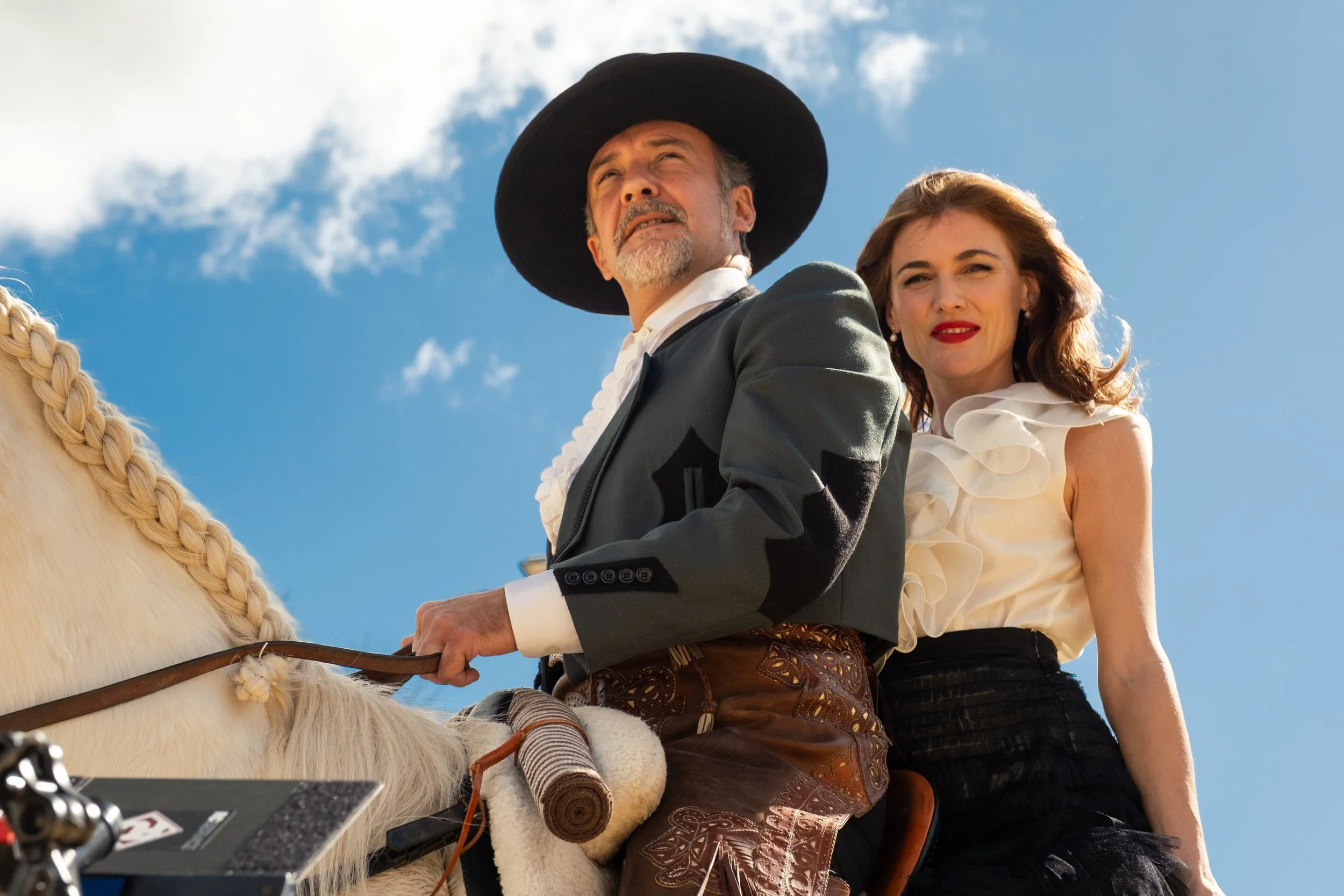
That philosophy explains why the series feels so emotionally volatile. These characters are not designed to behave rationally; they are designed to self-destruct beautifully.
Perhaps the most revealing moment of the conversation came when Esther Martínez Lobato admitted that the writers never try to redeem these characters or soften their flaws. Berlin remains narcissistic, manipulative, and emotionally dangerous. The series does not ask audiences to admire his morality. It asks them to surrender to his presence.
“When he enters the room,” she said, “everything changes.”
And perhaps that is the real reason this universe continues to resonate so strongly. These characters seduce precisely because they are incapable of control. They choose emotion over strategy, desire over logic and passion over self-preservation, even when they know it could destroy them.
In the end, Berlin and the Lady with an Ermine is not about stealing art. It is about what people destroy while trying to feel alive.
