
SIRĀT REVIEW: A PULSATING, SENSORIAL FEAST
words by SONNY NGO
In Óliver Laxe’s apocalyptic, dustpunk world, music is the remedy for the soul. “It’s not for listening, it’s for dancing,” one of the film’s characters boldly manifests. While Sirāt may at first glance promise an incessant rave, the film quickly turns into a jaw-dropping, edge-of-your-seat thriller. Borrowing qualities from both Mad Max: Fury Road and quite oddly from Paris, Texas, the film continuously pulsates between despair and euphoria. Having previously been awarded the Cannes Jury Prize, it’s an explosive tour de force sure to attract audiences for an entrancing dance.
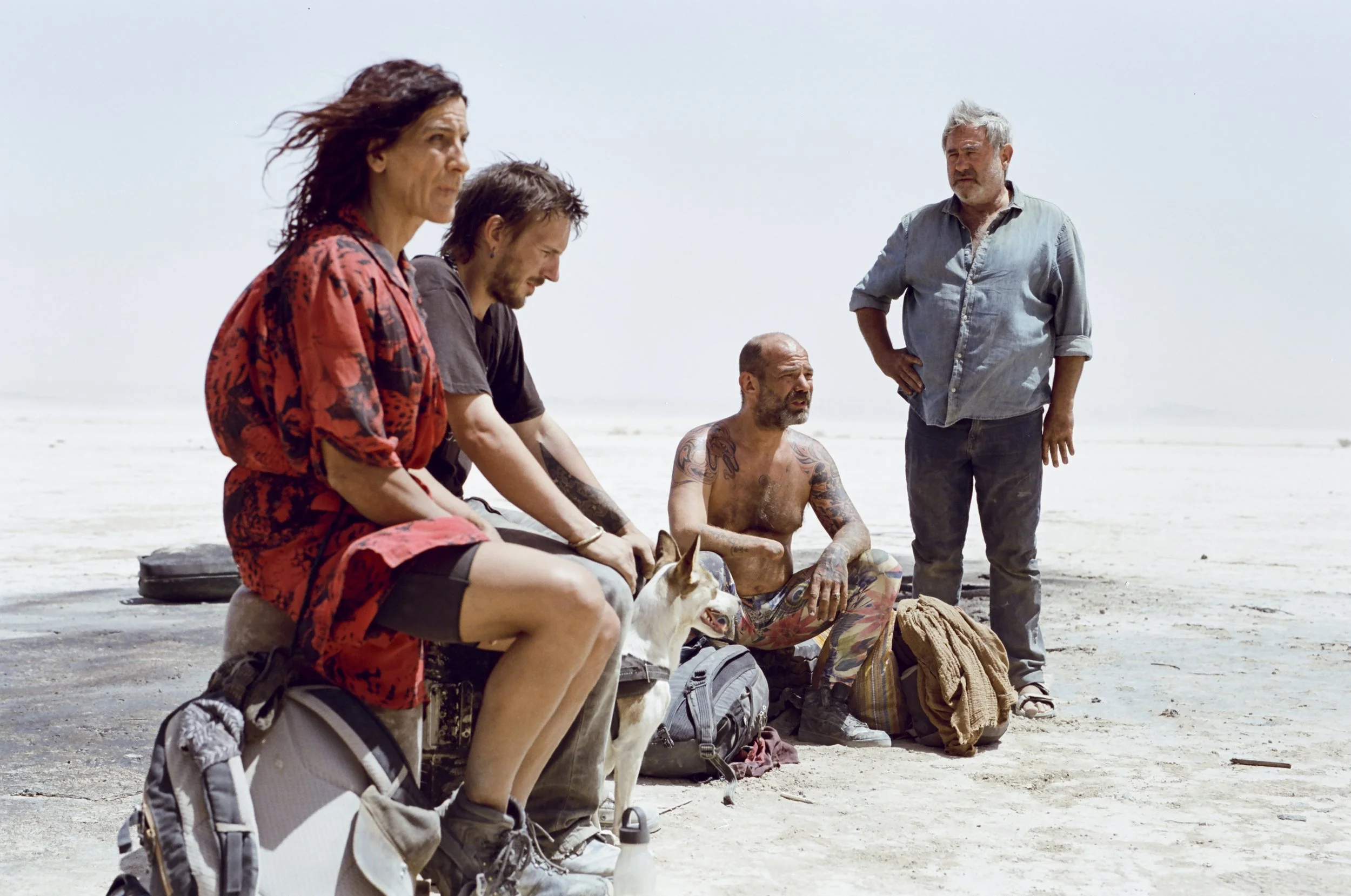
image courtesy of cineart.nl
The extended opening sequence introduces a crowd of ravers setting up their speakers in the Moroccan deserts. Booming basses resonate throughout the landscape and the thumps of rhythmic dancing immerse you into the world of Sirāt. There is barely any dialogue here; the soundtrack sets the tone loud enough for the rest of the film. Electronic artist Kangding Ray solely composed the utterly hypnotising techno score. Pounding minimal beats have at once a textured, rough edge, and a futuristic, free-spirited character. Enhanced by cinematographer Mauro Hece’s vision, the visuals have a certain Wim Wenders-like quality to them; hazy fade outs capture the poetic landscape and our characters getting lost in the music. It’s an insurmountable soundscape deeply entangled with the film’s plot and reflecting its evocative and emotive nature.
In Islamic beliefs, As-Sirāt is the bridge every person must cross to find paradise. In the film, this path will prove itself to be a hellish one to walk. Searching for his lost daughter, Luis (Sergi López) scours the sandy region with his son Esteban (newcomer Bruno Núñez) and their dog Pipa. They advance from one rave to another in the hopes of finding her amongst the bounces of festivalgoers. At one point, they meet a group of ravers on the margins of the event, who hint that she might be at a further rave deeper into the wasteland. Soon after, when the military invades and terminates their current rave, Luis and Esteban find themselves in an impromptu car escapade with their newly-met acquaintances. It appears that a third world war has broken loose: martial forces surveil the barren land for refugees, radios transmit bleakening news of civil flare-ups, and alongside the roads, people are brawling for fuel and water. Needless to say, the relationship between Luis and the ravers is strained at first. Can they trust this erratic man not to be of any hindrance, and can he confide in the strangers he met only just now? But the journey ahead is rugged – they need his sustenance and he their navigation instincts to the next rave – the only path forward seems communal.

image courtesy of cineart.nl
For the first part of the film, Sirāt comes across as a fairly simple narrative structure. A man loses his daughter and must find her at all costs. Halfway through, however, a moment so unexpected materialises into a dreadful sequence. It completely shifts the energy of the film from a moveable rave-along odyssey to an exhilarating breathtaker. And it doesn’t stop there: Laxe seems most interested in hitting audiences with disastrous, haphazardly shock after shock. To some, it might come across as comically ungrounded, and to others, it will represent a haunting watch.
Either way, Sirāt is an absolute thrill ride. Yet there is no foreshadowing nor a grand reveal audiences might long for. There purely is a path forward. “Is this what the end of the world feels like?,” a raver asks, “It’s been the end of the world for a long time,” another answers. Sirāt will leave you with a sense of existentialism (“is this it?”), however, if you are open to the ways the film throws curveballs at you and forces you to engage with music and your senses, then you might be able to enjoy the ride. At the end of the world, the only path forward may seem like a descent into madness, but if you are surrounded by the right ravers, family, or community – you might be able to turn that lunacy into joy, eusexua, and true elation, even if it’s just for a momentary dance.
Sirāt first premiered at Cannes Film Festival 2025 and screened during this year’s International Film Festival Rotterdam as well. It will screen in Dutch cinemas starting February 19.