
WHY IS WUTHERING HEIGHTS SO DIVISIVE?
words by ANOUK WOUDT
Now that Emerald Fennell’s highly anticipated film adaptation of the beloved classic Wuthering Heights is finally out, people can’t seem to make up their minds about it. From being utterly obsessed to deeply hated, it might be one of the most divisive films of the year. Well, we’re adding another opinion into the cesspool. Yes, it’s dramatic, it’s sexy, it’s colourful, but even with all of that fluff, can that cushion the pressing issues many had with the film?
all images courtesy of Warner Bros
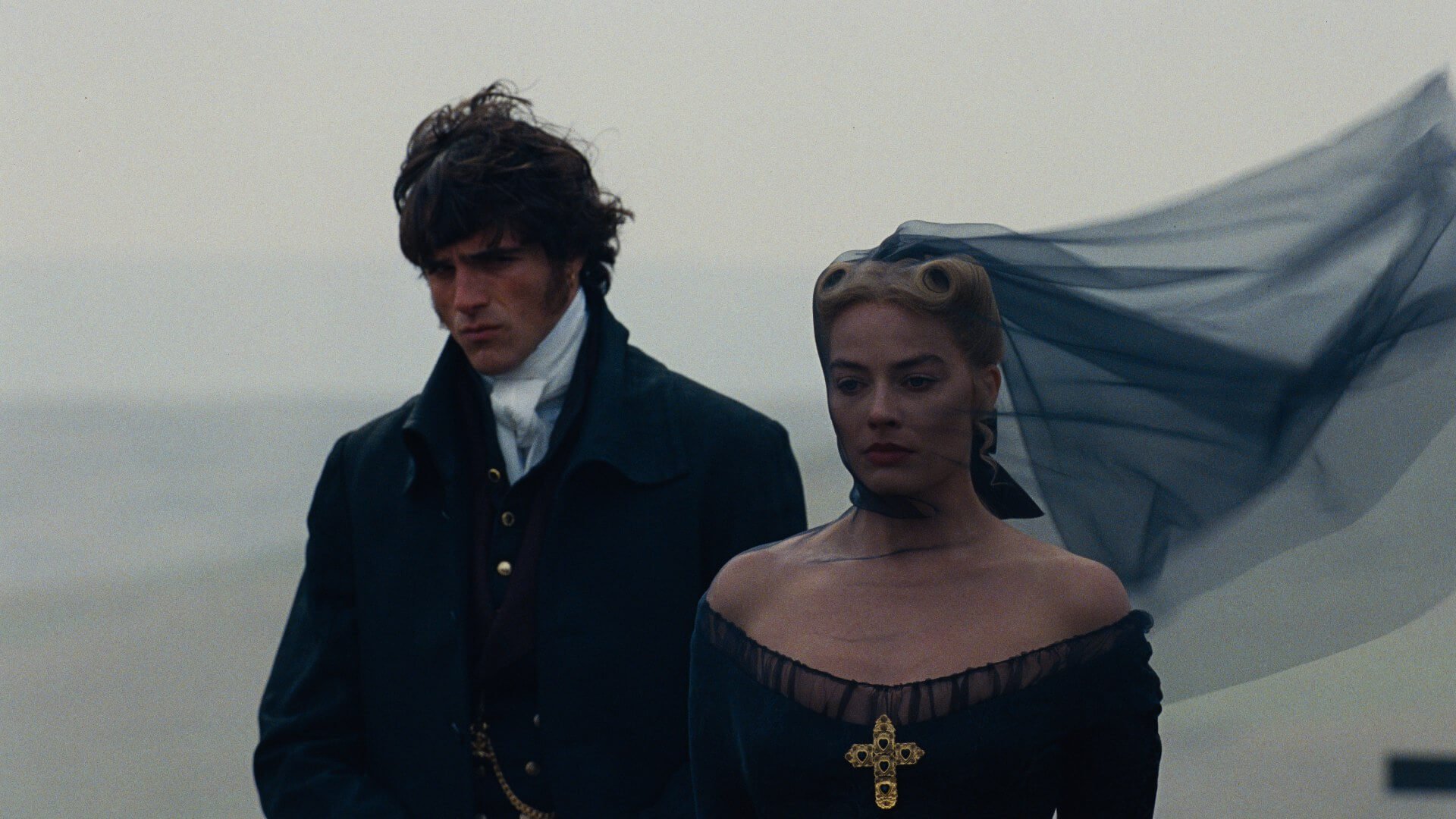
Though the actor choices have been scrutinized since their announcement, we can’t help but mention it, as it definitely affects the viewing experience in a glaringly obvious way. Though Margot Robbie and Jacob Elordi’s performances were good, the casting still feels contradictory to the story. Seeing a 35-year-old Robbie prancing around as a teenager just teeters too close to ridicule, though Heathcliff sporting a full beard and abs at 16 is also beyond unbelievable. In addition to them being full-grown adults, the storyline loses its substance with the apparition of a ghostly white Heathcliff. Described in the book as “dark-skinned”, a story of a love divided by the racial tensions of 18th-century England becomes an A-list rom-com. The fact that our Edgar Linton is darker than him also just feeds into the irony of it all. It all boils down to the director embracing diversity, but not enough to fit the sexualized fantasy of the leading love interest in her mind.
Casting qualms aside, the sets were fantastical with shots that transported you into a world completely within Fennell’s imagination. The entire film takes place in a fog of Old England with a macabre ambiance that lingers in every scene. Striking reds contrast ghastly greys to help you settle into their twisted world. The visual language was definitely the star of the film, and paired with the siren-esque vocals of Charli XCX, it made for a stunning viewing experience. From the very opening scene, the film fulfills its promise to be shockingly smutified, clearly an attempt to make a splash as big as Saltburn’s bathtub scene. Though BDSM references are littered throughout, somehow it still fails to out-freak its predecessor – though some scenes come close. The pair’s intense hypersexualization can sometimes cheapen their love to a common affair, though some scenes swept us completely off our feet. Lust overcomes Cathy and Heathcliff’s relationship, relying on sexuality to express their deep, everlasting obsession, likening the film to a form of gothic erotica. It’s different from the Wuthering Heights we know and love; but what is the point of a remake that acts as a perfect copy?
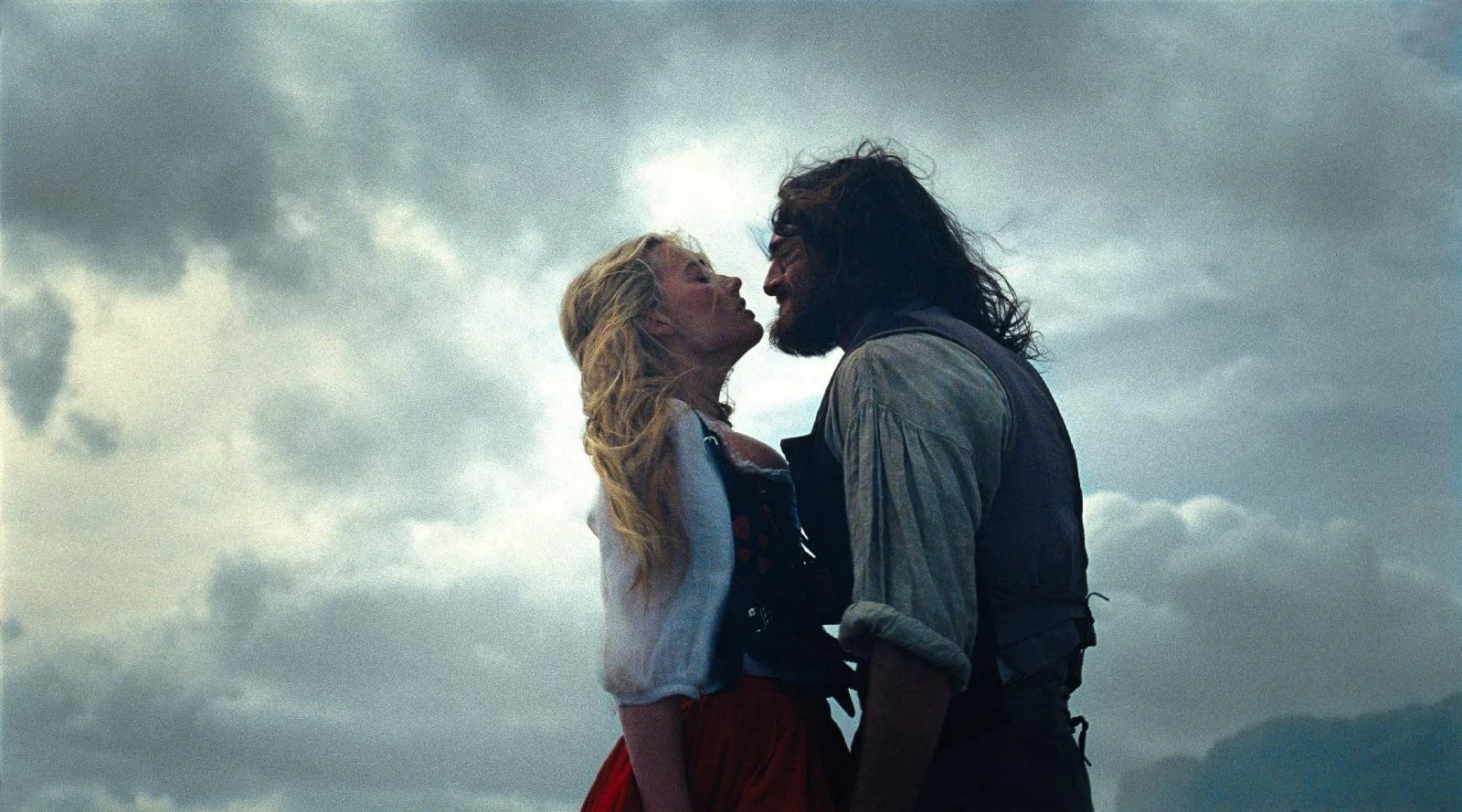
As per Emerald Fennell’s quotation marks, the film is not an adaptation, but an interpretation. This dismissal of accuracy explains the lack of literary and historical faithfulness, relying on the director’s superimposed desires of what that world should be. Beyond the modern costuming that had some up in arms, the film unjustly romanticizes their mutual abuse, labelling it as the ‘greatest love story of all time.’ This title, unfortunately, strips some of the story’s meaning away, considering that the book reads as a cautionary tale of the destruction that follows as intense as theirs. While the film does still desecrate its characters, it crumbles apart so quickly that it’s hard to feel the warning signs.
With this point aside, Emerald Fennell’s Wuthering Heights stands alone from its inspiration. Though it lacks some of the depth that the book left us with, it leaves us feeling something entirely new. After all, art is created from reinterpretation and reinvention, and without this impulse, nothing new would ever emerge.
