ADÉLA'S DEBUT ALBUM: BECOMING THE PRIMA OF POP
words by DEBORAH DRENOFCI
Pop princess ADÉLA releases her debut album PRIMA today, September 4th, via Polydor Records, co-executive produced by Blake Slatkin and Dylan Brady. More than an album, PRIMA is a manifestation of dreams, a testimony to ADÉLA's power as a young woman in her 20s moving toward her dream, dressed fully as her own magnificent self. This is what makes this rising star magical — not the polish, not the hooks, but the ability to honour her essence in the midst of the chaotic process of becoming.
In Elton John's Rocket Hour, he tells ADÉLA she feels like a breath of fresh air. Taking a compliment from an artist like him means you must be doing something right, but when it comes to becoming a pop star — what does doing it right even mean?
On the album's name, ADÉLA explained: "PRIMA means 'first,' which is perfect since this is my debut. Being a prima ballerina means you're the top dog, the best ballerina in the house. It's a term of endearment in the ballet community. I'm trying to be the prima ballerina of pop, and this is my first step to achieve that." It's a fitting reference coming from her — ADÉLA trained as a ballerina growing up, long before pop music became her calling.
ADÉLA wanted her album to sound like a 22-year-old girl. She explains: "At my age, you either hear, 'She's really deep,' or, 'She's funny and doesn't take anything seriously.' I tried to express both sides. I mixed the hard with the soft, the vulnerable with the swag of it all, the muscular beats with the feminine energy. I did exactly what I wanted to."
When we caught up with her at Lowlands Festival, ADÉLA said: "I kind of made it for little me, as an homage to all the music that I loved when I first started to develop my own taste. It is about being a 22-year-old woman, about love, about family, about good sex, bad sex. I made it with little me in mind, as in, if I listened to this record when I was twelve, would I be a fan of myself. I think I succeeded!"
On her voyage to become the prima of pop, ADÉLA honours the artists who came before her with taste — because inspiration should not only be used, but appreciated.

image courtesy of POLYDOR RECORDS
As an opener, ADÉLA introduces herself through KGB — a powerful, provocative, big fat hello to the world. The song traces back to where she started, how hard she worked to get here, and how much further she plans to go.
“I was, like, eight, working the night shift to learn English
I’m like a spy, I studied this shit, call me the K-G-Bitch”
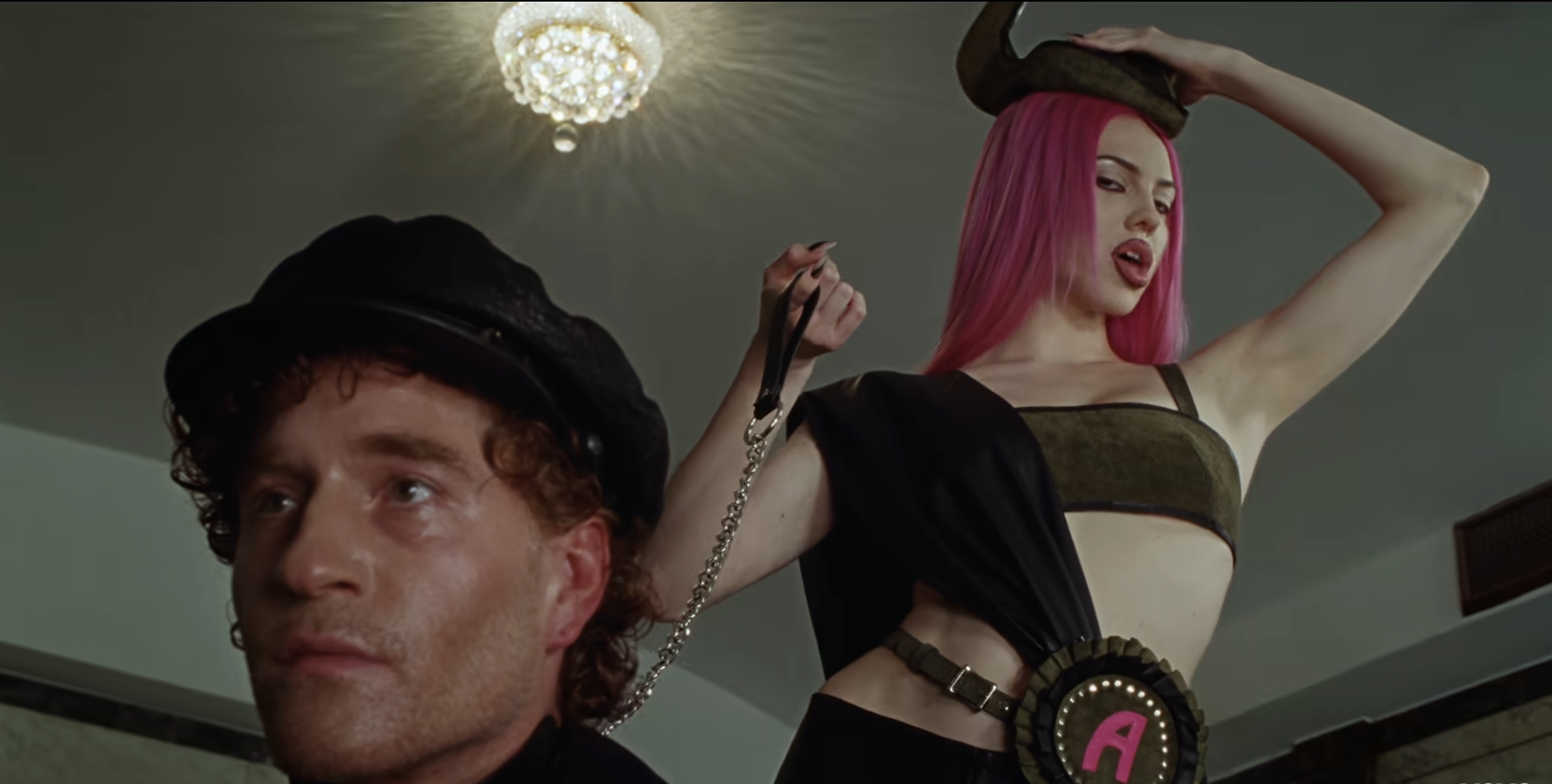
image still via YOUTUBE
Then comes the second track, Nicole Kidman, for which ADÉLA released the music video today. The song is layered with references to Kidman's work, though the initial spark came on a Golden Globes event she attended: "I've never been in a movie, but I got all glammed up, put into a dress, had my hair done, and I looked really good. My hair was super bouncy, and my corset was so tight that I thought, 'I feel like Nicole Kidman right now.'"
The video pushes that idea further, staging two versions of ADÉLA in the same room. One sits on the bed, composed, fully in control. The other kneels on the ground, licking water from a plate — a direct nod to Kidman's scene in Babygirl. The dominant ADÉLA represents restraint and command; the one on the floor gives voice to the subconscious, submissive desires beneath it. By the end, the two versions embrace as if ADÉLA was saying both sides of her deserve a place, and neither cancels the other out. Elsewhere in the video, ADÉLA references To Die For, Eyes Wide Shut, and there is also a wink to Kidman's AMC ad moment.
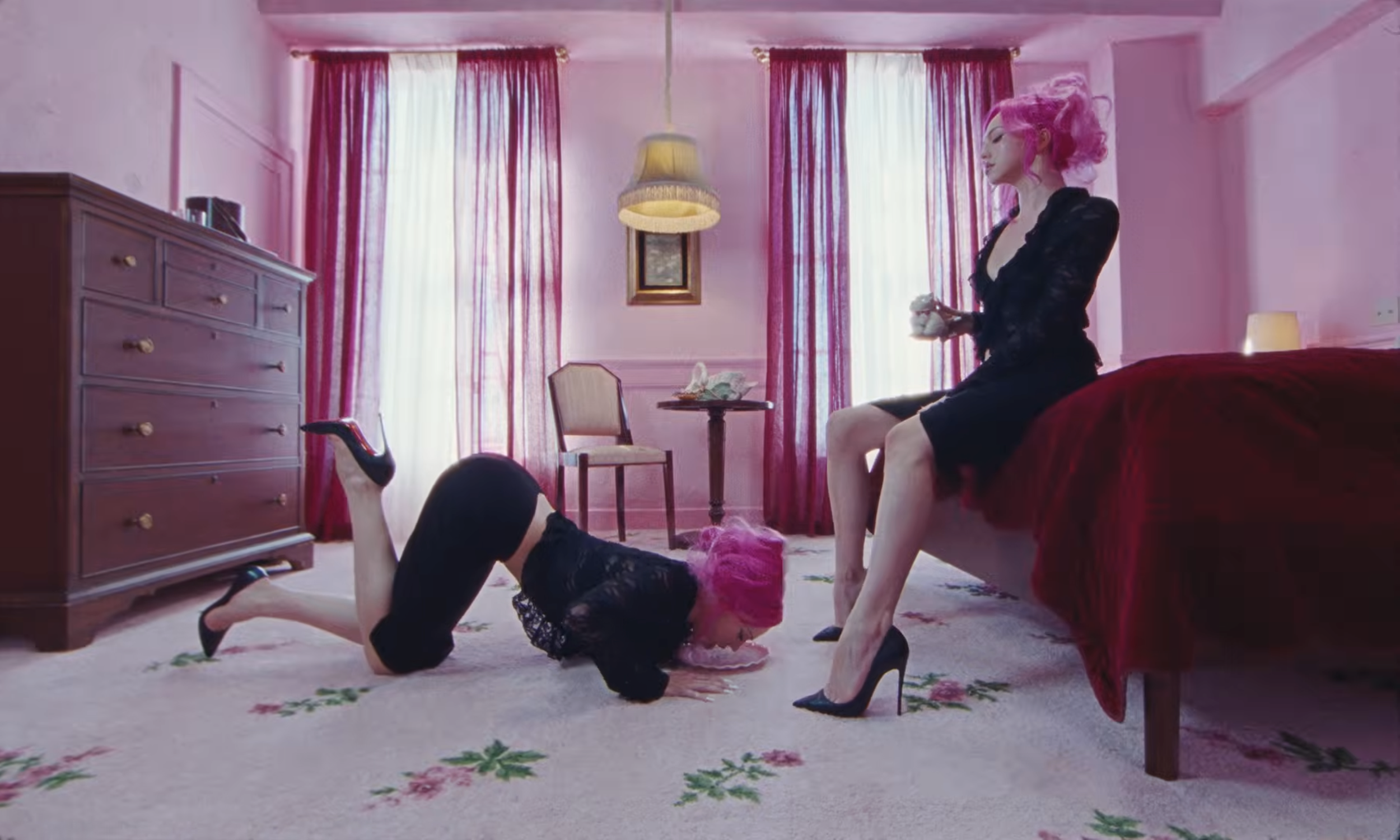

image stills via YOUTUBE

photography by ELIZABETH MIRANDA
The third track, I'm the Man, channels the spirit of Ariana Grande and Doja Cat's contemporary R&B. ADÉLA steps into the role usually reserved for men — unapologetic, and entirely at ease in her own confidence. The lyrics play with a sharper idea underneath: that when successful, self-assured women make men uneasy, the easiest way society processes that discomfort is by recasting the woman as somehow acting like "the man."
On the fourth track, Boys, ADÉLA keeps that same fearless energy going — this time with a wink toward early Britney Spears sparkle running through the production.
“I got boys like a vending machine
I just press the right buttons, and they falling for me”
On her fifth track, Red Bottoms, followed by the sixth, Hitachi, ADÉLA steps out of that rougher swagger and into something softer. This is the other side of a bad bitch — the hopeless romantic, the scared lover, the one still attached. She sings about lost love, nostalgia, and sex with an unguarded, almost unfinished honesty.
From there, the album lifts back into rebellion with Fantasize, track seven, and Starving Artist, track eight — where ADÉLA turns her attention to boredom and the restlessness of wanting more than what's in front of her.
“This is the part where human nature
Fills me with need and sways my mind
This is the part where I’m no better
The more that I fantasize”
Track nine, Marijuana, finds a confident ADÉLA getting high off a new guy, riding the same reckless, lighthearted energy that runs through the album's front half. It's a brief return to indulgence before the record turns inward again.
The tenth track, Therapy, is where the album turns most personal. ADÉLA recorded it while sick, running her vocals through light autotune processing — a choice that, rather than polishing the moment, only deepens the sense of exposure. It plays almost like an automatic writing session read aloud in a notebook, delivered low on energy but somehow still striking, still whole. She sings about not having the money to move her mother closer to her, and the discomfort of having to negotiate that future with people she describes, unfiltered, as a bunch of annoying white men who happen to hold the keys to it anyway. She also opens up about missing her baby sister's childhood, the years she wasn't there to watch her grow. The album then closes with Ain't in LA — now something of an anthem for bad bitches everywhere.
“It feels kinda heavy right now
It feels kinda messy right now”
By the end of PRIMA, we start to find an answer to the question this piece opened with — what does “doing it right” actually mean? The answer isn't black and white. Hard work and a dream only get you halfway there; the rest comes down to simply being yourself. Across this album, the self gets lost, found, and lost again, but its essence never fully disappears. Sometimes it's loud, sometimes it's quiet. It shows up in the big dreams and in the heartbreaks alike — which might be the closest thing to doing it right that anyone gets.

images courtesy of POLYDOR RECORDS