BOYS WILL BE IMAGES: PERFORMANCE, MASCULINITY, AND GESTURE IN PETER DE POTTER’S WORK
words and interview by FRANCESCO PIZZUTI
In a visual culture like today’s, the body exists beyond the person. It is captured, framed, warped, repeated, reimagined, and always performed. But to call this merely performative feels too easy, almost moralistic, as if somewhere there’s a space of non-performance that should be inhabited, a truth that escapes the rules and confines of repetition and repurpose; a pure, unperformed self waiting to be recovered. Having a body is already a form of appearance. The question is not whether it performs, but how. What’s it like to be an image, a hesitation, an interruption of oneself?
These are the questions that surfaced when speaking with Belgian visual artist and image maker Peter de Potter, whose unequivocal body of work has long inhabited the visual sphere as a suspended ensemble of male bodies, skin, textures, intensities, traced with the pressure of poetic hints through pencil words, charged with a boyish angst and a visceral, queer, masculine sensibility.
all images courtesy of PETER DE POTTER
Peter de Potter has existed within the digital realm for a long time, making the online sphere itself foundational in shaping and recognising his work. He rose in a moment when internet image culture, curation, and reposting became central to how art was seen and shared, where images were starting to insist on themselves.
Going through his Instagram feels a bit like going through the male underwear aisle as a closeted 12-year-old, less precise, though, more feral, more warrior-like. His images, grainy, tactile, never overexplained, often feature semi-naked young men in states that feel at once angsty and theatrical, withdrawn yet show-offy. They kneel, bend, turn away, drape themselves over gaming chairs, or seem caught in the middle of something unresolved. There is no neat story, no psychological confession handed to the viewer. Instead, there is atmosphere, juxtaposition, tension, posture, and a distinct sense that the image is thinking in its own language, reflecting on its own mediality.
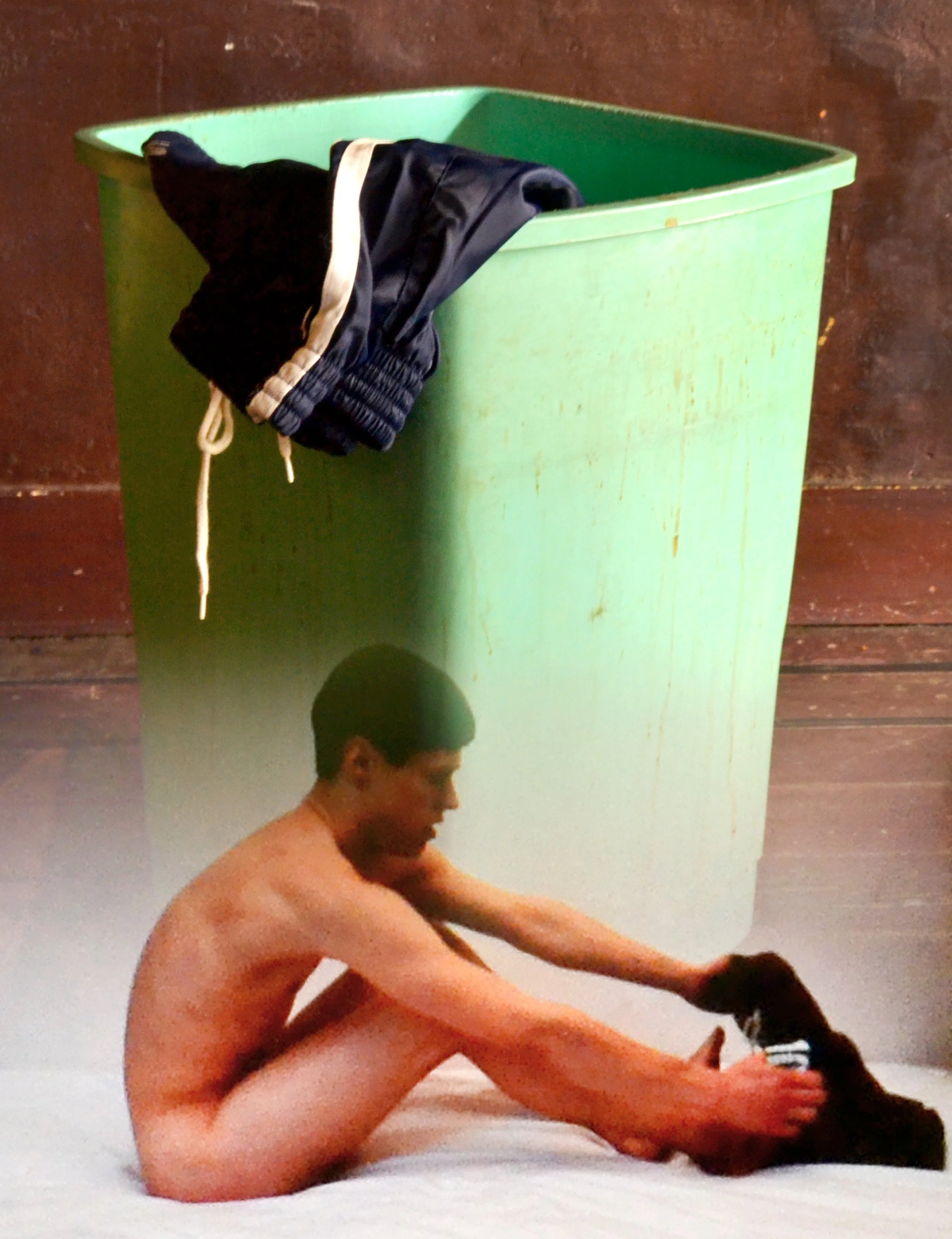
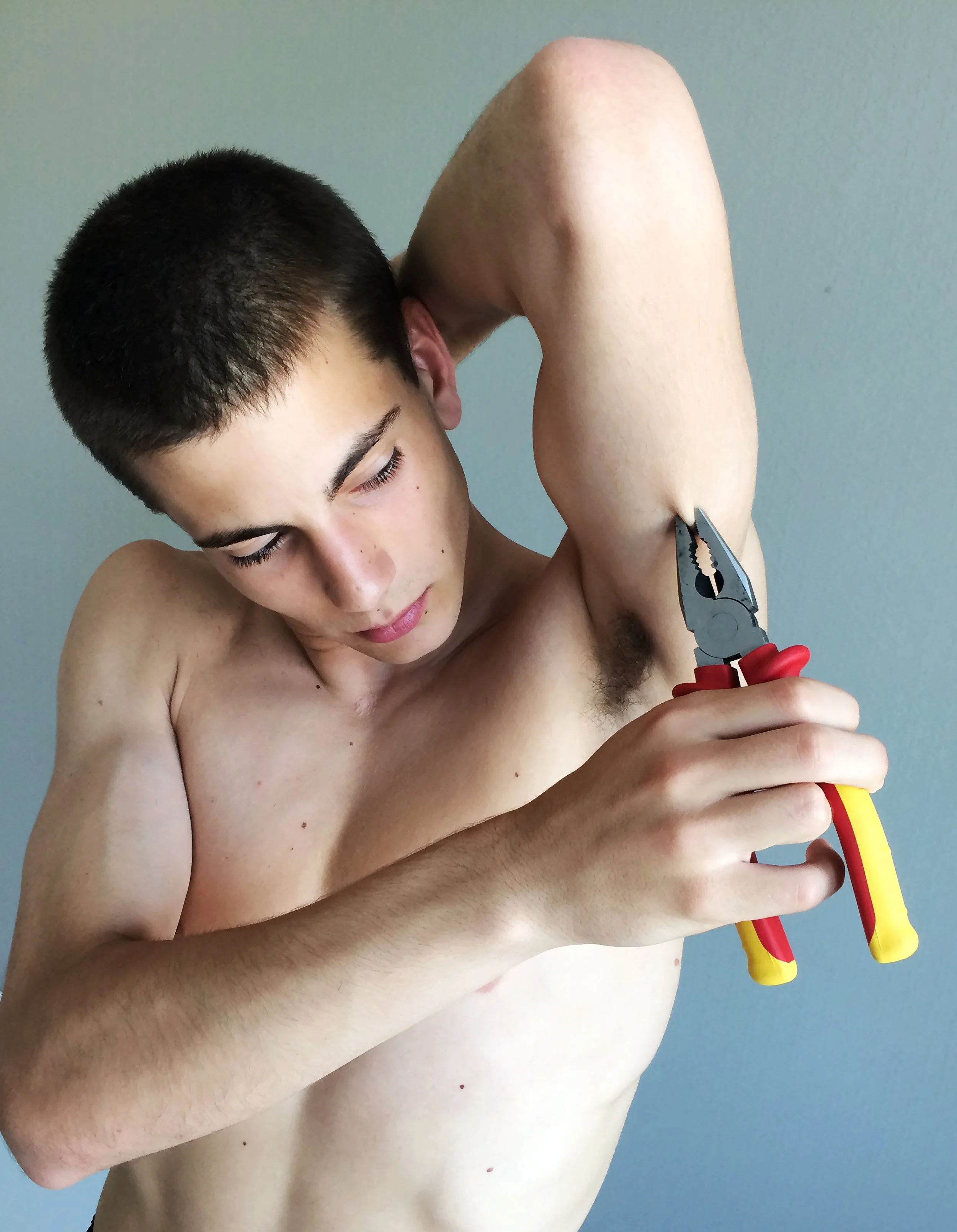
De Potter himself resists easy readings. When the recurring assumption of his work being “about masculinity” is brought up, he complicates the claim, admitting that while he’s not annoyed by that reading, he doesn’t see it precisely like that: “Like any artist, I have been inventing and developing my own language, not only conceptually but also practically”. That language, as he describes it, was built through self-imposed limits. “A long time ago, I decided on my ‘tools’, the way a painter would choose their colours and brushes”. For him, those tools became written words, graphics and a very particular kind of person. This is one of the keys to understanding his work. The bodies in his images are not simply subjects, and not quite characters either, but “more like representations; the way parables are illustrated throughout art history”.
De Potter is not interested in documentary truth, nor in the fantasy of raw access to a person. The figure in the image is “a presence but also a shape, absolutely made of flesh and blood but also a pure visual motif”. This is what gives his work its strange intensity: the body appears both tactile and formal, erotic and constructed, personal and impersonal at once.
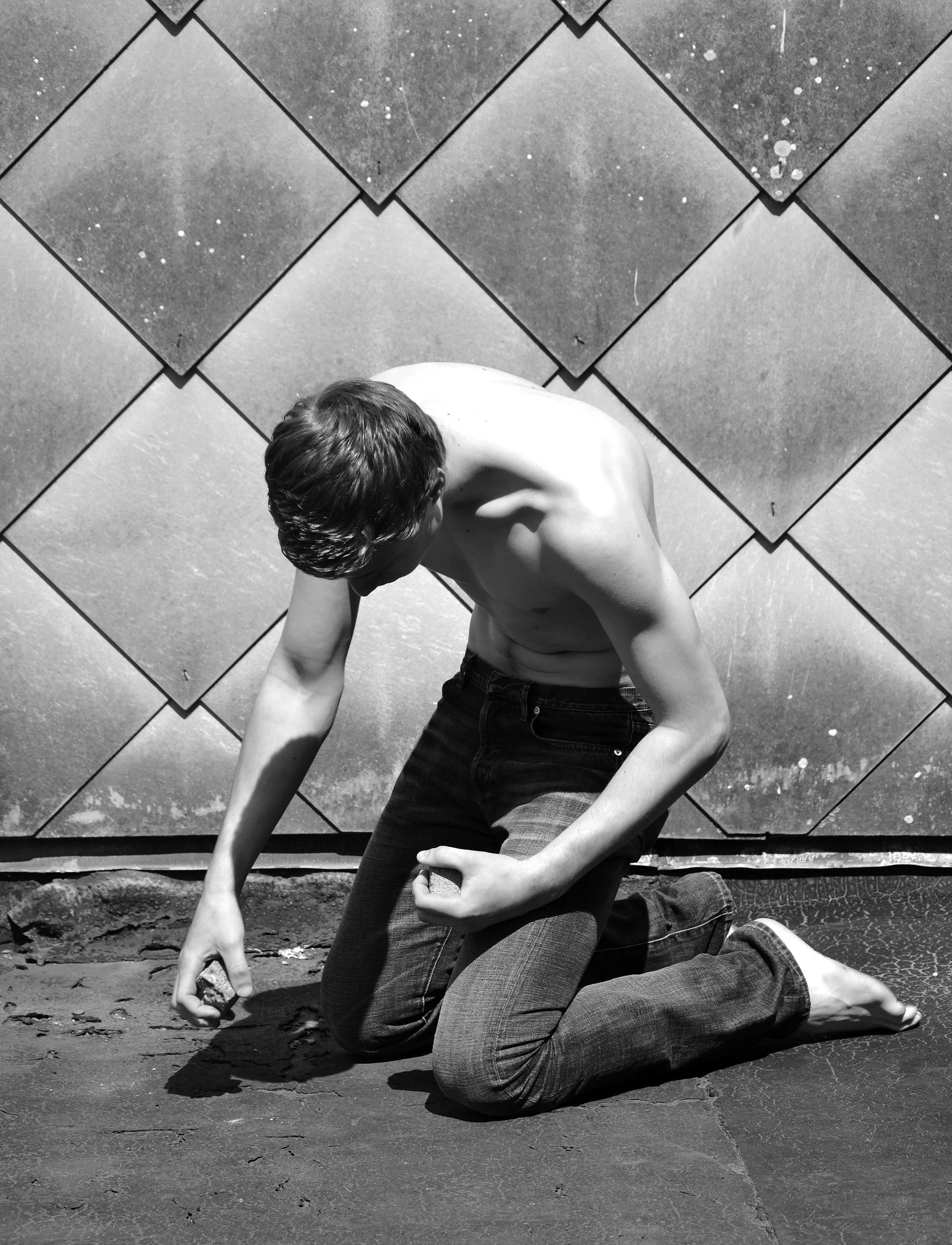
His images often feel suspended in this tension, or, perhaps, just suspended. “I don’t really do portraits; my images always involve some kind of action or moment”, he says. “I want the viewer to feel these are staged actions to avoid them being viewed as pure documentary. But at the same time, I make sure there’s also a definite and unvarnished realism to them”. What he seems to seek is the meeting point between staging, realism, gesture, suspension, movement, composition, and accident, “where it becomes something elevated, poetic or aspirational maybe, touching the senses”.
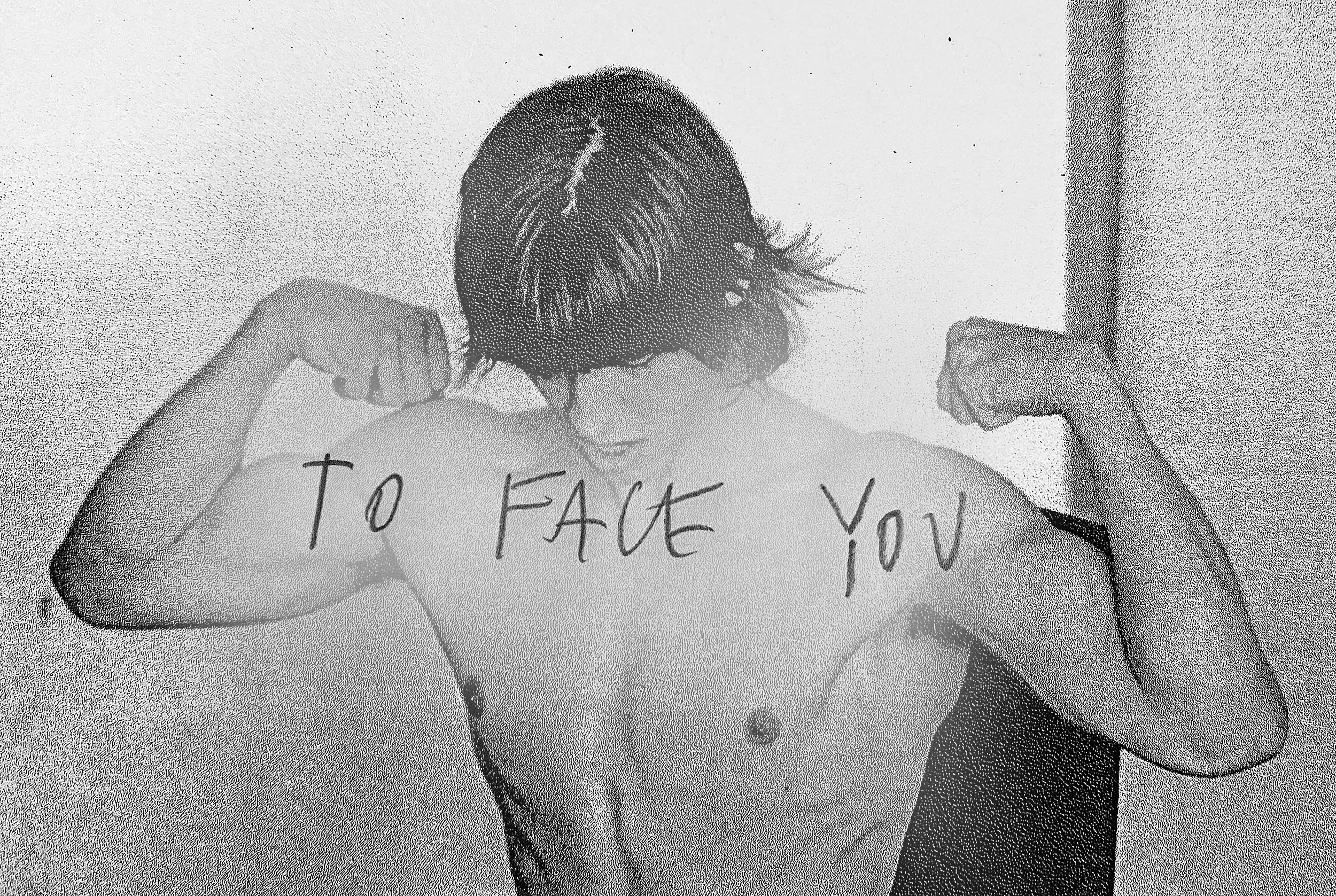
That phrase — touching the senses — feels important. Precisely because De Potter’s images make visible the conditions under which bodies become images at all. In his work, the visual is never neutral. It exposes the body. It has pressure, temperature, awkwardness. It can seduce, but it hesitates. The action remains suspended in an in-between state that doesn’t immediately register as meaning, but more like a felt intensity. In one of his prints (012: I LOOK AWAY), the man appears neither to be rising nor collapsing, neither working nor resting. The gesture is held open; it refuses culmination. The masculine body does not arrive at triumph, seduction, or even explicit defeat, but instead exists in the interval between those states.
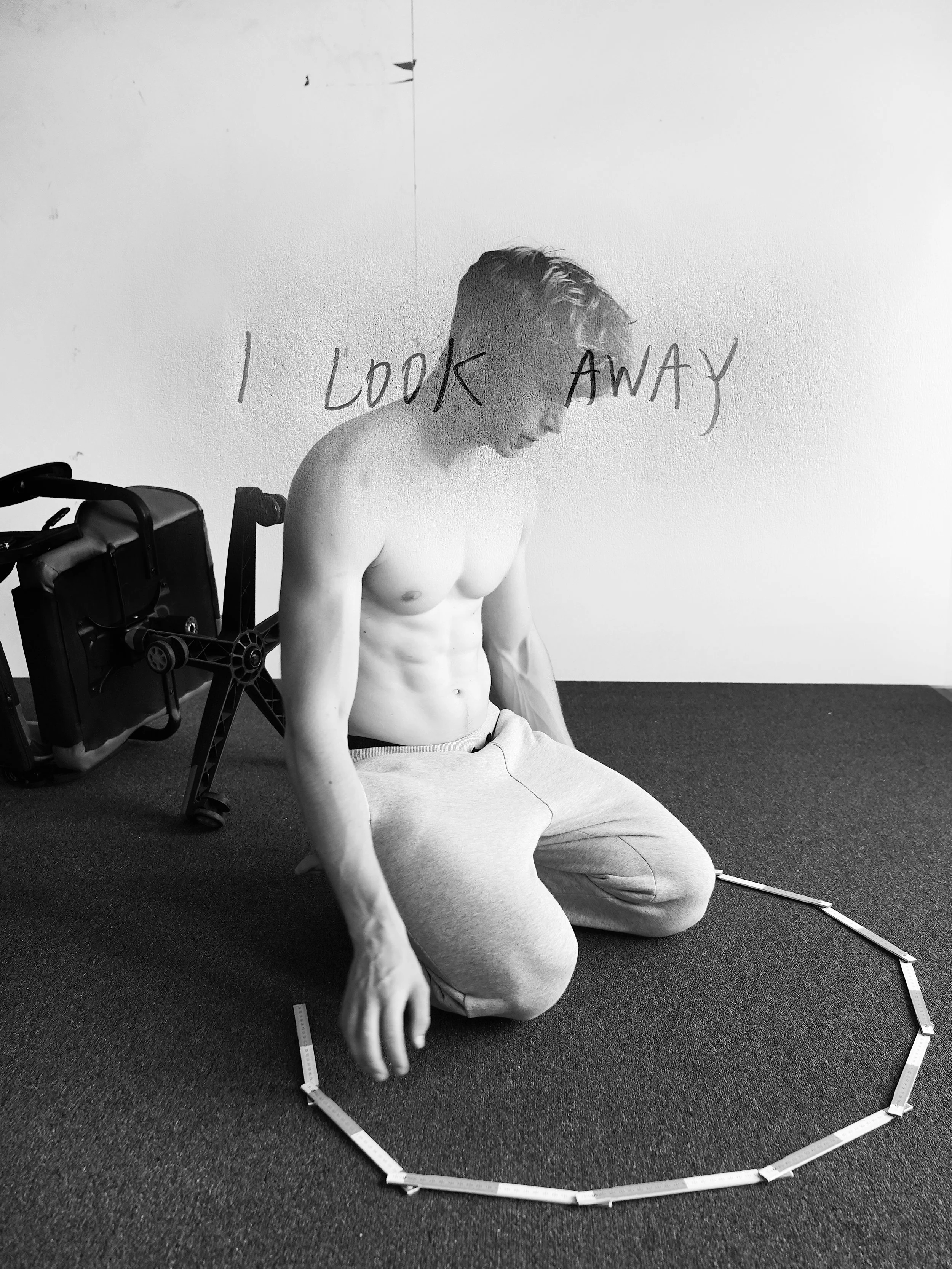
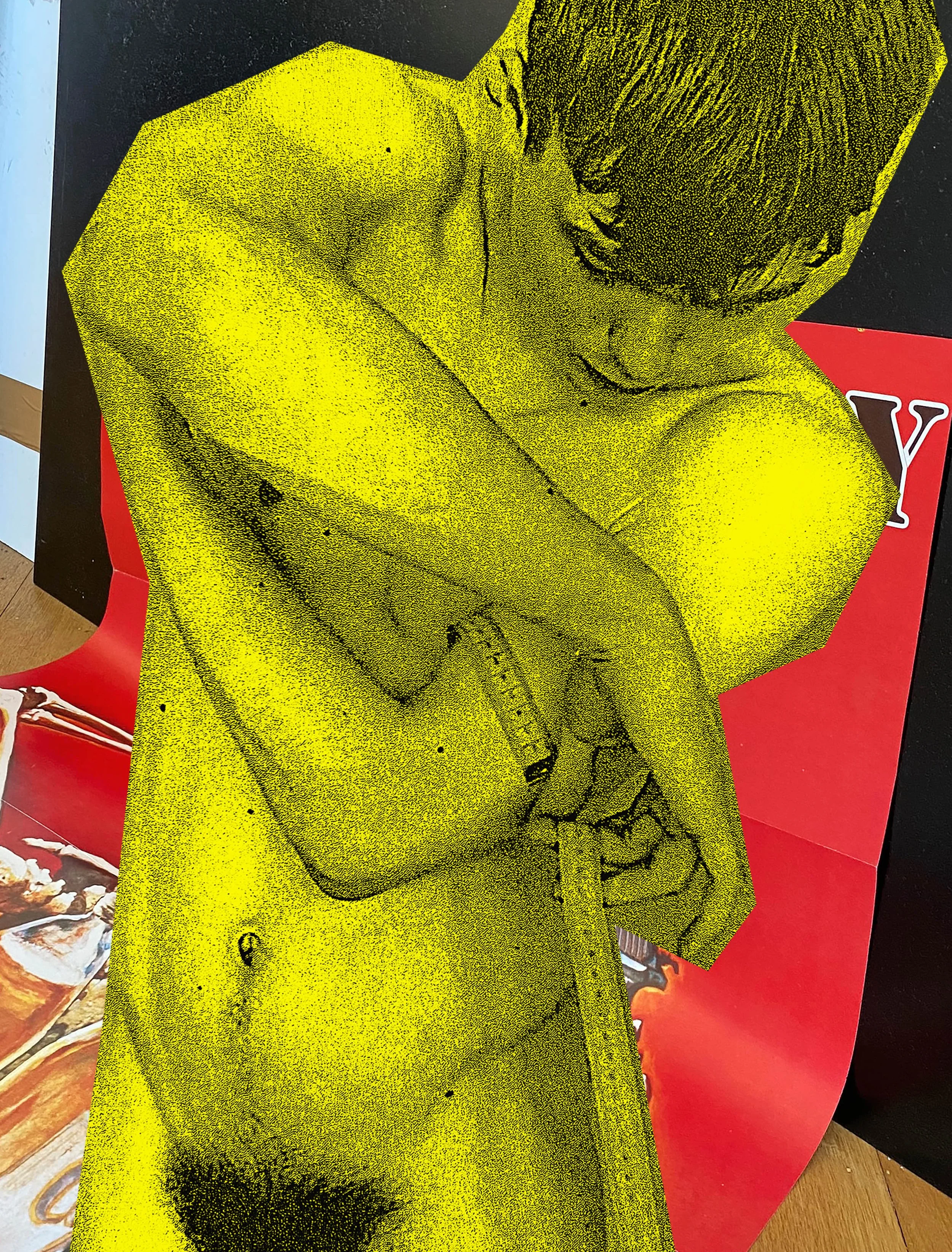
When De Potter speaks about performance — referring to his 2023 artist book Ring Light New Testament — he observes how “performing, for oneself, for others, has become a common, worldwide language, to the extent that it’s not even perceived as a performance anymore”. “A staged performance is now a truth of some kind”. In an era of casual grid posts, thirst traps, OnlyFans, video stills, and endlessly curated self-images, performance no longer announces itself as artificial. It arrives as sincerity, as evidence, as selfhood. De Potter does not lament this shift from some imagined outside. On the contrary, he insists on taking visual culture seriously. “I am a living product of a visual society, and I see my work before anything else as my heartfelt contribution to visual culture”, he says. “I am living in a time where the self has turned itself into a visual and acts as a visual”.
There is no condescension in the statement. “It’s lazy and patronising to look down on selfie culture or memes or thirst traps or whatever”, he says. “However you feel about them, they push along the visual language”. That refusal of moral superiority runs throughout his work. He is not diagnosing the visual age from above; he is absorbing its codes and reconfiguring them into something denser, stranger, and quite poetic; and that feels like a profoundly queer practice.
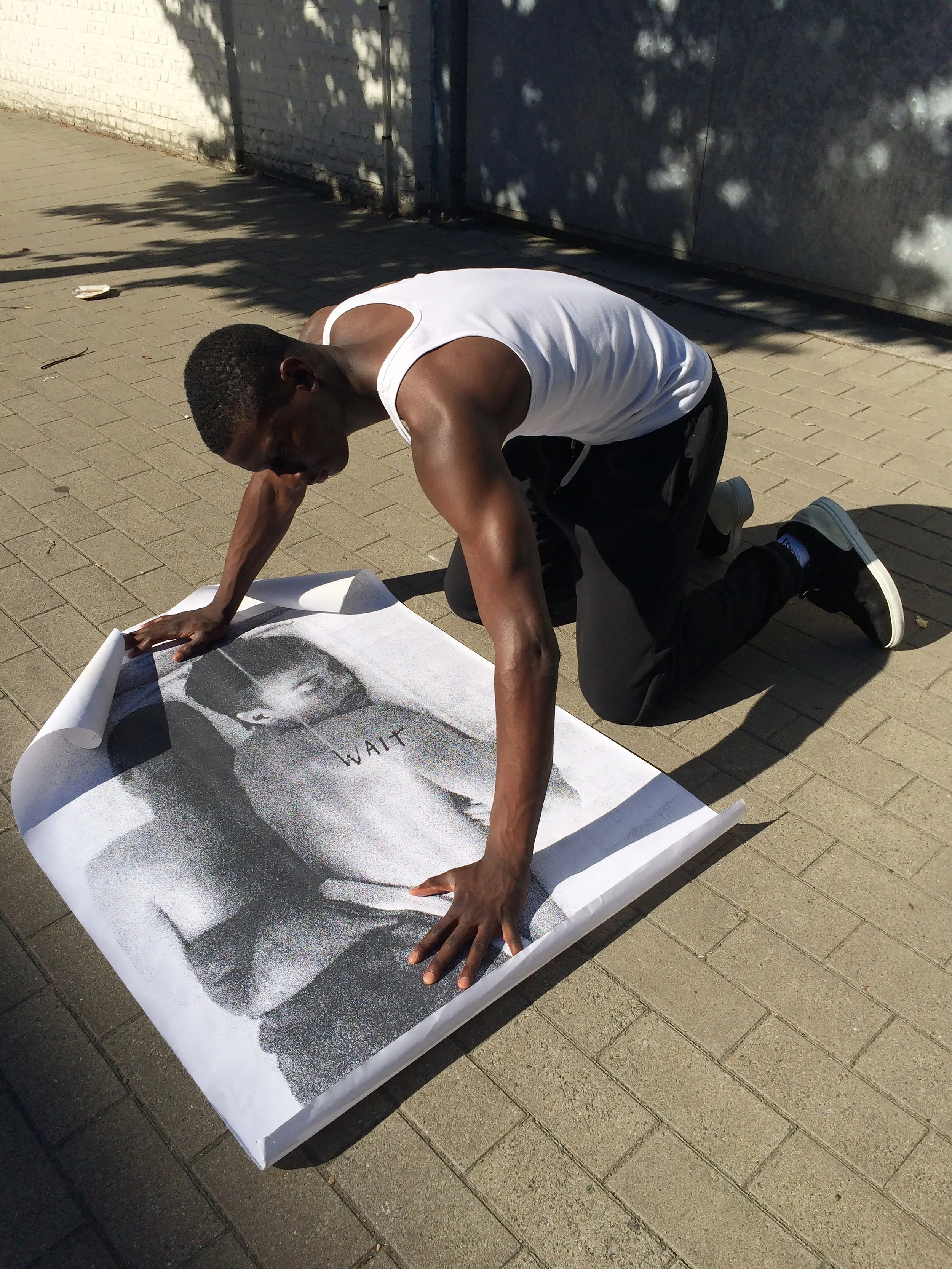
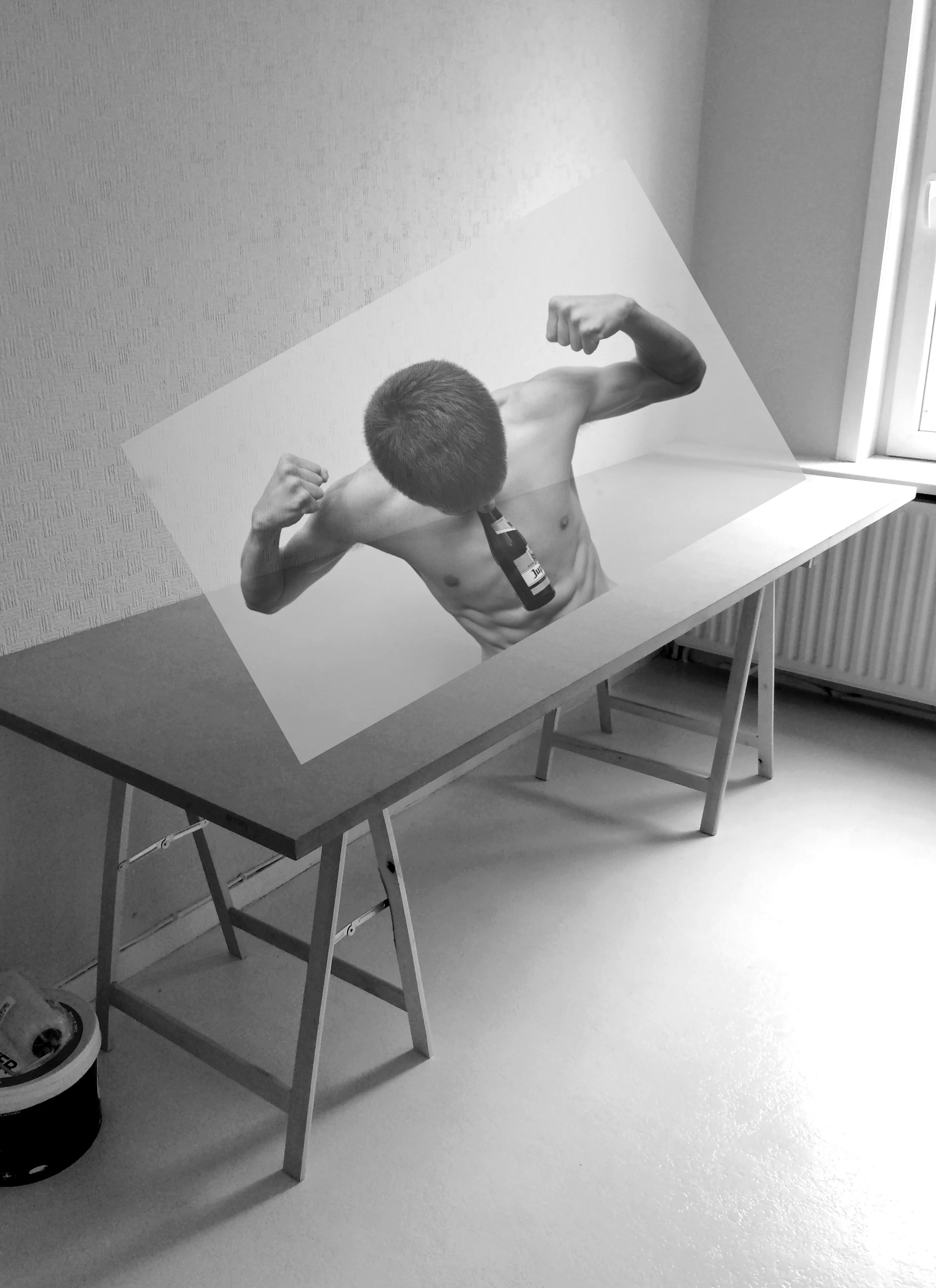
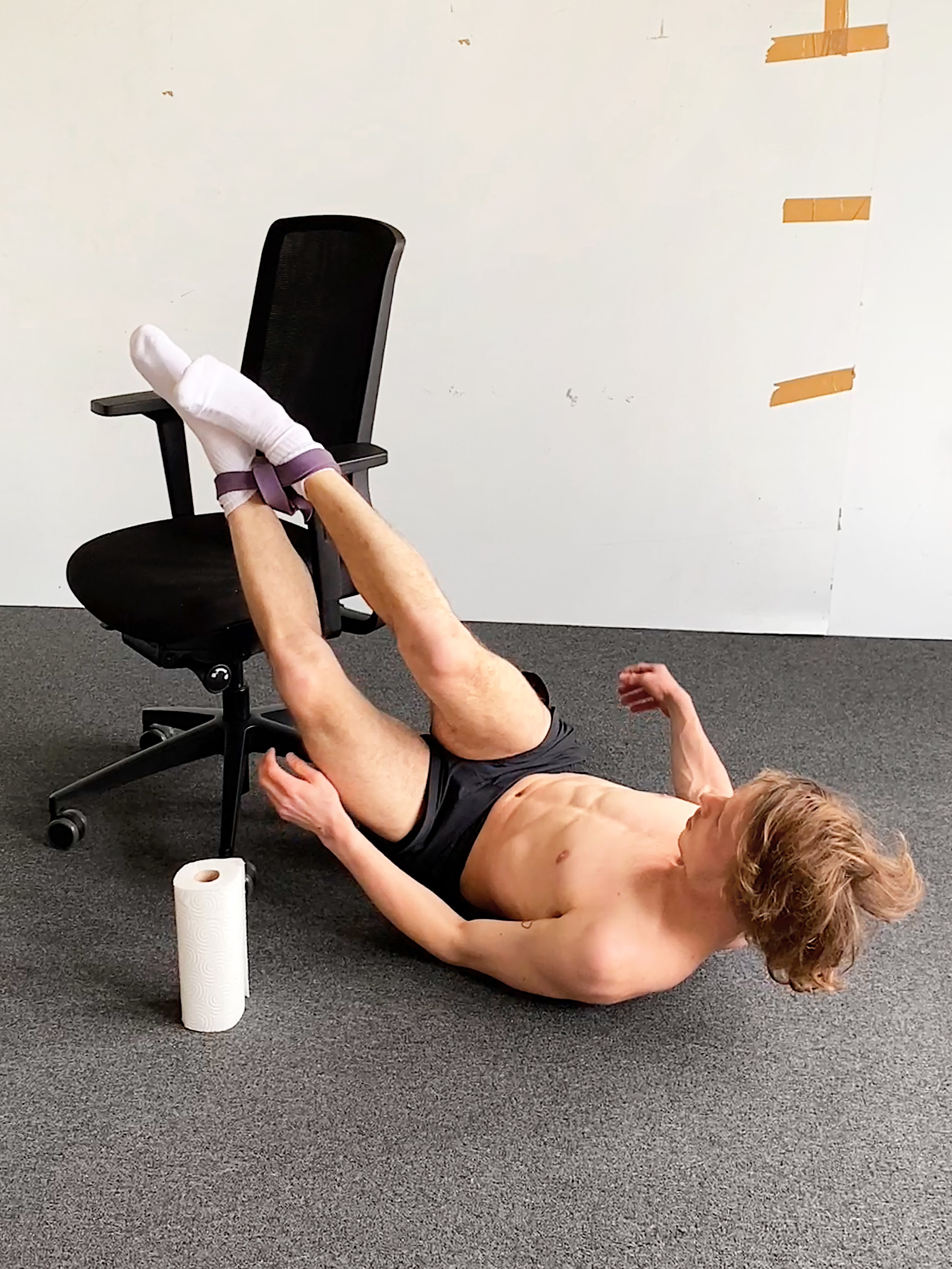
This also shapes the erotic charge of his images. Nudity in De Potter’s work is unmistakable, but he describes it in unexpectedly calm terms. “I often said before that the nudity is mainly there to represent the state of aloneness”, he explains, “Not loneliness!”. It is an important distinction. For him, nudity is not necessarily spectacle or provocation but a way of staging solitude, stillness, and physical presence; “a comfortable thing, a tranquillity thing”.
What matters is the possibility of seeing the body differently. “I work on the idea that in my work the body is non-problematic”, he says. In a culture where the body is so often treated as shameful, guilty, excessive, or in need of correction, that position feels quietly radical. “I’m not trying to paint an idealised or even an escapist world at all, but somehow I feel it’s important to offer the viewer a sense of worth and inspiration by looking at the body as a non-problematic given.”
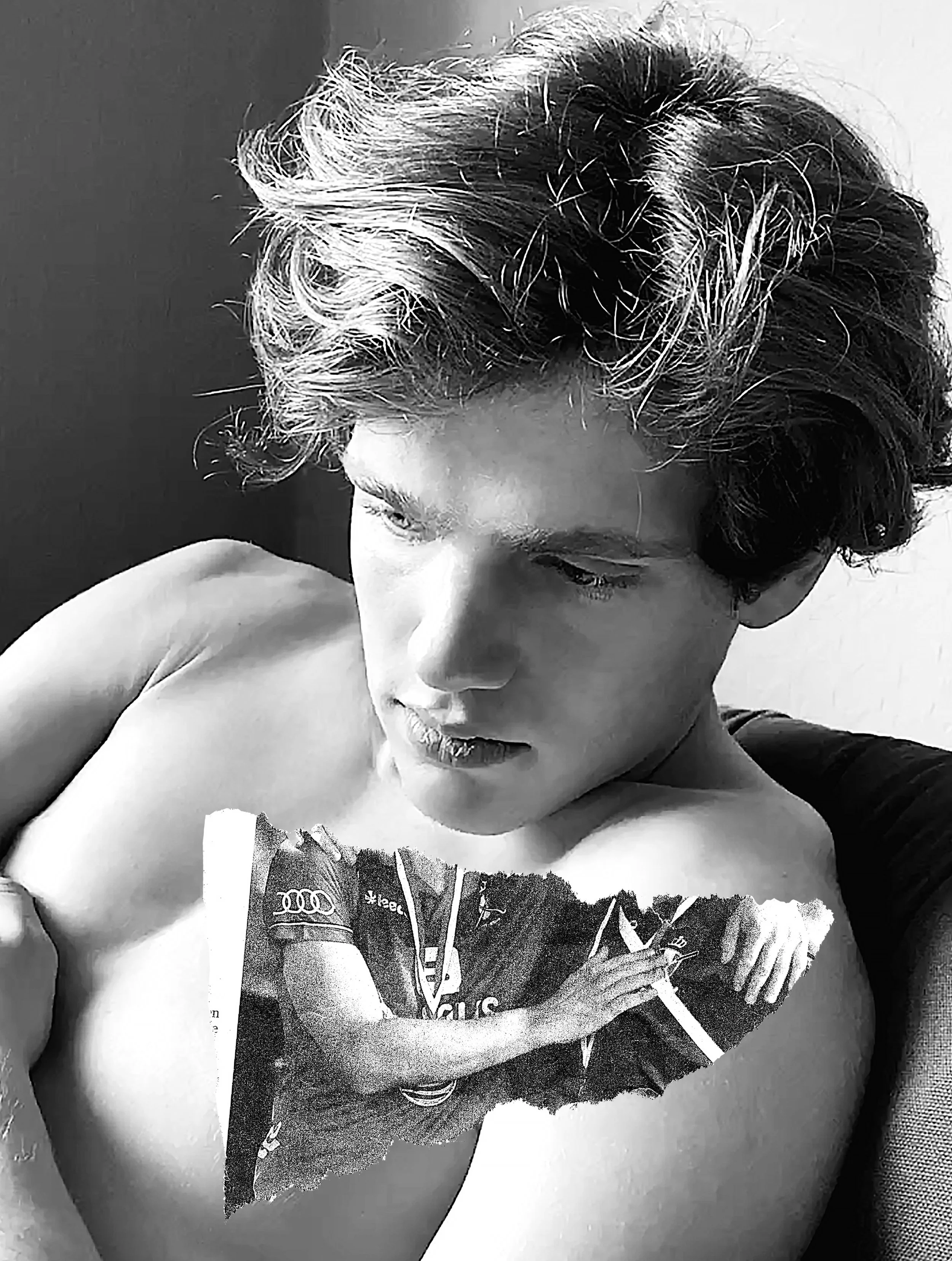
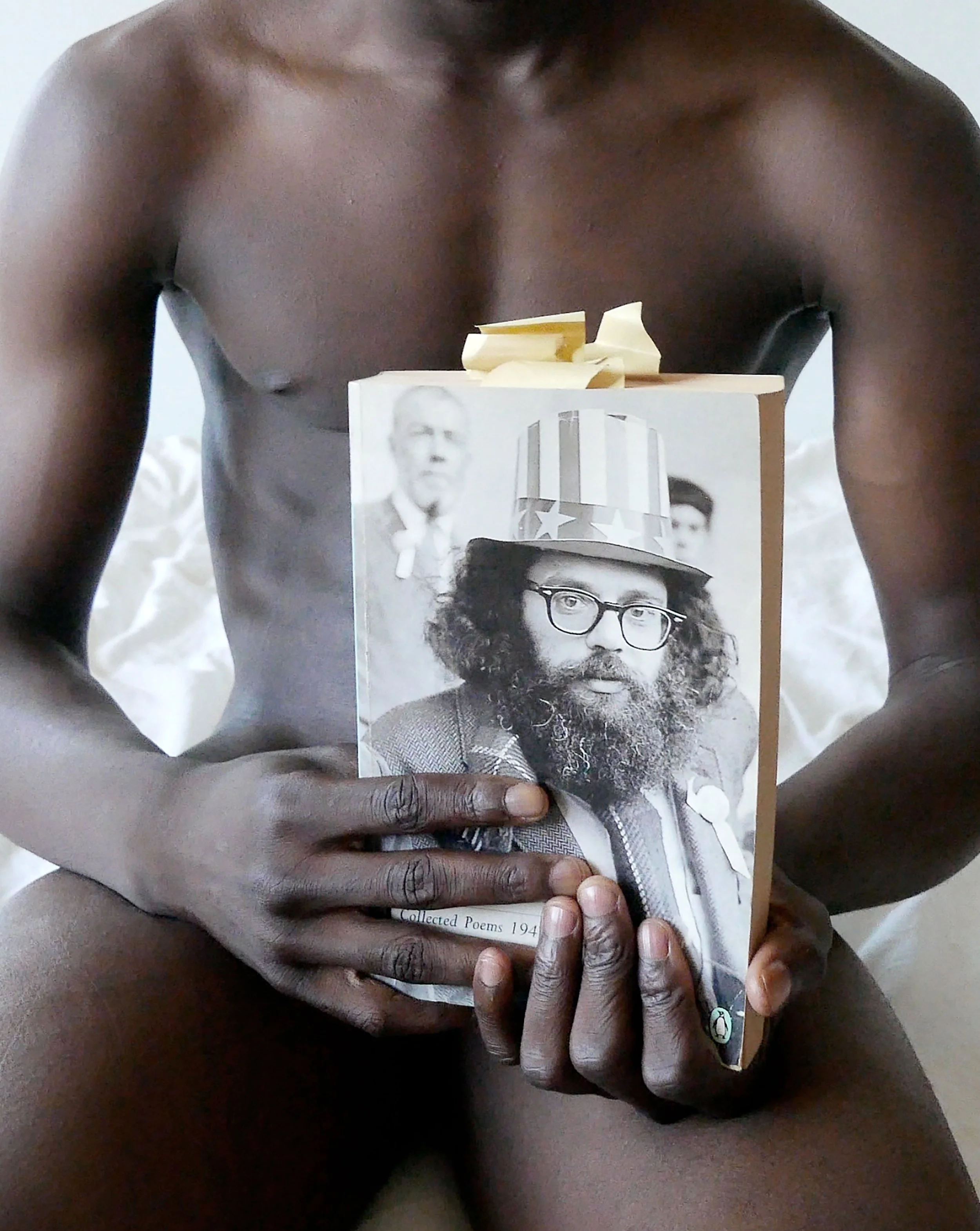
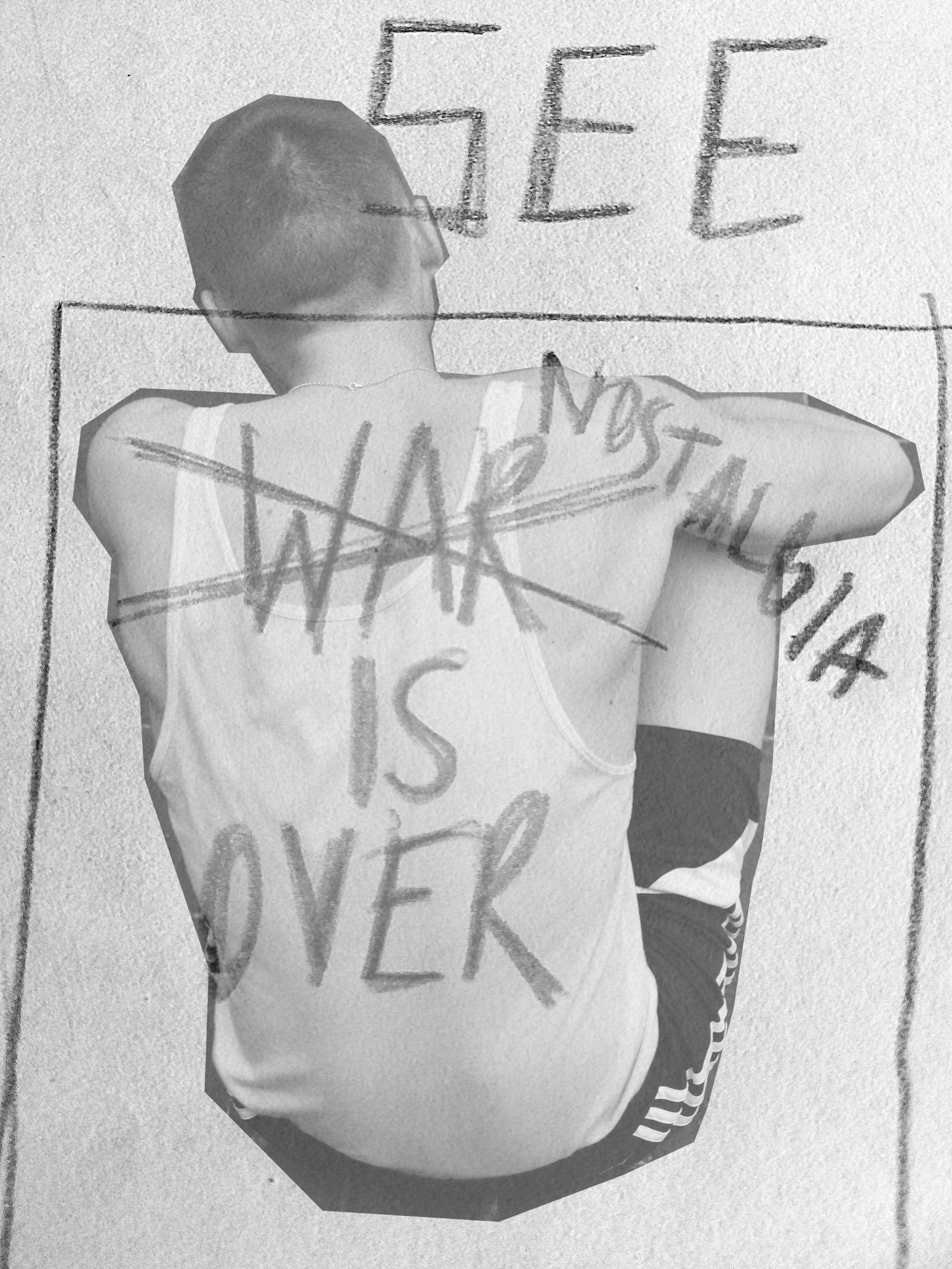
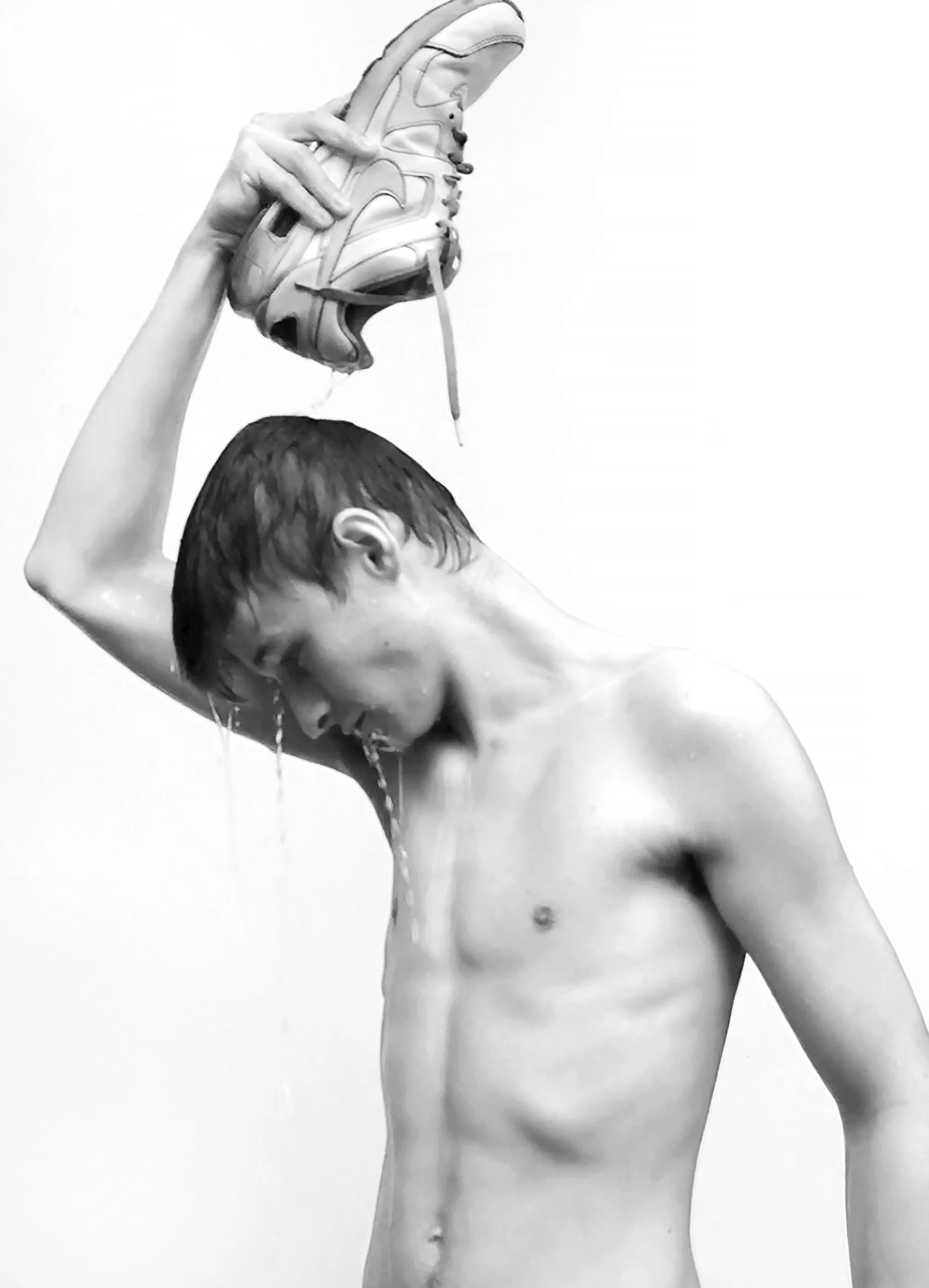
And what of the male body specifically? De Potter’s answer is as ambivalent as his images. On one hand, he sees a new ease in how young men inhabit their image. “There’s a more relaxed attitude when it comes to the male body in today’s visual culture”, he says. “The current generation of young men is reinventing or maybe reappraising their version of vanity”. But this ease has limits. “It mainly happens within the realm of the image”, he notes. In this way, the masculine body here almost frames and unframes itself; it doesn’t communicate a meaning to be decoded, but exposes the very difficulty, or refusal, of completing the communicative act, the representational act. “There seems to be a feeling of safety in the recorded version of the body, much less in the actuality of it. Being a body in a picture is some kind of a parallel persona in itself.”
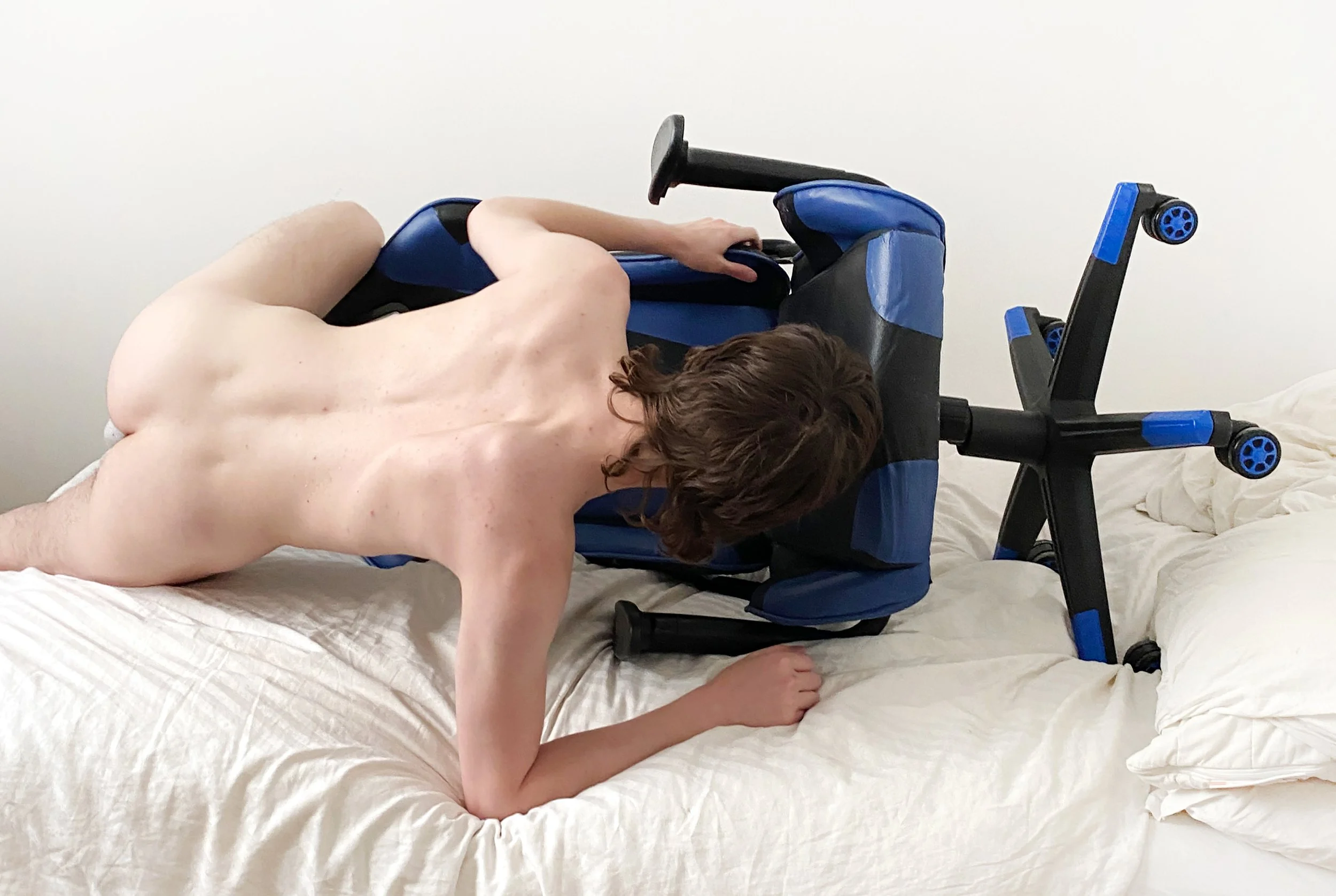
The body in the image as a parallel persona, neither false nor fully identical to the self: De Potter’s work glides and crawls within this tension. It doesn’t resolve the pressure between masculinity and queerness, between performance and truth, movement and stillness; it sits with them without turning to critique or moralised alternative. His images do not explain the body; they let it appear as charged surface. Masculinity lingers there, but in a flailing state; attached to its objects, its rituals, its self-image; suspended, desirable, awkwardly present, even as its promise begins to collapse.
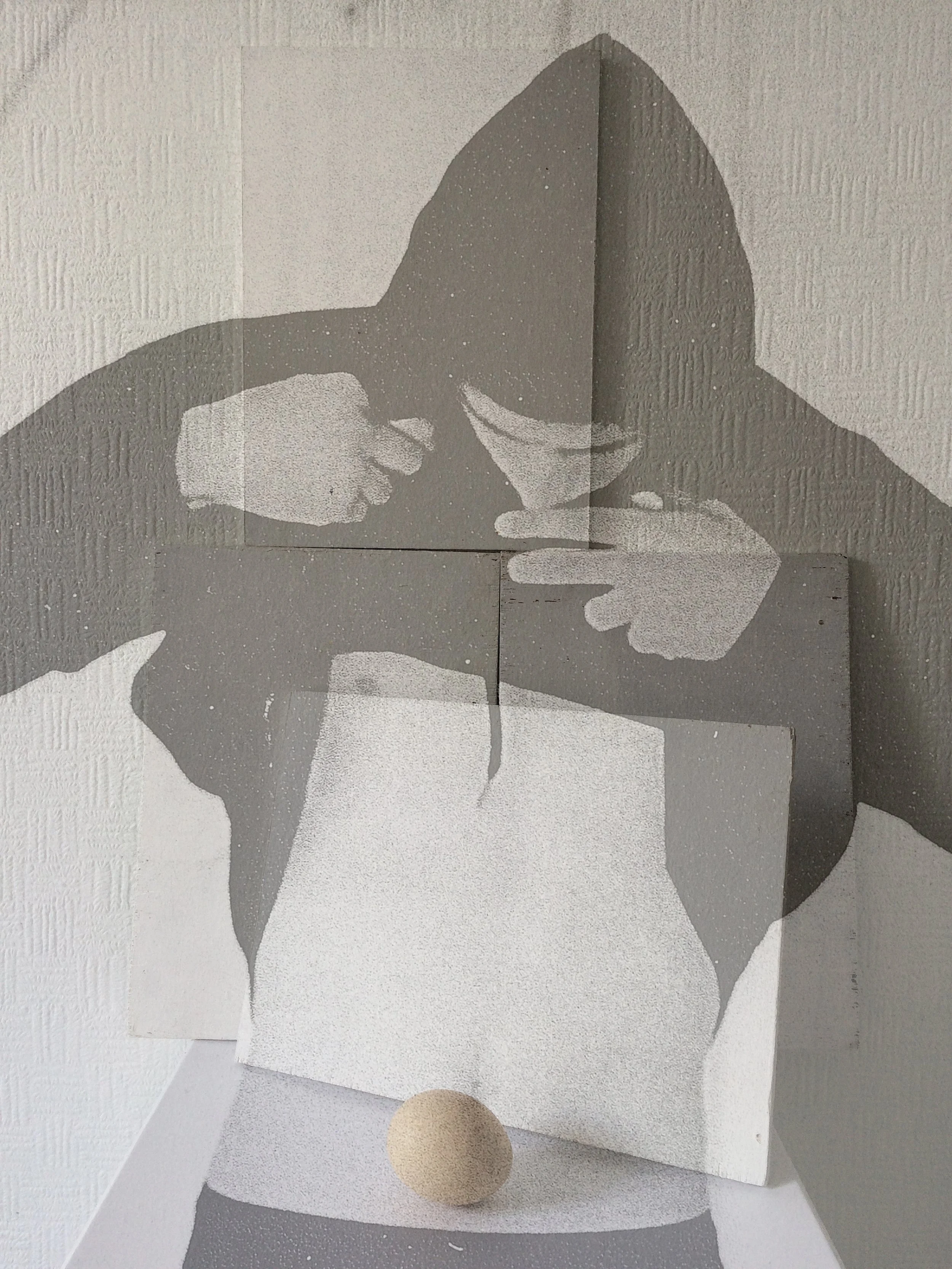
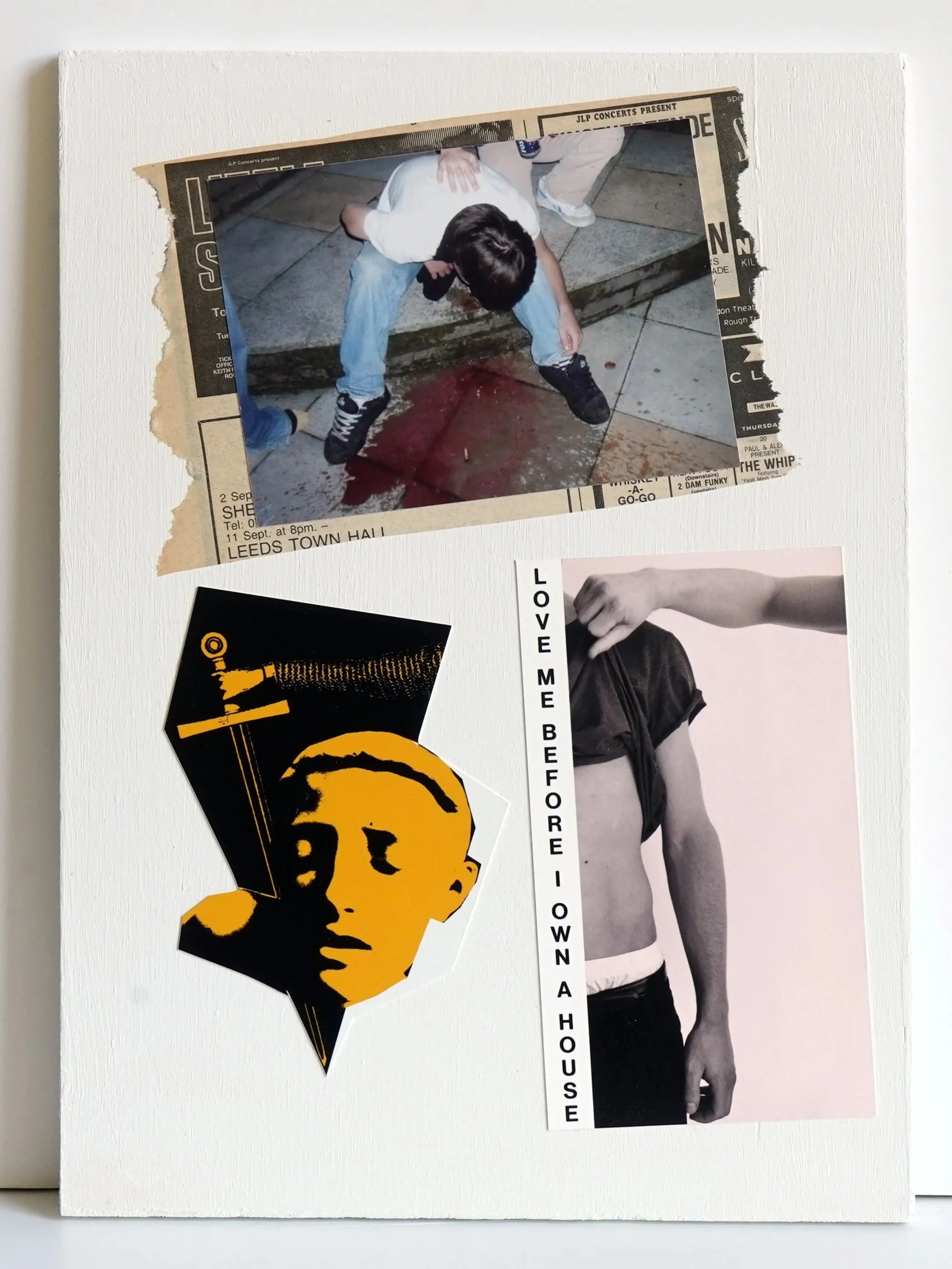
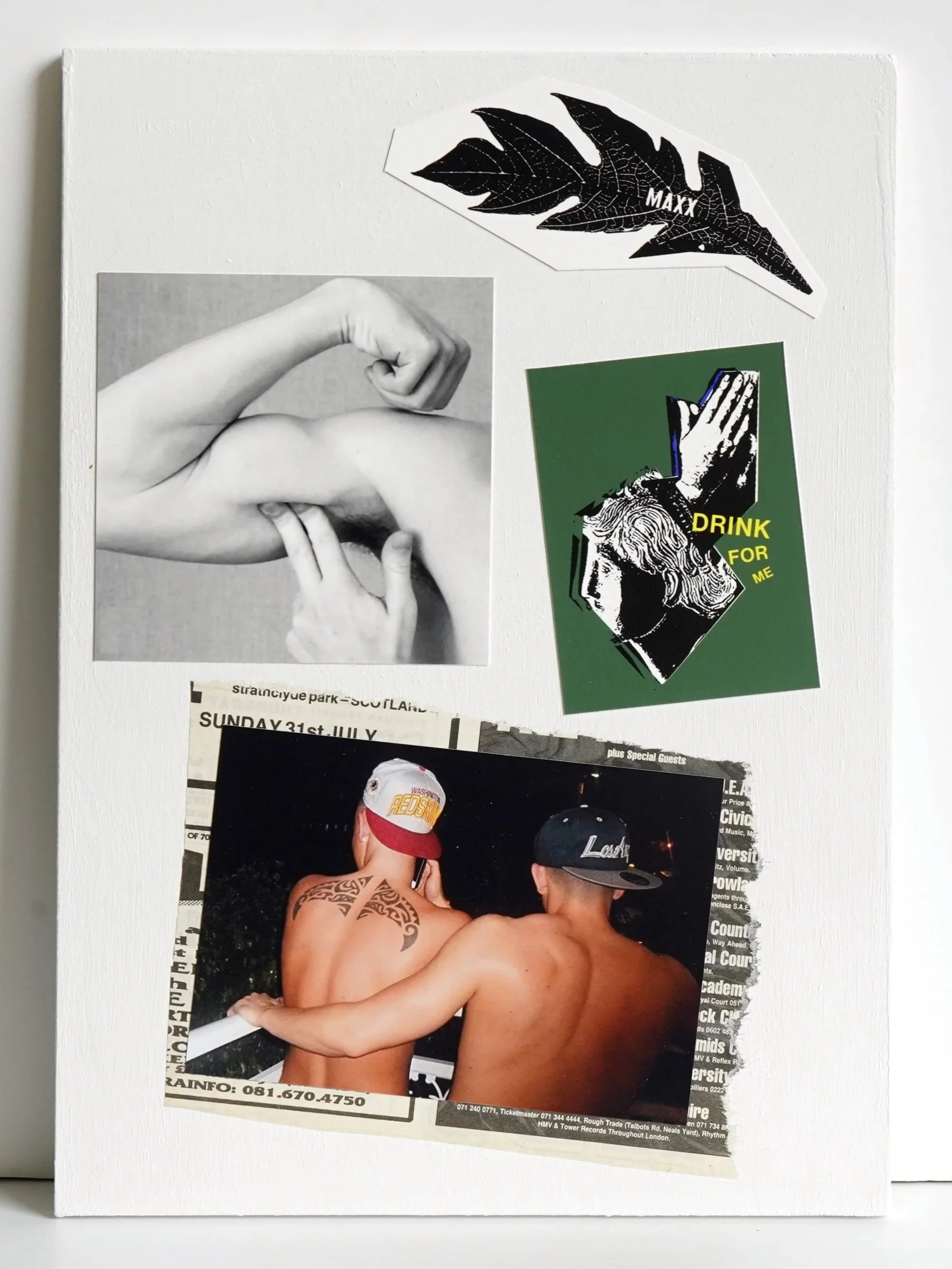
So the male body is held in a state of uncertainty where it can be reinhabited differently — perhaps it is precisely here that queerness comes into this tension. His 2025 series 50 Instructional Panels turns to a personal archive of old downloaded male images through the lens of today’s masculinity debate, yet refuses both panic and moral clarity. He treats the male image as something to take seriously, but not too seriously; something culturally loaded, but still irreducible to discourse. This is what makes his work stick: it asks us to look at the image in an immanent way, not behind it, as if there were a gestural reality of higher importance, but instead to look harder at the visual itself.