
WAKING UP IN 2026 WHERE SEX STILL SELLS
words by NIA TOPALOVA
editor MAREK BARTEK
2026! The year of desensitisation, where there’s not much left to scandalise us. Rosalía wandering around Vegas in Monique Fei’s smoky see-through “naked” dress, Heidi Klum in flesh coloured skintight latex gown at the 2026 Grammy Awards, or Gabbriette’s decadently sexy take on bridalwear: as the body is so thoroughly incorporated into the business of fashion, the level of exposure becomes too much of a familiar territory, registering as styling, branding, advertising, and content.

A 2017 Guardian article describes Joseph Corré, (Vivienne Westwood’s son), and Serena Rees’ Agent Provocateur’s campaigns featuring Kylie Minogue and Kate Moss as overly sexual, up for sale, and “open to offers”, reading: “There was a detailed nostalgia spliced with a punk aesthetic that made it feel almost intellectually confrontational, which turned it into a statement of empowerment. …If erotica was wrong because it was objectifying, to retake erotica meant to literally disaggregate people into their body parts, and then laugh.”
Cast our minds back to 1974: the year when Westwood and Malcolm McLaren opened their boutique “SEX” at 430 King’s Road, London; a sacred place, the “rubberwear for the office”, where businessmen would try on bondage trousers in longing to satisfy their most treasured yearnings in broad daylight. “SEX” was the actual birthplace and wardrobe for the Seventies British punk movement, confronting political dissent, social injustice, and sexual taboos like nothing else at the time.
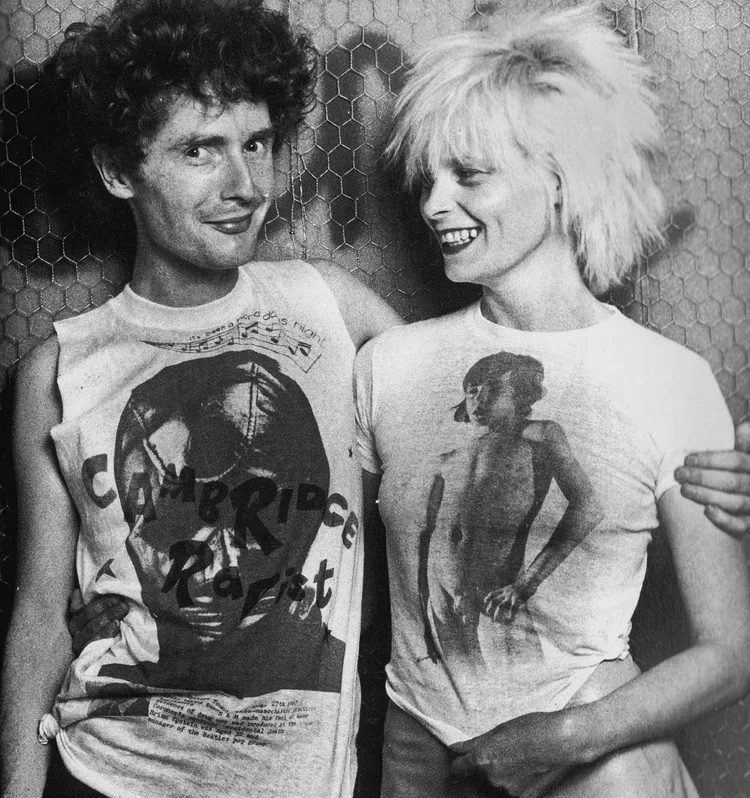
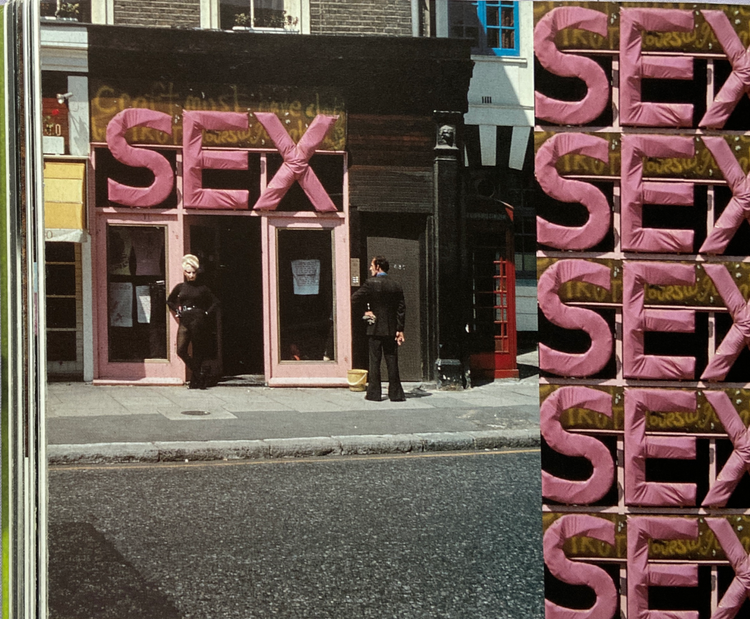
Vivienne Westwood and Malcolm McLaren in front of their boutique “SEX”, photographed by Sheila Rock
Turning to the 90s and early 00s, to Tom Ford’s prominent flirtations with censorship: Erin Cummings and Ryan Locke giving us no discretion at all; JR Gallison’s iconic shoots by Terry Richardson for Fall/Winter 2001, or Kate Moss by Inez and Vinoodh that same year. Twenty seven years after, the duo photographs Dakota Johnson and Alexander Skarsgård for a Valentino beauty campaign, both of them being, in a way, “sexualised” within the roles they’re playing: roles that serve, have always served, and will continue to serve as simple functions provoking emotion, which, after all, is all it takes. And that brings me to a point that men too, have always been seen as sort of “sex symbols”. Ford, along with Thierry Mugler, John Galliano, Alexander McQueen, Jean Paul Gaultier, to name a few, were selling seduction, fantasy, and enticement, and evidently, it worked. Recently, Kylie Jenner appeared naked in a campaign selling Khy shoes, much as Heidi Klum did back in 2003 for Birkenstock. But alongside the more familiar admiration of the female body, there’s Mugler’s Spring/Summer 2026 campaign with Tatiana Horslaville, giving us a counterpoint of a bodybuilder’s body becoming the object of desire.
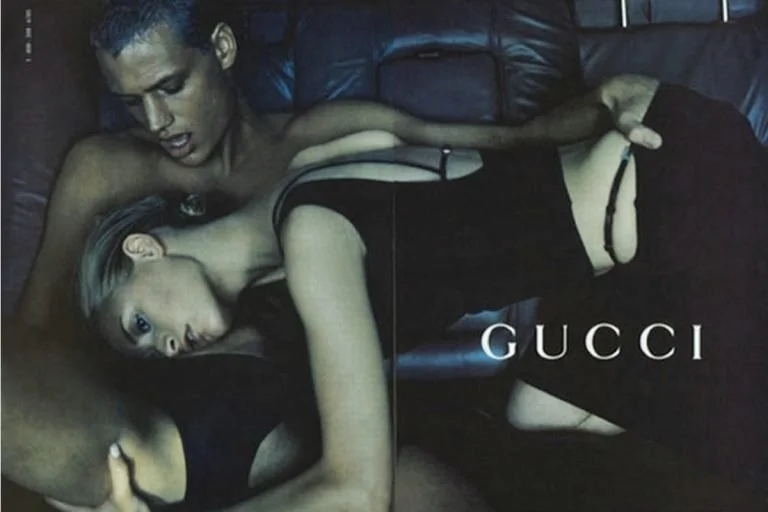
Erin Cummings and Ryan Locke by Luis Sanchis, Spring/Summer 1998
The fact is, women showing their bodies is barely what’s notable about 2026; Marylin Monroe was doing that seventy years ago. She, however, spent years fighting the machinery that had made her famous, demanding better roles and greater control over her career and her own image. Addison Rae is one of the examples who has embraced the Monroe parallels, but with a vital difference of working within a system that allows her to build a brand around herself, and to exercise far more control over the image that brand produces.

Addison Rae wearing Thom Browne CFDA Awards Look
Cinema, too, has played with the currency of desire as language through which culture could talk about everything we were supposedly not supposed to talk about. In American Beauty, for instance, desire is projected onto Angela Hayes and all that she seems to promise Lester Burnham: youth, freedom, beauty, and an end to his deeply dissatisfying, mediocre life, one he has built himself. The image of the naked Angela lying among red roses serves merely as a portrait of a man’s superficial burning fantasy. Au contraire, in Basic Instinct, Catherine Tramell walks into a room full of men who believe they are there to examine her and proceeds to make them painfully aware that they are the ones being examined, weaponising the fantasy and changing the direction of the gaze.
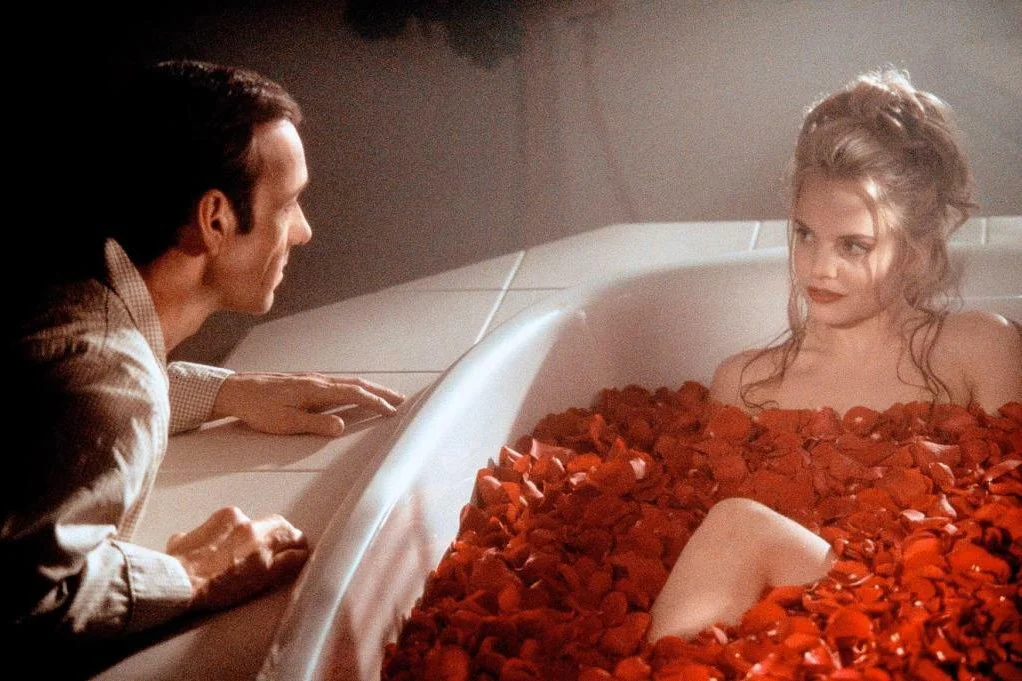
American Beauty, 1999
And literature!
There was this spectacular woman named Eve Babitz, a writer, muse, the quintessential L.A. Girl whose sexuality was as substantial as her literacy. In “Didion&Babitz”, Lili Anolik renders her with a rather specific kind of lush and unembarrassed admiration that Babitz herself might have greatly appreciated:
“…And then there were those 36DDs. Now, Eve would come to regard her breasts as her glory showcasing them in the tightest of sweaters, chin up, spine straight, a get-a-load-of-these gleam in her eye.” … When asked whether she ever felt she’d been taken advantage of by men, she responded: “What man could take advantage of me? I usually slept with him before he got the chance.””
In 1963, photographer Julian Wasser took the famous Take His Queen! photograph of Eve, fully naked, playing chess with a fully suited Marcel Duchamp. Anolik explains how the photo was “her chance to be Marilyn”. In The Seven Year Itch (1955) Marilyn's character becomes "The Girl": a fantasy constructed by the male imagination and sustained by the male gaze. While Marilyn was the object of the gaze, Babitz, decades later, was consciously recreating and manipulating the mythology of that object. Anolik presents Eve as “the American Dream made lush, nubile flesh”; Much like Marilyn, “a sex object who was also a sex subject, exploiting herself every bit as ruthlessly as any of the (men) exploited her”, not only “a model and a muse, passive and pliable, but an artist and instigator, wicked and subversive.” Eve’s own account makes clear how she positions herself within this dynamic: “...Walter thought he was running the show, and I finally got to run something.” Anolik then goes on to show how Eve completely took over his show, making it her very own, with her image forever associated with the photograph that “every artist on the planet knows.”

Take His Queen!, 1963, photographed by Julian Wasser
Returning to 2026; Sabrina Carpenter’s album cover, “Man’s Best Friend”, posing on four legs next to a man in black suit holding her hair, provoked fairly interesting discussions across the internet, including comments such as “How many album sales so far”; “Heavy on Satan’s leash huh?; That’s despicable what you did for money and fame!”, lyrically followed by: “Some people are seriously lacking media literacy here”. Moreover, Olivia Rodrigo’s recent choice of clothing triggered some iconic reactions: “It’s like a music video for the Epstein files!”
I often wonder, though, is it just 2026, or has this been going on for good? One might think it’s a matter of timing: the timing for dressing up like a doll or practicing sex positions on stage is just… wrong. Yet what’s ironic is that timing is somehow eternally wrong. In her “Real Estate”, Deborah Levy poses a few questions:
“Are women real estate owned by patriarchy?
And what about women who are rented for sex by men?
Who owns the deeds to the land in that transaction?
… If, like the great struggling goddesses, we were too powerful for the fathers and brothers of patriarchy, how did our repressed power and potency make itself manifest on a Monday?”
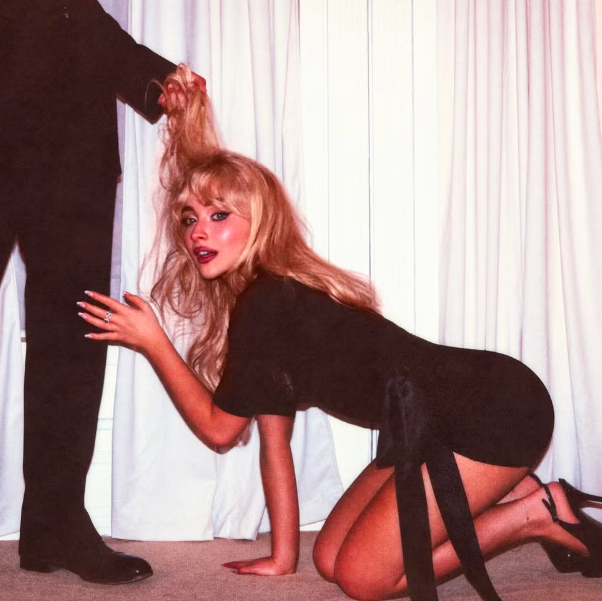
image courtesy of Island Records
For whatever reason, we expect women to be seductive and desirable, provided they do not become too conscious of the power those qualities offer; we want seduction, yet we keep shaming the seductive. It is perhaps even more uncomfortable to ask why do we keep letting the act of provocation be dictated by a society that has been possessing and policing women’s bodies for centuries? Some of us simply choose to play with it.
