
SOLOMUN'S ALL NIGHT LONG AT PACHA IBIZA
words by SARA BRAJKO
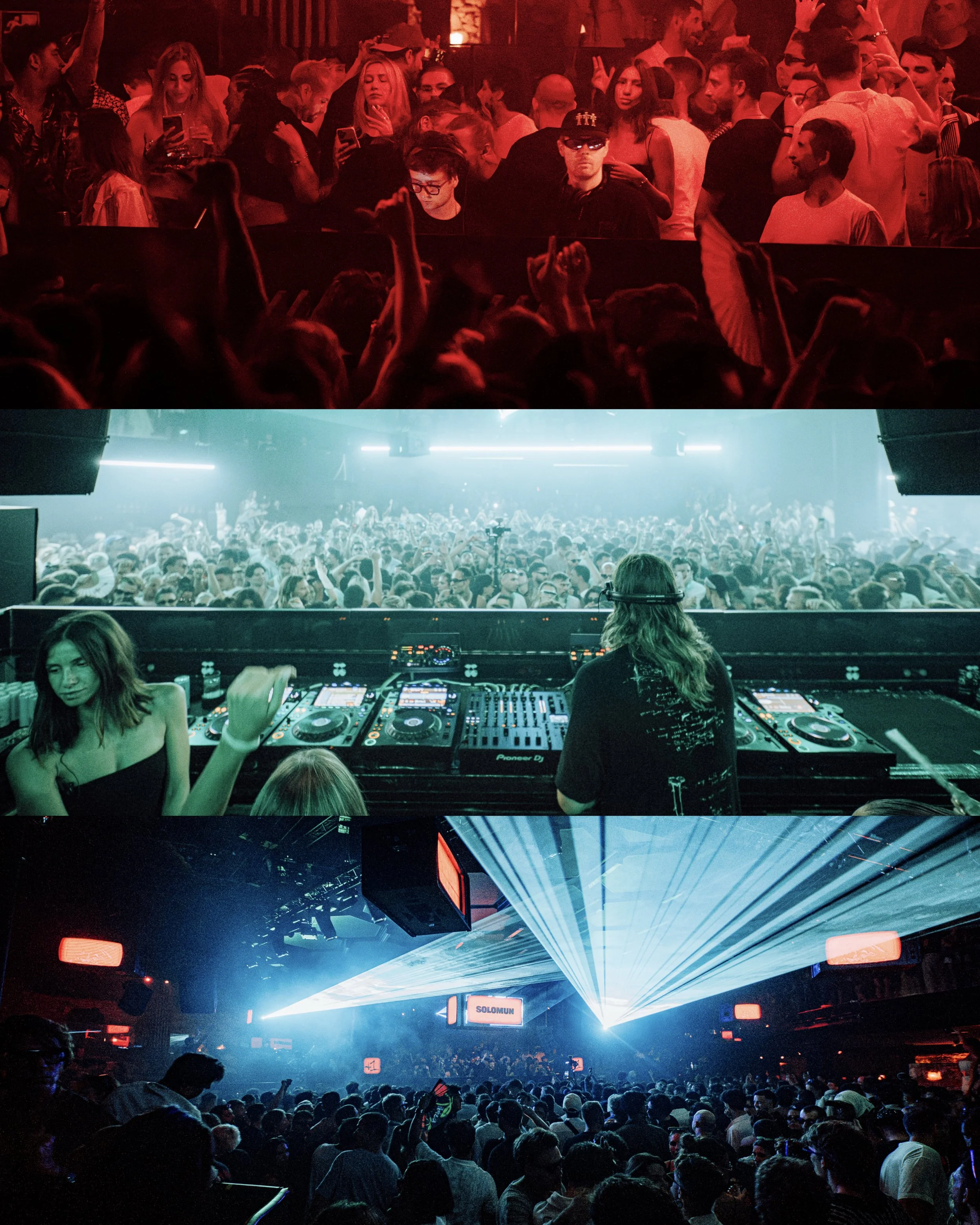
For more than a decade, Solomun +1 has shaped the rhythm of Sunday nights in Ibiza. On August 9th, that rhythm took its most distilled form: one of only five All Night Long editions of the 2026 season, the rare dates when the guest is set aside and Solomun plays the entire night alone. No handovers, no back-to-back closing hour. One artist, one room, eight uninterrupted hours.
images courtesy of PACHA IBIZA
Since 2013, Solomun +1 has reduced the usual multi-name Ibiza bill to a single guest, giving each artist room to play for hours rather than a conventional slot. He also brought the DJ booth down into the centre of Pacha's dancefloor, so the crowd surrounds him on every side. On August 9th, that physical closeness mattered more than the history: you were not watching an eight-hour set from a distance, you were inside its movement.
I arrived knowing that eight hours could easily feel like an endurance test. Instead, the first stretch of the night felt deliberately spacious. Solomun did not rush to show where the set was going. The opening hours were warm, rhythmic and patient, built around groove rather than an immediate sequence of peaks. Records were allowed to breathe. At first, the room still had the looseness of people arriving, finding friends and deciding where to stand.
Gradually, conversations around the edges became shorter and more bodies turned toward the booth. The night seemed to gather itself almost imperceptibly. That patience became one of the defining musical details of the set. Rather than relying on obvious drops, Solomun repeatedly let a groove establish itself long enough for small changes to become significant: a bassline becoming heavier, a percussion pattern sharpening, a vocal fragment appearing after several minutes of tension. His transitions rarely announced themselves. One record seemed to dissolve into the next until the room had changed without anyone noticing the exact moment it happened.
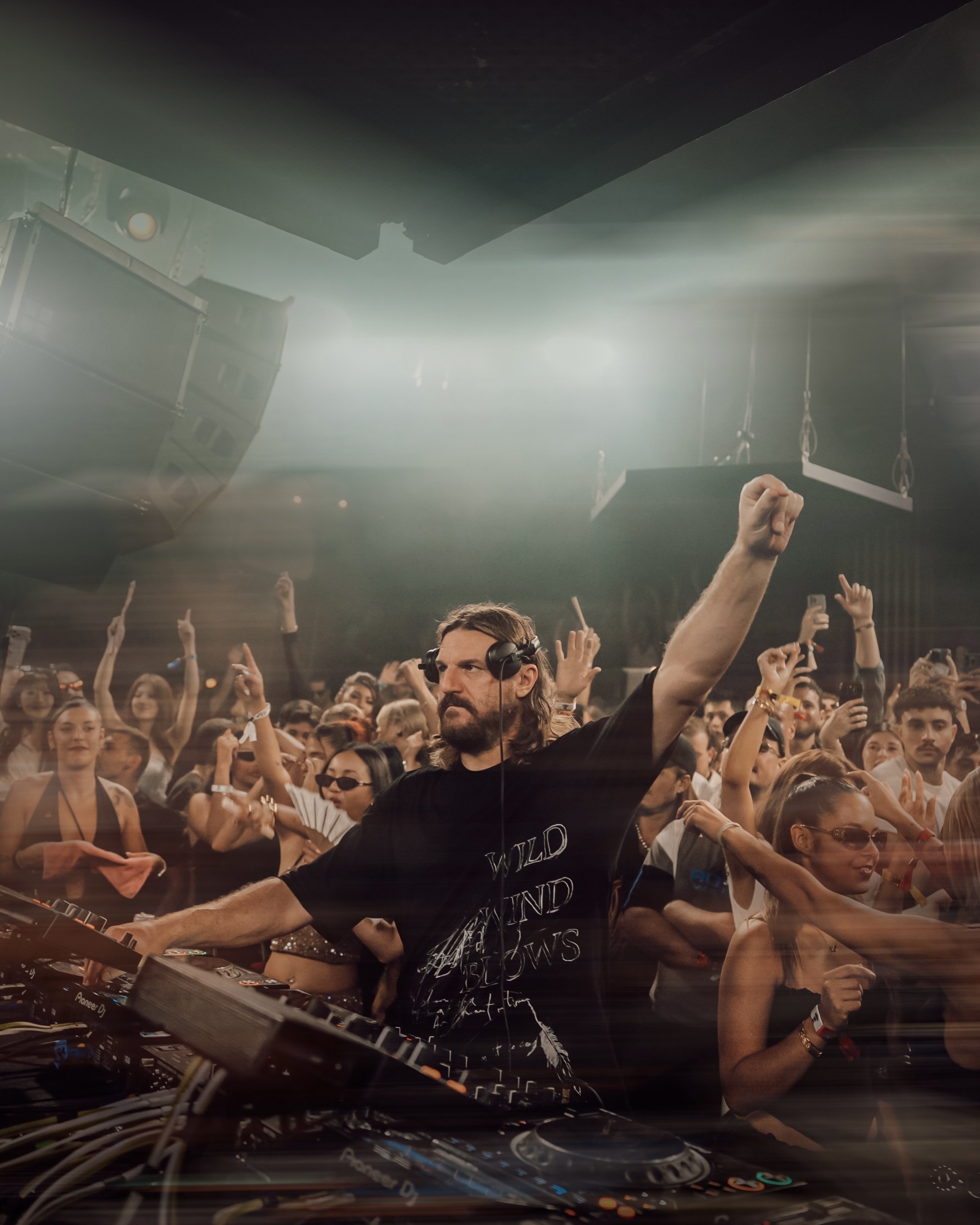
Around two, the low end became more insistent and the set began to feel tougher. I remember registering the shift physically before I registered it musically. The floor felt denser, the crowd closer, and people who had been moving between rooms were suddenly staying put. The music moved into darker, more driving territory, with rolling house and techno, heavier percussion and less space between the pulses. The effect was cumulative rather than aggressive: Solomun kept tightening the room instead of throwing it into a single oversized peak.
photography by MARINA BAEZA, courtesy of PACHA IBIZA
One moment in the middle of the night stayed with me for exactly that reason. A long, strippedback transition seemed to hold the floor in suspension. Instead of reaching immediately for release, he kept reducing and rebuilding the rhythm. Around me, people started looking at one another as much as at the booth, waiting for where he would take it. When the weight finally returned, the reaction travelled across the centre of the dancefloor almost instantly: hands went up, people shouted, strangers turned toward each other smiling.
On a setlist it might register as only another transition; in the room, it felt like the point when the crowd fully surrendered to the night. Somewhere around then, I made my way closer to the booth, into the dense ring of people surrounding the centre of the floor. From there, the entire evening began to make more sense. Up close, Solomun's connection with the room becomes unmistakable. He reads the dancefloor constantly, but not theatrically. A smile when a record lands, a small nod, a hand lifted for a second - tiny gestures become part of an exchange. The crowd reacts to him; he reacts back, and over the course of the night the two begin to amplify one another.
Standing there also changed how I heard the set. From the edge of the room, the progression could feel seamless; beside the booth, you noticed the decisions inside it. A record would be given an extra minute because the floor was still locked into it. A transition would stretch instead of resolving where you expected. At other points, the pressure would tighten through a heavier rhythm or a more forceful bassline. That responsiveness is difficult to communicate through a recording because the crowd is part of the arrangement. The set was not simply being delivered to us; it was being adjusted around us in real time.
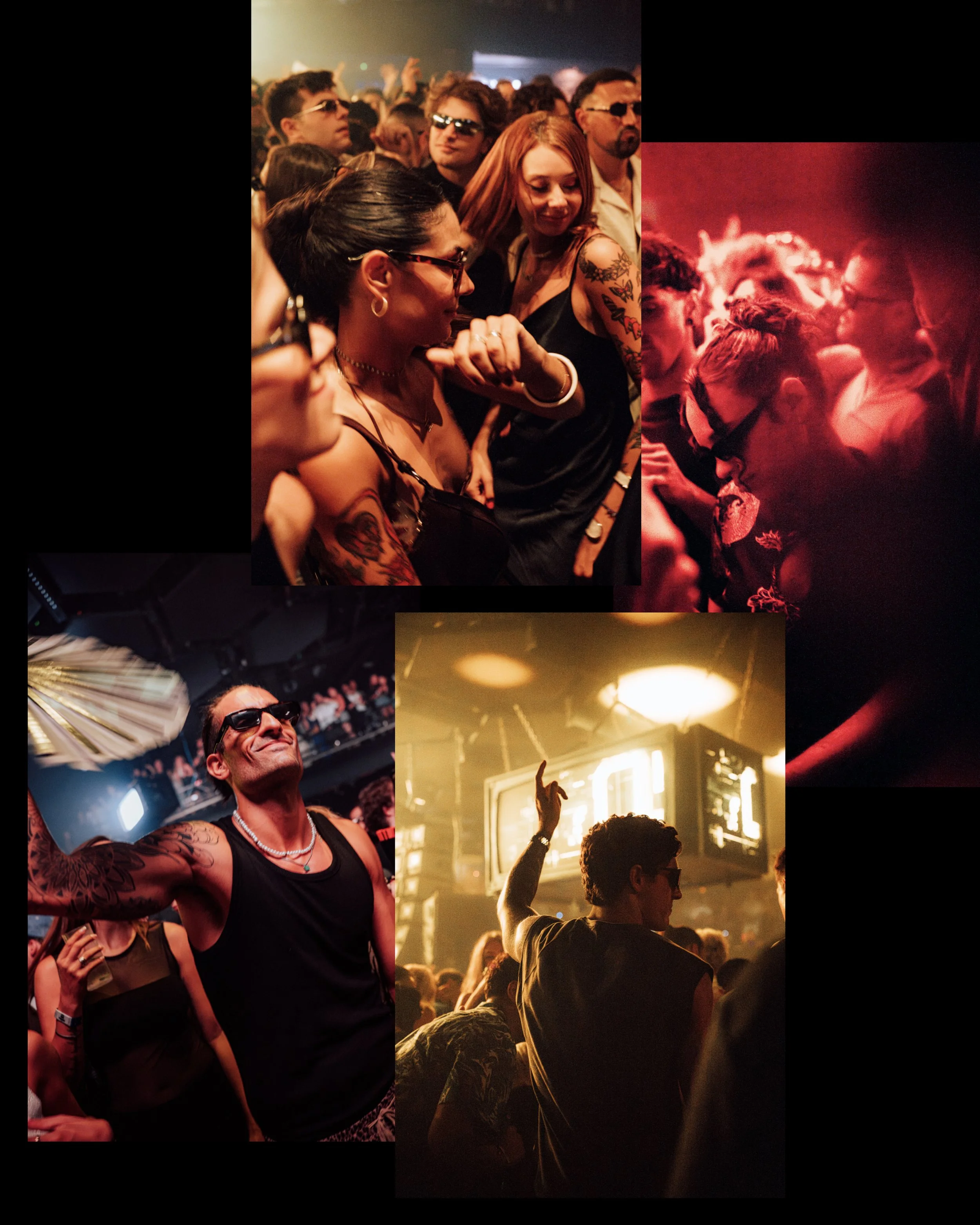
The most surprising part of the night was what did not happen: there was no obvious dip. At three or four in the morning — the hours when even strong club nights can lose concentration - the room remained unusually focused. The energy had changed, certainly. It was less about the excitement of arriving and more about giving in to the length of the set. People paced themselves, disappeared to the terrace, came back, found a new place on the floor.
But musically, there was no sense that Solomun was filling time before a closing run. Pacha's layout became essential to experiencing that arc. Stepping away to the quieter rooms or open-air terrace and returning later could make the dancefloor feel newly intense.
images courtesy of PACHA IBIZA
On one return, the room had shifted from a looser groove into something harder and more compressed. An All Night Long set is not experienced as one continuous block: you leave and re-enter it, and each return lets you hear how far the night has travelled. By five and then six in the morning, the atmosphere had changed again. The crowd was more committed and, strangely, more intimate. Faces that had been anonymous earlier had become familiar simply because we kept ending up in the same pocket of the floor. There was no sense of everyone waiting for one final recognisable record before calling it a night. Solomun continued to build rather than simply cash in the energy he had accumulated. At six, when a standard Solomun +1 night would ordinarily be approaching its conclusion, this one still felt as though it had somewhere to go.
That was the point at which the eight-hour format stopped feeling like a novelty and started to feel necessary. With no second artist arriving to reset the room, Solomun never had to surrender the narrative. He could introduce an idea early, move away from it for hours and later return to a related texture without the set feeling fragmented. The night had memory. The heavier passages of the early morning carried more weight because they had been earned by the restraint of the opening, and the peaks mattered because not every transition had been treated as one.
The 2026 residency spans nineteen Sundays, with guests ranging from Jamie xx and Peggy Gou to Skrillex, Anyma and Idris Elba. The All Night Long editions are the exception, and they expose Solomun's curatorship most clearly because there is nowhere for the arc to be handed off.
August 9th was a reminder of why the format has endured, but what stayed with me was not the history of the residency or one spectacular drop. It was the accumulation of small decisions across the night: the patience of the opening, the point when the room tightened around two, the darker and more percussive middle hours, the crowd still completely engaged at four, and the strange feeling at six that the night was still building rather than ending. Those are the details that made this edition feel singular. Solomun does not simply play to the room; over eight hours, he shapes it from within, allowing the exchange between DJ and dancefloor to decide where the night goes next.
Solomun +1 continues every Sunday at Pacha Ibiza through early October, with two All Night Long dates remaining this season.