
BRANDS FROM MADRID FASHION WEEK EVERYONE SHOULD KNOW
words by MAREK BARTEK
While we've already gone full autumnal in Northern Europe, it was still hot, hot, hot in Madrid last week. The thermometer hovered around sweat-worthy 35 degrees as many gathered in the city, fresh off the back of Formula 1 weekend, to witness a slightly different kind of show — or rather, shows — as Spanish designers unveiled their latest creative endeavours on the runway during Mercedes-Benz Madrid Fashion Week.
Madrid — and Spanish fashion overall — has something to say for sure. Speaking with the creative director of the fashion week, Valentina Suárez-Zuloaga, it was obvious how much this means to her, and how much work went into bringing the event from the outskirts of Madrid into its very centre and across different locations. This marked an ultimate turning point, with the city recognising fashion as an integral part of its identity.
Throughout the week, we were served a variety of aesthetics and points of view. We saw a fair share of established Spanish brands and some newer, exciting ones, but no matter which category they fell into, one thing connected the Spanish fashion scene: it was fun. Here, fashion truly is a reflection of the culture, their connection to the land, traditions but also the way of life — relaxed, joyful, and embracive of everyone. Here are the brands from Mercedes-Benz Madrid Fashion Week we can't wait to see more of!
SIMORRA
all images courtesy of MERCEDES-BENZ MADRID FASHION WEEK
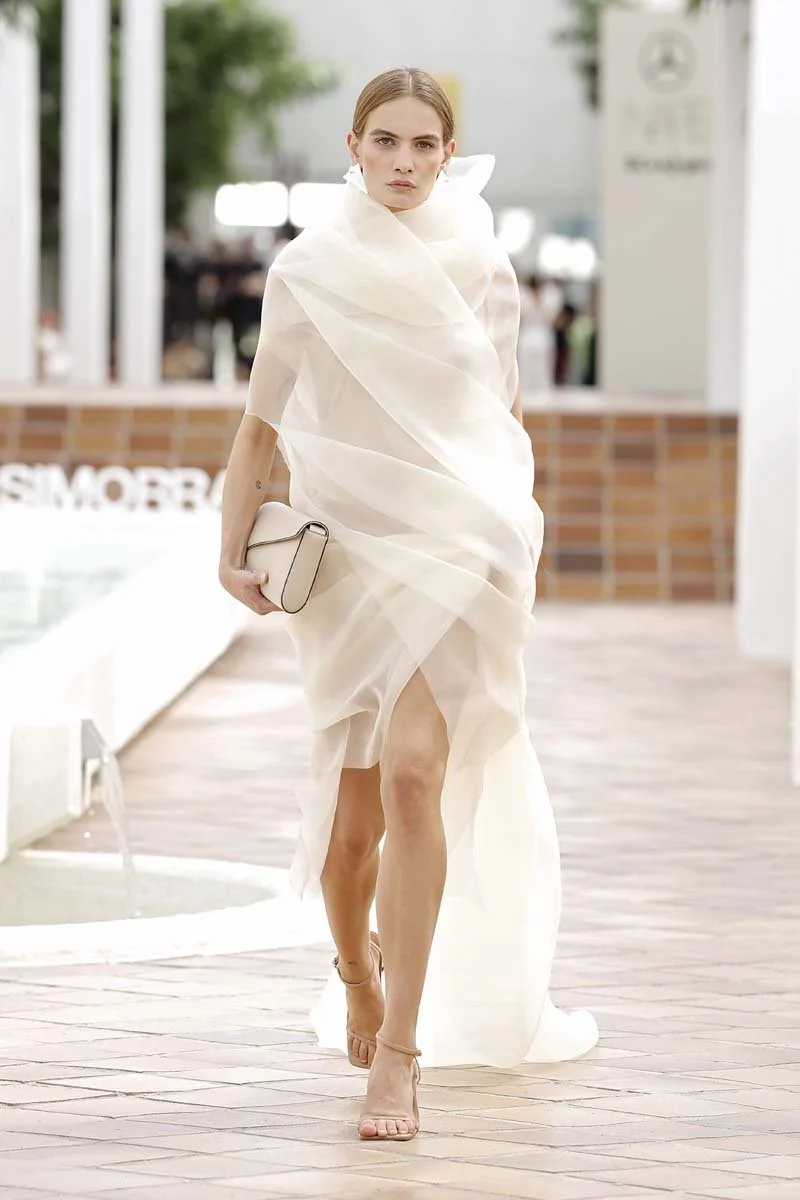
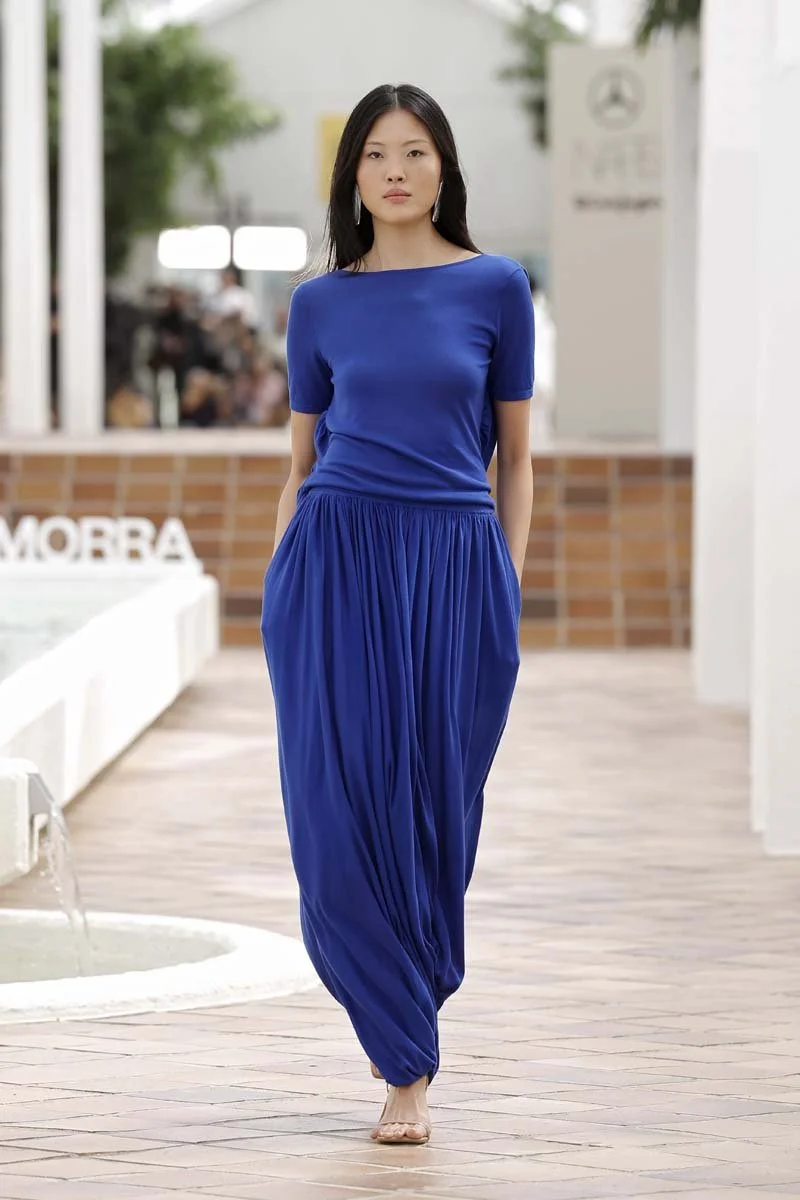
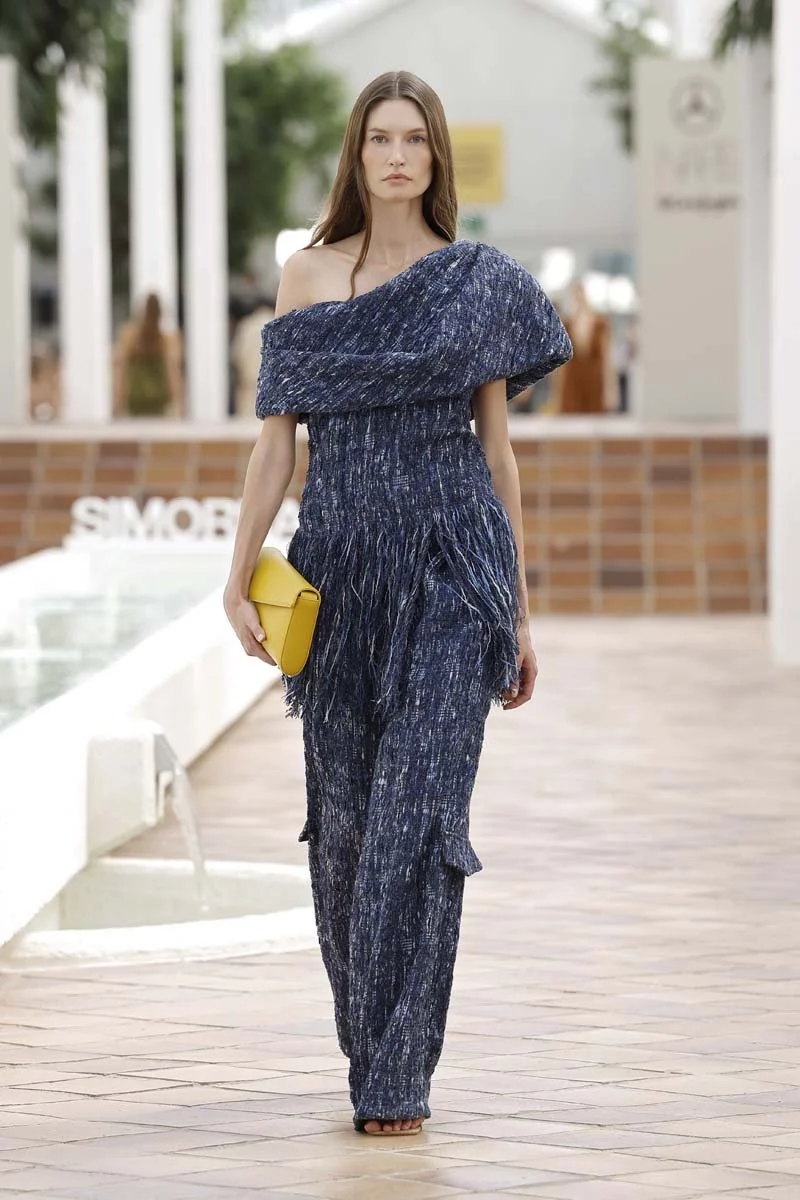
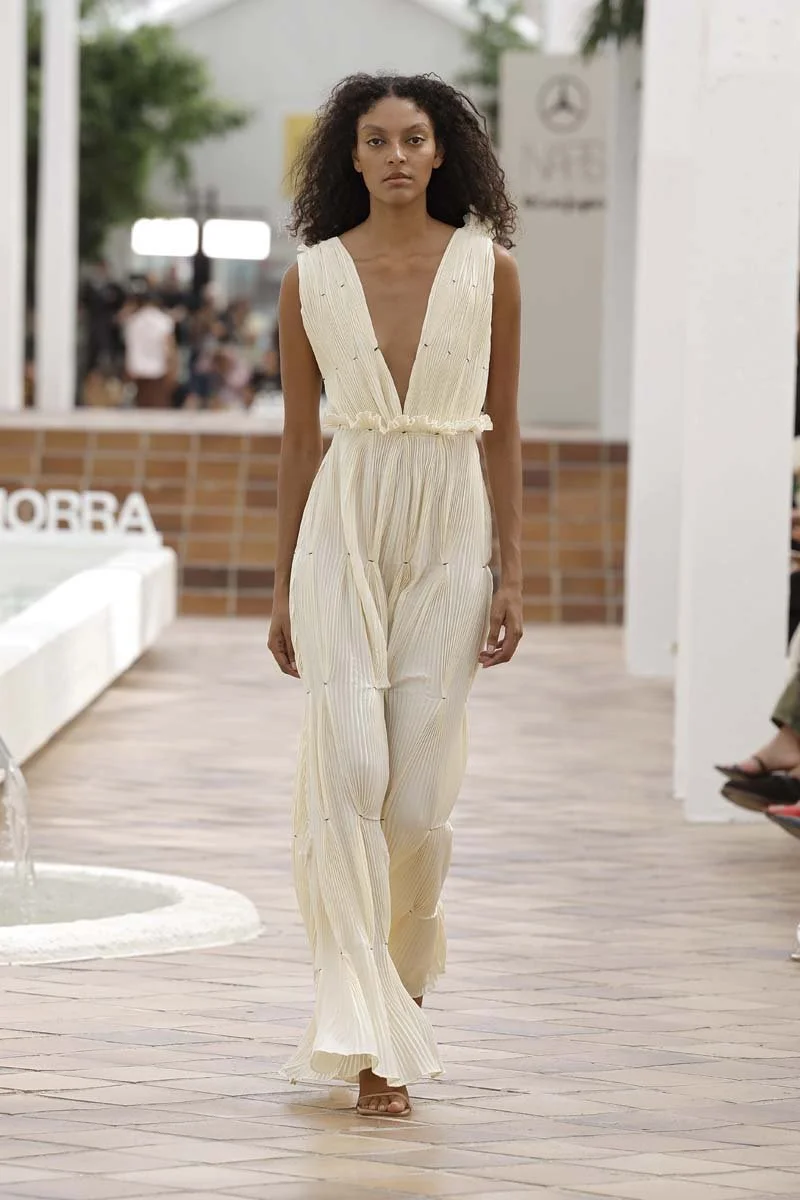
There probably wasn’t another brand at Madrid Fashion Week that explored fabric as thoughtfully as Simorra. Titled Fold In, the collection revolved around pleats, folds and sculptural draping, treating textiles not simply as materials, but as active participants in shaping the silhouette.
The opening look of an ethereal off-white dress wrapped in translucent layers, complete with a sweeping train that floated effortlessly behind the model was an instant moment of captivation. Even stronger was an ivory pleated dress interrupted only by tiny black stitches that gently gathered sections of fabric together. Ingenious, it was easily one of the most beautiful garments shown in Madrid. Soft cobalt jersey dresses moulded elegantly around the body, while sharply pleated red mini dress and black set inevitably made us reminiscent of the Japanese masters of pleating.
But while the soften, thinner fabrics truly transported us into the Simorra’s word, the looks with heavier fabrics kept pulling us out of it. Stiff linen and canvas-like fabrics simply refused to cooperate, creating unnecessary bulk rather than graceful movement. At times, it felt as though the collection was asking certain materials to do something they never wanted to do in the first place.
Even so, Fold In showcased Simorra's ability to think deeply about construction and textile manipulation. The collection may not have landed every experiment, but its strongest moments were beautiful enough to make us eager to see where the brand folds next.
ERNESTO NARANJO
all images courtesy of MERCEDES-BENZ MADRID FASHION WEEK
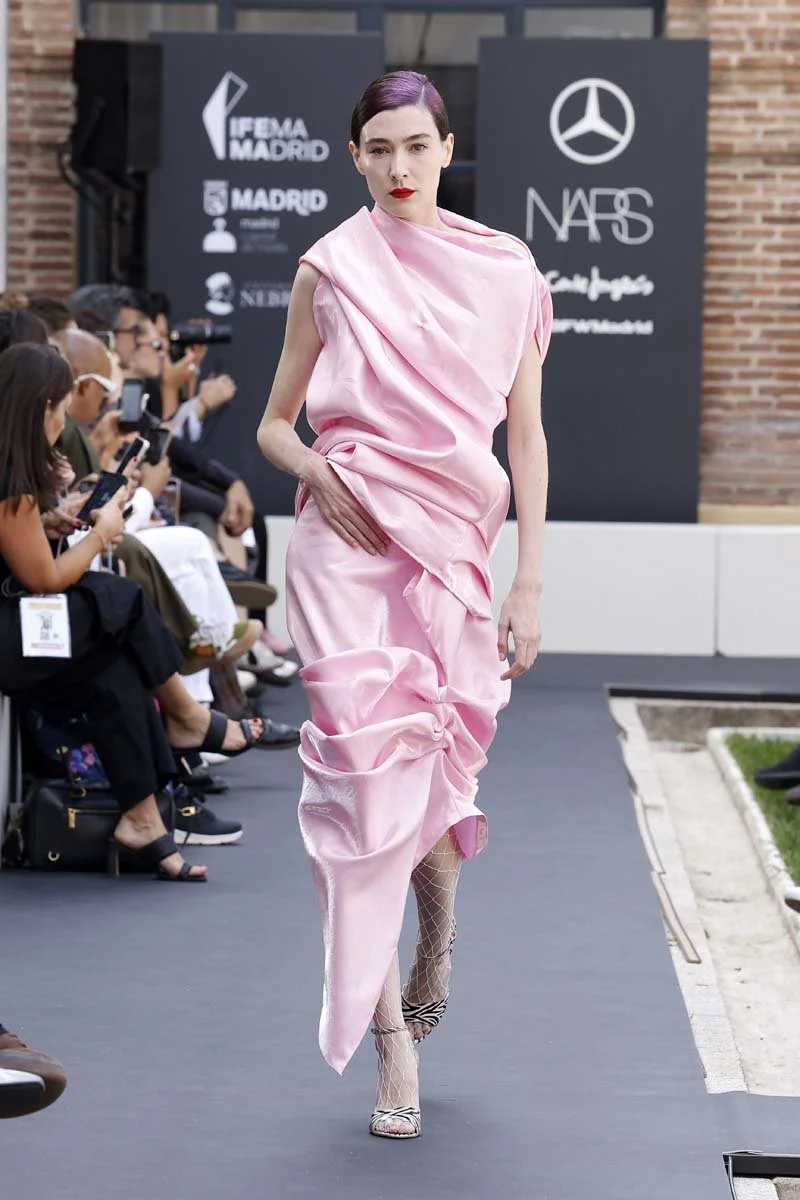
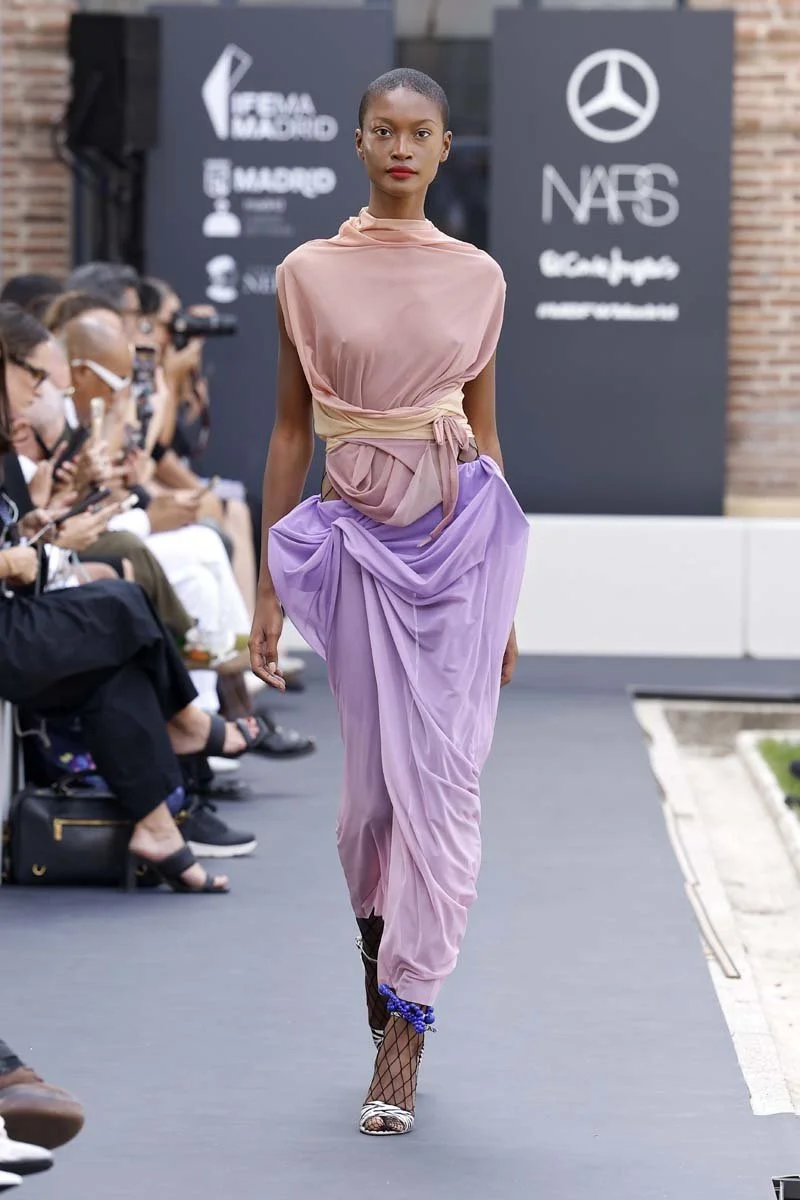
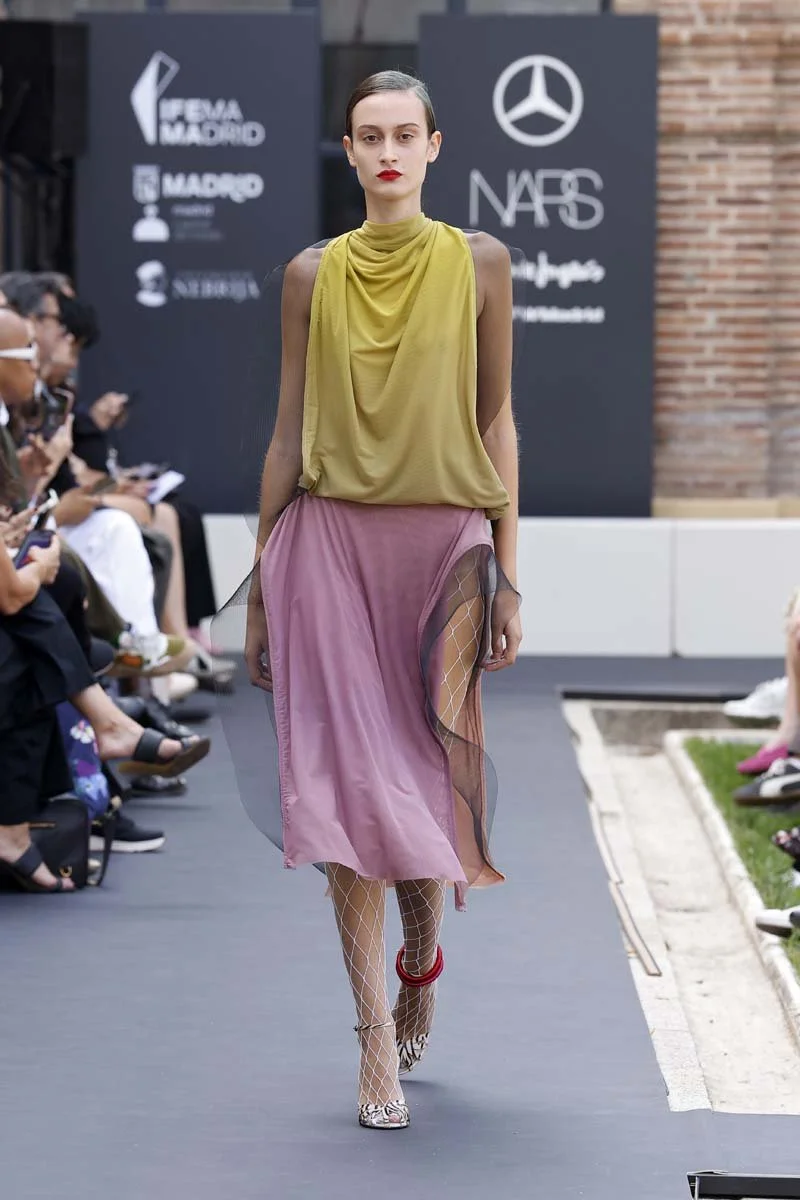
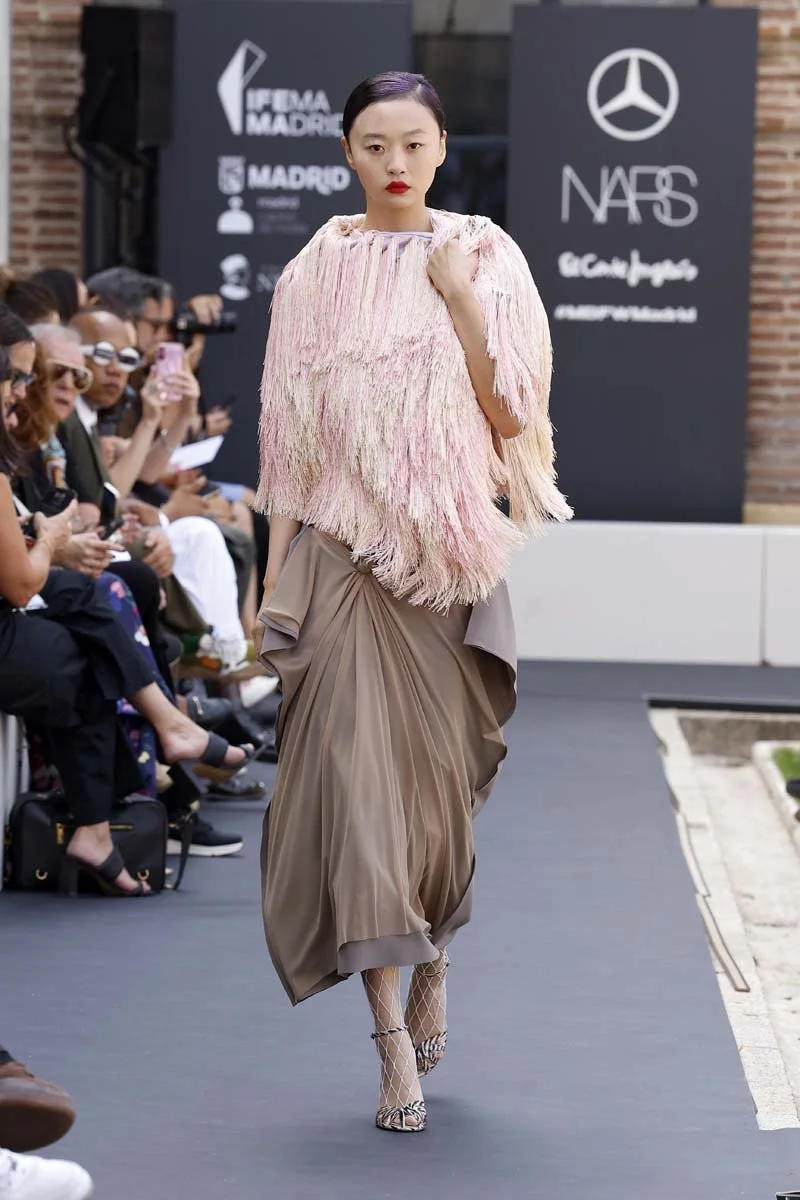
There was something incredibly irresistible about Ernesto Naranjo's Ondine. Inspired by the fluid relationship between body, gesture and fabric, the collection drifted between structural and soft, never allowing a silhouette to fully remain one or the other. Layers of organza and silk satin floated around the body, and delicate ombré fabrics shifted from lavender into an almost toxic Scheele's Green, or from soft peach into deep violet, creating an ethereal sense of movement as models walked.
Naranjo understands how to create capture viewer’s attention remarkably well. Stiff tulle peaking from beneath translucent fabrics sculpted unexpected volumes, while tiny feather applications, coral-like brooches and netted accessories added moments of fantasy and sexiness without overwhelming the clothes. A vibrant fuchsia dress fastened with an bow across the bust was so simple and yet among the collection's standout moments. There were moments where we couldn't help but think, "Like mother, like daughter." Having worked under John Galliano at Maison Margiela, Naranjo occasionally let small echoes of Galliano's Dior slip into his own language. They never felt derivative thought — more like affectionate nods from one generation to the next.
Romantic without becoming nostalgic and experimental without losing wearability, Ernesto Naranjo as one of Spain's most exciting designers to watch and the collection cemented him as a designer confidently finding his own language, one beautiful silhouette at a time.
ACROMATYX
all images courtesy of MERCEDES-BENZ MADRID FASHION WEEK
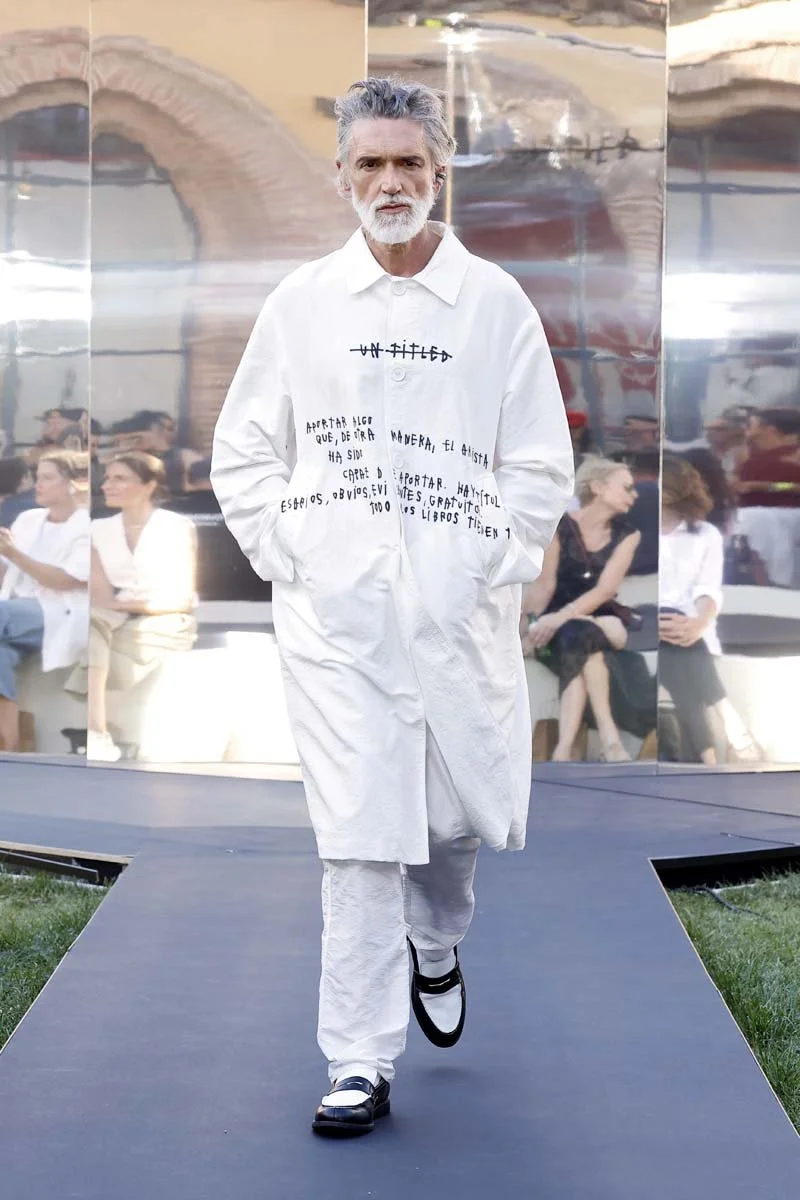
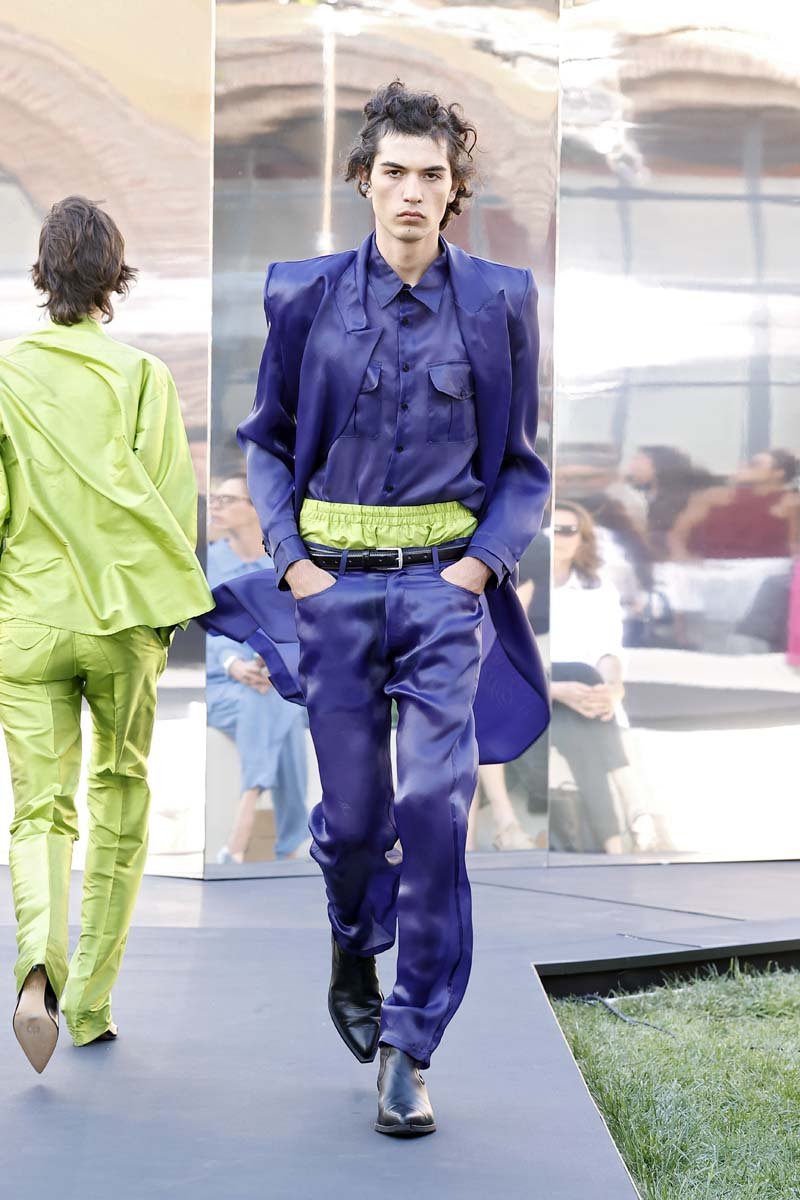
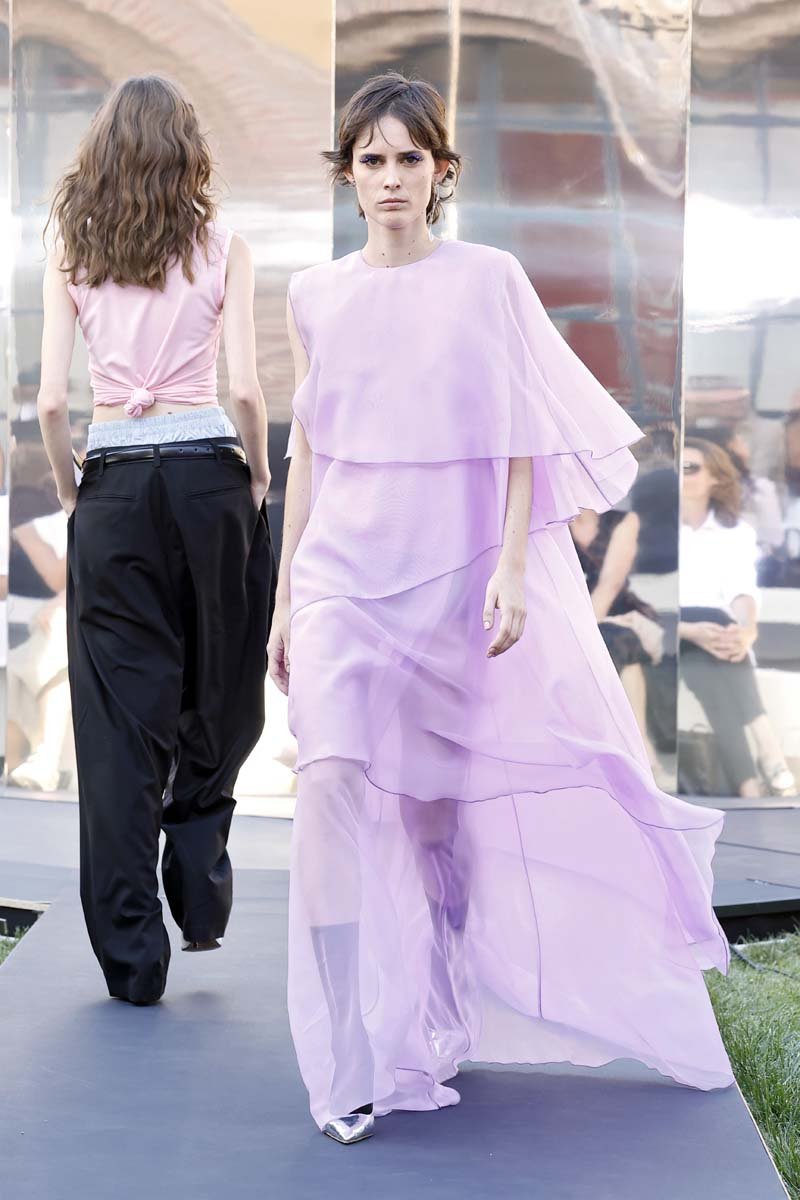
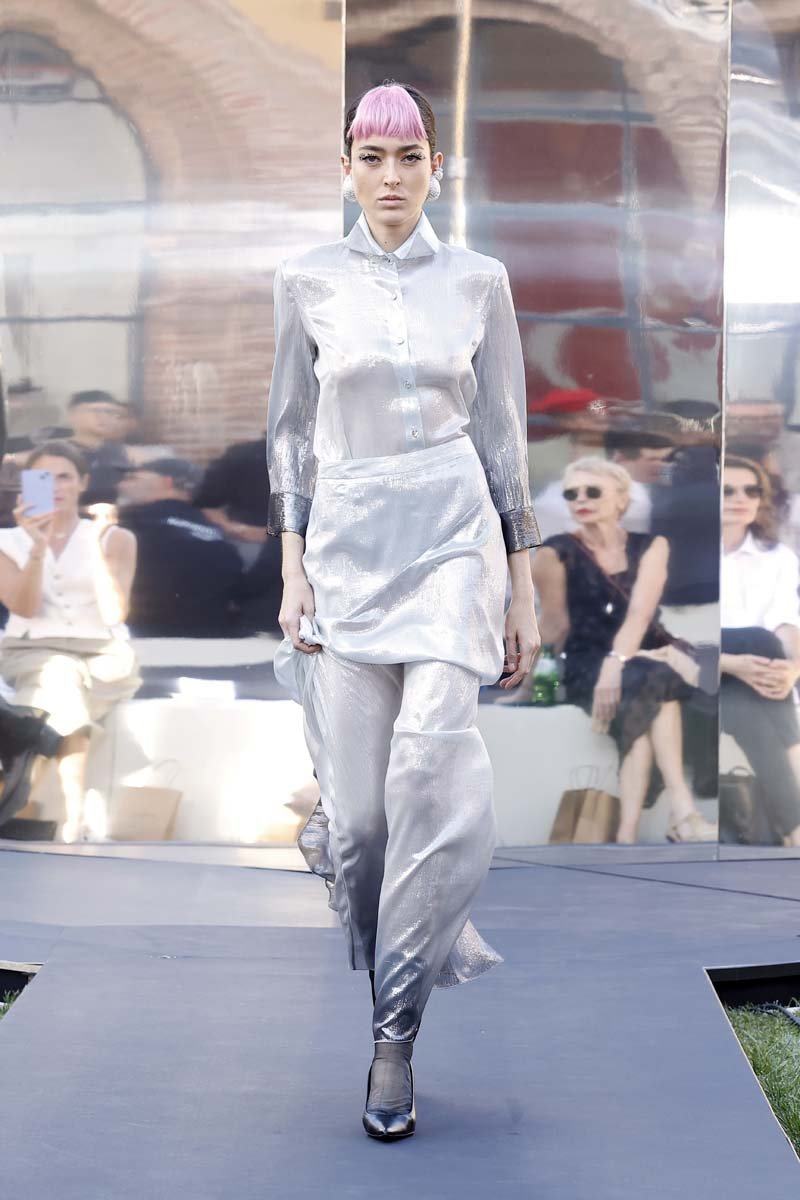
While many designers embraced romance, florals and soft femininity, ACROMATYX went the complete opposite direction, delivering something sharper, darker and considerably more urban — and yet no sacrifices to elegance were made.
The show opened with what looked like an almost clinical white bodysuit, traced with black seams that mapped the body, followed by a white lab coat emblazoned with the word Untitled — an unmistakable nod to Martin Margiela's iconic white coats. From there, the collection gradually unfolded through translucent technical layers, precise tailoring and beautifully executed proportions. Organza shirts floated over structured silhouettes, while transparent trenches, cropped jackets and layered shorts introduced an intriguing — though maybe not groundbreaking — exploration of all things sexy.
Pastel pinks and violets slowly emerged before colliding with vivid lime green and electric purple, a combination that felt unexpectedly fresh and very Prada-esque. Yet despite these brighter moments, the collection never lost its distinctive edge. The tailoring remained razor-sharp, the accessories hot, and even the metallic silver looks, fading gradually into black, felt fashionably futuristic.
There were occasional missteps — one oversized black suit overwhelmed its wearer to the point of distorting the silhouette — but they were exceptions within an otherwise remarkably cohesive collection. More than anything, ACROMATYX demonstrated that minimalism does not have to feel cold. The collision of architectural precision with sensuality and technical experimentation allowed Franx de Cristal and Xavi García to deliver a collection that felt confident, contemporary and refreshingly unlike anything else shown that week.
CALAFAT
all images courtesy of MERCEDES-BENZ MADRID FASHION WEEK
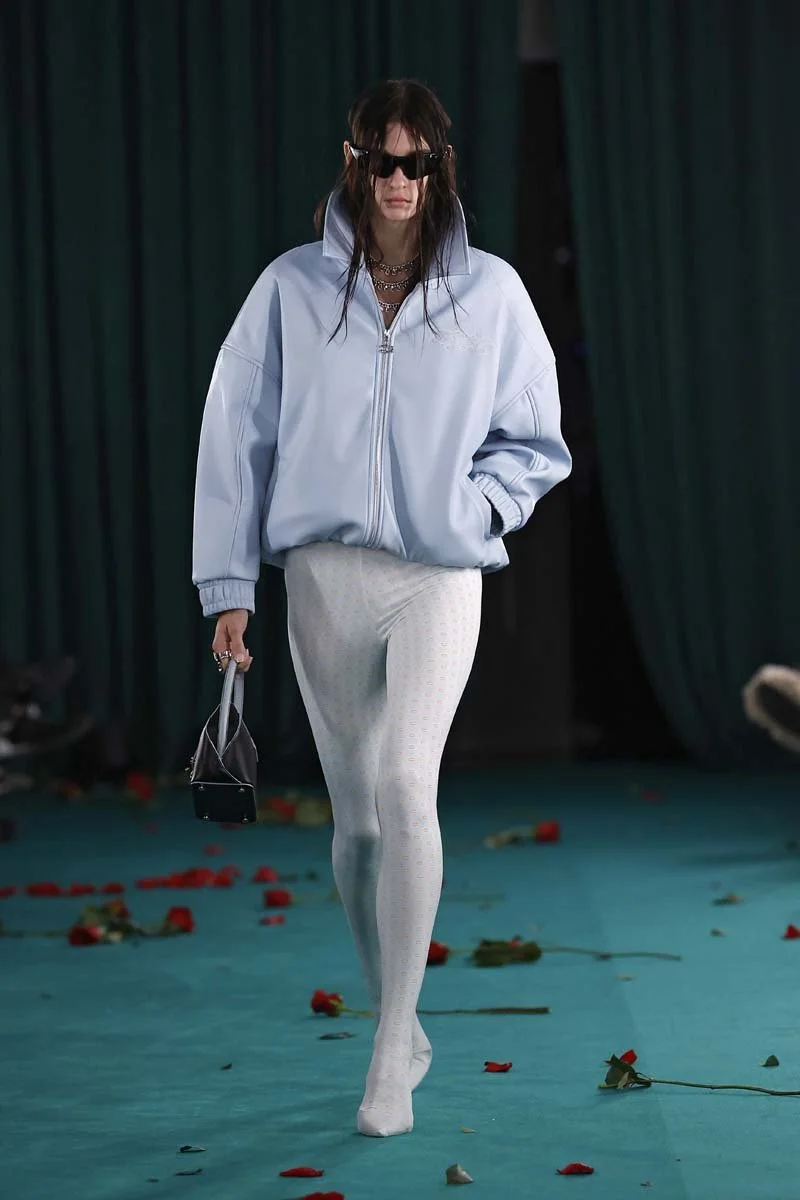
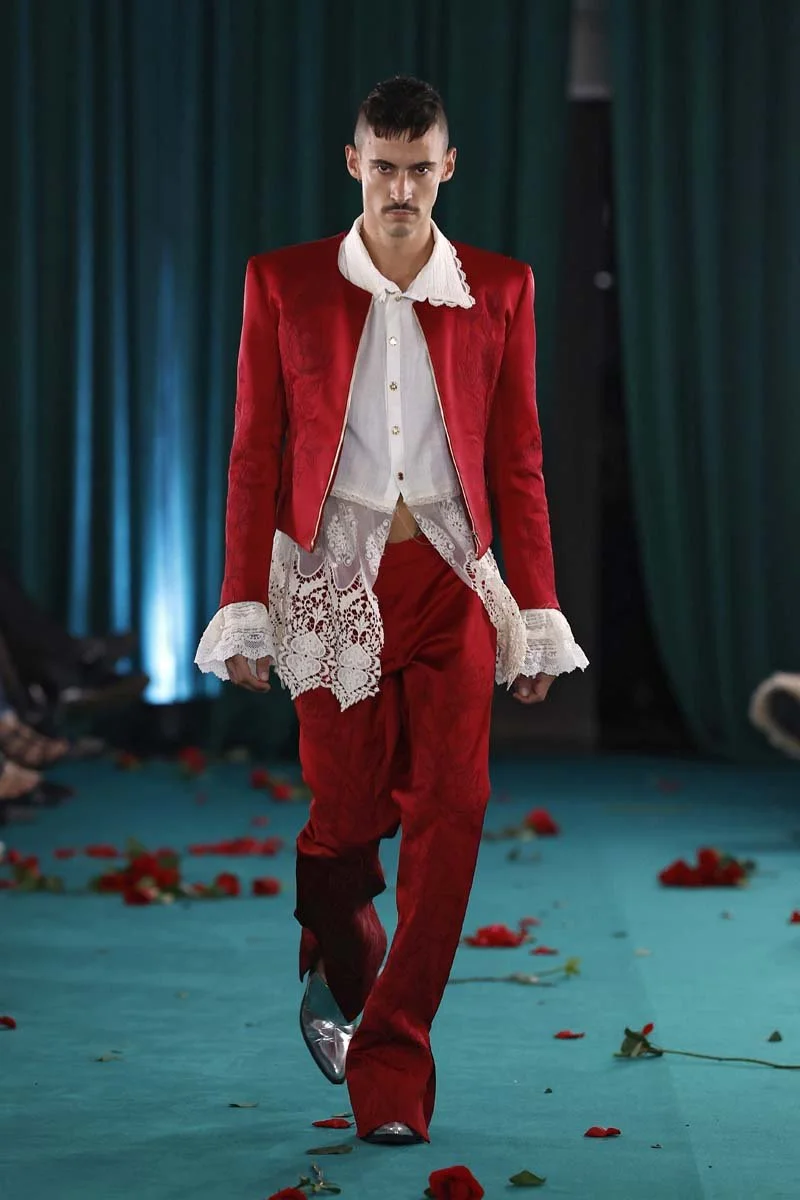
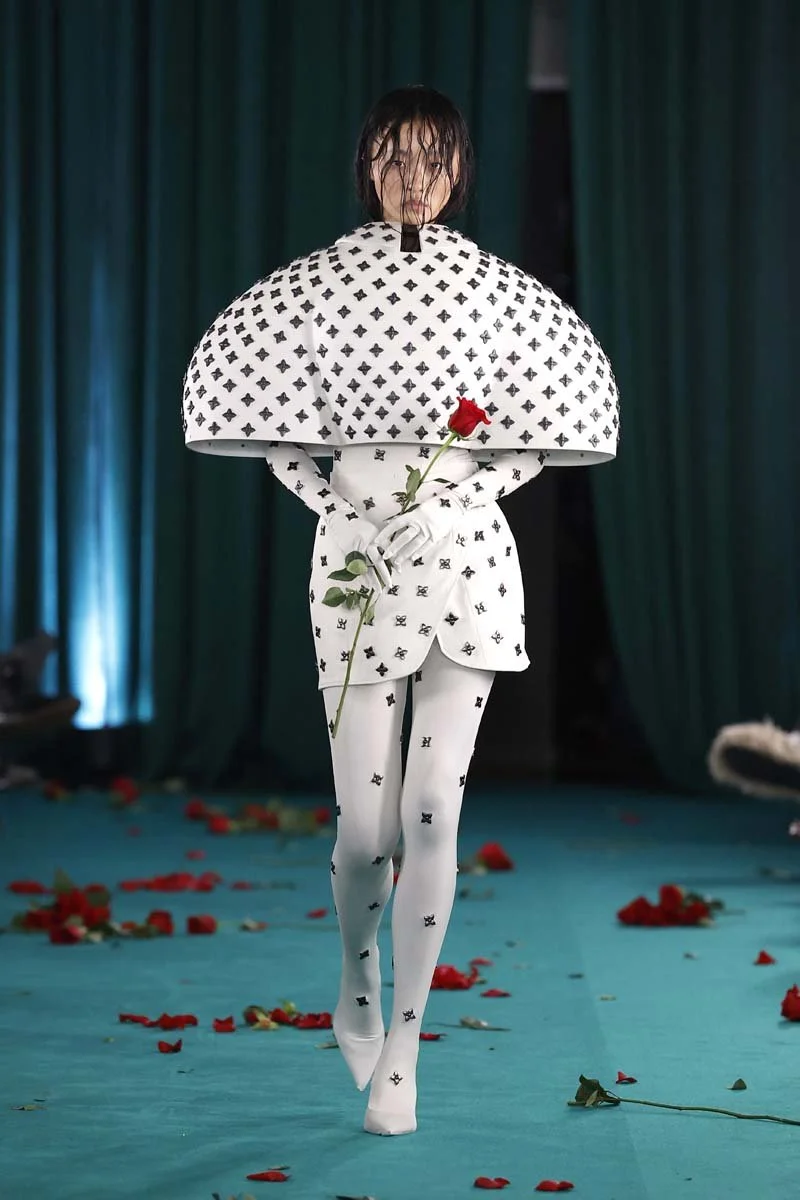
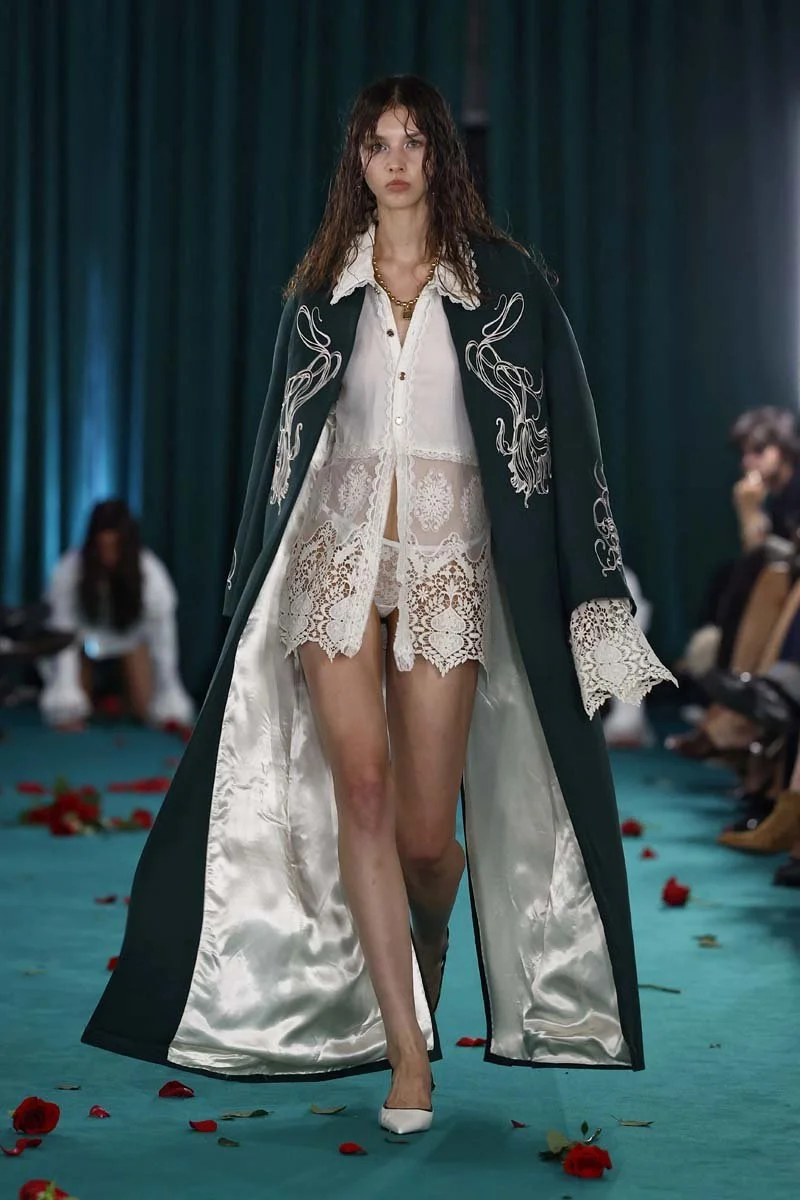
Theatricality has become one of fashion's favourite crutches, often compensating for collections that struggle to stand on their own. Burnt Rose Garden, however, proves that giving us a good show and creating something substantial doesn’t need to be mutually exclusive. Álvaro Calafat staged a surreal world of scattered roses, performers and sculptural interventions, yet the drama of it all never overshadowed the clothes.
While echoes of today's fashion landscape are unmistakable, particularly in the collision of streetwear with sensual tailoring and eveningwear, Calafat filtered those contemporary references through an unmistakably Spanish lens. Rich crimson tailoring, floral embroidery, lace detailing and aristocratic silhouettes soften the collection's darker edge, creating something warmer and more romantic than its sharper counterparts. It is a collection that embraces contradiction, balancing oversized leather bombers and sporty zip-ups with corseted gowns, fluid slips and technically accomplished atelier pieces. Normally, all of these elements combined should count for a disaster but in this context they somehow worked.
The styling deserves equal credit. Wet hair, wraparound sunglasses and layered jewellery grounded the collection firmly in the present, preventing its romanticism from drifting into past. Sculptural accessories and oversized floral forms pushed the narrative further into more avant-garde expression but they never felt gratuitous.
Beneath the performance lied a genuinely desirable wardrobe. It confidently moved between commercial ready-to-wear and conceptual craftsmanship. It's an assured step forward for CALAFAT, for sure, and a convincing demonstration that storytelling can be a powerful tool when used right.
PALOMO
all images courtesy of MERCEDES-BENZ MADRID FASHION WEEK
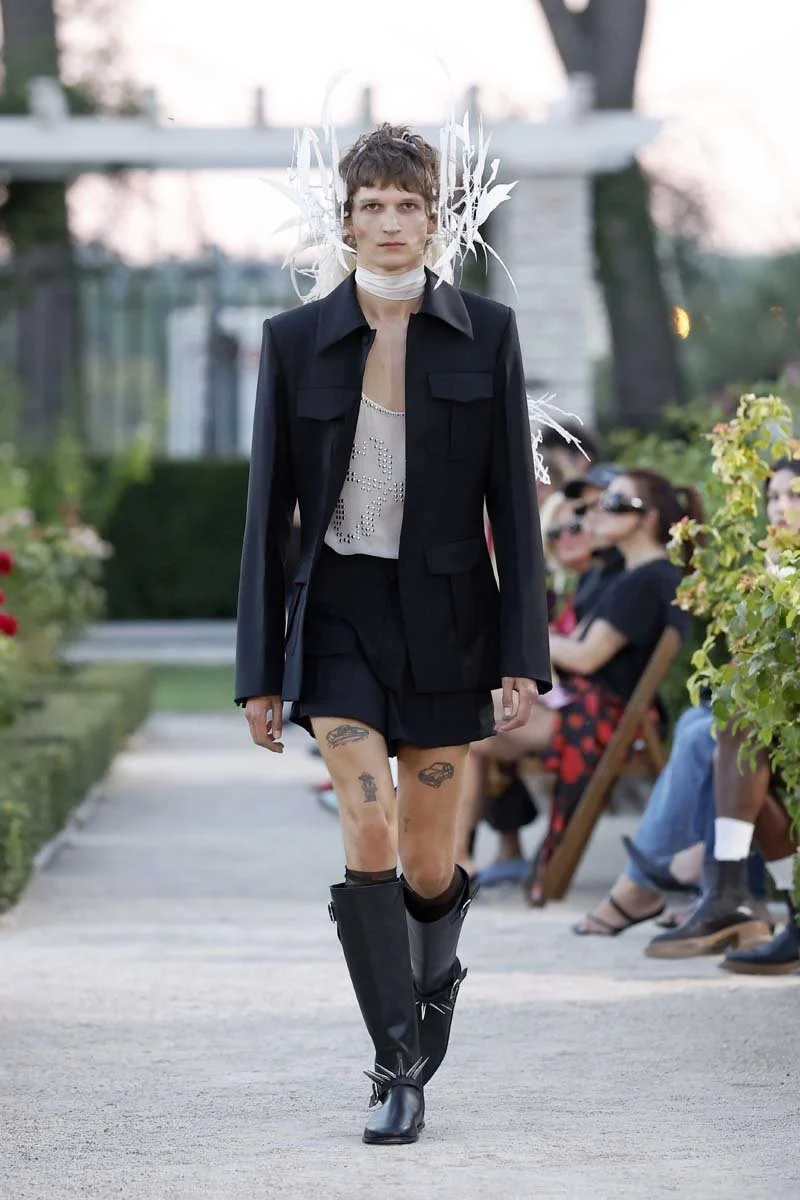
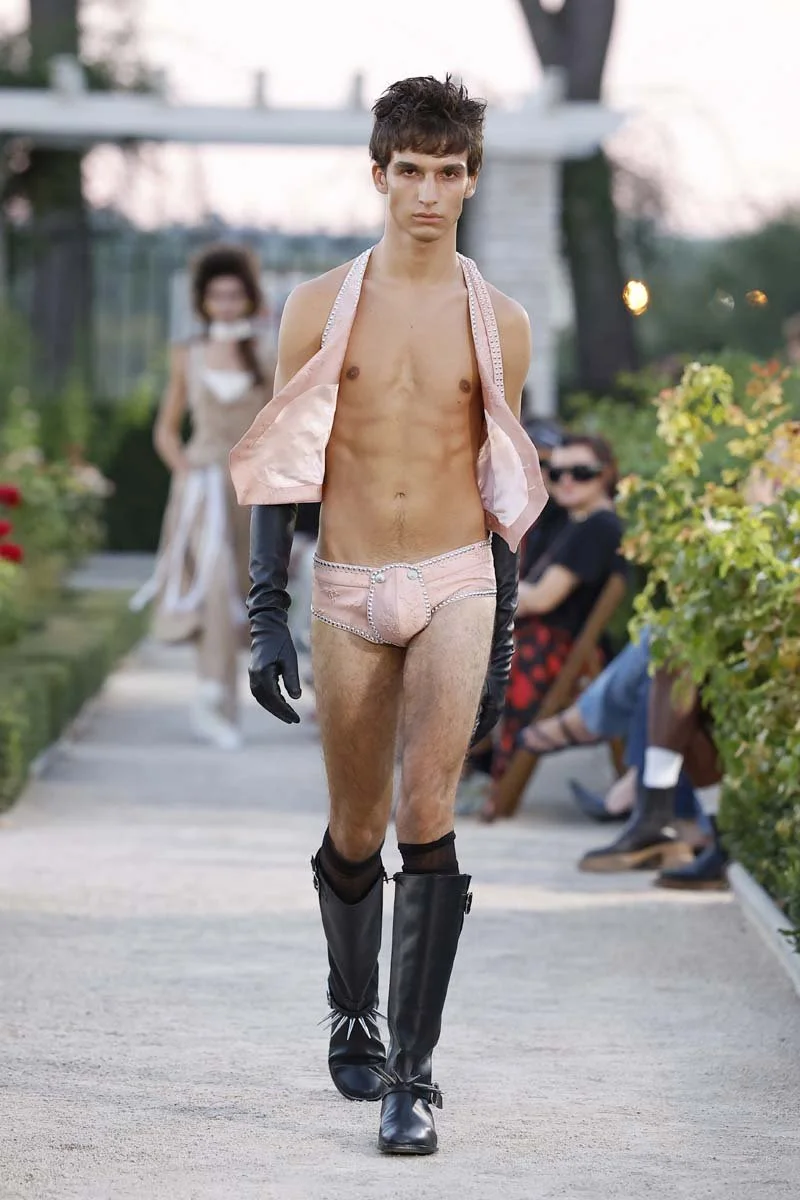
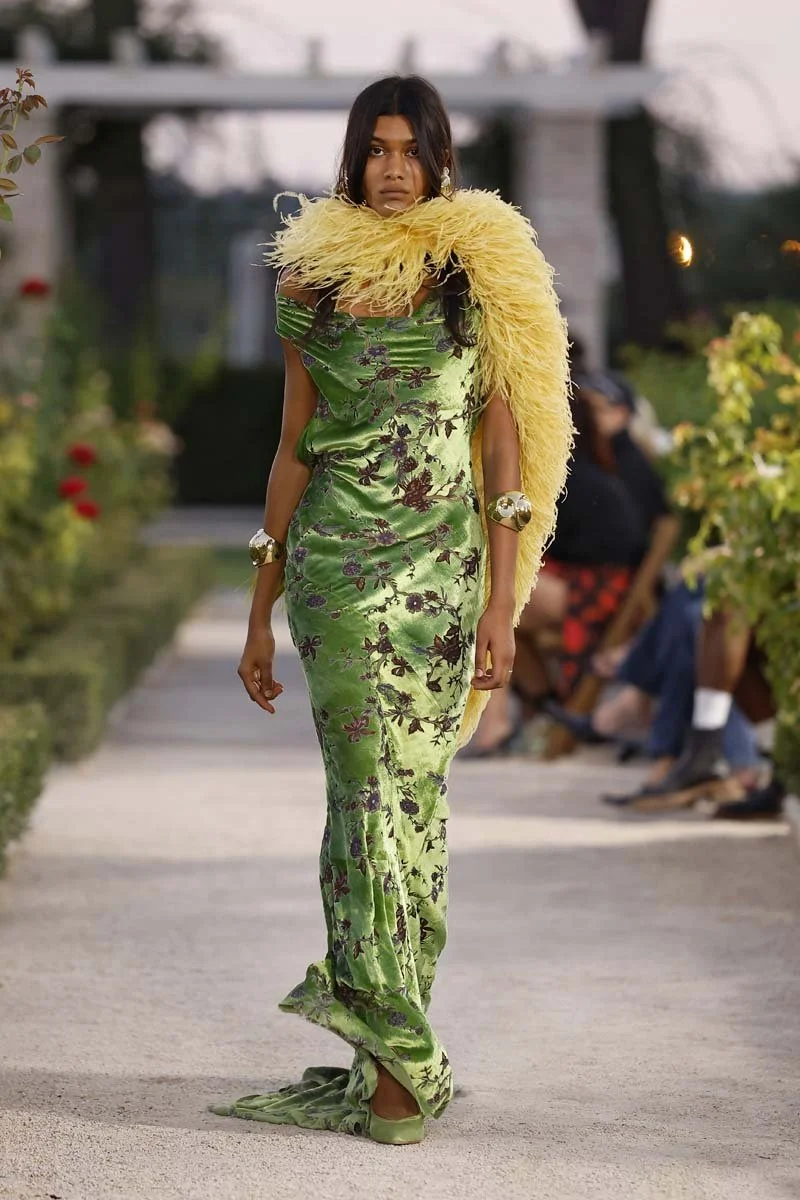
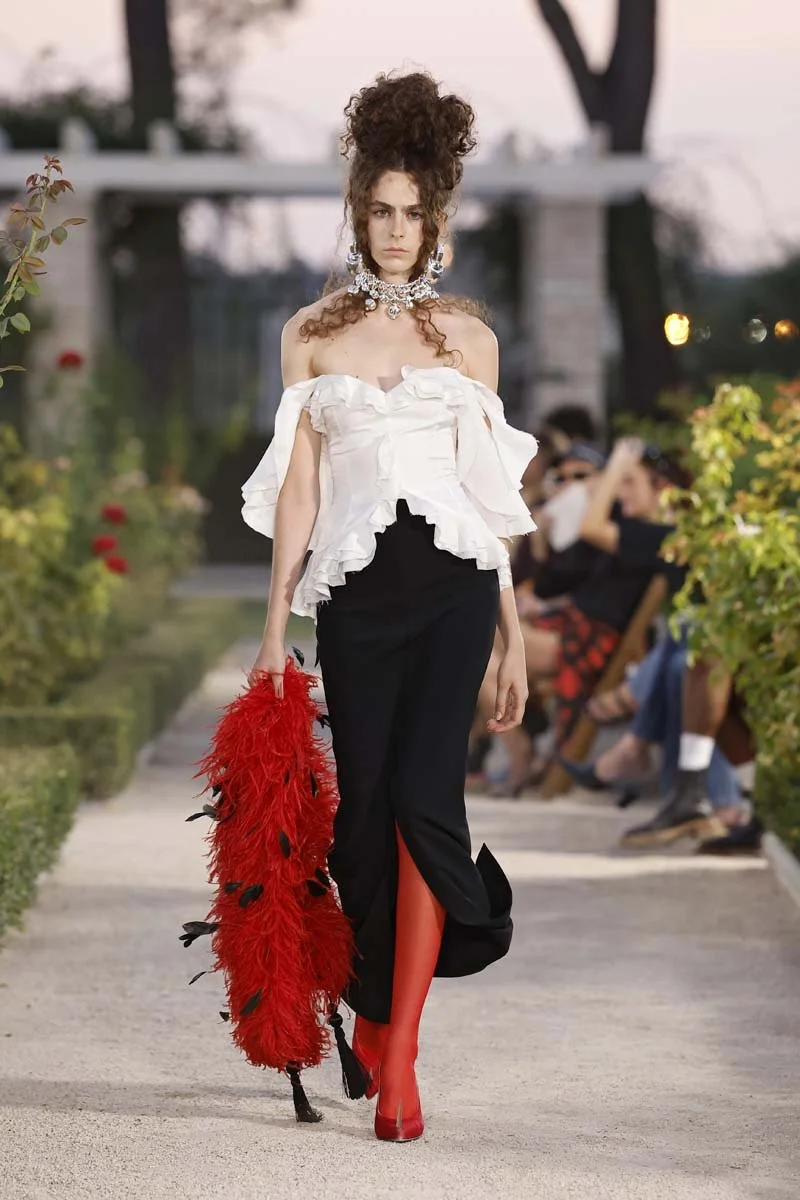
If there was one show everyone wanted an invitation to in Madrid, it was Palomo. Staged at sunset in a rose garden, Alejandro Gómez Palomo's latest collection felt like a fever dream. It was theatrical, naturally, but never kitschy.
Drawing on the mythology of Arcadia, the collection explored paradise as a place where beauty is constantly disrupted by temptation. The theme manifested into an abundance of delicate slip dresses and softly belted tailoring. Powdery shades of beige, blush and white were interrupted by sharply cut leather, thorn-like embellishments on footwear and flashes of saturated crimson. Feathered headpieces recalled celestial creatures more than costumes, while oversized jewellery, reminiscent of religious relics, reinforced the collection's distinctly Spanish identity.
Palomo's expansion into womenswear feels increasingly assured, yet the collection never abandons the gender-fluid language that birthed the house. Instead, masculine tailoring and sensual draping exist comfortably alongside one another, united by impeccable craftsmanship and love for drama. Particularly striking was the colour story: buttery yellows, dusty pinks, emerald greens and deep floral purples were paired with remarkable excellence. Even at its most colourful, the pairings were not there to disrupt or stand in opposition, but rather soothe the eyes and create unexpected harmonies.
There is, however, a noticeable shift. Since the brand sold minority stakes to Andge Investments among others, the silhouettes feel cleaner, more focused and, ultimately, more wearable. The extravagance remains, but it is channelled with greater discipline. That being said — if anything — the commercial awareness strengthens the brand, proving that romance and fantasy need not exist at opposite ends of a more pragmatic future.
Marie Antoinette may have lingered somewhere in the background of the moodboard, but this was unmistakably Palomo's Spain: decadent, sensual, emotionally charged and unapologetically queer.
ANTONIO DEL CANTO
all images courtesy of MERCEDES-BENZ MADRID FASHION WEEK
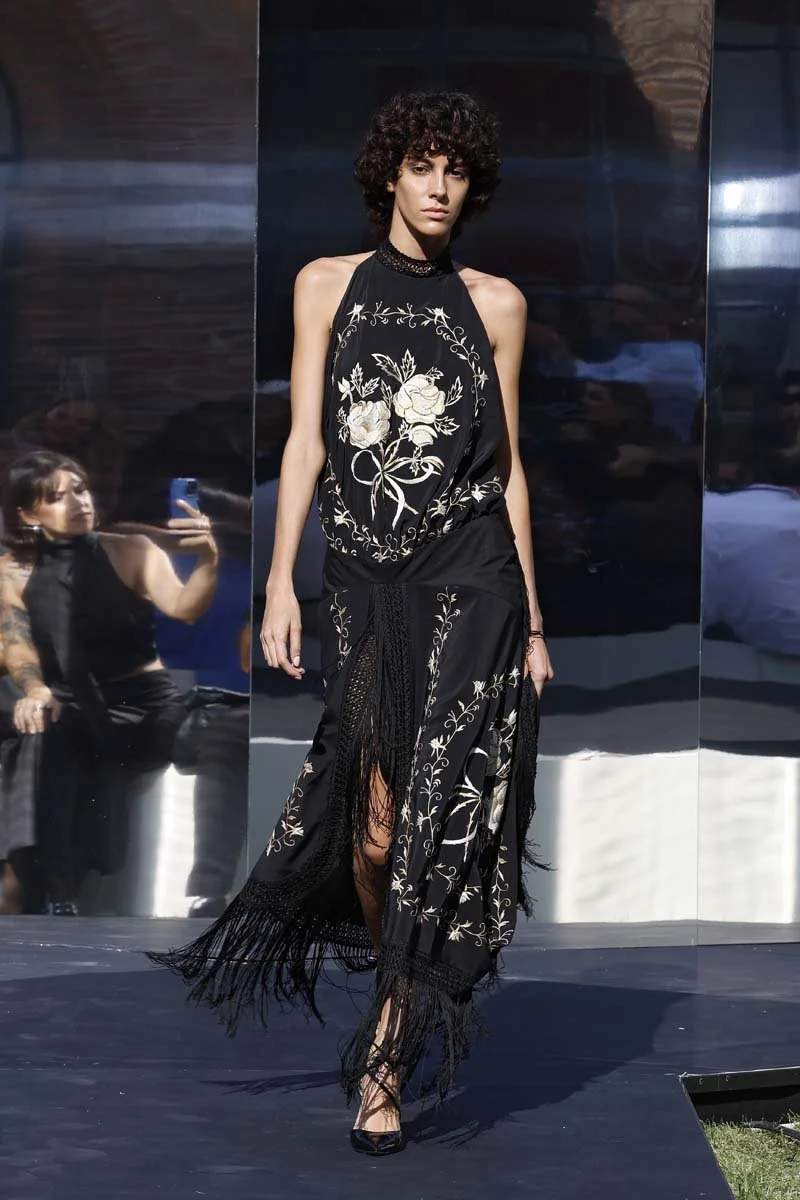
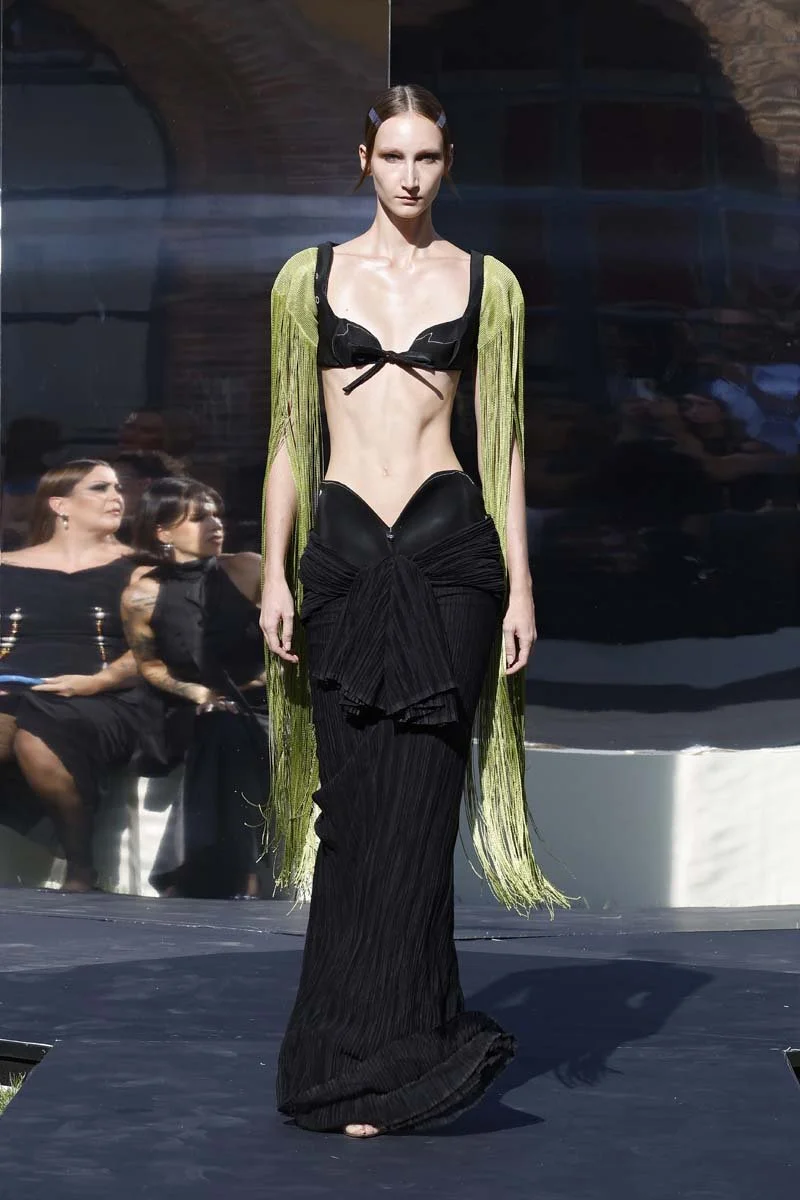
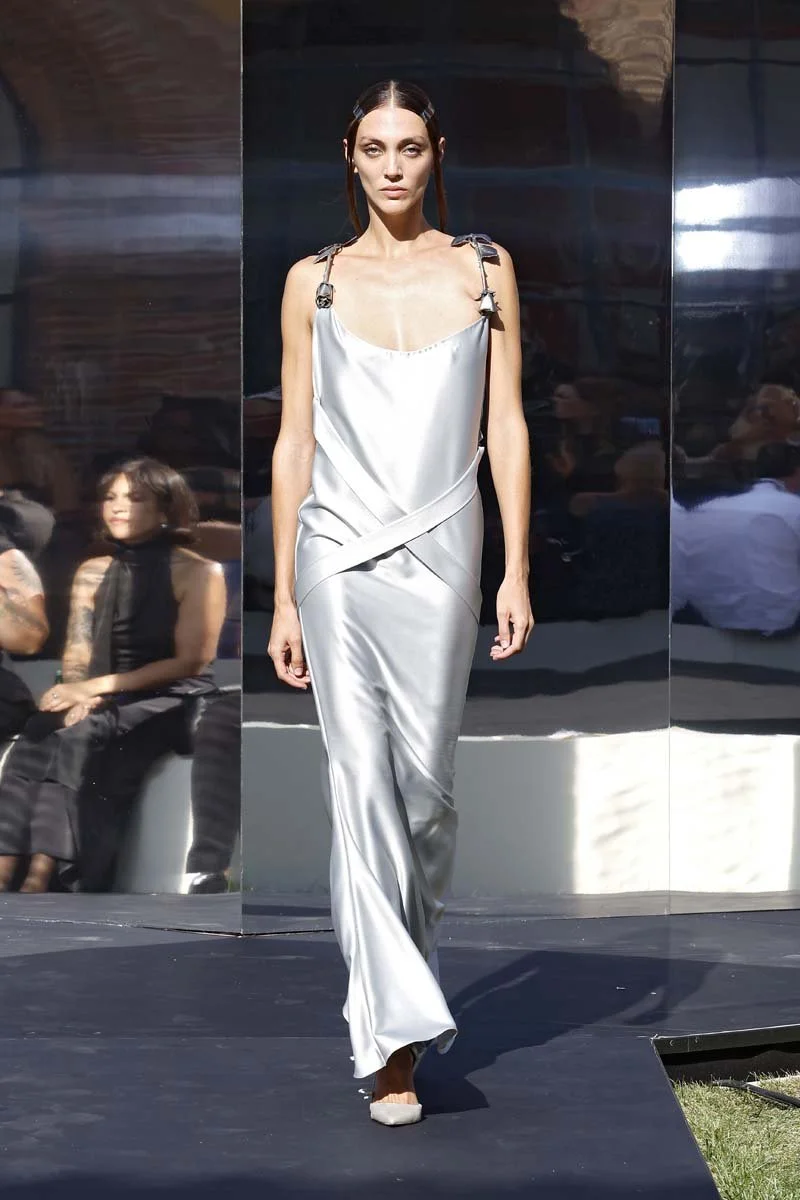
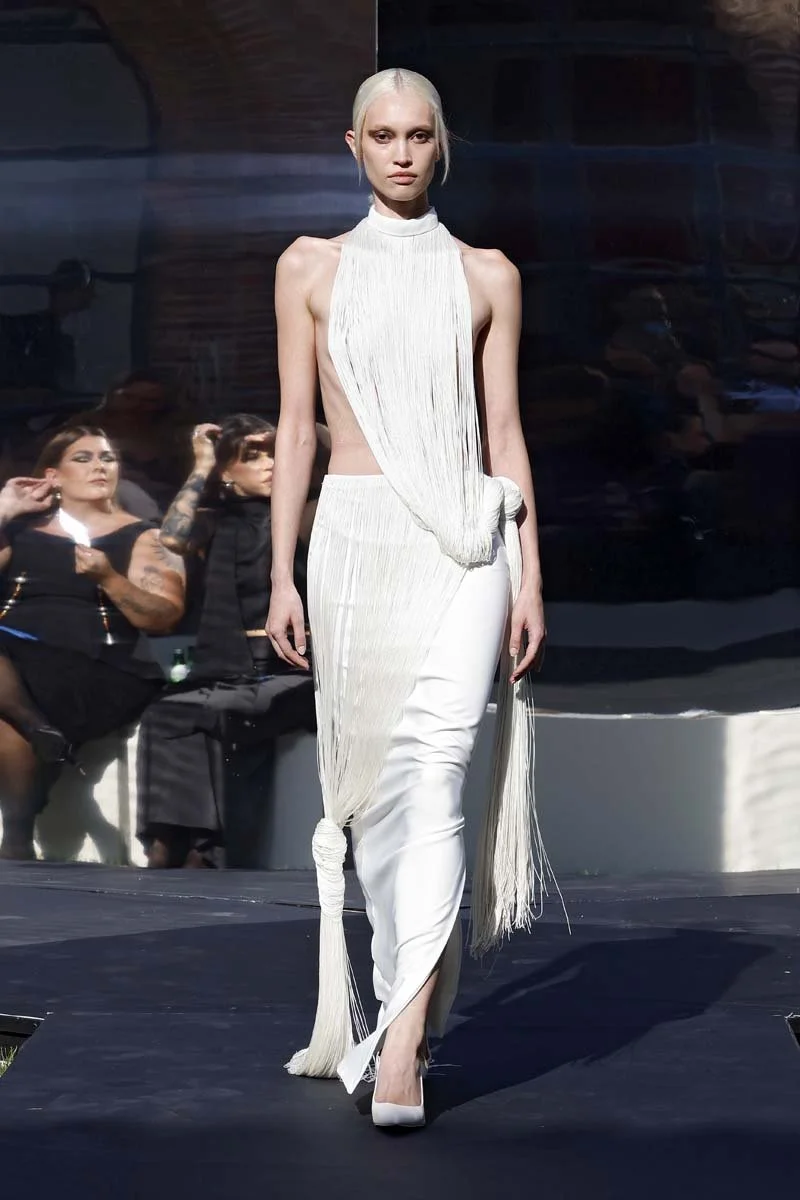
Getting dressed rarely looks this beautiful. Antonio Del Canto's collection captured that fleeting moment before stepping out the door, when clothes are still being adjusted. The opening looks with sharp geometrical motifs set a particularly confident tone before giving way to softer eveningwear. Dresses appeared tied as though knitwear had been casually wrapped around the waist, sculptural silhouettes softened into fluid draping, and garments seemed caught somewhere right before being finished.
Del Canto's craftsmanship remained the collection's greatest strength. Murano glass droplets hung suspended from gowns, while delicate metal roses became far more than decoration, at times fastening garments together across the shoulders. Throughout the collection, these artisanal details never felt excessive, instead they reinforced the unique visual language an sensuality that ran through every look. Revealing silhouettes, liquid satins and precise cut-outs exposed the body with confidence but never in an vulgar way.
If the collection occasionally lost momentum, it was only because its strongest ideas deserved a slightly tighter edit. Even so, Antonio Del Canto demonstrated a remarkably assured aesthetic, fusing craftsmanship, sensuality and immaculate construction into something exciting to watch.